Rigveda 2.34: To the Maruts
Introduction
Rigveda 2.34 is a hymn of 15 verses addressed to the Maruts. It stands in book (maṇḍala) 2, the family book of Gṛtsamada. The Rigveda is the oldest collection of Sanskrit hymns, composed in the second half of the second millennium BCE and handed down orally for many centuries before it was written down.
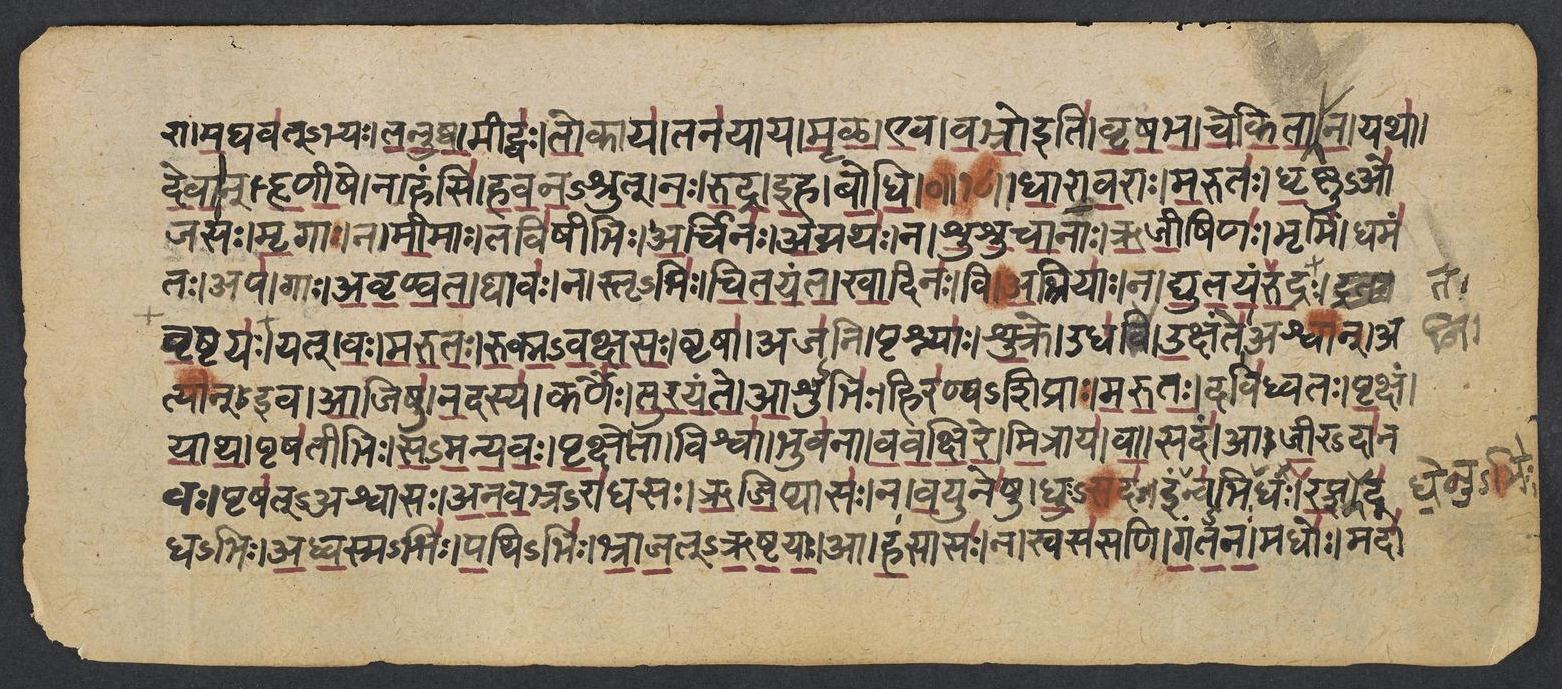
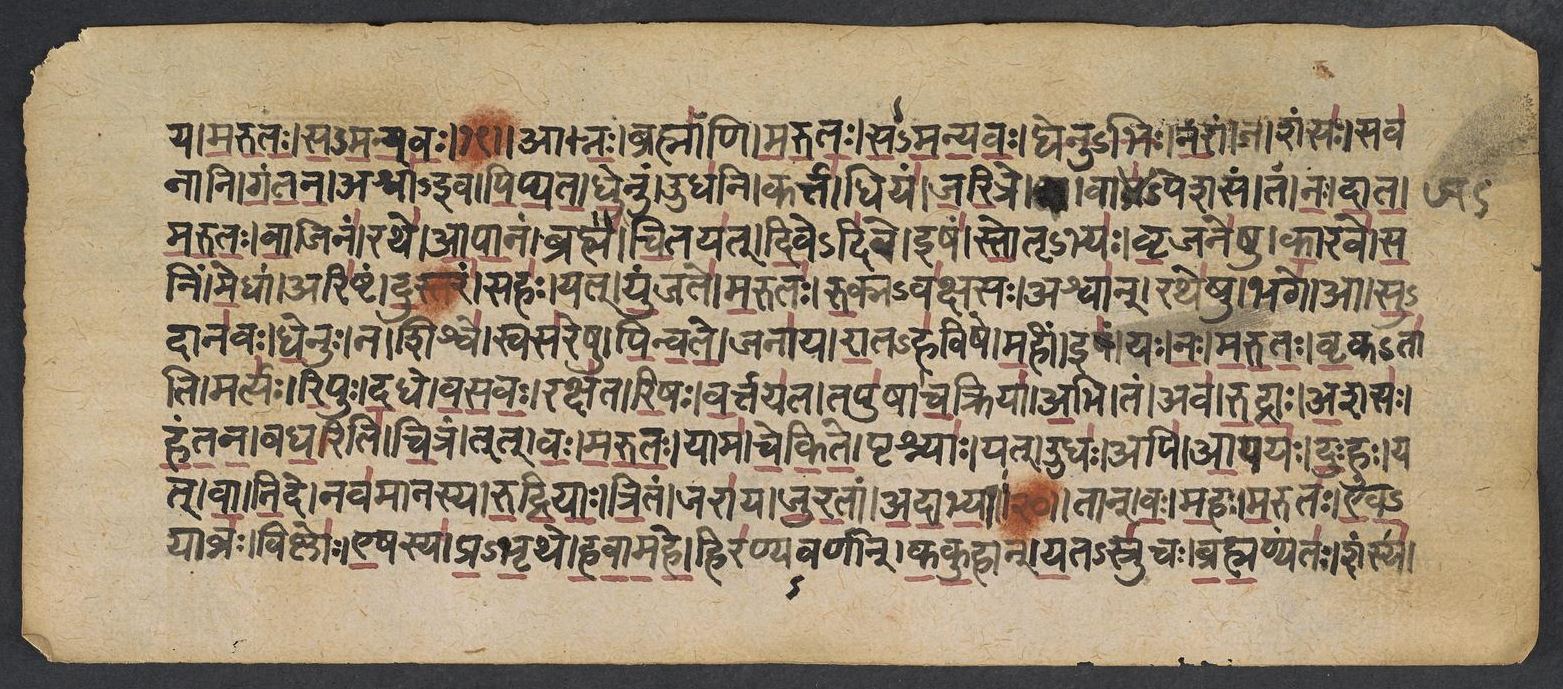
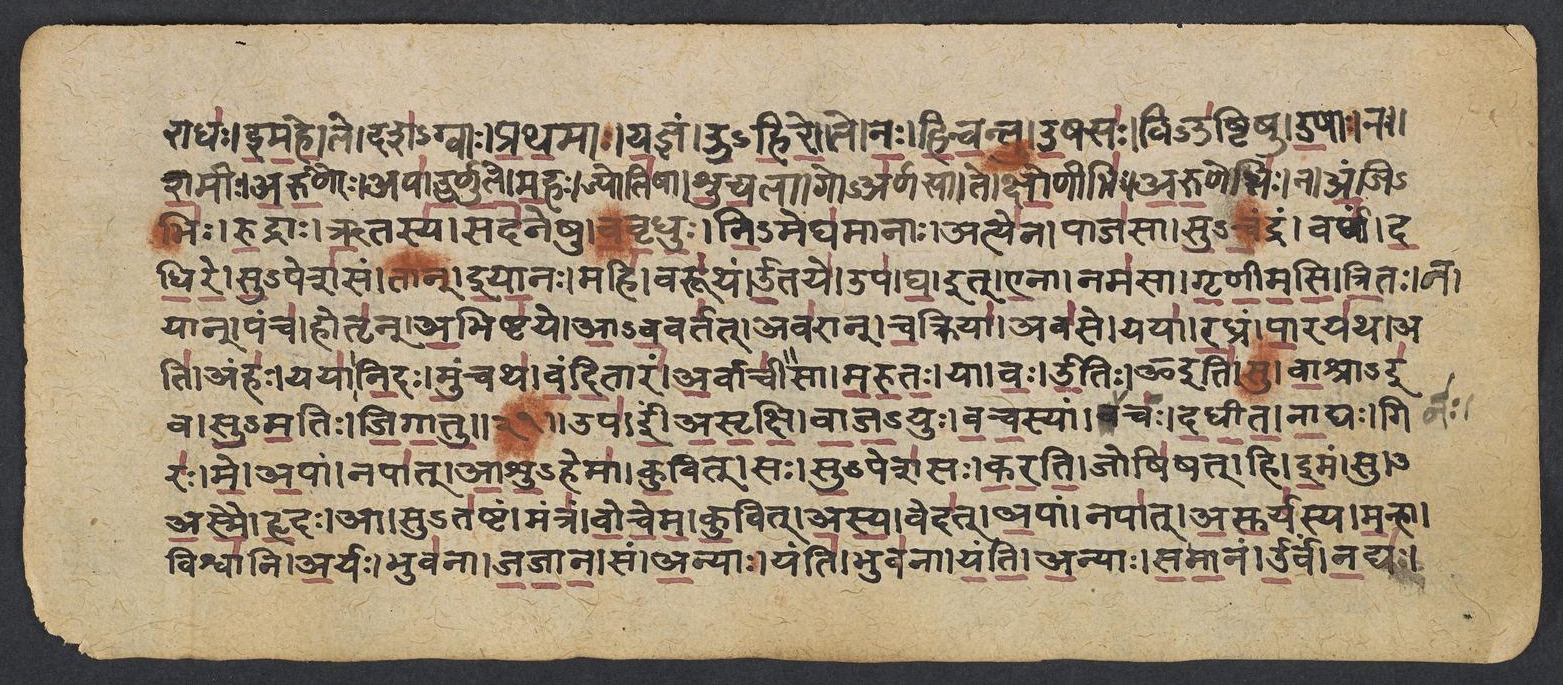
The manuscript shown is Penn Ms. Coll. 390 Item 41 (University of Pennsylvania), an undated paper manuscript of the padapāṭha (the word-by-word recitation text, in which every word is written separately and compounds are split) of the whole Ṛgveda in Devanāgarī, 884 leaves in fascicles, 7-9 lines to the page, accents in red; this hymn stands on fol. 176r-177r. Each section below gives the verses that end on one page; the page boundaries were read on the images (the opening words of every page), not counted out. Where the manuscript is a padapāṭha (the word-by-word recitation text), the section shows Aufrecht's continuous (saṃhitā) text first and, as the edition text, the padapāṭha of the same verses, which is the form written on the page.
How was this verified? (Provenance)
Where on the image
Penn Ms. Coll. 390 Item 41, fol. 176r (numbered 9r by the scribe) (OPenn image 177, lower leaf). Checked on the image: the Rigveda text on this page begins in RV 2.33.14 ‹-sthirā maghavat-bhyaḥ tanuṣva mīḍhavaḥ›. The next page with Rigveda text, fol. 176v (numbered 9v by the scribe), begins in RV 2.34.5 ‹-madāya marutaḥ sa-manyavaḥ›. Verses 2.34.1-4 end on this page.
1dhā̱rā̱va̱rā ma̱ruto̍ dhṛ̱ṣṇvo̍jaso mṛ̱gā na bhī̱mās tavi̍ṣībhir a̱rcina̍ḥ | a̱gnayo̱ na śu̍śucā̱nā ṛ̍jī̱ṣiṇo̱ bhṛmi̱ṁ dhama̍nto̱ apa̱ gā a̍vṛṇvata ||
2dyāvo̱ na stṛbhi̍ś citayanta khā̱dino̱ vy a1̱̍bhriyā̱ na dyu̍tayanta vṛ̱ṣṭaya̍ḥ | ru̱dro yad vo̍ maruto rukmavakṣaso̱ vṛṣāja̍ni̱ pṛśnyā̍ḥ śu̱kra ūdha̍ni ||
3u̱kṣante̱ aśvā̱m̐ atyā̍m̐ ivā̱jiṣu̍ na̱dasya̱ karṇai̍s turayanta ā̱śubhi̍ḥ | hira̍ṇyaśiprā maruto̱ davi̍dhvataḥ pṛ̱kṣaṁ yā̍tha̱ pṛṣa̍tībhiḥ samanyavaḥ ||
4pṛ̱kṣe tā viśvā̱ bhuva̍nā vavakṣire mi̱trāya̍ vā̱ sada̱m ā jī̱radā̍navaḥ | pṛṣa̍daśvāso anava̱bhrarā̍dhasa ṛji̱pyāso̱ na va̱yune̍ṣu dhū̱rṣada̍ḥ ||
Compare: Padapāṭha (word-by-word text written in the manuscript; Sansknet e-text via GRETIL)
1dhārāvarāḥ | marutaḥ | ghṛṣṇu-ojasaḥ | mṛgāḥ | na | bhīmāḥ | taviṣībhiḥ | arcinaḥ | agnayaḥ | na | śuśucānāḥ | ṛjīṣiṇaḥ | bhṛmim | dhamantaḥ | apa | gāḥ | avṛṇvata
2dyāvaḥ | na | stṛ-bhiḥ | citayanta | khādinaḥ | vi | abhriyāḥ | na | dyutayanta | vṛṣṭayaḥ | rudraḥ | yat | vaḥ | marutaḥ | rukma-vakṣasaḥ | vṛṣā | ajani | pṛśnyāḥ | śukre | ūdhani
3ukṣante | aśvān | atyān-iva | ājiṣu | nadasya | karṇaiḥ | turayante | āśu-bhiḥ | h iraṇya-śiprāḥ | marutaḥ | davidhvataḥ | pṛkṣam | yātha | pṛṣatībhiḥ | sa-manyavaḥ
4pṛkṣe | tā | viśvā | bhuvanā | vavakṣire | mitrāya | vā | sadam | ā | jīra-dānavaḥ | pṛṣat-aśvāsaḥ | anavabhra-rādhasaḥ | ṛjipyāsaḥ | na | vayuneṣu | dhūḥ-sadaḥ
1THE Maruts of resistless might who love the rain, resplendent, terrible like wild beasts in their strength, Glowing like flames of fire, impetuous in career, blowing the wandering raincloud, have disclosed the kine.
2They gleam with armlets as the heavens are decked with stars, like cloud-born lightnings shine the torrents of their rain. Since the strong Rudra, O Maruts with brilliant chests, sprang into life for you in Pr̥iṣni's radiant lap.
3They drip like horses in the racings of swift steeds; with the stream's rapid ears they hasten on their way. Maruts with helms of gold, ye who make all things shake, con e with your spotted deer, one-minded, to our food.
4They have bestowed of Mitra all that live, to feed, they who for evermore cause their swift drops to flow; Whose steeds are spotted deer, whose riches never fail, like horses in full speed, bound to the pole in work.
Where on the image
Penn Ms. Coll. 390 Item 41, fol. 176v (numbered 9v by the scribe) (OPenn image 178, upper leaf). Checked on the image: the Rigveda text on this page begins in RV 2.34.5 ‹-madāya marutaḥ sa-manyavaḥ›. The next page with Rigveda text, fol. 177r (numbered 10r by the scribe), begins in RV 2.34.11 ‹rādhaḥ īmahe›. Verses 2.34.5-10 end on this page; 2.34.5 begins on fol. 176r (numbered 9r by the scribe).
5indha̍nvabhir dhe̱nubhī̍ ra̱pśadū̍dhabhir adhva̱smabhi̍ḥ pa̱thibhi̍r bhrājadṛṣṭayaḥ | ā ha̱ṁsāso̱ na svasa̍rāṇi gantana̱ madho̱r madā̍ya marutaḥ samanyavaḥ ||
6ā no̱ brahmā̍ṇi marutaḥ samanyavo na̱rāṁ na śaṁsa̱ḥ sava̍nāni gantana | aśvā̍m iva pipyata dhe̱num ūdha̍ni̱ kartā̱ dhiya̍ṁ jari̱tre vāja̍peśasam ||
7taṁ no̍ dāta maruto vā̱jina̱ṁ ratha̍ āpā̱nam brahma̍ ci̱taya̍d di̱ve-di̍ve | iṣa̍ṁ sto̱tṛbhyo̍ vṛ̱jane̍ṣu kā̱rave̍ sa̱nim me̱dhām ari̍ṣṭaṁ du̱ṣṭara̱ṁ saha̍ḥ ||
8yad yu̱ñjate̍ ma̱ruto̍ ru̱kmava̍kṣa̱so 'śvā̱n rathe̍ṣu̱ bhaga̱ ā su̱dāna̍vaḥ | dhe̱nur na śiśve̱ svasa̍reṣu pinvate̱ janā̍ya rā̱taha̍viṣe ma̱hīm iṣa̍m ||
9yo no̍ maruto vṛ̱katā̍ti̱ martyo̍ ri̱pur da̱dhe va̍savo̱ rakṣa̍tā ri̱ṣaḥ | va̱rtaya̍ta̱ tapu̍ṣā ca̱kriyā̱bhi tam ava̍ rudrā a̱śaso̍ hantanā̱ vadha̍ḥ ||
10ci̱traṁ tad vo̍ maruto̱ yāma̍ cekite̱ pṛśnyā̱ yad ūdha̱r apy ā̱payo̍ du̱huḥ | yad vā̍ ni̱de nava̍mānasya rudriyās tri̱taṁ jarā̍ya jura̱tām a̍dābhyāḥ ||
Compare: Padapāṭha (word-by-word text written in the manuscript; Sansknet e-text via GRETIL)
5indhanva-bhiḥ | dhenu-bhiḥ | rapśadūdha-bhiḥ | adhvasma-bhiḥ | pathi-bhiḥ | bhrājat-ṛṣṭayaḥ | ā | haṃsāsaḥ | na | svasarāṇi | gantana | madhoḥ | madāya | marutaḥ | sa-manyavaḥ
6ā | naḥ | brahmāṇi | marutaḥ | sa-manyavaḥ | narām | na | śaṃsaḥ | savanāni | gantana | aśvām-iva | pipyata | dhenum | ūdhani | kartā | dhiyam | jaritre | vāja-peśasam
7tam | naḥ | dāta | marutaḥ | vājinam | rathe | āpānam | brahma | citayat | dive--dive | iṣam | stotṛ-bhyaḥ | vṛjaneṣu | kārave | sanim | medhām | ariṣṭam | dustaram | sahaḥ
8yat | yuñjate | marutaḥ | rukma-vakṣasaḥ | aśvān | ratheṣu | bhage | ā | su-dānavaḥ | dhenuḥ | na | śiśve | svasareṣu | pinvate | janāya | rāta-haviṣe | mahīm | iṣam
9yaḥ | naḥ | marutaḥ | vṛka-tāti | martyaḥ | ripuḥ | dadhe | vasavaḥ | rakṣata | riṣaḥ | vartayata | vapuṣā | cakriyā | abhi | tam | ava | rudrāḥ | aśasaḥ | hantana | vadhariti
10citram | tat | vaḥ | marutaḥ | yāma | cekite | pṛśnyāḥ | yat | ūdhaḥ | api | āpayaḥ | duhuḥ | yat | vā | nide | navamānasya | rudriyāḥ | tritam | jarāya | juratām | adābhyāḥ
5With brightly-flarning kine whose udders swell with milk, with glittering lances on your unobstructed paths, O Maruts, of one mind, like swans who seek their nests, come to the rapturous enjoyment of the meath.
6To these our prayers, O Maruts, come unanimous, come ye to our libations like the praise of men. Make it swell like a mare, in udder like a cow, and for the singer grace the song with plenteous strength.
7Give us a steed, O Maruts mighty in the car; prevailing prayer that brings remembrance day by day; Food to your praisers, to your bard in deeds of might give winning wisdom, power uninjured, unsurpassed.
8When the bright-chested Maruts, lavish of their gifts, bind at the time bliss their horses to the cars, Then, as the milch-cow feeds her calf within the stalls, they pour forth food for all oblation-bringing men.
9Save us, O Maruts, Vasus, from the injurer, the mortal foe who makes us looked upon as wolves. With chariot all aflame compass him round about: O Rudras, cast away the foeman's deadly bolt.
10Well-known, ye Maruts, is that wondrous course of yours, when they milked Pr̥iṣni's udder, close akin to her. Or when to shame the bard who lauded, Rudra's Sons, ye O infallible brought Trita to decay.
Where on the image
Penn Ms. Coll. 390 Item 41, fol. 177r (numbered 10r by the scribe) (OPenn image 178, lower leaf). Checked on the image: the Rigveda text on this page begins in RV 2.34.11 ‹rādhaḥ īmahe›. The next page with Rigveda text, fol. 177v (numbered 10v by the scribe), begins in RV 2.35.3 ‹pṛṇanti tam oṃ iti›. Verses 2.34.11-15 end on this page; 2.34.11 begins on fol. 176v (numbered 9v by the scribe).
11tān vo̍ ma̱ho ma̱ruta̍ eva̱yāvno̱ viṣṇo̍r e̱ṣasya̍ prabhṛ̱the ha̍vāmahe | hira̍ṇyavarṇān kaku̱hān ya̱tasru̍co brahma̱ṇyanta̱ḥ śaṁsya̱ṁ rādha̍ īmahe ||
12te daśa̍gvāḥ pratha̱mā ya̱jñam ū̍hire̱ te no̍ hinvantū̱ṣaso̱ vyu̍ṣṭiṣu | u̱ṣā na rā̱mīr a̍ru̱ṇair apo̍rṇute ma̱ho jyoti̍ṣā śuca̱tā goa̍rṇasā ||
13te kṣo̱ṇībhi̍r aru̱ṇebhi̱r nāñjibhī̍ ru̱drā ṛ̱tasya̱ sada̍neṣu vāvṛdhuḥ | ni̱megha̍mānā̱ atye̍na̱ pāja̍sā suśca̱ndraṁ varṇa̍ṁ dadhire su̱peśa̍sam ||
14tām̐ i̍yā̱no mahi̱ varū̍tham ū̱taya̱ upa̱ ghed e̱nā nama̍sā gṛṇīmasi | tri̱to na yān pañca̱ hotṝ̍n a̱bhiṣṭa̍ya āva̱varta̱d ava̍rāñ ca̱kriyāva̍se ||
15yayā̍ ra̱dhram pā̱raya̱thāty aṁho̱ yayā̍ ni̱do mu̱ñcatha̍ vandi̱tāra̍m | a̱rvācī̱ sā ma̍ruto̱ yā va̍ ū̱tir o ṣu vā̱śreva̍ suma̱tir ji̍gātu ||
Compare: Padapāṭha (word-by-word text written in the manuscript; Sansknet e-text via GRETIL)
11tān | vaḥ | mahaḥ | marutaḥ | eva-yāvnaḥ | viṣṇoḥ | eṣasya | pra-bhṛthe | havāmahe | hiraṇya-varṇān | kakuhān | yata-srucaḥ | brahmaṇyantaḥ | śaṃsyam | rādhaḥ | īmahe
12te | daśa-gvāḥ | prathamāḥ | yajñam | ūhire | te | naḥ | hinvantu | uṣasaḥ | vi-uṣṭiṣu | uṣāḥ | na | rāmīḥ | aruṇaiḥ | apa | ūrṇute | mahaḥ | jyotiṣā | śucatā | go--arṇasā
13te | kṣoṇībhiḥ | aruṇebhiḥ | na | añji-bhiḥ | rudrāḥ | ṛtasya | sadaneṣu | vavṛdhuḥ | ni--meghamānāḥ | atyena | pājasā | su-candram | varṇam | dadhire | su-peśasam
14tān | iyānaḥ | mahi | varūtham | ūtaye | upa | gha | it | enā | namasā | gṛṇīmasi | tritaḥ | na | yān | pañca | hotṛṝn | abhiṣṭaye | āvavartat | avarān | cakriyā | avase
15yayā | radhram | pārayatha | ati | aṃhaḥ | yayā | nidaḥ | muñcatha | vanditāram | arvācī | sā | marutaḥ | yā | vaḥ | ūtiḥ | o iti | su | vāśrāiva | su-matiḥ | jigātu
11We call you, such, great Maruts, following wonted ways, to the oblation paid to Vishṇu Speeder-on. With ladles lifted up, with prayer, we seek of them preeminent, golden-hued, the wealth which all extol.
12They, the Daṣagvas, first of all brought sacrifice: they at the break of mornings shall inspirit us. Dawn with her purple beams uncovereth the nights, with great light glowing like a billowy sea of milk.
13The Rudras have rejoiced them in the gathered bands at seats of worship as in purple ornaments. They with impetuous vigour sending down the rain have taken to themselves a bright and lovely hue.
14Soliciting their high protection for our help, with this our adoration we sing praise to them, Whom, for assistance, like the five terrestrial priests. Trita hath brought to aid us hither on his car.
15So may your favouring help be turned to us-ward, your kindness like a lowing cow approach us, Wherewith ye bear your servant over trouble, and free your worshipper from scoff and scorning.
Notes
- Sanskrit: Aufrecht's edition (1877) with the Vedic accents, as entered by van Nooten and Holland (GRETIL).
- English: Ralph T. H. Griffith, The Hymns of the Rigveda (1889-1892; 2nd ed. 1896-1897), from the VedaWeb digital text; OCR slips in that text were corrected against the printed 2nd edition (data/sources/rigveda/griffith_errata.json).
- Padapāṭha (edition text): Sansknet e-text via GRETIL (CC BY-NC-SA 4.0).
Cite
Sources
- Source: Penn Ms. Coll. 390 Item 41 (undated (catalogued with Penn's 18th-19th c. Vedic manuscripts)), OPenn, Public Domain Mark + Aufrecht's accented text (GRETIL) + Griffith's English (VedaWeb) (holding institution)
- Critical edition: Aufrecht (1877), accented e-text via GRETIL
← previous · → next · v cycle view · l back to library