Rigveda 2.35: To Apam Napat
Introduction
Rigveda 2.35 is a hymn of 15 verses addressed to Apam Napat. It stands in book (maṇḍala) 2, the family book of Gṛtsamada. The Rigveda is the oldest collection of Sanskrit hymns, composed in the second half of the second millennium BCE and handed down orally for many centuries before it was written down.
The manuscript shown is Penn Ms. Coll. 390 Item 41 (University of Pennsylvania), an undated paper manuscript of the padapāṭha (the word-by-word recitation text, in which every word is written separately and compounds are split) of the whole Ṛgveda in Devanāgarī, 884 leaves in fascicles, 7-9 lines to the page, accents in red; this hymn stands on fol. 177r-178r. Each section below gives the verses that end on one page; the page boundaries were read on the images (the opening words of every page), not counted out. Where the manuscript is a padapāṭha (the word-by-word recitation text), the section shows Aufrecht's continuous (saṃhitā) text first and, as the edition text, the padapāṭha of the same verses, which is the form written on the page.
How was this verified? (Provenance)
Where on the image
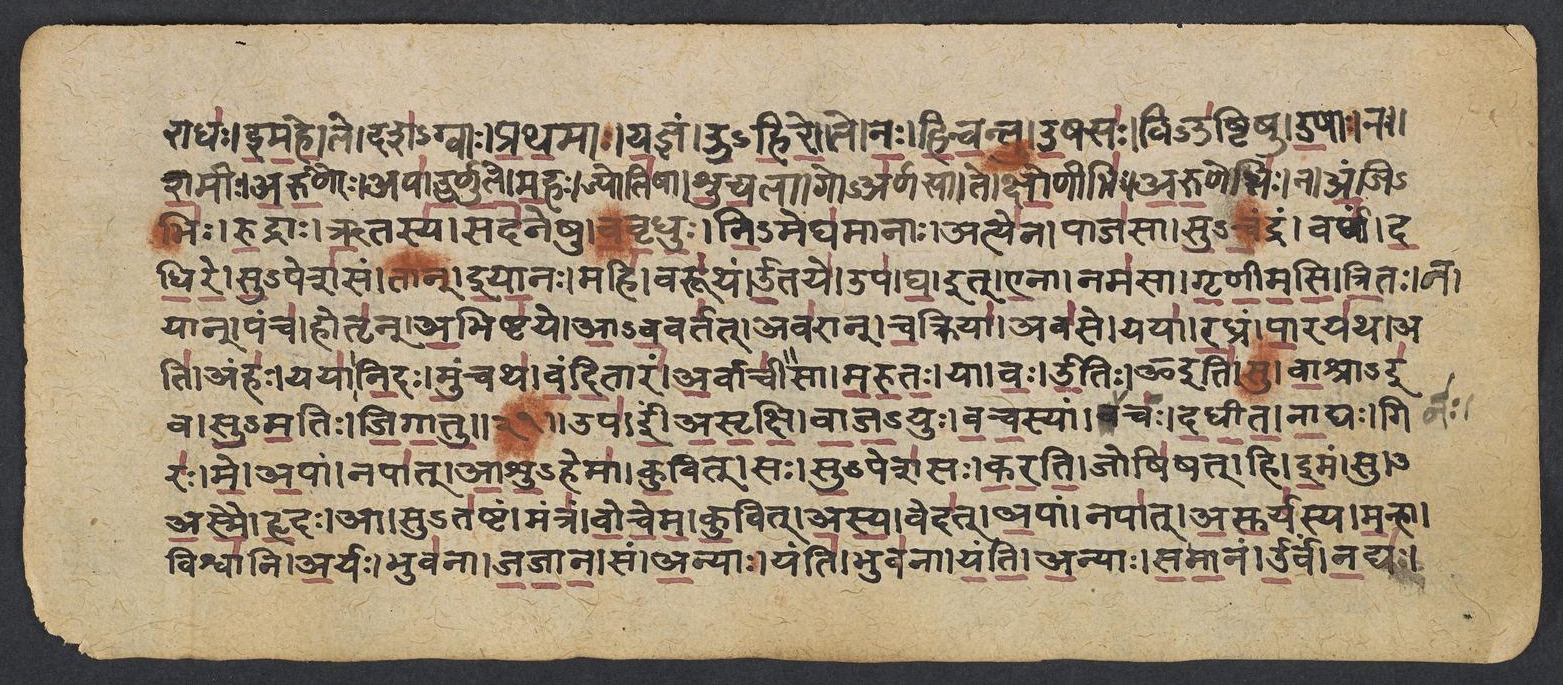
Penn Ms. Coll. 390 Item 41, fol. 177r (numbered 10r by the scribe) (OPenn image 178, lower leaf). Checked on the image: the Rigveda text on this page begins in RV 2.34.11 ‹rādhaḥ īmahe›. The next page with Rigveda text, fol. 177v (numbered 10v by the scribe), begins in RV 2.35.3 ‹pṛṇanti tam oṃ iti›. Verses 2.35.1-2 end on this page.
1upe̍m asṛkṣi vāja̱yur va̍ca̱syāṁ cano̍ dadhīta nā̱dyo giro̍ me | a̱pāṁ napā̍d āśu̱hemā̍ ku̱vit sa su̱peśa̍sas karati̱ joṣi̍ṣa̱d dhi ||
2i̱maṁ sv a̍smai hṛ̱da ā suta̍ṣṭa̱m mantra̍ṁ vocema ku̱vid a̍sya̱ veda̍t | a̱pāṁ napā̍d asu̱rya̍sya ma̱hnā viśvā̍ny a̱ryo bhuva̍nā jajāna ||
Compare: Padapāṭha (word-by-word text written in the manuscript; Sansknet e-text via GRETIL)
1upa | īm | asṛkṣi | vāja-yuḥ | vacasyām | canaḥ | dadhīta | nādyaḥ | giraḥ | me | apām | napāt | āśu-hemā | kuvit | saḥ | su-peśasaḥ | karati | joṣiṣat | hi
2imam | su | asmai | hṛdaḥ | ā | su-taṣṭam | mantram | vocema | kuvit | asya | vedat | apām | napāt | asuryasya | mahnā | viśvāni | aryaḥ | bhuvanā | jajāna
1EAGER for spoil my flow of speech I utter: may the Floods' Child accept my songs with favour. Will not the rapid Son of Waters make them lovely, for he it is who shall enjoy them?
2To him let us address the song well-fashioned, forth from the heart. Shall he not understand it' The friendly Son of Waters by the greatness of Godhead hath produced all things existing.
Where on the image
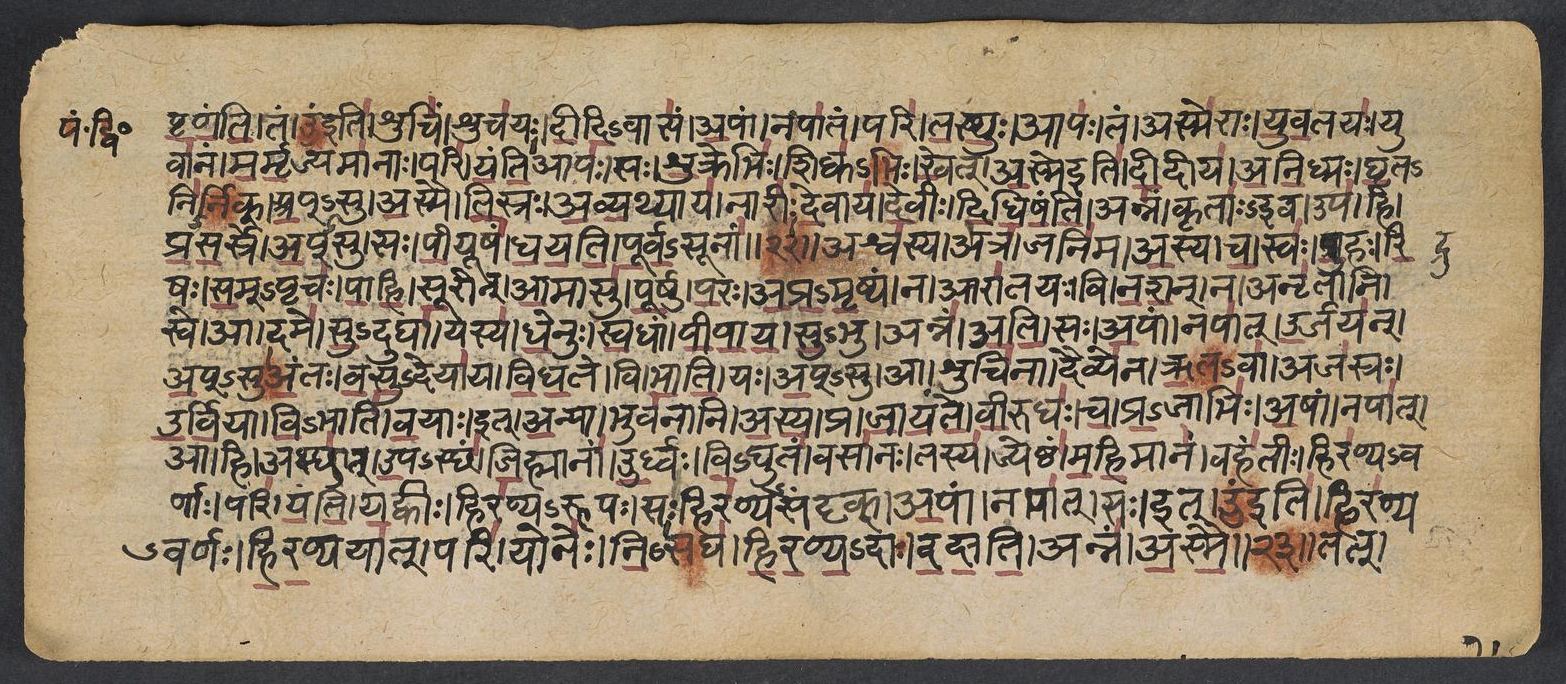
Penn Ms. Coll. 390 Item 41, fol. 177v (numbered 10v by the scribe) (OPenn image 179, upper leaf). Checked on the image: the Rigveda text on this page begins in RV 2.35.3 ‹pṛṇanti tam oṃ iti›. The next page with Rigveda text, fol. 178r (numbered 1r by the scribe), begins in RV 2.35.11 ‹asya anīkam uta cāru›. Verses 2.35.3-10 end on this page; 2.35.3 begins on fol. 177r (numbered 10r by the scribe).
3sam a̱nyā yanty upa̍ yanty a̱nyāḥ sa̍mā̱nam ū̱rvaṁ na̱dya̍ḥ pṛṇanti | tam ū̱ śuci̱ṁ śuca̍yo dīdi̱vāṁsa̍m a̱pāṁ napā̍ta̱m pari̍ tasthu̱r āpa̍ḥ ||
4tam asme̍rā yuva̱tayo̱ yuvā̍nam marmṛ̱jyamā̍nā̱ḥ pari̍ ya̱nty āpa̍ḥ | sa śu̱krebhi̱ḥ śikva̍bhī re̱vad a̱sme dī̱dāyā̍ni̱dhmo ghṛ̱tani̍rṇig a̱psu ||
5a̱smai ti̱sro a̍vya̱thyāya̱ nārī̍r de̱vāya̍ de̱vīr di̍dhiṣa̱nty anna̍m | kṛtā̍ i̱vopa̱ hi pra̍sa̱rsre a̱psu sa pī̱yūṣa̍ṁ dhayati pūrva̱sūnā̍m ||
6aśva̱syātra̱ jani̍mā̱sya ca̱ sva̍r dru̱ho ri̱ṣaḥ sa̱mpṛca̍ḥ pāhi sū̱rīn | ā̱māsu̍ pū̱rṣu pa̱ro a̍pramṛ̱ṣyaṁ nārā̍tayo̱ vi na̍śa̱n nānṛ̍tāni ||
7sva ā dame̍ su̱dughā̱ yasya̍ dhe̱nuḥ sva̱dhām pī̍pāya su̱bhv anna̍m atti | so a̱pāṁ napā̍d ū̱rjaya̍nn a̱psv a1̱̍ntar va̍su̱deyā̍ya vidha̱te vi bhā̍ti ||
8yo a̱psv ā śuci̍nā̱ daivye̍na ṛ̱tāvāja̍sra urvi̱yā vi̱bhāti̍ | va̱yā id a̱nyā bhuva̍nāny asya̱ pra jā̍yante vī̱rudha̍ś ca pra̱jābhi̍ḥ ||
9a̱pāṁ napā̱d ā hy asthā̍d u̱pastha̍ṁ ji̱hmānā̍m ū̱rdhvo vi̱dyuta̱ṁ vasā̍naḥ | tasya̱ jyeṣṭha̍m mahi̱māna̱ṁ vaha̍ntī̱r hira̍ṇyavarṇā̱ḥ pari̍ yanti ya̱hvīḥ ||
10hira̍ṇyarūpa̱ḥ sa hira̍ṇyasaṁdṛg a̱pāṁ napā̱t sed u̱ hira̍ṇyavarṇaḥ | hi̱ra̱ṇyayā̱t pari̱ yone̍r ni̱ṣadyā̍ hiraṇya̱dā da̍da̱ty anna̍m asmai ||
Compare: Padapāṭha (word-by-word text written in the manuscript; Sansknet e-text via GRETIL)
3sam | anyāḥ | yanti | upa | yanti | anyāḥ | samānam | ūrvam | nadyaḥ | pṛṇanti | tam | oṃ iti | śucim | śucayaḥ | dīdi-vāṃsam | apām | napātam | pari | tasthuḥ | āpaḥ
4tam | asmerāḥ | yuvatayaḥ | yuvānam | marmṛjyamānāḥ | pari | yanti | āpaḥ | saḥ | śukrebhiḥ | śikva-bhiḥ | revat | asme iti | dīdāya | anidhmaḥ | ghṛta-nirnik | ap-su
5asmai | tisraḥ | avyathyāya | nārīḥ | devāya | devīḥ | didhiṣanti | annam | kṛtāiva | upa | hi | pra-sarsre | ap-su | saḥ | pīyūṣam | dhayati | pūrva-sūnām
6aśvasya | atra | janima | asya | ca | svaḥ | druhaḥ | riṣaḥ | sam-pṛcaḥ | pāhi | sūrīn | āmāsu | pūrṣu | paraḥ | apra-mṛṣyam | na | arātayaḥ | vi | naśan | na | anṛtāni
7sve | ā | dame | su-dughā | yasya | dhenuḥ | svadhām | pīpāya | su-bhu | annam | atti | saḥ | apām | napāt | ūrjayan | ap-su | antaḥ | vasu-deyāya | vidhate | vi | bhāti
8yaḥ | ap-su | ā | śucinā | daivyena | ṛta-vā | ajasraḥ | urviyā | vi-bhāti | vayāḥ | it | anyā | bhuvanāni | asya | pra | jāyante | vīrudhaḥ | ca | pra-jābhiḥ
9apām | napāt | ā | hi | asthāt | upa-stham | jihmānām | ūrdhvaḥ | vidyutam | vasānaḥ | tasya | jyeṣṭham | mhimānam | vahantīḥ | hiraṇya-varṇāḥ | pari | yanti | yahvīḥ
10hiraṇya-rūpaḥ | saḥ | hiraṇya-sandṛk | apām | napāt | saḥ | it | oṃ iti | hiraṇya-varṇaḥ | hiraṇyayāt | pari | yoneḥ | ni-sadya | hiraṇya-dāḥ | dadati | annam | asmai
3Some floods unite themselves and others join them: die sounding rivers fill one common storehouse. On every side the bright Floods have encompassed the bright resplendent Offspring of the Waters.
4The never-sullen waters, youthful Maidens, carefully decking, wait on him the youthful. He with bright rays shines forth in splendid beauty, unfed with wood. in waters, oil-enveloped.
5To him three Dames are offering food to feed him, Goddesses to the God whom none may injure. Within the waters hath he pressed, as hollows, and drinks their milk who now are first made mothers.
6Here was the horse's birth; his was the sunlight. Save thou our princes from the oppressor's onslaught. Him, indestructible, dwelling at a distance in forts unwrought lies and ill spirits reach not.
7He, in whose mansion is the teeming Milch-cow, swells the Gods' nectar and eats noble viands. lle Son of Waters, gathering strength in waters, shines for his worshipper to give him treasures.
8He who in waters with his own pure Godhead shines widely, law-abiding, everlasting- The other worlds are verily his branches, and plants are born of him with all their offspring.
9The Waters' Son hath risen, and clothed in lightning ascended up unto the curled cloud's bosom; And bearing with them his supremest glory the Youthful Ones, gold-coloured, move around him.
10Golden in form is he, like gold to look on, his colour is like gold, the Son of Waters. When he is seated fresh from golden birthplace those who present their gold give food to feed him.
Where on the image
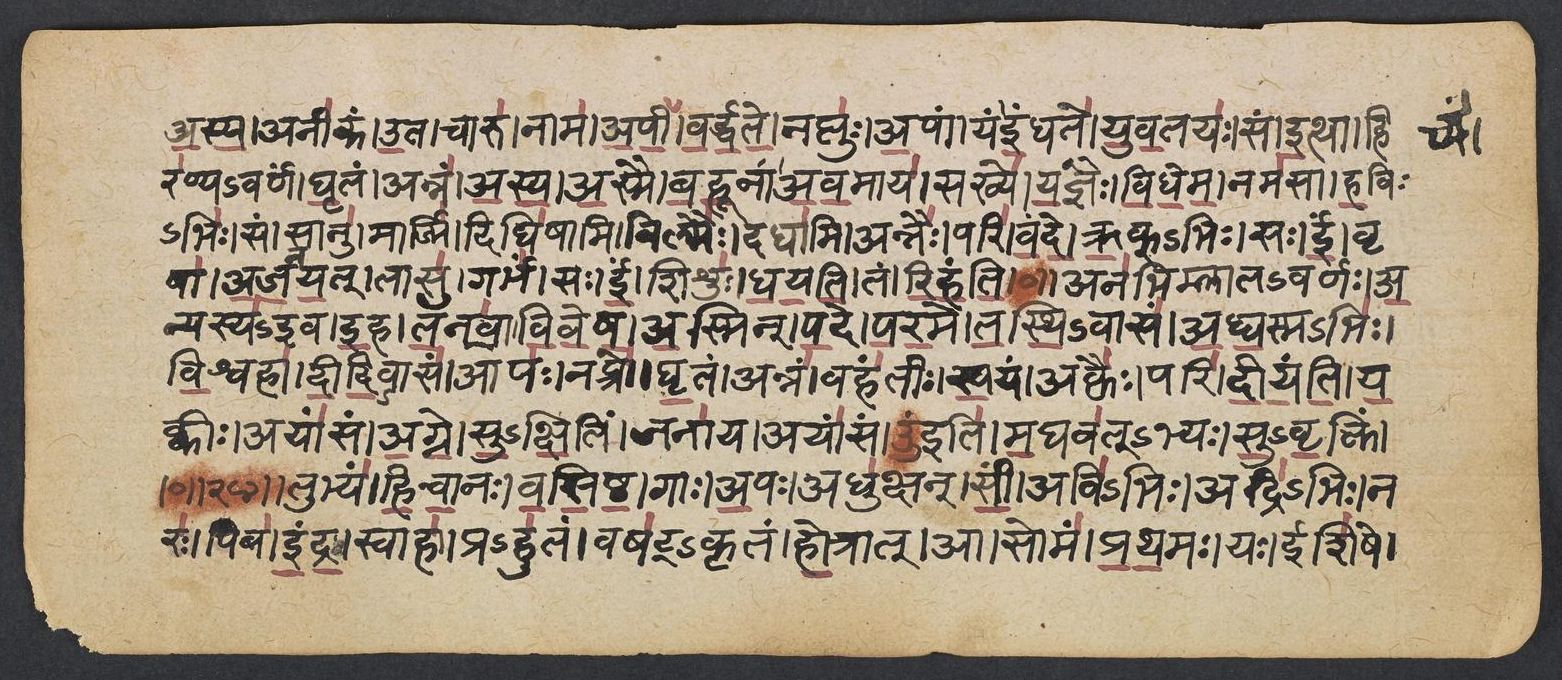
Penn Ms. Coll. 390 Item 41, fol. 178r (numbered 1r by the scribe) (OPenn image 179, lower leaf). Checked on the image: the Rigveda text on this page begins in RV 2.35.11 ‹asya anīkam uta cāru›. The next page with Rigveda text, fol. 178v (numbered 11v by the scribe), begins in RV 2.36.2 ‹yajñaiḥ sam-miślāḥ pṛṣatībhiḥ ṛṣṭi-bhiḥ›. Verses 2.35.11-15 end on this page; 2.35.11 begins on fol. 177v (numbered 10v by the scribe).
11tad a̱syānī̍kam u̱ta cāru̱ nāmā̍pī̱cya̍ṁ vardhate̱ naptu̍r a̱pām | yam i̱ndhate̍ yuva̱taya̱ḥ sam i̱tthā hira̍ṇyavarṇaṁ ghṛ̱tam anna̍m asya ||
12a̱smai ba̍hū̱nām a̍va̱māya̱ sakhye̍ ya̱jñair vi̍dhema̱ nama̍sā ha̱virbhi̍ḥ | saṁ sānu̱ mārjmi̱ didhi̍ṣāmi̱ bilmai̱r dadhā̱my annai̱ḥ pari̍ vanda ṛ̱gbhiḥ ||
13sa ī̱ṁ vṛṣā̍janaya̱t tāsu̱ garbha̱ṁ sa ī̱ṁ śiśu̍r dhayati̱ taṁ ri̍hanti | so a̱pāṁ napā̱d ana̍bhimlātavarṇo̱ 'nyasye̍ve̱ha ta̱nvā̍ viveṣa ||
14a̱smin pa̱de pa̍ra̱me ta̍sthi̱vāṁsa̍m adhva̱smabhi̍r vi̱śvahā̍ dīdi̱vāṁsa̍m | āpo̱ naptre̍ ghṛ̱tam anna̱ṁ vaha̍ntīḥ sva̱yam atkai̱ḥ pari̍ dīyanti ya̱hvīḥ ||
15ayā̍ṁsam agne sukṣi̱tiṁ janā̱yāyā̍ṁsam u ma̱ghava̍dbhyaḥ suvṛ̱ktim | viśva̱ṁ tad bha̱draṁ yad ava̍nti de̱vā bṛ̱had va̍dema vi̱dathe̍ su̱vīrā̍ḥ ||
Compare: Padapāṭha (word-by-word text written in the manuscript; Sansknet e-text via GRETIL)
11tat | asya | anīkam | uta | cāru | nāma | apīcyam | vardhate | naptuḥ | apām | yam | indhate | yuvatayaḥ | sam | itthā | hiraṇya-varṇam | ghṛtam | annam | asya
12asmai | bahūnām | avamāya | sakhye | yajñaiḥ | vidhema | namasā | haviḥ-bhiḥ | sam | sānu | mārjmi | didhiṣāmi | bilmaiḥ | dadhāmi | annaiḥ | pari | vande | ṛk-bhiḥ
13saḥ | īm | vṛṣā | ajanayat | tāsu | garbham | saḥ | īm | śiśuḥ | dhayati | tam | rihant i | saḥ | apām | napāt | anabhimlāta-varṇaḥ | anyasya-iva | iha | tanvā | v iveṣa
14asmin | pade | parame | tasthi-vāṃsam | adhvasma-bhiḥ | viśvahā | dīdi-vāṃsam | āpaḥ | naptre | ghṛtam | annam | vahantīḥ | svayam | atkaiḥ | pari | dīyanti | yahvīḥ
15ayāṃsam | agne | su-kṣitim | janāya | ayāṃsam | oṃ iti | maghavat-bhyaḥ | su-vṛktim | viśvam | tat | bhadram | yat | avanti | devāḥ | bṛhat | vadema | vidathe | su-vīrāḥ
11This the fair name and this the lovely aspect of him the Waters' Son increase in secret. Whom here the youthful Maids together kindle, his food is sacred oil of golden colour.
12Him, nearest Friend of many, will we worship with sacrifice. and reverence and oblation. I make his back to shine, with chips provide him; t offer food and with my songs exalt him.
13The Bull hath laid his own life-germ Within them. He sucks them as an infant, and they kiss him. He, Son of Waters, of unfading colour, hadi entered here as in another's body.
14While here he dwelleth in sublimest station, resplendent with the rays that never perish, The Waters, bearing oil to feed their offspring, flow, Youthful Ones, in wanderings about him.
15Agni, I gave good shelter to the people, and to the princes goodly preparation. Blessed is all that Gods regard with favour. Loud may we speak, with heroes, in assembly.
Notes
- Sanskrit: Aufrecht's edition (1877) with the Vedic accents, as entered by van Nooten and Holland (GRETIL).
- English: Ralph T. H. Griffith, The Hymns of the Rigveda (1889-1892; 2nd ed. 1896-1897), from the VedaWeb digital text; OCR slips in that text were corrected against the printed 2nd edition (data/sources/rigveda/griffith_errata.json).
- Padapāṭha (edition text): Sansknet e-text via GRETIL (CC BY-NC-SA 4.0).
Cite
Sources
- Source: Penn Ms. Coll. 390 Item 41 (undated (catalogued with Penn's 18th-19th c. Vedic manuscripts)), OPenn, Public Domain Mark + Aufrecht's accented text (GRETIL) + Griffith's English (VedaWeb) (holding institution)
- Critical edition: Aufrecht (1877), accented e-text via GRETIL
← previous · → next · v cycle view · l back to library