Rigveda 2.36: Cycle of the gods
Introduction
Rigveda 2.36 is a hymn of 6 verses addressed to cycle of the gods. It stands in book (maṇḍala) 2, the family book of Gṛtsamada. The Rigveda is the oldest collection of Sanskrit hymns, composed in the second half of the second millennium BCE and handed down orally for many centuries before it was written down.
The manuscript shown is Penn Ms. Coll. 390 Item 41 (University of Pennsylvania), an undated paper manuscript of the padapāṭha (the word-by-word recitation text, in which every word is written separately and compounds are split) of the whole Ṛgveda in Devanāgarī, 884 leaves in fascicles, 7-9 lines to the page, accents in red; this hymn stands on fol. 178r-178v. Each section below gives the verses that end on one page; the page boundaries were read on the images (the opening words of every page), not counted out. Where the manuscript is a padapāṭha (the word-by-word recitation text), the section shows Aufrecht's continuous (saṃhitā) text first and, as the edition text, the padapāṭha of the same verses, which is the form written on the page.
How was this verified? (Provenance)
Where on the image
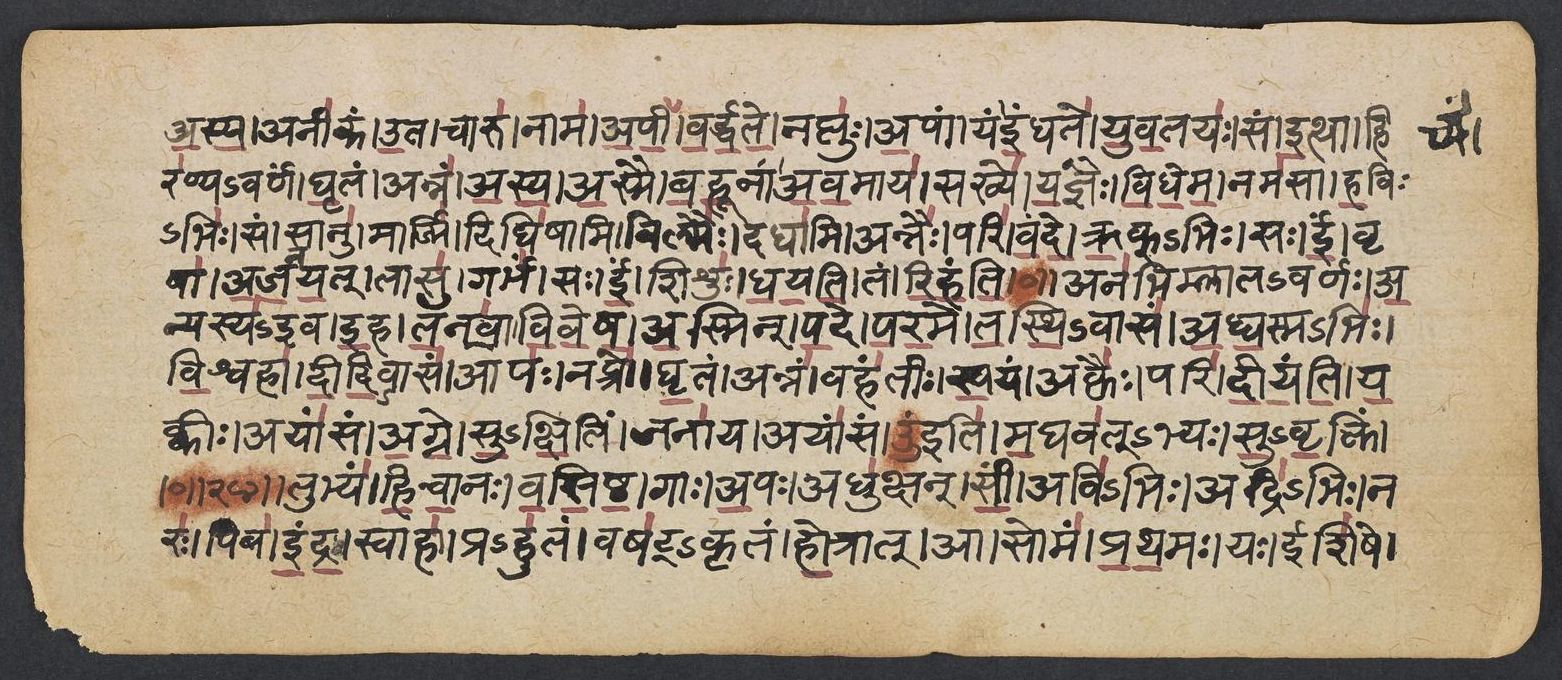
Penn Ms. Coll. 390 Item 41, fol. 178r (numbered 1r by the scribe) (OPenn image 179, lower leaf). Checked on the image: the Rigveda text on this page begins in RV 2.35.11 ‹asya anīkam uta cāru›. The next page with Rigveda text, fol. 178v (numbered 11v by the scribe), begins in RV 2.36.2 ‹yajñaiḥ sam-miślāḥ pṛṣatībhiḥ ṛṣṭi-bhiḥ›. Verse 2.36.1 ends on this page.
1tubhya̍ṁ hinvā̱no va̍siṣṭa̱ gā a̱po 'dhu̍kṣan sī̱m avi̍bhi̱r adri̍bhi̱r nara̍ḥ | pibe̍ndra̱ svāhā̱ prahu̍ta̱ṁ vaṣa̍ṭkṛtaṁ ho̱trād ā soma̍m pratha̱mo ya īśi̍ṣe ||
Compare: Padapāṭha (word-by-word text written in the manuscript; Sansknet e-text via GRETIL)
1tubhyam | hinvānaḥ | vasiṣṭa | gāḥ | apaḥ | adhukṣan | sīm | avi-bhiḥ | adri-bhiḥ | naraḥ | piba | indra | svāhā | pra-hutam | vaṣaṭ-kṛtam | hotrāt | ā | somam | prathamaḥ | yaḥ | īśiṣe
1WATER and milk hath he endued, sent forth to thee: the men have drained him with the filters and the stones. Drink, Indra, from the Hotar's bowlfirst right is thine-Soma hallowed and poured with Vashaṭ and Svâhâ.
Where on the image
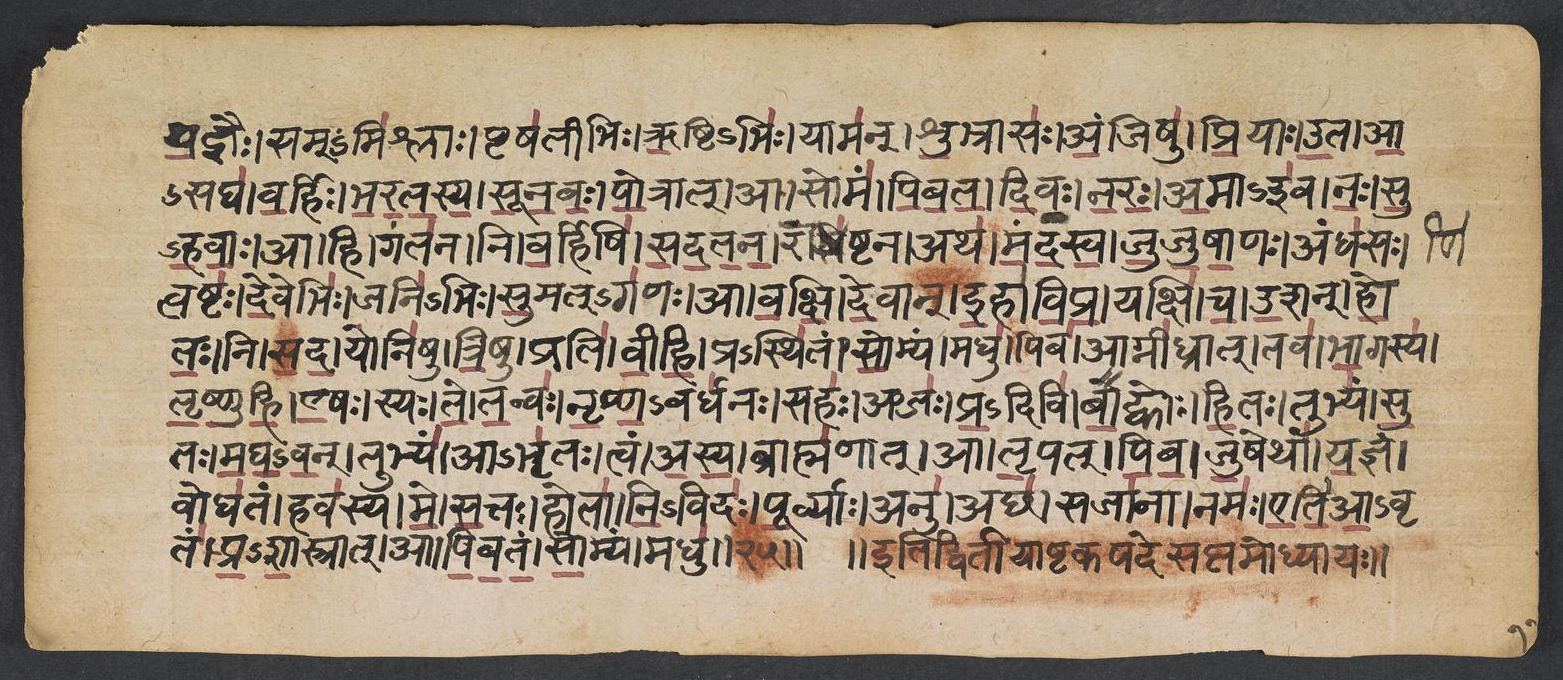
Penn Ms. Coll. 390 Item 41, fol. 178v (numbered 11v by the scribe) (OPenn image 180, upper leaf). Checked on the image: the Rigveda text on this page begins in RV 2.36.2 ‹yajñaiḥ sam-miślāḥ pṛṣatībhiḥ ṛṣṭi-bhiḥ›. The next page with Rigveda text, fol. 179r (numbered 1r by the scribe), begins in RV 2.37.1 ‹mandasva hotrāt anu joṣam›. Verses 2.36.2-6 end on this page.
2ya̱jñaiḥ sammi̍ślā̱ḥ pṛṣa̍tībhir ṛ̱ṣṭibhi̱r yāma̍ñ chu̱bhrāso̍ a̱ñjiṣu̍ pri̱yā u̱ta | ā̱sadyā̍ ba̱rhir bha̍ratasya sūnavaḥ po̱trād ā soma̍m pibatā divo naraḥ ||
3a̱meva̍ naḥ suhavā̱ ā hi ganta̍na̱ ni ba̱rhiṣi̍ sadatanā̱ raṇi̍ṣṭana | athā̍ mandasva jujuṣā̱ṇo andha̍sa̱s tvaṣṭa̍r de̱vebhi̱r jani̍bhiḥ su̱madga̍ṇaḥ ||
4ā va̍kṣi de̱vām̐ i̱ha vi̍pra̱ yakṣi̍ co̱śan ho̍ta̱r ni ṣa̍dā̱ yoni̍ṣu tri̱ṣu | prati̍ vīhi̱ prasthi̍taṁ so̱myam madhu̱ pibāgnī̍dhrā̱t tava̍ bhā̱gasya̍ tṛpṇuhi ||
5e̱ṣa sya te̍ ta̱nvo̍ nṛmṇa̱vardha̍na̱ḥ saha̱ oja̍ḥ pra̱divi̍ bā̱hvor hi̱taḥ | tubhya̍ṁ su̱to ma̍ghava̱n tubhya̱m ābhṛ̍ta̱s tvam a̍sya̱ brāhma̍ṇā̱d ā tṛ̱pat pi̍ba ||
6ju̱ṣethā̍ṁ ya̱jñam bodha̍ta̱ṁ hava̍sya me sa̱tto hotā̍ ni̱vida̍ḥ pū̱rvyā anu̍ | acchā̱ rājā̍nā̱ nama̍ ety ā̱vṛta̍m praśā̱strād ā pi̍bataṁ so̱myam madhu̍ ||
Compare: Padapāṭha (word-by-word text written in the manuscript; Sansknet e-text via GRETIL)
2yajñaiḥ | sam-miślāḥ | pṛṣatībhiḥ | ṛṣṭi-bhiḥ | yāman | śubhrāsaḥ | añjiṣu | priyāḥ | uta | āsadya | barhiḥ | bharatasya | sūnavaḥ | potrāt | ā | somam | pibata | divaḥ | naraḥ
3amāiva | naḥ | su-havāḥ | ā | hi | gantana | ni | barhiṣi | sadatana | raṇiṣṭana | atha | mandasva | jujuṣāṇaḥ | andhasaḥ | tvaṣṭaḥ | devebhiḥ | jani-bhiḥ | sumat-gaṇaḥ
4ā | vakṣi | devān | iha | vipra | yakṣi | ca | uśan | hotaḥ | ni | sada | yoniṣu | triṣu | prati | vīhi | pra-sthitam | somyam | madhu | piba | āgnīdhrāt | tava | bhāgasya | tṛpṇuhi
5eṣaḥ | syaḥ | te | tanvaḥ | nṛmṇa-vardhanaḥ | sahaḥ | ojaḥ | pra-divi | bāhvoḥ | hitaḥ | tubhyam | sutaḥ | maghavan | tubhyam | ābhṛtaḥ | tvam | asya | brāhmaṇāt | ā | tṛpat | piba
6juṣethām | yajñam | bodhatam | havasya | me | sattaḥ | hotā | ni-vidaḥ | pūrvyāḥ | anu | accha | rājānā | namaḥ | eti | āvṛtam | pra-śāstrāt | ā | pibatam | somyam | madhu
2Busied with sacrifice, with spotted deer and spears, gleaming upon your way with ornaments, yea, our Friends, Sitting on sacred grass, ye Sons of Bharata, drink Soma from the Potar's bowl, O Men of heaven.
3Come unto us, ye swift to listen: as at home upon the sacred grass sit and enjoy yourselves. And, Tvashṭar, well-content be joyful in the juice with Gods and Goddesses in gladsome company.
4Bring the Gods hither, Sage, and offer sacrifice: at the three altars seat thee willingly, O Priest. Accept for thy delight the proffered Soma meath: drink from the Kindler's bowl and fill thee with thy share.
5This is the strengthener of thy body's manly might: strength, victory for all time are placed within thine arms. Pressed for thee, Maghavan, it is offered unto thee: drink from the chalice of this Brahman, drink thy fill.
6Accept the sacrifice; mark both of you, my call: the Priest hath seated him after the ancient texts. My prayer that bids them come goes forth to both the Kings: drink ye the Soma meath from the Director's bowl.
Notes
- Sanskrit: Aufrecht's edition (1877) with the Vedic accents, as entered by van Nooten and Holland (GRETIL).
- English: Ralph T. H. Griffith, The Hymns of the Rigveda (1889-1892; 2nd ed. 1896-1897), from the VedaWeb digital text; OCR slips in that text were corrected against the printed 2nd edition (data/sources/rigveda/griffith_errata.json).
- Padapāṭha (edition text): Sansknet e-text via GRETIL (CC BY-NC-SA 4.0).
Cite
Sources
- Source: Penn Ms. Coll. 390 Item 41 (undated (catalogued with Penn's 18th-19th c. Vedic manuscripts)), OPenn, Public Domain Mark + Aufrecht's accented text (GRETIL) + Griffith's English (VedaWeb) (holding institution)
- Critical edition: Aufrecht (1877), accented e-text via GRETIL
← previous · → next · v cycle view · l back to library