Rigveda 2.5: To Agni
Introduction
Rigveda 2.5 is a hymn of 8 verses addressed to Agni. It stands in book (maṇḍala) 2, the family book of Gṛtsamada. The Rigveda is the oldest collection of Sanskrit hymns, composed in the second half of the second millennium BCE and handed down orally for many centuries before it was written down.
The manuscript shown is Penn Ms. Coll. 390 Item 41 (University of Pennsylvania), an undated paper manuscript of the padapāṭha (the word-by-word recitation text, in which every word is written separately and compounds are split) of the whole Ṛgveda in Devanāgarī, 884 leaves in fascicles, 7-9 lines to the page, accents in red; this hymn stands on fol. 153v-154r. Each section below gives the verses that end on one page; the page boundaries were read on the images (the opening words of every page), not counted out. Where the manuscript is a padapāṭha (the word-by-word recitation text), the section shows Aufrecht's continuous (saṃhitā) text first and, as the edition text, the padapāṭha of the same verses, which is the form written on the page.
How was this verified? (Provenance)
Where on the image
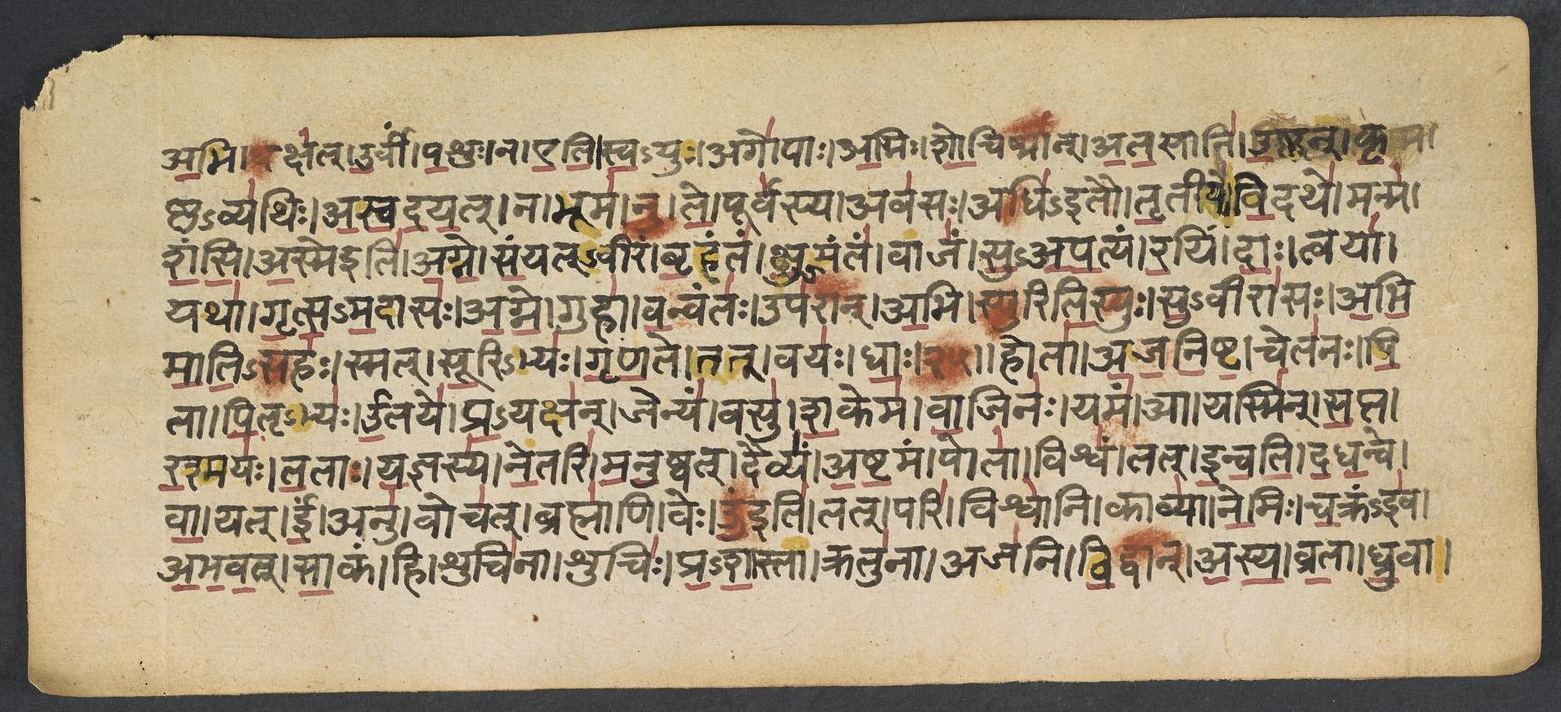
Penn Ms. Coll. 390 Item 41, fol. 153v (numbered 11v by the scribe) (OPenn image 155, upper leaf). Checked on the image: the Rigveda text on this page begins in RV 2.4.7 ‹-dhakṣat urvīṃ paśuḥ na›. The next page with Rigveda text, fol. 154r (numbered 12r by the scribe), begins in RV 2.5.4 ‹vayāḥ-iva anu rohate›. Verses 2.5.1-3 end on this page.
1hotā̍janiṣṭa̱ ceta̍naḥ pi̱tā pi̱tṛbhya̍ ū̱taye̍ | pra̱yakṣa̱ñ jenya̱ṁ vasu̍ śa̱kema̍ vā̱jino̱ yama̍m ||
2ā yasmi̍n sa̱pta ra̱śmaya̍s ta̱tā ya̱jñasya̍ ne̱tari̍ | ma̱nu̱ṣvad daivya̍m aṣṭa̱mam potā̱ viśva̱ṁ tad i̍nvati ||
3da̱dha̱nve vā̱ yad ī̱m anu̱ voca̱d brahmā̍ṇi̱ ver u̱ tat | pari̱ viśvā̍ni̱ kāvyā̍ ne̱miś ca̱kram i̍vābhavat ||
Compare: Padapāṭha (word-by-word text written in the manuscript; Sansknet e-text via GRETIL)
1hotā | ajaniṣṭa | cetanaḥ | pitā | pitṛ-bhyaḥ | ūtaye | pra-yakṣan | jenyam | vasu | śakema | vājinaḥ | yamam
2ā | yasmin | sapta | raśmayaḥ | tatāḥ | yajñasya | netari | manuṣvat | daivyam | aṣṭamam | potā | viśvam | tat | invati
3dadhanve | vā | yat | īm | anu | vocat | brahmāṇi | veḥ | oṃ iti | tat | pari | viśvāni | kāvyā | nemiḥ | cakram-iva | abhavat
1HERALD and teacher was he born, a guardian for our patrons' help, Earner by rites of noble wealth. That Strong One may we grasp and guide;
2In whom, Leader of sacrifice, the seven reins, far extended, meet; Who furthers, man-like, eighth in place, as Cleanser, all the work divine.
3When swift he follows this behest, bird-like he chants the holy prayers. He holds all knowledge in his grasp even as the felly rounds the wheel.
Where on the image
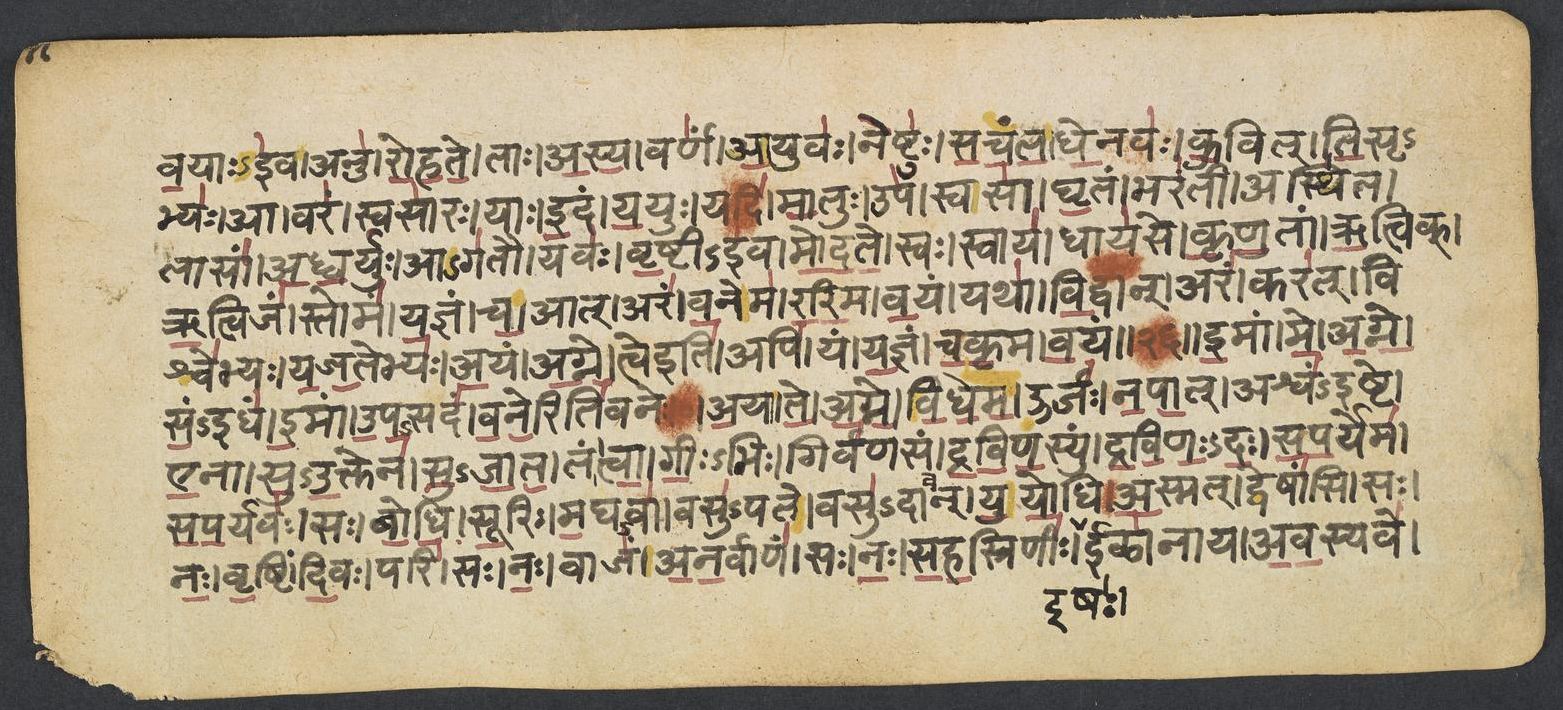
Penn Ms. Coll. 390 Item 41, fol. 154r (numbered 12r by the scribe) (OPenn image 155, lower leaf). Checked on the image: the Rigveda text on this page begins in RV 2.5.4 ‹vayāḥ-iva anu rohate›. The next page with Rigveda text, fol. 154v (numbered 12v by the scribe), begins in RV 2.6.6 ‹yaviṣṭha dūta naḥ girā›. Verses 2.5.4-8 end on this page; 2.5.4 begins on fol. 153v (numbered 11v by the scribe).
4sā̱kaṁ hi śuci̍nā̱ śuci̍ḥ praśā̱stā kratu̱nāja̍ni | vi̱dvām̐ a̍sya vra̱tā dhru̱vā va̱yā i̱vānu̍ rohate ||
5tā a̍sya̱ varṇa̍m ā̱yuvo̱ neṣṭu̍ḥ sacanta dhe̱nava̍ḥ | ku̱vit ti̱sṛbhya̱ ā vara̱ṁ svasā̍ro̱ yā i̱daṁ ya̱yuḥ ||
6yadī̍ mā̱tur upa̱ svasā̍ ghṛ̱tam bhara̱nty asthi̍ta | tāsā̍m adhva̱ryur āga̍tau̱ yavo̍ vṛ̱ṣṭīva̍ modate ||
7svaḥ svāya̱ dhāya̍se kṛṇu̱tām ṛ̱tvig ṛ̱tvija̍m | stoma̍ṁ ya̱jñaṁ cād ara̍ṁ va̱nemā̍ rari̱mā va̱yam ||
8yathā̍ vi̱dvām̐ ara̱ṁ kara̱d viśve̍bhyo yaja̱tebhya̍ḥ | a̱yam a̍gne̱ tve api̱ yaṁ ya̱jñaṁ ca̍kṛ̱mā va̱yam ||
Compare: Padapāṭha (word-by-word text written in the manuscript; Sansknet e-text via GRETIL)
4sākam | hi | śucinā | śuciḥ | pra-śāstā | kratunā | ajani | vidvān | asya | vratā | dhruvā | vayāḥ-iva | anu | rohate
5tāḥ | asya | varṇam | āyuvaḥ | neṣṭuḥ | sacanta | dhenavaḥ | kuvit | tisṛ-bhyaḥ | ā | varam | svasāraḥ | yāḥ | idam | yayuḥ
6yadi | mātuḥ | upa | svasā | ghṛtam | bharantī | asthita | tāsām | adhvaryuḥ | āgatau | yavaḥ | vṛṣṭī-iva | modate
7svaḥ | svāya | dhāyase | kṛṇutām | ṛtvik | ṛtvijam | stomam | yajñam | ca | āt | aram | vanema | rarima | vayam
8yathā | vidvān | aram | karat | viśvebhyaḥ | yajatebhyaḥ | ayam | agne | tve iti | api | yam | yajñam | cakṛma | vayam
4Together with pure mental power, pure, as Director, was he born. Skilled in his own unchanging laws he waxes like the growing boughs.
5Clothing them in his hues, the kine of him the Leader wait on him. Is he not better than the Three, the Sisters who have come to us?
6When, laden with the holy oil, the Sitster (sic) by the Mother stands, The Priest delights in their approach, as corn at coming of the rain.
7For his support let him perform as ministrant his priestly task; Yea, song of praise and sacrifice: we have bestowed, let us obtain.
8That so this man well skilled, may pay worship to all the Holy Ones. And, Agni, this our sacrifice which wehave here prepared, to thee.
Notes
- Sanskrit: Aufrecht's edition (1877) with the Vedic accents, as entered by van Nooten and Holland (GRETIL).
- English: Ralph T. H. Griffith, The Hymns of the Rigveda (1889-1892; 2nd ed. 1896-1897), from the VedaWeb digital text; OCR slips in that text were corrected against the printed 2nd edition (data/sources/rigveda/griffith_errata.json).
- Padapāṭha (edition text): Sansknet e-text via GRETIL (CC BY-NC-SA 4.0).
Cite
Sources
- Source: Penn Ms. Coll. 390 Item 41 (undated (catalogued with Penn's 18th-19th c. Vedic manuscripts)), OPenn, Public Domain Mark + Aufrecht's accented text (GRETIL) + Griffith's English (VedaWeb) (holding institution)
- Critical edition: Aufrecht (1877), accented e-text via GRETIL
← previous · → next · v cycle view · l back to library