Rigveda 3.1: To Agni
Introduction
Rigveda 3.1 is a hymn of 23 verses addressed to Agni. It stands in book (maṇḍala) 3, the family book of Viśvāmitra. The Rigveda is the oldest collection of Sanskrit hymns, composed in the second half of the second millennium BCE and handed down orally for many centuries before it was written down.
The manuscript shown is Penn Ms. Coll. 390 Item 41 (University of Pennsylvania), an undated paper manuscript of the padapāṭha (the word-by-word recitation text, in which every word is written separately and compounds are split) of the whole Ṛgveda in Devanāgarī, 884 leaves in fascicles, 7-9 lines to the page, accents in red; this hymn stands on fol. 183r-185r. Each section below gives the verses that end on one page; the page boundaries were read on the images (the opening words of every page), not counted out. Where the manuscript is a padapāṭha (the word-by-word recitation text), the section shows Aufrecht's continuous (saṃhitā) text first and, as the edition text, the padapāṭha of the same verses, which is the form written on the page.
How was this verified? (Provenance)
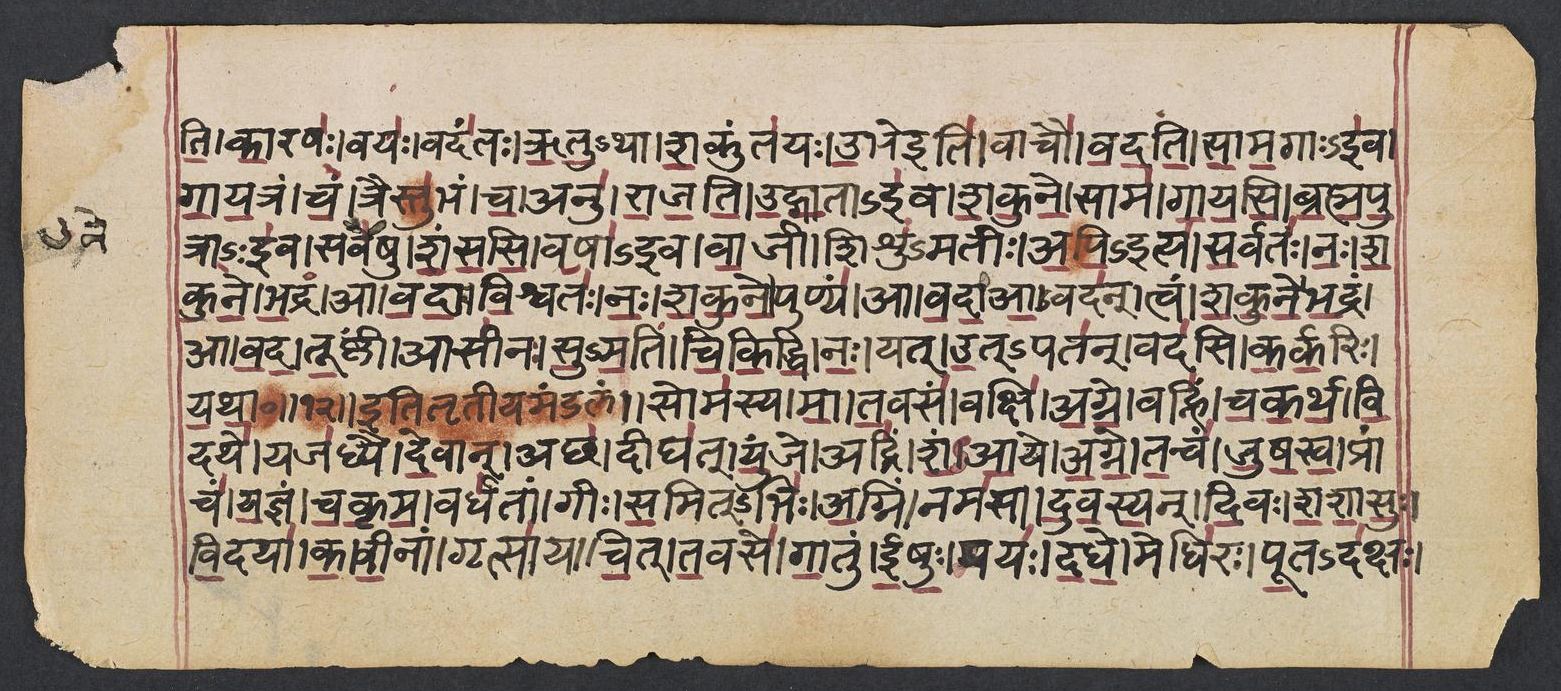
Where on the image
Penn Ms. Coll. 390 Item 41, fol. 183r (numbered 5r by the scribe) (OPenn image 184, lower leaf). Checked on the image: the Rigveda text on this page begins in RV 2.43.1 ‹-gṛṇanti kāravaḥ vayaḥ vadantaḥ›. The next page with Rigveda text, fol. 183v (numbered 5v by the scribe), begins in RV 3.1.3 ‹divaḥ su-bandhuḥ januṣā pṛthivyāḥ›. Verses 3.1.1-2 end on this page.
1soma̍sya mā ta̱vasa̱ṁ vakṣy a̍gne̱ vahni̍ṁ cakartha vi̱dathe̱ yaja̍dhyai | de̱vām̐ acchā̱ dīdya̍d yu̱ñje adri̍ṁ śamā̱ye a̍gne ta̱nva̍ṁ juṣasva ||
2prāñca̍ṁ ya̱jñaṁ ca̍kṛma̱ vardha̍tā̱ṁ gīḥ sa̱midbhi̍r a̱gniṁ nama̍sā duvasyan | di̱vaḥ śa̍śāsur vi̱dathā̍ kavī̱nāṁ gṛtsā̍ya cit ta̱vase̍ gā̱tum ī̍ṣuḥ ||
Compare: Padapāṭha (word-by-word text written in the manuscript; Sansknet e-text via GRETIL)
1somasya | mā | tavasam | vakṣi | agne | vahnim | cakartha | vidathe | yajadhyai | devān | accha | dīdyat | yuñje | adrim | śam-āye | agne | tanvam | juṣasva
2prāñcam | yajñam | cakṛma | vardhatām | gīḥ | samit-bhiḥ | agnim | namasā | duvasyan | divaḥ | śaśāsuḥ | vidathā | kavīnām | gṛsāya | cit | tavase | gātum | īṣuḥ
1THOU, Agni, who wilt have the strong, hast made me the Soma's priest, to worship in assembly. Thou shinest to the Gods, I set the pressstones. I toil; be joyful in thyself, O Agni.
2East have we turned the rite; may the hymn aid it. With wood and worship shall they honour Agni. From heaven the synods of the wise have learnt it: c'en for the quick and strong they seek advancement.
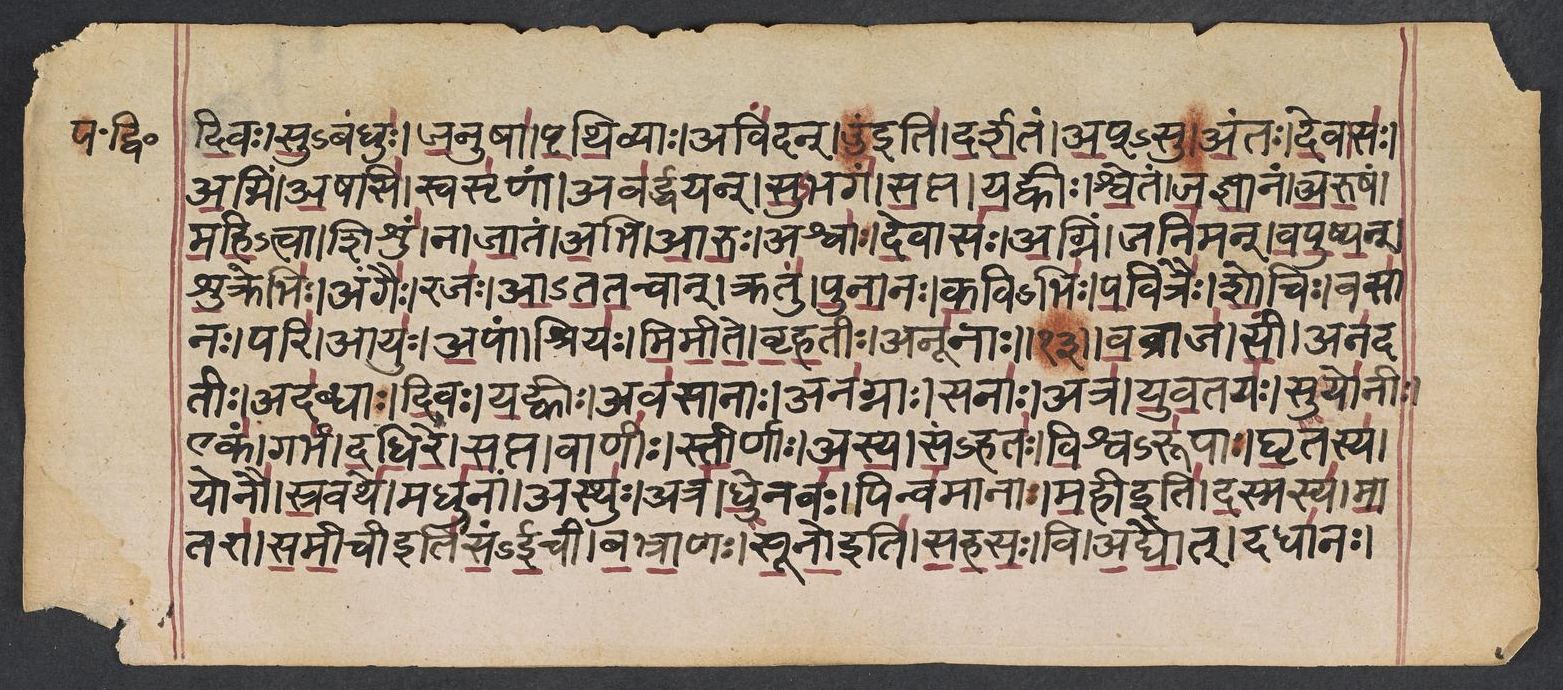
Where on the image
Penn Ms. Coll. 390 Item 41, fol. 183v (numbered 5v by the scribe) (OPenn image 185, upper leaf). Checked on the image: the Rigveda text on this page begins in RV 3.1.3 ‹divaḥ su-bandhuḥ januṣā pṛthivyāḥ›. The next page with Rigveda text, fol. 184r (numbered 6r by the scribe), begins in RV 3.1.8 ‹śukrā rabhasā vapūṃṣi ścotanti›. Verses 3.1.3-7 end on this page; 3.1.3 begins on fol. 183r (numbered 5r by the scribe).
3mayo̍ dadhe̱ medhi̍raḥ pū̱tada̍kṣo di̱vaḥ su̱bandhu̍r ja̱nuṣā̍ pṛthi̱vyāḥ | avi̍ndann u darśa̱tam a̱psv a1̱̍ntar de̱vāso̍ a̱gnim a̱pasi̱ svasṝ̍ṇām ||
4ava̍rdhayan su̱bhaga̍ṁ sa̱pta ya̱hvīḥ śve̱taṁ ja̍jñā̱nam a̍ru̱ṣam ma̍hi̱tvā | śiśu̱ṁ na jā̱tam a̱bhy ā̍ru̱r aśvā̍ de̱vāso̍ a̱gniṁ jani̍man vapuṣyan ||
5śu̱krebhi̱r aṅgai̱ raja̍ ātata̱nvān kratu̍m punā̱naḥ ka̱vibhi̍ḥ pa̱vitrai̍ḥ | śo̱cir vasā̍na̱ḥ pary āyu̍r a̱pāṁ śriyo̍ mimīte bṛha̱tīr anū̍nāḥ ||
6va̱vrājā̍ sī̱m ana̍datī̱r ada̍bdhā di̱vo ya̱hvīr ava̍sānā̱ ana̍gnāḥ | sanā̱ atra̍ yuva̱taya̱ḥ sayo̍nī̱r eka̱ṁ garbha̍ṁ dadhire sa̱pta vāṇī̍ḥ ||
7stī̱rṇā a̍sya sa̱ṁhato̍ vi̱śvarū̍pā ghṛ̱tasya̱ yonau̍ sra̱vathe̱ madhū̍nām | asthu̱r atra̍ dhe̱nava̱ḥ pinva̍mānā ma̱hī da̱smasya̍ mā̱tarā̍ samī̱cī ||
Compare: Padapāṭha (word-by-word text written in the manuscript; Sansknet e-text via GRETIL)
3mayaḥ | dadhe | medhiraḥ | pūta-dakṣaḥ | divaḥ | su-bandhuḥ | januṣā | pṛthivyāḥ | avindan | oṃ iti | darśatam | ap-su | antaḥ | devāsaḥ | agnim | apasi | svasṝṇām
4avardhayan | su-bhagam | sapta | yahvīḥ | śvetam | jajñānam | aruṣam | mahi-tvā | śiśum | na | jātam | abhi | āruḥ | aśvāḥ | devāsaḥ | agnim | janiman | vapuṣyan
5śukrebhiḥ | aṅgaiḥ | rajaḥ | ātatanvān | kratum | punānaḥ | kavi-bhiḥ | pavitraiḥ | śociḥ | vasānaḥ | pari | āyuḥ | apām | śriyaḥ | mimīte | bṛhatīḥ | anūnāḥ
6vavrāja | sīm | anadatīḥ | adabdhāḥ | divaḥ | yahvīḥ | avasānāḥ | anagnāḥ | sanāḥ | atra | yuvatayaḥ | sa-yonīḥ | ekam | garbham | dadhire | sapta | vāṇīḥ
7stīrṇāḥ | asya | sam-hataḥ | viśva-rūpā | ghṛtasya | yonau | sravathe | madhūnām | asthuḥ | atra | dhenavaḥ | pinvamānāḥ | mahī iti | dasmasya | mātarā | samīcī itisam-īcī
3The Prudent, he whose will is pure, brought welfare, allied by birth to Heaven and Earth in kinship. The Gods discovered in the midst of waters beautiful Agni with the Sisters' labour.
4Him, Blessed One, the Seven strong Floods augmented, him white at birth and red when waxen mighty. As mother mares run to their new-born you ling, so at his birth the Gods wondered at Agni.
5Spreading with radiant limbs throughout the region, purging his power with wise purifications, Robing himself in light, the life of waters, lie spreads abroad his high and perfect glories.
6He sought heaven's Mighty Ones, the unconsuming, the unimpaired, not clothed and yet not naked. Then they, ancient and young, who dwell together, Seven sounding Rivers, as one germ received him.
7His piles, assuming every form, are scattered where flow sweet waters, at the spring of fatness; There stood the milch-kine with full-laden udders, and both paired Mighty Mothers of the Wondrous.
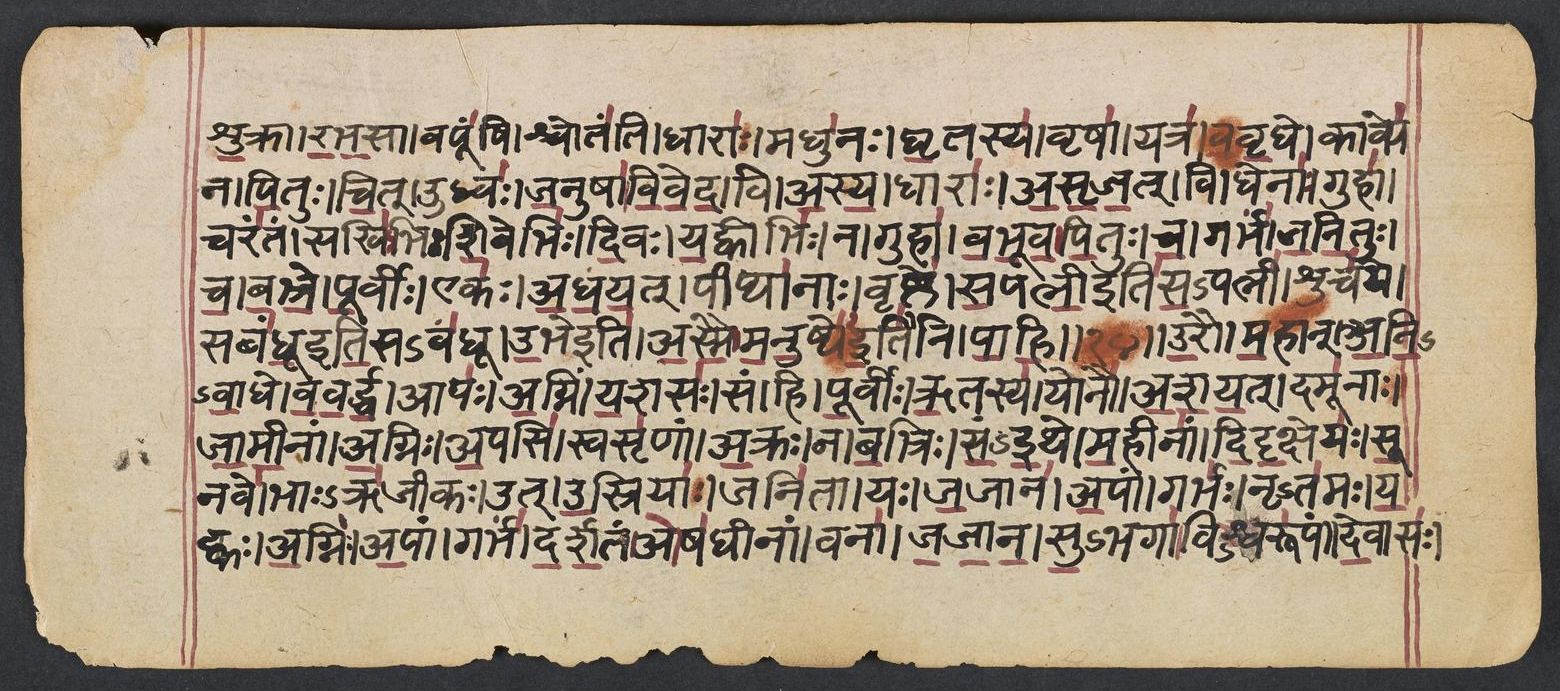
Where on the image
Penn Ms. Coll. 390 Item 41, fol. 184r (numbered 6r by the scribe) (OPenn image 185, lower leaf). Checked on the image: the Rigveda text on this page begins in RV 3.1.8 ‹śukrā rabhasā vapūṃṣi ścotanti›. The next page with Rigveda text, fol. 184v (numbered 6v by the scribe), begins in RV 3.1.13 ‹cit manasā sam hi›. Verses 3.1.8-12 end on this page; 3.1.8 begins on fol. 183v (numbered 5v by the scribe).
8ba̱bhrā̱ṇaḥ sū̍no sahaso̱ vy a̍dyau̱d dadhā̍naḥ śu̱krā ra̍bha̱sā vapū̍ṁṣi | ścota̍nti̱ dhārā̱ madhu̍no ghṛ̱tasya̱ vṛṣā̱ yatra̍ vāvṛ̱dhe kāvye̍na ||
9pi̱tuś ci̱d ūdha̍r ja̱nuṣā̍ viveda̱ vy a̍sya̱ dhārā̍ asṛja̱d vi dhenā̍ḥ | guhā̱ cara̍nta̱ṁ sakhi̍bhiḥ śi̱vebhi̍r di̱vo ya̱hvībhi̱r na guhā̍ babhūva ||
10pi̱tuś ca̱ garbha̍ṁ jani̱tuś ca̍ babhre pū̱rvīr eko̍ adhaya̱t pīpyā̍nāḥ | vṛṣṇe̍ sa̱patnī̱ śuca̍ye̱ saba̍ndhū u̱bhe a̍smai manu̱ṣye̱3̱̍ ni pā̍hi ||
11u̱rau ma̱hām̐ a̍nibā̱dhe va̍va̱rdhāpo̍ a̱gniṁ ya̱śasa̱ḥ saṁ hi pū̱rvīḥ | ṛ̱tasya̱ yonā̍v aśaya̱d damū̍nā jāmī̱nām a̱gnir a̱pasi̱ svasṝ̍ṇām ||
12a̱kro na ba̱bhriḥ sa̍mi̱the ma̱hīnā̍ṁ didṛ̱kṣeya̍ḥ sū̱nave̱ bhāṛ̍jīkaḥ | ud u̱sriyā̱ jani̍tā̱ yo ja̱jānā̱pāṁ garbho̱ nṛta̍mo ya̱hvo a̱gniḥ ||
Compare: Padapāṭha (word-by-word text written in the manuscript; Sansknet e-text via GRETIL)
8babhrāṇaḥ | sūno iti | sahasaḥ | vi | adyaut | dadhānaḥ | śukrā | rabhasā | vapūṃṣi | ścotanti | dhārāḥ | madhunaḥ | ghṛtasya | vṛṣā | yatra | vavṛdhe | kāvyena
9pituḥ | cit | ūdhaḥ | januṣā | viveda | vi | asya | dhārāḥ | asṛjat | vi | dhenāḥ | guhā | carantam | sakhi-bhiḥ | śivebhiḥ | divaḥ | yahvībhiḥ | na | guhā | babhūva
10pituḥ | ca | garbham | janituḥ | ca | babhre | pūrvīḥ | ekaḥ | adhayat | pīpyānāḥ | vṛṣṇe | sapatnī itisapatnī | śucaye | sabandhū itisa-bandhū | ubhe iti | asmai | manuṣye iti | ni | pāhi
11urau | mahān | ani-bādhe | vavardha | āpaḥ | agnim | yaśasaḥ | sam | hi | pūrvīḥ | ṛtasya | yonau | aśayat | damūnāḥ | jāmīnām | agniḥ | apasi | svasṛṝṇām
12akraḥ | na | babhriḥ | sam-ithe | mahīnām | didṛkṣeyaḥ | sūnave | bhāḥ-ṛjīkaḥ | ut | usriyāḥ | janitā | yaḥ | jajāna | apām | garbhaḥ | nṛ-tamaḥ | yahvaḥ | agniḥ
8Carefully cherished, Son of Strength, thou shonest assuming lasting and refulgent beauties. Full streams of fatness and sweet juice descended, there where the Mighty One grew strong by wisdom.
9From birth he knew even his Father's bosom, he set his voices and his streams in motion; Knew him who moved with blessed Friends in secret, with the young Dames of heaven. He stayed not hidden.
10He nursed the Infant of the Sire and Maker: alone the Babe sucked many a teeming bosom. Guard, for the Bright and Strong, the fellow-spouses friendly to men and bound to him in kinship.
11The Mighty One increased in space unbounded; full many a glorious flood gave strength to Agni. Friend of the house, within the lap of Order lay Agni, in the Sister Rivers' service.
12As keen supporter where great waters gather, light-shedder whom the brood rejoice to look on; He who begat, and will beget, the dawnlights, most manly, Child of Floods, is youthful Agni.
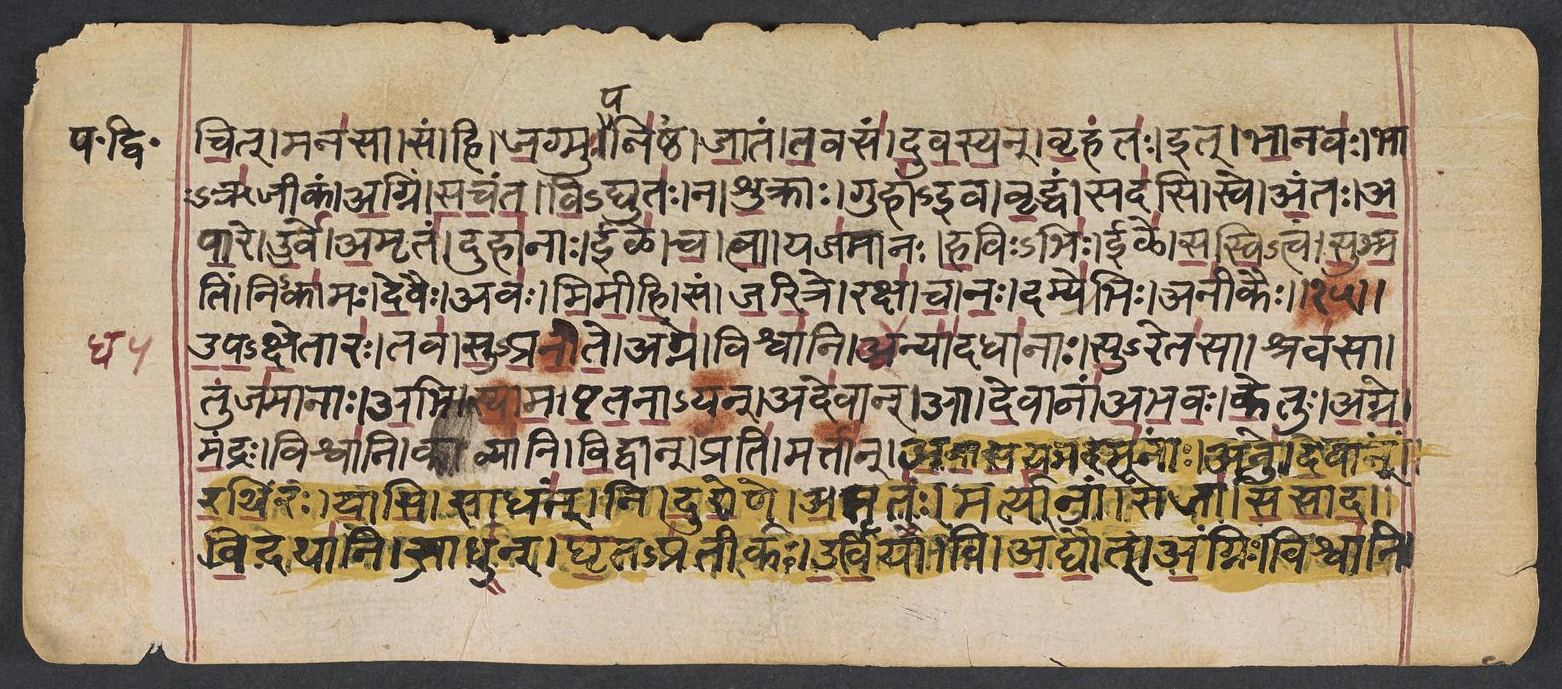
Where on the image
Penn Ms. Coll. 390 Item 41, fol. 184v (numbered 6v by the scribe) (OPenn image 186, upper leaf). Checked on the image: the Rigveda text on this page begins in RV 3.1.13 ‹cit manasā sam hi›. The next page with Rigveda text, fol. 185r (numbered 7r by the scribe), begins in RV 3.1.18 ‹kāvyāni vidvān›. Verses 3.1.13-17 end on this page; 3.1.13 begins on fol. 184r (numbered 6r by the scribe).
13a̱pāṁ garbha̍ṁ darśa̱tam oṣa̍dhīnā̱ṁ vanā̍ jajāna su̱bhagā̱ virū̍pam | de̱vāsa̍ś ci̱n mana̍sā̱ saṁ hi ja̱gmuḥ pani̍ṣṭhaṁ jā̱taṁ ta̱vasa̍ṁ duvasyan ||
14bṛ̱hanta̱ id bhā̱navo̱ bhāṛ̍jīkam a̱gniṁ sa̍canta vi̱dyuto̱ na śu̱krāḥ | guhe̍va vṛ̱ddhaṁ sada̍si̱ sve a̱ntar a̍pā̱ra ū̱rve a̱mṛta̱ṁ duhā̍nāḥ ||
15īḻe̍ ca tvā̱ yaja̍māno ha̱virbhi̱r īḻe̍ sakhi̱tvaṁ su̍ma̱tiṁ nikā̍maḥ | de̱vair avo̍ mimīhi̱ saṁ ja̍ri̱tre rakṣā̍ ca no̱ damye̍bhi̱r anī̍kaiḥ ||
16u̱pa̱kṣe̱tāra̱s tava̍ supraṇī̱te 'gne̱ viśvā̍ni̱ dhanyā̱ dadhā̍nāḥ | su̱reta̍sā̱ śrava̍sā̱ tuñja̍mānā a̱bhi ṣyā̍ma pṛtanā̱yūm̐r ade̍vān ||
17ā de̱vānā̍m abhavaḥ ke̱tur a̍gne ma̱ndro viśvā̍ni̱ kāvyā̍ni vi̱dvān | prati̱ martā̍m̐ avāsayo̱ damū̍nā̱ anu̍ de̱vān ra̍thi̱ro yā̍si̱ sādha̍n ||
Compare: Padapāṭha (word-by-word text written in the manuscript; Sansknet e-text via GRETIL)
13apām | garbham | darśatam | oṣadhīnām | vanā | jajāna | su-bhagā | vi-rūpam | devāsaḥ | cit | manasā | sam | hi | jagmuḥ | paniṣṭham | jātam | tavasam | duvasyan
14bṛhantaḥ | it | bhānavaḥ | bhāḥ-ṛjīkam | agnim | sacanta | vi-dyutaḥ | na | śukrāḥ | guhāiva | vṛddham | sadasi | sve | antaḥ | apāre | ūrve | amṛtam | duhānāḥ
15īḷe | ca | tvā | yajamānaḥ | haviḥ-bhiḥ | īḷe | sakhi-tvam | su-matim | ni-kāmaḥ | devaiḥ | avaḥ | mimīhi | sam | jaritre | rakṣa | ca | naḥ | damye--bhiḥ | anīkaiḥ
16upa-kṣetāraḥ | tava | su-pranīte | agne | viśvāni | dhanyā | dadhānāḥ | su-retasā | śravasā | tuñjamānāḥ | abhi | syāma | pṛtanāyūn | adevān
17ā | devānām | abhavaḥ | ketuḥ | agne | mandraḥ | viśvāni | kāvyāni | vidvān | prati | martān | avāsayaḥ | damūnāḥ | anu | devān | rathiraḥ | yāsi | sādhan
13Him, varied in his form, the lovely Infant of floods and plants the blessed wood hath gendered. Gods even, moved in spirit, came around him, and served him at his birth, the Strong, the Wondrous.
14Like brilliant lightnings, mighty luminaries accompany the light-diffusing Agni, Waxen, as 'twere in secret, in his dwelling, while in the boundless stall they milk out Amrit.
15I sacrificing serve thee with oblations and crave with longing thy good-will and friendship. Grant, with the Gods, thy grace to him who lauds thee, protect us with thy rays that guard the homestead.
16May we, O Agni, thou who leadest wisely, thy followers and masters of all treasures, Strong in the glory of our noble offspring, subdue the godless when they seek the battle.
17Ensign of Gods hast thou become, O Agni, joy-giver, knower of all secret wisdom. Friend of the homestead, thou hast lightened mortals: carborne thou goest to the Gods, fulfilling.
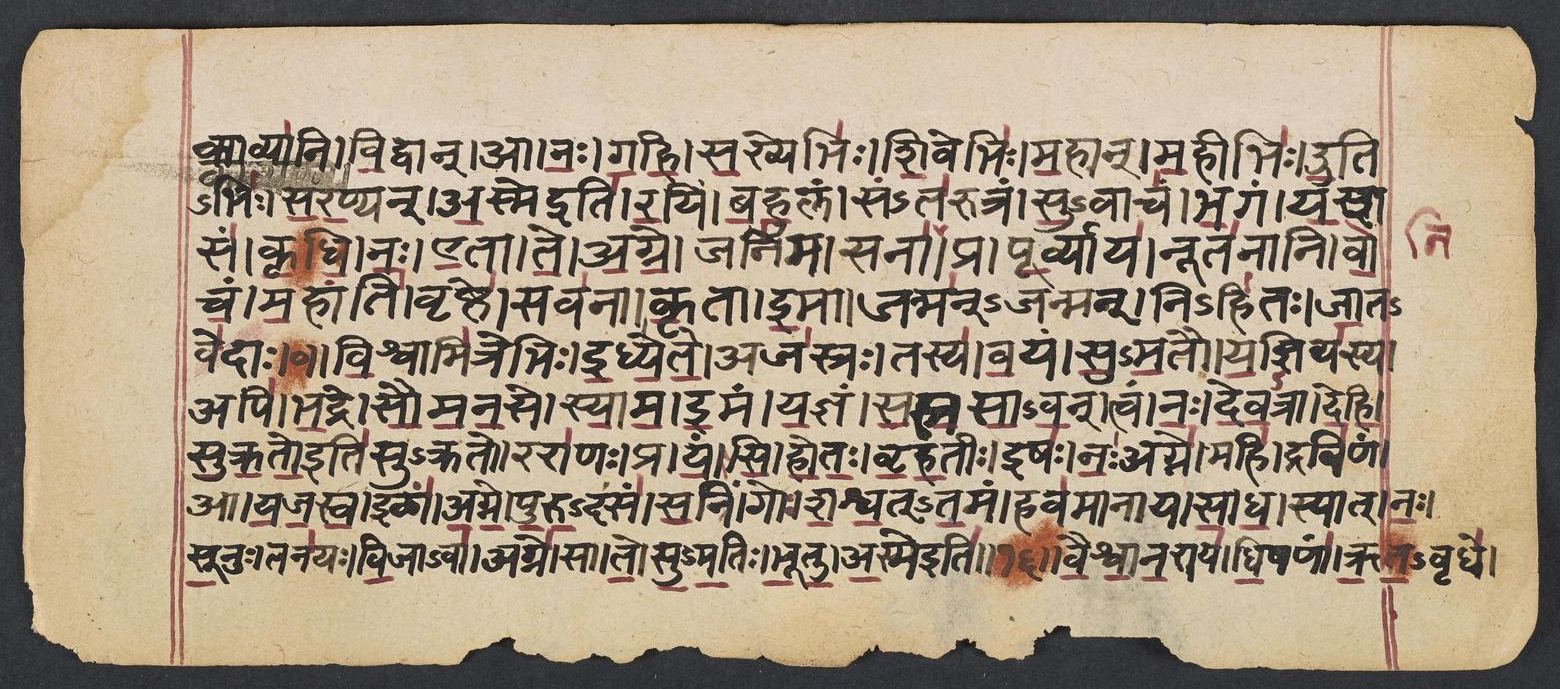
Where on the image
Penn Ms. Coll. 390 Item 41, fol. 185r (numbered 7r by the scribe) (OPenn image 186, lower leaf). Checked on the image: the Rigveda text on this page begins in RV 3.1.18 ‹kāvyāni vidvān›. The next page with Rigveda text, fol. 185v (numbered 7v by the scribe), begins in RV 3.2.1 ‹ghṛtam na pūtam agnaye›. Verses 3.1.18-23 end on this page; 3.1.18 begins on fol. 184v (numbered 6v by the scribe).
18ni du̍ro̱ṇe a̱mṛto̱ martyā̍nā̱ṁ rājā̍ sasāda vi̱dathā̍ni̱ sādha̍n | ghṛ̱tapra̍tīka urvi̱yā vy a̍dyaud a̱gnir viśvā̍ni̱ kāvyā̍ni vi̱dvān ||
19ā no̍ gahi sa̱khyebhi̍ḥ śi̱vebhi̍r ma̱hān ma̱hībhi̍r ū̱tibhi̍ḥ sara̱ṇyan | a̱sme ra̱yim ba̍hu̱laṁ saṁta̍rutraṁ su̱vāca̍m bhā̱gaṁ ya̱śasa̍ṁ kṛdhī naḥ ||
20e̱tā te̍ agne̱ jani̍mā̱ sanā̍ni̱ pra pū̱rvyāya̱ nūta̍nāni vocam | ma̱hānti̱ vṛṣṇe̱ sava̍nā kṛ̱temā janma̍ñ-janma̱n nihi̍to jā̱tave̍dāḥ ||
21janma̍ñ-janma̱n nihi̍to jā̱tave̍dā vi̱śvāmi̍trebhir idhyate̱ aja̍sraḥ | tasya̍ va̱yaṁ su̍ma̱tau ya̱jñiya̱syāpi̍ bha̱dre sau̍mana̱se syā̍ma ||
22i̱maṁ ya̱jñaṁ sa̍hasāva̱n tvaṁ no̍ deva̱trā dhe̍hi sukrato̱ rarā̍ṇaḥ | pra ya̍ṁsi hotar bṛha̱tīr iṣo̱ no 'gne̱ mahi̱ dravi̍ṇa̱m ā ya̍jasva ||
23iḻā̍m agne puru̱daṁsa̍ṁ sa̱niṁ goḥ śa̍śvatta̱maṁ hava̍mānāya sādha | syān na̍ḥ sū̱nus tana̍yo vi̱jāvāgne̱ sā te̍ suma̱tir bhū̍tv a̱sme ||
Compare: Padapāṭha (word-by-word text written in the manuscript; Sansknet e-text via GRETIL)
18ni | duroṇe | amṛtaḥ | martyānām | rājā | sasāda | vidathāni | sādhan | ghṛta-pratīkaḥ | urviyā | vi | adyaut | agniḥ | viśvāni | kāvyāni | vidvān
19ā | naḥ | gahi | sakhyebhiḥ | śivebhiḥ | mahān | mahībhiḥ | ūti-bhiḥ | saraṇyan | asme iti | rayim | bahulam | sam-tarutram | su-vācam | bhāgam | yaśasam | kṛdhi | naḥ
20etā | te | agne | janima | sanāni | pra | pūrvyāya | nūtanāni | vocam | mahānti | vṛṣṇe | savanā | kṛtā | imā | janman-janman | ni-hitaḥ | jāta-vedāḥ
21janman-janman | ni-hitaḥ | jāta-vedāḥ | viśvāmitrebhiḥ | idhyate | ajasraḥ | tasya | vayam | su-matau | yajñiyasya | api | bhadre | saumanase | syāma
22imam | yajñam | sahasāvan | tvam | naḥ | deva-trā | dhehi | su-krato itisu-krato | rarāṇaḥ | pra | yaṃsi | hotaḥ | bṛhatīḥ | iṣaḥ | naḥ | agne | mahi | draviṇam | ā | yajasva
23iḷām | agne | puru-daṃsam | sanim | goḥ | śaśvat-tamam | havamānāya | sādha | syāt | naḥ | sūnuḥ | tanayaḥ | vijāvā | agne | sā | te | su-matiḥ | bhūtu | asme iti
18Within the house hath sate the King immortal of mortals, filling full their sacred synods. Bedewed with holy oil he shineth widely, Agni, the knower of all secret wisdom.
19Come unto us with thine auspicious friendship, come speeding, Mighty, with thy mighty succours. Grant us abundant wealth that saves from danger, that brings a good repute, a glorious portion.
20To thee who art of old these songs, O Agni, have I declared, the ancient and the later. These great libations to the Strong are offiered: in every birth is Jâtavedas stablished.
21Stablished in every birth is Jâtavedas, kindled perpetual by the Viṣvâmitras. May we rest ever in the loving-kindness, in the auspicious grace of him the Holy.
22This sacrifice of ours do thou, O Mighty, O truly Wise, bear to the Gods rejoicing. Grant us abundant food, thou priestly Herald, vouchsafe to give us ample wealth, O Agni.
23As holy food, Agni, to thine'invoker give wealth in cattle, lasting, rich in marvels. To us he born a son, and spreading offspring. Agni, be this thy gracious will to us-ward.
Notes
- Sanskrit: Aufrecht's edition (1877) with the Vedic accents, as entered by van Nooten and Holland (GRETIL).
- English: Ralph T. H. Griffith, The Hymns of the Rigveda (1889-1892; 2nd ed. 1896-1897), from the VedaWeb digital text; OCR slips in that text were corrected against the printed 2nd edition (data/sources/rigveda/griffith_errata.json).
- Padapāṭha (edition text): Sansknet e-text via GRETIL (CC BY-NC-SA 4.0).
Cite
Sources
- Source: Penn Ms. Coll. 390 Item 41 (undated (catalogued with Penn's 18th-19th c. Vedic manuscripts)), OPenn, Public Domain Mark + Aufrecht's accented text (GRETIL) + Griffith's English (VedaWeb) (holding institution)
- Critical edition: Aufrecht (1877), accented e-text via GRETIL
← previous · → next · v cycle view · l back to library