Rigveda 3.2: To Agni Vaisvanara
Introduction
Rigveda 3.2 is a hymn of 15 verses addressed to Agni Vaisvanara. It stands in book (maṇḍala) 3, the family book of Viśvāmitra. The Rigveda is the oldest collection of Sanskrit hymns, composed in the second half of the second millennium BCE and handed down orally for many centuries before it was written down.
The manuscript shown is Penn Ms. Coll. 390 Item 41 (University of Pennsylvania), an undated paper manuscript of the padapāṭha (the word-by-word recitation text, in which every word is written separately and compounds are split) of the whole Ṛgveda in Devanāgarī, 884 leaves in fascicles, 7-9 lines to the page, accents in red; this hymn stands on fol. 185r-186v. Each section below gives the verses that end on one page; the page boundaries were read on the images (the opening words of every page), not counted out. Where the manuscript is a padapāṭha (the word-by-word recitation text), the section shows Aufrecht's continuous (saṃhitā) text first and, as the edition text, the padapāṭha of the same verses, which is the form written on the page.
How was this verified? (Provenance)
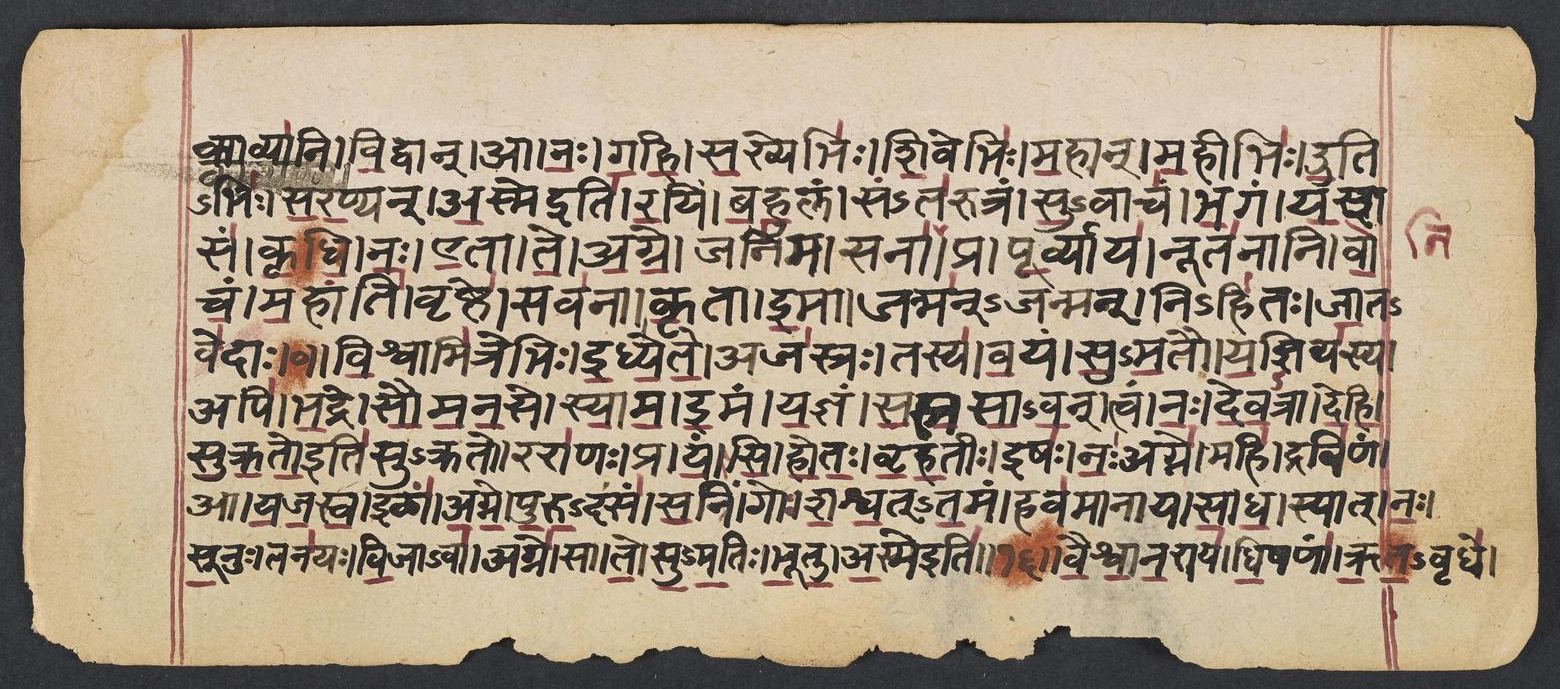
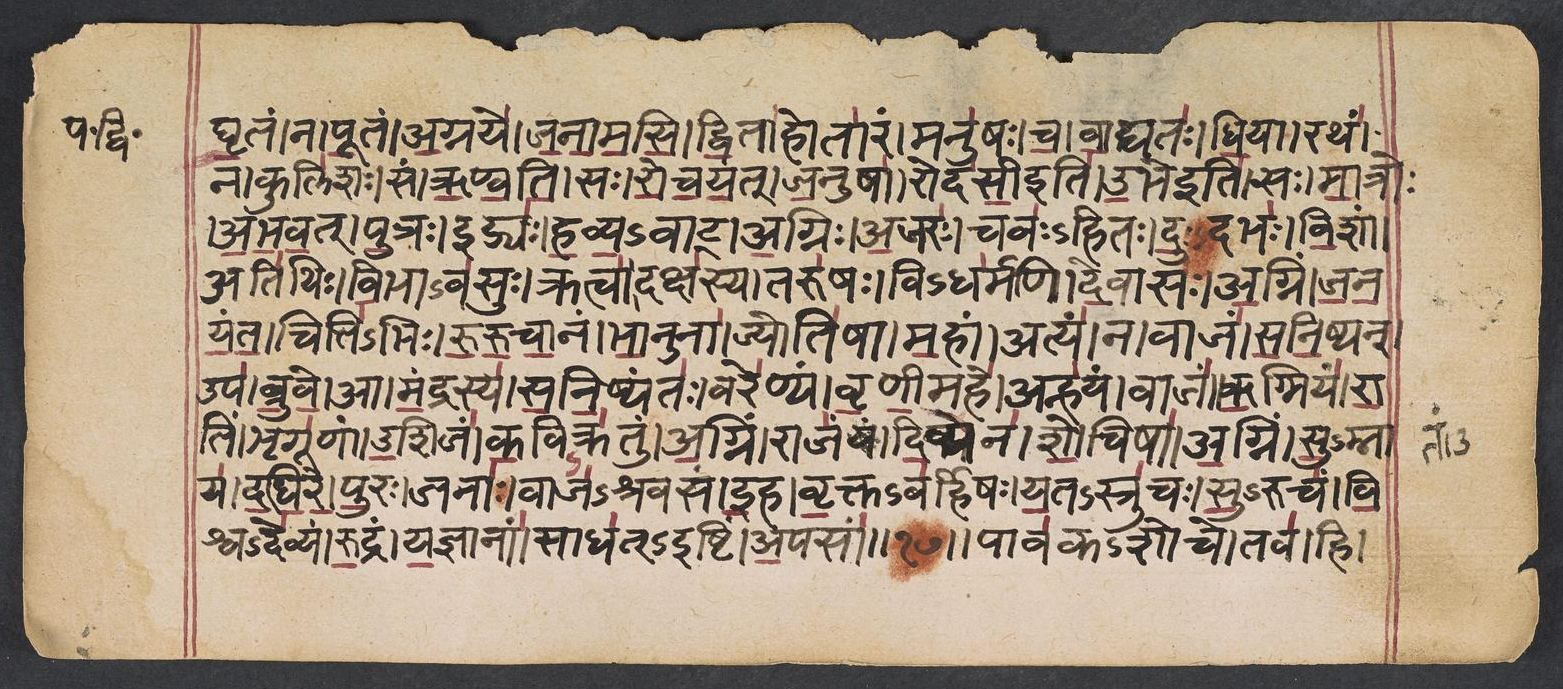
Where on the image
Penn Ms. Coll. 390 Item 41, fol. 185v (numbered 7v by the scribe) (OPenn image 187, upper leaf). Checked on the image: the Rigveda text on this page begins in RV 3.2.1 ‹ghṛtam na pūtam agnaye›. The next page with Rigveda text, fol. 186r (numbered 8r by the scribe), begins in RV 3.2.6 ‹kṣayam pari hotaḥ yajñeṣu›. Verses 3.2.1-5 end on this page; 3.2.1 begins on fol. 185r (numbered 7r by the scribe).
1vai̱śvā̱na̱rāya̍ dhi̱ṣaṇā̍m ṛtā̱vṛdhe̍ ghṛ̱taṁ na pū̱tam a̱gnaye̍ janāmasi | dvi̱tā hotā̍ra̱m manu̍ṣaś ca vā̱ghato̍ dhi̱yā ratha̱ṁ na kuli̍śa̱ḥ sam ṛ̍ṇvati ||
2sa ro̍cayaj ja̱nuṣā̱ roda̍sī u̱bhe sa mā̱tror a̍bhavat pu̱tra īḍya̍ḥ | ha̱vya̱vāḻ a̱gnir a̱jara̱ś cano̍hito dū̱ḻabho̍ vi̱śām ati̍thir vi̱bhāva̍suḥ ||
3kratvā̱ dakṣa̍sya̱ taru̍ṣo̱ vidha̍rmaṇi de̱vāso̍ a̱gniṁ ja̍nayanta̱ citti̍bhiḥ | ru̱ru̱cā̱nam bhā̱nunā̱ jyoti̍ṣā ma̱hām atya̱ṁ na vāja̍ṁ sani̱ṣyann upa̍ bruve ||
4ā ma̱ndrasya̍ sani̱ṣyanto̱ vare̍ṇyaṁ vṛṇī̱mahe̱ ahra̍ya̱ṁ vāja̍m ṛ̱gmiya̍m | rā̱tim bhṛgū̍ṇām u̱śija̍ṁ ka̱vikra̍tum a̱gniṁ rāja̍ntaṁ di̱vyena̍ śo̱ciṣā̍ ||
5a̱gniṁ su̱mnāya̍ dadhire pu̱ro janā̱ vāja̍śravasam i̱ha vṛ̱ktaba̍rhiṣaḥ | ya̱tasru̍caḥ su̱ruca̍ṁ vi̱śvade̍vyaṁ ru̱draṁ ya̱jñānā̱ṁ sādha̍diṣṭim a̱pasā̍m ||
Compare: Padapāṭha (word-by-word text written in the manuscript; Sansknet e-text via GRETIL)
1vaiśvānarāya | dhiṣaṇām | ṛta-vṛdhe | ghṛtam | na | pūtam | agnaye | janāmasi | dvitā | hotāram | manuṣaḥ | ca | vāghataḥ | dhiyā | ratham | na | kuliśaḥ | sam | ṛṇvati
2saḥ | rocayat | januṣā | rodasī iti | ubhe iti | saḥ | mātroḥ | abhavat | putraḥ | īḍyaḥ | havya-vāṭ | agniḥ | ajaraḥ | canaḥ-hitaḥ | duḥ-dabhaḥ | viśām | atithiḥ | vibhāvasuḥ
3kratvā | dakṣasya | taruṣaḥ | vi-dharmaṇi | devāsaḥ | agnim | janayanta | citti-bhiḥ | rurucānam | bhānunā | jyotiṣā | mahām | atyam | na | vājam | saniṣyan | upa | bruve
4ā | mandrasya | saniṣyantaḥ | vareṇyam | vṛṇīmahe | ahrayam | vājam | ṛgmiyam | rātim | bhṛgāūṇām | uśijam | kavi-kratum | agnim | rājantam | divyena | śociṣā
5agnim | sumnāya | dadhire | puraḥ | janāḥ | vāja-śravasam | iha | vṛkta-barhi ṣaḥ | yata-srucaḥ | su-rucam | viśva-devyam | rudram | yajñānām | sādhat-iṣṭi m | apasām
1To him, Vaiṣvânara, who strengthens Holy Law, to Agni we present our praise like oil made pure. With thoughtful insight human priests bring him anear, our Herald from of old, as an axe forms a car.
2He made the heaven and earth resplendent by his birth: Child of two Mothers he was meet to be implored, Agni, oblation-bearer, gracious, ever-young, infallible, rich in radiant light, the guest of men.
3Within the range of their surpassing power, by might, the Gods created Agni with inventive thought. I, eager to win strength, address him, like a steed, resplendent with his brilliance, with his ample light.
4Eager to gain, we crave from him the friendly God strength confident, choiceworthy meet to be extolled: The Bhr̥igus' bounty, willing, strong with sages' lore, even Agni shining forth with light that comes from heaven.
5For happiness, men, having trimmed the sacred grass, set Agni glorious for his strength before them here; Yea, with raised ladles, him bright, dear to all the Gods, perfecting aims of works, Rudra of solemn rites.
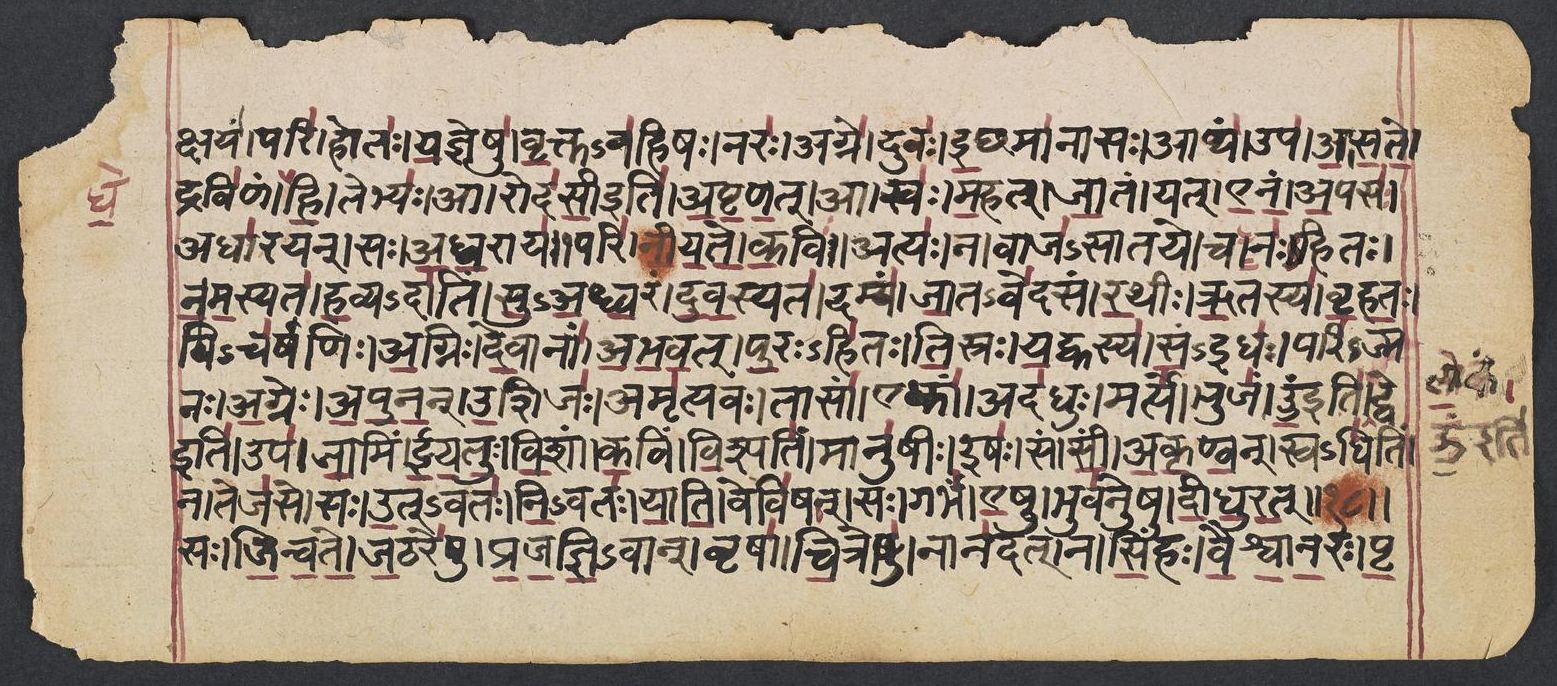
Where on the image
Penn Ms. Coll. 390 Item 41, fol. 186r (numbered 8r by the scribe) (OPenn image 187, lower leaf). Checked on the image: the Rigveda text on this page begins in RV 3.2.6 ‹kṣayam pari hotaḥ yajñeṣu›. The next page with Rigveda text, fol. 186v (numbered 8v by the scribe), begins in RV 3.2.11 ‹-pṛthu-pājāḥ amartyaḥ vasu ratnā›. Verses 3.2.6-10 end on this page; 3.2.6 begins on fol. 185v (numbered 7v by the scribe).
6pāva̍kaśoce̱ tava̱ hi kṣaya̱m pari̱ hota̍r ya̱jñeṣu̍ vṛ̱ktaba̍rhiṣo̱ nara̍ḥ | agne̱ duva̍ i̱cchamā̍nāsa̱ āpya̱m upā̍sate̱ dravi̍ṇaṁ dhehi̱ tebhya̍ḥ ||
7ā roda̍sī apṛṇa̱d ā sva̍r ma̱haj jā̱taṁ yad e̍nam a̱paso̱ adhā̍rayan | so a̍dhva̱rāya̱ pari̍ ṇīyate ka̱vir atyo̱ na vāja̍sātaye̱ cano̍hitaḥ ||
8na̱ma̱syata̍ ha̱vyadā̍tiṁ svadhva̱raṁ du̍va̱syata̱ damya̍ṁ jā̱tave̍dasam | ra̱thīr ṛ̱tasya̍ bṛha̱to vica̍rṣaṇir a̱gnir de̱vānā̍m abhavat pu̱rohi̍taḥ ||
9ti̱sro ya̱hvasya̍ sa̱midha̱ḥ pari̍jmano̱ 'gner a̍punann u̱śijo̱ amṛ̍tyavaḥ | tāsā̱m ekā̱m ada̍dhu̱r martye̱ bhuja̍m u lo̱kam u̱ dve upa̍ jā̱mim ī̍yatuḥ ||
10vi̱śāṁ ka̱viṁ vi̱śpati̱m mānu̍ṣī̱r iṣa̱ḥ saṁ sī̍m akṛṇva̱n svadhi̍ti̱ṁ na teja̍se | sa u̱dvato̍ ni̱vato̍ yāti̱ vevi̍ṣa̱t sa garbha̍m e̱ṣu bhuva̍neṣu dīdharat ||
Compare: Padapāṭha (word-by-word text written in the manuscript; Sansknet e-text via GRETIL)
6pāvaka-śoce | tava | hi | kṣayam | pari | hotaḥ | yajñeṣu | vṛkta-barhiṣaḥ | naraḥ | agne | duvaḥ | icchamānāsaḥ | āpyam | upa | āsate | draviṇam | dhehi | tebhyaḥ
7ā | rodasī iti | apṛṇat | ā | svaḥ | mahat | jātam | yat | enam | apasaḥ | adhārayan | saḥ | adhvarāya | pari | nīyate | kaviḥ | atyaḥ | na | vāja-sātaye | canaḥ-hitaḥ
8namasyata | havya-dātim | su-adhvaram | duvasyata | dabhyam | jāta-vedasam | rathīḥ | ṛtasya | bṛhataḥ | vi-carṣaṇiḥ | agniḥ | devānām | abhavat | puraḥ-hitaḥ
9tisraḥ | yahvasya | sam-idhaḥ | pari-jmanaḥ | agneḥ | apunan | uśijaḥ | amṛtyavaḥ | tāsām | ekām | adadhuḥ | martye | bhujam | oṃ iti | lokam | oṃ iti | dve iti | upa | jāmim | īyatuḥ
10viśām | kavim | viśpatim | mānuṣīḥ | iṣaḥ | sam | sīm | akṛṇvan | sva-dhitim | na | tejase | saḥ | ut-vataḥ | ni-vataḥ | yāti | veviṣat | saḥ | garbham | eṣu | bhuvaneṣu | dīdharat
6Around thy dwelling-place, O brightly-shining Priest, are men at sacrifice, whose sacred grass is trimmed. Wishing to do thee service, Agni, they are there, desirous of thy friendship grant them store of wealth.
7He hath filled heaven and earth and the great realm of light, when at his birth the skilful held him in their hold. He like a horse is led forth to the sacrifice Sage, graciously inclined, that he may win us strength.
8Honour the oblation-bearer, him who knows fair rites, serve ye the Household Friend who knows all things that be. He drives the chariot of the lofty ordinance: Agni most active, is the great High Priest of Gods.
9They who are free from death, fain for him, purified three splendours of the mighty Agni, circling all. To man, for his enjoyment, one of these they gave: the other two have passed into the sister sphere.
10Man's sacrificial food hath sharpened like an axe, for brightness, him the Sage of men, the people's Lord, Busied with sacred rites he mounts and he descends. He hath laid down his vital germ within these worlds.
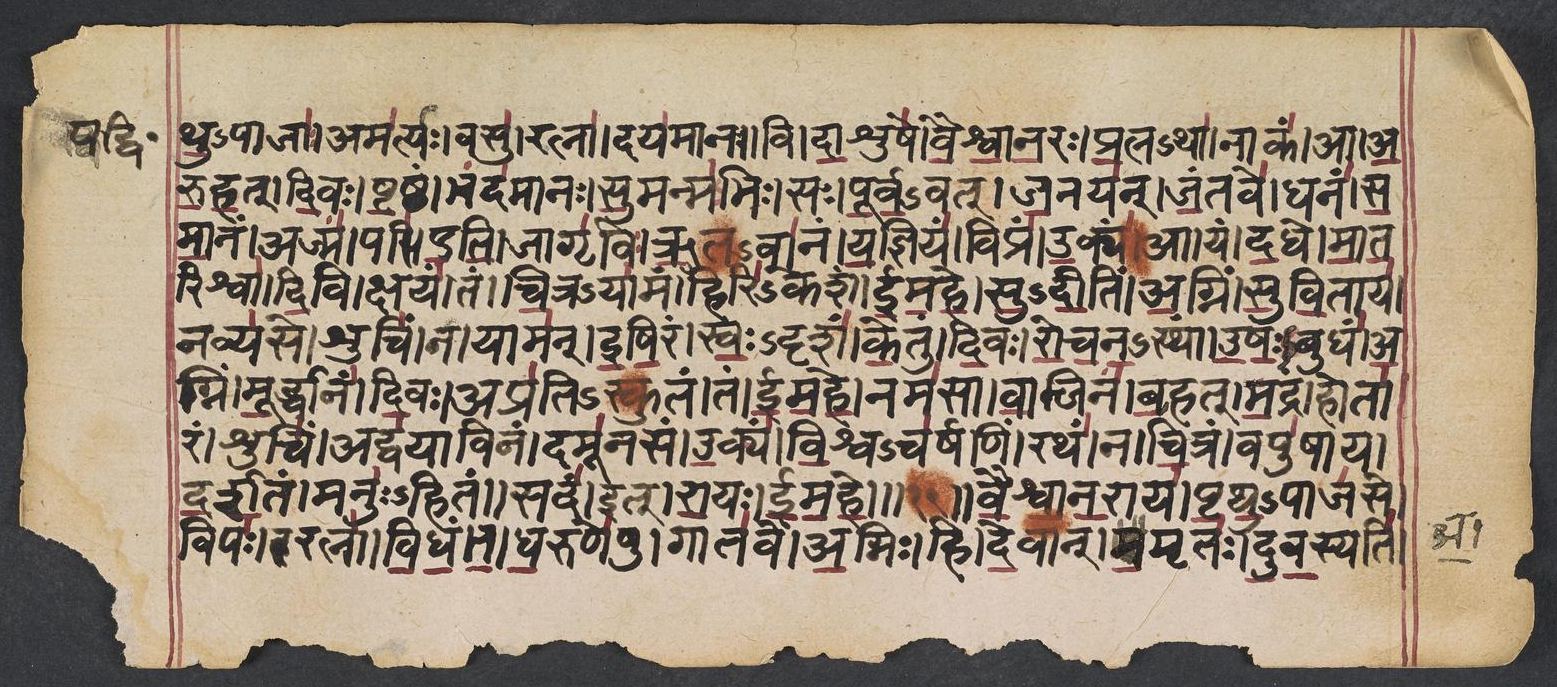
Where on the image
Penn Ms. Coll. 390 Item 41, fol. 186v (numbered 8v by the scribe) (OPenn image 188, upper leaf). Checked on the image: the Rigveda text on this page begins in RV 3.2.11 ‹-pṛthu-pājāḥ amartyaḥ vasu ratnā›. The next page with Rigveda text, fol. 187r (numbered 9r by the scribe), begins in RV 3.3.1 ‹atha dharmāṇi sanatā na›. Verses 3.2.11-15 end on this page; 3.2.11 begins on fol. 186r (numbered 8r by the scribe).
11sa ji̍nvate ja̱ṭhare̍ṣu prajajñi̱vān vṛṣā̍ ci̱treṣu̱ nāna̍da̱n na si̱ṁhaḥ | vai̱śvā̱na̱raḥ pṛ̍thu̱pājā̱ ama̍rtyo̱ vasu̱ ratnā̱ daya̍māno̱ vi dā̱śuṣe̍ ||
12vai̱śvā̱na̱raḥ pra̱tnathā̱ nāka̱m āru̍had di̱vas pṛ̱ṣṭham bhanda̍mānaḥ su̱manma̍bhiḥ | sa pū̍rva̱vaj ja̱naya̍ñ ja̱ntave̱ dhana̍ṁ samā̱nam ajma̱m pary e̍ti̱ jāgṛ̍viḥ ||
13ṛ̱tāvā̍naṁ ya̱jñiya̱ṁ vipra̍m u̱kthya1̱̍m ā yaṁ da̱dhe mā̍ta̱riśvā̍ di̱vi kṣaya̍m | taṁ ci̱trayā̍ma̱ṁ hari̍keśam īmahe sudī̱tim a̱gniṁ su̍vi̱tāya̱ navya̍se ||
14śuci̱ṁ na yāma̍nn iṣi̱raṁ sva̱rdṛśa̍ṁ ke̱tuṁ di̱vo ro̍cana̱sthām u̍ṣa̱rbudha̍m | a̱gnim mū̱rdhāna̍ṁ di̱vo apra̍tiṣkuta̱ṁ tam ī̍mahe̱ nama̍sā vā̱jina̍m bṛ̱hat ||
15ma̱ndraṁ hotā̍ra̱ṁ śuci̱m adva̍yāvina̱ṁ damū̍nasam u̱kthya̍ṁ vi̱śvaca̍rṣaṇim | ratha̱ṁ na ci̱traṁ vapu̍ṣāya darśa̱tam manu̍rhita̱ṁ sada̱m id rā̱ya ī̍mahe ||
Compare: Padapāṭha (word-by-word text written in the manuscript; Sansknet e-text via GRETIL)
11saḥ | jinvate | jaṭhareṣu | prajajñi-vān | vṛṣā | citreṣu | nānadat | na | siṃhaḥ | vaiśvānaraḥ | pṛthu-pājāḥ | amartyaḥ | vasu | ratnā | dayamānaḥ | vi | dāśuṣe
12vaiśvānaraḥ | pratna-thā | nākam | ā | aruhat | divaḥ | pṛṣṭham | bhandamānaḥ | sumanma-bhiḥ | saḥ | pūrva-vat | janayan | jantave | dhanam | samānam | ajmam | pari | eti | jāgṛviḥ
13ṛta-vānam | yajñiyam | vipram | ukthyam | ā | yam | dadhe | mātariśvā | divi | kṣayam | tam | citra-yāmam | hari-keśam | īmahe | sud-ītim | agnim | su-vitāya | navyase
14śucim | na | yāman | iṣiram | svaḥ-dṛśam | ketum | divaḥ | rocana-sthām | uṣaḥ-budham | agnim | mūrdhānam | divaḥ | aprati-skutam | tam | īmahe | namasā | vājinam | bṛhat
15mandram | hotāram | śucim | advayāvinam | damūnasam | ukthyam | viśva-carṣaṇ im | ratham | na | citram | vapuṣāya | darśatam | manuḥ-hitam | sadam | it | rāyaḥ | īmahe
11He stirs with life in wombs dissimilar in kind, born as a Lion or a loudly-bellowing Bull: Vaiṣvânara immortal with wide-reaching might, bestowing goods and wealth on him who offers gifts.
12Vaiṣvânara, as of old, mounted the cope of heaven, heaven's ridge, well greeted, by those skilled in noble songs. He, as of old, producing riches for the folk, still watchful, traversesthe common way again.
13For new prosperity we seek to Agni, him whose course is splendid, gold-haired, excellently bright, Whom Mâtariṣvan stablished, dweller in the heaven, meet for high praise and holy, sage and true to Law.
14As pure and swift of course, beholder of the light, who stands in heaven's bright sphere a sign, who wakes at dawn, Agni, the head of heaven, whom none may turn aside-to him the Powerful with mighty prayer we seek.
15The cheerful Priest, the pure, in whom no guile is found, Friend of the House, praise-worthy, dear to all mankind, Fair to behold for beauty like a splendid car,– Agni the Friend of men we ever seek for wealth.
Notes
- Sanskrit: Aufrecht's edition (1877) with the Vedic accents, as entered by van Nooten and Holland (GRETIL).
- English: Ralph T. H. Griffith, The Hymns of the Rigveda (1889-1892; 2nd ed. 1896-1897), from the VedaWeb digital text; OCR slips in that text were corrected against the printed 2nd edition (data/sources/rigveda/griffith_errata.json).
- Padapāṭha (edition text): Sansknet e-text via GRETIL (CC BY-NC-SA 4.0).
Cite
Sources
- Source: Penn Ms. Coll. 390 Item 41 (undated (catalogued with Penn's 18th-19th c. Vedic manuscripts)), OPenn, Public Domain Mark + Aufrecht's accented text (GRETIL) + Griffith's English (VedaWeb) (holding institution)
- Critical edition: Aufrecht (1877), accented e-text via GRETIL
← previous · → next · v cycle view · l back to library