Rigveda 3.10: To Agni
Introduction
Rigveda 3.10 is a hymn of 9 verses addressed to Agni. It stands in book (maṇḍala) 3, the family book of Viśvāmitra. The Rigveda is the oldest collection of Sanskrit hymns, composed in the second half of the second millennium BCE and handed down orally for many centuries before it was written down.
The manuscript shown is Penn Ms. Coll. 390 Item 41 (University of Pennsylvania), an undated paper manuscript of the padapāṭha (the word-by-word recitation text, in which every word is written separately and compounds are split) of the whole Ṛgveda in Devanāgarī, 884 leaves in fascicles, 7-9 lines to the page, accents in red; this hymn stands on fol. 195v-196v. Each section below gives the verses that end on one page; the page boundaries were read on the images (the opening words of every page), not counted out. Where the manuscript is a padapāṭha (the word-by-word recitation text), the section shows Aufrecht's continuous (saṃhitā) text first and, as the edition text, the padapāṭha of the same verses, which is the form written on the page.
How was this verified? (Provenance)
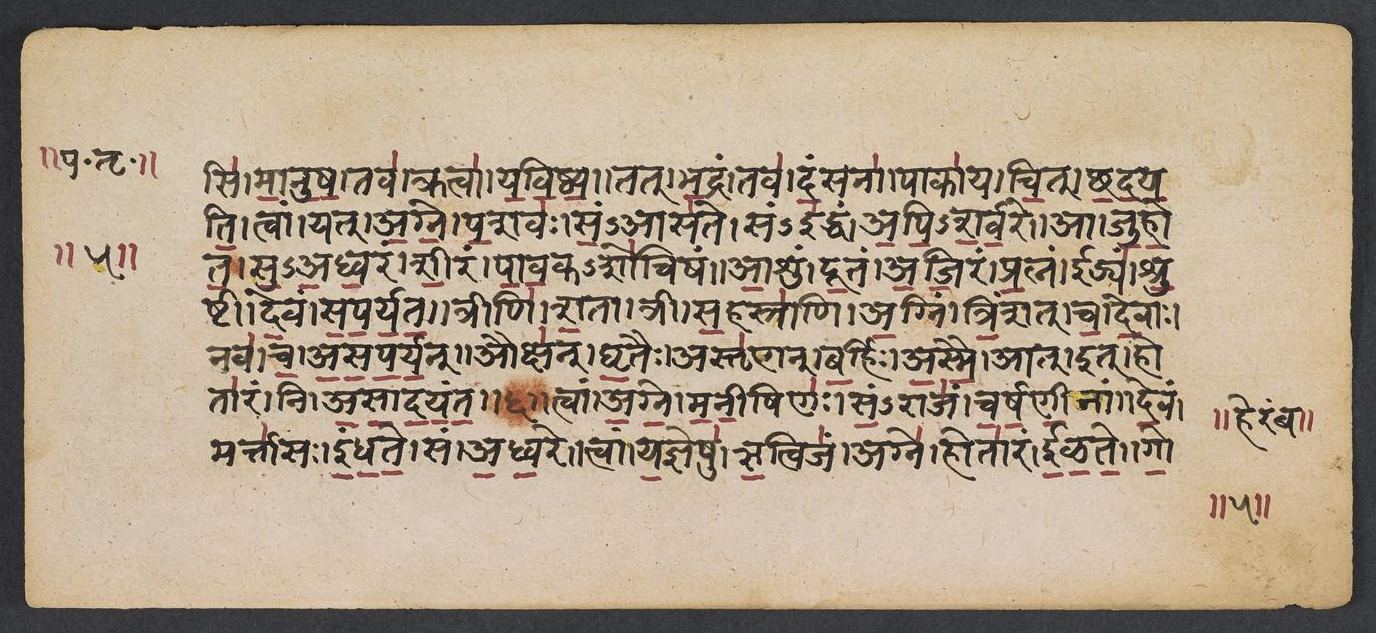
Where on the image
Penn Ms. Coll. 390 Item 41, fol. 195v (numbered 5v by the scribe) (OPenn image 197, upper leaf). Checked on the image: the Rigveda text on this page begins in RV 3.9.6 ‹-abhi-pāsi mānuṣa tava kratvā›. The next page with Rigveda text, fol. 196r (numbered 6r by the scribe), begins in RV 3.10.2 ‹-gopāḥ ṛtasya dīdihi sve›. Verse 3.10.1 ends on this page.
1tvām a̍gne manī̱ṣiṇa̍ḥ sa̱mrāja̍ṁ carṣaṇī̱nām | de̱vam martā̍sa indhate̱ sam a̍dhva̱re ||
Compare: Padapāṭha (word-by-word text written in the manuscript; Sansknet e-text via GRETIL)
1tvām | agne | manīṣiṇaḥ | sam-rājam | carṣaṇīnām | devam | martāsaḥ | indhate | sam | adhvare
1THEE Agni, God, Imperial Lord of all mankind, do mortal men With understanding kindle at thesacrifice.
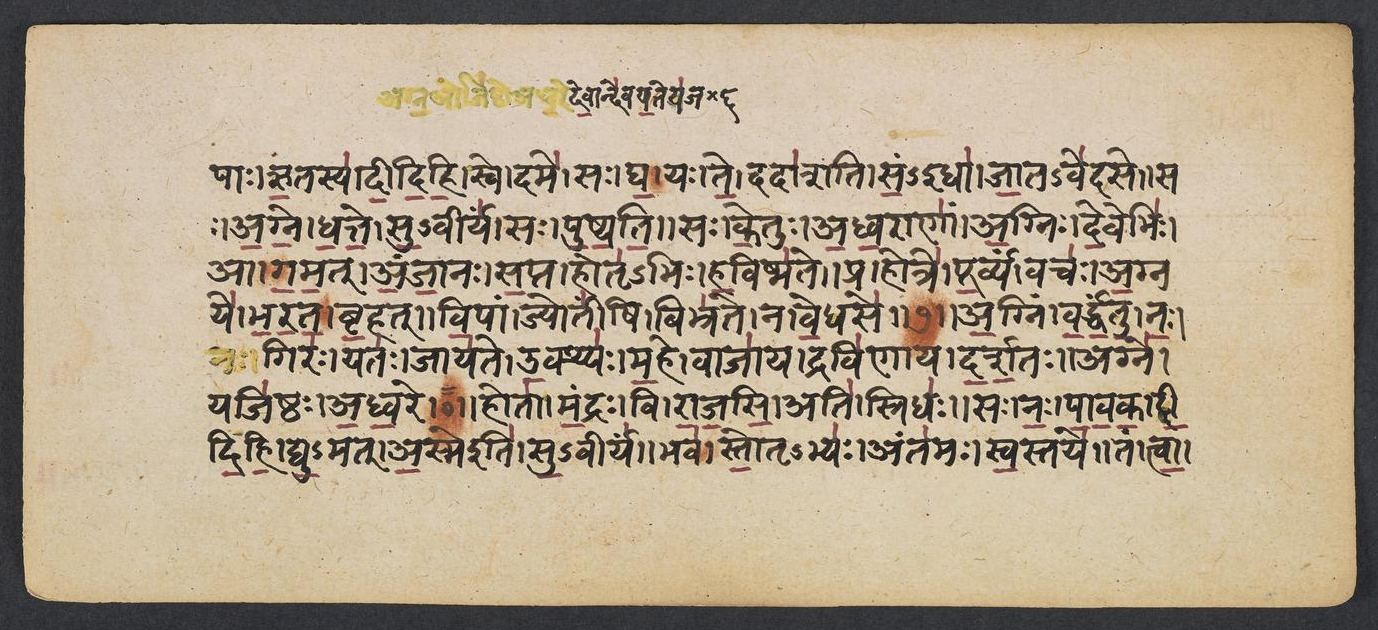
Where on the image
Penn Ms. Coll. 390 Item 41, fol. 196r (numbered 6r by the scribe) (OPenn image 197, lower leaf). Checked on the image: the Rigveda text on this page begins in RV 3.10.2 ‹-gopāḥ ṛtasya dīdihi sve›. The next page with Rigveda text, fol. 196v (numbered 6v by the scribe), begins in RV 3.10.9 ‹viprāḥ vipanyavaḥ jāgṛ-vāṃsaḥ sam›. Verses 3.10.2-8 end on this page; 3.10.2 begins on fol. 195v (numbered 5v by the scribe).
2tvāṁ ya̱jñeṣv ṛ̱tvija̱m agne̱ hotā̍ram īḻate | go̱pā ṛ̱tasya̍ dīdihi̱ sve dame̍ ||
3sa ghā̱ yas te̱ dadā̍śati sa̱midhā̍ jā̱tave̍dase | so a̍gne dhatte su̱vīrya̱ṁ sa pu̍ṣyati ||
4sa ke̱tur a̍dhva̱rāṇā̍m a̱gnir de̱vebhi̱r ā ga̍mat | a̱ñjā̱naḥ sa̱pta hotṛ̍bhir ha̱viṣma̍te ||
5pra hotre̍ pū̱rvyaṁ vaco̱ 'gnaye̍ bharatā bṛ̱hat | vi̱pāṁ jyotī̍ṁṣi̱ bibhra̍te̱ na ve̱dhase̍ ||
6a̱gniṁ va̍rdhantu no̱ giro̱ yato̱ jāya̍ta u̱kthya̍ḥ | ma̱he vājā̍ya̱ dravi̍ṇāya darśa̱taḥ ||
7agne̱ yaji̍ṣṭho adhva̱re de̱vān de̍vaya̱te ya̍ja | hotā̍ ma̱ndro vi rā̍ja̱sy ati̱ sridha̍ḥ ||
8sa na̍ḥ pāvaka dīdihi dyu̱mad a̱sme su̱vīrya̍m | bhavā̍ sto̱tṛbhyo̱ anta̍maḥ sva̱staye̍ ||
Compare: Padapāṭha (word-by-word text written in the manuscript; Sansknet e-text via GRETIL)
2tvām | yajñeṣu | ṛtvijam | agne | hotāram | īḷate | gopāḥ | ṛtasya | dīdihi | sve | dame
3saḥ | gha | yaḥ | te | dadāśati | samidhā | jāta-vedase | saḥ | agne | dhatte | su-vīryam | saḥ | puṣyati
4saḥ | ketuḥ | adhvarāṇām | agniḥ | devebhiḥ | ā | gamat | añjānaḥ | sapta | hotṛ-bhiḥ | haviṣmate
5pra | hotre | pūrvyam | vacaḥ | agnaye | bharata | bṛhat | vipām | jyotīṃṣi | bibhrate | na | vedhase
6agnim | vardhantu | naḥ | giraḥ | yataḥ | jāyate | ukthyaḥ | mahe | vājāya | draviṇāya | darśataḥ
7agne | yajiṣṭhaḥ | adhvare | devān | deva-yate | yaja | hotā | mandraḥ | vi | rājasi | ati | sridhaḥ
8saḥ | naḥ | pāvaka | dīdihi | dyu-mat | asme iti | su-vīryam | bhava | stotṛ-bhyaḥ | antamaḥ | svastaye
2They laud thee in their solemn rites, Agni, as Minister and Priest, Shine forth in thine own home as guardian of the Law.
3He, verily, who honours thee with fuel, Knower of all life, He, Agni! wins heroic might, he prospers well.
4Ensign of sacrifices, he, Agni, with Gods is come to us, Decked by the seven priests, to him who bringeth gifts.
5ToAgni, the Invoking Priest, offer your best, your lofty speech, To him Ordainer-like who brings the light of songs.
6Let these our hymns make Agni grow, whence, meet for laud, he springs to life, To mighty strength and great possession, fair to see.
7Best Sacrificer, bring the Gods, O Agni, to the pious man: A joyful Priest, thy splendour drive our foes afar
8As such, O Purifier, shine on us heroic glorious might: Be nearest Friend to those who laud thee, for their weal.
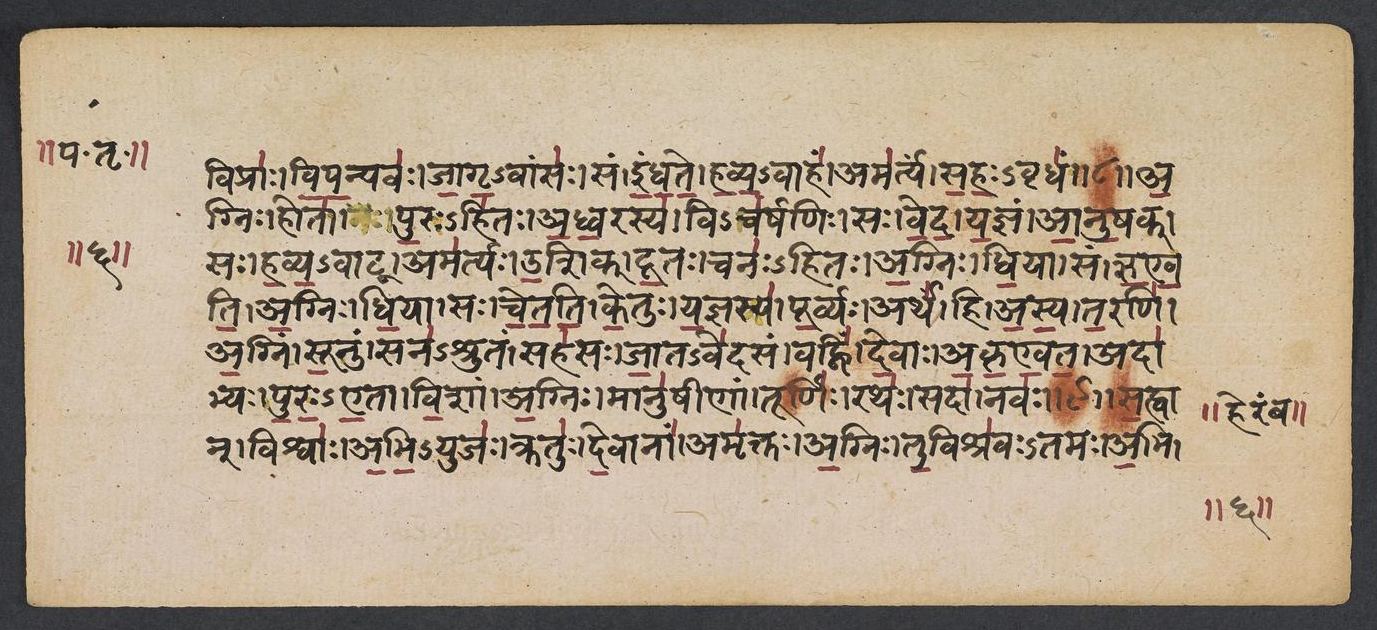
Where on the image
Penn Ms. Coll. 390 Item 41, fol. 196v (numbered 6v by the scribe) (OPenn image 198, upper leaf). Checked on the image: the Rigveda text on this page begins in RV 3.10.9 ‹viprāḥ vipanyavaḥ jāgṛ-vāṃsaḥ sam›. The next page with Rigveda text, fol. 197r (numbered 7r by the scribe), begins in RV 3.11.7 ‹prayāṃsi vāhasā dāśvān aśnoti›. Verse 3.10.9 ends on this page; 3.10.9 begins on fol. 196r (numbered 6r by the scribe).
9taṁ tvā̱ viprā̍ vipa̱nyavo̍ jāgṛ̱vāṁsa̱ḥ sam i̍ndhate | ha̱vya̱vāha̱m ama̍rtyaṁ saho̱vṛdha̍m ||
Compare: Padapāṭha (word-by-word text written in the manuscript; Sansknet e-text via GRETIL)
9tam | tvā | viprāḥ | vipanyavaḥ | jāgṛ-vāṃsaḥ | sam | indhate | havya-vāham | amartyam | sahaḥ-vṛdham
9So, wakeful, versed in sacred hymns, the holy singers kindle thee. Oblation-bearer, deathless, cherisher of strength.
Notes
- Sanskrit: Aufrecht's edition (1877) with the Vedic accents, as entered by van Nooten and Holland (GRETIL).
- English: Ralph T. H. Griffith, The Hymns of the Rigveda (1889-1892; 2nd ed. 1896-1897), from the VedaWeb digital text; OCR slips in that text were corrected against the printed 2nd edition (data/sources/rigveda/griffith_errata.json).
- Padapāṭha (edition text): Sansknet e-text via GRETIL (CC BY-NC-SA 4.0).
Cite
Sources
- Source: Penn Ms. Coll. 390 Item 41 (undated (catalogued with Penn's 18th-19th c. Vedic manuscripts)), OPenn, Public Domain Mark + Aufrecht's accented text (GRETIL) + Griffith's English (VedaWeb) (holding institution)
- Critical edition: Aufrecht (1877), accented e-text via GRETIL
← previous · → next · v cycle view · l back to library