Rigveda 3.9: To Agni
Introduction
Rigveda 3.9 is a hymn of 9 verses addressed to Agni. It stands in book (maṇḍala) 3, the family book of Viśvāmitra. The Rigveda is the oldest collection of Sanskrit hymns, composed in the second half of the second millennium BCE and handed down orally for many centuries before it was written down.
The manuscript shown is Penn Ms. Coll. 390 Item 41 (University of Pennsylvania), an undated paper manuscript of the padapāṭha (the word-by-word recitation text, in which every word is written separately and compounds are split) of the whole Ṛgveda in Devanāgarī, 884 leaves in fascicles, 7-9 lines to the page, accents in red; this hymn stands on fol. 194v-195v. Each section below gives the verses that end on one page; the page boundaries were read on the images (the opening words of every page), not counted out. Where the manuscript is a padapāṭha (the word-by-word recitation text), the section shows Aufrecht's continuous (saṃhitā) text first and, as the edition text, the padapāṭha of the same verses, which is the form written on the page.
How was this verified? (Provenance)
Where on the image
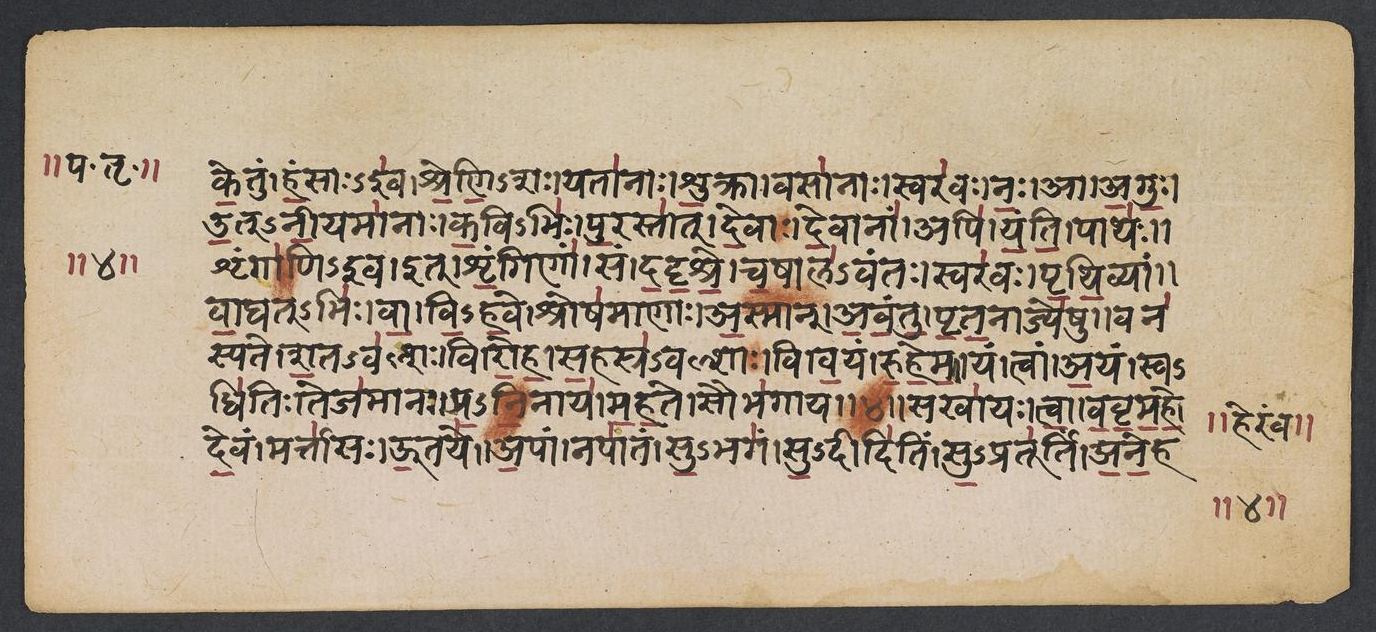
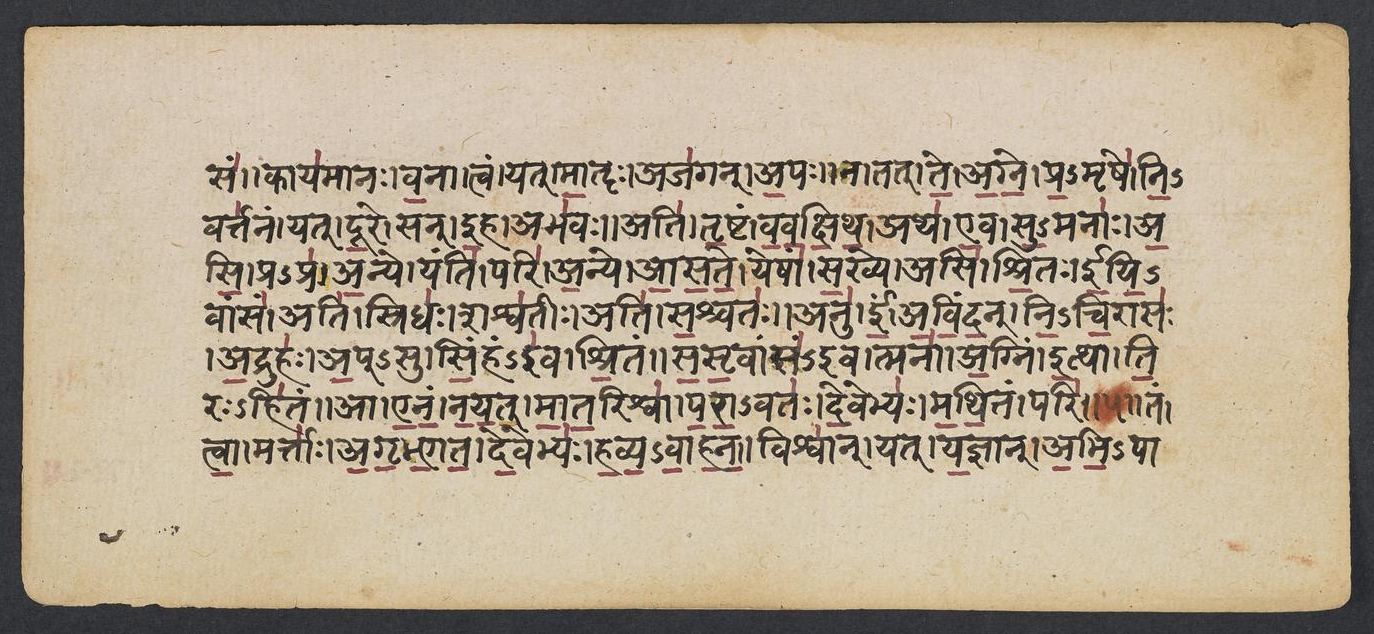
Penn Ms. Coll. 390 Item 41, fol. 195r (numbered 5r by the scribe) (OPenn image 196, lower leaf). Checked on the image: the Rigveda text on this page begins in RV 3.9.1 ‹-anehasam›. The next page with Rigveda text, fol. 195v (numbered 5v by the scribe), begins in RV 3.9.6 ‹-abhi-pāsi mānuṣa tava kratvā›. Verses 3.9.1-5 end on this page; 3.9.1 begins on fol. 194v (numbered 4v by the scribe).
1sakhā̍yas tvā vavṛmahe de̱vam martā̍sa ū̱taye̍ | a̱pāṁ napā̍taṁ su̱bhaga̍ṁ su̱dīdi̍tiṁ su̱pratū̍rtim ane̱hasa̍m ||
2kāya̍māno va̱nā tvaṁ yan mā̱tṝr aja̍gann a̱paḥ | na tat te̍ agne pra̱mṛṣe̍ ni̱varta̍na̱ṁ yad dū̱re sann i̱hābha̍vaḥ ||
3ati̍ tṛ̱ṣṭaṁ va̍vakṣi̱thāthai̱va su̱manā̍ asi | pra-prā̱nye yanti̱ pary a̱nya ā̍sate̱ yeṣā̍ṁ sa̱khye asi̍ śri̱taḥ ||
4ī̱yi̱vāṁsa̱m ati̱ sridha̱ḥ śaśva̍tī̱r ati̍ sa̱ścata̍ḥ | anv ī̍m avindan nici̱rāso̍ a̱druho̱ 'psu si̱ṁham i̍va śri̱tam ||
5sa̱sṛ̱vāṁsa̍m iva̱ tmanā̱gnim i̱tthā ti̱rohi̍tam | aina̍ṁ nayan māta̱riśvā̍ parā̱vato̍ de̱vebhyo̍ mathi̱tam pari̍ ||
Compare: Padapāṭha (word-by-word text written in the manuscript; Sansknet e-text via GRETIL)
1sakhāyaḥ | tvā | vavṛmahe | devam | martāsaḥ | ūtaye | apām | napātam | su-bhagam | su-dīditim | su-pratūrtim | anehasam
2kāyamānaḥ | vanā | tvam | yat | mātṝḥ | ajagan | apaḥ | na | tat | te | agne | pra-mṛṣe | ni-vartanam | yat | dūre | san | iha | abhavaḥ
3ati | tṛṣṭam | vavakṣitha | atha | eva | su-manāḥ | asi | pra-pra | anye | yanti | pari | anye | āsate | yeṣām | sakhye | asi | śritaḥ
4īyi-vāṃsam | ati | sridhaḥ | śaśvatīḥ | ati | saścataḥ | anu | īm | avindan | ni-cirāsaḥ | adruhaḥ | ap-su | siṃham-iva | śritam
5sasṛvāṃsam-iva | tmanā | agnim | itthā | tiraḥ-hitam | ā | enam | nayat | mātar iśvā | parāvataḥ | devebhyaḥ | mathitam | pari
1WE as thy friends have chosen thee, mortals a God, to be our help, The Waters' Child, the blessed, the resplendent One, victorious and beyond compare.
2Since thou delighting in the woods hast gone unto thy mother streams, Not to be scorned, Agni, is that return of thine when from afar thou now art here.
3O'er pungent smoke hast thou prevailed, and thus art thou benevolent. Some go before, and others round about thee sit, they in whose friendship thou hast place.
4Him who had passed beyond his foes, beyond continual pursuits, Him the unerring Ones, observant, found in floods, couched like a lion in his lair.
5Him wandering at his own free will, Agni here hidden from our view, Him Mâtariṣvan brought to us from far away produced by friction, from the Gods.
Where on the image
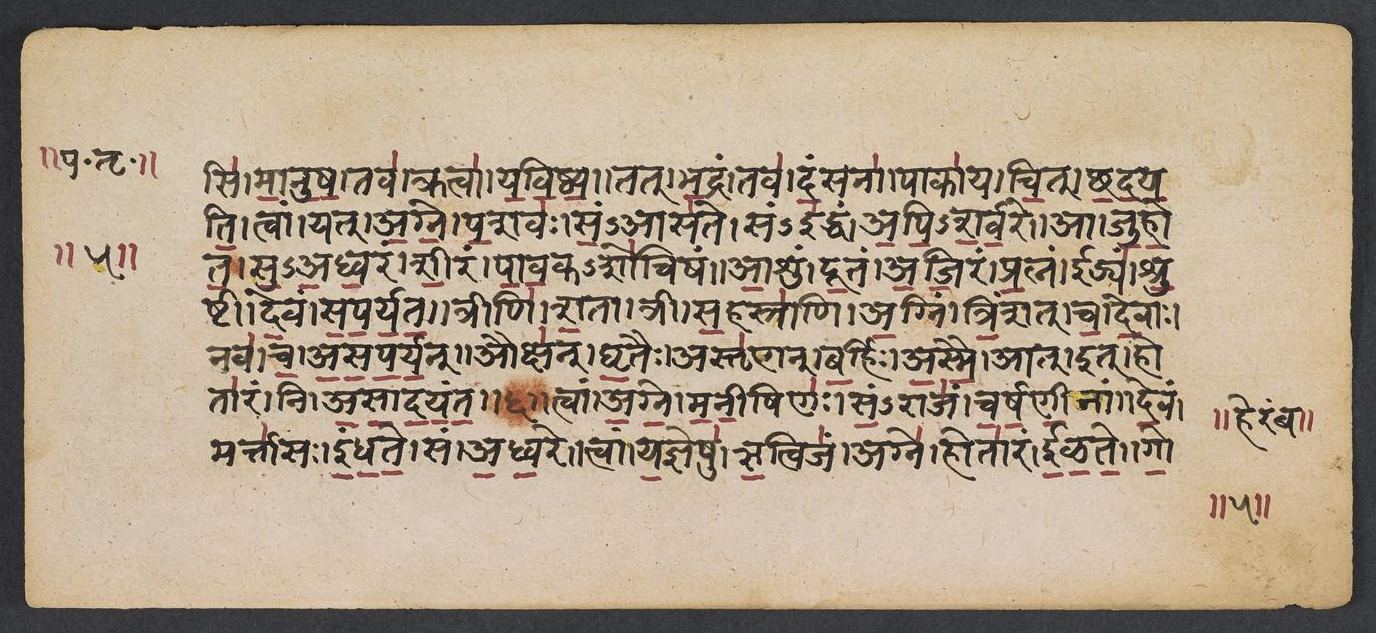
Penn Ms. Coll. 390 Item 41, fol. 195v (numbered 5v by the scribe) (OPenn image 197, upper leaf). Checked on the image: the Rigveda text on this page begins in RV 3.9.6 ‹-abhi-pāsi mānuṣa tava kratvā›. The next page with Rigveda text, fol. 196r (numbered 6r by the scribe), begins in RV 3.10.2 ‹-gopāḥ ṛtasya dīdihi sve›. Verses 3.9.6-9 end on this page; 3.9.6 begins on fol. 195r (numbered 5r by the scribe).
6taṁ tvā̱ martā̍ agṛbhṇata de̱vebhyo̍ havyavāhana | viśvā̱n yad ya̱jñām̐ a̍bhi̱pāsi̍ mānuṣa̱ tava̱ kratvā̍ yaviṣṭhya ||
7tad bha̱draṁ tava̍ da̱ṁsanā̱ pākā̍ya cic chadayati | tvāṁ yad a̍gne pa̱śava̍ḥ sa̱māsa̍te̱ sami̍ddham apiśarva̱re ||
8ā ju̍hotā svadhva̱raṁ śī̱ram pā̍va̱kaśo̍ciṣam | ā̱śuṁ dū̱tam a̍ji̱ram pra̱tnam īḍya̍ṁ śru̱ṣṭī de̱vaṁ sa̍paryata ||
9trīṇi̍ śa̱tā trī sa̱hasrā̍ṇy a̱gniṁ tri̱ṁśac ca̍ de̱vā nava̍ cāsaparyan | aukṣa̍n ghṛ̱tair astṛ̍ṇan ba̱rhir a̍smā̱ ād id dhotā̍ra̱ṁ ny a̍sādayanta ||
Compare: Padapāṭha (word-by-word text written in the manuscript; Sansknet e-text via GRETIL)
6tam | tvā | martāḥ | agṛbhṇata | devebhyaḥ | havya-vāhana | viśvān | yat | yajñān | abhi-pāsi | mānuṣa | tava | kratvā | yaviṣṭhya
7tat | bhadram | tava | daṃsanā | pākāya | cit | chadayati | tvām | yat | agne | paśavaḥ | sam-āsate | sam-iddham | api-śarvare
8ā | juhota | su-adhvaram | śīram | pāvaka-śociṣam | āśum | dūtam | ajiram | pratnam | īḍyam | śruṣṭī | devam | saparyata
9trīṇi | śatā | trī | sahasrāṇi | agnim | triṃśat | ca | devāḥ | nava | ca | asaparyan | aukṣan | ghṛtaiḥ | astṛṇan | barhiḥ | asmai | āt | it | hotāram | ni | asādayanta
6O Bearer of Oblations, thus mortals received thee from the Gods, Whilst thou, the Friend of man, guardest each sacrifice with thine own power, Most Youthful One.
7Amid thy wonders this is good, yea, to the simple is it clear, When gathered round about thee, Agni, lie the herds where thou art kindled in the morn.
8Offer to him who knows fair rites, who burns with purifying glow, Swift envoy, active, ancient, and adorable: serve ye the God attentively.
9Three times a hundred Gods and thrice a thousand, and three times ten and nine have worshipped Agni, For him spread sacred grass, with oil bedewed him, and stablished him as Priest and Sacrificer.
Notes
- Sanskrit: Aufrecht's edition (1877) with the Vedic accents, as entered by van Nooten and Holland (GRETIL).
- English: Ralph T. H. Griffith, The Hymns of the Rigveda (1889-1892; 2nd ed. 1896-1897), from the VedaWeb digital text; OCR slips in that text were corrected against the printed 2nd edition (data/sources/rigveda/griffith_errata.json).
- Padapāṭha (edition text): Sansknet e-text via GRETIL (CC BY-NC-SA 4.0).
Cite
Sources
- Source: Penn Ms. Coll. 390 Item 41 (undated (catalogued with Penn's 18th-19th c. Vedic manuscripts)), OPenn, Public Domain Mark + Aufrecht's accented text (GRETIL) + Griffith's English (VedaWeb) (holding institution)
- Critical edition: Aufrecht (1877), accented e-text via GRETIL
← previous · → next · v cycle view · l back to library