Rigveda 3.3: To Agni Vaisvanara
Introduction
Rigveda 3.3 is a hymn of 11 verses addressed to Agni Vaisvanara. It stands in book (maṇḍala) 3, the family book of Viśvāmitra. The Rigveda is the oldest collection of Sanskrit hymns, composed in the second half of the second millennium BCE and handed down orally for many centuries before it was written down.
The manuscript shown is Penn Ms. Coll. 390 Item 41 (University of Pennsylvania), an undated paper manuscript of the padapāṭha (the word-by-word recitation text, in which every word is written separately and compounds are split) of the whole Ṛgveda in Devanāgarī, 884 leaves in fascicles, 7-9 lines to the page, accents in red; this hymn stands on fol. 186v-188r. Each section below gives the verses that end on one page; the page boundaries were read on the images (the opening words of every page), not counted out. Where the manuscript is a padapāṭha (the word-by-word recitation text), the section shows Aufrecht's continuous (saṃhitā) text first and, as the edition text, the padapāṭha of the same verses, which is the form written on the page.
How was this verified? (Provenance)
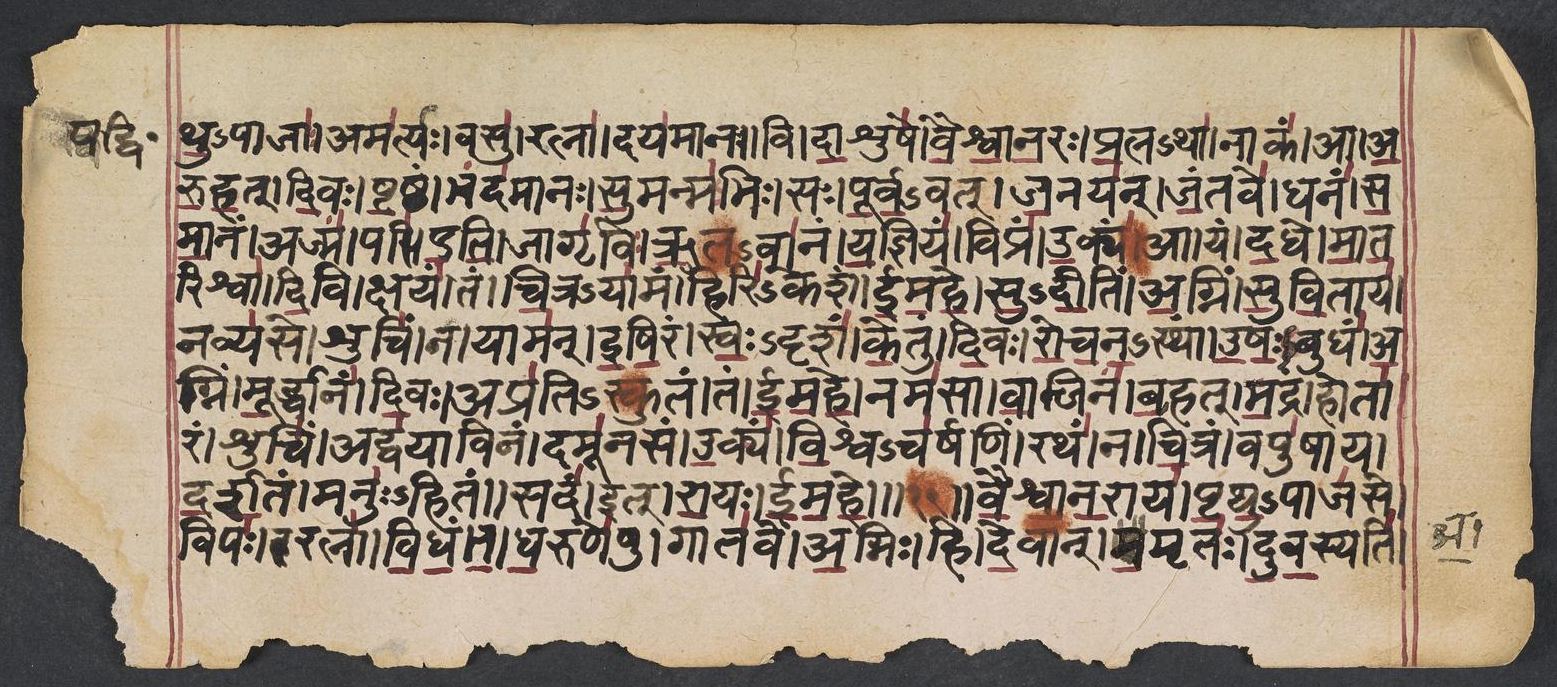
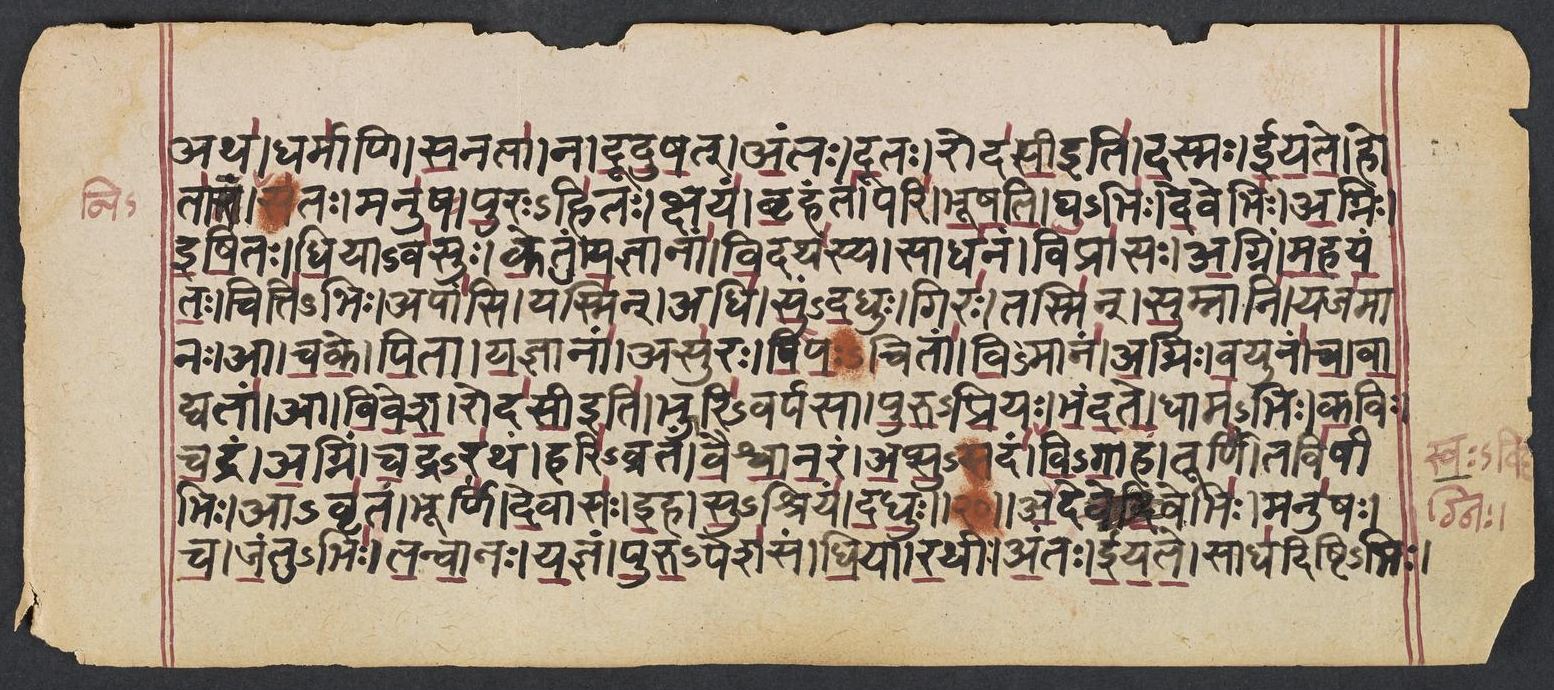
Where on the image
Penn Ms. Coll. 390 Item 41, fol. 187r (numbered 9r by the scribe) (OPenn image 188, lower leaf). Checked on the image: the Rigveda text on this page begins in RV 3.3.1 ‹atha dharmāṇi sanatā na›. The next page with Rigveda text, fol. 187v (numbered 9v by the scribe), begins in RV 3.3.6 ‹jīraḥ damūnāḥ abhiśasti-cātanaḥ›. Verses 3.3.1-5 end on this page; 3.3.1 begins on fol. 186v (numbered 8v by the scribe).
1vai̱śvā̱na̱rāya̍ pṛthu̱pāja̍se̱ vipo̱ ratnā̍ vidhanta dha̱ruṇe̍ṣu̱ gāta̍ve | a̱gnir hi de̱vām̐ a̱mṛto̍ duva̱syaty athā̱ dharmā̍ṇi sa̱natā̱ na dū̍duṣat ||
2a̱ntar dū̱to roda̍sī da̱sma ī̍yate̱ hotā̱ niṣa̍tto̱ manu̍ṣaḥ pu̱rohi̍taḥ | kṣaya̍m bṛ̱hanta̱m pari̍ bhūṣati̱ dyubhi̍r de̱vebhi̍r a̱gnir i̍ṣi̱to dhi̱yāva̍suḥ ||
3ke̱tuṁ ya̱jñānā̍ṁ vi̱datha̍sya̱ sādha̍na̱ṁ viprā̍so a̱gnim ma̍hayanta̱ citti̍bhiḥ | apā̍ṁsi̱ yasmi̱nn adhi̍ saṁda̱dhur gira̱s tasmi̍n su̱mnāni̱ yaja̍māna̱ ā ca̍ke ||
4pi̱tā ya̱jñānā̱m asu̍ro vipa̱ścitā̍ṁ vi̱māna̍m a̱gnir va̱yuna̍ṁ ca vā̱ghatā̍m | ā vi̍veśa̱ roda̍sī̱ bhūri̍varpasā purupri̱yo bha̍ndate̱ dhāma̍bhiḥ ka̱viḥ ||
5ca̱ndram a̱gniṁ ca̱ndrara̍tha̱ṁ hari̍vrataṁ vaiśvāna̱ram a̍psu̱ṣada̍ṁ sva̱rvida̍m | vi̱gā̱haṁ tūrṇi̱ṁ tavi̍ṣībhi̱r āvṛ̍ta̱m bhūrṇi̍ṁ de̱vāsa̍ i̱ha su̱śriya̍ṁ dadhuḥ ||
Compare: Padapāṭha (word-by-word text written in the manuscript; Sansknet e-text via GRETIL)
1vaiśvānarāya | pṛthu-pājase | vipaḥ | ratnā | vidhanta | dharuṇeṣu | gātave | agniḥ | hi | devān | amṛtaḥ | duvasyati | atha | dharmāṇi | sanatā | na | dūduṣat
2antaḥ | dūtaḥ | rodasī iti | dasmaḥ | īyate | hotā | ni-sattaḥ | manuṣaḥ | puraḥ-hitaḥ | kṣayam | bṛhantam | pari | bhūṣati | dyu-bhiḥ | devebhiḥ | agniḥ | iṣitaḥ | dhiyāvasuḥ
3ketum | yajñānām | vidathasya | sādhanam | viprāsaḥ | agnim | mahayanta | citti-bhiḥ | apāṃsi | yasmin | adhi | sam-dadhuḥ | giraḥ | tasmin | sumnāni | yajamānaḥ | ā | cake
4pitā | yajñānām | asuraḥ | vipaḥ-citām | vi-mānam | agniḥ | vayunam | ca | vāghatām | ā | viveśa | rodasī iti | bhūri-varpasā | puru-priyaḥ | bhandate | dhāma-bhiḥ | kaviḥ
5candram | agnim | candra-ratham | hari-vratam | vaiśvānaram | apsu-sadam | svaḥ-vidam | vi-gāham | tūrṇim | taviṣībhiḥ | āvṛtam | bhūrṇim | devāsaḥ | iha | su-śriyam | dadhuḥ
1To him who shines afar, Vaiṣvânara, shall bards give precious things that he may go on certain paths: For Agni the Immortal serves the Deities, and therefore never breaks their everlasting laws.
2He, wondrous envoy, goes between the earth and heaven, firm seated as the Herald, great High Priest of men. He compassethwith rays the lofty dwelling-place, Agni, sent forward by the Gods, enriched with piayer.
3Sages shall glorify Agni with earnest thoughts, ensign of sacrifice, who fills the synod full: In whom the singers have stored up their holy acts to him the worshipper looks for joy and happiness.
4The Sire of sacrifice, great God of holy bards, Agni, the measure and the symbol of the priests, Hath entered heaven and earth that show in varied form: the Sage whom many love rejoiceth in his might.
5Bright Agni with the bright car, Lord of green domains, Vaiṣvânara dweller in the floods, who finds the light, Pervading, swift and wild, encompassed round with powers, him very glorious have the Gods established here.
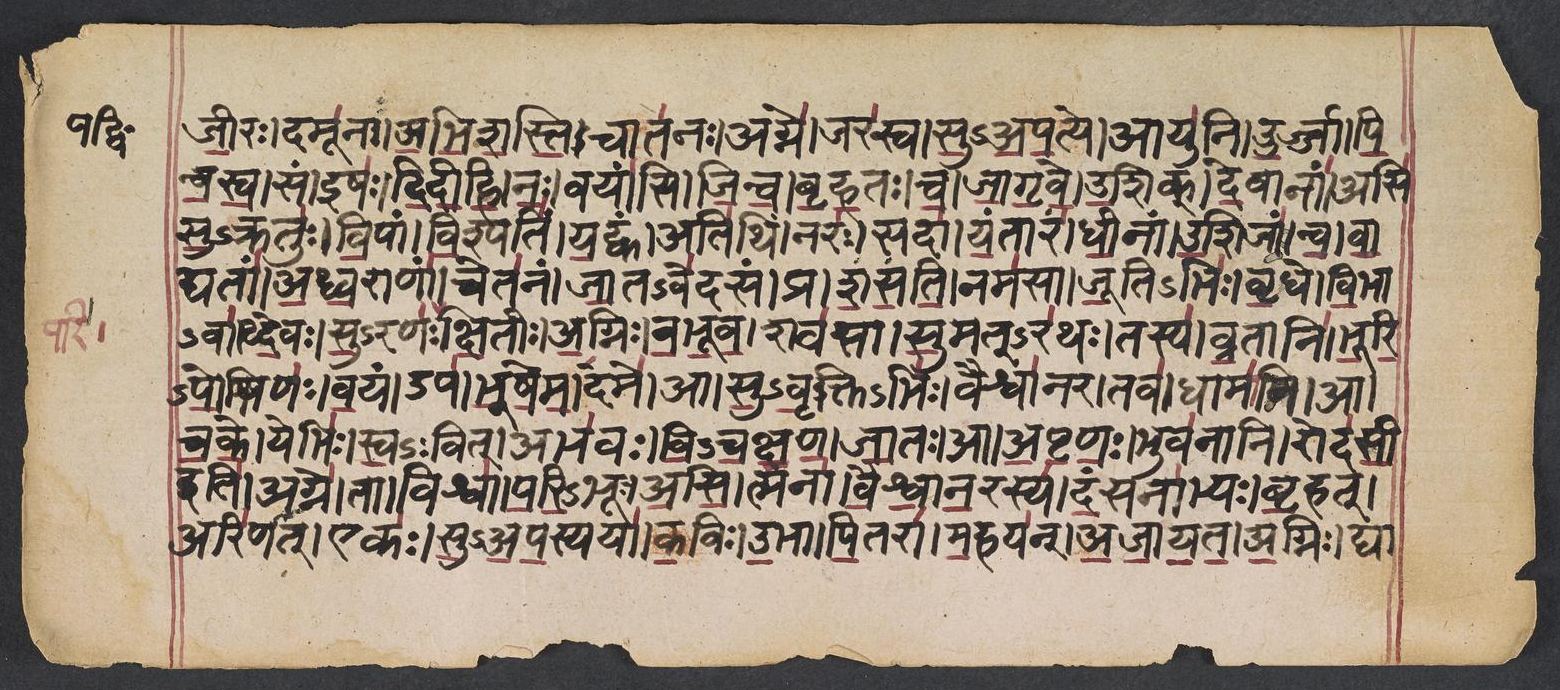
Where on the image
Penn Ms. Coll. 390 Item 41, fol. 187v (numbered 9v by the scribe) (OPenn image 189, upper leaf). Checked on the image: the Rigveda text on this page begins in RV 3.3.6 ‹jīraḥ damūnāḥ abhiśasti-cātanaḥ›. The next page with Rigveda text, fol. 188r (numbered 10r by the scribe), begins in RV 3.3.11 ‹-dyāvāpṛthivī iti bhūri-retasā›. Verses 3.3.6-10 end on this page; 3.3.6 begins on fol. 187r (numbered 9r by the scribe).
6a̱gnir de̱vebhi̱r manu̍ṣaś ca ja̱ntubhi̍s tanvā̱no ya̱jñam pu̍ru̱peśa̍saṁ dhi̱yā | ra̱thīr a̱ntar ī̍yate̱ sādha̍diṣṭibhir jī̱ro damū̍nā abhiśasti̱cāta̍naḥ ||
7agne̱ jara̍sva svapa̱tya āyu̍ny ū̱rjā pi̍nvasva̱ sam iṣo̍ didīhi naḥ | vayā̍ṁsi jinva bṛha̱taś ca̍ jāgṛva u̱śig de̱vānā̱m asi̍ su̱kratu̍r vi̱pām ||
8vi̱śpati̍ṁ ya̱hvam ati̍thi̱ṁ nara̱ḥ sadā̍ ya̱ntāra̍ṁ dhī̱nām u̱śija̍ṁ ca vā̱ghatā̍m | a̱dhva̱rāṇā̱ṁ ceta̍naṁ jā̱tave̍dasa̱m pra śa̍ṁsanti̱ nama̍sā jū̱tibhi̍r vṛ̱dhe ||
9vi̱bhāvā̍ de̱vaḥ su̱raṇa̱ḥ pari̍ kṣi̱tīr a̱gnir ba̍bhūva̱ śava̍sā su̱madra̍thaḥ | tasya̍ vra̱tāni̍ bhūripo̱ṣiṇo̍ va̱yam upa̍ bhūṣema̱ dama̱ ā su̍vṛ̱ktibhi̍ḥ ||
10vaiśvā̍nara̱ tava̱ dhāmā̱ny ā ca̍ke̱ yebhi̍ḥ sva̱rvid abha̍vo vicakṣaṇa | jā̱ta āpṛ̍ṇo̱ bhuva̍nāni̱ roda̍sī̱ agne̱ tā viśvā̍ pari̱bhūr a̍si̱ tmanā̍ ||
Compare: Padapāṭha (word-by-word text written in the manuscript; Sansknet e-text via GRETIL)
6agniḥ | devebhiḥ | manuṣaḥ | ca | jantu-bhiḥ | tanvānaḥ | yajñam | puru-peśasam | dhiyā | rathīḥ | antaḥ | īyate | sādhadiṣṭi-bhiḥ | jīraḥ | damūnāḥ | abhiśasti-cātanaḥ
7agne | jarasva | su-apatye | āyuni | ūrjā | pinvasva | sam | iṣaḥ | didīhi | naḥ | vayāṃsi | jinva | bṛhataḥ | ca | jāgṛve | uśik | devānām | asi | su-kratuḥ | vipām
8viśpatim | yahvam | atithim | naraḥ | sadā | yantāram | dhīnām | uśijam | ca | vāghatām | adhvarāṇām | cetanam | jāta-vedasam | pra | śaṃsanti | namasā | jūti-bhiḥ | vṛdhe
9vibhāvā | devaḥ | su-raṇaḥ | pari | kṣitīḥ | agniḥ | babhūva | śavasā | sumat-rathaḥ | tasya | vratāni | bhūri-poṣiṇaḥ | vayam | upa | bhūṣema | dame | ā | suvṛkti-bhiḥ
10vaiśvānara | tava | dhāmāni | ā | cakre | yebhiḥ | svaḥ-vit | abhavaḥ | vi-cakṣaṇa | jātaḥ | ā | apṛṇaḥ | bhuvanāni | rodasī iti | agne | tā | viśvā | pari-bhūḥ | asi | tmanā
6Agni, together with the Gods and Manu's folk by thought extending sacrifice in varied form, Goes, car-borne, to and fro with those who crown each rite, the fleet, the Household Friend, who turns the curse aside.
7Sing, Agni, for long life to us and noble sons: teem thou with plenty, shine upon us store of food. Increase the great man's strength, thou ever-vigilant: thou, longing for the Gods, knowest their hymns full well.
8The Mighty One, Lord of the people and their guest, the leader of their thoughts, devoted Friend of priests, Our solemn rites' announcer, Jâtavedas, men with worship ever praise, with urgings for their weal.
9Agni the God resplendent, giver of great joy, hath on his lovely car compassed the lands with, might. Let us with pure laudations in his house approach the high laws of the nourisher of multitudes.
10I celebrate thy glories, O Vaiṣvânara, wherewith thou, O farsighted God, has found the light. Thou filledst at thy birth both worlds, the earth and heaven: all this, O Agni, hast thou compassed of thyself.
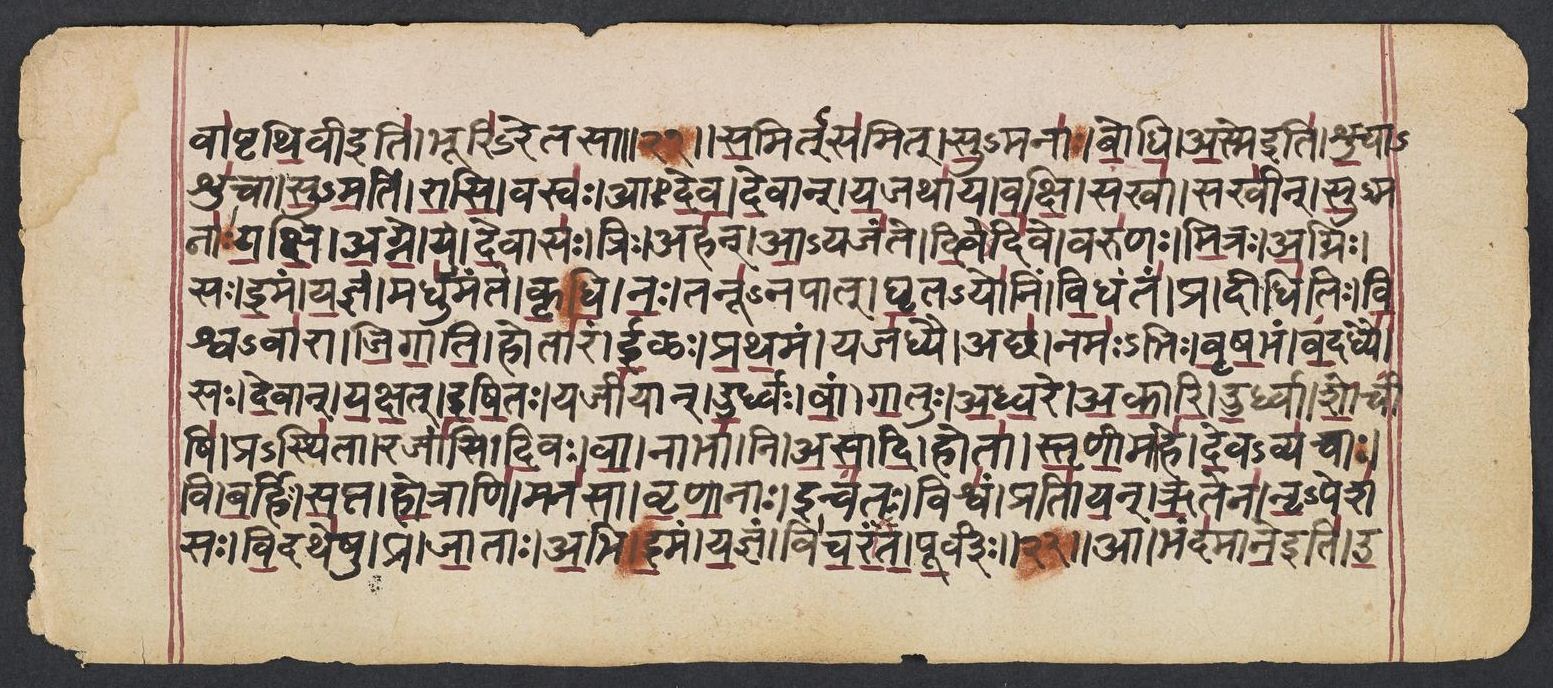
Where on the image
Penn Ms. Coll. 390 Item 41, fol. 188r (numbered 10r by the scribe) (OPenn image 189, lower leaf). Checked on the image: the Rigveda text on this page begins in RV 3.3.11 ‹-dyāvāpṛthivī iti bhūri-retasā›. The next page with Rigveda text, fol. 188v (numbered 10v by the scribe), begins in RV 3.4.6 ‹-uṣasau upāke iti uta›. Verse 3.3.11 ends on this page; 3.3.11 begins on fol. 187v (numbered 9v by the scribe).
11vai̱śvā̱na̱rasya̍ da̱ṁsanā̍bhyo bṛ̱had ari̍ṇā̱d eka̍ḥ svapa̱syayā̍ ka̱viḥ | u̱bhā pi̱tarā̍ ma̱haya̍nn ajāyatā̱gnir dyāvā̍pṛthi̱vī bhūri̍retasā ||
Compare: Padapāṭha (word-by-word text written in the manuscript; Sansknet e-text via GRETIL)
11vaiśvānarasya | daṃsanābhyaḥ | bṛhat | ariṇāt | ekaḥ | su-apasyayā | kaviḥ | ubhā | pitarā | mahayan | ajāyata | agniḥ | dyāvāpṛthivī iti | bhūri-retasā
11By his great skill the Sage alone hath brought to pass a great deed, mightier than Vaiṣvânara's wondrous acts. Agni sprang into being, magnifying both his Parents, Heaven and Earth, rich in prolific seed.
Notes
- Sanskrit: Aufrecht's edition (1877) with the Vedic accents, as entered by van Nooten and Holland (GRETIL).
- English: Ralph T. H. Griffith, The Hymns of the Rigveda (1889-1892; 2nd ed. 1896-1897), from the VedaWeb digital text; OCR slips in that text were corrected against the printed 2nd edition (data/sources/rigveda/griffith_errata.json).
- Padapāṭha (edition text): Sansknet e-text via GRETIL (CC BY-NC-SA 4.0).
Cite
Sources
- Source: Penn Ms. Coll. 390 Item 41 (undated (catalogued with Penn's 18th-19th c. Vedic manuscripts)), OPenn, Public Domain Mark + Aufrecht's accented text (GRETIL) + Griffith's English (VedaWeb) (holding institution)
- Critical edition: Aufrecht (1877), accented e-text via GRETIL
← previous · → next · v cycle view · l back to library