Rigveda 3.4: Apri hymn
Introduction
Rigveda 3.4 is a hymn of 11 verses addressed to Apri hymn. It stands in book (maṇḍala) 3, the family book of Viśvāmitra. The Rigveda is the oldest collection of Sanskrit hymns, composed in the second half of the second millennium BCE and handed down orally for many centuries before it was written down.
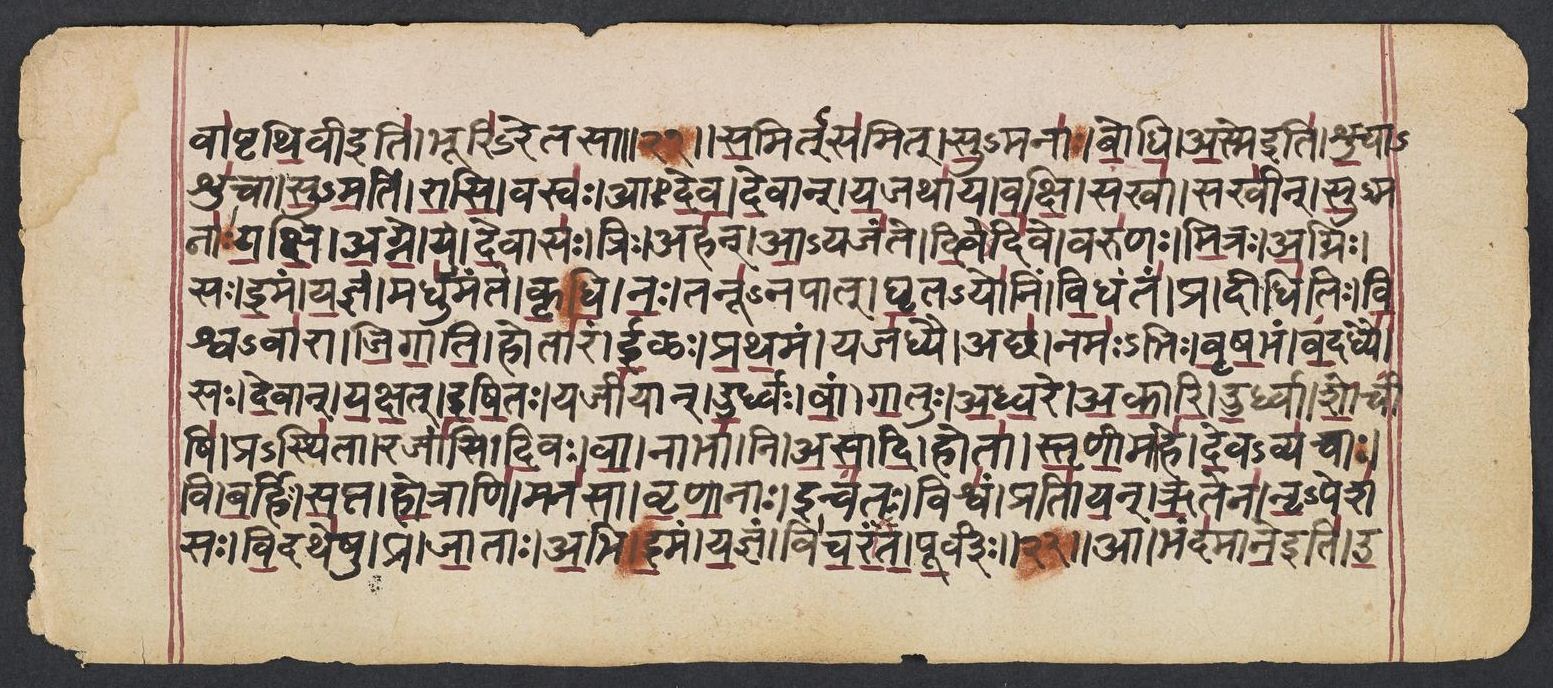
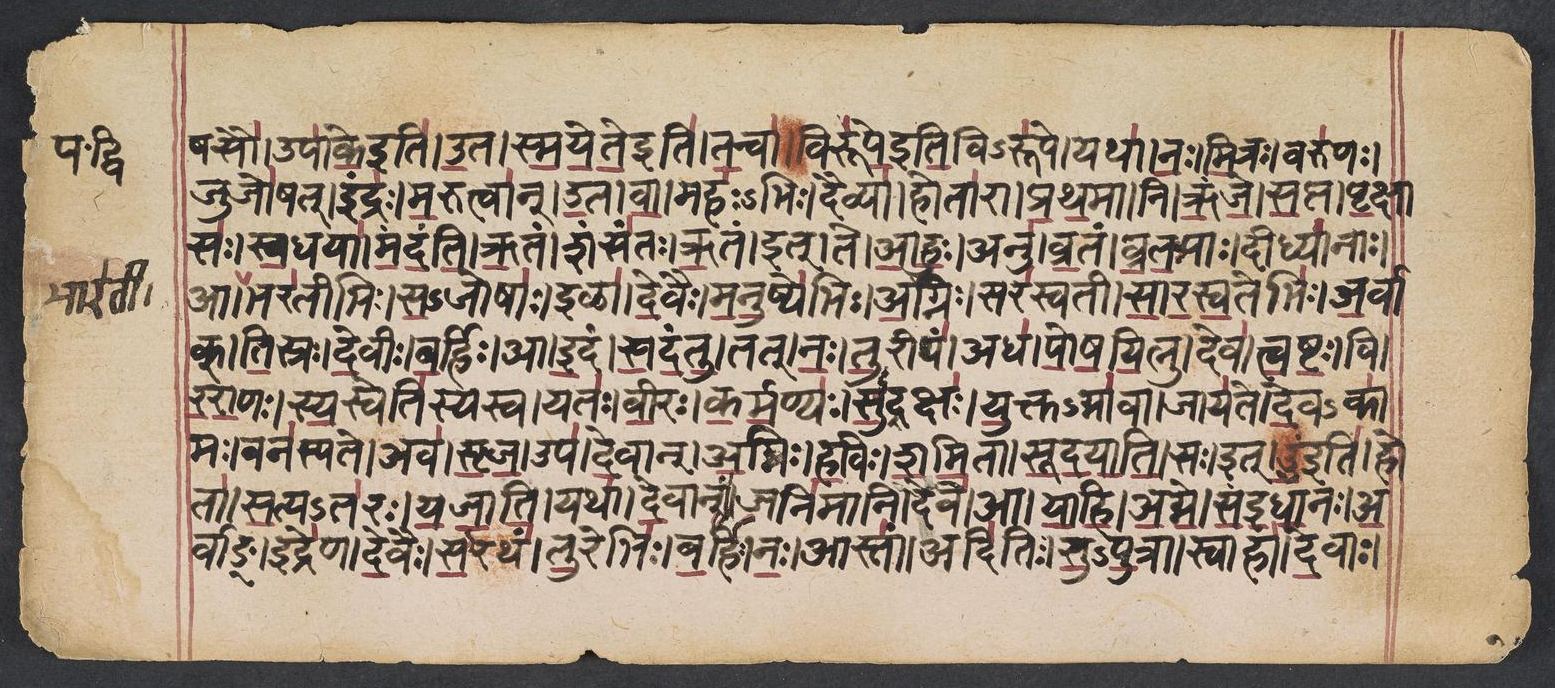
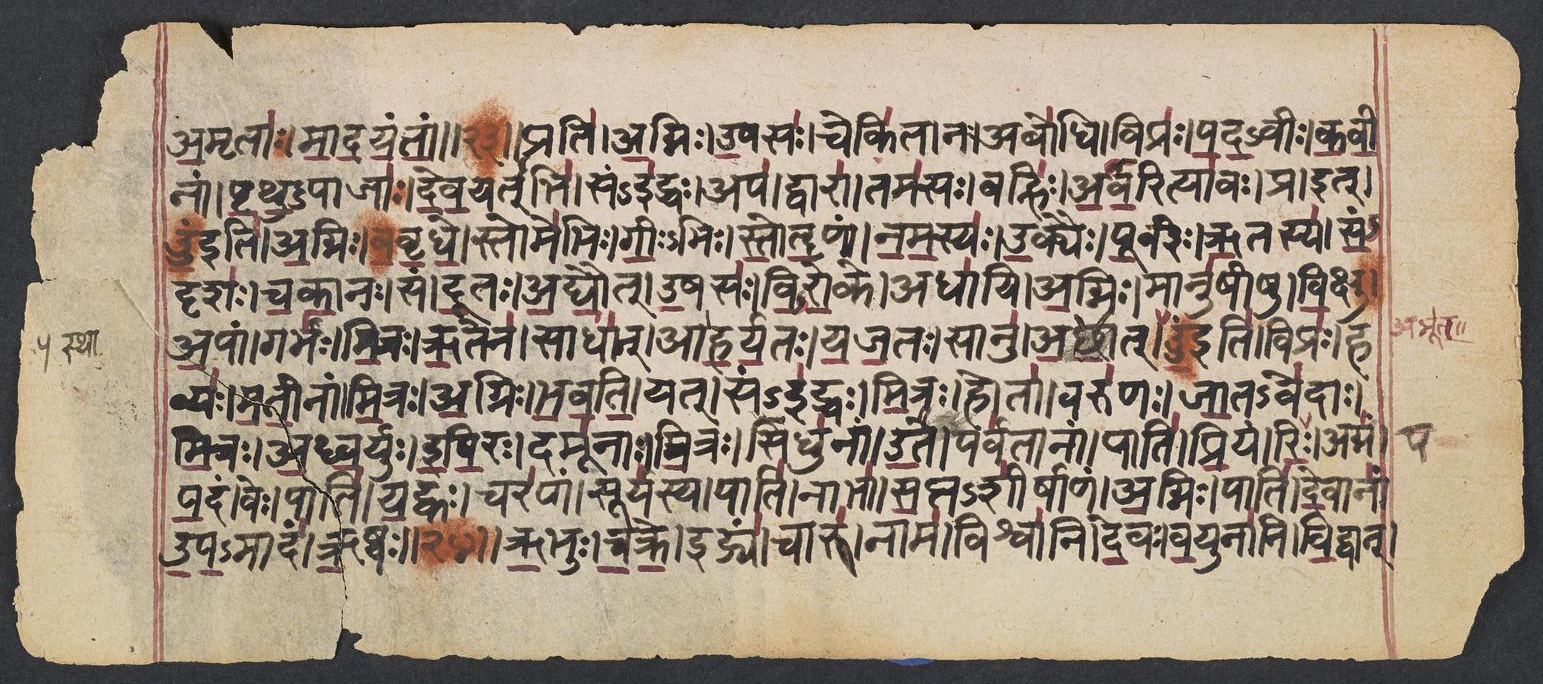
The manuscript shown is Penn Ms. Coll. 390 Item 41 (University of Pennsylvania), an undated paper manuscript of the padapāṭha (the word-by-word recitation text, in which every word is written separately and compounds are split) of the whole Ṛgveda in Devanāgarī, 884 leaves in fascicles, 7-9 lines to the page, accents in red; this hymn stands on fol. 188r-189r. Each section below gives the verses that end on one page; the page boundaries were read on the images (the opening words of every page), not counted out. Where the manuscript is a padapāṭha (the word-by-word recitation text), the section shows Aufrecht's continuous (saṃhitā) text first and, as the edition text, the padapāṭha of the same verses, which is the form written on the page.
How was this verified? (Provenance)
Where on the image
Penn Ms. Coll. 390 Item 41, fol. 188r (numbered 10r by the scribe) (OPenn image 189, lower leaf). Checked on the image: the Rigveda text on this page begins in RV 3.3.11 ‹-dyāvāpṛthivī iti bhūri-retasā›. The next page with Rigveda text, fol. 188v (numbered 10v by the scribe), begins in RV 3.4.6 ‹-uṣasau upāke iti uta›. Verses 3.4.1-5 end on this page.
1sa̱mit-sa̍mit su̱manā̍ bodhy a̱sme śu̱cā-śu̍cā suma̱tiṁ rā̍si̱ vasva̍ḥ | ā de̍va de̱vān ya̱jathā̍ya vakṣi̱ sakhā̱ sakhī̍n su̱manā̍ yakṣy agne ||
2yaṁ de̱vāsa̱s trir aha̍nn ā̱yaja̍nte di̱ve-di̍ve̱ varu̍ṇo mi̱tro a̱gniḥ | semaṁ ya̱jñam madhu̍mantaṁ kṛdhī na̱s tanū̍napād ghṛ̱tayo̍niṁ vi̱dhanta̍m ||
3pra dīdhi̍tir vi̱śvavā̍rā jigāti̱ hotā̍ram i̱ḻaḥ pra̍tha̱maṁ yaja̍dhyai | acchā̱ namo̍bhir vṛṣa̱bhaṁ va̱ndadhyai̱ sa de̱vān ya̍kṣad iṣi̱to yajī̍yān ||
4ū̱rdhvo vā̍ṁ gā̱tur a̍dhva̱re a̍kāry ū̱rdhvā śo̱cīṁṣi̱ prasthi̍tā̱ rajā̍ṁsi | di̱vo vā̱ nābhā̱ ny a̍sādi̱ hotā̍ stṛṇī̱mahi̍ de̱vavya̍cā̱ vi ba̱rhiḥ ||
5sa̱pta ho̱trāṇi̱ mana̍sā vṛṇā̱nā inva̍nto̱ viśva̱m prati̍ yann ṛ̱tena̍ | nṛ̱peśa̍so vi̱dathe̍ṣu̱ pra jā̱tā a̱bhī̱3̱̍maṁ ya̱jñaṁ vi ca̍ranta pū̱rvīḥ ||
Compare: Padapāṭha (word-by-word text written in the manuscript; Sansknet e-text via GRETIL)
1samit-samit | su-manāḥ | bodhi | asme iti | śucāśucā | su-matim | rāsi | vasvaḥ | ā | deva | devān | yajathāya | vakṣi | sakhā | sakhīn | su-manāḥ | yakṣi | agne
2yam | devāsaḥ | triḥ | ahan | āyajante | dive--dive | varuṇaḥ | mitraḥ | agniḥ | saḥ | imam | yajñam | madhu-mantam | kṛdhi | naḥ | tanū-napāt | ghṛta-yonim | vidhantam
3pra | dīdhitiḥ | viśva-vārā | jigāti | hotāram | iḷaḥ | prathamam | yajadhyai | accha | namaḥ-bhiḥ | vṛṣabham | vandadhyai | saḥ | devān | yakṣat | iṣitaḥ | yajīyān
4ūrdhvaḥ | vām | gātuḥ | adhvare | akāri | ūrdhvā | śocīṃṣi | prasthitā | rajāṃsi | divaḥ | vā | nābhā | ni | asādi | hotā | stṛṇīmahi | deva-vyacāḥ | vi | barhiḥ
5sapta | hotrāṇi | manasā | vṛṇānāḥ | invantaḥ | viśvam | prati | yan | ṛtena | nṛ-peśasaḥ | vidatheṣu | pra | jātāḥ | abhi | imam | yajñam | vi | caranta | pūrvīḥ
1BE friendly with each kindled log of fuel, with every flash bestow the boon of riches. Bring thou the Gods, O God, unto our worship: serve, well-inclined, as Friend thy friends, O Agni.
2Agni whom daily Varuṇa and Mitra the Gods bring thrice a day to this our worship, Tanûnapât, enrich with meath our service that dwells with holy oil, that offers honour.
3The thought that bringeth every boon proceedeth to worship first the Priest of the libation, That we may greet the Strong One with our homage. Urged, may he bring the Gods, best Sacrificer.
4On high your way to sacrifice was made ready; the radiant flames went upward to the regions. Full in the midst of heaven the Priest is seated: sirew we the sacred grass where Gods may rest them.
5Claiming in mind the seven priests' burntoblations, inciting all, they came in settled order. To this our sacrifice approach the many who show in hero beauty at assemblies.
Where on the image
Penn Ms. Coll. 390 Item 41, fol. 188v (numbered 10v by the scribe) (OPenn image 190, upper leaf). Checked on the image: the Rigveda text on this page begins in RV 3.4.6 ‹-uṣasau upāke iti uta›. The next page with Rigveda text, fol. 189r (numbered 11r by the scribe), begins in RV 3.4.11 ‹amṛtāḥ mādayantām›. Verses 3.4.6-10 end on this page; 3.4.6 begins on fol. 188r (numbered 10r by the scribe).
6ā bhanda̍māne u̱ṣasā̱ upā̍ke u̱ta sma̍yete ta̱nvā̱3̱̍ virū̍pe | yathā̍ no mi̱tro varu̍ṇo̱ jujo̍ṣa̱d indro̍ ma̱rutvā̍m̐ u̱ta vā̱ maho̍bhiḥ ||
7daivyā̱ hotā̍rā pratha̱mā ny ṛ̍ñje sa̱pta pṛ̱kṣāsa̍ḥ sva̱dhayā̍ madanti | ṛ̱taṁ śaṁsa̍nta ṛ̱tam it ta ā̍hu̱r anu̍ vra̱taṁ vra̍ta̱pā dīdhyā̍nāḥ ||
8ā bhāra̍tī̱ bhāra̍tībhiḥ sa̱joṣā̱ iḻā̍ de̱vair ma̍nu̱ṣye̍bhir a̱gniḥ | sara̍svatī sārasva̱tebhi̍r a̱rvāk ti̱sro de̱vīr ba̱rhir edaṁ sa̍dantu ||
9tan na̍s tu̱rīpa̱m adha̍ poṣayi̱tnu deva̍ tvaṣṭa̱r vi ra̍rā̱ṇaḥ sya̍sva | yato̍ vī̱raḥ ka̍rma̱ṇya̍ḥ su̱dakṣo̍ yu̱ktagrā̍vā̱ jāya̍te de̱vakā̍maḥ ||
10vana̍spa̱te 'va̍ sṛ̱jopa̍ de̱vān a̱gnir ha̱viḥ śa̍mi̱tā sū̍dayāti | sed u̱ hotā̍ sa̱tyata̍ro yajāti̱ yathā̍ de̱vānā̱ṁ jani̍māni̱ veda̍ ||
Compare: Padapāṭha (word-by-word text written in the manuscript; Sansknet e-text via GRETIL)
6ā | bhandamāneiti | uṣasau | upāke iti | uta | smayeteiti | tanvā | virūpeitivi-rūpe | yathā | naḥ | mitraḥ | varuṇaḥ | jujoṣat | indraḥ | marutvān | uta | vā | mahaḥ-bhiḥ
7daivyā | hotārā | prathamā | ni | ṛñje | sapta | pṛkṣāsaḥ | svadhayā | madanti | ṛtam | śaṃsantaḥ | ṛtam | it | te | āhuḥ | anu | vratam | vrata-pāḥ | dīdhyānāḥ
8ā | bhāratī | bhāratībhiḥ | sa-joṣāḥ | iḷāḥ | devaiḥ | manuṣyebhiḥ | agniḥ | sarasvatī | sārasvatebhiḥ | arvāk | tisraḥ | devīḥ | barhiḥ | ā | idam | sadantu
9tat | naḥ | turīpam | adha | poṣayitnu | deva | tvaṣṭaḥ | vi | rarāṇaḥ | syasveti syasva | yataḥ | vīraḥ | karmaṇyaḥ | su-dakṣaḥ | yukta-grāvā | jāyate | deva-kāmaḥ
10vanaspate | ava | sṛja | upa | devān | agniḥ | haviḥ | śamitā | sūdayāti | saḥ | it | oṃ iti | hotā | satya-taraḥ | yajāti | yathā | devānām | janimāni | veda
6Night and Dawn, lauded, hither come together, both smiling, different are their forms in colour, That Varuṇa and Mitra may accept us, and Indra, girt by Maruts, with his glories.
7I crave the grace of heaven's two chief Invokers: the seven swift steeds joy in their wonted manner. These speak of truth, praising the truth eternal, thinking on Order as the guards of Order.
8May Bhâratî with all her Sisters, Iḷâ accordant with the Gods, with mortals Agni, Sarasvatî with all her kindred Rivers, come to this grass, Three Goddesses, and seat them.
9Well pleased with us do thou O God, O Tvashṭar, give ready issue to our procreant vigour, Whence springs the hero, powerful, skilled in action, lover of Gods, adjuster of the press-stones.
10Send to the Gods the oblation, Lord of Forests; and let the Immolator, Agni, dress it. He as the truer Priest shall offer worship, for the Gods' generations well he knoweth.
Where on the image
Penn Ms. Coll. 390 Item 41, fol. 189r (numbered 11r by the scribe) (OPenn image 190, lower leaf). Checked on the image: the Rigveda text on this page begins in RV 3.4.11 ‹amṛtāḥ mādayantām›. The next page with Rigveda text, fol. 189v (numbered 11v by the scribe), begins in RV 3.5.6 ‹samasya carma ghṛta-vat padam›. Verse 3.4.11 ends on this page; 3.4.11 begins on fol. 188v (numbered 10v by the scribe).
11ā yā̍hy agne samidhā̱no a̱rvāṅ indre̍ṇa de̱vaiḥ sa̱ratha̍ṁ tu̱rebhi̍ḥ | ba̱rhir na̍ āstā̱m adi̍tiḥ supu̱trā svāhā̍ de̱vā a̱mṛtā̍ mādayantām ||
Compare: Padapāṭha (word-by-word text written in the manuscript; Sansknet e-text via GRETIL)
11ā | yāhi | agne | sam-idhānaḥ | arvāṅ | indreṇa | devaiḥ | sa-ratham | turebhiḥ | barhiḥ | naḥ | āstām | aditiḥ | su-putrā | svāhā | devāḥ | amṛtāḥ | mādayantām
11Come thou to us, O Agni, duly kindled, together with the potent Gods and Indra. On this our grass sit Aditi, happy Mother, and let our Hail delight the Gods Immortal.
Notes
- Sanskrit: Aufrecht's edition (1877) with the Vedic accents, as entered by van Nooten and Holland (GRETIL).
- English: Ralph T. H. Griffith, The Hymns of the Rigveda (1889-1892; 2nd ed. 1896-1897), from the VedaWeb digital text; OCR slips in that text were corrected against the printed 2nd edition (data/sources/rigveda/griffith_errata.json).
- Padapāṭha (edition text): Sansknet e-text via GRETIL (CC BY-NC-SA 4.0).
Cite
Sources
- Source: Penn Ms. Coll. 390 Item 41 (undated (catalogued with Penn's 18th-19th c. Vedic manuscripts)), OPenn, Public Domain Mark + Aufrecht's accented text (GRETIL) + Griffith's English (VedaWeb) (holding institution)
- Critical edition: Aufrecht (1877), accented e-text via GRETIL
← previous · → next · v cycle view · l back to library