Rigveda 3.31: To Indra
Introduction
Rigveda 3.31 is a hymn of 22 verses addressed to Indra. It stands in book (maṇḍala) 3, the family book of Viśvāmitra. The Rigveda is the oldest collection of Sanskrit hymns, composed in the second half of the second millennium BCE and handed down orally for many centuries before it was written down.
The manuscript shown is Penn Ms. Coll. 390 Item 41 (University of Pennsylvania), an undated paper manuscript of the padapāṭha (the word-by-word recitation text, in which every word is written separately and compounds are split) of the whole Ṛgveda in Devanāgarī, 884 leaves in fascicles, 7-9 lines to the page, accents in red; this hymn stands on fol. 213r-216r. Each section below gives the verses that end on one page; the page boundaries were read on the images (the opening words of every page), not counted out. Where the manuscript is a padapāṭha (the word-by-word recitation text), the section shows Aufrecht's continuous (saṃhitā) text first and, as the edition text, the padapāṭha of the same verses, which is the form written on the page.
How was this verified? (Provenance)
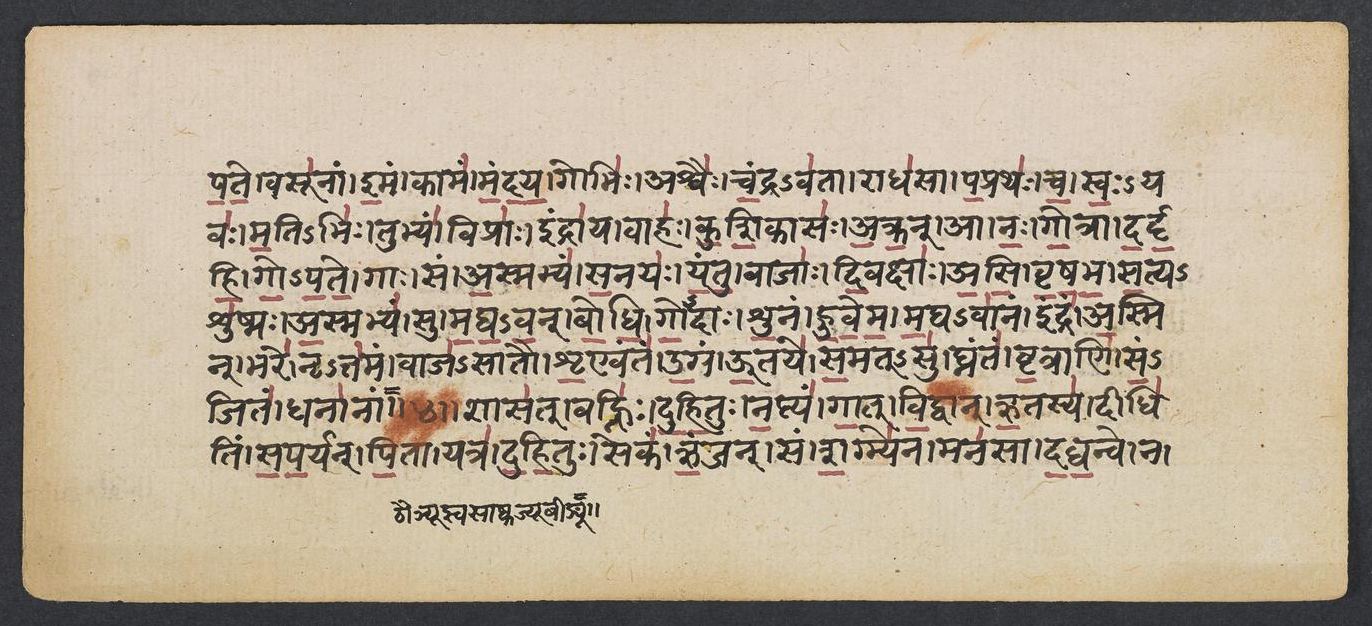
Where on the image
Penn Ms. Coll. 390 Item 41, fol. 213r (numbered 23r by the scribe) (OPenn image 214, lower leaf). Checked on the image: the Rigveda text on this page begins in RV 3.30.19 ‹-vasu-pate vasūnām›. The next page with Rigveda text, fol. 213v (numbered 23v by the scribe), begins in RV 3.31.2 ‹na jāmaye tānvaḥ riktham›. Verse 3.31.1 ends on this page.
1śāsa̱d vahni̍r duhi̱tur na̱ptya̍ṁ gād vi̱dvām̐ ṛ̱tasya̱ dīdhi̍tiṁ sapa̱ryan | pi̱tā yatra̍ duhi̱tuḥ seka̍m ṛ̱ñjan saṁ śa̱gmye̍na̱ mana̍sā dadha̱nve ||
Compare: Padapāṭha (word-by-word text written in the manuscript; Sansknet e-text via GRETIL)
1śāsat | vahniḥ | duhituḥ | naptyam | gāt | vidvān | ṛtasya | dīdhitim | saparyan | pitā | yatra | duhituḥ | sekam | ṛñjan | sam | śagmyena | manasā | dadhanve
1WISE, teaching, following the thought of Order, the sonless gained a grandson from his daughter. Fain, as a sire, to see his child prolific, he sped to meet her with an eager spirit.
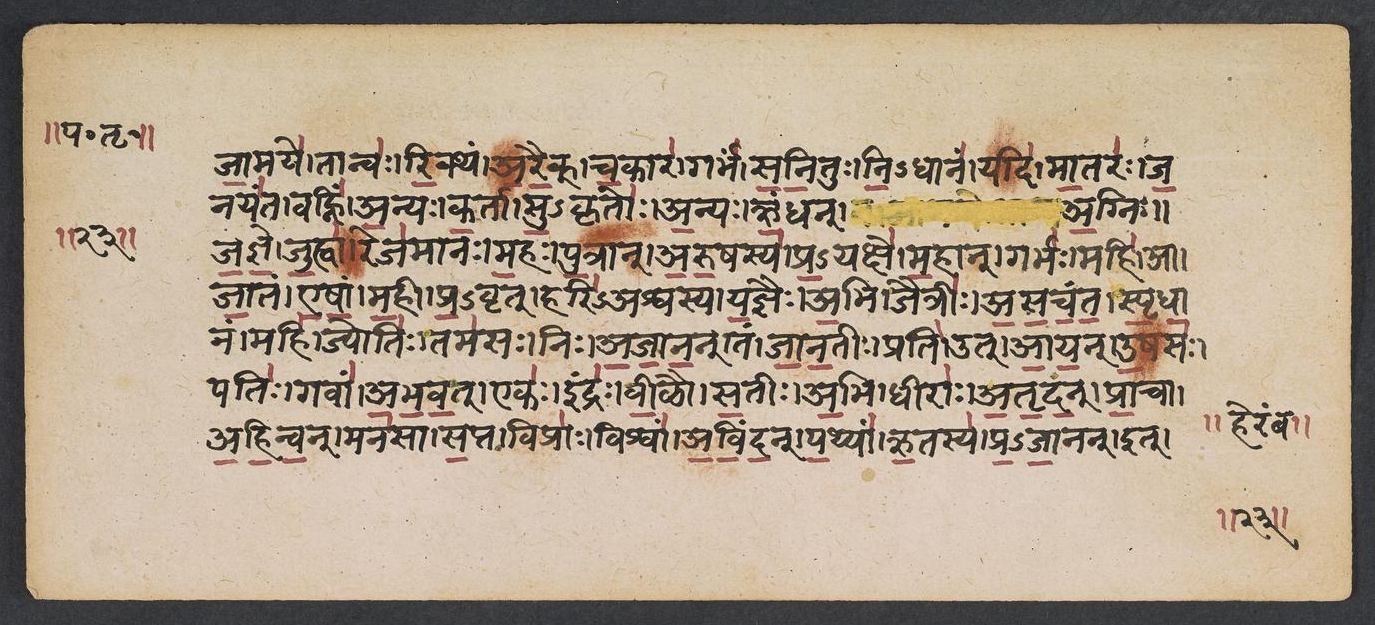
Where on the image
Penn Ms. Coll. 390 Item 41, fol. 213v (numbered 23v by the scribe) (OPenn image 215, upper leaf). Checked on the image: the Rigveda text on this page begins in RV 3.31.2 ‹na jāmaye tānvaḥ riktham›. The next page with Rigveda text, fol. 214r (numbered 24r by the scribe), begins in RV 3.31.5 ‹it tā namasā viveśa›. Verses 3.31.2-4 end on this page.
2na jā̱maye̱ tānvo̍ ri̱ktham ā̍raik ca̱kāra̱ garbha̍ṁ sani̱tur ni̱dhāna̍m | yadī̍ mā̱taro̍ ja̱naya̍nta̱ vahni̍m a̱nyaḥ ka̱rtā su̱kṛto̍r a̱nya ṛ̱ndhan ||
3a̱gnir ja̍jñe ju̱hvā̱3̱̍ reja̍māno ma̱has pu̱trām̐ a̍ru̱ṣasya̍ pra̱yakṣe̍ | ma̱hān garbho̱ mahy ā jā̱tam e̍ṣām ma̱hī pra̱vṛd dharya̍śvasya ya̱jñaiḥ ||
4a̱bhi jaitrī̍r asacanta spṛdhā̱nam mahi̱ jyoti̱s tama̍so̱ nir a̍jānan | taṁ jā̍na̱tīḥ praty ud ā̍yann u̱ṣāsa̱ḥ pati̱r gavā̍m abhava̱d eka̱ indra̍ḥ ||
Compare: Padapāṭha (word-by-word text written in the manuscript; Sansknet e-text via GRETIL)
2na | jāmaye | tānvaḥ | riktham | araik | cakāra | garbham | sanituḥ | ni-dhānam | yadi | mātaraḥ | janayanta | vahnim | anyaḥ | kartā | su-kṛtoḥ | anyaḥ | ṛndhan
3agniḥ | jajñe | juhvā | rejamānaḥ | mahaḥ | putrān | aruṣasya | pra-yakṣe | mahān | garbhaḥ | mahi | ā | jātam | eṣām | mahī | pra-vṛt | hari-aśvasya | yajñaiḥ
4abhi | jaitrīḥ | asacanta | spṛdhānam | mahi | jyotiḥ | tamasaḥ | niḥ | ajānan | tam | jānatīḥ | prati | ut | āyan | uṣasaḥ | patiḥ | gavām | abhavat | ekaḥ | indraḥ
2The Son left not his portion to the brother, he made a home to hold him who should gain, it. What time his Parents gave the Priest his being, of the good pair one acted, one promoted.
3Agni was born trembling with tongue that flickered, so that the Red's great children should be honoured. Great is their germ, that born of them is mighty, great the Bays' Lord's approach through sacrifices.
4Conquering bands upon the Warrior waited: they recognized great light from out the darkness. The conscious Dawns went forth to meet his coming, and the sole Master of the kine was Indra.
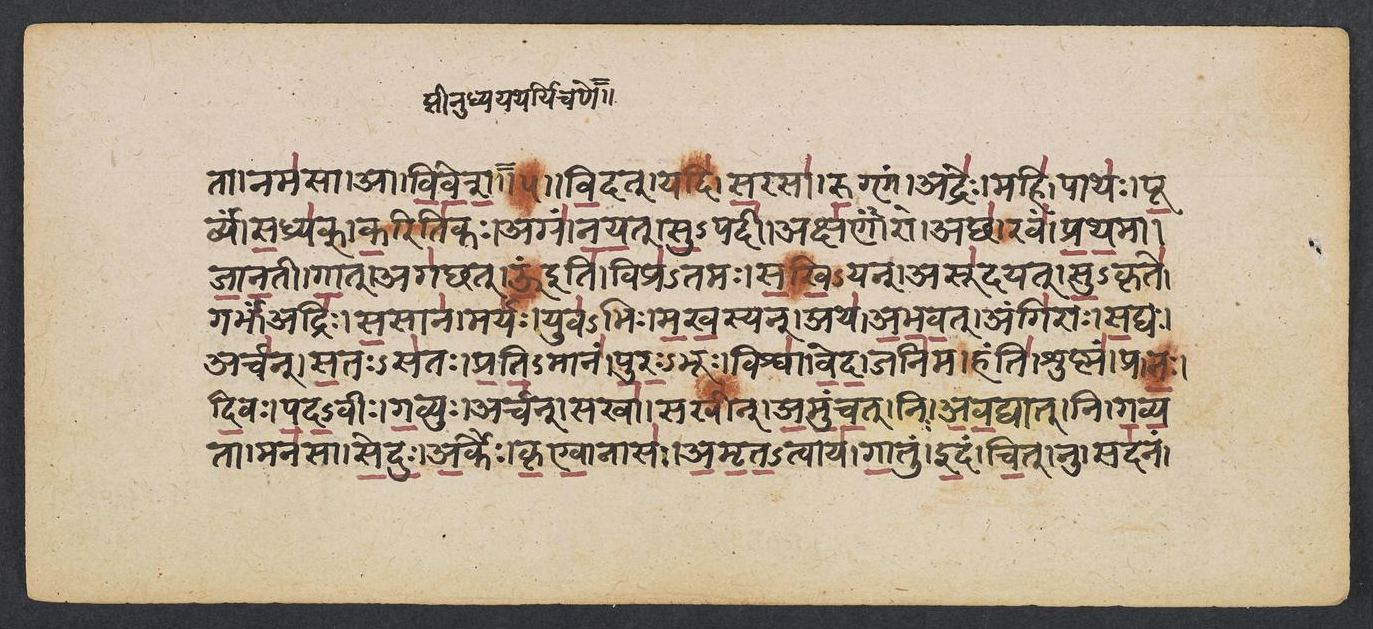
Where on the image
Penn Ms. Coll. 390 Item 41, fol. 214r (numbered 24r by the scribe) (OPenn image 215, lower leaf). Checked on the image: the Rigveda text on this page begins in RV 3.31.5 ‹it tā namasā viveśa›. The next page with Rigveda text, fol. 214v (numbered 24v by the scribe), begins in RV 3.31.9 ‹bhūri eṣām yena māsān›. Verses 3.31.5-8 end on this page; 3.31.5 begins on fol. 213v (numbered 23v by the scribe).
5vī̱ḻau sa̱tīr a̱bhi dhīrā̍ atṛndan prā̱cāhi̍nva̱n mana̍sā sa̱pta viprā̍ḥ | viśvā̍m avindan pa̱thyā̍m ṛ̱tasya̍ prajā̱nann it tā nama̱sā vi̍veśa ||
6vi̱dad yadī̍ sa̱ramā̍ ru̱gṇam adre̱r mahi̱ pātha̍ḥ pū̱rvyaṁ sa̱dhrya̍k kaḥ | agra̍ṁ nayat su̱pady akṣa̍rāṇā̱m acchā̱ rava̍m pratha̱mā jā̍na̱tī gā̍t ||
7aga̍cchad u̱ vipra̍tamaḥ sakhī̱yann asū̍dayat su̱kṛte̱ garbha̱m adri̍ḥ | sa̱sāna̱ maryo̱ yuva̍bhir makha̱syann athā̍bhava̱d aṅgi̍rāḥ sa̱dyo arca̍n ||
8sa̱taḥ-sa̍taḥ prati̱māna̍m puro̱bhūr viśvā̍ veda̱ jani̍mā̱ hanti̱ śuṣṇa̍m | pra ṇo̍ di̱vaḥ pa̍da̱vīr ga̱vyur arca̱n sakhā̱ sakhī̍m̐r amuñca̱n nir a̍va̱dyāt ||
Compare: Padapāṭha (word-by-word text written in the manuscript; Sansknet e-text via GRETIL)
5vīḷau | satīḥ | abhi | dhīrāḥ | atṛndan | prācā | ahinvan | manasā | sapta | viprāḥ | viśvām | avindan | pathyām | ṛtasya | pra-jānan | it | tā | namasā | viveśa
6vidat | yadi | saramā | rugṇam | adreḥ | mahi | pāthaḥ | pūrvyam | sadhryak | kariti kaḥ | agram | nayat | su-padī | akṣarāṇām | accha | ravam | prathamā | jānatī | gāt
7agacchat | oṃ iti | vipra-tamaḥ | sakhi-yan | asūdayat | su-kṛte | garbham | adriḥ | sasāna | maryaḥ | yuva-bhiḥ | makhasyan | atha | abhavat | aṅgirāḥ | sadyaḥ | arcan
8sataḥ-sataḥ | prati-mānam | puraḥ-bhūḥ | viśvā | veda | janima | hanti | śuṣṇam | pra | ṇaḥ | divaḥ | pada-vīḥ | gavyuḥ | arcan | sakhā | sakhīn | amuñcat | niḥ | avadyāt
5The sages freed them from their firmbuilt prison: the seven priests drove them forward with their spirit. All holy Order's pathway they discovered he, full of knowledge, shared these deeds through worship.
6When Saramâ had found the mountain's fissure, that vast and ancient place she plundered thoroughly. In the floods' van she led them forth, light-footed: she who well knew came first unto their lowing.
7Longing for friendship came the noblest singer: the hill poured forth its treasure for the pious. The Hero with young followers fought and conquered, and straightway Angiras was singing praises,
8Peer of each noble thing, yea, all excelling, all creatures doth he know, he slayeth Ṣushṇa. Our leader, fain for war, singing from heaven, as Friend he saved his lovers from dishonour.
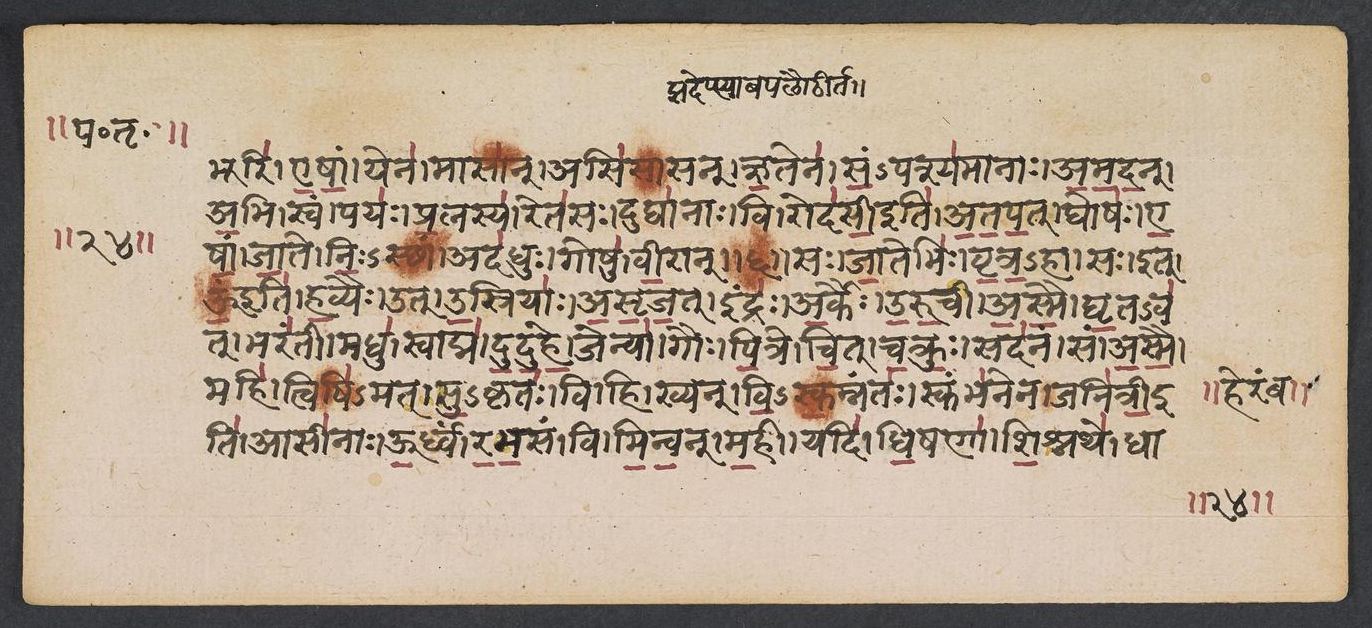
Where on the image
Penn Ms. Coll. 390 Item 41, fol. 214v (numbered 24v by the scribe) (OPenn image 216, upper leaf). Checked on the image: the Rigveda text on this page begins in RV 3.31.9 ‹bhūri eṣām yena māsān›. The next page with Rigveda text, fol. 215r (numbered 25r by the scribe), begins in RV 3.31.13 ‹-dhāt sadyaḥ-vṛdham vi-bhvam rodasyoḥ›. Verses 3.31.9-12 end on this page; 3.31.9 begins on fol. 214r (numbered 24r by the scribe).
9ni ga̍vya̱tā mana̍sā sedur a̱rkaiḥ kṛ̍ṇvā̱nāso̍ amṛta̱tvāya̍ gā̱tum | i̱daṁ ci̱n nu sada̍na̱m bhūry e̍ṣā̱ṁ yena̱ māsā̱m̐ asi̍ṣāsann ṛ̱tena̍ ||
10sa̱mpaśya̍mānā amadann a̱bhi svam paya̍ḥ pra̱tnasya̱ reta̍so̱ dughā̍nāḥ | vi roda̍sī atapa̱d ghoṣa̍ eṣāṁ jā̱te ni̱ṣṭhām ada̍dhu̱r goṣu̍ vī̱rān ||
11sa jā̱tebhi̍r vṛtra̱hā sed u̍ ha̱vyair ud u̱sriyā̍ asṛja̱d indro̍ a̱rkaiḥ | u̱rū̱cy a̍smai ghṛ̱tava̱d bhara̍ntī̱ madhu̱ svādma̍ duduhe̱ jenyā̱ gauḥ ||
12pi̱tre ci̍c cakru̱ḥ sada̍na̱ṁ sam a̍smai̱ mahi̱ tviṣī̍mat su̱kṛto̱ vi hi khyan | vi̱ṣka̱bhnanta̱ḥ skambha̍nenā̱ jani̍trī̱ āsī̍nā ū̱rdhvaṁ ra̍bha̱saṁ vi mi̍nvan ||
Compare: Padapāṭha (word-by-word text written in the manuscript; Sansknet e-text via GRETIL)
9ni | gavyatā | manasā | seduḥ | arkaiḥ | kṛṇvānāsaḥ | amṛta-tvāya | gātum | idam | ci t | nu | sadanam | bhūri | eṣām | yena | māsān | asisāsan | ṛtena
10sam-paśyamānāḥ | amadan | abhi | svam | payaḥ | pratnasya | retasaḥ | dughānāḥ | vi | rodasī iti | atapat | ghoṣaḥ | eṣām | jāte | niḥ-sthām | adadhuḥ | goṣu | vīrān
11saḥ | jātebhiḥ | vṛtra-hā | saḥ | it | oṃ iti | havyaiḥ | ut | usriyāḥ | asṛjat | indraḥ | arkaiḥ | urūcī | asmai | ghṛta-vat | bharantī | madhu | svādma | duduhe | jenyā | gauḥ
12pitre | cit | cakruḥ | sadanam | sam | asmai | mahi | tviṣi-mat | su-kṛtaḥ | vi | hi | khyan | vi-skabhnantaḥ | skambhanena | janitrī iti | āsīnāḥ | ūrdhvam | rabhasam | vi | minvan
9They sate them down with spirit fain for booty, making with hymns a way to life eternal. And this is still their place of frequent session, whereby they sought to gain the months through Order.
10Drawing the milk of ancient seed prolific, they joyed as they beheld their own possession. Their shout of triumph heated earth and heaven. When the kine showed, they bade the heroes rouse them.
11Indra drove forth the kine, that Vr̥itra-slayer, while hymns of praise rose up and gifts were offered. For him the Cow, noble and far-extending, poured pleasant juices, bringing oil and sweetness.
12They made a mansion for their Father, deftly provided him a great and glorious dwelling; With firm support parted and stayed the Parents, and, sitting, fixed him there erected, mighty.
Where on the image
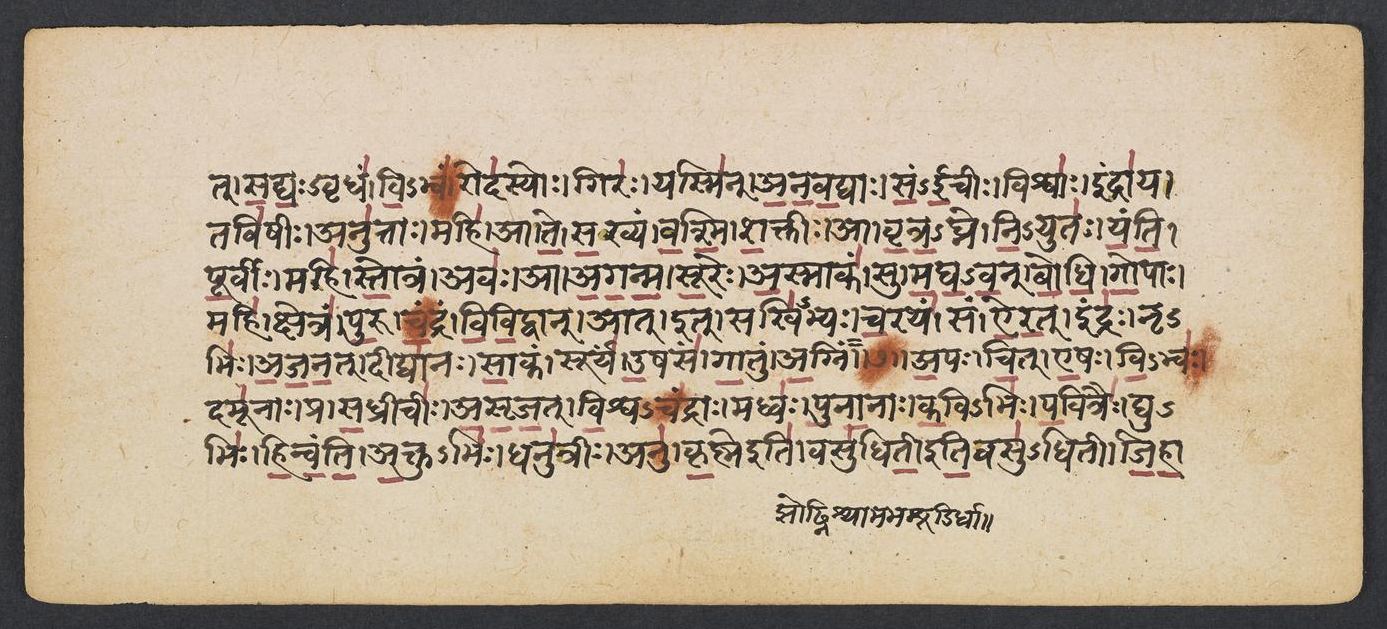
Penn Ms. Coll. 390 Item 41, fol. 215r (numbered 25r by the scribe) (OPenn image 216, lower leaf). Checked on the image: the Rigveda text on this page begins in RV 3.31.13 ‹-dhāt sadyaḥ-vṛdham vi-bhvam rodasyoḥ›. The next page with Rigveda text, fol. 215v (numbered 25v by the scribe), begins in RV 3.31.17 ‹-jihāteiti ubhe iti sūryasya›. Verses 3.31.13-16 end on this page; 3.31.13 begins on fol. 214v (numbered 24v by the scribe).
13ma̱hī yadi̍ dhi̱ṣaṇā̍ śi̱śnathe̱ dhāt sa̍dyo̱vṛdha̍ṁ vi̱bhva1̱̍ṁ roda̍syoḥ | giro̱ yasmi̍nn anava̱dyāḥ sa̍mī̱cīr viśvā̱ indrā̍ya̱ tavi̍ṣī̱r anu̍ttāḥ ||
14mahy ā te̍ sa̱khyaṁ va̍śmi śa̱ktīr ā vṛ̍tra̱ghne ni̱yuto̍ yanti pū̱rvīḥ | mahi̍ sto̱tram ava̱ āga̍nma sū̱rer a̱smāka̱ṁ su ma̍ghavan bodhi go̱pāḥ ||
15mahi̱ kṣetra̍m pu̱ru śca̱ndraṁ vi̍vi̱dvān ād it sakhi̍bhyaś ca̱ratha̱ṁ sam ai̍rat | indro̱ nṛbhi̍r ajana̱d dīdyā̍naḥ sā̱kaṁ sūrya̍m u̱ṣasa̍ṁ gā̱tum a̱gnim ||
16a̱paś ci̍d e̱ṣa vi̱bhvo̱3̱̍ damū̍nā̱ḥ pra sa̱dhrīcī̍r asṛjad vi̱śvaśca̍ndrāḥ | madhva̍ḥ punā̱nāḥ ka̱vibhi̍ḥ pa̱vitrai̱r dyubhi̍r hinvanty a̱ktubhi̱r dhanu̍trīḥ ||
Compare: Padapāṭha (word-by-word text written in the manuscript; Sansknet e-text via GRETIL)
13mahī | yadi | dhiṣaṇā | śiśnathe | dhāt | sadyaḥ-vṛdham | vi-bhvam | rodasyoḥ | giraḥ | yasmin | anavadyāḥ | sam-īcīḥ | viśvāḥ | indrāya | taviṣīḥ | anuttāḥ
14mahi | ā | te | sakhyam | vaśmi | śaktīḥ | ā | vṛtra-ghne | ni-yutaḥ | yanti | pūrvīḥ | mahi | stotram | avaḥ | ā | aganma | sūreḥ | asmākam | su | maghavan | bodhi | gopāḥ
15mahi | kṣetram | puru | candram | vividvān | āt | it | sakhi-bhyaḥ | caratham | sam | airat | indraḥ | nṛ-bhiḥ | ajanat | dīdyānaḥ | sākam | sūryam | uṣasam | gātum | agn im
16apaḥ | cit | eṣaḥ | vi-bhvaḥ | damūnāḥ | pra | sadhrīcīḥ | asṛjat | viśva-candrāḥ | madhvaḥ | punānāḥ | kavi-bhiḥ | pavitraiḥ | dyu-bhiḥ | hinvanti | aktu-bhiḥ | dhanutrīḥ
13What time the ample chalice had impelled him, swift waxing, vast, to pierce the earth and heaven,– Him in whom blameless songs are all united: all powers invincible belong to Indra.
14I crave thy powers, I crave thy mighty friendship: full many a team goes to the Vr̥itra-slayer. Great is the laud, we seek the Princes' favour. Be thou, O Maghavan, our guard and keeper.
15He, having found great, splendid, rich dominion, sent life and motion to his friends and lovers. Indra who shone together with the Heroes begat the song, the fire, and Sun and Morning.
16Vast, the House-Friend, he set the waters flowing, all-lucid, widely spread, that move together. By the wise cleansings of the meath made holy, through days, and nights they speed the swift streams onward.
Where on the image
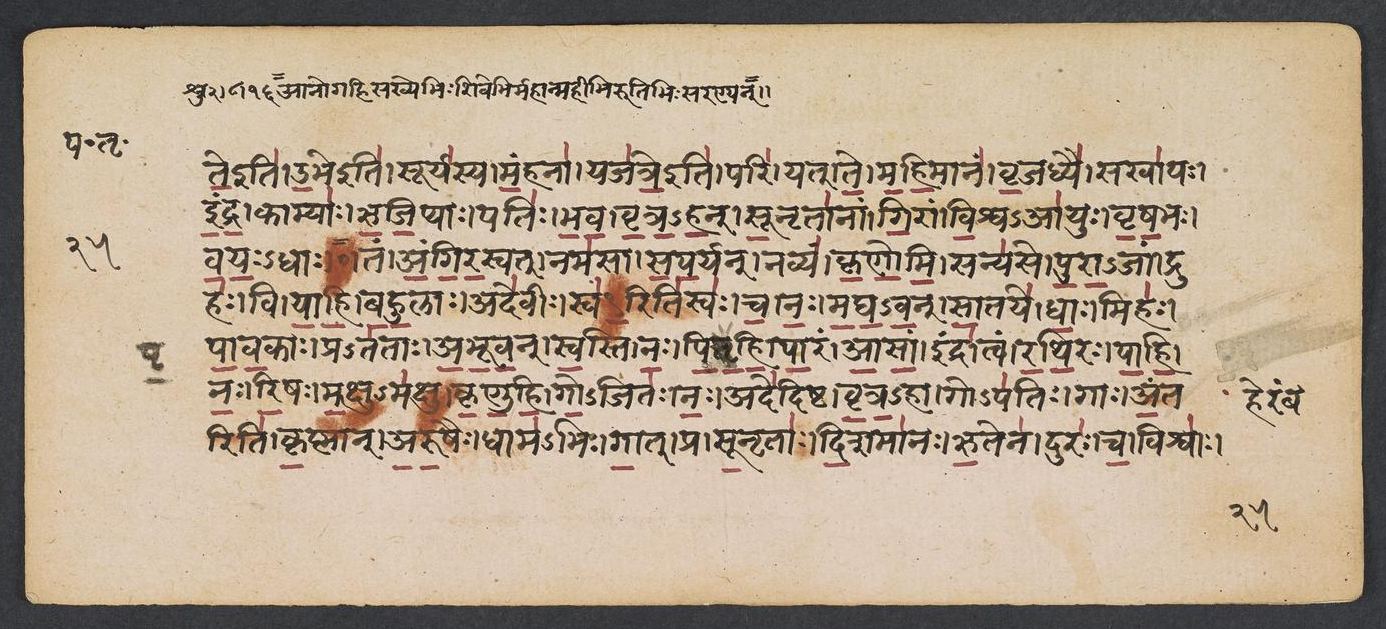
Penn Ms. Coll. 390 Item 41, fol. 215v (numbered 25v by the scribe) (OPenn image 217, upper leaf). Checked on the image: the Rigveda text on this page begins in RV 3.31.17 ‹-jihāteiti ubhe iti sūryasya›. The next page with Rigveda text, fol. 216r (numbered 26r by the scribe), begins in RV 3.31.22 ‹-dhanānām›. Verses 3.31.17-21 end on this page; 3.31.17 begins on fol. 215r (numbered 25r by the scribe).
17anu̍ kṛ̱ṣṇe vasu̍dhitī jihāte u̱bhe sūrya̍sya ma̱ṁhanā̱ yaja̍tre | pari̱ yat te̍ mahi̱māna̍ṁ vṛ̱jadhyai̱ sakhā̍ya indra̱ kāmyā̍ ṛji̱pyāḥ ||
18pati̍r bhava vṛtrahan sū̱nṛtā̍nāṁ gi̱rāṁ vi̱śvāyu̍r vṛṣa̱bho va̍yo̱dhāḥ | ā no̍ gahi sa̱khyebhi̍ḥ śi̱vebhi̍r ma̱hān ma̱hībhi̍r ū̱tibhi̍ḥ sara̱ṇyan ||
19tam a̍ṅgira̱svan nama̍sā sapa̱ryan navya̍ṁ kṛṇomi̱ sanya̍se purā̱jām | druho̱ vi yā̍hi bahu̱lā ade̍vī̱ḥ sva̍ś ca no maghavan sā̱taye̍ dhāḥ ||
20miha̍ḥ pāva̱kāḥ prata̍tā abhūvan sva̱sti na̍ḥ pipṛhi pā̱ram ā̍sām | indra̱ tvaṁ ra̍thi̱raḥ pā̍hi no ri̱ṣo ma̱kṣū-ma̍kṣū kṛṇuhi go̱jito̍ naḥ ||
21ade̍diṣṭa vṛtra̱hā gopa̍ti̱r gā a̱ntaḥ kṛ̱ṣṇām̐ a̍ru̱ṣair dhāma̍bhir gāt | pra sū̱nṛtā̍ di̱śamā̍na ṛ̱tena̱ dura̍ś ca̱ viśvā̍ avṛṇo̱d apa̱ svāḥ ||
Compare: Padapāṭha (word-by-word text written in the manuscript; Sansknet e-text via GRETIL)
17anu | kṛṣṇe iti | vasudhitī itivasu-dhitī | jihāteiti | ubhe iti | sūryasya | maṃhanā | yajatre | pari | yat | te | mahimānam | vṛjadhyai | sakhāyaḥ | indra | kāmyāḥ | ṛjipyāḥ
18patiḥ | bhava | vṛtra-han | sūnṛtānām | girām | viśva-āyuḥ | vṛṣabhaḥ | vayaḥ-dhāḥ | ā | naḥ | gahi | sakhyebhiḥ | śivebhiḥ | mahān | mahībhiḥ | ūti-bhiḥ | saraṇyan
19tam | aṅgirasvat | namasā | saparyan | navyam | kṛṇomi | sanyase | purājām | druhaḥ | vi | yāhi | bahulāḥ | adevīḥ | svar itisvaḥ | ca | naḥ | magha-van | sātaye | dhāḥ
20mihaḥ | pāvakāḥ | pra-tatāḥ | abhūvan | svasti | naḥ | pipṛhi | pāram | āsām | indra | tvam | rathiraḥ | pāhi | naḥ | riṣaḥ | makṣu-makṣu | kṛṇuhi | go--jitaḥ | naḥ
21adediṣṭa | vṛtra-hā | go--patiḥ | gāḥ | antariti | kṛṣṇān | aruṣaiḥ | dhāma-bhiḥ | gāt | pra | sūnṛtāḥ | diśamānaḥ | ṛtena | duraḥ | ca | viśvāḥ | avṛṇot | apa | svāḥ
17To thee proceed the dark, the treasure-holders, both of them sanctified by Sûrya's bounty. The while thy lovely storming Friends, O Indra, fail to attain the measure of thy greatness.
18Be Lord of joyous songs, O Vr̥itra-slayer, Bull dear to all, who gives the power of living. Come unto us with thine auspicious friendship, hastening, Mighty One, with mighty succours.
19Like Angiras I honour him with worship, and renovate old song for him the Ancient. Chase thou the many godless evil creatures, and give us, Maghavan, heaven's light to help m.
20Far forth are spread the purifying waters convey thou us across them unto safety. Save us, our Charioteer, from harm, O Indra, soon, very soon, make us win spoil of cattle.
21His kine their Lord hath shown, e'en Vr̥itra's slayer, through the black hosts he passed with red attendants. Teaching us pleasant things by holy Order, to, us hath he thrown open all his portals.
Where on the image
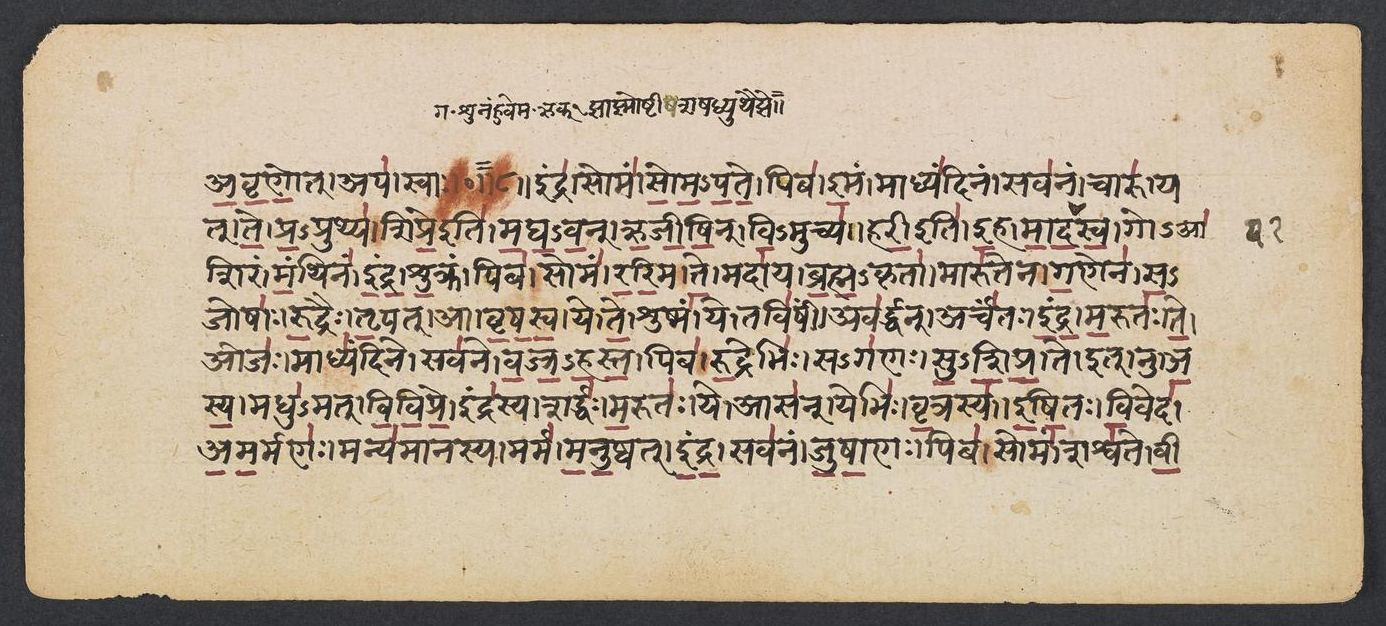
Penn Ms. Coll. 390 Item 41, fol. 216r (numbered 26r by the scribe) (OPenn image 217, lower leaf). Checked on the image: the Rigveda text on this page begins in RV 3.31.22 ‹-dhanānām›. The next page with Rigveda text, fol. 216v (numbered 26v by the scribe), begins in RV 3.32.5 ‹-vīryāya saḥ ā vavṛtsva›. Verse 3.31.22 ends on this page; 3.31.22 begins on fol. 215v (numbered 25v by the scribe).
22śu̱naṁ hu̍vema ma̱ghavā̍na̱m indra̍m a̱smin bhare̱ nṛta̍ma̱ṁ vāja̍sātau | śṛ̱ṇvanta̍m u̱gram ū̱taye̍ sa̱matsu̱ ghnanta̍ṁ vṛ̱trāṇi̍ sa̱ṁjita̱ṁ dhanā̍nām ||
Compare: Padapāṭha (word-by-word text written in the manuscript; Sansknet e-text via GRETIL)
22śunam | huvema | maghavānam | indram | asmin | bhare | nṛ-tamam | vāja-sātau | śṛṇvantam | ugram | ūtaye | samat-su | ghnantam | vṛtrāṇi | sam-jitam | dhanānām
22Call we on Maghavan, auspicious Indra, best Hero in this fight where spoil is gathered. The Strong who listens, who gives aid in battles, who slays the Vr̥itras, wins and gathers riches.
Notes
- Sanskrit: Aufrecht's edition (1877) with the Vedic accents, as entered by van Nooten and Holland (GRETIL).
- English: Ralph T. H. Griffith, The Hymns of the Rigveda (1889-1892; 2nd ed. 1896-1897), from the VedaWeb digital text; OCR slips in that text were corrected against the printed 2nd edition (data/sources/rigveda/griffith_errata.json).
- Padapāṭha (edition text): Sansknet e-text via GRETIL (CC BY-NC-SA 4.0).
Cite
Sources
- Source: Penn Ms. Coll. 390 Item 41 (undated (catalogued with Penn's 18th-19th c. Vedic manuscripts)), OPenn, Public Domain Mark + Aufrecht's accented text (GRETIL) + Griffith's English (VedaWeb) (holding institution)
- Critical edition: Aufrecht (1877), accented e-text via GRETIL
← previous · → next · v cycle view · l back to library