Rigveda 3.32: To Indra
Introduction
Rigveda 3.32 is a hymn of 17 verses addressed to Indra. It stands in book (maṇḍala) 3, the family book of Viśvāmitra. The Rigveda is the oldest collection of Sanskrit hymns, composed in the second half of the second millennium BCE and handed down orally for many centuries before it was written down.
The manuscript shown is Penn Ms. Coll. 390 Item 41 (University of Pennsylvania), an undated paper manuscript of the padapāṭha (the word-by-word recitation text, in which every word is written separately and compounds are split) of the whole Ṛgveda in Devanāgarī, 884 leaves in fascicles, 7-9 lines to the page, accents in red; this hymn stands on fol. 216r-217v. Each section below gives the verses that end on one page; the page boundaries were read on the images (the opening words of every page), not counted out. Where the manuscript is a padapāṭha (the word-by-word recitation text), the section shows Aufrecht's continuous (saṃhitā) text first and, as the edition text, the padapāṭha of the same verses, which is the form written on the page.
How was this verified? (Provenance)
Where on the image
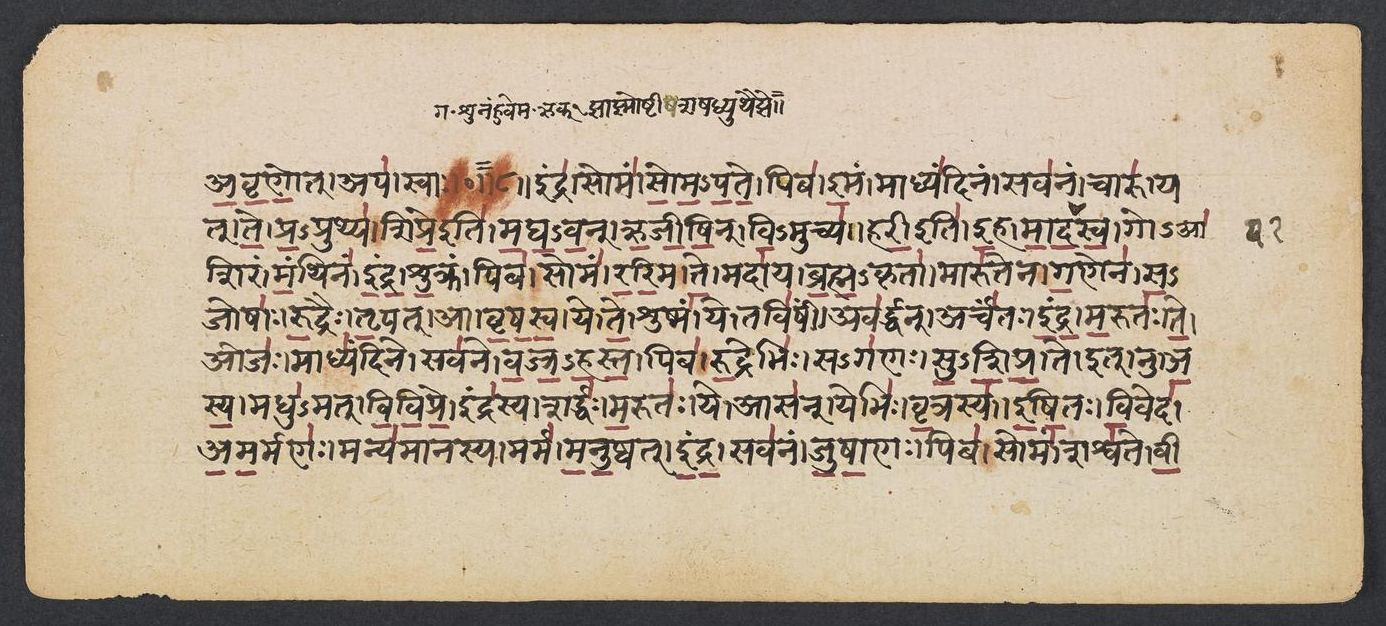
Penn Ms. Coll. 390 Item 41, fol. 216r (numbered 26r by the scribe) (OPenn image 217, lower leaf). Checked on the image: the Rigveda text on this page begins in RV 3.31.22 ‹-dhanānām›. The next page with Rigveda text, fol. 216v (numbered 26v by the scribe), begins in RV 3.32.5 ‹-vīryāya saḥ ā vavṛtsva›. Verses 3.32.1-4 end on this page.
1indra̱ soma̍ṁ somapate̱ pibe̱mam mādhya̍ṁdina̱ṁ sava̍na̱ṁ cāru̱ yat te̍ | pra̱pruthyā̱ śipre̍ maghavann ṛjīṣin vi̱mucyā̱ harī̍ i̱ha mā̍dayasva ||
2gavā̍śiram ma̱nthina̍m indra śu̱kram pibā̱ soma̍ṁ rari̱mā te̱ madā̍ya | bra̱hma̱kṛtā̱ māru̍tenā ga̱ṇena̍ sa̱joṣā̍ ru̱drais tṛ̱pad ā vṛ̍ṣasva ||
3ye te̱ śuṣma̱ṁ ye tavi̍ṣī̱m ava̍rdha̱nn arca̍nta indra ma̱ruta̍s ta̱ oja̍ḥ | mādhya̍ṁdine̱ sava̍ne vajrahasta̱ pibā̍ ru̱drebhi̱ḥ saga̍ṇaḥ suśipra ||
4ta in nv a̍sya̱ madhu̍mad vivipra̱ indra̍sya̱ śardho̍ ma̱ruto̱ ya āsa̍n | yebhi̍r vṛ̱trasye̍ṣi̱to vi̱vedā̍ma̱rmaṇo̱ manya̍mānasya̱ marma̍ ||
Compare: Padapāṭha (word-by-word text written in the manuscript; Sansknet e-text via GRETIL)
1indra | somam | soma-pate | piba | imam | mādhyandinam | savanam | cāru | yat | te | pra-pruthya | śipreiti | magha-van | ṛjīṣin | vi-mucya | harī iti | iha | mādayasva
2go--āśiram | manthinam | indra | śukram | piba | somam | rarima | te | madāya | brahma-kṛtā | mārutena | gaṇena | sa-joṣāḥ | rudraiḥ | tṛpat | ā | vṛṣasva
3ye | te | śuṣmam | ye | taviṣīm | avardhan | arcantaḥ | indra | marutaḥ | te | ojaḥ | mādhyandine | savane | vajra-hasta | piba | rudrebhiḥ | sa-gaṇaḥ | su-śipra
4te | it | nu | asya | madhu-mat | vivipre | indrasya | śardhaḥ | marutaḥ | ye | āsan | yebhiḥ | vṛtrasya | iṣitaḥ | viveda | amarmaṇaḥ | manyamānasya | marma
1DRINK thou this Soma, Indra, Lord of Soma; drink thou the draught of noonday which thou lovest. Puffing thy cheeks, impetuous, liberal Giver, here loose thy two Bay Horses and rejoice thee.
2Quaff it pure, meal-blent, mixt with milk, O Indra; we have poured forth the Soma for thy rapture. Knit with the prayer-fulfilling band of Maruts, yea, with the Rudras, drink till thou art sated;
3Those who gave increase to thy strength and vigour; the Maruts singing forth thy might, O Indra. Drink thou, O fair of cheek, whose hand wields thunder, with Rudras banded, at our noon libation.
4They, even the Maruts who were there, excited with song the meath-created strength of Indra. By them impelled to act he reached the vitals Of Vr̥itra, though he deemed that none might wound him.
Where on the image
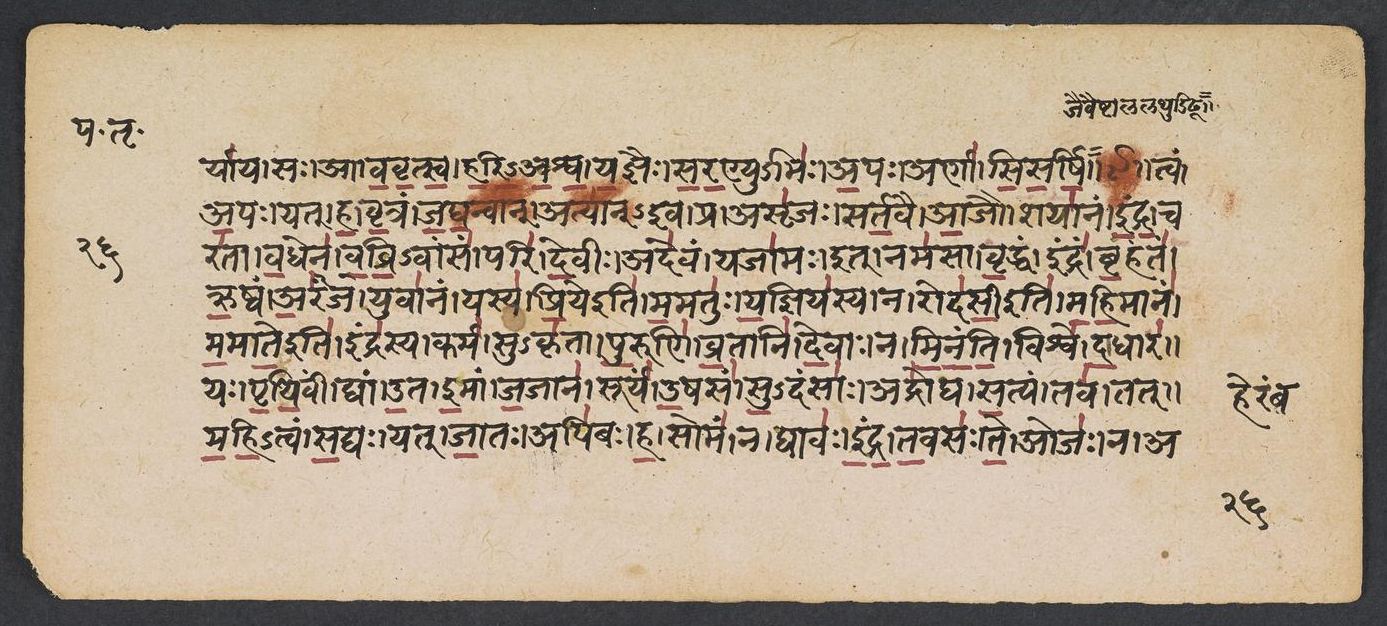
Penn Ms. Coll. 390 Item 41, fol. 216v (numbered 26v by the scribe) (OPenn image 218, upper leaf). Checked on the image: the Rigveda text on this page begins in RV 3.32.5 ‹-vīryāya saḥ ā vavṛtsva›. The next page with Rigveda text, fol. 217r (numbered 27r by the scribe), begins in RV 3.32.9 ‹-ahā na māsāḥ śaradaḥ›. Verses 3.32.5-8 end on this page; 3.32.5 begins on fol. 216r (numbered 26r by the scribe).
5ma̱nu̱ṣvad i̍ndra̱ sava̍naṁ juṣā̱ṇaḥ pibā̱ soma̱ṁ śaśva̍te vī̱ryā̍ya | sa ā va̍vṛtsva haryaśva ya̱jñaiḥ sa̍ra̱ṇyubhi̍r a̱po arṇā̍ sisarṣi ||
6tvam a̱po yad dha̍ vṛ̱traṁ ja̍gha̱nvām̐ atyā̍m̐ iva̱ prāsṛ̍ja̱ḥ sarta̱vājau | śayā̍nam indra̱ cara̍tā va̱dhena̍ vavri̱vāṁsa̱m pari̍ de̱vīr ade̍vam ||
7yajā̍ma̱ in nama̍sā vṛ̱ddham indra̍m bṛ̱hanta̍m ṛ̱ṣvam a̱jara̱ṁ yuvā̍nam | yasya̍ pri̱ye ma̱matu̍r ya̱jñiya̍sya̱ na roda̍sī mahi̱māna̍m ma̱māte̍ ||
8indra̍sya̱ karma̱ sukṛ̍tā pu̱rūṇi̍ vra̱tāni̍ de̱vā na mi̍nanti̱ viśve̍ | dā̱dhāra̱ yaḥ pṛ̍thi̱vīṁ dyām u̱temāṁ ja̱jāna̱ sūrya̍m u̱ṣasa̍ṁ su̱daṁsā̍ḥ ||
Compare: Padapāṭha (word-by-word text written in the manuscript; Sansknet e-text via GRETIL)
5manuṣvat | indra | savanam | juṣāṇaḥ | piba | somam | śaśvate | vīryāya | saḥ | ā | vavṛtsva | hari-aśva | yajñaiḥ | saraṇyu-bhiḥ | apaḥ | arṇā | sisarṣi
6tvam | apaḥ | yat | ha | vṛtram | jaghanvān | atyān-iva | pra | asṛjaḥ | sartavai | ājau | śayānam | indra | caratā | vadhena | vavri-vāṃsam | pari | devīḥ | adevam
7yajāmaḥ | it | namasā | vṛddham | indram | bṛhantam | ṛṣvam | ajaram | yuvānam | yasya | priye | mamatuḥ | yajñiyasya | na | rodasī iti | mahimānam | mamāteiti
8indrasya | karma | su-kṛtā | purūṇi | vratāni | devāḥ | na | minanti | viśve | dādhāra | yaḥ | pṛthivīm | dyām | uta | imām | jajāna | sūryam | uṣasam | su-daṃsāḥ
5Pleased, like a man, with our libation, Indra, drink, for enduring hero might, the Soma. Lord of Bays, moved by sacrifice come hither: thou with the Swift Ones stirrest floods and waters.
6When thou didst loose the streams to run like racers in the swift contest, having smitten Vr̥itra With flying weapon where he lay, O Indra, and, godless, kept the Goddesses encompassed.
7With reverence let us worship mighty Indra, great and sublime, eternal, everyouthful, Whose greatness the dear world-halves have not measured, no, nor conceived the might of him the Holy.
8Many are Indra's nobly wrought achievements, and none of all the Gods transgress his statutes. He beareth up this earth and heaven, and, doer of marvels, he begat the Sun and Morning.
Where on the image
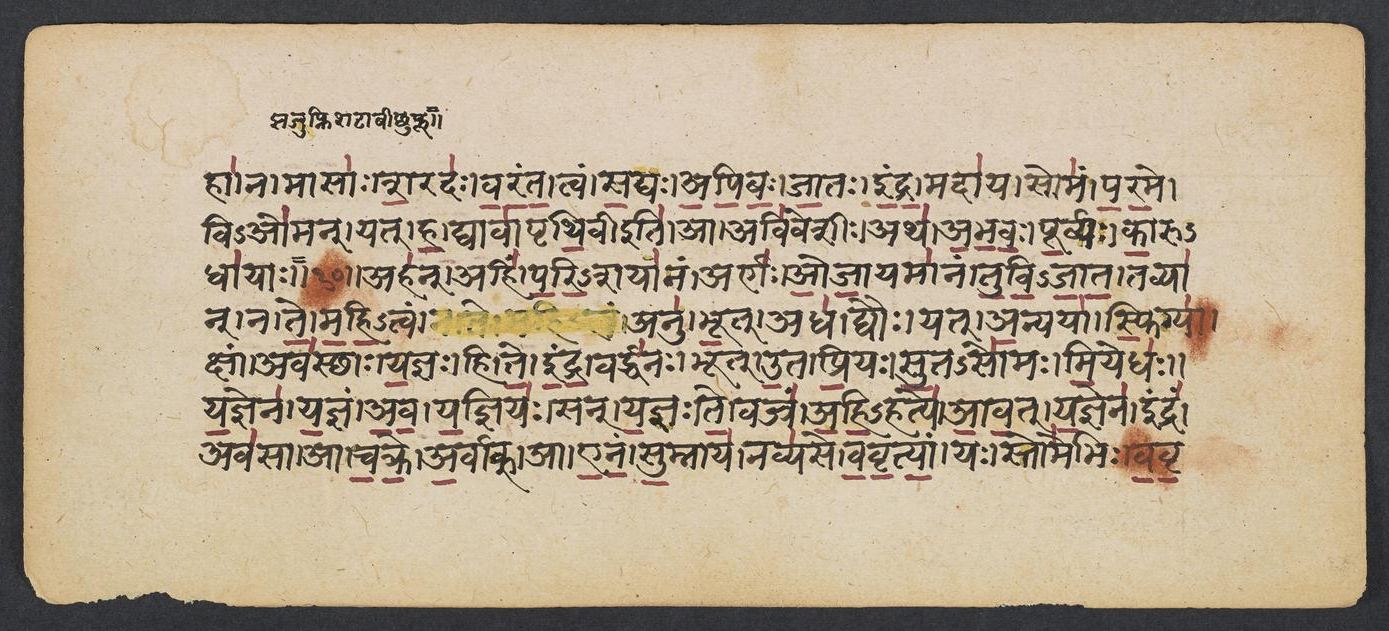
Penn Ms. Coll. 390 Item 41, fol. 217r (numbered 27r by the scribe) (OPenn image 218, lower leaf). Checked on the image: the Rigveda text on this page begins in RV 3.32.9 ‹-ahā na māsāḥ śaradaḥ›. The next page with Rigveda text, fol. 217v (numbered 27v by the scribe), begins in RV 3.32.13 ‹-vavṛdhe pūrvyebhiḥ yaḥ madhyamebhiḥ›. Verses 3.32.9-12 end on this page; 3.32.9 begins on fol. 216v (numbered 26v by the scribe).
9adro̍gha sa̱tyaṁ tava̱ tan ma̍hi̱tvaṁ sa̱dyo yaj jā̱to api̍bo ha̱ soma̍m | na dyāva̍ indra ta̱vasa̍s ta̱ ojo̱ nāhā̱ na māsā̍ḥ śa̱rado̍ varanta ||
10tvaṁ sa̱dyo a̍pibo jā̱ta i̍ndra̱ madā̍ya̱ soma̍m para̱me vyo̍man | yad dha̱ dyāvā̍pṛthi̱vī āvi̍veśī̱r athā̍bhavaḥ pū̱rvyaḥ kā̱rudhā̍yāḥ ||
11aha̱nn ahi̍m pari̱śayā̍na̱m arṇa̍ ojā̱yamā̍naṁ tuvijāta̱ tavyā̍n | na te̍ mahi̱tvam anu̍ bhū̱d adha̱ dyaur yad a̱nyayā̍ sphi̱gyā̱3̱̍ kṣām ava̍sthāḥ ||
12ya̱jño hi ta̍ indra̱ vardha̍no̱ bhūd u̱ta pri̱yaḥ su̱taso̍mo mi̱yedha̍ḥ | ya̱jñena̍ ya̱jñam a̍va ya̱jñiya̱ḥ san ya̱jñas te̱ vajra̍m ahi̱hatya̍ āvat ||
Compare: Padapāṭha (word-by-word text written in the manuscript; Sansknet e-text via GRETIL)
9adrogha | satyam | tava | tat | mahi-tvam | sadyaḥ | yat | jātaḥ | apibaḥ | ha | somam | na | dyāvaḥ | indra | tavasaḥ | te | ojaḥ | na | ahā | na | māsāḥ | śaradaḥ | varanta
10tvam | sadyaḥ | apibaḥ | jataḥ | indra | madāya | somam | parame | vi-oman | yat | ha | dyāvāpṛthivī iti | ā | aviveśīḥ | atha | abhavaḥ | pūrvyaḥ | kāru-dhāyāḥ
11ahan | ahim | pari-śayānam | arṇaḥ | ojāyamānam | tuvi-jāta | tavyān | na | te | mahi-tvam | anu | bhūt | adha | dyauḥ | yat | anyayā | sphigyā | kṣām | avasthāḥ
12yajñaḥ | hi | te | indra | vardhanaḥ | bhūt | uta | priyaḥ | suta-somaḥ | miyedhaḥ | yajñena | yajñam | ava | yajñiyaḥ | san | yajñaḥ | te | vajram | ahi-hatye | āvat
9Herein, O Guileless One, is thy true greatness, that soon as born thou drankest up the Soma. Days may not check the power of thee the Mighty, nor the nights, Indra, nor the months, nor autumns.
10As soon as thou wast born in highest heaven thou drankest Soma to delight thee, Indra; And when thou hadst pervaded earth and heaven thou wast the first supporter of the singer.
11Thou, puissant God, more mighty, slewest. Ahi showing his strength when couched around the waters. The heaven itself attained not to thy greatness when with one hip of thine the earth was shadowed.
12Sacrifice, Indra, made thee wax so mighty, the dear oblation with the flowing Soma. O Worshipful, with worship help our worship, for worship helped thy bolt when slaying Ahi.
Where on the image
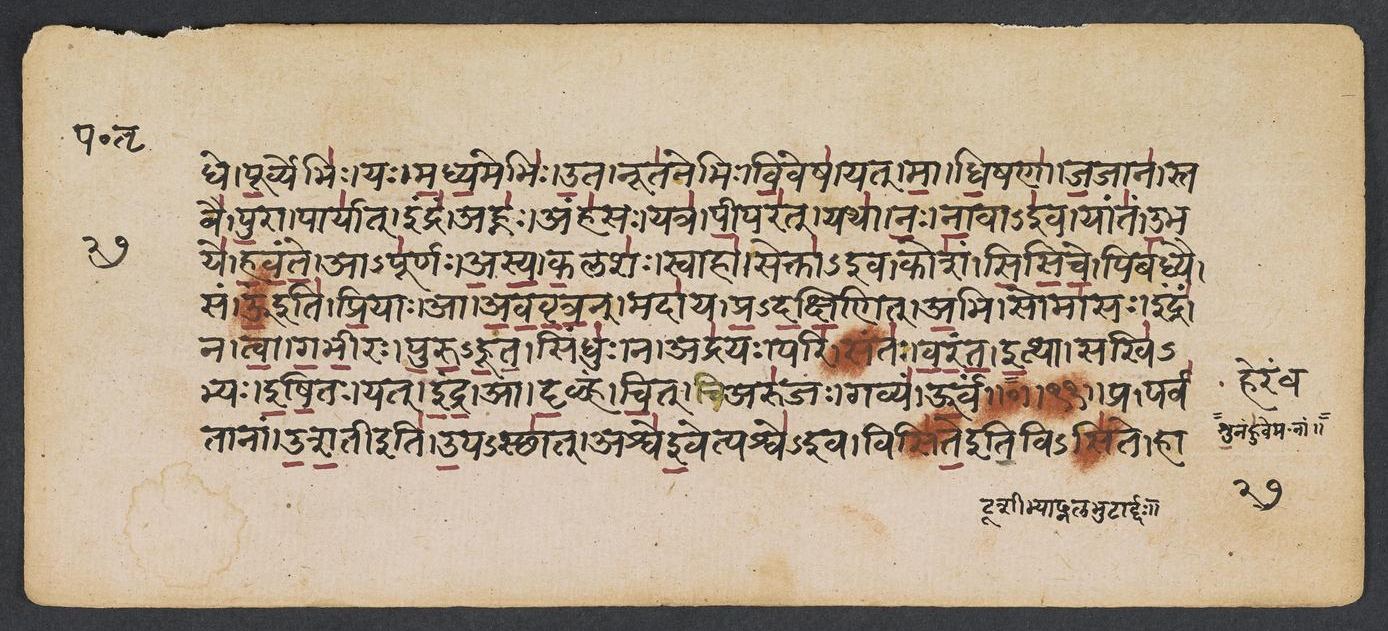
Penn Ms. Coll. 390 Item 41, fol. 217v (numbered 27v by the scribe) (OPenn image 219, upper leaf). Checked on the image: the Rigveda text on this page begins in RV 3.32.13 ‹-vavṛdhe pūrvyebhiḥ yaḥ madhyamebhiḥ›. The next page with Rigveda text, fol. 218r (numbered 28r by the scribe), begins in RV 3.33.1 ‹-hāsamāneiti gāvāiva śubhre iti›. Verses 3.32.13-17 end on this page; 3.32.13 begins on fol. 217r (numbered 27r by the scribe).
13ya̱jñenendra̱m ava̱sā ca̍kre a̱rvāg aina̍ṁ su̱mnāya̱ navya̍se vavṛtyām | yaḥ stome̍bhir vāvṛ̱dhe pū̱rvyebhi̱r yo ma̍dhya̱mebhi̍r u̱ta nūta̍nebhiḥ ||
14vi̱veṣa̱ yan mā̍ dhi̱ṣaṇā̍ ja̱jāna̱ stavai̍ pu̱rā pāryā̱d indra̱m ahna̍ḥ | aṁha̍so̱ yatra̍ pī̱para̱d yathā̍ no nā̱veva̱ yānta̍m u̱bhaye̍ havante ||
15āpū̍rṇo asya ka̱laśa̱ḥ svāhā̱ sekte̍va̱ kośa̍ṁ sisice̱ piba̍dhyai | sam u̍ pri̱yā āva̍vṛtra̱n madā̍ya pradakṣi̱ṇid a̱bhi somā̍sa̱ indra̍m ||
16na tvā̍ gabhī̱raḥ pu̍ruhūta̱ sindhu̱r nādra̍ya̱ḥ pari̱ ṣanto̍ varanta | i̱tthā sakhi̍bhya iṣi̱to yad i̱ndrā dṛ̱ḻhaṁ ci̱d aru̍jo̱ gavya̍m ū̱rvam ||
17śu̱naṁ hu̍vema ma̱ghavā̍na̱m indra̍m a̱smin bhare̱ nṛta̍ma̱ṁ vāja̍sātau | śṛ̱ṇvanta̍m u̱gram ū̱taye̍ sa̱matsu̱ ghnanta̍ṁ vṛ̱trāṇi̍ sa̱ṁjita̱ṁ dhanā̍nām ||
Compare: Padapāṭha (word-by-word text written in the manuscript; Sansknet e-text via GRETIL)
13yajñena | indram | avasā | ā | cakre | arvāk | ā | enam | sumnāya | navyase | vavṛtyām | yaḥ | stomebhiḥ | vavṛdhe | pūrvyebhiḥ | yaḥ | madhyamebhiḥ | uta | nūtanebh iḥ
14viveṣa | yat | mā | dhiṣaṇā | jajāna | stavai | purā | pāryāt | indram | ahnaḥ | aṃhasaḥ | yatra | pīparat | yathā | naḥ | nāvāiva | yāntam | ubhaye | havante
15āpūrṇaḥ | asya | kalaśaḥ | svāhā | sektāiva | kośam | sisice | pibadhyai | sam | oṃ iti | priyāḥ | ā | avavṛtram | madāya | pra-dakṣiṇit | abhi | somāsaḥ | indram
16na | tvā | gabhīraḥ | puru-hūta | sindhuḥ | na | adrayaḥ | pari | santaḥ | varanta | itthā | sakhi-bhyaḥ | iṣitaḥ | yat | indra | ā | dṛḷham | cit | arujaḥ | gavyam | ūrvam
17śunam | huvema | maghavānam | indram | asmin | bhare | nṛ-tamam | vāja-sātau | śṛṇvantam | ugram | ūtaye | samat-su | ghnantam | vṛtrāṇi | sam-jitam | dhanānām
13With sacrifice and wish have I brought Indra; still for new blessings may I turn him hither, Him magnified by ancient songs and praises, by lauds of later time and days yet recent.
14I have brought forth a song when longing seized me: ere the decisive day will I laud Indra; Then may lie safely bear us over trouble, as in a ship, when both sides invocate him.
15Full is his chalice: Glory! Like a pourer I have filled up the vessel for his drinking. Presented on the right, dear Soma juices have brought us Indra, to rejoice him, hither.
16Not the deep-flowing flood, O Much-invoked One! not hills that compass thee about restrain thee, Since here incited, for thy friends, O Indra, thou breakest e'en the firm built stall of cattle.
17Call we on Maghavan, auspicious Indra, best Hero in this fight where spoil is gathered, The Strong who listens, who gives aid in battles, who slays the Vr̥itras, wins and gathers riches.
Notes
- Sanskrit: Aufrecht's edition (1877) with the Vedic accents, as entered by van Nooten and Holland (GRETIL).
- English: Ralph T. H. Griffith, The Hymns of the Rigveda (1889-1892; 2nd ed. 1896-1897), from the VedaWeb digital text; OCR slips in that text were corrected against the printed 2nd edition (data/sources/rigveda/griffith_errata.json).
- Padapāṭha (edition text): Sansknet e-text via GRETIL (CC BY-NC-SA 4.0).
Cite
Sources
- Source: Penn Ms. Coll. 390 Item 41 (undated (catalogued with Penn's 18th-19th c. Vedic manuscripts)), OPenn, Public Domain Mark + Aufrecht's accented text (GRETIL) + Griffith's English (VedaWeb) (holding institution)
- Critical edition: Aufrecht (1877), accented e-text via GRETIL
← previous · → next · v cycle view · l back to library