Rigveda 3.33: To Visvamitra and the rivers
Introduction
Rigveda 3.33 is a hymn of 13 verses addressed to Visvamitra and the rivers. It stands in book (maṇḍala) 3, the family book of Viśvāmitra. The Rigveda is the oldest collection of Sanskrit hymns, composed in the second half of the second millennium BCE and handed down orally for many centuries before it was written down.
The manuscript shown is Penn Ms. Coll. 390 Item 41 (University of Pennsylvania), an undated paper manuscript of the padapāṭha (the word-by-word recitation text, in which every word is written separately and compounds are split) of the whole Ṛgveda in Devanāgarī, 884 leaves in fascicles, 7-9 lines to the page, accents in red; this hymn stands on fol. 217v-219v. Each section below gives the verses that end on one page; the page boundaries were read on the images (the opening words of every page), not counted out. Where the manuscript is a padapāṭha (the word-by-word recitation text), the section shows Aufrecht's continuous (saṃhitā) text first and, as the edition text, the padapāṭha of the same verses, which is the form written on the page.
How was this verified? (Provenance)
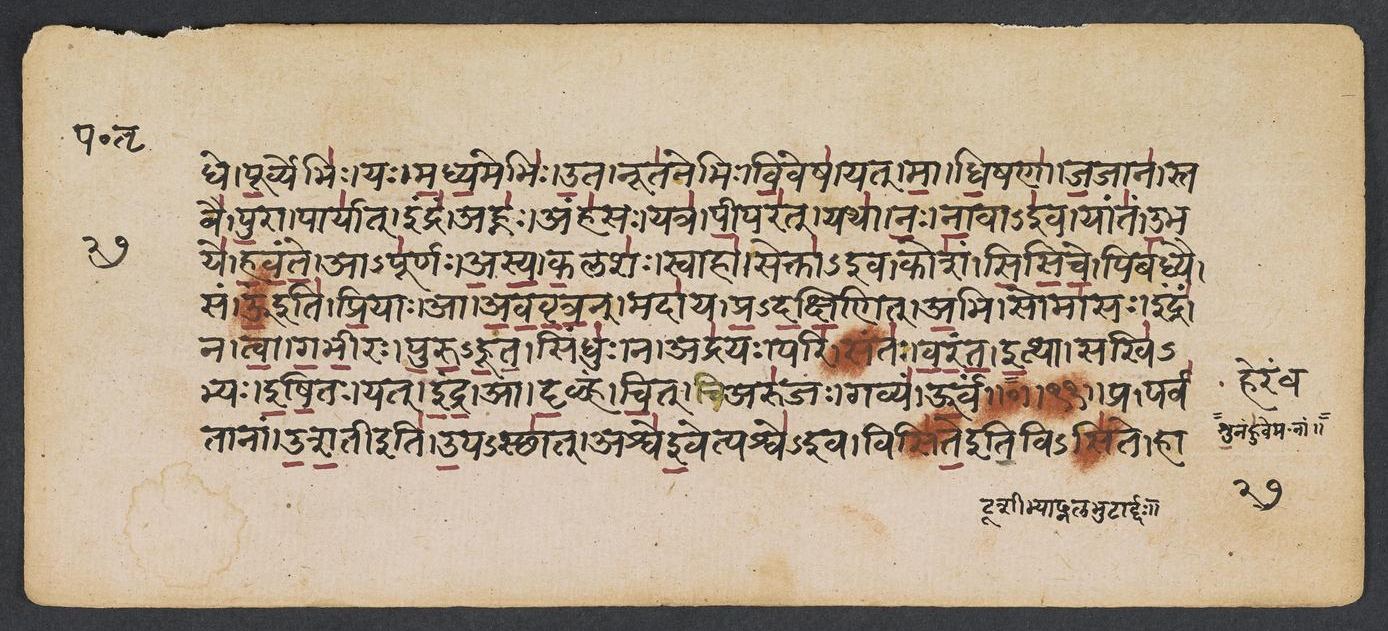
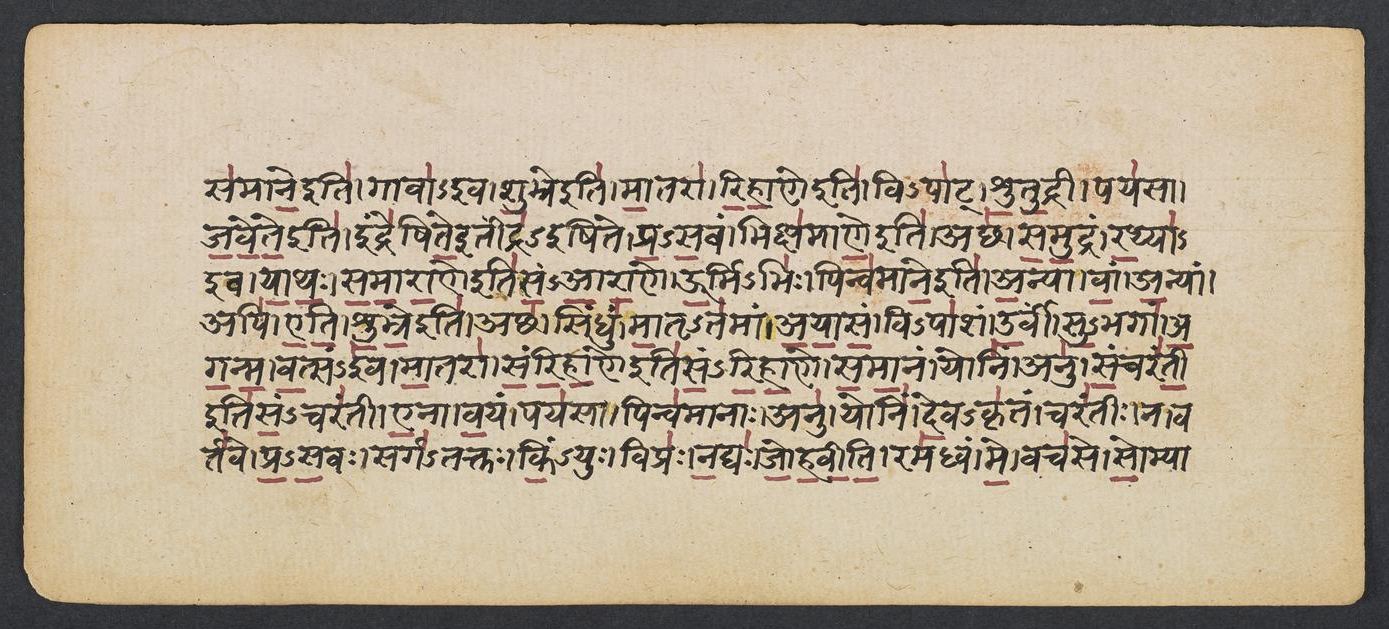
Where on the image
Penn Ms. Coll. 390 Item 41, fol. 218r (numbered 28r by the scribe) (OPenn image 219, lower leaf). Checked on the image: the Rigveda text on this page begins in RV 3.33.1 ‹-hāsamāneiti gāvāiva śubhre iti›. The next page with Rigveda text, fol. 218v (numbered 28v by the scribe), begins in RV 3.33.5 ‹ṛta-varīḥ upa muhūrtam evaiḥ›. Verses 3.33.1-4 end on this page; 3.33.1 begins on fol. 217v (numbered 27v by the scribe).
1pra parva̍tānām uśa̱tī u̱pasthā̱d aśve̍ iva̱ viṣi̍te̱ hāsa̍māne | gāve̍va śu̱bhre mā̱tarā̍ rihā̱ṇe vipā̍ṭ chutu̱drī paya̍sā javete ||
2indre̍ṣite prasa̱vam bhikṣa̍māṇe̱ acchā̍ samu̱draṁ ra̱thye̍va yāthaḥ | sa̱mā̱rā̱ṇe ū̱rmibhi̱ḥ pinva̍māne a̱nyā vā̍m a̱nyām apy e̍ti śubhre ||
3acchā̱ sindhu̍m mā̱tṛta̍mām ayāsa̱ṁ vipā̍śam u̱rvīṁ su̱bhagā̍m aganma | va̱tsam i̍va mā̱tarā̍ saṁrihā̱ṇe sa̍mā̱naṁ yoni̱m anu̍ sa̱ṁcara̍ntī ||
4e̱nā va̱yam paya̍sā̱ pinva̍mānā̱ anu̱ yoni̍ṁ de̱vakṛ̍ta̱ṁ cara̍ntīḥ | na varta̍ve prasa̱vaḥ sarga̍taktaḥ ki̱ṁyur vipro̍ na̱dyo̍ johavīti ||
Compare: Padapāṭha (word-by-word text written in the manuscript; Sansknet e-text via GRETIL)
1pra | parvatānām | uśatī iti | upa-sthāt | aśveivetyaśve--iva | visiteitivi-site | hāsamāneiti | gāvāiva | śubhre iti | mātarā | rihāṇe iti | vi-pāṭ | śutudrī | payasā | javeteiti
2indreṣiteitīndra-iṣite | pra-savam | bhikṣamāṇeiti | accha | samudram | rathyāiva | yāthaḥ | samārāṇe itisam-ārāṇe | ūrmi-bhiḥ | pinvamāneiti | anyā | vām | anyām | api | eti | śubhreit i
3accha | sindhum | mātṛ-tamām | ayāsam | vipāśam | urvīm | su-bhagām | aganma | vatsam-iva | mātarā | saṃrihāṇe itisam-rihāṇe | samānam | yonim | anu | sam-carantī
4enā | vayam | payasā | pinvamānāḥ | anu | yonim | deva-kṛtam | carantīḥ | na | vartave | pra-savaḥ | sarga-taktaḥ | kim-yuḥ | vipraḥ | nadyaḥ | johavīti
1FORTH from the bosom of the mountains, eager as two swift mares with loosened rein contending, Like two bright mother cows who lick their youngling, Vipâṣ and Ṣutudrî speed down their waters.
2Impelled by Indra whom ye pray to urge you, ye move as 'twere on chariots to the ocean. Flowing together, swelling with your billows, O lucid Streams, each of you seeks the other.
3I have attained the most maternal River, we have approached Vipâṣ, the broad, the blessed. Licking as 'twere their calf the pair of Mothers flow onward to their common home together.
4We two who rise and swell with billowy waters move forward to the home which Gods have made us. Our flood may not be stayed when urged to motion. What would the singer, calling to the Rivers?
Where on the image
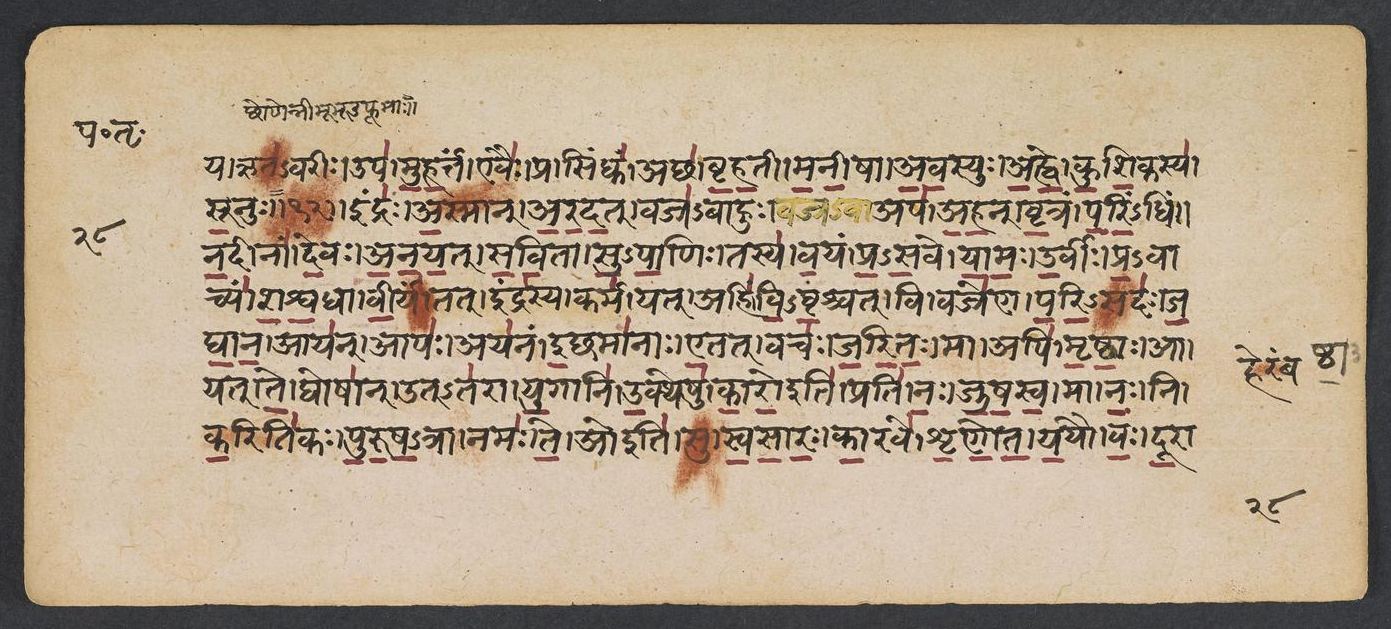
Penn Ms. Coll. 390 Item 41, fol. 218v (numbered 28v by the scribe) (OPenn image 220, upper leaf). Checked on the image: the Rigveda text on this page begins in RV 3.33.5 ‹ṛta-varīḥ upa muhūrtam evaiḥ›. The next page with Rigveda text, fol. 219r (numbered 29r by the scribe), begins in RV 3.33.9 ‹-dūrāt anasā rathena ni›. Verses 3.33.5-8 end on this page; 3.33.5 begins on fol. 218r (numbered 28r by the scribe).
5rama̍dhvam me̱ vaca̍se so̱myāya̱ ṛtā̍varī̱r upa̍ muhū̱rtam evai̍ḥ | pra sindhu̱m acchā̍ bṛha̱tī ma̍nī̱ṣāva̱syur a̍hve kuśi̱kasya̍ sū̱nuḥ ||
6indro̍ a̱smām̐ a̍rada̱d vajra̍bāhu̱r apā̍han vṛ̱tram pa̍ri̱dhiṁ na̱dīnā̍m | de̱vo̍ 'nayat savi̱tā su̍pā̱ṇis tasya̍ va̱yam pra̍sa̱ve yā̍ma u̱rvīḥ ||
7pra̱vācya̍ṁ śaśva̱dhā vī̱rya1̱̍ṁ tad indra̍sya̱ karma̱ yad ahi̍ṁ vivṛ̱ścat | vi vajre̍ṇa pari̱ṣado̍ jaghā̱nāya̱nn āpo 'ya̍nam i̱cchamā̍nāḥ ||
8e̱tad vaco̍ jarita̱r māpi̍ mṛṣṭhā̱ ā yat te̱ ghoṣā̱n utta̍rā yu̱gāni̍ | u̱ktheṣu̍ kāro̱ prati̍ no juṣasva̱ mā no̱ ni ka̍ḥ puruṣa̱trā nama̍s te ||
Compare: Padapāṭha (word-by-word text written in the manuscript; Sansknet e-text via GRETIL)
5ramadhvam | me | vacase | somyāya | ṛta-varīḥ | upa | muhūrtam | evaiḥ | pra | sindhum | accha | bṛhatī | manīṣā | avasyuḥ | ahne | kuśikasya | sūnuḥ
6indraḥ | asmān | aradat | vajra-bāhuḥ | apa | ahan | vṛtram | pari-dhim | nadīnām | devaḥ | anayat | savitā | su-pāṇiḥ | tasya | vayam | pra-save | yāmaḥ | urvīḥ
7pra-vācyam | śaśvadhā | vīryam | tat | indrasya | karma | yat | ahim | vi-vṛścat | vi | vajreṇa | pari-ṣadaḥ | jaghāna | āyan | āpaḥ | ayanam | icchamānāḥ
8etat | vacaḥ | jaritaḥ | mā | api | mṛṣṭhāḥ | ā | yat | te | ghoṣān | ut-tarā | yugāni | uktheṣu | kāro iti | prati | naḥ | juṣasva | mā | naḥ | ni | karitikaḥ | puruṣa-trā | namaḥ | te
5Linger a little at my friendly bidding rest, Holy Ones, a moment in your journey. With hymn sublime soliciting your favour Kuṣika's son hath called unto the River.
6Indra who wields the thunder dug our channels: he smote down Vr̥itra, him who stayed our currents. Savitar, God, the lovely-handed, led us, and at his sending forth we flow expanded.
7That hero deed of Indra must be lauded for ever that he rent Ahi in pieces. He smote away the obstructors with his thunder, and eager for their course forth flowed the waters.
8Never forget this word of thine, O singer, which future generations shall reecho. In hymns, O bard, show us thy loving kindness. Humble us not mid men. To thee be honour!
Where on the image
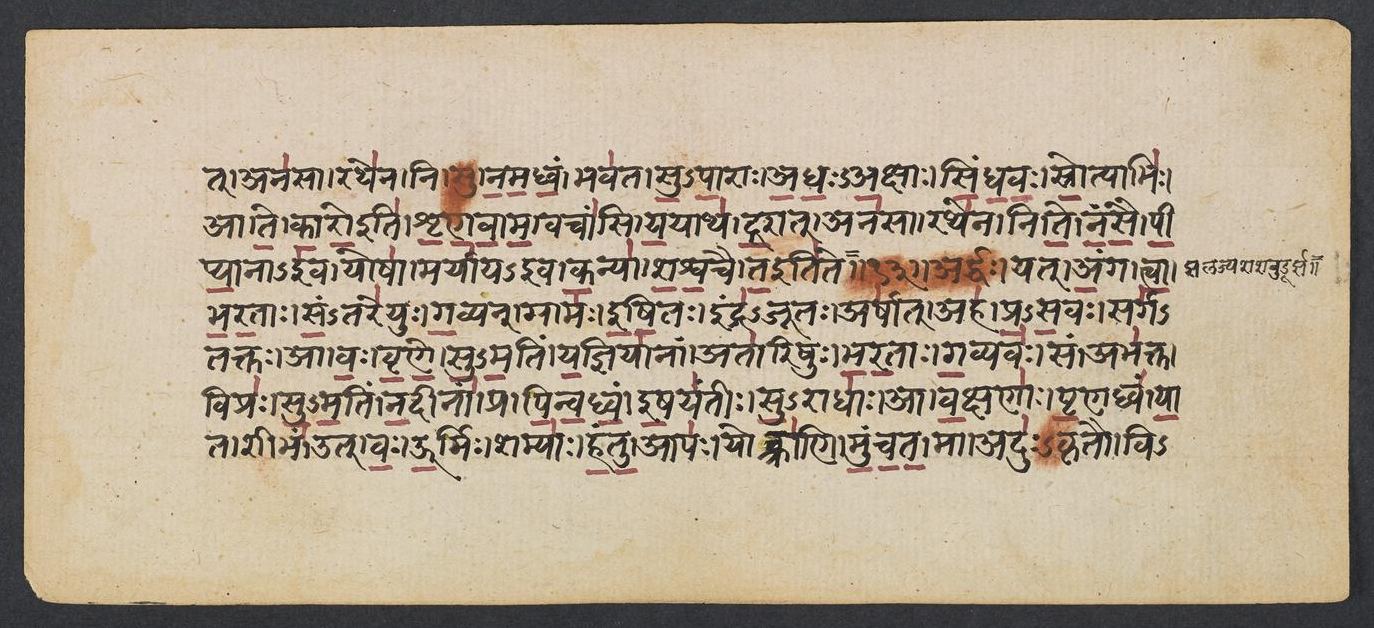
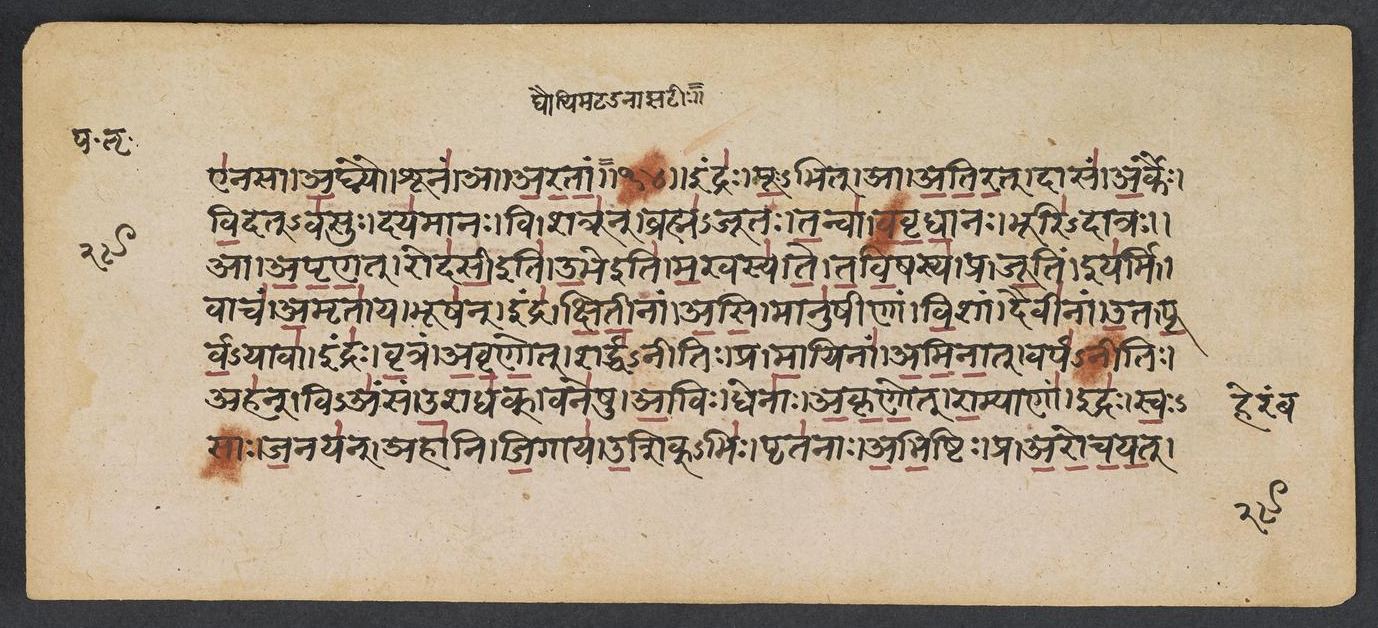
Penn Ms. Coll. 390 Item 41, fol. 219r (numbered 29r by the scribe) (OPenn image 220, lower leaf). Checked on the image: the Rigveda text on this page begins in RV 3.33.9 ‹-dūrāt anasā rathena ni›. The next page with Rigveda text, fol. 219v (numbered 29v by the scribe), begins in RV 3.33.13 ‹-vi-enasā aghnyau śūnam ā›. Verses 3.33.9-12 end on this page; 3.33.9 begins on fol. 218v (numbered 28v by the scribe).
9o ṣu sva̍sāraḥ kā̱rave̍ śṛṇota ya̱yau vo̍ dū̱rād ana̍sā̱ rathe̍na | ni ṣū na̍madhva̱m bhava̍tā supā̱rā a̍dhoa̱kṣāḥ si̍ndhavaḥ sro̱tyābhi̍ḥ ||
10ā te̍ kāro śṛṇavāmā̱ vacā̍ṁsi ya̱yātha̍ dū̱rād ana̍sā̱ rathe̍na | ni te̍ naṁsai pīpyā̱neva̱ yoṣā̱ maryā̍yeva ka̱nyā̍ śaśva̱cai te̍ ||
11yad a̱ṅga tvā̍ bhara̱tāḥ sa̱ṁtare̍yur ga̱vyan grāma̍ iṣi̱ta indra̍jūtaḥ | arṣā̱d aha̍ prasa̱vaḥ sarga̍takta̱ ā vo̍ vṛṇe suma̱tiṁ ya̱jñiyā̍nām ||
12atā̍riṣur bhara̱tā ga̱vyava̱ḥ sam abha̍kta̱ vipra̍ḥ suma̱tiṁ na̱dīnā̍m | pra pi̍nvadhvam i̱ṣaya̍ntīḥ su̱rādhā̱ ā va̱kṣaṇā̍ḥ pṛ̱ṇadhva̍ṁ yā̱ta śībha̍m ||
Compare: Padapāṭha (word-by-word text written in the manuscript; Sansknet e-text via GRETIL)
9o iti | su | svasāraḥ | kārave | śṛṇota | yayau | vaḥ | dūrāt | anasā | rathena | ni | su | namadhvam | bhavata | su-pārāḥ | adhaḥ-akṣāḥ | sindhavaḥ | srotyābhiḥ
10ā | te | kāro iti | śṛṇavāma | vacāṃsi | yayātha | dūrāt | anasā | rathena | ni | te | naṃsai | pīpyānāiva | yoṣā | maryāya-iva | kanyā | śaśvacai | taitite
11yat | aṅga | tvā | bharatāḥ | sam-tareyuḥ | gavyan | grāmaḥ | iṣitaḥ | indra-jūtaḥ | arṣāt | aha | pra-savaḥ | sarga-taktaḥ | ā | vaḥ | vṛṇe | su-matim | yajñiyānām
12atāriṣuḥ | bharatāḥ | gavyavaḥ | sam | abhakta | vipraḥ | su-matim | nadīnām | pra | pinvadhvam | iṣayantīḥ | su-rādhā | ā | vakṣaṇāḥ | pṛṇadhvam | yāta | śībham
9List quickly, Sisters, to the bard who cometh to you from far away with car and wagon. Bow lowly down; be easy to be traversed stay, Rivers, with your floods below our axles.
10Yea, we will listen to thy words, O singer. With wain and car from far away thou comest. Low, like a nursing mother, will I bend me, and yield me as a maiden to her lover.
11Soon as the Bharatas have fared across thee, the warrior band, urged on and sped by Indra, Then let your streams flow on in rapid motion. I crave your favour who deserve our worship.
12The warrior host, the Bharatas, fared over the singer won the favour of the Rivers. Swell with your billows, hasting, pouring riches. Fill full your channels, and roll swiftly onward.
Where on the image
Penn Ms. Coll. 390 Item 41, fol. 219v (numbered 29v by the scribe) (OPenn image 221, upper leaf). Checked on the image: the Rigveda text on this page begins in RV 3.33.13 ‹-vi-enasā aghnyau śūnam ā›. The next page with Rigveda text, fol. 220r (numbered 30r by the scribe), begins in RV 3.34.4 ‹manave ketum ahnām avindat›. Verse 3.33.13 ends on this page; 3.33.13 begins on fol. 219r (numbered 29r by the scribe).
13ud va̍ ū̱rmiḥ śamyā̍ ha̱ntv āpo̱ yoktrā̍ṇi muñcata | mādu̍ṣkṛtau̱ vye̍nasā̱ghnyau śūna̱m āra̍tām ||
Compare: Padapāṭha (word-by-word text written in the manuscript; Sansknet e-text via GRETIL)
13ut | vaḥ | ūrmiḥ | śamyāḥ | hantu | āpaḥ | yoktrāṇi | muñcata | mā | aduḥ-kṛtau | vi-enasā | aghnyau | śūnam | ā | aratām
13So let your wave bear up the pins, and ye, O Waters, spare the thongs; And never may the pair of Bulls, harmless and sinless, waste away.
Notes
- Sanskrit: Aufrecht's edition (1877) with the Vedic accents, as entered by van Nooten and Holland (GRETIL).
- English: Ralph T. H. Griffith, The Hymns of the Rigveda (1889-1892; 2nd ed. 1896-1897), from the VedaWeb digital text; OCR slips in that text were corrected against the printed 2nd edition (data/sources/rigveda/griffith_errata.json).
- Padapāṭha (edition text): Sansknet e-text via GRETIL (CC BY-NC-SA 4.0).
Cite
Sources
- Source: Penn Ms. Coll. 390 Item 41 (undated (catalogued with Penn's 18th-19th c. Vedic manuscripts)), OPenn, Public Domain Mark + Aufrecht's accented text (GRETIL) + Griffith's English (VedaWeb) (holding institution)
- Critical edition: Aufrecht (1877), accented e-text via GRETIL
← previous · → next · v cycle view · l back to library