Rigveda 3.34: To Indra
Introduction
Rigveda 3.34 is a hymn of 11 verses addressed to Indra. It stands in book (maṇḍala) 3, the family book of Viśvāmitra. The Rigveda is the oldest collection of Sanskrit hymns, composed in the second half of the second millennium BCE and handed down orally for many centuries before it was written down.
The manuscript shown is Penn Ms. Coll. 390 Item 41 (University of Pennsylvania), an undated paper manuscript of the padapāṭha (the word-by-word recitation text, in which every word is written separately and compounds are split) of the whole Ṛgveda in Devanāgarī, 884 leaves in fascicles, 7-9 lines to the page, accents in red; this hymn stands on fol. 219v-220v. Each section below gives the verses that end on one page; the page boundaries were read on the images (the opening words of every page), not counted out. Where the manuscript is a padapāṭha (the word-by-word recitation text), the section shows Aufrecht's continuous (saṃhitā) text first and, as the edition text, the padapāṭha of the same verses, which is the form written on the page.
How was this verified? (Provenance)
Where on the image
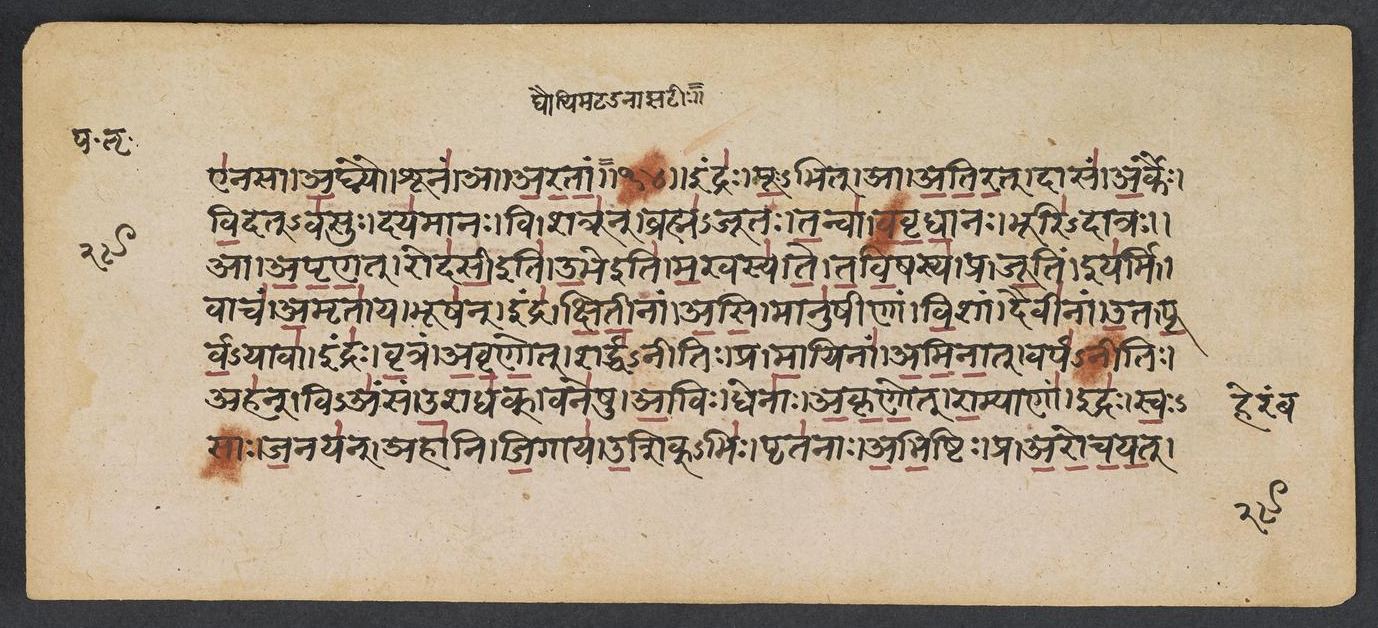
Penn Ms. Coll. 390 Item 41, fol. 219v (numbered 29v by the scribe) (OPenn image 221, upper leaf). Checked on the image: the Rigveda text on this page begins in RV 3.33.13 ‹-vi-enasā aghnyau śūnam ā›. The next page with Rigveda text, fol. 220r (numbered 30r by the scribe), begins in RV 3.34.4 ‹manave ketum ahnām avindat›. Verses 3.34.1-3 end on this page.
1indra̍ḥ pū̱rbhid āti̍ra̱d dāsa̍m a̱rkair vi̱dadva̍su̱r daya̍māno̱ vi śatrū̍n | brahma̍jūtas ta̱nvā̍ vāvṛdhā̱no bhūri̍dātra̱ āpṛ̍ṇa̱d roda̍sī u̱bhe ||
2ma̱khasya̍ te tavi̱ṣasya̱ pra jū̱tim iya̍rmi̱ vāca̍m a̱mṛtā̍ya̱ bhūṣa̍n | indra̍ kṣitī̱nām a̍si̱ mānu̍ṣīṇāṁ vi̱śāṁ daivī̍nām u̱ta pū̍rva̱yāvā̍ ||
3indro̍ vṛ̱tram a̍vṛṇo̱c chardha̍nīti̱ḥ pra mā̱yinā̍m aminā̱d varpa̍ṇītiḥ | aha̱n vya̍ṁsam u̱śadha̱g vane̍ṣv ā̱vir dhenā̍ akṛṇod rā̱myāṇā̍m ||
Compare: Padapāṭha (word-by-word text written in the manuscript; Sansknet e-text via GRETIL)
1indraḥ | pūḥ-bhit | ā | atirat | dāsam | arkaiḥ | vidat-vasuḥ | dayamānaḥ | vi | śatrūn | brahma-jūtaḥ | tanvā | vavṛdhānaḥ | bhūri-dātraḥ | ā | apṛṇat | rodasī iti | ubhe iti
2makhasya | te | taviṣasya | pra | jūtim | iyarmi | vācam | amṛtāya | bhūṣan | indra | kṣitīnām | asi | mānuṣīṇām | viśām | daivīnām | uta | pūrva-yāvā
3indraḥ | vṛtram | avṛṇot | śardha-nītiḥ | pra | māyinām | amināt | varpa-nītiḥ | ahan | vi-aṃsam | uśadhak | vaneṣu | āviḥ | dhenāḥ | akṛṇot | rāmyāṇām
1FORT-RENDER, Lord of Wealth, dispelling foemen, Indra with lightnings hath o'ercome the Dâsa. Impelled by prayer and waxen great in body, he hath filled earth and heaven, the Bounteous Giver.
2I stimulate thy zeal, the Strong, the Hero decking my song of praise forth; Immortal. O Indra, thou art equally the Leader of heavenly hosts and human generations.
3Leading, his band Indra encompassed Vr̥itra; weak grew the wily leader of enchanters. He who burns fierce in forests slaughtered Vyansa, and made the Milch-kine of the nights apparent.
Where on the image
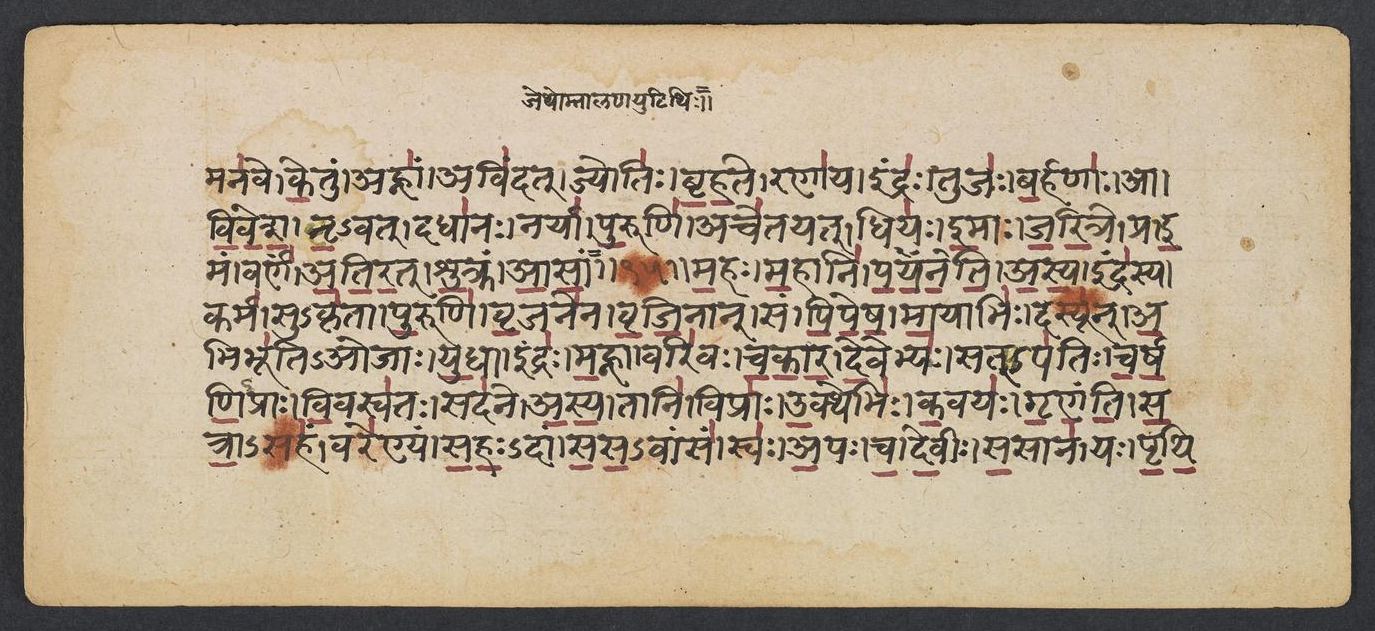
Penn Ms. Coll. 390 Item 41, fol. 220r (numbered 30r by the scribe) (OPenn image 221, lower leaf). Checked on the image: the Rigveda text on this page begins in RV 3.34.4 ‹manave ketum ahnām avindat›. The next page with Rigveda text, fol. 220v (numbered 30v by the scribe), begins in RV 3.34.8 ‹-pṛthivīm dyām uta imām›. Verses 3.34.4-7 end on this page; 3.34.4 begins on fol. 219v (numbered 29v by the scribe).
4indra̍ḥ sva̱rṣā ja̱naya̱nn ahā̍ni ji̱gāyo̱śigbhi̱ḥ pṛta̍nā abhi̱ṣṭiḥ | prāro̍caya̱n mana̍ve ke̱tum ahnā̱m avi̍nda̱j jyoti̍r bṛha̱te raṇā̍ya ||
5indra̱s tujo̍ ba̱rhaṇā̱ ā vi̍veśa nṛ̱vad dadhā̍no̱ naryā̍ pu̱rūṇi̍ | ace̍taya̱d dhiya̍ i̱mā ja̍ri̱tre premaṁ varṇa̍m atirac chu̱kram ā̍sām ||
6ma̱ho ma̱hāni̍ panayanty a̱syendra̍sya̱ karma̱ sukṛ̍tā pu̱rūṇi̍ | vṛ̱jane̍na vṛji̱nān sam pi̍peṣa mā̱yābhi̱r dasyū̍m̐r a̱bhibhū̍tyojāḥ ||
7yu̱dhendro̍ ma̱hnā vari̍vaś cakāra de̱vebhya̱ḥ satpa̍tiś carṣaṇi̱prāḥ | vi̱vasva̍ta̱ḥ sada̍ne asya̱ tāni̱ viprā̍ u̱kthebhi̍ḥ ka̱vayo̍ gṛṇanti ||
Compare: Padapāṭha (word-by-word text written in the manuscript; Sansknet e-text via GRETIL)
4indraḥ | svaḥ-sā | janayan | ahāni | jigāya | uśik-bhiḥ | pṛtanāḥ | abhiṣṭiḥ | pra | arocayat | manave | ketum | ahnām | avindat | jyotiḥ | bṛhate | raṇāya
5indraḥ | tujaḥ | barhaṇāḥ | ā | viveśa | nṛ-vat | dadhānaḥ | naryā | purūṇi | acetayat | dhiyaḥ | imāḥ | jaritre | pra | imam | varṇam | atirat | śukram | āsām
6mahaḥ | mahāni | panayanti | asya | indrasya | karma | su-kṛtā | purūṇi | vṛjanena | vṛjinān | sam | pipeṣa | māyābhiḥ | dasyūṃn | abhibhūti-ojāḥ
7yudhā | indraḥ | mahnā | varivaḥ | cakāra | devebhyaḥ | sat-patiḥ | carṣaṇi-prāḥ | vivasvataḥ | sadane | asya | tāni | viprāḥ | ukthebhiḥ | kavayaḥ | gṛṇanti
4Indra, light-winner, days' Creator, conquered, victorious, hostile bands with those who loved him. For man the days' bright ensign he illumined, and found the light for his joy and gladness.
5Forward to fiercely falling blows pressed Indra, herolike doing many hero exploits. These holy songs he taught the bard who praised him, and widely spread these Dawns' resplendent colour.
6They laud the mighty acts of him the Mighty, the many glorious deeds performed by Indra. He in his strength, with all-surpassing prowess, through wondrous arts crushed the malignant Dasyus.
7Lord of the brave, Indra who rules the people gave freedom to the Gods by might and battle. Wise singers glorify with chanted praises these his achievements in Vivasvan's dwelling.
Where on the image
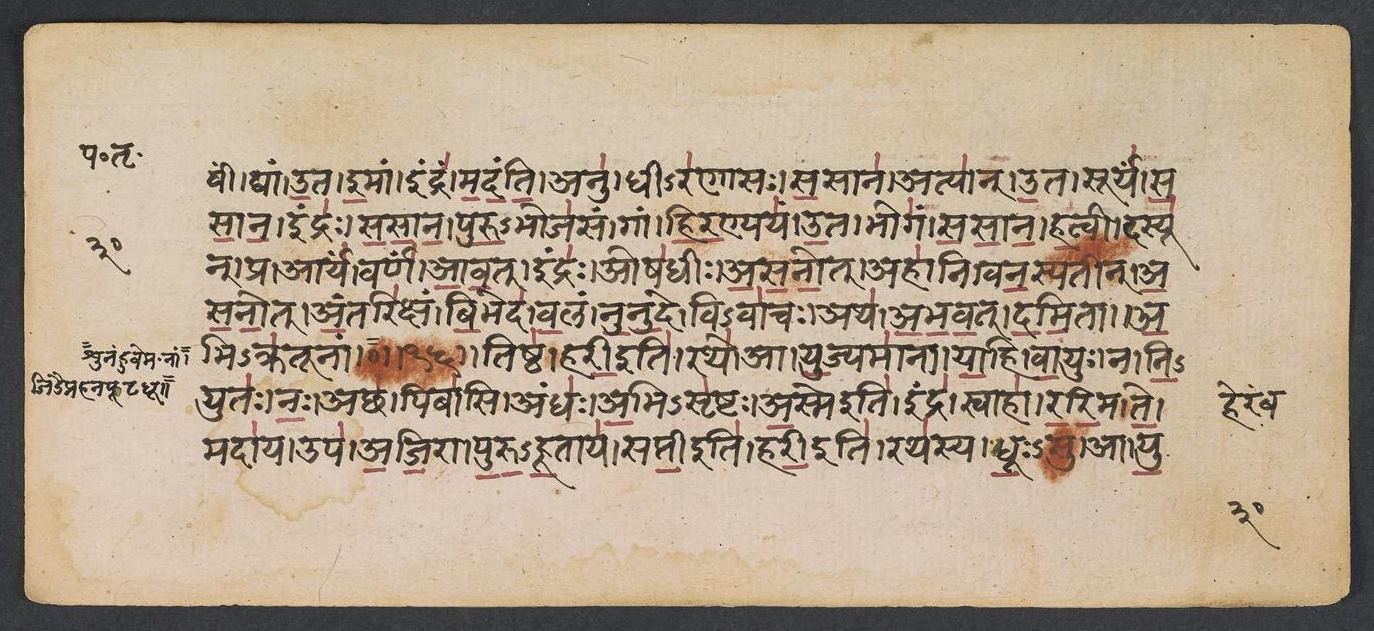
Penn Ms. Coll. 390 Item 41, fol. 220v (numbered 30v by the scribe) (OPenn image 222, upper leaf). Checked on the image: the Rigveda text on this page begins in RV 3.34.8 ‹-pṛthivīm dyām uta imām›. The next page with Rigveda text, fol. 221r (numbered 31r by the scribe), begins in RV 3.35.2 ‹-yunajmi dravat yathā sam-bhṛtam›. Verses 3.34.8-11 end on this page; 3.34.8 begins on fol. 220r (numbered 30r by the scribe).
8sa̱trā̱sāha̱ṁ vare̍ṇyaṁ saho̱dāṁ sa̍sa̱vāṁsa̱ṁ sva̍r a̱paś ca̍ de̱vīḥ | sa̱sāna̱ yaḥ pṛ̍thi̱vīṁ dyām u̱temām indra̍m mada̱nty anu̱ dhīra̍ṇāsaḥ ||
9sa̱sānātyā̍m̐ u̱ta sūrya̍ṁ sasā̱nendra̍ḥ sasāna puru̱bhoja̍sa̱ṁ gām | hi̱ra̱ṇyaya̍m u̱ta bhoga̍ṁ sasāna ha̱tvī dasyū̱n prārya̱ṁ varṇa̍m āvat ||
10indra̱ oṣa̍dhīr asano̱d ahā̍ni̱ vana̱spatī̍m̐r asanod a̱ntari̍kṣam | bi̱bheda̍ va̱laṁ nu̍nu̱de vivā̱co 'thā̍bhavad dami̱tābhikra̍tūnām ||
11śu̱naṁ hu̍vema ma̱ghavā̍na̱m indra̍m a̱smin bhare̱ nṛta̍ma̱ṁ vāja̍sātau | śṛ̱ṇvanta̍m u̱gram ū̱taye̍ sa̱matsu̱ ghnanta̍ṁ vṛ̱trāṇi̍ sa̱ṁjita̱ṁ dhanā̍nām ||
Compare: Padapāṭha (word-by-word text written in the manuscript; Sansknet e-text via GRETIL)
8satrāsaham | vareṇyam | sahaḥ-dām | sasavāṃsam | svaḥ | apaḥ | ca | devīḥ | sasāna | yaḥ | pṛthivīm | dyām | uta | imām | indram | madanti | anu | dhī-raṇāsaḥ
9sasāna | atyān | uta | sūryam | sasāna | indraḥ | sasāna | puru-bhojasam | gām | hiraṇyayam | uta | bhogam | sasāna | hatvī | dasyūn | pra | ayam | varṇam | āvat
10indraḥ | oṣadhīḥ | asanot | ahāni | vanaspatīn | asanot | antarikṣam | bibheda | valam | nunude | vi-vācaḥ | atha | abhavat | damitā | abhi-kratūnām
11śunam | huvema | maghavānam | indram | asmin | bhare | nṛ-tamam | vāja-sātau | śṛṇvantam | ugram | ūtaye | samat-su | ghnantam | vṛtrāṇi | sam-jitam | dhanānām
8Excellent, Conqueror, the victory-giver, the winner of the light and Godlike Waters, He who hath won this broad earth and this heaven, -in Indra they rejoice who love devotions.
9He gained possession of the Sun and Horses, Indra obtained the Cow who feedeth many. Treasure of gold he won; he smote the Dasyus, and gave protection to the Aryan colour.
10He took the plants and days for his possession; he gained the forest trees and air's mid-region. Vala he cleft, and chased away opponents: thus was he tamer of the overweening.
11Call we on Maghavan, auspicious Indra, best Hero in the fight where spoil is gathered, The Strong, who listens, who gives aid in battles, who slays the Vr̥itras, wins and gathers treasures.
Notes
- Sanskrit: Aufrecht's edition (1877) with the Vedic accents, as entered by van Nooten and Holland (GRETIL).
- English: Ralph T. H. Griffith, The Hymns of the Rigveda (1889-1892; 2nd ed. 1896-1897), from the VedaWeb digital text; OCR slips in that text were corrected against the printed 2nd edition (data/sources/rigveda/griffith_errata.json).
- Padapāṭha (edition text): Sansknet e-text via GRETIL (CC BY-NC-SA 4.0).
Cite
Sources
- Source: Penn Ms. Coll. 390 Item 41 (undated (catalogued with Penn's 18th-19th c. Vedic manuscripts)), OPenn, Public Domain Mark + Aufrecht's accented text (GRETIL) + Griffith's English (VedaWeb) (holding institution)
- Critical edition: Aufrecht (1877), accented e-text via GRETIL
← previous · → next · v cycle view · l back to library