Rigveda 3.35: To Indra
Introduction
Rigveda 3.35 is a hymn of 11 verses addressed to Indra. It stands in book (maṇḍala) 3, the family book of Viśvāmitra. The Rigveda is the oldest collection of Sanskrit hymns, composed in the second half of the second millennium BCE and handed down orally for many centuries before it was written down.
The manuscript shown is Penn Ms. Coll. 390 Item 41 (University of Pennsylvania), an undated paper manuscript of the padapāṭha (the word-by-word recitation text, in which every word is written separately and compounds are split) of the whole Ṛgveda in Devanāgarī, 884 leaves in fascicles, 7-9 lines to the page, accents in red; this hymn stands on fol. 220v-222r. Each section below gives the verses that end on one page; the page boundaries were read on the images (the opening words of every page), not counted out. Where the manuscript is a padapāṭha (the word-by-word recitation text), the section shows Aufrecht's continuous (saṃhitā) text first and, as the edition text, the padapāṭha of the same verses, which is the form written on the page.
How was this verified? (Provenance)
Where on the image
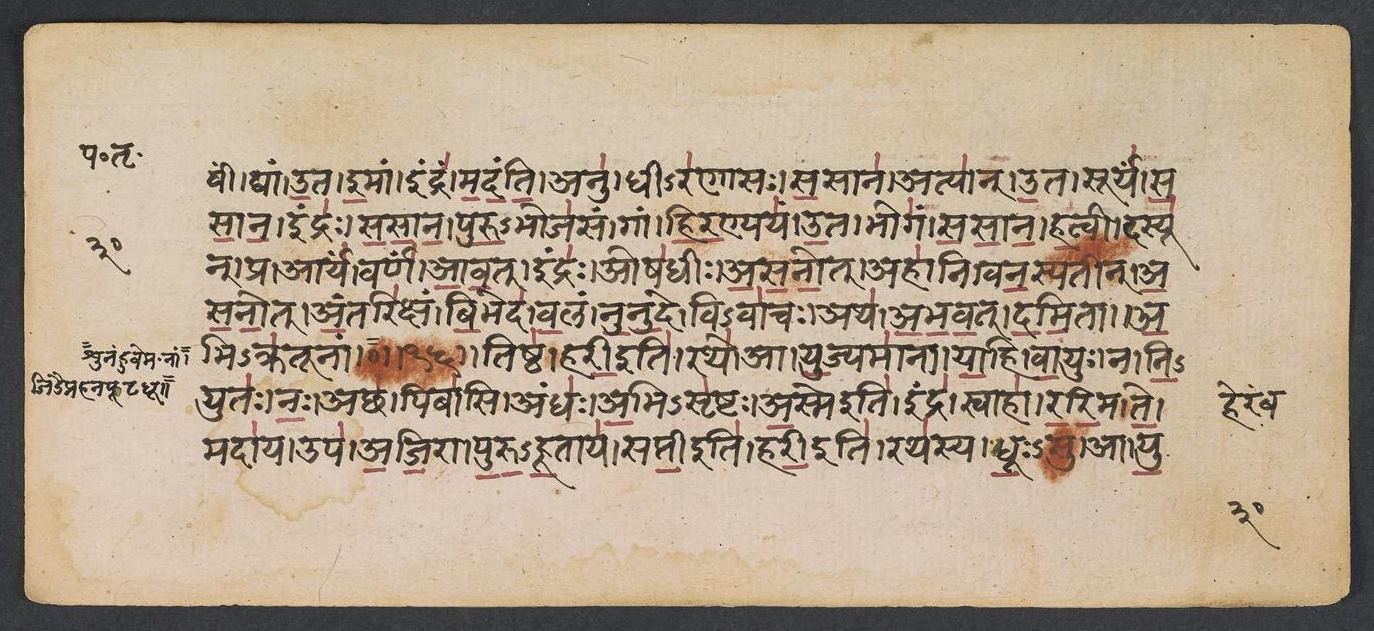
Penn Ms. Coll. 390 Item 41, fol. 220v (numbered 30v by the scribe) (OPenn image 222, upper leaf). Checked on the image: the Rigveda text on this page begins in RV 3.34.8 ‹-pṛthivīm dyām uta imām›. The next page with Rigveda text, fol. 221r (numbered 31r by the scribe), begins in RV 3.35.2 ‹-yunajmi dravat yathā sam-bhṛtam›. Verse 3.35.1 ends on this page.
1tiṣṭhā̱ harī̱ ratha̱ ā yu̱jyamā̍nā yā̱hi vā̱yur na ni̱yuto̍ no̱ accha̍ | pibā̱sy andho̍ a̱bhisṛ̍ṣṭo a̱sme indra̱ svāhā̍ rari̱mā te̱ madā̍ya ||
Compare: Padapāṭha (word-by-word text written in the manuscript; Sansknet e-text via GRETIL)
1tiṣṭha | harī iti | rathe | ā | yujyamānā | yāhi | vāyuḥ | na | ni-yutaḥ | naḥ | accha | pibāsi | andhaḥ | abhi-sṛṣṭaḥ | asme iti | indra | svāhā | rarima | te | madāya
1MOUNT the Bay Horses to thy chariot harnessed, and come to us like Vâyu with his coursers. Thou, hastening to us, shalt drink the Soma. Hail, Indra. We have poured it for thy rapture.
Where on the image
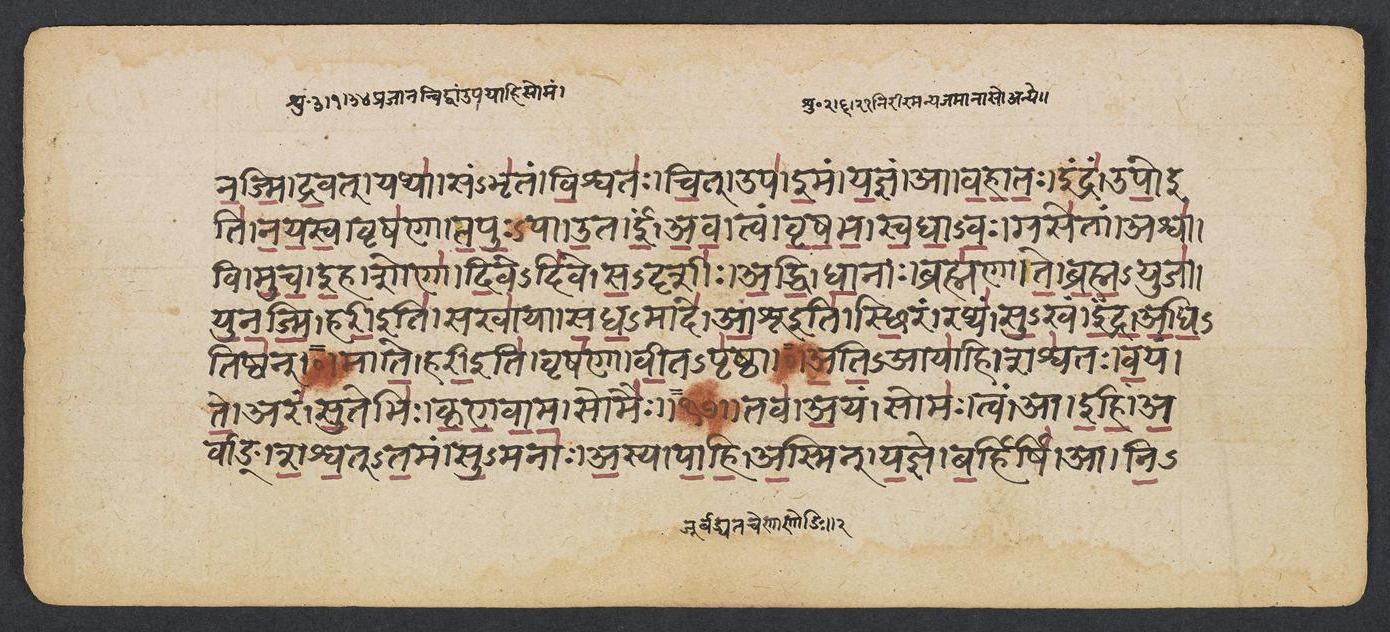
Penn Ms. Coll. 390 Item 41, fol. 221r (numbered 31r by the scribe) (OPenn image 222, lower leaf). Checked on the image: the Rigveda text on this page begins in RV 3.35.2 ‹-yunajmi dravat yathā sam-bhṛtam›. The next page with Rigveda text, fol. 221v (numbered 31v by the scribe), begins in RV 3.35.6 ‹-ni-sadya dadhiṣva imam jaṭhare›. Verses 3.35.2-5 end on this page; 3.35.2 begins on fol. 220v (numbered 30v by the scribe).
2upā̍ji̱rā pu̍ruhū̱tāya̱ saptī̱ harī̱ ratha̍sya dhū̱rṣv ā yu̍najmi | dra̱vad yathā̱ sambhṛ̍taṁ vi̱śvata̍ś ci̱d upe̱maṁ ya̱jñam ā va̍hāta̱ indra̍m ||
3upo̍ nayasva̱ vṛṣa̍ṇā tapu̱ṣpotem a̍va̱ tvaṁ vṛ̍ṣabha svadhāvaḥ | grase̍tā̱m aśvā̱ vi mu̍ce̱ha śoṇā̍ di̱ve-di̍ve sa̱dṛśī̍r addhi dhā̱nāḥ ||
4brahma̍ṇā te brahma̱yujā̍ yunajmi̱ harī̱ sakhā̍yā sadha̱māda̍ ā̱śū | sthi̱raṁ ratha̍ṁ su̱kham i̍ndrādhi̱tiṣṭha̍n prajā̱nan vi̱dvām̐ upa̍ yāhi̱ soma̍m ||
5mā te̱ harī̱ vṛṣa̍ṇā vī̱tapṛ̍ṣṭhā̱ ni rī̍rama̱n yaja̍mānāso a̱nye | a̱tyāyā̍hi̱ śaśva̍to va̱yaṁ te 'ra̍ṁ su̱tebhi̍ḥ kṛṇavāma̱ somai̍ḥ ||
Compare: Padapāṭha (word-by-word text written in the manuscript; Sansknet e-text via GRETIL)
2upa | ajirā | puru-hūtāya | saptī iti | harī iti | rathasya | dhūḥ-su | ā | yunajmi | dravat | yathā | sam-bhṛtam | viśvataḥ | cit | upa | imam | yajñam | ā | vahātaḥ | indram
3upo iti | nayasva | vṛṣaṇā | tapuḥ-pā | uta | īm | ava | tvam | vṛṣabha | svadhāvaḥ | grasetām | aśvā | vi | muca | iha | śoṇā | dive--dive | sa-dṛśīḥ | addhi | dhānāḥ
4brahmaṇā | te | brahma-yujā | yunajmi | harī iti | sakhāyā | sadha-māde | āśū iti | sthiram | ratham | sukham | indra | adhi-tiṣṭhan | pra-jānan | vidvām | upa | yāhi | somam
5mā | te | harī iti | vṛṣaṇā | vīta-pṛṣṭhā | ni | rīraman | yajamānāsaḥ | anye | ati-āyāhi | śaśvataḥ | vayam | te | aram | sutebhiḥ | kṛṇavāma | somaiḥ
2For him, the God who is invoked by many, the two swift Bay Steeds to the pole I harness, That they in fleet course may bring Indra hither, e'en to this sacrifice arranged completely.
3Bring the strong Steeds who drink the warm libation, and, Bull of Godlike nature, be thou gracious. Let thy Steeds eat; set free thy Tawny Horses, and roasted grain like this consume thou daily.
4Those who are yoked by prayer I harness, fleet friendly Bays who take their joy together. Mounting thy firm and easy car, O Indra, wise and all-knowing come thou to the Soma.
5No other worshippers must stay beside them thy Bays, thy vigorous and smooth-backed Coursers. Pass by them all and hasten onward hither: with Soma pressed we will prepare to feast thee.
Where on the image
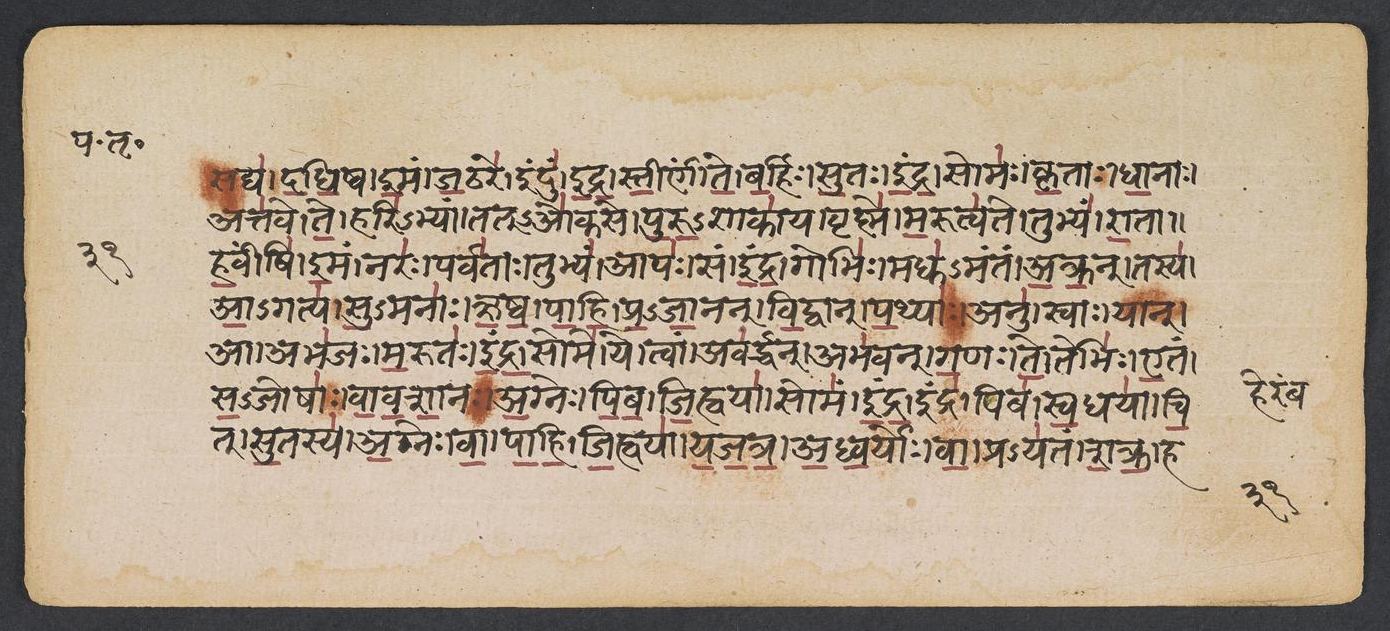
Penn Ms. Coll. 390 Item 41, fol. 221v (numbered 31v by the scribe) (OPenn image 223, upper leaf). Checked on the image: the Rigveda text on this page begins in RV 3.35.6 ‹-ni-sadya dadhiṣva imam jaṭhare›. The next page with Rigveda text, fol. 222r (numbered 32r by the scribe), begins in RV 3.35.10 ‹-hastāt hotuḥ vā yajñam›. Verses 3.35.6-9 end on this page; 3.35.6 begins on fol. 221r (numbered 31r by the scribe).
6tavā̱yaṁ soma̱s tvam ehy a̱rvāṅ cha̍śvatta̱maṁ su̱manā̍ a̱sya pā̍hi | a̱smin ya̱jñe ba̱rhiṣy ā ni̱ṣadyā̍ dadhi̱ṣvemaṁ ja̱ṭhara̱ indu̍m indra ||
7stī̱rṇaṁ te̍ ba̱rhiḥ su̱ta i̍ndra̱ soma̍ḥ kṛ̱tā dhā̱nā atta̍ve te̱ hari̍bhyām | tado̍kase puru̱śākā̍ya̱ vṛṣṇe̍ ma̱rutva̍te̱ tubhya̍ṁ rā̱tā ha̱vīṁṣi̍ ||
8i̱maṁ nara̱ḥ parva̍tā̱s tubhya̱m āpa̱ḥ sam i̍ndra̱ gobhi̱r madhu̍mantam akran | tasyā̱gatyā̍ su̱manā̍ ṛṣva pāhi prajā̱nan vi̱dvān pa̱thyā̱3̱̍ anu̱ svāḥ ||
9yām̐ ābha̍jo ma̱ruta̍ indra̱ some̱ ye tvām ava̍rdha̱nn abha̍van ga̱ṇas te̍ | tebhi̍r e̱taṁ sa̱joṣā̍ vāvaśā̱no̱3̱̍ 'gneḥ pi̍ba ji̱hvayā̱ soma̍m indra ||
Compare: Padapāṭha (word-by-word text written in the manuscript; Sansknet e-text via GRETIL)
6tava | ayam | somaḥ | tvam | ā | ihi | arvāṅ | śaśvat-tamam | su-manāḥ | asya | pāhi | asmin | yajñe | barhiṣi | ā | ni-sadya | dadhiṣva | imam | jaṭhare | indum | indra
7stīrṇam | te | barhiḥ | sutaḥ | indra | somaḥ | kṛtāḥ | dhānāḥ | attave | te | hari-bhyām | tat-okase | puru-śākāya | vṛṣṇe | marutvate | tubhyam | rātā | havīṃṣi
8imam | naraḥ | parvatāḥ | tubhyam | āpaḥ | sam | indra | gobhiḥ | madhu-mantam | akran | tasya | āgatya | su-manāḥ | ṛṣva | pāhi | pra-jānan | vidvān | pathyāḥ | anu | svāḥ
9yān | ā | abhajaḥ | marutaḥ | indra | some | ye | tvām | avardhan | abhavan | gaṇaḥ | te | tebhiḥ | etam | sa-joṣāḥ | vāvaśānaḥ | agneḥ | piba | jihvayā | somam | indra
6Thine is this Sorna: hasten to approach it. Drink thou thereof, benevolent, and cease not. Sit on the sacred grass at this our worship, and take these drops into thy belly, Indra.
7The grass is strewn for thee, pressed is the Soma; the grain is ready for thy Bays to feed on. To thee who lovest them, the very mighty, strong, girt by Maruts, are these gifts presented.
8This the sweet draught, with cows, the men, the mountains, the waters, Indra, have for thee made ready. Come, drink thereof, Sublime One, friendly-minded, foreseeing, knowing well the ways thou goest.
9The Maruts, they with whom thou sharedst Soma, Indra, who made thee strong and were thine army,– With these accordant, eagerly desirous drink thou this Soma with the tongue of Agni.
Where on the image
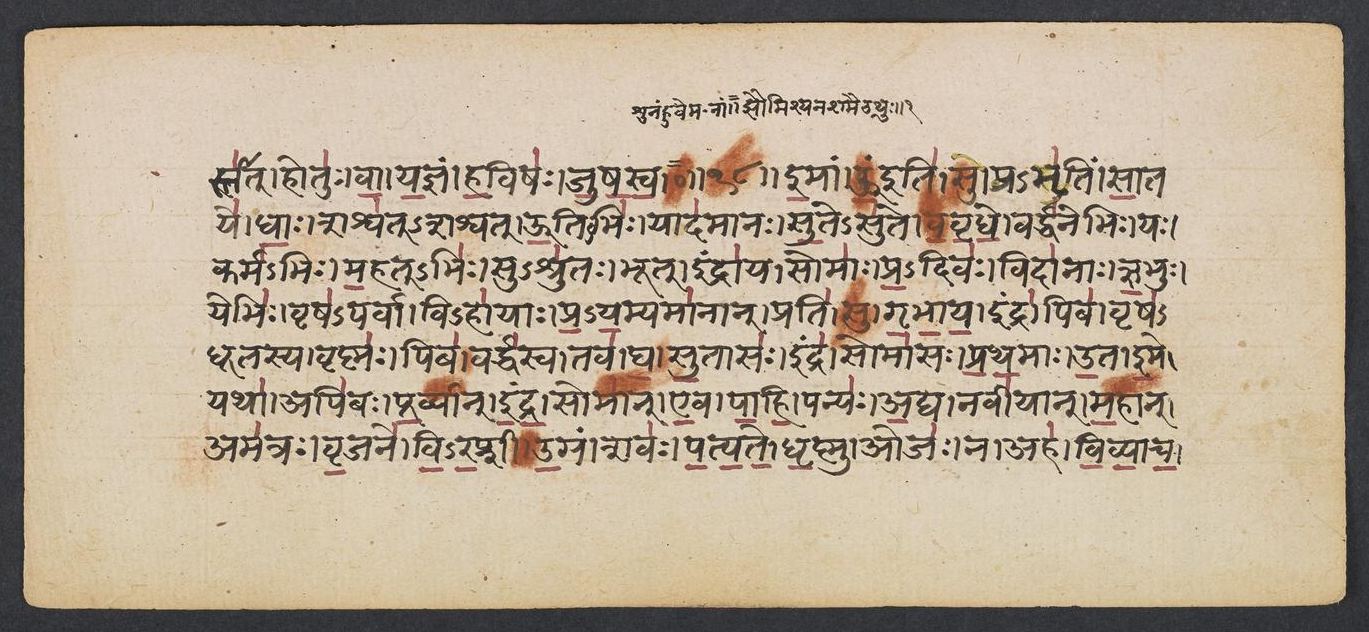
Penn Ms. Coll. 390 Item 41, fol. 222r (numbered 32r by the scribe) (OPenn image 223, lower leaf). Checked on the image: the Rigveda text on this page begins in RV 3.35.10 ‹-hastāt hotuḥ vā yajñam›. The next page with Rigveda text, fol. 222v (numbered 32v by the scribe), begins in RV 3.36.4 ‹pṛthivī cana enam yat›. Verses 3.35.10-11 end on this page; 3.35.10 begins on fol. 221v (numbered 31v by the scribe).
10indra̱ piba̍ sva̱dhayā̍ cit su̱tasyā̱gner vā̍ pāhi ji̱hvayā̍ yajatra | a̱dhva̱ryor vā̱ praya̍taṁ śakra̱ hastā̱d dhotu̍r vā ya̱jñaṁ ha̱viṣo̍ juṣasva ||
11śu̱naṁ hu̍vema ma̱ghavā̍na̱m indra̍m a̱smin bhare̱ nṛta̍ma̱ṁ vāja̍sātau | śṛ̱ṇvanta̍m u̱gram ū̱taye̍ sa̱matsu̱ ghnanta̍ṁ vṛ̱trāṇi̍ sa̱ṁjita̱ṁ dhanā̍nām ||
Compare: Padapāṭha (word-by-word text written in the manuscript; Sansknet e-text via GRETIL)
10indra | piba | svadhayā | cit | sutasya | agneḥ | vā | pāhi | jihvayā | yajatra | adhvaryoḥ | vā | pra-yatam | śakra | hastāt | hotuḥ | vā | yajñam | haviṣaḥ | juṣasva
11śunam | huvema | maghavānam | indram | asmin | bhare | nṛ-tamam | vāja-sātau | śṛṇvantam | ugram | ūtaye | samat-su | ghnantam | vṛtrāṇi | sam-jitam | dhanānām
10Drink, Indra, of the juice by thine own nature, or by the tongue of Agni, O thou Holy. Accept the sacrificial gift, O Ṣakra, from the Adhvaryu's hand or from the Hotar's.
11Call we on Maghavan, auspicious Indra, best Hero in the fight where spoil is gathered, The Strong, who listens, who.gives aid in battles, who slays the Vr̥itras, wins and gathers riches.
Notes
- Sanskrit: Aufrecht's edition (1877) with the Vedic accents, as entered by van Nooten and Holland (GRETIL).
- English: Ralph T. H. Griffith, The Hymns of the Rigveda (1889-1892; 2nd ed. 1896-1897), from the VedaWeb digital text; OCR slips in that text were corrected against the printed 2nd edition (data/sources/rigveda/griffith_errata.json).
- Padapāṭha (edition text): Sansknet e-text via GRETIL (CC BY-NC-SA 4.0).
Cite
Sources
- Source: Penn Ms. Coll. 390 Item 41 (undated (catalogued with Penn's 18th-19th c. Vedic manuscripts)), OPenn, Public Domain Mark + Aufrecht's accented text (GRETIL) + Griffith's English (VedaWeb) (holding institution)
- Critical edition: Aufrecht (1877), accented e-text via GRETIL
← previous · → next · v cycle view · l back to library