Rigveda 3.36: To Indra
Introduction
Rigveda 3.36 is a hymn of 11 verses addressed to Indra. It stands in book (maṇḍala) 3, the family book of Viśvāmitra. The Rigveda is the oldest collection of Sanskrit hymns, composed in the second half of the second millennium BCE and handed down orally for many centuries before it was written down.
The manuscript shown is Penn Ms. Coll. 390 Item 41 (University of Pennsylvania), an undated paper manuscript of the padapāṭha (the word-by-word recitation text, in which every word is written separately and compounds are split) of the whole Ṛgveda in Devanāgarī, 884 leaves in fascicles, 7-9 lines to the page, accents in red; this hymn stands on fol. 222r-223r. Each section below gives the verses that end on one page; the page boundaries were read on the images (the opening words of every page), not counted out. Where the manuscript is a padapāṭha (the word-by-word recitation text), the section shows Aufrecht's continuous (saṃhitā) text first and, as the edition text, the padapāṭha of the same verses, which is the form written on the page.
How was this verified? (Provenance)
Where on the image
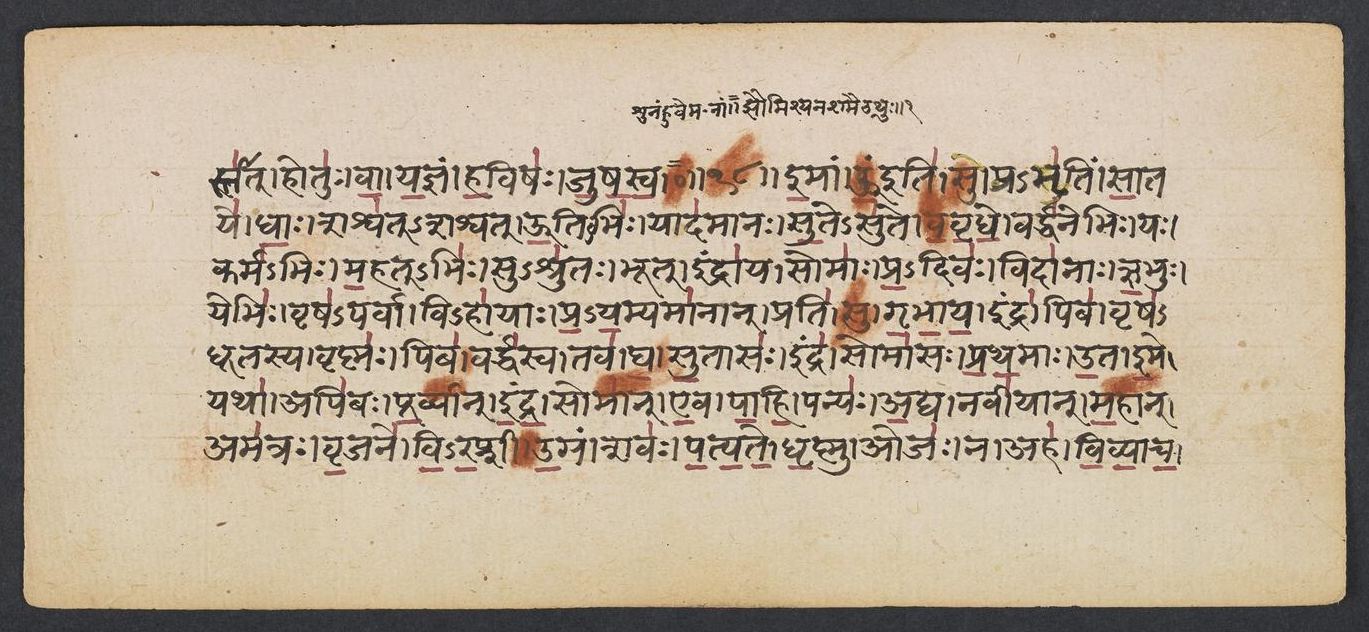
Penn Ms. Coll. 390 Item 41, fol. 222r (numbered 32r by the scribe) (OPenn image 223, lower leaf). Checked on the image: the Rigveda text on this page begins in RV 3.35.10 ‹-hastāt hotuḥ vā yajñam›. The next page with Rigveda text, fol. 222v (numbered 32v by the scribe), begins in RV 3.36.4 ‹pṛthivī cana enam yat›. Verses 3.36.1-3 end on this page.
1i̱mām ū̱ ṣu prabhṛ̍tiṁ sā̱taye̍ dhā̱ḥ śaśva̍c-chaśvad ū̱tibhi̱r yāda̍mānaḥ | su̱te-su̍te vāvṛdhe̱ vardha̍nebhi̱r yaḥ karma̍bhir ma̱hadbhi̱ḥ suśru̍to̱ bhūt ||
2indrā̍ya̱ somā̍ḥ pra̱divo̱ vidā̍nā ṛ̱bhur yebhi̱r vṛṣa̍parvā̱ vihā̍yāḥ | pra̱ya̱myamā̍nā̱n prati̱ ṣū gṛ̍bhā̱yendra̱ piba̱ vṛṣa̍dhūtasya̱ vṛṣṇa̍ḥ ||
3pibā̱ vardha̍sva̱ tava̍ ghā su̱tāsa̱ indra̱ somā̍saḥ pratha̱mā u̱teme | yathāpi̍baḥ pū̱rvyām̐ i̍ndra̱ somā̍m̐ e̱vā pā̍hi̱ panyo̍ a̱dyā navī̍yān ||
Compare: Padapāṭha (word-by-word text written in the manuscript; Sansknet e-text via GRETIL)
1imām | oṃ iti | su | pra-bhṛtim | sātaye | dhāḥ | śaśvat-śaśvat | ūti-bhiḥ | yādamānaḥ | sute--sute | vavṛdhe | vardhanebhiḥ | yaḥ | karma-bhiḥ | mahat-bhiḥ | su-śrutaḥ | bhūt
2indrāya | somāḥ | pra-divaḥ | vidānāḥ | ṛbhuḥ | yebhiḥ | vṛṣa-parvā | vi-hāyāḥ | pra-yamyamānān | prati | su | gṛbhāya | indra | piba | vṛṣa-dhūtasya | vṛṣṇaḥ
3piba | vardhasva | tava | gha | sutāsaḥ | indra | somāsaḥ | prathamāḥ | uta | ime | yathā | apibaḥ | pūrvyān | indra | somān | eva | pāhi | panyaḥ | adya | navīyān
1WITH constant succours, fain thyself to share it, make this oblation which we bring effective. Grown great through strengthening gifts at each libation, he hath become renowned by mighty exploits.
2For Indra were the Somas erst- discovered, whereby he grew strong-jointed, vast, and skilful. Indra , take quickly these presented juices: drink of the strong, that which the strong have shaken.
3Drink and wax great. Thine are the juices, Indra, both Somas of old time and these we bring thee. Even as thou drankest, Indra, earlier Somas, so drink to-day, a new guest, meet for praises.
Where on the image
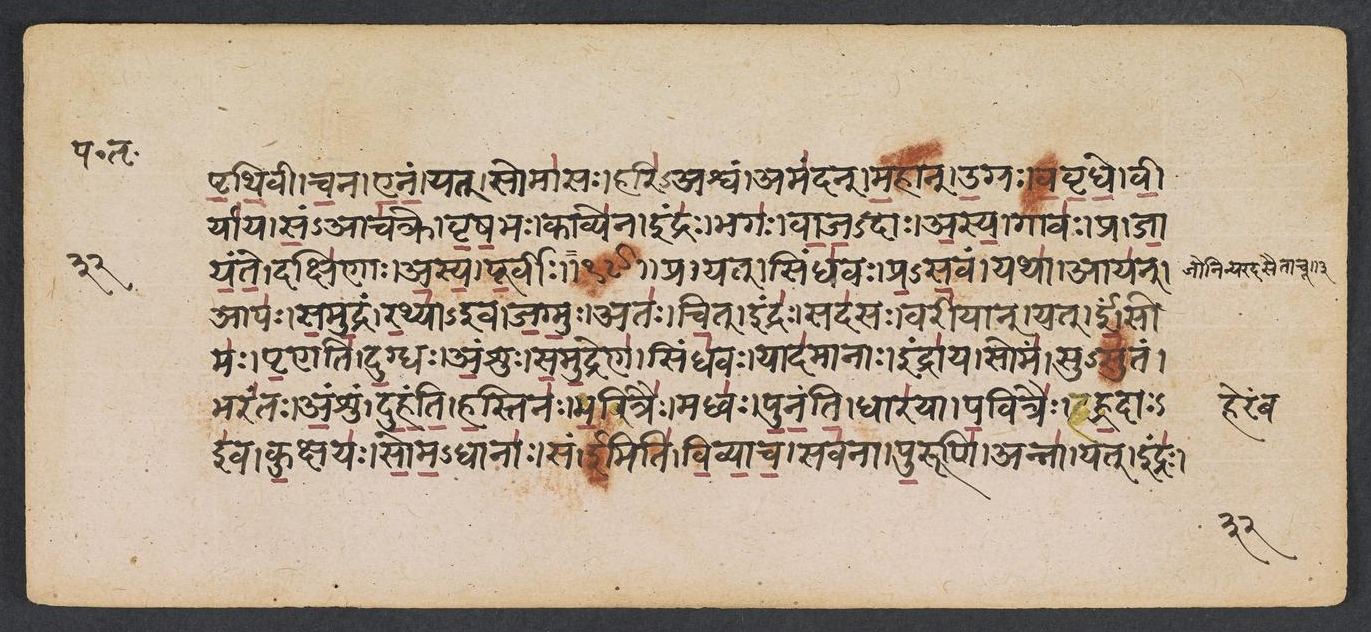
Penn Ms. Coll. 390 Item 41, fol. 222v (numbered 32v by the scribe) (OPenn image 224, upper leaf). Checked on the image: the Rigveda text on this page begins in RV 3.36.4 ‹pṛthivī cana enam yat›. The next page with Rigveda text, fol. 223r (numbered 33r by the scribe), begins in RV 3.36.8 ‹prathamā vi āśa vṛtram›. Verses 3.36.4-7 end on this page; 3.36.4 begins on fol. 222r (numbered 32r by the scribe).
4ma̱hām̐ ama̍tro vṛ̱jane̍ vira̱pśy u1̱̍graṁ śava̍ḥ patyate dhṛ̱ṣṇv oja̍ḥ | nāha̍ vivyāca pṛthi̱vī ca̱naina̱ṁ yat somā̍so̱ harya̍śva̱m ama̍ndan ||
5ma̱hām̐ u̱gro vā̍vṛdhe vī̱ryā̍ya sa̱māca̍kre vṛṣa̱bhaḥ kāvye̍na | indro̱ bhago̍ vāja̱dā a̍sya̱ gāva̱ḥ pra jā̍yante̱ dakṣi̍ṇā asya pū̱rvīḥ ||
6pra yat sindha̍vaḥ prasa̱vaṁ yathāya̱nn āpa̍ḥ samu̱draṁ ra̱thye̍va jagmuḥ | ata̍ś ci̱d indra̱ḥ sada̍so̱ varī̍yā̱n yad ī̱ṁ soma̍ḥ pṛ̱ṇati̍ du̱gdho a̱ṁśuḥ ||
7sa̱mu̱dreṇa̱ sindha̍vo̱ yāda̍mānā̱ indrā̍ya̱ soma̱ṁ suṣu̍ta̱m bhara̍ntaḥ | a̱ṁśuṁ du̍hanti ha̱stino̍ bha̱ritrai̱r madhva̍ḥ punanti̱ dhāra̍yā pa̱vitrai̍ḥ ||
Compare: Padapāṭha (word-by-word text written in the manuscript; Sansknet e-text via GRETIL)
4mahān | amatraḥ | vṛjane | vi-rapśī | ugram | śavaḥ | patyate | dhṛṣṇu | ojaḥ | na | aha | vivyāca | pṛthivī | cana | enam | yat | somāsaḥ | hari-aśvam | amandan
5mahān | ugraḥ | vavṛdhe | vīryāya | sam-ācakre | vṛṣabhaḥ | kāvyena | indraḥ | bhagaḥ | vāja-dāḥ | asya | gāvaḥ | pra | jayante | dakṣiṇāḥ | asya | pūrvīḥ
6pra | yat | sindhavaḥ | pra-savam | yathā | āyan | āpaḥ | samudram | rathyāiva | jagmuḥ | ataḥ | cit | indraḥ | sadasaḥ | varīyān | yat | īm | somaḥ | pṛṇati | dugdhaḥ | aṃśuḥ
7samudreṇa | sindhavaḥ | yādamānāḥ | indrāya | somam | suṣutam | bharantaḥ | aṃśum | duhanti | hastinaḥ | bharitraiḥ | madhvaḥ | punanti | dhārayā | pavitraiḥ
4Great and impetuous, mighty-voiced in battle, surpassing power is his, and strength resistless. Him the broad earth hath never comprehended when Somas cheered the Lord of Tawny Coursers.
5Mighty and strong he waxed for hero exploit: the Bull was furnished a Sage's wisdom. Indra is our kind Lord; his steers have vigour; his cows are many with abundant offspring.
6As floods according to their stream flow onward, so to the sea, as borne on cars, the waters. Vaster is Indra even than his dwelling, what time the stalk milked out, the Soma, fills him.
7Eager to mingle with the sea, the rivers carry the well-pressed Soma juice to Indra. They drain the stalk out with their arms, quick-banded, and cleanse it with a stream of mead and filters.
Where on the image
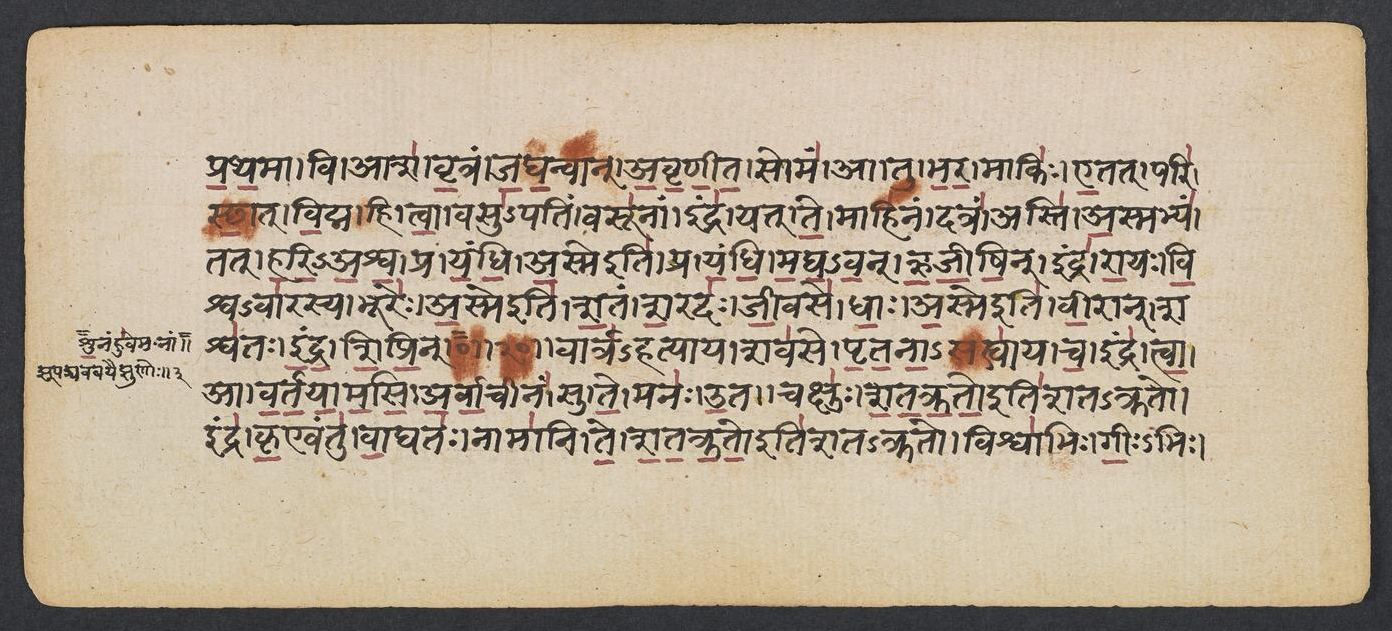
Penn Ms. Coll. 390 Item 41, fol. 223r (numbered 33r by the scribe) (OPenn image 224, lower leaf). Checked on the image: the Rigveda text on this page begins in RV 3.36.8 ‹prathamā vi āśa vṛtram›. The next page with Rigveda text, fol. 223v (numbered 33v by the scribe), begins in RV 3.37.3 ‹īmahe indra abhimāti-sahye›. Verses 3.36.8-11 end on this page; 3.36.8 begins on fol. 222v (numbered 32v by the scribe).
8hra̱dā i̍va ku̱kṣaya̍ḥ soma̱dhānā̱ḥ sam ī̍ vivyāca̱ sava̍nā pu̱rūṇi̍ | annā̱ yad indra̍ḥ pratha̱mā vy āśa̍ vṛ̱traṁ ja̍gha̱nvām̐ a̍vṛṇīta̱ soma̍m ||
9ā tū bha̍ra̱ māki̍r e̱tat pari̍ ṣṭhād vi̱dmā hi tvā̱ vasu̍pati̱ṁ vasū̍nām | indra̱ yat te̱ māhi̍na̱ṁ datra̱m asty a̱smabhya̱ṁ tad dha̍ryaśva̱ pra ya̍ndhi ||
10a̱sme pra ya̍ndhi maghavann ṛjīṣi̱nn indra̍ rā̱yo vi̱śvavā̍rasya̱ bhūre̍ḥ | a̱sme śa̱taṁ śa̱rado̍ jī̱vase̍ dhā a̱sme vī̱rāñ chaśva̍ta indra śiprin ||
11śu̱naṁ hu̍vema ma̱ghavā̍na̱m indra̍m a̱smin bhare̱ nṛta̍ma̱ṁ vāja̍sātau | śṛ̱ṇvanta̍m u̱gram ū̱taye̍ sa̱matsu̱ ghnanta̍ṁ vṛ̱trāṇi̍ sa̱ṁjita̱ṁ dhanā̍nām ||
Compare: Padapāṭha (word-by-word text written in the manuscript; Sansknet e-text via GRETIL)
8hradāḥ-iva | kukṣayaḥ | soma-dhānāḥ | sam | īm iti | vivyāca | savanā | purūṇi | annā | yat | indraḥ | prathamā | vi | āśa | vṛtram | jaghanvān | avṛṇīta | somam
9ā | tu | bhara | mākiḥ | etat | pari | sthāt | vidma | hi | tvā | vasu-patim | vasūnām | indra | yat | te | māhinam | datram | asti | asmabhyam | tat | hari-aśva | pra | yandh i
10asme iti | pra | yandhi | magha-van | ṛjīṣin | indra | rāyaḥ | viśva-vārasya | bhūreḥ | asme iti | śatam | śaradaḥ | jīvase | dhāḥ | asme iti | vīrān | śaśvataḥ | indra | śiprin
11śunam | huvema | maghavānam | indram | asmin | bhare | nṛ-tamam | vāja-sātau | śṛṇvantam | ugram | ūtaye | samat-su | ghnantam | vṛtrāṇi | sam-jitam | dhanānām
8Like lakes appear his flanks filled full with Soma: yea, he contains libations in abundance. When Indra had consumed the first sweet viands, he, after slaying Vr̥itra, claimed the Soma.
9Then bring thou hither, and let none prevent it: we know thee well, the Lord of wealth and treasure. That splendid gift which is thine own, O Indra, vouchsafe to us, Lord of the Tawny Coursers.
10O Indra, Maghavan, impetuous mover, grant us abundant wealth that brings all blessings. Give us a hundred autumns for our lifetime: give us, O fair-checked Indra, store of heroes.
11Call we on Indra, Maghavan, auspicious, best Hero in the fight where spoil is gathered, The Strong, who listens, who gives aid in battles, who slays the Vr̥itras, wins and gathers riches.
Notes
- Sanskrit: Aufrecht's edition (1877) with the Vedic accents, as entered by van Nooten and Holland (GRETIL).
- English: Ralph T. H. Griffith, The Hymns of the Rigveda (1889-1892; 2nd ed. 1896-1897), from the VedaWeb digital text; OCR slips in that text were corrected against the printed 2nd edition (data/sources/rigveda/griffith_errata.json).
- Padapāṭha (edition text): Sansknet e-text via GRETIL (CC BY-NC-SA 4.0).
Cite
Sources
- Source: Penn Ms. Coll. 390 Item 41 (undated (catalogued with Penn's 18th-19th c. Vedic manuscripts)), OPenn, Public Domain Mark + Aufrecht's accented text (GRETIL) + Griffith's English (VedaWeb) (holding institution)
- Critical edition: Aufrecht (1877), accented e-text via GRETIL
← previous · → next · v cycle view · l back to library