Rigveda 3.37: To Indra
Introduction
Rigveda 3.37 is a hymn of 11 verses addressed to Indra. It stands in book (maṇḍala) 3, the family book of Viśvāmitra. The Rigveda is the oldest collection of Sanskrit hymns, composed in the second half of the second millennium BCE and handed down orally for many centuries before it was written down.
The manuscript shown is Penn Ms. Coll. 390 Item 41 (University of Pennsylvania), an undated paper manuscript of the padapāṭha (the word-by-word recitation text, in which every word is written separately and compounds are split) of the whole Ṛgveda in Devanāgarī, 884 leaves in fascicles, 7-9 lines to the page, accents in red; this hymn stands on fol. 223r-224r. Each section below gives the verses that end on one page; the page boundaries were read on the images (the opening words of every page), not counted out. Where the manuscript is a padapāṭha (the word-by-word recitation text), the section shows Aufrecht's continuous (saṃhitā) text first and, as the edition text, the padapāṭha of the same verses, which is the form written on the page.
How was this verified? (Provenance)
Where on the image
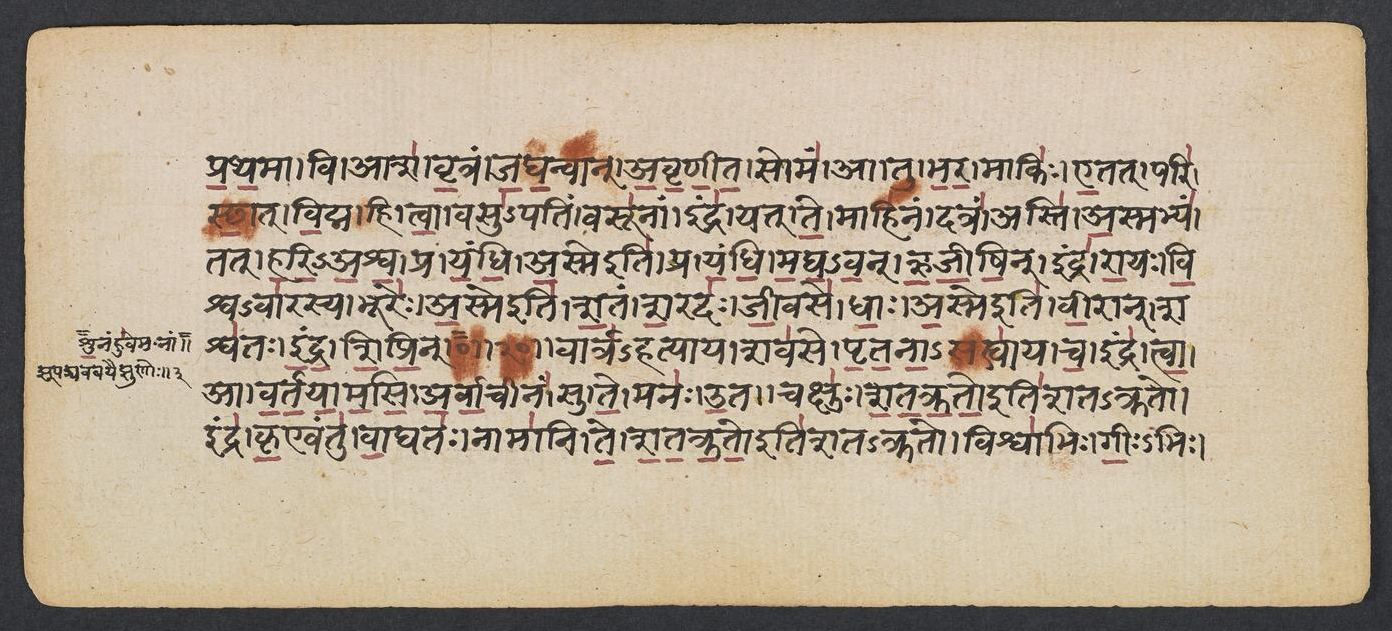
Penn Ms. Coll. 390 Item 41, fol. 223r (numbered 33r by the scribe) (OPenn image 224, lower leaf). Checked on the image: the Rigveda text on this page begins in RV 3.36.8 ‹prathamā vi āśa vṛtram›. The next page with Rigveda text, fol. 223v (numbered 33v by the scribe), begins in RV 3.37.3 ‹īmahe indra abhimāti-sahye›. Verses 3.37.1-2 end on this page.
1vārtra̍hatyāya̱ śava̍se pṛtanā̱ṣāhyā̍ya ca | indra̱ tvā va̍rtayāmasi ||
2a̱rvā̱cīna̱ṁ su te̱ mana̍ u̱ta cakṣu̍ḥ śatakrato | indra̍ kṛ̱ṇvantu̍ vā̱ghata̍ḥ ||
Compare: Padapāṭha (word-by-word text written in the manuscript; Sansknet e-text via GRETIL)
1vārtra-hatyāya | śavase | pṛtanāsahyāya | ca | indra | tvā | varayāmasi
2arvācīnam | su | te | manaḥ | uta | cakṣuḥ | śatakrato itiśata-krato | indra | kṛṇvantu | vāghataḥ
1O INDRA, for the strength that slays Vr̥itra and conquers in the fight, We turn thee hitherward to us.
2O Indra, Lord of Hundred Powers, may those who praise thee hitherward. Direct thy spirit and thine eye.
Where on the image
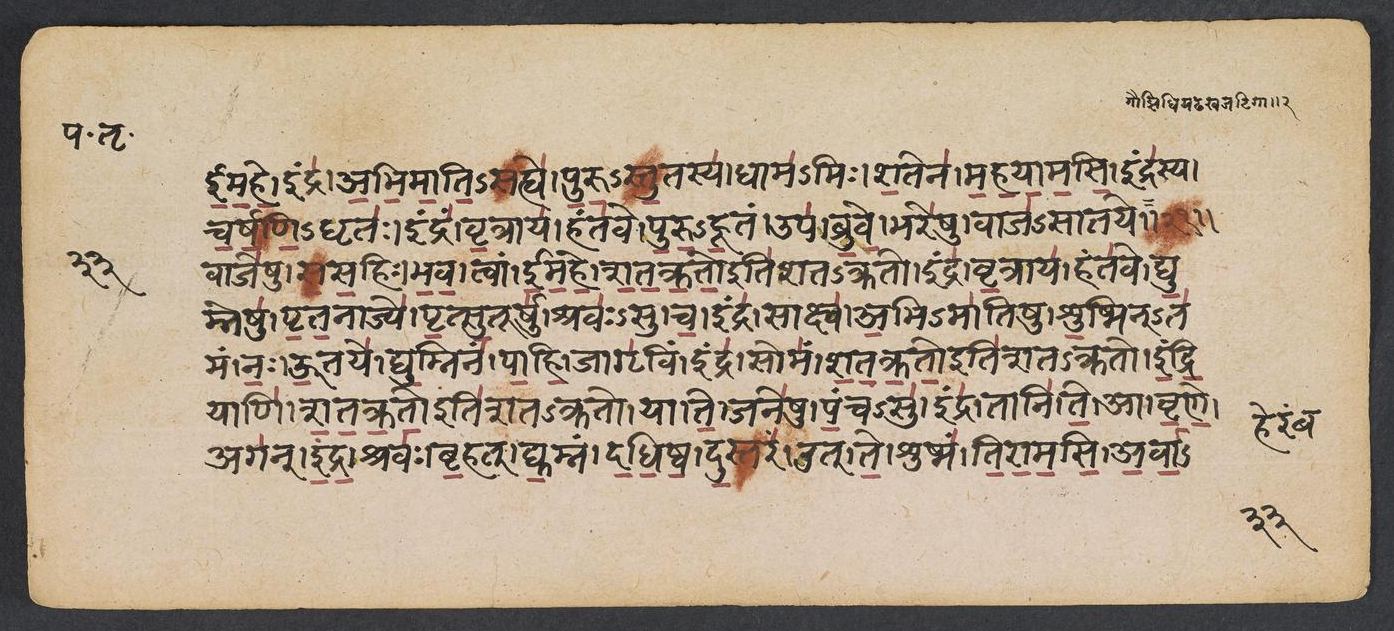
Penn Ms. Coll. 390 Item 41, fol. 223v (numbered 33v by the scribe) (OPenn image 225, upper leaf). Checked on the image: the Rigveda text on this page begins in RV 3.37.3 ‹īmahe indra abhimāti-sahye›. The next page with Rigveda text, fol. 224r (numbered 34r by the scribe), begins in RV 3.37.11 ‹-arvāvataḥ naḥ ā gahi›. Verses 3.37.3-10 end on this page; 3.37.3 begins on fol. 223r (numbered 33r by the scribe).
3nāmā̍ni te śatakrato̱ viśvā̍bhir gī̱rbhir ī̍mahe | indrā̍bhimāti̱ṣāhye̍ ||
4pu̱ru̱ṣṭu̱tasya̱ dhāma̍bhiḥ śa̱tena̍ mahayāmasi | indra̍sya carṣaṇī̱dhṛta̍ḥ ||
5indra̍ṁ vṛ̱trāya̱ hanta̍ve puruhū̱tam upa̍ bruve | bhare̍ṣu̱ vāja̍sātaye ||
6vāje̍ṣu sāsa̱hir bha̍va̱ tvām ī̍mahe śatakrato | indra̍ vṛ̱trāya̱ hanta̍ve ||
7dyu̱mneṣu̍ pṛta̱nājye̍ pṛtsu̱tūrṣu̱ śrava̍ḥsu ca | indra̱ sākṣvā̱bhimā̍tiṣu ||
8śu̱ṣminta̍maṁ na ū̱taye̍ dyu̱mnina̍m pāhi̱ jāgṛ̍vim | indra̱ soma̍ṁ śatakrato ||
9i̱ndri̱yāṇi̍ śatakrato̱ yā te̱ jane̍ṣu pa̱ñcasu̍ | indra̱ tāni̍ ta̱ ā vṛ̍ṇe ||
10aga̍nn indra̱ śravo̍ bṛ̱had dyu̱mnaṁ da̍dhiṣva du̱ṣṭara̍m | ut te̱ śuṣma̍ṁ tirāmasi ||
Compare: Padapāṭha (word-by-word text written in the manuscript; Sansknet e-text via GRETIL)
3nāmāni | te | śatakrato itiśata-krato | viśvābhiḥ | gīḥ-bhiḥ | īmahe | indra | abhimāti-sahye
4puru-stutasya | dhāma-bhiḥ | śatena | mahayāmasi | indrasya | carṣaṇi-dhṛtaḥ
5indram | vṛtrāya | hantave | puru-hūtam | upa | bruve | bhareṣu | vāja-sātaye
6vājeṣu | sasahiḥ | bhava | tvām | īmahe | śatakrato itiśata-krato | indra | vṛtrāya | hantave
7dyumneṣu | pṛtanājye | pṛtsutūrṣu | śravaḥ-su | ca | indra | sākṣva | abhi-mātiṣu
8śuṣmin-tamam | na | ūtaye | dyumninam | pāhi | jāgṛvim | indra | somam | śatakrato itiśata-krato
9indriyāṇi | śatakrato itiśata-krato | yā | te | janeṣu | pañca-su | indra | tāni | te | ā | vṛṇe
10agan | indra | śravaḥ | bṛhat | dyumnam | dadhiṣva | dustaram | ut | te | śuṣmam | tirāmasi
3O Indra, Lord of Hundred Powers, with all our songs we invocate Thy names for triumph over foes.
4We strive for glory through the powers immense of him whom many praise, Of Indra who supports mankind.
5For Vr̥itra's slaughter I address Indra whom many invocate, To win us booty in the wars.
6In battles be victorious. We seek thee, Lord of Hundred Powers, Indra, that Vr̥itra may be slain.
7In splendid combats of the hosts, in glories where the fight is won. Indra, be victor over foes.
8Drink thou the Soma for our help, bright, vigilant, exceeding strong, O Indra, Lord of Hundred Powers.
9O Ṣatakratu, powers which thou mid the Five Races hast displayed These, Indra, do I claim of thee.
10Indra, great glory hast thou gained. Win splendid fame which none may mar We make thy might perpetual.
Where on the image
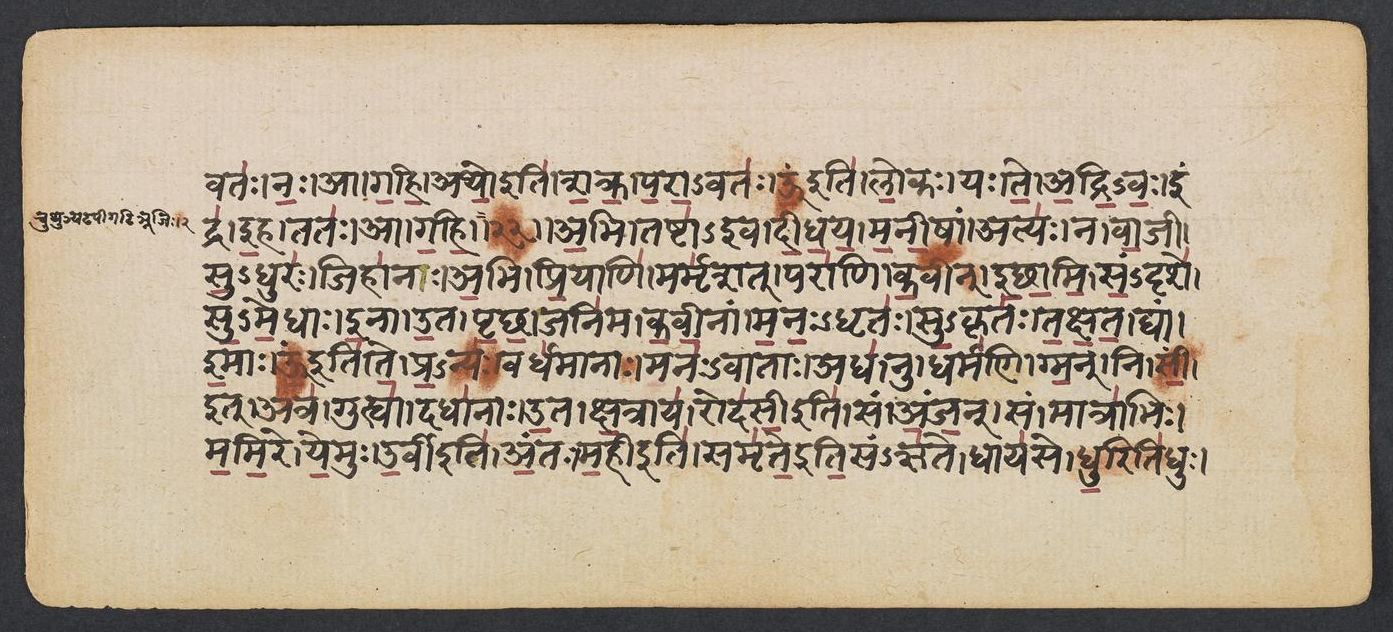
Penn Ms. Coll. 390 Item 41, fol. 224r (numbered 34r by the scribe) (OPenn image 225, lower leaf). Checked on the image: the Rigveda text on this page begins in RV 3.37.11 ‹-arvāvataḥ naḥ ā gahi›. The next page with Rigveda text, fol. 224v (numbered 34v by the scribe), begins in RV 3.38.4 ‹ātiṣṭhantam pari viśve abhūṣan›. Verse 3.37.11 ends on this page; 3.37.11 begins on fol. 223v (numbered 33v by the scribe).
11a̱rvā̱vato̍ na̱ ā ga̱hy atho̍ śakra parā̱vata̍ḥ | u̱ lo̱ko yas te̍ adriva̱ indre̱ha tata̱ ā ga̍hi ||
Compare: Padapāṭha (word-by-word text written in the manuscript; Sansknet e-text via GRETIL)
11arvāvataḥ | naḥ | ā | gahi | atho iti | śakra | parāvataḥ | oṃ iti | lokaḥ | yaḥ | te | adri-vaḥ | indra | iha | tataḥ | ā | gahi
11Come to us either from anear, Or, Ṣakra, come from far away. Indra, wherever be thy home, come to us thence, O Thunder-armed.
Notes
- Sanskrit: Aufrecht's edition (1877) with the Vedic accents, as entered by van Nooten and Holland (GRETIL).
- English: Ralph T. H. Griffith, The Hymns of the Rigveda (1889-1892; 2nd ed. 1896-1897), from the VedaWeb digital text; OCR slips in that text were corrected against the printed 2nd edition (data/sources/rigveda/griffith_errata.json).
- Padapāṭha (edition text): Sansknet e-text via GRETIL (CC BY-NC-SA 4.0).
Cite
Sources
- Source: Penn Ms. Coll. 390 Item 41 (undated (catalogued with Penn's 18th-19th c. Vedic manuscripts)), OPenn, Public Domain Mark + Aufrecht's accented text (GRETIL) + Griffith's English (VedaWeb) (holding institution)
- Critical edition: Aufrecht (1877), accented e-text via GRETIL
← previous · → next · v cycle view · l back to library