Rigveda 3.38: To Indra
Introduction
Rigveda 3.38 is a hymn of 10 verses addressed to Indra. It stands in book (maṇḍala) 3, the family book of Viśvāmitra. The Rigveda is the oldest collection of Sanskrit hymns, composed in the second half of the second millennium BCE and handed down orally for many centuries before it was written down.
The manuscript shown is Penn Ms. Coll. 390 Item 41 (University of Pennsylvania), an undated paper manuscript of the padapāṭha (the word-by-word recitation text, in which every word is written separately and compounds are split) of the whole Ṛgveda in Devanāgarī, 884 leaves in fascicles, 7-9 lines to the page, accents in red; this hymn stands on fol. 224r-225r. Each section below gives the verses that end on one page; the page boundaries were read on the images (the opening words of every page), not counted out. Where the manuscript is a padapāṭha (the word-by-word recitation text), the section shows Aufrecht's continuous (saṃhitā) text first and, as the edition text, the padapāṭha of the same verses, which is the form written on the page.
How was this verified? (Provenance)
Where on the image
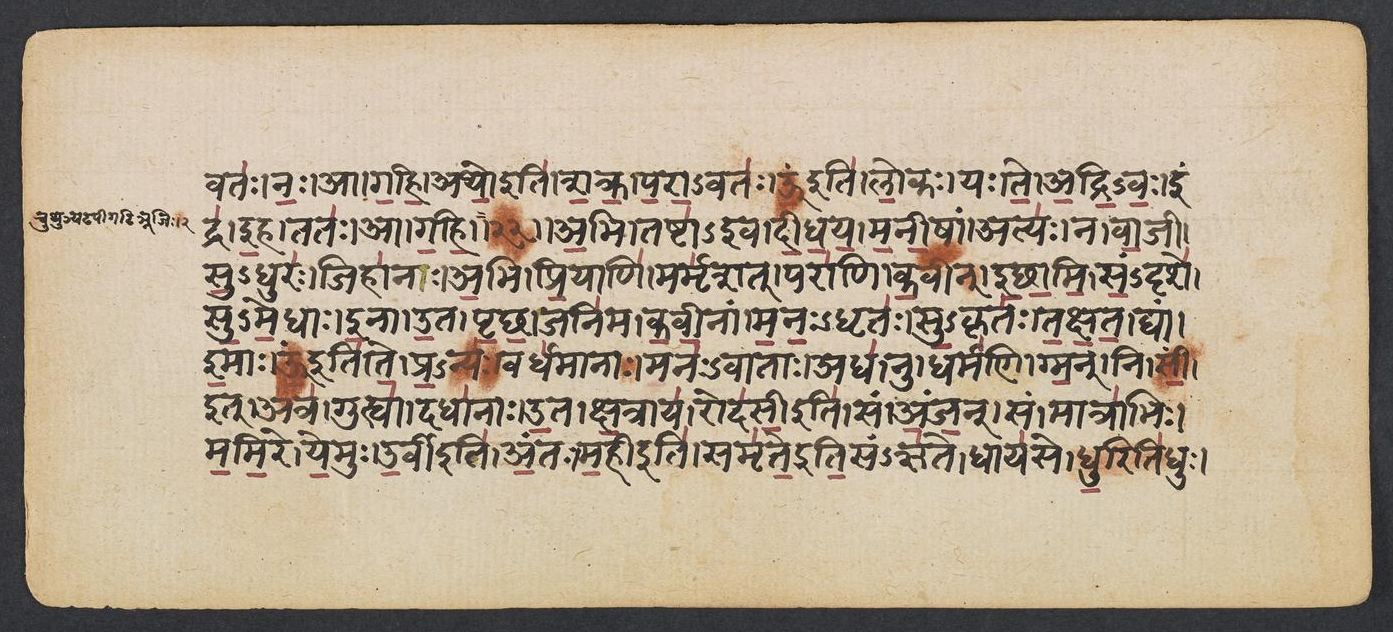
Penn Ms. Coll. 390 Item 41, fol. 224r (numbered 34r by the scribe) (OPenn image 225, lower leaf). Checked on the image: the Rigveda text on this page begins in RV 3.37.11 ‹-arvāvataḥ naḥ ā gahi›. The next page with Rigveda text, fol. 224v (numbered 34v by the scribe), begins in RV 3.38.4 ‹ātiṣṭhantam pari viśve abhūṣan›. Verses 3.38.1-3 end on this page.
1a̱bhi taṣṭe̍va dīdhayā manī̱ṣām atyo̱ na vā̱jī su̱dhuro̱ jihā̍naḥ | a̱bhi pri̱yāṇi̱ marmṛ̍śa̱t parā̍ṇi ka̱vīm̐r i̍cchāmi sa̱ṁdṛśe̍ sume̱dhāḥ ||
2i̱nota pṛ̍ccha̱ jani̍mā kavī̱nām ma̍no̱dhṛta̍ḥ su̱kṛta̍s takṣata̱ dyām | i̱mā u̍ te pra̱ṇyo̱3̱̍ vardha̍mānā̱ mano̍vātā̱ adha̱ nu dharma̍ṇi gman ||
3ni ṣī̱m id atra̱ guhyā̱ dadhā̍nā u̱ta kṣa̱trāya̱ roda̍sī̱ sam a̍ñjan | sam mātrā̍bhir mami̱re ye̱mur u̱rvī a̱ntar ma̱hī samṛ̍te̱ dhāya̍se dhuḥ ||
Compare: Padapāṭha (word-by-word text written in the manuscript; Sansknet e-text via GRETIL)
1abhi | taṣṭāiva | dīdhaya | manīṣām | atyaḥ | na | vājī | su-dhuraḥ | jihānaḥ | abh i | priyāṇi | marmṛśat | parāṇi | kavīn | icchāmi | sam-dṛśe | su-medhāḥ
2inā | uta | pṛccha | janima | kavīnām | manaḥ-dhṛtaḥ | su-kṛtaḥ | takṣata | dyām | imāḥ | oṃ iti | te | pra-nyaḥ | vardhamānāḥ | manaḥ-vātāḥ | adha | nu | dharmaṇi | gman
3ni | sīm | it | atra | guhyā | dadhānāḥ | uta | kṣatrāya | rodasī iti | sam | añjan | sam | mātrābhiḥ | mamire | yemuḥ | urvī iti | antaḥ | mahī | samṛteitisam-ṛte | dhāyase | dhuḥ
1HASTING like some strong courser good at drawing, a thought have I imagined like a workman. Pondering what is dearest and most noble, I long to see the sages full of wisdom.
2Ask of the sages' mighty generations firm-minded and devout they framed the heaven. These are thy heart-sought strengthening directions, and they have come to be sky's upholders.
3Assuming in this world mysterious natures, they decked the heaven and earth for high dominion, Measured with measures, fixed their broad expanses, set the great worlds apart held firm for safety.
Where on the image
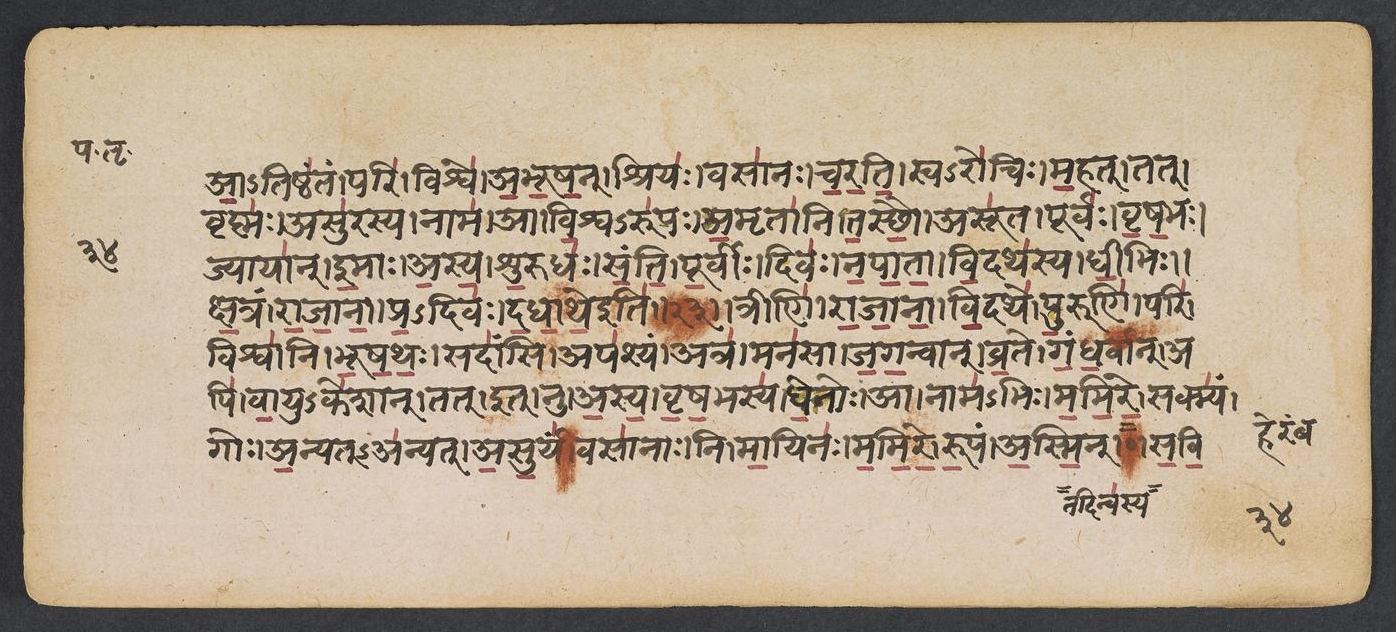
Penn Ms. Coll. 390 Item 41, fol. 224v (numbered 34v by the scribe) (OPenn image 226, upper leaf). Checked on the image: the Rigveda text on this page begins in RV 3.38.4 ‹ātiṣṭhantam pari viśve abhūṣan›. The next page with Rigveda text, fol. 225r (numbered 35r by the scribe), begins in RV 3.38.8 ‹-savituḥ nakiḥ me hiraṇyayīm›. Verses 3.38.4-7 end on this page.
4ā̱tiṣṭha̍nta̱m pari̱ viśve̍ abhūṣa̱ñ chriyo̱ vasā̍naś carati̱ svaro̍ciḥ | ma̱hat tad vṛṣṇo̱ asu̍rasya̱ nāmā vi̱śvarū̍po a̱mṛtā̍ni tasthau ||
5asū̍ta̱ pūrvo̍ vṛṣa̱bho jyāyā̍n i̱mā a̍sya śu̱rudha̍ḥ santi pū̱rvīḥ | divo̍ napātā vi̱datha̍sya dhī̱bhiḥ kṣa̱traṁ rā̍jānā pra̱divo̍ dadhāthe ||
6trīṇi̍ rājānā vi̱dathe̍ pu̱rūṇi̱ pari̱ viśvā̍ni bhūṣatha̱ḥ sadā̍ṁsi | apa̍śya̱m atra̱ mana̍sā jaga̱nvān vra̱te ga̍ndha̱rvām̐ api̍ vā̱yuke̍śān ||
7tad in nv a̍sya vṛṣa̱bhasya̍ dhe̱nor ā nāma̍bhir mamire̱ sakmya̱ṁ goḥ | a̱nyad-a̍nyad asu̱rya1̱̍ṁ vasā̍nā̱ ni mā̱yino̍ mamire rū̱pam a̍smin ||
Compare: Padapāṭha (word-by-word text written in the manuscript; Sansknet e-text via GRETIL)
4ātiṣṭhantam | pari | viśve | abhūṣan | śriyaḥ | vasānaḥ | carati | sva-rociḥ | mahat | tat | vṛṣṇaḥ | asurasya | nāma | ā | viśva-rūpaḥ | amṛtāni | tasthau
5asūta | pūrvaḥ | vṛṣabhaḥ | jyāyān | imāḥ | asya | śurudhaḥ | santi | pūrvīḥ | d ivaḥ | napātā | vidathasya | dhībhiḥ | kṣatram | rājānā | pra-divaḥ | dadhātheiti
6trīṇi | rājānā | vidathe | purūṇi | pari | viśvāni | bhūṣathaḥ | sadāṃsi | apaśyam | atra | manasā | jaganvān | vrate | gandharvān | api | vāyu-keśān
7tat | it | nu | asya | vṛṣabhasya | dhenoḥ | ā | nāma-bhiḥ | mamire | sakmyam | goḥ | anyat-anyat | asuryam | vasānāḥ | ni | māyinaḥ | mamire | rūpam | asmin
4Even as he mounted up they all adorned him: self-luminous he travels clothed in splendour. That is the Bull's, the Asura's mighty figure: he, omniform, hath reached the eternal waters.
5First the more ancient Bull engendered offspring; these are his many draughts that lent him vigour. From days of old ye Kings, two Sons of Heaven, by hymns of sacrifice have won dominion.
6Three seats ye Sovrans, in the Holy synod, many, yea, all, ye honour with your presence. There saw I, going thither in the spirit, Gandharvas in their course with wind-blown tresses.
7That same companionship of her, the Milch-cow, here with the strong Bull's divers forms they stablished. Enduing still some new celestial figure, the skilful workers shaped a form around him.
Where on the image
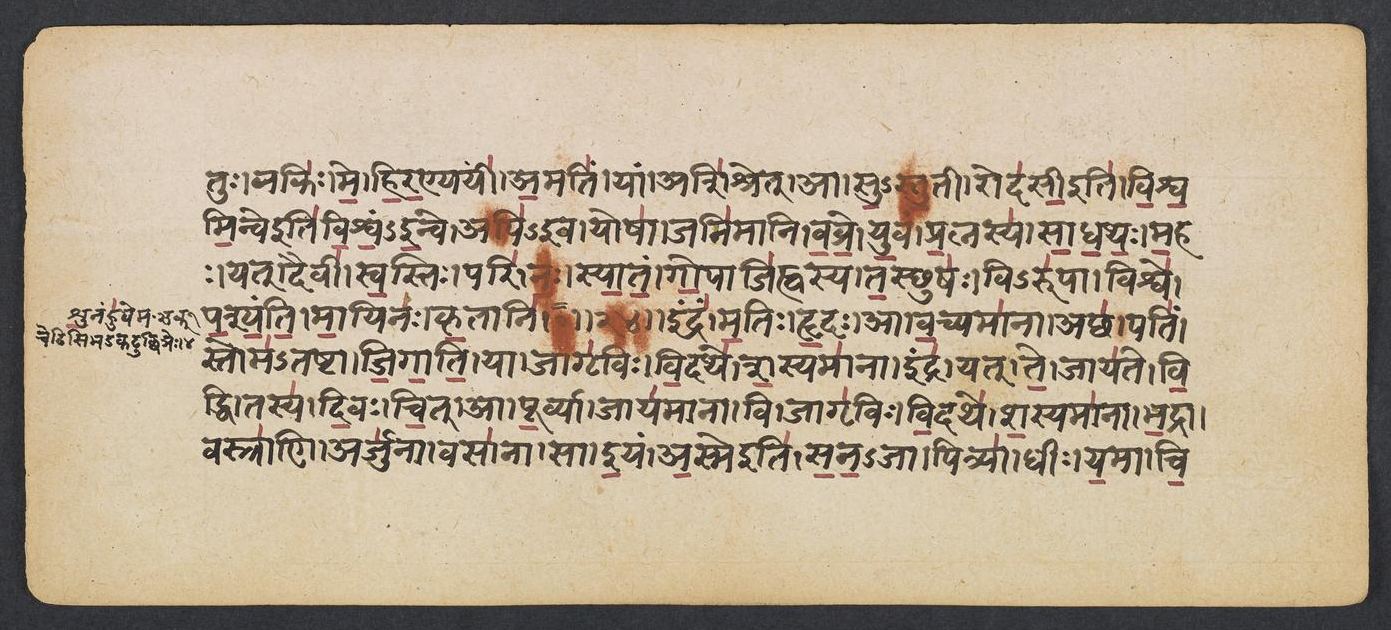
Penn Ms. Coll. 390 Item 41, fol. 225r (numbered 35r by the scribe) (OPenn image 226, lower leaf). Checked on the image: the Rigveda text on this page begins in RV 3.38.8 ‹-savituḥ nakiḥ me hiraṇyayīm›. The next page with Rigveda text, fol. 225v (numbered 35v by the scribe), begins in RV 3.39.3 ‹-cit atra yama-sūḥ asūta›. Verses 3.38.8-10 end on this page; 3.38.8 begins on fol. 224v (numbered 34v by the scribe).
8tad in nv a̍sya savi̱tur naki̍r me hira̱ṇyayī̍m a̱mati̱ṁ yām aśi̍śret | ā su̍ṣṭu̱tī roda̍sī viśvami̱nve apī̍va̱ yoṣā̱ jani̍māni vavre ||
9yu̱vam pra̱tnasya̍ sādhatho ma̱ho yad daivī̍ sva̱stiḥ pari̍ ṇaḥ syātam | go̱pāji̍hvasya ta̱sthuṣo̱ virū̍pā̱ viśve̍ paśyanti mā̱yina̍ḥ kṛ̱tāni̍ ||
10śu̱naṁ hu̍vema ma̱ghavā̍na̱m indra̍m a̱smin bhare̱ nṛta̍ma̱ṁ vāja̍sātau | śṛ̱ṇvanta̍m u̱gram ū̱taye̍ sa̱matsu̱ ghnanta̍ṁ vṛ̱trāṇi̍ sa̱ṁjita̱ṁ dhanā̍nām ||
Compare: Padapāṭha (word-by-word text written in the manuscript; Sansknet e-text via GRETIL)
8at | it | nu | asya | savituḥ | nakiḥ | me | hiraṇyayīm | amatim | yām | aśiśret | ā | su-stutī | rodasī iti | viśvaminve itiviśvam-inve | api-iva | yoṣā | janimāni | vavre
9yuvam | pratnasya | sādhathaḥ | mahaḥ | yat | daivī | svastiḥ | pari | ṇaḥ | syātam | gopājihvasya | tasthuṣaḥ | vi-rūpā | viśve | paśyanti | māyinaḥ | kṛtāni
10śunam | huvema | maghavānam | indram | asmin | bhare | nṛ-tamam | vāja-sātau | śṛṇvantam | ugram | ūtaye | samat-su | ghnantam | vṛtrāṇi | sam-jitam | dhanānām
8Let no one here debar me from enjoying the golden light which Savitar diffuses. He covers both all-fostering worlds with praises even as a woman cherishes her children.
9Fulfil, ye twain, his work, the Great, the Ancient: as heavenly blessing keep your guard around us. All the wise Gods behold his varied actions who stands erect, whose voice is like a herdsman's.
10Call we on Indra, Maghavan, auspicious, best Hero in the fight where spoil is gathered, The Strong, who listens, who gives aid in battles, who slays the Vr̥itras, wins and gathers riches.
Notes
- Sanskrit: Aufrecht's edition (1877) with the Vedic accents, as entered by van Nooten and Holland (GRETIL).
- English: Ralph T. H. Griffith, The Hymns of the Rigveda (1889-1892; 2nd ed. 1896-1897), from the VedaWeb digital text; OCR slips in that text were corrected against the printed 2nd edition (data/sources/rigveda/griffith_errata.json).
- Padapāṭha (edition text): Sansknet e-text via GRETIL (CC BY-NC-SA 4.0).
Cite
Sources
- Source: Penn Ms. Coll. 390 Item 41 (undated (catalogued with Penn's 18th-19th c. Vedic manuscripts)), OPenn, Public Domain Mark + Aufrecht's accented text (GRETIL) + Griffith's English (VedaWeb) (holding institution)
- Critical edition: Aufrecht (1877), accented e-text via GRETIL
← previous · → next · v cycle view · l back to library