Rigveda 3.39: To Indra
Introduction
Rigveda 3.39 is a hymn of 9 verses addressed to Indra. It stands in book (maṇḍala) 3, the family book of Viśvāmitra. The Rigveda is the oldest collection of Sanskrit hymns, composed in the second half of the second millennium BCE and handed down orally for many centuries before it was written down.
The manuscript shown is Penn Ms. Coll. 390 Item 41 (University of Pennsylvania), an undated paper manuscript of the padapāṭha (the word-by-word recitation text, in which every word is written separately and compounds are split) of the whole Ṛgveda in Devanāgarī, 884 leaves in fascicles, 7-9 lines to the page, accents in red; this hymn stands on fol. 225r-226r. Each section below gives the verses that end on one page; the page boundaries were read on the images (the opening words of every page), not counted out. Where the manuscript is a padapāṭha (the word-by-word recitation text), the section shows Aufrecht's continuous (saṃhitā) text first and, as the edition text, the padapāṭha of the same verses, which is the form written on the page.
How was this verified? (Provenance)
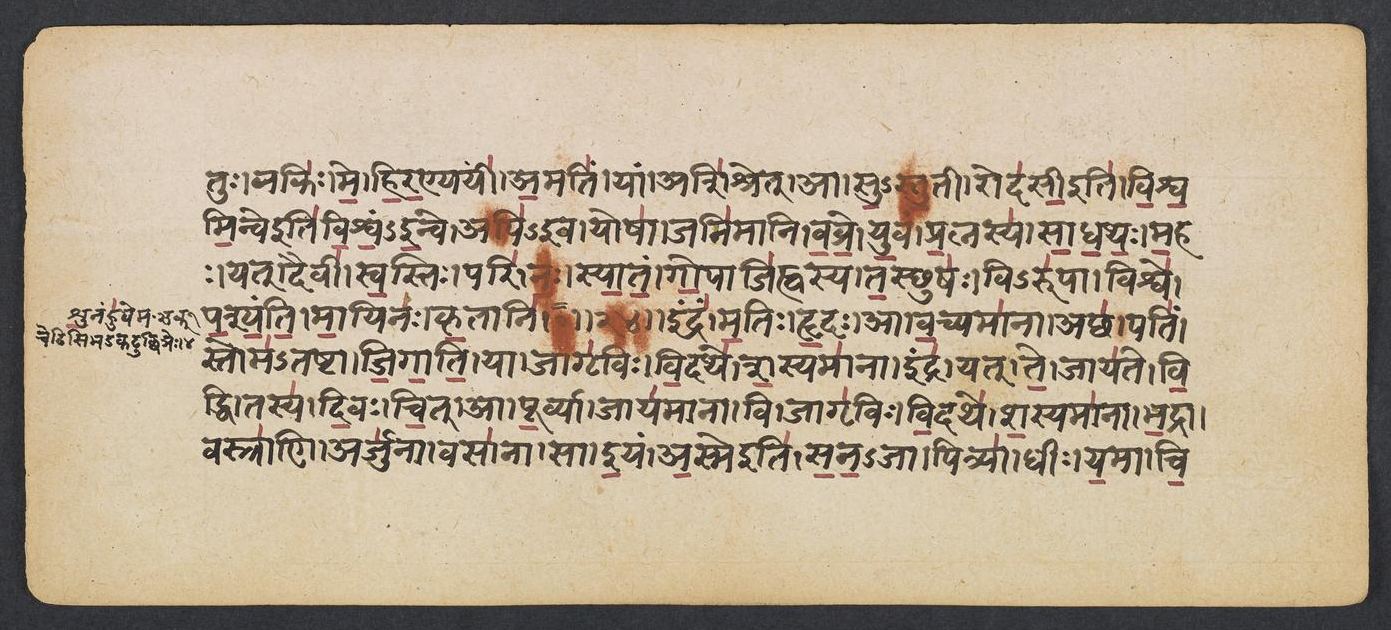
Where on the image
Penn Ms. Coll. 390 Item 41, fol. 225r (numbered 35r by the scribe) (OPenn image 226, lower leaf). Checked on the image: the Rigveda text on this page begins in RV 3.38.8 ‹-savituḥ nakiḥ me hiraṇyayīm›. The next page with Rigveda text, fol. 225v (numbered 35v by the scribe), begins in RV 3.39.3 ‹-cit atra yama-sūḥ asūta›. Verses 3.39.1-2 end on this page.
1indra̍m ma̱tir hṛ̱da ā va̱cyamā̱nācchā̱ pati̱ṁ stoma̍taṣṭā jigāti | yā jāgṛ̍vir vi̱dathe̍ śa̱syamā̱nendra̱ yat te̱ jāya̍te vi̱ddhi tasya̍ ||
2di̱vaś ci̱d ā pū̱rvyā jāya̍mānā̱ vi jāgṛ̍vir vi̱dathe̍ śa̱syamā̍nā | bha̱drā vastrā̱ṇy arju̍nā̱ vasā̍nā̱ seyam a̱sme sa̍na̱jā pitryā̱ dhīḥ ||
Compare: Padapāṭha (word-by-word text written in the manuscript; Sansknet e-text via GRETIL)
1indram | matiḥ | hṛdaḥ | ā | vacyamānā | accha | patim | stoma-taṣṭā | jigāti | yā | jāgṛviḥ | vidathe | śasyamānā | indra | yat | te | jāyate | viddhi | tasya
2divaḥ | cit | ā | pūrvyā | jāyamānā | vi | jāgṛviḥ | vidatheśasyamānā | bhadrā | vastrāṇi | arjunā | vasānā | sā | iyam | asme iti | sana-jā | pitryā | dhīḥ
1To Indra from the heart the hymn proceedeth, to him the Lord, recited, built with praises; The wakening song sung forth in holy synod: that which is born for thee, O Indra, notice.
2Born from the heaven e'en in the days aforetime, wakening, sting aloud in holy synod, Auspicious, clad in white and shining raiment, this is the ancient hymn of our forefathers.
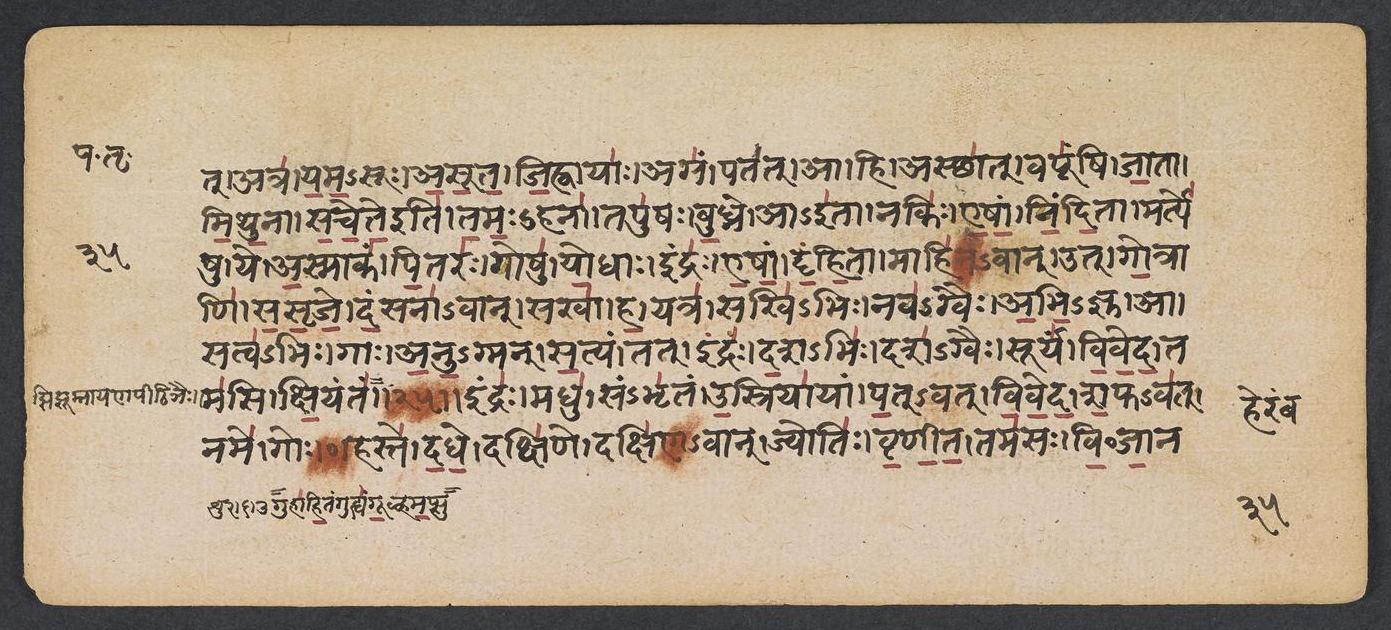
Where on the image
Penn Ms. Coll. 390 Item 41, fol. 225v (numbered 35v by the scribe) (OPenn image 227, upper leaf). Checked on the image: the Rigveda text on this page begins in RV 3.39.3 ‹-cit atra yama-sūḥ asūta›. The next page with Rigveda text, fol. 226r (numbered 36r by the scribe), begins in RV 3.39.7 ‹-vi-jānan āre syama duḥ-itāt›. Verses 3.39.3-6 end on this page; 3.39.3 begins on fol. 225r (numbered 35r by the scribe).
3ya̱mā ci̱d atra̍ yama̱sūr a̍sūta ji̱hvāyā̱ agra̱m pata̱d ā hy asthā̍t | vapū̍ṁṣi jā̱tā mi̍thu̱nā sa̍cete tamo̱hanā̱ tapu̍ṣo bu̱dhna etā̍ ||
4naki̍r eṣāṁ nindi̱tā martye̍ṣu̱ ye a̱smāka̍m pi̱taro̱ goṣu̍ yo̱dhāḥ | indra̍ eṣāṁ dṛṁhi̱tā māhi̍nāvā̱n ud go̱trāṇi̍ sasṛje da̱ṁsanā̍vān ||
5sakhā̍ ha̱ yatra̱ sakhi̍bhi̱r nava̍gvair abhi̱jñv ā satva̍bhi̱r gā a̍nu̱gman | sa̱tyaṁ tad indro̍ da̱śabhi̱r daśa̍gvai̱ḥ sūrya̍ṁ viveda̱ tama̍si kṣi̱yanta̍m ||
6indro̱ madhu̱ sambhṛ̍tam u̱sriyā̍yām pa̱dvad vi̍veda śa̱phava̱n name̱ goḥ | guhā̍ hi̱taṁ guhya̍ṁ gū̱ḻham a̱psu haste̍ dadhe̱ dakṣi̍ṇe̱ dakṣi̍ṇāvān ||
Compare: Padapāṭha (word-by-word text written in the manuscript; Sansknet e-text via GRETIL)
3yamā | cit | atra | yama-sūḥ | asūta | jihvāyā | agram | patat | ā | hi | asthāt | vapūṃṣi | jātā | mithunā | saceteiti | tamaḥ-hanā | tapuṣaḥ | budhne | āitā
4nakiḥ | eṣām | ninditā | martyeṣu | ye | asmākam | pitaraḥ | goṣu | yodhāḥ | indraḥ | eṣām | dṛṃhitā | māhina-vān | ut | gotrāṇi | sasṛje | daṃsanāvān
5sakhā | ha | yatra | sakhi-bhiḥ | nava-gvaiḥ | abhi-jñu | ā | satva-bhiḥ | gāḥ | anu-gman | satyam | tat | indraḥ | daśa-bhiḥ | daśa-gvaiḥ | sūryam | viveda | tamasi | kṣiyantam
6indraḥ | madhu | sam-bhṛtam | usriyāyām | pat-vat | viveda | śapha-vat | name | goḥ | guhā | hitam | guhyam | gūḷham | ap-su | haste | dadhe | dakṣiṇe | dakṣiṇa-vān
3The Mother of the Twins hath borne Twin Children: my tongue's tip raised itself and rested silent. Killing the darkness at the light's foundation, the Couple newly born attain their beauty.
4Not one is found among them, none of mortals, to blame our sires who fought to win the cattle. Their strengthener was Indra the Majestic he spread their stalls of kine the Wonder-Worker.
5Where as a Friend with friendly men, Navagvas, with heroes, on his knees he sought the cattle. There, verily with ten Daṣagvas Indra found the Sun lying hidden in the darkness.
6Indra found meath collected in the milch-cow, by foot and hoof, in the cow's place of pasture. That which lay secret, hidden in the waters, he held in his right hand, the rich rewarder.
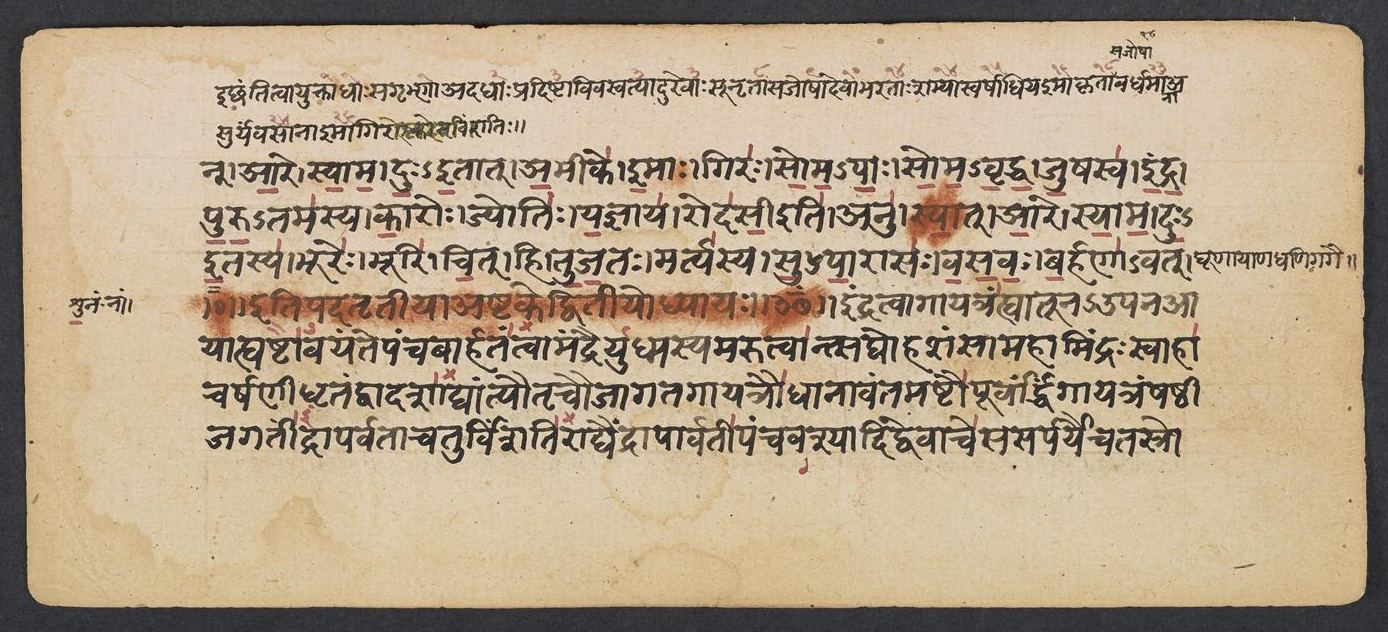
Where on the image
Penn Ms. Coll. 390 Item 41, fol. 226r (numbered 36r by the scribe) (OPenn image 227, lower leaf). Checked on the image: the Rigveda text on this page begins in RV 3.39.7 ‹-vi-jānan āre syama duḥ-itāt›. The next page with Rigveda text, fol. 226v (numbered 36v by the scribe), begins in RV 3.40.1 ‹indra tvā vṛṣabham vayam›. Verses 3.39.7-9 end on this page; 3.39.7 begins on fol. 225v (numbered 35v by the scribe).
7jyoti̍r vṛṇīta̱ tama̍so vijā̱nann ā̱re syā̍ma duri̱tād a̱bhīke̍ | i̱mā gira̍ḥ somapāḥ somavṛddha ju̱ṣasve̍ndra puru̱tama̍sya kā̱roḥ ||
8jyoti̍r ya̱jñāya̱ roda̍sī̱ anu̍ ṣyād ā̱re syā̍ma duri̱tasya̱ bhūre̍ḥ | bhūri̍ ci̱d dhi tu̍ja̱to martya̍sya supā̱rāso̍ vasavo ba̱rhaṇā̍vat ||
9śu̱naṁ hu̍vema ma̱ghavā̍na̱m indra̍m a̱smin bhare̱ nṛta̍ma̱ṁ vāja̍sātau | śṛ̱ṇvanta̍m u̱gram ū̱taye̍ sa̱matsu̱ ghnanta̍ṁ vṛ̱trāṇi̍ sa̱ṁjita̱ṁ dhanā̍nām ||
Compare: Padapāṭha (word-by-word text written in the manuscript; Sansknet e-text via GRETIL)
7jyotiḥ | vṛṇīta | tamasaḥ | vi-jānan | āre | syama | duḥ-itāt | abhīke | imāḥ | giraḥ | soma-pāḥ | soma-vṛddha | juṣasva | indra | puru-tamasya | kāroḥ
8jyotiḥ | yajñāya | rodasī iti | anu | syāt | āre | syāma | duḥ-itasya | bhūreḥ | bhūri | cit | hi | tujataḥ | martyasya | su-pārāsaḥ | vasavaḥ | barhaṇāvat
9śunam | huvema | maghavānam | indram | asmin | bhare | nṛ-tamam | vāja-sātau | śṛṇvantam | ugram | ūtaye | samat-su | ghnantam | vṛtrāṇi | sam-jitam | dhanānām
7He took the light, discerning it from darkness: may we be far removed from all misfortune. These songs, O Soma-drinker, cheered by Soma, Indra, accept from thy most zealous poet.
8Let there be light through both the worlds for worship: may we be far from most overwhelming evil. Great woe comes even from the hostile mortal, piled up; but good at rescue are the Vasus.
9Call we on Maghavan, auspicious Indra, best Hero in the fight where spoil is gathered, The Strong, who listens, who gives aid in battles, who slays the Vr̥itras, wins and gathers riches.
Notes
- Sanskrit: Aufrecht's edition (1877) with the Vedic accents, as entered by van Nooten and Holland (GRETIL).
- English: Ralph T. H. Griffith, The Hymns of the Rigveda (1889-1892; 2nd ed. 1896-1897), from the VedaWeb digital text; OCR slips in that text were corrected against the printed 2nd edition (data/sources/rigveda/griffith_errata.json).
- Padapāṭha (edition text): Sansknet e-text via GRETIL (CC BY-NC-SA 4.0).
Cite
Sources
- Source: Penn Ms. Coll. 390 Item 41 (undated (catalogued with Penn's 18th-19th c. Vedic manuscripts)), OPenn, Public Domain Mark + Aufrecht's accented text (GRETIL) + Griffith's English (VedaWeb) (holding institution)
- Critical edition: Aufrecht (1877), accented e-text via GRETIL
← previous · → next · v cycle view · l back to library