Rigveda 3.5: To Agni
Introduction
Rigveda 3.5 is a hymn of 11 verses addressed to Agni. It stands in book (maṇḍala) 3, the family book of Viśvāmitra. The Rigveda is the oldest collection of Sanskrit hymns, composed in the second half of the second millennium BCE and handed down orally for many centuries before it was written down.
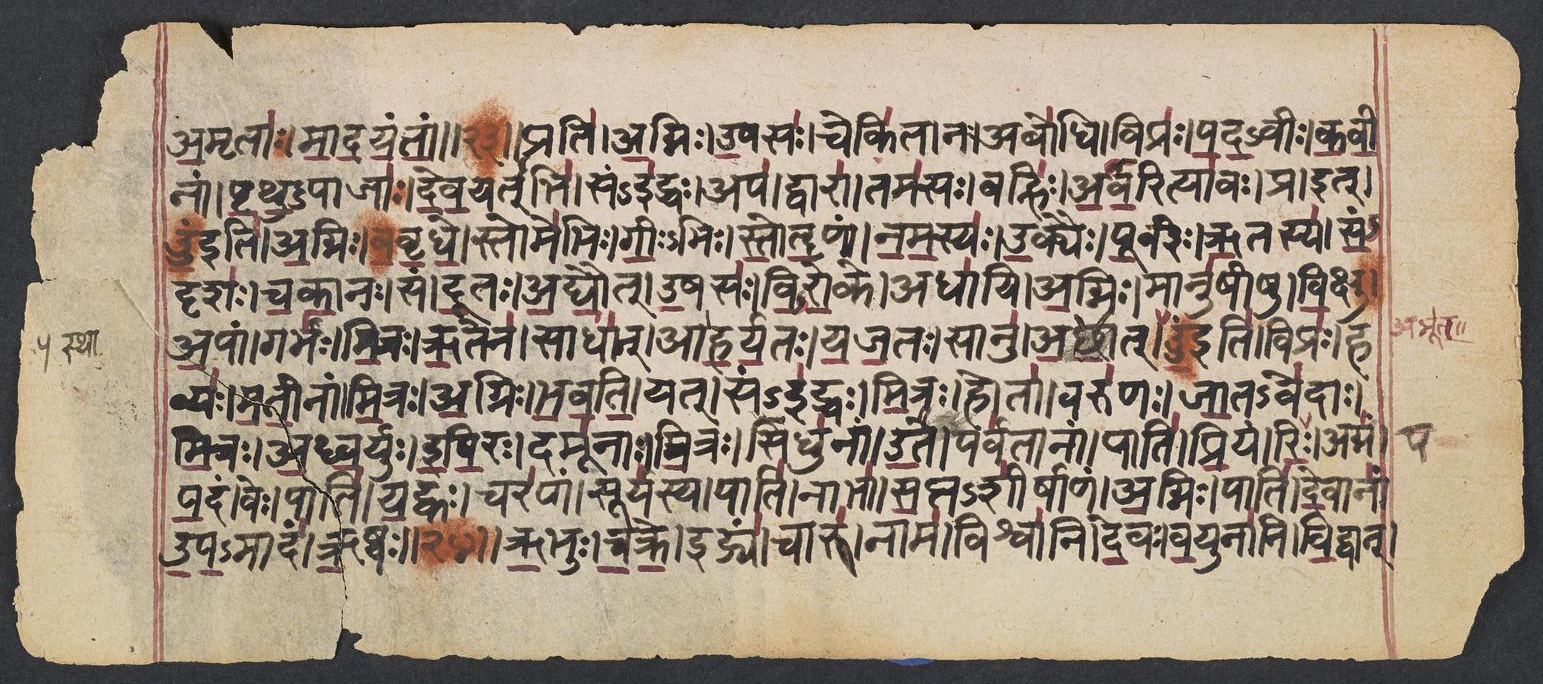
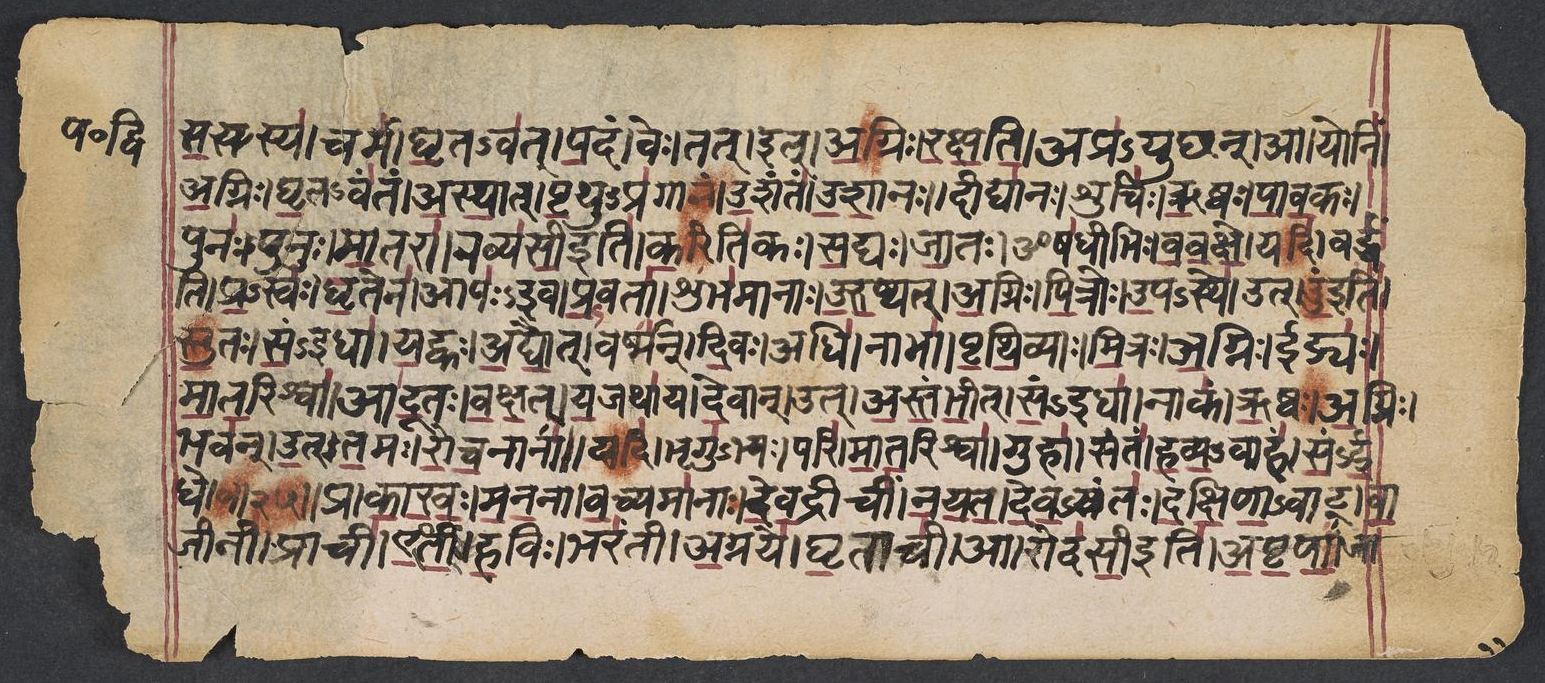
The manuscript shown is Penn Ms. Coll. 390 Item 41 (University of Pennsylvania), an undated paper manuscript of the padapāṭha (the word-by-word recitation text, in which every word is written separately and compounds are split) of the whole Ṛgveda in Devanāgarī, 884 leaves in fascicles, 7-9 lines to the page, accents in red; this hymn stands on fol. 189r-189v. Each section below gives the verses that end on one page; the page boundaries were read on the images (the opening words of every page), not counted out. Where the manuscript is a padapāṭha (the word-by-word recitation text), the section shows Aufrecht's continuous (saṃhitā) text first and, as the edition text, the padapāṭha of the same verses, which is the form written on the page.
How was this verified? (Provenance)
Where on the image
Penn Ms. Coll. 390 Item 41, fol. 189r (numbered 11r by the scribe) (OPenn image 190, lower leaf). Checked on the image: the Rigveda text on this page begins in RV 3.4.11 ‹amṛtāḥ mādayantām›. The next page with Rigveda text, fol. 189v (numbered 11v by the scribe), begins in RV 3.5.6 ‹samasya carma ghṛta-vat padam›. Verses 3.5.1-5 end on this page.
1praty a̱gnir u̱ṣasa̱ś ceki̍tā̱no 'bo̍dhi̱ vipra̍ḥ pada̱vīḥ ka̍vī̱nām | pṛ̱thu̱pājā̍ deva̱yadbhi̱ḥ sami̱ddho 'pa̱ dvārā̱ tama̍so̱ vahni̍r āvaḥ ||
2pred v a̱gnir vā̍vṛdhe̱ stome̍bhir gī̱rbhiḥ sto̍tṝ̱ṇāṁ na̍ma̱sya̍ u̱kthaiḥ | pū̱rvīr ṛ̱tasya̍ sa̱ṁdṛśa̍ś cakā̱naḥ saṁ dū̱to a̍dyaud u̱ṣaso̍ viro̱ke ||
3adhā̍yy a̱gnir mānu̍ṣīṣu vi̱kṣv a1̱̍pāṁ garbho̍ mi̱tra ṛ̱tena̱ sādha̍n | ā ha̍rya̱to ya̍ja̱taḥ sānv a̍sthā̱d abhū̍d u̱ vipro̱ havyo̍ matī̱nām ||
4mi̱tro a̱gnir bha̍vati̱ yat sami̍ddho mi̱tro hotā̱ varu̍ṇo jā̱tave̍dāḥ | mi̱tro a̍dhva̱ryur i̍ṣi̱ro damū̍nā mi̱traḥ sindhū̍nām u̱ta parva̍tānām ||
5pāti̍ pri̱yaṁ ri̱po agra̍m pa̱daṁ veḥ pāti̍ ya̱hvaś cara̍ṇa̱ṁ sūrya̍sya | pāti̱ nābhā̍ sa̱ptaśī̍rṣāṇam a̱gniḥ pāti̍ de̱vānā̍m upa̱māda̍m ṛ̱ṣvaḥ ||
Compare: Padapāṭha (word-by-word text written in the manuscript; Sansknet e-text via GRETIL)
1prati | agniḥ | uṣasaḥ | cekitānaḥ | abodhi | vipraḥ | pada-vīḥ | kavīnām | pṛthu-pājāḥ | devayat-bhiḥ | samiddhaḥ | apa | dvārā | tamasaḥ | vahniḥ | āvar ity āvaḥ
2pra | it | oṃ iti | agniḥ | vavṛdhe | stomebhiḥ | gīḥ-bhiḥ | stotṝṇām | namasyaḥ | ukthaiḥ | pūrvīḥ | ṛtasya | sam-dṛśaḥ | cakānaḥ | sam | dūtaḥ | adyaut | uṣasaḥ | vi-roke
3adhāyi | agniḥ | mānuṣīṣu | vikṣu | apām | garbhaḥ | mitraḥ | ṛtena | sādhan | ā | hiryataḥ | yajataḥ | sānu | asthāt | abhūt | oṃ iti | vipraḥ | havyaḥ | matīnām
4mitraḥ | agniḥ | bhavati | yat | sam-iddhaḥ | mitraḥ | hotā | varuṇaḥ | jata-vedāḥ | mitraḥ | adhvaryuḥ | iṣiraḥ | damūnāḥ | mitraḥ | sindhūnām | uta | parvatānām
5pāti | priyam | ripaḥ | agram | padam | veḥ | pāti | yahvaḥ | caraṇam | sūryasya | pāti | nābhā | sapta-śīrṣāṇām | agniḥ | pāti | devānām | upa-mādam | ṛṣvaḥ
1AGNI who shines against the Dawns is wakened. The holy Singer who precedes the sages. With far-spread lustre, kindled by the pious, the Priest hath thrown both gates of darkness open.
2Agni hath waxen mighty by laudations, to be adored with hymns of those who praise him. Loving the varied shows of holy Order at the first flush of dawn he shines as envoy.
3Amid men's homes hath Agni been established, fulfilling with the Law, Friend, germ of waters. Loved and adored, the height he hath ascended, the Singer, object of our invocations.
4Agni is Mitra when enkindled duly, Mitra as Priest, Varuṇa, Jâtavedas; Mitra as active minister, and House-Friend, Mitra of flowing rivers and of mountains.
5The Earth's, the Bird's dear lofty place he guardeth, he guardeth in his might the course of Sûrya, Guardeth the Seven-headed in the centre, guardeth sublime the Deities enjoyment.
Where on the image
Penn Ms. Coll. 390 Item 41, fol. 189v (numbered 11v by the scribe) (OPenn image 191, upper leaf). Checked on the image: the Rigveda text on this page begins in RV 3.5.6 ‹samasya carma ghṛta-vat padam›. The next page with Rigveda text, fol. 190r (numbered 12r by the scribe), begins in RV 3.6.2 ‹-jāyamānaḥ uta pra rikthāḥ›. Verses 3.5.6-11 end on this page; 3.5.6 begins on fol. 189r (numbered 11r by the scribe).
6ṛ̱bhuś ca̍kra̱ īḍya̱ṁ cāru̱ nāma̱ viśvā̍ni de̱vo va̱yunā̍ni vi̱dvān | sa̱sasya̱ carma̍ ghṛ̱tava̍t pa̱daṁ ves tad id a̱gnī ra̍kṣa̱ty apra̍yucchan ||
7ā yoni̍m a̱gnir ghṛ̱tava̍ntam asthāt pṛ̱thupra̍gāṇam u̱śanta̍m uśā̱naḥ | dīdyā̍na̱ḥ śuci̍r ṛ̱ṣvaḥ pā̍va̱kaḥ puna̍ḥ-punar mā̱tarā̱ navya̍sī kaḥ ||
8sa̱dyo jā̱ta oṣa̍dhībhir vavakṣe̱ yadī̱ vardha̍nti pra̱svo̍ ghṛ̱tena̍ | āpa̍ iva pra̱vatā̱ śumbha̍mānā uru̱ṣyad a̱gniḥ pi̱tror u̱pasthe̍ ||
9ud u̍ ṣṭu̱taḥ sa̱midhā̍ ya̱hvo a̍dyau̱d varṣma̍n di̱vo adhi̱ nābhā̍ pṛthi̱vyāḥ | mi̱tro a̱gnir īḍyo̍ māta̱riśvā dū̱to va̍kṣad ya̱jathā̍ya de̱vān ||
10ud a̍stambhīt sa̱midhā̱ nāka̍m ṛ̱ṣvo̱3̱̍ 'gnir bhava̍nn utta̱mo ro̍ca̱nānā̍m | yadī̱ bhṛgu̍bhya̱ḥ pari̍ māta̱riśvā̱ guhā̱ santa̍ṁ havya̱vāha̍ṁ samī̱dhe ||
11iḻā̍m agne puru̱daṁsa̍ṁ sa̱niṁ goḥ śa̍śvatta̱maṁ hava̍mānāya sādha | syān na̍ḥ sū̱nus tana̍yo vi̱jāvāgne̱ sā te̍ suma̱tir bhū̍tv a̱sme ||
Compare: Padapāṭha (word-by-word text written in the manuscript; Sansknet e-text via GRETIL)
6ṛbhuḥ | cakre | īḍyam | cāru | nāma | viśvāni | devaḥ | vayunāni | vidvān | samasya | carma | ghṛta-vat padam | veḥ | tat | it | agniḥ | rakṣati | apra-yucchan
7ā | yonim | agniḥ | ghṛta-vantam | asthāt | pṛthu-pragānam | uśantam | uśānaḥ | dīdyānaḥ | śuciḥ | ṛṣvaḥ | pāvakaḥ | punaḥ-punaḥ | mātarā | navyasī iti | karitikaḥ
8sadyaḥ | jātaḥ | oṣadhībhiḥ | vavakṣe | yadi | vardhanti | pra-svaḥ | ghṛtena | āpaḥ-iva | pra-vatā | śumbhamānāḥ | uruṣyat | agniḥ | pitroḥ | upa-sthe
9ut | ūām iti | stutaḥ | sam-idhā | yahvaḥ | adyaut | varṣman | divaḥ | adhi | nābhā | pṛthivyāḥ | mitraḥ | agniḥ | īḍyaḥ | mātariśvā | ā | dūtaḥ | vakṣat | yajathāya | devān
10ut | astambhīt | sam-idhā | nākam | ṛṣvaḥ | agniḥ | bhavan | ut-tamaḥ | rocanānām | yadi | bhṛgu-bhyaḥ | pari | mātariśvā | guhā | santam | havya-vāham | sam-īdhe
11iḷām | agne | puru-daṃsam | sanim | goḥ | śaśvat-tamam | havamānāya | sādha | syāt | naḥ | sūnuḥ | tanayaḥ | vijāvā | agne | sā | te | su-matiḥ | bhūtu | asme iti
6The skilful God who knows all forms of knowledge made for himself a fair form, meet for worship. This Agni guards with care that never ceases the Soma's skin, the Bird's place rich in fatness.
7Agni hath entered longingly the longing shrine rich with fatness, giving easy access. Resplendent, pure, sublime and purifying, again, again he renovates his Mothers.
8Born suddenly, by plants he grew to greatness, when tender shoots with holy oil increased him, Like waters lovely when they hasten downward may Agni in his Parents' lap protect us.
9Extolled, the Strong shone forth with kindled fuel to the earth's centre, to the height of heaven. May Agni, Friend, adorable Mâtariṣvan, as envoy bring the Gods unto our worship.
10Best of all luminaries lofty Agni supported with his flame the height of heaven, When, far from Bhr̥igus, Mâtariṣvan kindled the oblation-bearer where he lay in secret.
11As holy food, Agni to thine invoker give wealth in cattle, lasting, rich in marvels. To us be born a son and spreading offspring. Agni, be this thy gracious will to us-word.
Notes
- Sanskrit: Aufrecht's edition (1877) with the Vedic accents, as entered by van Nooten and Holland (GRETIL).
- English: Ralph T. H. Griffith, The Hymns of the Rigveda (1889-1892; 2nd ed. 1896-1897), from the VedaWeb digital text; OCR slips in that text were corrected against the printed 2nd edition (data/sources/rigveda/griffith_errata.json).
- Padapāṭha (edition text): Sansknet e-text via GRETIL (CC BY-NC-SA 4.0).
Cite
Sources
- Source: Penn Ms. Coll. 390 Item 41 (undated (catalogued with Penn's 18th-19th c. Vedic manuscripts)), OPenn, Public Domain Mark + Aufrecht's accented text (GRETIL) + Griffith's English (VedaWeb) (holding institution)
- Critical edition: Aufrecht (1877), accented e-text via GRETIL
← previous · → next · v cycle view · l back to library