Rigveda 3.47: To Indra
Introduction
Rigveda 3.47 is a hymn of 5 verses addressed to Indra. It stands in book (maṇḍala) 3, the family book of Viśvāmitra. The Rigveda is the oldest collection of Sanskrit hymns, composed in the second half of the second millennium BCE and handed down orally for many centuries before it was written down.
The manuscript shown is Penn Ms. Coll. 390 Item 41 (University of Pennsylvania), an undated paper manuscript of the padapāṭha (the word-by-word recitation text, in which every word is written separately and compounds are split) of the whole Ṛgveda in Devanāgarī, 884 leaves in fascicles, 7-9 lines to the page, accents in red; this hymn stands on fol. 230v-231r. Each section below gives the verses that end on one page; the page boundaries were read on the images (the opening words of every page), not counted out. Where the manuscript is a padapāṭha (the word-by-word recitation text), the section shows Aufrecht's continuous (saṃhitā) text first and, as the edition text, the padapāṭha of the same verses, which is the form written on the page.
How was this verified? (Provenance)
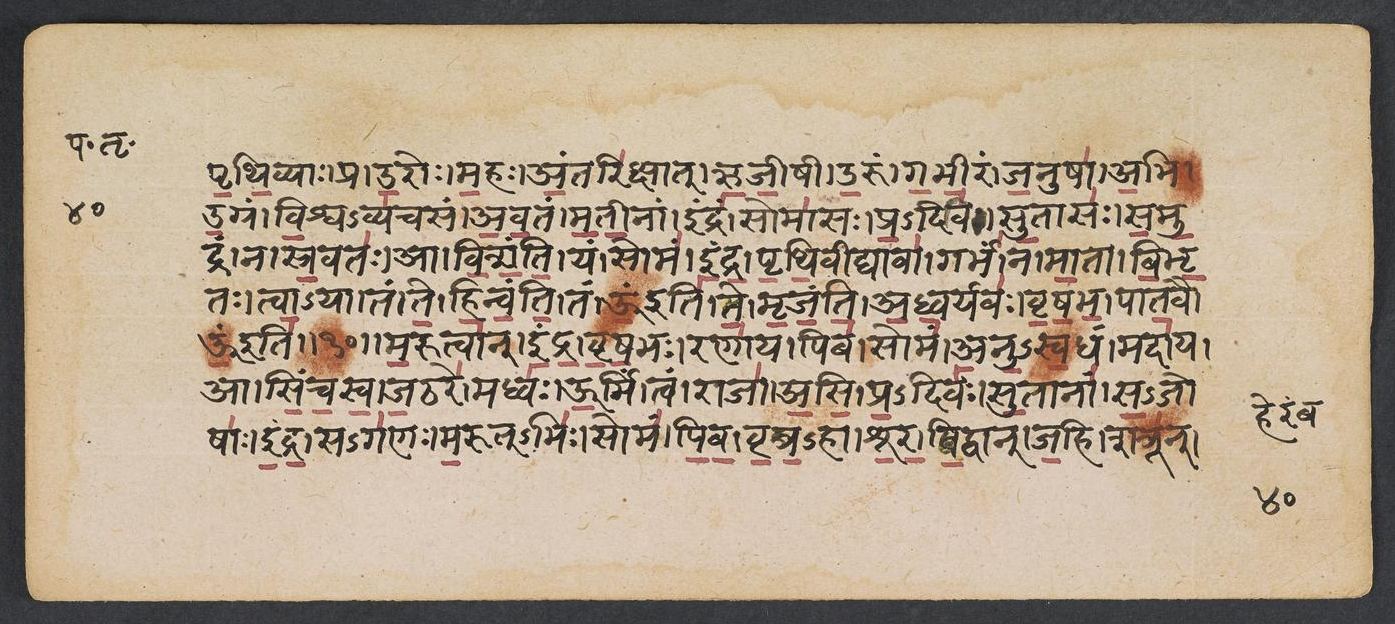
Where on the image
Penn Ms. Coll. 390 Item 41, fol. 230v (numbered 40v by the scribe) (OPenn image 232, upper leaf). Checked on the image: the Rigveda text on this page begins in RV 3.46.3 ‹pṛthivyāḥ pra uroḥ mahaḥ›. The next page with Rigveda text, fol. 231r (numbered 41r by the scribe), begins in RV 3.47.2 ‹apa mṛdhaḥ nudasva atha›. Verse 3.47.1 ends on this page.
1ma̱rutvā̍m̐ indra vṛṣa̱bho raṇā̍ya̱ pibā̱ soma̍m anuṣva̱dham madā̍ya | ā si̍ñcasva ja̱ṭhare̱ madhva̍ ū̱rmiṁ tvaṁ rājā̍si pra̱diva̍ḥ su̱tānā̍m ||
Compare: Padapāṭha (word-by-word text written in the manuscript; Sansknet e-text via GRETIL)
1marutvān | indra | vṛṣabhaḥ | raṇāya | piba | somam | anu-svadham | madāya | ā | siñcasva | jaṭhare | madhvaḥ | ūrmim | tvam | rājā | asi | pra-divaḥ | sutānām
1DRINK, Indra, Marut-girt, as Bull, the Soma, for joy, for rapture even as thou listest. Pour down the flood of meath within thy belly: thou from of old art King of Soma juices.
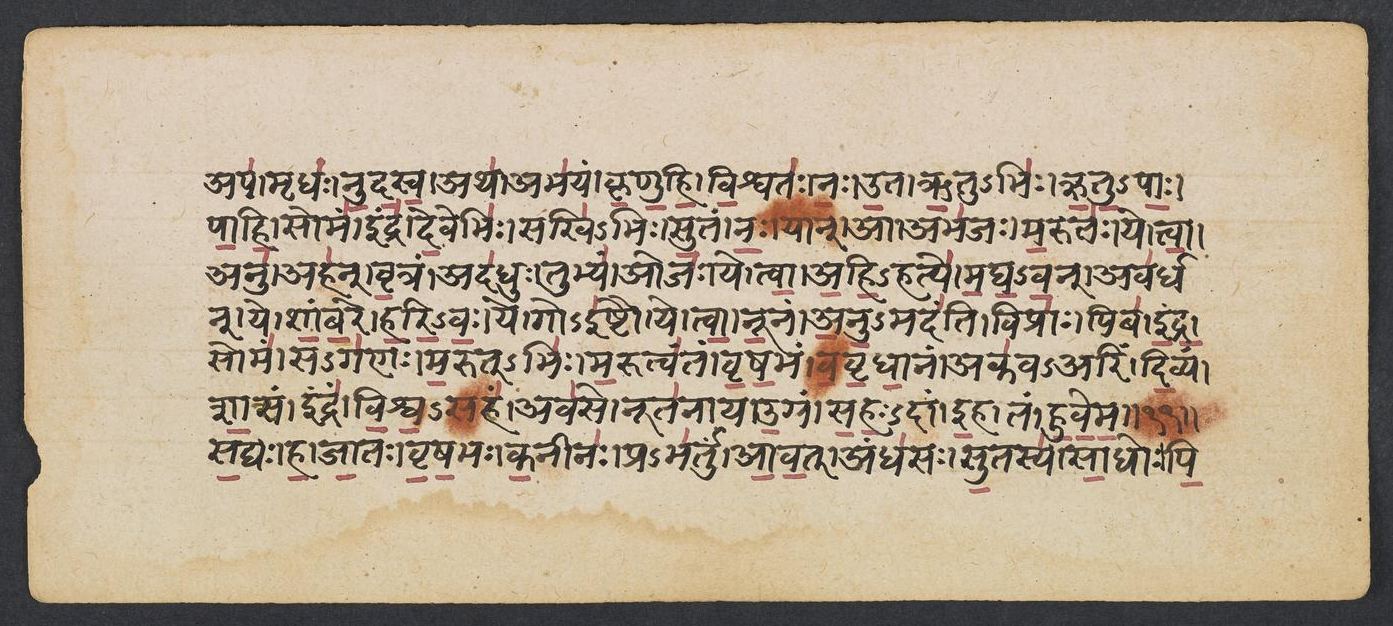
Where on the image
Penn Ms. Coll. 390 Item 41, fol. 231r (numbered 41r by the scribe) (OPenn image 232, lower leaf). Checked on the image: the Rigveda text on this page begins in RV 3.47.2 ‹apa mṛdhaḥ nudasva atha›. The next page with Rigveda text, fol. 231v (numbered 41v by the scribe), begins in RV 3.48.1 ‹-piba prati-kāmam yathā te›. Verses 3.47.2-5 end on this page; 3.47.2 begins on fol. 230v (numbered 40v by the scribe).
2sa̱joṣā̍ indra̱ saga̍ṇo ma̱rudbhi̱ḥ soma̍m piba vṛtra̱hā śū̍ra vi̱dvān | ja̱hi śatrū̱m̐r apa̱ mṛdho̍ nuda̱svāthābha̍yaṁ kṛṇuhi vi̱śvato̍ naḥ ||
3u̱ta ṛ̱tubhi̍r ṛtupāḥ pāhi̱ soma̱m indra̍ de̱vebhi̱ḥ sakhi̍bhiḥ su̱taṁ na̍ḥ | yām̐ ābha̍jo ma̱ruto̱ ye tvānv aha̍n vṛ̱tram ada̍dhu̱s tubhya̱m oja̍ḥ ||
4ye tvā̍hi̱hatye̍ maghava̱nn ava̍rdha̱n ye śā̍mba̱re ha̍rivo̱ ye gavi̍ṣṭau | ye tvā̍ nū̱nam a̍nu̱mada̍nti̱ viprā̱ḥ pibe̍ndra̱ soma̱ṁ saga̍ṇo ma̱rudbhi̍ḥ ||
5ma̱rutva̍ntaṁ vṛṣa̱bhaṁ vā̍vṛdhā̱nam aka̍vāriṁ di̱vyaṁ śā̱sam indra̍m | vi̱śvā̱sāha̱m ava̍se̱ nūta̍nāyo̱graṁ sa̍ho̱dām i̱ha taṁ hu̍vema ||
Compare: Padapāṭha (word-by-word text written in the manuscript; Sansknet e-text via GRETIL)
2sa-joṣāḥ | indra | sa-gaṇaḥ | marut-bhiḥ | somam | piba | vṛtra-hā | śūra | vidvān | jahi | śatrūn | apa | mṛdhaḥ | nudasva | atha | abhayam | kṛṇuhi | viśvataḥ | naḥ
3uta | ṛtu-bhiḥ | ṛtu-pāḥ | pāhi | somam | indra | devebhiḥ | sakhi-bhiḥ | sutam | naḥ | yān | ā | abhajaḥ | marutaḥ | ye | tvā | anu | ahan | vṛtram | adadhuḥ | tubhyam | ojaḥ
4ye | tvā | ahi-hatye | magha-van | avardhan | ye | śāmbare | harivaḥ | ye | go--iṣṭau | ye | tvā | nnam | anu-madantiḥviprāḥḥpibaḥindraḥsomamḥsa-gaṇaḥḥmarut-bhiḥ
5marutvantam | vṛṣabham | vavṛdhānam | akava-arim | divyam | śāsam | indram | viśvāsaham | avase | nūtanāya | ugram | sahaḥ-dām | iha | tam | huvema
2Indra, accordant, with the banded Maruts, drink Soma, Hero, as wise Vr̥itra-slayer. Slay thou our foemen, drive away assailants and make us safe on every side from danger.
3And, drinker at due seasons, drink in season, Indra, with friendly Gods, our pressed-out Soma. The Maruts following, whom thou madest sharers, gave thee the victory, and thou slewest Vr̥itra.
4Drink Soma, Indra, banded with the Maruts who, Maghavan, strengthened thee at Ahi's slaughter, 'Gainst Ṣambara, Lord of Bays! in winning cattle, and now rejoice in thee, the holy Singers.
5The Bull whose strength hath waxed, whom Maruts follow, free-giving Indra, the celestial Ruler, Mighty, all-conquering, the victory-giver, him let us call to grant us new protection.
Notes
- Sanskrit: Aufrecht's edition (1877) with the Vedic accents, as entered by van Nooten and Holland (GRETIL).
- English: Ralph T. H. Griffith, The Hymns of the Rigveda (1889-1892; 2nd ed. 1896-1897), from the VedaWeb digital text; OCR slips in that text were corrected against the printed 2nd edition (data/sources/rigveda/griffith_errata.json).
- Padapāṭha (edition text): Sansknet e-text via GRETIL (CC BY-NC-SA 4.0).
Cite
Sources
- Source: Penn Ms. Coll. 390 Item 41 (undated (catalogued with Penn's 18th-19th c. Vedic manuscripts)), OPenn, Public Domain Mark + Aufrecht's accented text (GRETIL) + Griffith's English (VedaWeb) (holding institution)
- Critical edition: Aufrecht (1877), accented e-text via GRETIL
← previous · → next · v cycle view · l back to library