Rigveda 3.48: To Indra
Introduction
Rigveda 3.48 is a hymn of 5 verses addressed to Indra. It stands in book (maṇḍala) 3, the family book of Viśvāmitra. The Rigveda is the oldest collection of Sanskrit hymns, composed in the second half of the second millennium BCE and handed down orally for many centuries before it was written down.
The manuscript shown is Penn Ms. Coll. 390 Item 41 (University of Pennsylvania), an undated paper manuscript of the padapāṭha (the word-by-word recitation text, in which every word is written separately and compounds are split) of the whole Ṛgveda in Devanāgarī, 884 leaves in fascicles, 7-9 lines to the page, accents in red; this hymn stands on fol. 231r-231v. Each section below gives the verses that end on one page; the page boundaries were read on the images (the opening words of every page), not counted out. Where the manuscript is a padapāṭha (the word-by-word recitation text), the section shows Aufrecht's continuous (saṃhitā) text first and, as the edition text, the padapāṭha of the same verses, which is the form written on the page.
How was this verified? (Provenance)
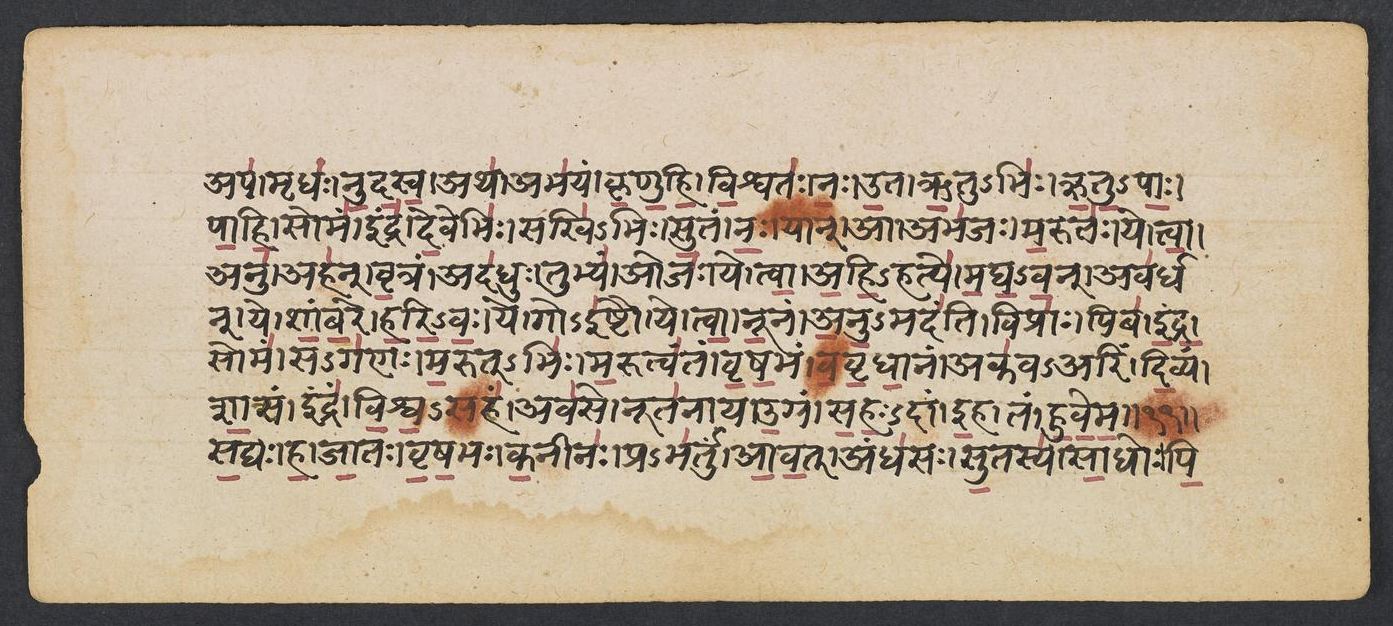
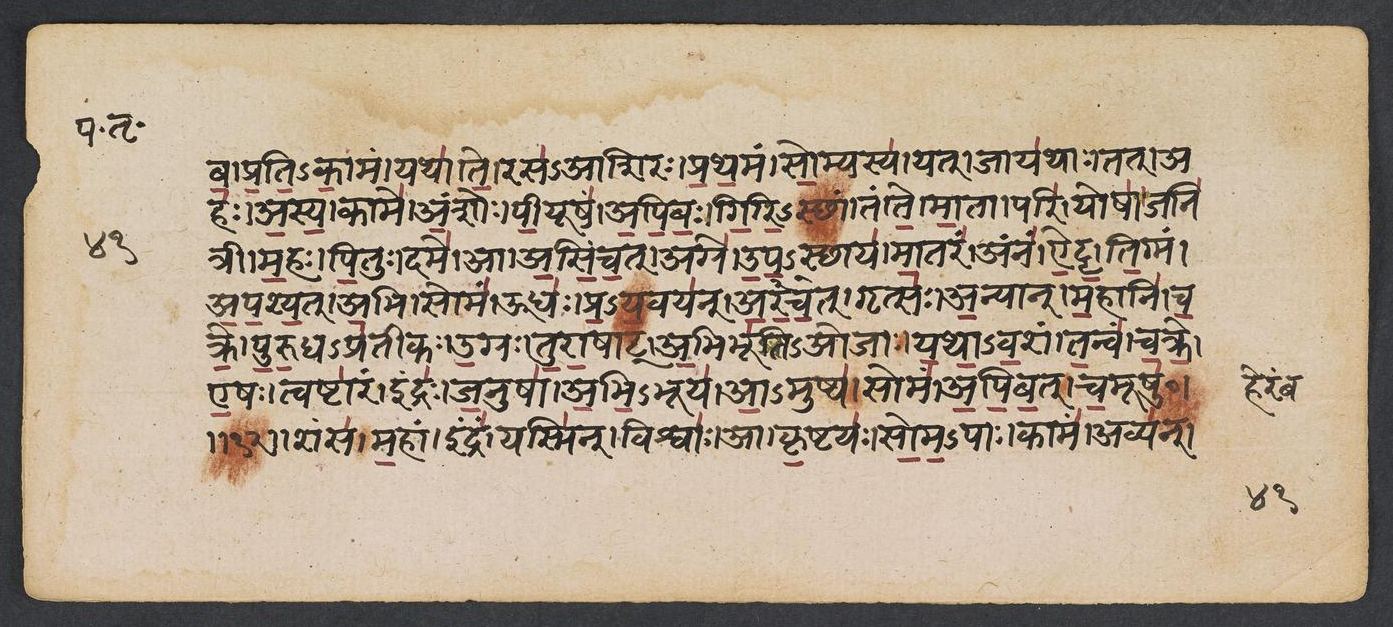
Where on the image
Penn Ms. Coll. 390 Item 41, fol. 231v (numbered 41v by the scribe) (OPenn image 233, upper leaf). Checked on the image: the Rigveda text on this page begins in RV 3.48.1 ‹-piba prati-kāmam yathā te›. The next page with Rigveda text, fol. 232r (numbered 42r by the scribe), begins in RV 3.49.1 ‹yam su-kratum dhiṣaṇe vibhva-taṣṭam›. Verses 3.48.1-5 end on this page; 3.48.1 begins on fol. 231r (numbered 41r by the scribe).
1sa̱dyo ha̍ jā̱to vṛ̍ṣa̱bhaḥ ka̱nīna̱ḥ prabha̍rtum āva̱d andha̍saḥ su̱tasya̍ | sā̱dhoḥ pi̍ba pratikā̱maṁ yathā̍ te̱ rasā̍śiraḥ pratha̱maṁ so̱myasya̍ ||
2yaj jāya̍thā̱s tad aha̍r asya̱ kāme̱ 'ṁśoḥ pī̱yūṣa̍m apibo giri̱ṣṭhām | taṁ te̍ mā̱tā pari̱ yoṣā̱ jani̍trī ma̱haḥ pi̱tur dama̱ āsi̍ñca̱d agre̍ ||
3u̱pa̱sthāya̍ mā̱tara̱m anna̍m aiṭṭa ti̱gmam a̍paśyad a̱bhi soma̱m ūdha̍ḥ | pra̱yā̱vaya̍nn acara̱d gṛtso̍ a̱nyān ma̱hāni̍ cakre puru̱dhapra̍tīkaḥ ||
4u̱gras tu̍rā̱ṣāḻ a̱bhibhū̍tyojā yathāva̱śaṁ ta̱nva̍ṁ cakra e̱ṣaḥ | tvaṣṭā̍ra̱m indro̍ ja̱nuṣā̍bhi̱bhūyā̱muṣyā̱ soma̍m apibac ca̱mūṣu̍ ||
5śu̱naṁ hu̍vema ma̱ghavā̍na̱m indra̍m a̱smin bhare̱ nṛta̍ma̱ṁ vāja̍sātau | śṛ̱ṇvanta̍m u̱gram ū̱taye̍ sa̱matsu̱ ghnanta̍ṁ vṛ̱trāṇi̍ sa̱ṁjita̱ṁ dhanā̍nām ||
Compare: Padapāṭha (word-by-word text written in the manuscript; Sansknet e-text via GRETIL)
1sadyaḥ | ha | jataḥ | vṛṣabhaḥ | kanīnaḥ | pra-bhartum | āvat | andhasaḥ | sutasya | sādhoḥ | piba | prati-kāmam | yathā | te | rasa-āśiraḥ | prathamam | somyasya
2yat | jāyathāḥ | tat | ahaḥ | asya | kāme | aṃśoḥ | pīyūṣam | apibaḥ | giri-sthām | tam | te | mātā | pari | yoṣā | janitrī | mahaḥ | pituḥ | dame | ā | asiñcat | agre
3upa-sthāya | mātaram | annam | aiṭa | tigmam | apaśyat | abhi | somam | ūdhaḥ | pra-yavayan | acarat | gṛtsaḥ | anyān | mahāni | cakre | purudha-pratīkaḥ
4ugraḥ | turāṣāṭ | abhibhūti-ojāḥ | yathāvaśam | tanvam | cakre | eṣaḥ | tvaṣṭāram | indraḥ | januṣā | abhi-bhūya | āmuṣya | somam | apibat | camūṣu
5śunam | huvema | maghavānam | indram | asmin | bhare | nṛ-tamam | vāja-sātau | śṛṇvantam | ugram | ūtaye | samat-su | ghnantam | vṛtrāṇi | sam-jitam | dhanānām
1SOON as the young Bull sprang into existence he longed to taste the pressed-out Soma's liquor. Drink thou thy fill, according to thy longing, first, of the goodly mixture blent with Soma.
2That day when thou wast born thou, fain to taste it, drankest the plant's milk which the mountains nourish. That milk thy Mother first, the Dame who bare thee, poured for thee in thy mighty Father's dwelling.
3Desiring food he came unto his Mother, and on her breast beheld the pungent Soma. Wise, he moved on, keeping aloof the others, and wrought great exploits in his varied aspects.
4Fierce, quickly conquering, of surpassing vigour, he framed his body even as he listed. E'en from his birth-time Indra conquered Tvashṭar, bore off the Soma and in beakers drank it.
5Call we on Maghavan, auspicious Indra, best Hero in the fight where spoil is gathered; The Strong, who listens, who gives aid in battles, who slays the Vr̥itras, wins and gathers riches.
Notes
- Sanskrit: Aufrecht's edition (1877) with the Vedic accents, as entered by van Nooten and Holland (GRETIL).
- English: Ralph T. H. Griffith, The Hymns of the Rigveda (1889-1892; 2nd ed. 1896-1897), from the VedaWeb digital text; OCR slips in that text were corrected against the printed 2nd edition (data/sources/rigveda/griffith_errata.json).
- Padapāṭha (edition text): Sansknet e-text via GRETIL (CC BY-NC-SA 4.0).
Cite
Sources
- Source: Penn Ms. Coll. 390 Item 41 (undated (catalogued with Penn's 18th-19th c. Vedic manuscripts)), OPenn, Public Domain Mark + Aufrecht's accented text (GRETIL) + Griffith's English (VedaWeb) (holding institution)
- Critical edition: Aufrecht (1877), accented e-text via GRETIL
← previous · → next · v cycle view · l back to library