Rigveda 3.49: To Indra
Introduction
Rigveda 3.49 is a hymn of 5 verses addressed to Indra. It stands in book (maṇḍala) 3, the family book of Viśvāmitra. The Rigveda is the oldest collection of Sanskrit hymns, composed in the second half of the second millennium BCE and handed down orally for many centuries before it was written down.
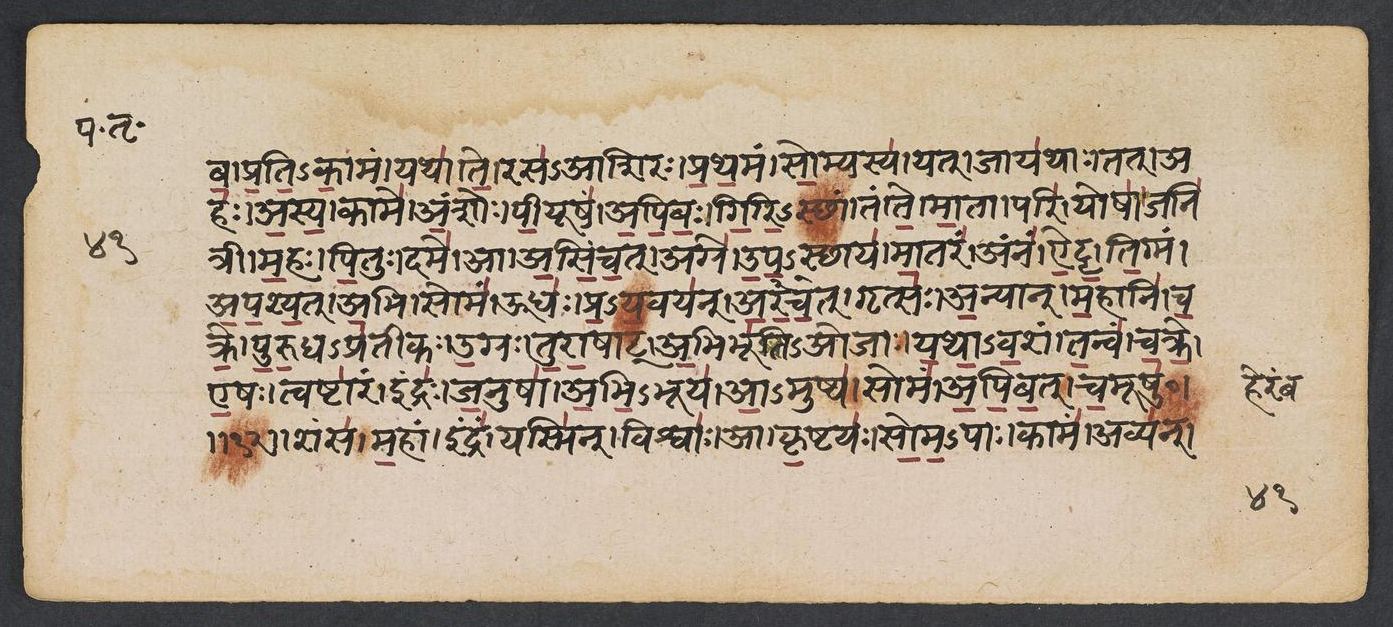
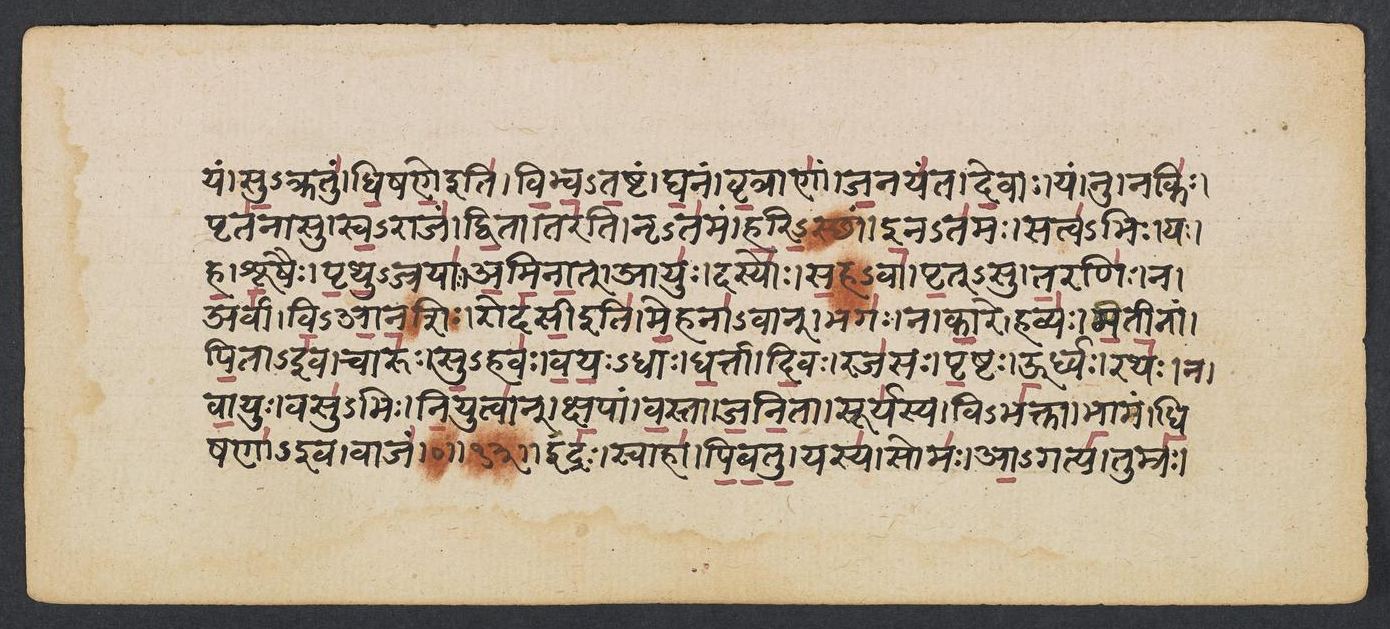
The manuscript shown is Penn Ms. Coll. 390 Item 41 (University of Pennsylvania), an undated paper manuscript of the padapāṭha (the word-by-word recitation text, in which every word is written separately and compounds are split) of the whole Ṛgveda in Devanāgarī, 884 leaves in fascicles, 7-9 lines to the page, accents in red; this hymn stands on fol. 231v-232r. Each section below gives the verses that end on one page; the page boundaries were read on the images (the opening words of every page), not counted out. Where the manuscript is a padapāṭha (the word-by-word recitation text), the section shows Aufrecht's continuous (saṃhitā) text first and, as the edition text, the padapāṭha of the same verses, which is the form written on the page.
How was this verified? (Provenance)
Where on the image
Penn Ms. Coll. 390 Item 41, fol. 232r (numbered 42r by the scribe) (OPenn image 233, lower leaf). Checked on the image: the Rigveda text on this page begins in RV 3.49.1 ‹yam su-kratum dhiṣaṇe vibhva-taṣṭam›. The next page with Rigveda text, fol. 232v (numbered 42v by the scribe), begins in RV 3.50.1 ‹vṛṣabhaḥ marutvān ā uru-vyacāḥ›. Verses 3.49.1-5 end on this page; 3.49.1 begins on fol. 231v (numbered 41v by the scribe).
1śaṁsā̍ ma̱hām indra̱ṁ yasmi̱n viśvā̱ ā kṛ̱ṣṭaya̍ḥ soma̱pāḥ kāma̱m avya̍n | yaṁ su̱kratu̍ṁ dhi̱ṣaṇe̍ vibhvata̱ṣṭaṁ gha̱naṁ vṛ̱trāṇā̍ṁ ja̱naya̍nta de̱vāḥ ||
2yaṁ nu naki̱ḥ pṛta̍nāsu sva̱rāja̍ṁ dvi̱tā tara̍ti̱ nṛta̍maṁ hari̱ṣṭhām | i̱nata̍ma̱ḥ satva̍bhi̱r yo ha̍ śū̱ṣaiḥ pṛ̍thu̱jrayā̍ aminā̱d āyu̱r dasyo̍ḥ ||
3sa̱hāvā̍ pṛ̱tsu ta̱raṇi̱r nārvā̍ vyāna̱śī roda̍sī me̱hanā̍vān | bhago̱ na kā̱re havyo̍ matī̱nām pi̱teva̱ cāru̍ḥ su̱havo̍ vayo̱dhāḥ ||
4dha̱rtā di̱vo raja̍sas pṛ̱ṣṭa ū̱rdhvo ratho̱ na vā̱yur vasu̍bhir ni̱yutvā̍n | kṣa̱pāṁ va̱stā ja̍ni̱tā sūrya̍sya̱ vibha̍ktā bhā̱gaṁ dhi̱ṣaṇe̍va̱ vāja̍m ||
5śu̱naṁ hu̍vema ma̱ghavā̍na̱m indra̍m a̱smin bhare̱ nṛta̍ma̱ṁ vāja̍sātau | śṛ̱ṇvanta̍m u̱gram ū̱taye̍ sa̱matsu̱ ghnanta̍ṁ vṛ̱trāṇi̍ sa̱ṁjita̱ṁ dhanā̍nām ||
Compare: Padapāṭha (word-by-word text written in the manuscript; Sansknet e-text via GRETIL)
1śaṃsā | mahām | indram | yasmin | viśvāḥ | ā | kṛṣṭayaḥ | soma-pāḥ | kāmam | avyan | yam | su-kratum | dhiṣaṇe | vibhva-taṣṭam | ghanam | vṛtrāṇām | janayanta | devāḥ
2yam | nu | nakiḥ | pṛtanāsu | sva-rājam | dvitā | tarati | nṛ-tamam | hari-sthām | ina-tamaḥ | satva-bhiḥ | yaḥ | ha | śūṣaiḥ | pṛthu-jrayāḥ | amināt | āyuḥ | dasyoḥ
3saha-vā | pṛt-su | taraṇiḥ | na | arvā | vi-ānaśī iti | rodasī iti | mehanāvān | bhagaḥ | na | kāre | havyaḥ | matīnām | pitāiva | cāruḥ | su-havaḥ | vayaḥ-dhāḥ
4dhartā | divaḥ | rajasaḥ | pṛṣṭaḥ | ūrdhvaḥ | rathaḥ | na | vāyuḥ | vasu-bhiḥ | niyutvān | kṣapām | vastā | janitā | sūryasya | vi-bhaktā | bhāgam | dhiṣaṇāiva | vājam
5śunam | huvema | maghavānam | indram | asmin | bhare | nṛ-tamam | vāja-sātau | śṛṇvantam | ugram | ūtaye | samat-su | ghnantam | vṛtrāṇi | sam-jitam | dhanānām
1GREAT Indra will I laud, in whom all people who drink the Soma have attained their longing; Whom, passing wise, Gods, Heaven and Earth, engendered, formed by a Master's hand, to crush the Vr̥itras.
2Whom, most heroic, borne by Tawny Coursers, verily none subdueth in the battle; Who, reaching far, most vigorous, hath shortened the Dasyu's life with Warriors bold of spirit.
3Victor in fight, swift mover like a warhorse, pervading both worlds, rainer down of blessings, To he invoked in war like Bhaga, Father, as 'twere, of hymns, fair, prompt to hear, strength-giver.
4Supporting heaven, the high back of the region, his car is Vâyu with his team of Vasus. Illumining the nights, the Sun's creator, like Dhishaṇâ he deals forth strength and riches.
5Call we on Maghavan, auspicious Indra, best Hero in the fight where spoil is gathered; The Strong, who listens, who gives aid in battles, who slays the Vr̥itras, wins and gathers treasure.
Notes
- Sanskrit: Aufrecht's edition (1877) with the Vedic accents, as entered by van Nooten and Holland (GRETIL).
- English: Ralph T. H. Griffith, The Hymns of the Rigveda (1889-1892; 2nd ed. 1896-1897), from the VedaWeb digital text; OCR slips in that text were corrected against the printed 2nd edition (data/sources/rigveda/griffith_errata.json).
- Padapāṭha (edition text): Sansknet e-text via GRETIL (CC BY-NC-SA 4.0).
Cite
Sources
- Source: Penn Ms. Coll. 390 Item 41 (undated (catalogued with Penn's 18th-19th c. Vedic manuscripts)), OPenn, Public Domain Mark + Aufrecht's accented text (GRETIL) + Griffith's English (VedaWeb) (holding institution)
- Critical edition: Aufrecht (1877), accented e-text via GRETIL
← previous · → next · v cycle view · l back to library