Rigveda 3.6: To Agni
Introduction
Rigveda 3.6 is a hymn of 11 verses addressed to Agni. It stands in book (maṇḍala) 3, the family book of Viśvāmitra. The Rigveda is the oldest collection of Sanskrit hymns, composed in the second half of the second millennium BCE and handed down orally for many centuries before it was written down.
The manuscript shown is Penn Ms. Coll. 390 Item 41 (University of Pennsylvania), an undated paper manuscript of the padapāṭha (the word-by-word recitation text, in which every word is written separately and compounds are split) of the whole Ṛgveda in Devanāgarī, 884 leaves in fascicles, 7-9 lines to the page, accents in red; this hymn stands on fol. 189v-190v. Each section below gives the verses that end on one page; the page boundaries were read on the images (the opening words of every page), not counted out. Where the manuscript is a padapāṭha (the word-by-word recitation text), the section shows Aufrecht's continuous (saṃhitā) text first and, as the edition text, the padapāṭha of the same verses, which is the form written on the page.
How was this verified? (Provenance)
Where on the image
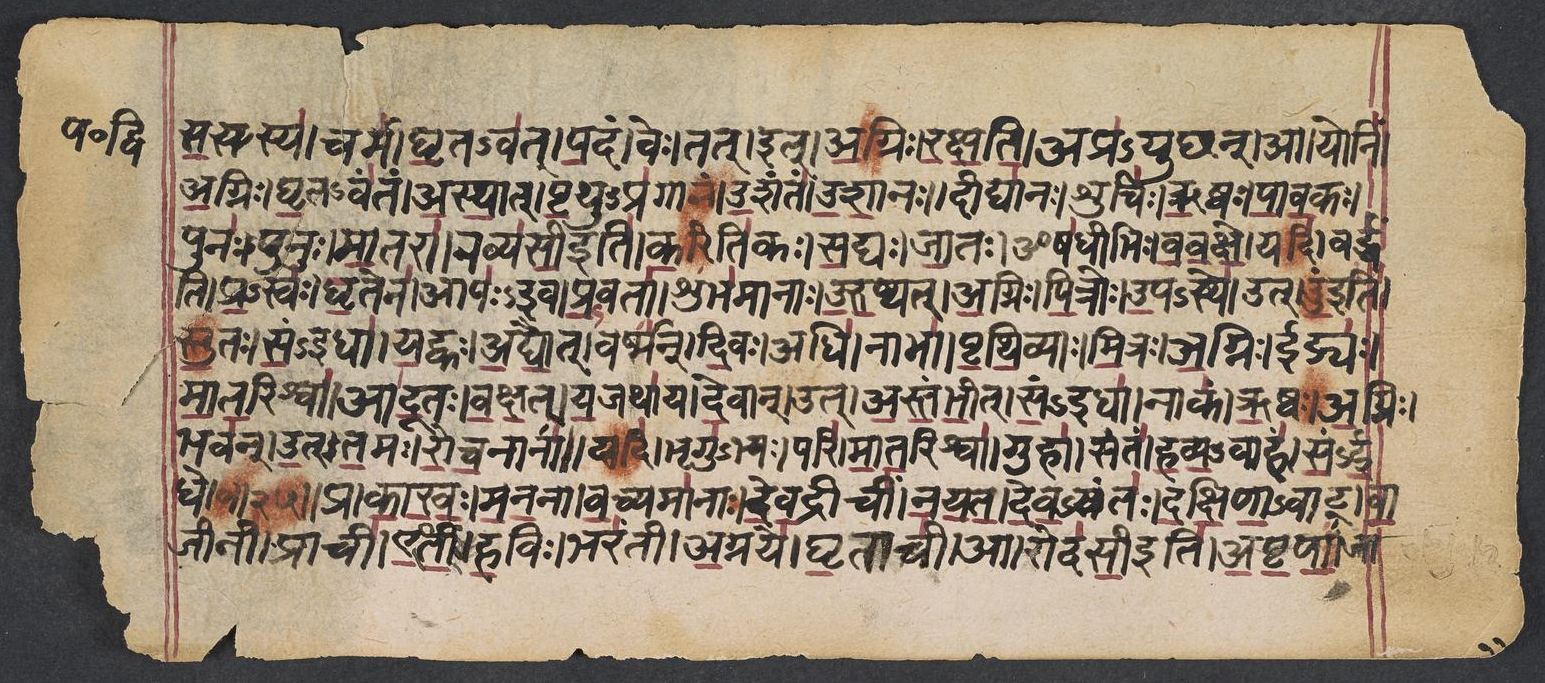
Penn Ms. Coll. 390 Item 41, fol. 189v (numbered 11v by the scribe) (OPenn image 191, upper leaf). Checked on the image: the Rigveda text on this page begins in RV 3.5.6 ‹samasya carma ghṛta-vat padam›. The next page with Rigveda text, fol. 190r (numbered 12r by the scribe), begins in RV 3.6.2 ‹-jāyamānaḥ uta pra rikthāḥ›. Verse 3.6.1 ends on this page.
1pra kā̍ravo mana̱nā va̱cyamā̍nā deva̱drīcī̍ṁ nayata deva̱yanta̍ḥ | da̱kṣi̱ṇā̱vāḍ vā̱jinī̱ prācy e̍ti ha̱vir bhara̍nty a̱gnaye̍ ghṛ̱tācī̍ ||
Compare: Padapāṭha (word-by-word text written in the manuscript; Sansknet e-text via GRETIL)
1pra | kāravaḥ | mananā | vacyamānāḥ | devadrīcīn | nayata | deva-yantaḥ | dakṣiṇāvāṭ | vājinī | prācī | eti | haviḥ | bharantī | agnaye | ghṛtācī
1URGED on by deep devotion, O ye singers, bring, pious ones, the God-approaching ladle. Borne onward to the right it travels eastward, and, filled with oil, to Agni bears oblation.
Where on the image
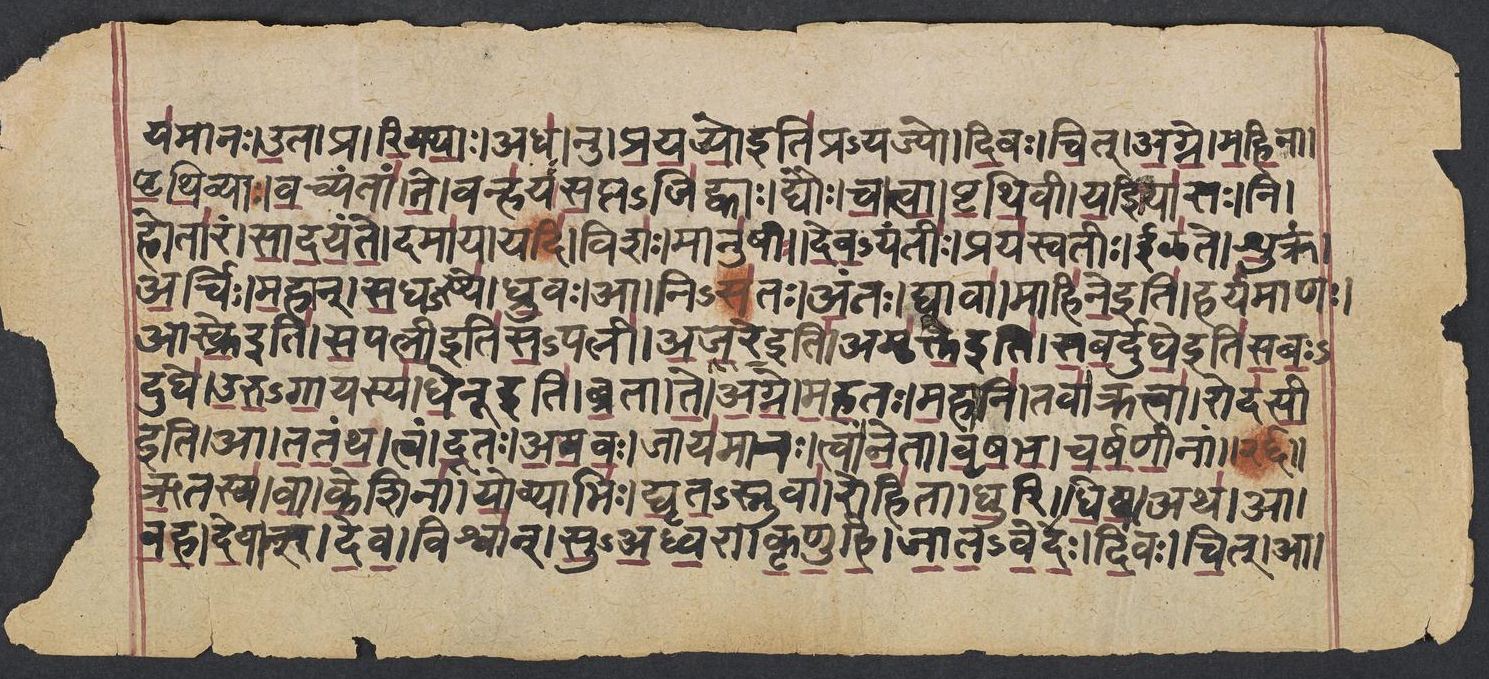
Penn Ms. Coll. 390 Item 41, fol. 190r (numbered 12r by the scribe) (OPenn image 191, lower leaf). Checked on the image: the Rigveda text on this page begins in RV 3.6.2 ‹-jāyamānaḥ uta pra rikthāḥ›. The next page with Rigveda text, fol. 190v (numbered 12v by the scribe), begins in RV 3.6.7 ‹te rucayanta rokāḥ uṣaḥ›. Verses 3.6.2-6 end on this page; 3.6.2 begins on fol. 189v (numbered 11v by the scribe).
2ā roda̍sī apṛṇā̱ jāya̍māna u̱ta pra ri̍kthā̱ adha̱ nu pra̍yajyo | di̱vaś ci̍d agne mahi̱nā pṛ̍thi̱vyā va̱cyantā̍ṁ te̱ vahna̍yaḥ sa̱ptaji̍hvāḥ ||
3dyauś ca̍ tvā pṛthi̱vī ya̱jñiyā̍so̱ ni hotā̍raṁ sādayante̱ damā̍ya | yadī̱ viśo̱ mānu̍ṣīr deva̱yantī̱ḥ praya̍svatī̱r īḻa̍te śu̱kram a̱rciḥ ||
4ma̱hān sa̱dhasthe̍ dhru̱va ā niṣa̍tto̱ 'ntar dyāvā̱ māhi̍ne̱ harya̍māṇaḥ | āskre̍ sa̱patnī̍ a̱jare̱ amṛ̍kte saba̱rdughe̍ urugā̱yasya̍ dhe̱nū ||
5vra̱tā te̍ agne maha̱to ma̱hāni̱ tava̱ kratvā̱ roda̍sī̱ ā ta̍tantha | tvaṁ dū̱to a̍bhavo̱ jāya̍māna̱s tvaṁ ne̱tā vṛ̍ṣabha carṣaṇī̱nām ||
6ṛ̱tasya̍ vā ke̱śinā̍ yo̱gyābhi̍r ghṛta̱snuvā̱ rohi̍tā dhu̱ri dhi̍ṣva | athā va̍ha de̱vān de̍va̱ viśvā̍n svadhva̱rā kṛ̍ṇuhi jātavedaḥ ||
Compare: Padapāṭha (word-by-word text written in the manuscript; Sansknet e-text via GRETIL)
2ā | rodasī iti | apṛṇāḥ | jāyamānaḥ | uta | pra | rikthāḥ | adha | nu | prayajyo itipra-yajyo | devaḥ | cit | agne | mahinā | pṛthivyāḥ | vacyantām | te | vahnayaḥ | sapta-jihvāḥ
3dyauḥ | ca | tvā | pṛthivī | yajñiyāsaḥ | ni | hotāram | sādayante | damāya | yadi | viśaḥ | mānuṣīḥ | deva-yantīḥ | prayasvatīḥ | īḷate | śukram | arciḥ
4mahān | sadha-sthe | dhruvaḥ | ā | ni-sattaḥ | antaḥ | dyāvā | māhineiti | haryamāṇaḥ | āskre iti | sapatnī itisa-patnī | ajareiti | amṛkte iti | sabardugheitisabaḥ-dughe | uru-gāyasya | dhenū iti
5vratā | te | agne | mahataḥ | mahāni | tava | kratvā | rodasī iti | ā | tatantha | tvam | dūtaḥ | abhavaḥ | jāyamānaḥ | tvam | netā | vṛṣabha | caṣarṇīnām
6ṛtasya | vā | keśinā | yogyābhiḥ | ghṛta-snuvā | rohitā | dhuri | dhiṣva | atha | vaha | devān | deva | viśvān | su-adhvarā | kṛṇuhi | jāta-vedaḥ
2Thou at thy birth didst fill both earth and heaven, yea, Most Adorable, thou didst exceed them. Even through the heaven's and through the earth's expanses let thy swift seventongued flames roll on, O Agni.
3Both Heaven and Earth and Gods who should be worshipped establish thee as Priest for every dwelling, Whenever human families, God-devoted, bringing oblations; laud thy splendid lustre.
4Firm in the Gods' home is the Mighty seated, between vast Heaven and Earth the well-beloved- Those Cows who yield, unharmed, their nectar, Spouses of the Far-Strider, everyoung, united.
5Great are the deeds of thee, the Great, O Agni: thou by thy power hast spread out earth and heaven. As soon as thou wast born thou wast an envoy, thou, Mighty One, was Leader of the people.
6Bind to the pole with cords of holy Order thy long-maned ruddy steeds who sprinkle fatness. Bring hither, O thou God, all Gods together: provide them noble worship, Jâtavedas.
Where on the image
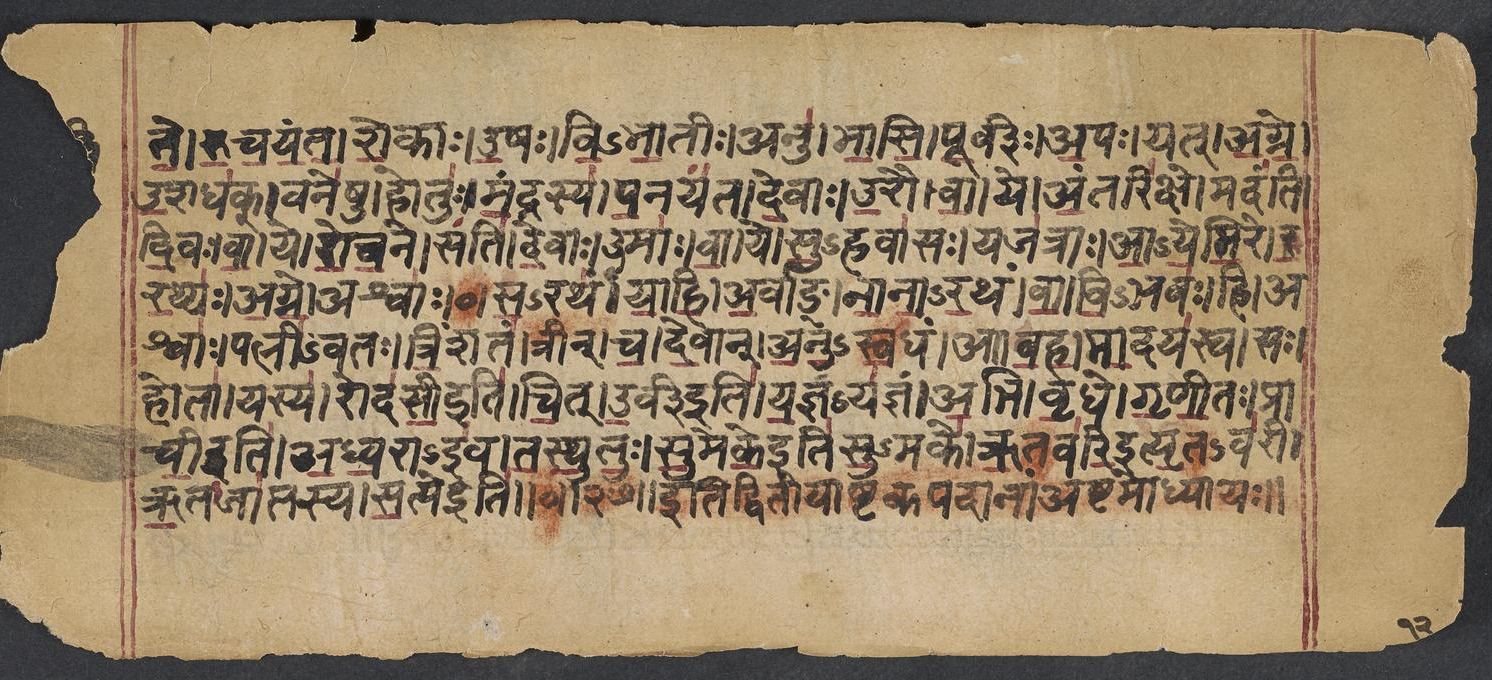
Penn Ms. Coll. 390 Item 41, fol. 190v (numbered 12v by the scribe) (OPenn image 192, upper leaf). Checked on the image: the Rigveda text on this page begins in RV 3.6.7 ‹te rucayanta rokāḥ uṣaḥ›. The next page with Rigveda text, fol. 192r (numbered 2r by the scribe), begins in RV 3.7.1 ‹pra ye āruḥ śiti-pṛṣṭhasya›. Verses 3.6.7-11 end on this page; 3.6.7 begins on fol. 190r (numbered 12r by the scribe).
7di̱vaś ci̱d ā te̍ rucayanta ro̱kā u̱ṣo vi̍bhā̱tīr anu̍ bhāsi pū̱rvīḥ | a̱po yad a̍gna u̱śadha̱g vane̍ṣu̱ hotu̍r ma̱ndrasya̍ pa̱naya̍nta de̱vāḥ ||
8u̱rau vā̱ ye a̱ntari̍kṣe̱ mada̍nti di̱vo vā̱ ye ro̍ca̱ne santi̍ de̱vāḥ | ūmā̍ vā̱ ye su̱havā̍so̱ yaja̍trā āyemi̱re ra̱thyo̍ agne̱ aśvā̍ḥ ||
9aibhi̍r agne sa̱ratha̍ṁ yāhy a̱rvāṅ nā̍nāra̱thaṁ vā̍ vi̱bhavo̱ hy aśvā̍ḥ | patnī̍vatas tri̱ṁśata̱ṁ trīm̐ś ca̍ de̱vān a̍nuṣva̱dham ā va̍ha mā̱daya̍sva ||
10sa hotā̱ yasya̱ roda̍sī cid u̱rvī ya̱jñaṁ-ya̍jñam a̱bhi vṛ̱dhe gṛ̍ṇī̱taḥ | prācī̍ adhva̱reva̍ tasthatuḥ su̱meke̍ ṛ̱tāva̍rī ṛ̱tajā̍tasya sa̱tye ||
11iḻā̍m agne puru̱daṁsa̍ṁ sa̱niṁ goḥ śa̍śvatta̱maṁ hava̍mānāya sādha | syān na̍ḥ sū̱nus tana̍yo vi̱jāvāgne̱ sā te̍ suma̱tir bhū̍tv a̱sme ||
Compare: Padapāṭha (word-by-word text written in the manuscript; Sansknet e-text via GRETIL)
7divaḥ | cit | ā | te | rucayanta | rokāḥ | uṣaḥ | vi-bhātīḥ | anu | bhāsi | pūrvīḥ | apaḥ | yat | agne | uśadhak | vaneṣu | hotuḥ | mandrasya | panayanta | devāḥ
8urau | vā | ye | antarikṣe | madanti | divaḥ | vā | ye | rocane | santi | devāḥ | ūmāḥ | vā | ye | su-havāsaḥ | yajatrāḥ | āyemire | rathyaḥ | agne | aśvāḥ
9ā | ebhiḥ | agne | sa-ratham | yāhi | arvāṅ | nānāratham | vā | vi-bhavaḥ | hi | aśvāḥ | patnī-vataḥ | triṃśatam | trīn | ca | devān | anu-svadham | ā | vaha | mādayasva
10saḥ | hotā | yasya | rodasī iti | cit | urvī iti | yajñam-yajñam | abhi | vṛdhe | gṛṇītaḥ | prācī iti | adhvarāiva | tasthatuḥ | sumeke itisu-meke | ṛtavarī ity ṛta-varī | ṛta-jātasya | satye iti
11iḷām | agne | puru-daṃsam | sanim | goḥ | śaśvat-tamam | havamānāya | sādha | syāt | naḥ | sūnuḥ | tanayaḥ | vijāvā | agne | sā | te | su-matiḥ | bhūtu | asme iti
7Even from the sky thy brilliant lights shone hither: still hast thou beamed through many a radiant morning, That the Gods praised their joyous Herald's labour eagerly burning, Agni, in the forests.
8The Gods who take delight in air's wide region, or those the dwellers in heaven's realm of brightness, Or those, the Holy, prompt to hear, our helpers, who, carborne, turn their horses hither, Agni---
9With these, borne on one car, Agni, approach us, or borne on many, for thy steeds are able. Bring, with their Dames, the Gods, the Three and-Thirty, after thy Godlike nature, and be joyful.
10He is the Priest at whose repeated worship even wide Heaven and Earth sing out for increase. They fair and true and holy coming forward stand at his sacrifice who springs from Order.
11As holy food, Agni, to thine invoker give wealth in cattle, lasting, rich in marvels. To us be born a son and spreading offspring. Agni, be this thy gracious will to usward.
Notes
- Sanskrit: Aufrecht's edition (1877) with the Vedic accents, as entered by van Nooten and Holland (GRETIL).
- English: Ralph T. H. Griffith, The Hymns of the Rigveda (1889-1892; 2nd ed. 1896-1897), from the VedaWeb digital text; OCR slips in that text were corrected against the printed 2nd edition (data/sources/rigveda/griffith_errata.json).
- Padapāṭha (edition text): Sansknet e-text via GRETIL (CC BY-NC-SA 4.0).
Cite
Sources
- Source: Penn Ms. Coll. 390 Item 41 (undated (catalogued with Penn's 18th-19th c. Vedic manuscripts)), OPenn, Public Domain Mark + Aufrecht's accented text (GRETIL) + Griffith's English (VedaWeb) (holding institution)
- Critical edition: Aufrecht (1877), accented e-text via GRETIL
← previous · → next · v cycle view · l back to library