Rigveda 3.7: To Agni
Introduction
Rigveda 3.7 is a hymn of 11 verses addressed to Agni. It stands in book (maṇḍala) 3, the family book of Viśvāmitra. The Rigveda is the oldest collection of Sanskrit hymns, composed in the second half of the second millennium BCE and handed down orally for many centuries before it was written down.
The manuscript shown is Penn Ms. Coll. 390 Item 41 (University of Pennsylvania), an undated paper manuscript of the padapāṭha (the word-by-word recitation text, in which every word is written separately and compounds are split) of the whole Ṛgveda in Devanāgarī, 884 leaves in fascicles, 7-9 lines to the page, accents in red; this hymn stands on fol. 192r-193v. Each section below gives the verses that end on one page; the page boundaries were read on the images (the opening words of every page), not counted out. Where the manuscript is a padapāṭha (the word-by-word recitation text), the section shows Aufrecht's continuous (saṃhitā) text first and, as the edition text, the padapāṭha of the same verses, which is the form written on the page.
How was this verified? (Provenance)
Where on the image
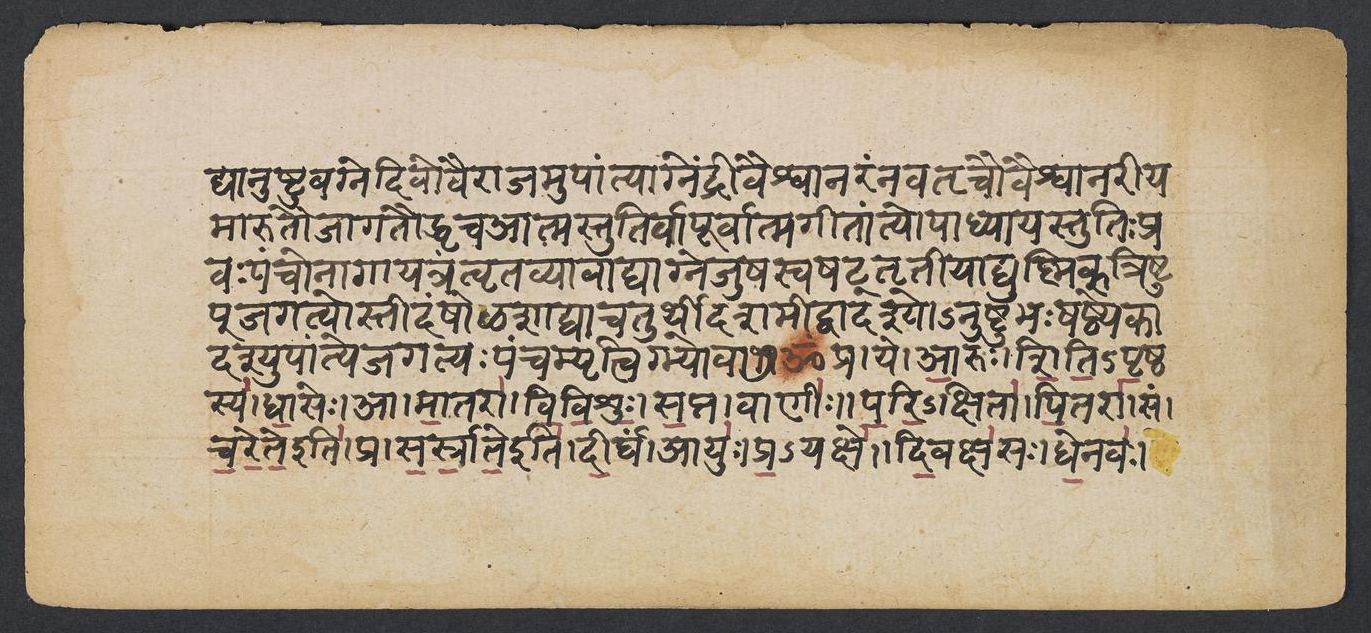
Penn Ms. Coll. 390 Item 41, fol. 192r (numbered 2r by the scribe) (OPenn image 193, lower leaf). Checked on the image: the Rigveda text on this page begins in RV 3.7.1 ‹pra ye āruḥ śiti-pṛṣṭhasya›. Lines 1-5 end the anukramaṇī; 3.7.1 (pra ye āruḥ śitipṛṣṭhasya) begins in line 5 after oṃ. The next page with Rigveda text, fol. 192v (numbered 2v by the scribe), begins in RV 3.7.2 ‹vṛṣṇaḥ aśvāḥ devīḥ ā›. Verse 3.7.1 ends on this page.
1pra ya ā̱ruḥ śi̍tipṛ̱ṣṭhasya̍ dhā̱ser ā mā̱tarā̍ viviśuḥ sa̱pta vāṇī̍ḥ | pa̱ri̱kṣitā̍ pi̱tarā̱ saṁ ca̍rete̱ pra sa̍rsrāte dī̱rgham āyu̍ḥ pra̱yakṣe̍ ||
Compare: Padapāṭha (word-by-word text written in the manuscript; Sansknet e-text via GRETIL)
1pra | ye | āruḥ | śiti-pṛṣṭhasya | dhāseḥ | ā | mātarā | viviśuḥ | sapta | vāṇīḥ | pari-kṣitāḥ | pitarā | sam | carete | pra | sarsrāteiti | dīrgham | āyuḥ | pra-yakṣe
1THE seven tones risen from the whitebacked viand have made their way between the pair of Mothers. Both circumjacent Parents come together to yield us length of days they hasten forward.
Where on the image
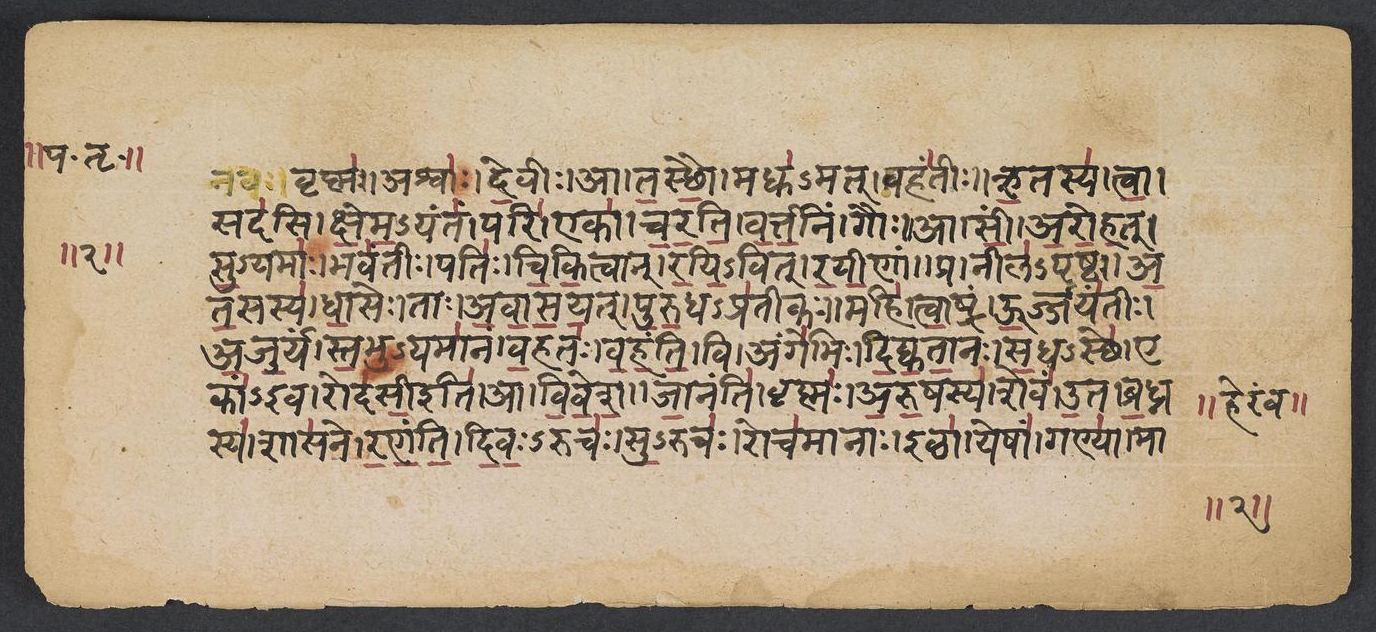
Penn Ms. Coll. 390 Item 41, fol. 192v (numbered 2v by the scribe) (OPenn image 194, upper leaf). Checked on the image: the Rigveda text on this page begins in RV 3.7.2 ‹vṛṣṇaḥ aśvāḥ devīḥ ā›. The next page with Rigveda text, fol. 193r (numbered 3r by the scribe), begins in RV 3.7.5 ‹-māhinā gīḥ›. Verses 3.7.2-4 end on this page; 3.7.2 begins on fol. 192r (numbered 2r by the scribe).
2di̱vakṣa̍so dhe̱navo̱ vṛṣṇo̱ aśvā̍ de̱vīr ā ta̍sthau̱ madhu̍ma̱d vaha̍ntīḥ | ṛ̱tasya̍ tvā̱ sada̍si kṣema̱yanta̱m pary ekā̍ carati varta̱niṁ gauḥ ||
3ā sī̍m arohat su̱yamā̱ bhava̍ntī̱ḥ pati̍ś ciki̱tvān ra̍yi̱vid ra̍yī̱ṇām | pra nīla̍pṛṣṭho ata̱sasya̍ dhā̱ses tā a̍vāsayat puru̱dhapra̍tīkaḥ ||
4mahi̍ tvā̱ṣṭram ū̱rjaya̍ntīr aju̱ryaṁ sta̍bhū̱yamā̍naṁ va̱hato̍ vahanti | vy aṅge̍bhir didyutā̱naḥ sa̱dhastha̱ ekā̍m iva̱ roda̍sī̱ ā vi̍veśa ||
Compare: Padapāṭha (word-by-word text written in the manuscript; Sansknet e-text via GRETIL)
2divakṣasaḥ | dhenavaḥ | vṛṣṇaḥ | aśvāḥ | devīḥ | ā | tasthau | madhu-mat | vahantīḥ | ṛtasya | tvā | sadasi | kṣema-yantam | pari | ekā | carati | vartanim | gauḥ
3ā | sīm | arohat | su-yamāḥ | bhavantīḥ | patiḥ | cikitvān | rayi-vit | rayīṇām | pra | nīla-pṛṣṭhaḥ | atasasya | dhāseḥ | tāḥ | avāsayat | purudha-pratīkaḥ
4mahi | tvāṣṭram | ūrjayantīḥ | ajuryam | stabhu-yamānam | vahataḥ | vahant i | vi | aṅgebhiḥ | didyutānaḥ | sadha-sthe | ekām-iva | rodasī iti | ā | viveśa
2The Male who dwells in heaven hath Mares and Milchkine: he came to Goddesses who bring sweet treasure. To thee safe resting in the seat of Order the Cow alone upon her way proceedeth.
3Wise Master, wealthy finder-out of riches, he mounted those who may with ease be guided. He, dark-backed, manifold with varied aspect, hath made them burst forth from their food the brushwood.
4Strength-giving streams bear hither him eternal, fain to support the mighty work. of Tvashṭar. He, flashing in his home with all his members, hath entered both the worlds as they were single.
Where on the image
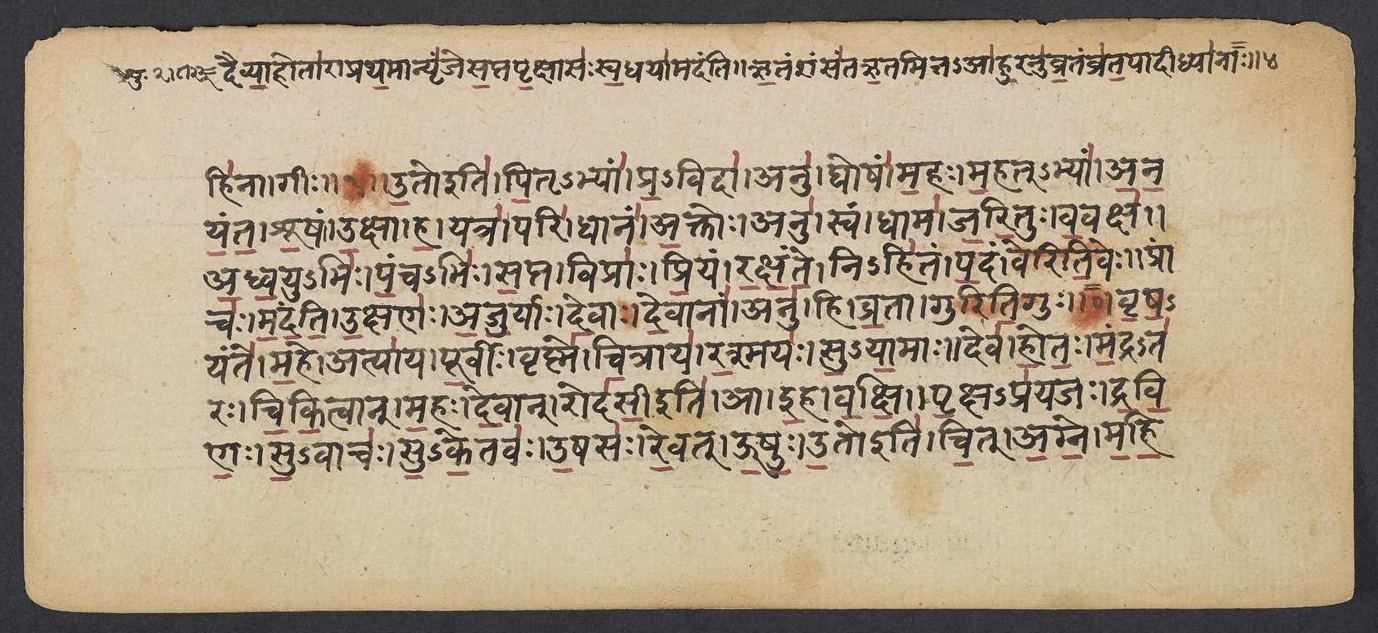
Penn Ms. Coll. 390 Item 41, fol. 193r (numbered 3r by the scribe) (OPenn image 194, lower leaf). Checked on the image: the Rigveda text on this page begins in RV 3.7.5 ‹-māhinā gīḥ›. The next page with Rigveda text, fol. 193v (numbered 3v by the scribe), begins in RV 3.7.10 ‹-mahinā pṛthivyāḥ kṛtam cit›. Verses 3.7.5-9 end on this page; 3.7.5 begins on fol. 192v (numbered 2v by the scribe).
5jā̱nanti̱ vṛṣṇo̍ aru̱ṣasya̱ śeva̍m u̱ta bra̱dhnasya̱ śāsa̍ne raṇanti | di̱vo̱ruca̍ḥ su̱ruco̱ roca̍mānā̱ iḻā̱ yeṣā̱ṁ gaṇyā̱ māhi̍nā̱ gīḥ ||
6u̱to pi̱tṛbhyā̍m pra̱vidānu̱ ghoṣa̍m ma̱ho ma̱hadbhyā̍m anayanta śū̱ṣam | u̱kṣā ha̱ yatra̱ pari̱ dhāna̍m a̱ktor anu̱ svaṁ dhāma̍ jari̱tur va̱vakṣa̍ ||
7a̱dhva̱ryubhi̍ḥ pa̱ñcabhi̍ḥ sa̱pta viprā̍ḥ pri̱yaṁ ra̍kṣante̱ nihi̍tam pa̱daṁ veḥ | prāñco̍ madanty u̱kṣaṇo̍ aju̱ryā de̱vā de̱vānā̱m anu̱ hi vra̱tā guḥ ||
8daivyā̱ hotā̍rā pratha̱mā ny ṛ̍ñje sa̱pta pṛ̱kṣāsa̍ḥ sva̱dhayā̍ madanti | ṛ̱taṁ śaṁsa̍nta ṛ̱tam it ta ā̍hu̱r anu̍ vra̱taṁ vra̍ta̱pā dīdhyā̍nāḥ ||
9vṛ̱ṣā̱yante̍ ma̱he atyā̍ya pū̱rvīr vṛṣṇe̍ ci̱trāya̍ ra̱śmaya̍ḥ suyā̱māḥ | deva̍ hotar ma̱ndrata̍raś ciki̱tvān ma̱ho de̱vān roda̍sī̱ eha va̍kṣi ||
Compare: Padapāṭha (word-by-word text written in the manuscript; Sansknet e-text via GRETIL)
5jānanti | vṛṣṇaḥ | aruṣasya | śevam | uta | bradhnasya | śāsane | raṇanti | divaḥ-rucaḥ | su-rucaḥ | rocamānāḥ | iḷā | yeṣām | gaṇyā | māhinā | gīḥ
6uto iti | pitṛ-bhyām | pra-vidā | anu | ghoṣam | mahaḥ | mahat-bhyām | anayanta | śūṣam | ukṣā | ha | yatra | pari | dhānam | aktoḥ | anu | svam | dhāma | jarituḥ | vavakṣa
7adhvaryu-bhiḥ | pañca-bhiḥ | sapta | viprāḥ | priyam | rakṣante | ni-hitam | padam | veḥ | prāñcaḥ | madanti | ukṣaṇaḥ | ajuryāḥ | devāḥ | devānām | anu | hi | vratā | guritiguḥ
8daivyā | hotārā | prathamā | ni | ṛñje | sapta | pṛkṣāsaḥ | svadhayā | madanti | ṛtam | śaṃsantaḥ | ṛtam | it | te | āhuḥ | anu | vratam | vrata-pā | dīdhyānāḥ
9vṛṣāyante | mahe | atyāya | pūrvīḥ | vṛṣṇe | citrāyaḥraśmayaḥḥsu-yāmāḥḥdevaḥhotaḥḥmandra-taraḥḥcikitvānḥmahaḥḥdevānḥrodasī itiḥāḥihaḥvakṣi
5They know the red Bull's blessing, and are joyful under the flaming-coloured Lord's dominion: They who give shine from heavenwith fair effulgence, whose lofty song like Iḷâ must be honoured.
6Yea, by tradition from the ancient sages they brought great strength from the two mighty Parents, To where the singer's Bull, the night's dispeller, after his proper law hath waxen stronger.
7Seven holy singers guard with five Adhvaryus the Bird's beloved firmly-settled station. The willing Bulls, untouched by eld, rejoice them: as Gods themselves the ways of Gods they follow.
8I crave the grace of heaven's two chief Invokers: the seven swift steeds joy in their wonted manner. These speak of truth, praising the Truth Eternal, thinking on Order as the guards of Order.
9The many seek the great Steed as a stallion: the reins obey the Lord of varied colour. O heavenly Priest, most pleasant, full of wisdom, bring the great Gods to us, and Earth and Heaven.
Where on the image
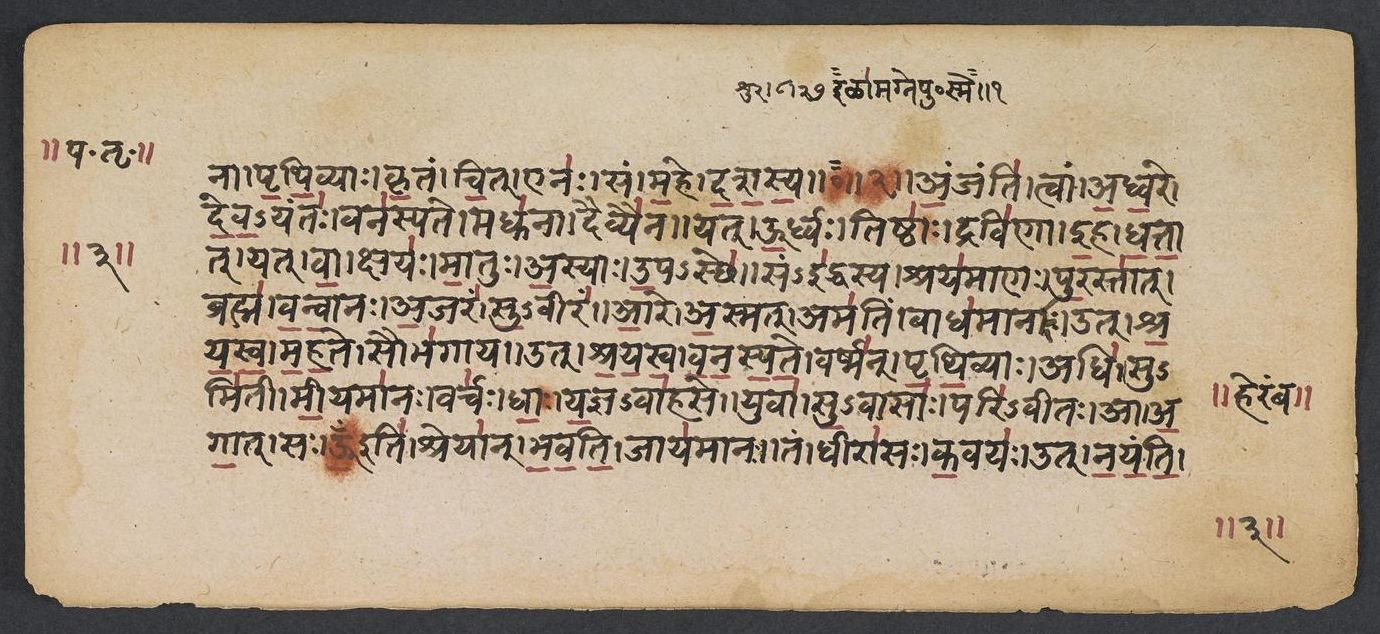
Penn Ms. Coll. 390 Item 41, fol. 193v (numbered 3v by the scribe) (OPenn image 195, upper leaf). Checked on the image: the Rigveda text on this page begins in RV 3.7.10 ‹-mahinā pṛthivyāḥ kṛtam cit›. The next page with Rigveda text, fol. 194r (numbered 4r by the scribe), begins in RV 3.8.4 ‹su-ādhyaḥ manasā deva-yantaḥ›. Verses 3.7.10-11 end on this page; 3.7.10 begins on fol. 193r (numbered 3r by the scribe).
10pṛ̱kṣapra̍yajo draviṇaḥ su̱vāca̍ḥ suke̱tava̍ u̱ṣaso̍ re̱vad ū̍ṣuḥ | u̱to ci̍d agne mahi̱nā pṛ̍thi̱vyāḥ kṛ̱taṁ ci̱d ena̱ḥ sam ma̱he da̍śasya ||
11iḻā̍m agne puru̱daṁsa̍ṁ sa̱niṁ goḥ śa̍śvatta̱maṁ hava̍mānāya sādha | syān na̍ḥ sū̱nus tana̍yo vi̱jāvāgne̱ sā te̍ suma̱tir bhū̍tv a̱sme ||
Compare: Padapāṭha (word-by-word text written in the manuscript; Sansknet e-text via GRETIL)
10pṛkṣa-prayajaḥ | draviṇaḥ | su-vācaḥ | su-ketavaḥ | uṣasaḥ | revat | ūṣuḥ | uto iti | cit | agne | mahinā | pṛthivyāḥ | kṛtam | cit | enaḥ | sam | mahe | daśasya
11iḷām | agne | puru-daṃsam | sanim | goḥ | śaśvat-tamam | havamānāya | sādha | syāt | naḥ | sūnuḥ | tanayaḥ | vijāvā | agne | sā | te | su-matiḥ | bhūtu | asme iti
10Rich Lord, the Mornings have gleamed forth in splendour, fair-rayed, fair-speaking, worshipped with all viands, Yea, with the glory of the earth, O Agni. Forgive us, for our weal, e'en sin cornmitted.
11As holy food, Agni, to thine invoker, give wealth in cattle, lasting, rich in marvels. To us be born a son, and spreading offspring Agni, be this thy gracious will to usward.
Notes
- Sanskrit: Aufrecht's edition (1877) with the Vedic accents, as entered by van Nooten and Holland (GRETIL).
- English: Ralph T. H. Griffith, The Hymns of the Rigveda (1889-1892; 2nd ed. 1896-1897), from the VedaWeb digital text; OCR slips in that text were corrected against the printed 2nd edition (data/sources/rigveda/griffith_errata.json).
- Padapāṭha (edition text): Sansknet e-text via GRETIL (CC BY-NC-SA 4.0).
Cite
Sources
- Source: Penn Ms. Coll. 390 Item 41 (undated (catalogued with Penn's 18th-19th c. Vedic manuscripts)), OPenn, Public Domain Mark + Aufrecht's accented text (GRETIL) + Griffith's English (VedaWeb) (holding institution)
- Critical edition: Aufrecht (1877), accented e-text via GRETIL
← previous · → next · v cycle view · l back to library