Rigveda 3.8: Sacrificial post
Introduction
Rigveda 3.8 is a hymn of 11 verses addressed to sacrificial post. It stands in book (maṇḍala) 3, the family book of Viśvāmitra. The Rigveda is the oldest collection of Sanskrit hymns, composed in the second half of the second millennium BCE and handed down orally for many centuries before it was written down.
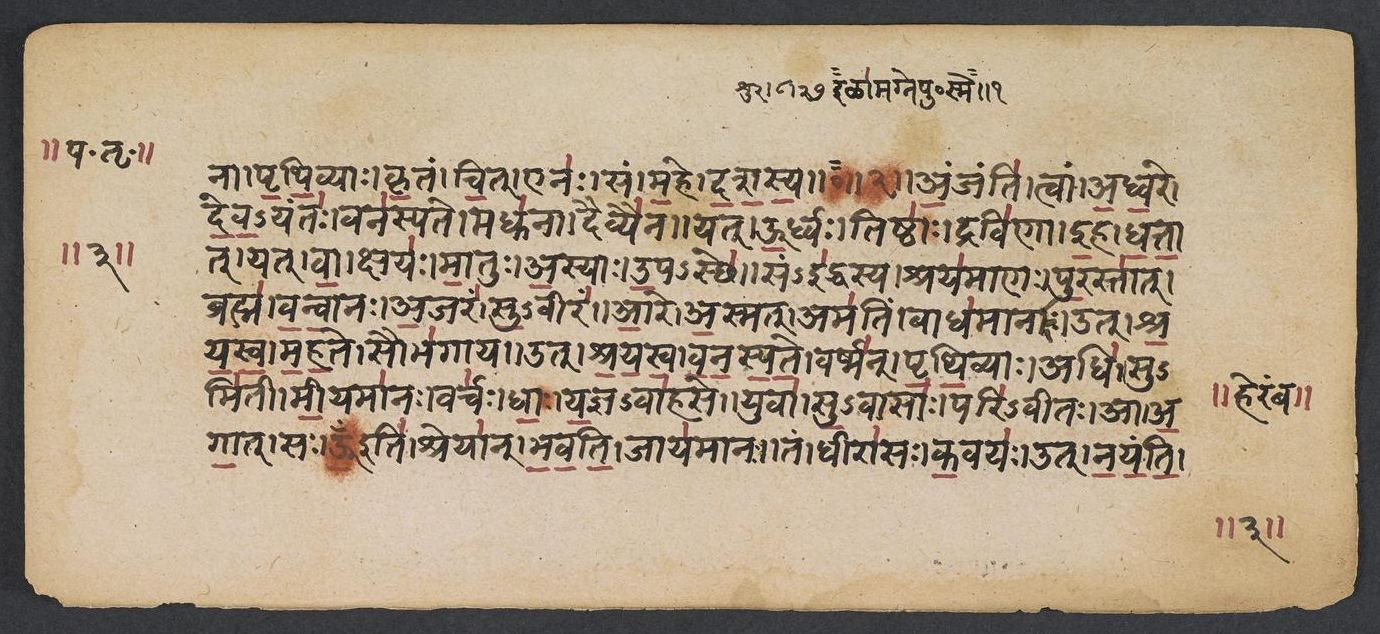
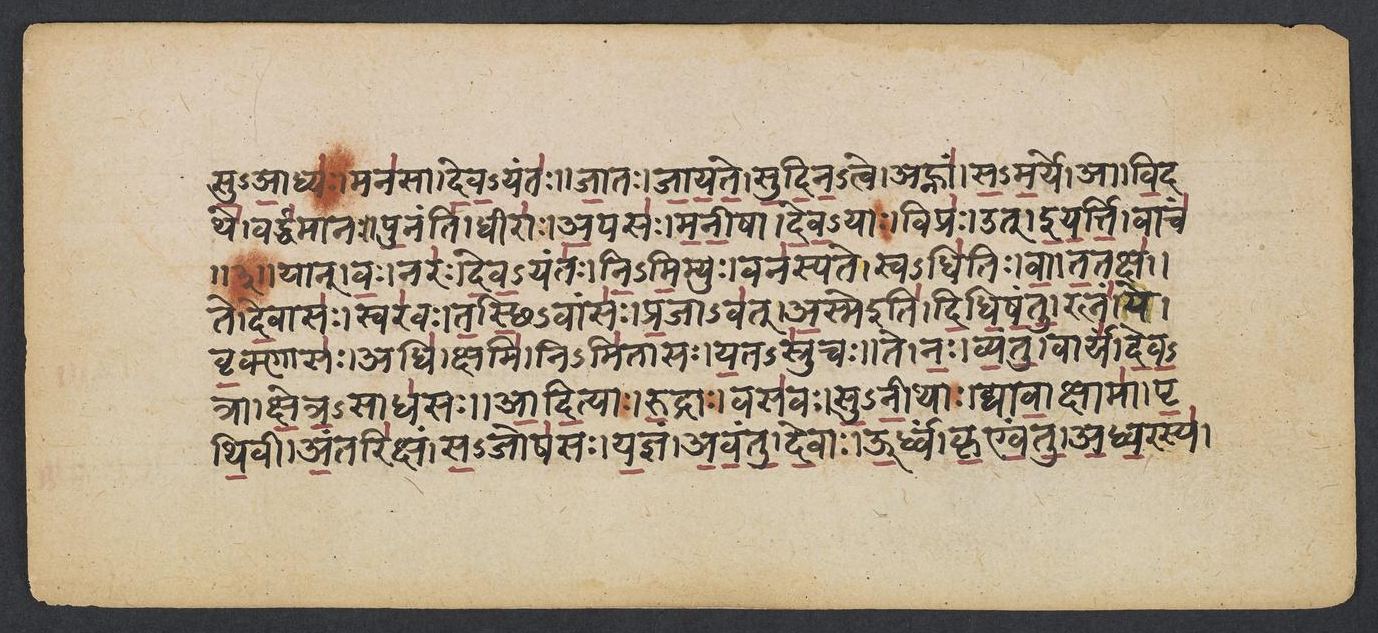
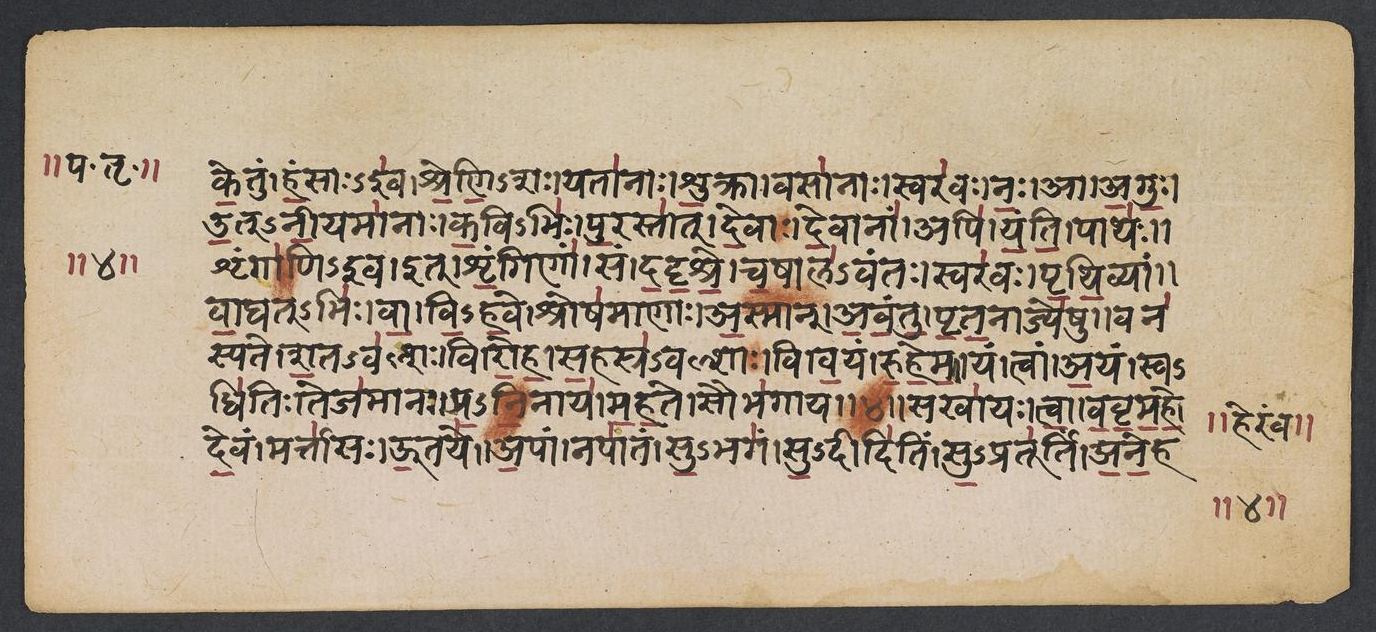
The manuscript shown is Penn Ms. Coll. 390 Item 41 (University of Pennsylvania), an undated paper manuscript of the padapāṭha (the word-by-word recitation text, in which every word is written separately and compounds are split) of the whole Ṛgveda in Devanāgarī, 884 leaves in fascicles, 7-9 lines to the page, accents in red; this hymn stands on fol. 193v-194v. Each section below gives the verses that end on one page; the page boundaries were read on the images (the opening words of every page), not counted out. Where the manuscript is a padapāṭha (the word-by-word recitation text), the section shows Aufrecht's continuous (saṃhitā) text first and, as the edition text, the padapāṭha of the same verses, which is the form written on the page.
How was this verified? (Provenance)
Where on the image
Penn Ms. Coll. 390 Item 41, fol. 193v (numbered 3v by the scribe) (OPenn image 195, upper leaf). Checked on the image: the Rigveda text on this page begins in RV 3.7.10 ‹-mahinā pṛthivyāḥ kṛtam cit›. The next page with Rigveda text, fol. 194r (numbered 4r by the scribe), begins in RV 3.8.4 ‹su-ādhyaḥ manasā deva-yantaḥ›. Verses 3.8.1-3 end on this page.
1a̱ñjanti̱ tvām a̍dhva̱re de̍va̱yanto̱ vana̍spate̱ madhu̍nā̱ daivye̍na | yad ū̱rdhvas tiṣṭhā̱ dravi̍ṇe̱ha dha̍ttā̱d yad vā̱ kṣayo̍ mā̱tur a̱syā u̱pasthe̍ ||
2sami̍ddhasya̱ śraya̍māṇaḥ pu̱rastā̱d brahma̍ vanvā̱no a̱jara̍ṁ su̱vīra̍m | ā̱re a̱smad ama̍ti̱m bādha̍māna̱ uc chra̍yasva maha̱te saubha̍gāya ||
3uc chra̍yasva vanaspate̱ varṣma̍n pṛthi̱vyā adhi̍ | sumi̍tī mī̱yamā̍no̱ varco̍ dhā ya̱jñavā̍hase ||
Compare: Padapāṭha (word-by-word text written in the manuscript; Sansknet e-text via GRETIL)
1añjanti | tvām | adhvare | deva-yantaḥ | vanaspate | madhunā | daivyena | yat | ūrdhvaḥ | tiṣṭhāḥ | dravinā | iha | dhattāt | yat | vā | kṣayaḥ | mātuḥ | asyāḥ | upa-sthe
2sam-iddhasya | śrayamāṇaḥ | purastāt | brahma | vanvānaḥ | ajaram | su-vīram | āre | asmat | amatim | bādhamānaḥ | ut | śrayasva | mahate | saubhagāya
3ut | śrayasva | vanaspate | varṣman | pṛthivyāḥ | adhi | su-mitī | mīyamānaḥ | varcaḥ | dhāḥ | yajña-vāhase
1GOD-SERVING men, O Sovran of the Forest, with heavenly meath at sacrifice anoint thee. Grant wealth to us when thou art standing upright as when reposing on this Mother's bosom.
2Set up to eastward of the fire enkindled, accepting prayer that wastes not, rich in hero. Driving far from us poverty and famine, lift thyself up to bring us great good fortune.
3Lord of the Forest, raise. thyself up on the loftiest spot of earth. Give splendour, fixt and measured well, to him who brings the sacrifice.
Where on the image
Penn Ms. Coll. 390 Item 41, fol. 194r (numbered 4r by the scribe) (OPenn image 195, lower leaf). Checked on the image: the Rigveda text on this page begins in RV 3.8.4 ‹su-ādhyaḥ manasā deva-yantaḥ›. The next page with Rigveda text, fol. 194v (numbered 4v by the scribe), begins in RV 3.8.8 ‹ketum›. Verses 3.8.4-7 end on this page; 3.8.4 begins on fol. 193v (numbered 3v by the scribe).
4yuvā̍ su̱vāsā̱ḥ pari̍vīta̱ āgā̱t sa u̱ śreyā̍n bhavati̱ jāya̍mānaḥ | taṁ dhīrā̍saḥ ka̱vaya̱ un na̍yanti svā̱dhyo̱3̱̍ mana̍sā deva̱yanta̍ḥ ||
5jā̱to jā̍yate sudina̱tve ahnā̍ṁ sama̱rya ā vi̱dathe̱ vardha̍mānaḥ | pu̱nanti̱ dhīrā̍ a̱paso̍ manī̱ṣā de̍va̱yā vipra̱ ud i̍yarti̱ vāca̍m ||
6yān vo̱ naro̍ deva̱yanto̍ nimi̱myur vana̍spate̱ svadhi̍tir vā ta̱takṣa̍ | te de̱vāsa̱ḥ svara̍vas tasthi̱vāṁsa̍ḥ pra̱jāva̍d a̱sme di̍dhiṣantu̱ ratna̍m ||
7ye vṛ̱kṇāso̱ adhi̱ kṣami̱ nimi̍tāso ya̱tasru̍caḥ | te no̍ vyantu̱ vārya̍ṁ deva̱trā kṣe̍tra̱sādha̍saḥ ||
Compare: Padapāṭha (word-by-word text written in the manuscript; Sansknet e-text via GRETIL)
4yuvā | su-vāsāḥ | pari-vītaḥ | ā | agāt | saḥ | oṃ iti | śreyān | bhavati | jāyamānaḥ | tam | dhīrāsaḥ | kavayaḥ | ut | nayanti | su-ādhyaḥ | manasā | deva-yantaḥ
5jātaḥ | jāyate | sudina-tve | ahnām | sa-marye | ā | vidathe | vardhamānaḥ | punanti | dhīrāḥ | apasaḥ | manīṣā | deva-yāḥ | vipraḥ | ut | iyarti | vācam
6yān | vaḥ | naraḥ | deva-yantaḥ | ni-mimyuḥ | vanaspate | sva-dhitiḥ | vā | tatakṣa | te | devāsaḥ | svaravaḥ | tasthi-vāṃsaḥ | prajāvat | asme iti | didhiṣantu | ratnam
7ye | vṛkṇāsaḥ | adhi | kṣami | ni-mitāsaḥ | yata-srucaḥ | te | naḥ | vyantu | vāyarm | deva-trā | kṣetra-sādhasaḥ
4Well-robed, enveloped he is come, the youthful: springing to life his glory waxeth greater. Contemplative in mind and God-adoring, sages of high intelligence upraise him.
5Sprung up he rises in the days' fair weather, increasing in the men-frequented synod. With song the wise and skilful consecrate him: his voice the God-adoring singer utters.
6, Ye whom religious men have firmly planted; thou Forest Sovran whom the axe hath fashioned,– Let those the Stakes divine which here are standing be fain to grant us wealth with store of children.
7O men who lift the ladles up, these hewn and planted in the ground, Bringing a blessing to the field, shall bear our precious gift to Gods.
Where on the image
Penn Ms. Coll. 390 Item 41, fol. 194v (numbered 4v by the scribe) (OPenn image 196, upper leaf). Checked on the image: the Rigveda text on this page begins in RV 3.8.8 ‹ketum›. The next page with Rigveda text, fol. 195r (numbered 5r by the scribe), begins in RV 3.9.1 ‹-anehasam›. Verses 3.8.8-11 end on this page; 3.8.8 begins on fol. 194r (numbered 4r by the scribe).
8ā̱di̱tyā ru̱drā vasa̍vaḥ sunī̱thā dyāvā̱kṣāmā̍ pṛthi̱vī a̱ntari̍kṣam | sa̱joṣa̍so ya̱jñam a̍vantu de̱vā ū̱rdhvaṁ kṛ̍ṇvantv adhva̱rasya̍ ke̱tum ||
9ha̱ṁsā i̍va śreṇi̱śo yatā̍nāḥ śu̱krā vasā̍nā̱ḥ svara̍vo na̱ āgu̍ḥ | u̱nnī̱yamā̍nāḥ ka̱vibhi̍ḥ pu̱rastā̍d de̱vā de̱vānā̱m api̍ yanti̱ pātha̍ḥ ||
10śṛṅgā̍ṇī̱vec chṛ̱ṅgiṇā̱ṁ saṁ da̍dṛśre ca̱ṣāla̍vanta̱ḥ svara̍vaḥ pṛthi̱vyām | vā̱ghadbhi̍r vā viha̱ve śroṣa̍māṇā a̱smām̐ a̍vantu pṛta̱nājye̍ṣu ||
11vana̍spate śa̱tava̍lśo̱ vi ro̍ha sa̱hasra̍valśā̱ vi va̱yaṁ ru̍hema | yaṁ tvām a̱yaṁ svadhi̍ti̱s teja̍mānaḥ praṇi̱nāya̍ maha̱te saubha̍gāya ||
Compare: Padapāṭha (word-by-word text written in the manuscript; Sansknet e-text via GRETIL)
8ādityāḥ | rudrāḥ | vasavaḥ | su-nīthāḥ | dyāvākṣāmā | pṛthivī | antarikṣam | sa-joṣasaḥ | yajñam | avantu | devāḥ | ūrdhvam | kṛṇvantu | adhvarasya | ketum
9haṃsāḥ-iva | śreṇiśaḥ | yatānāḥ | śukrāḥ | vasānāḥ | svaravaḥ | naḥ | ā | aguḥ | ut-nīyamānāḥ | kavi-bhiḥ | purastāt | devāḥ | devānām | api | yanti | pāthaḥ
10śṛṅgāṇi-iva | śṛṅgiṇām | sam | dadṛśre | caṣāla-vantaḥ | svaravaḥ | pṛthivyām | vāghat-bhiḥ | vā | vi-have | śroṣamāṇāḥ | asmān | avantu | pṛtanājyeṣu
11vanaspate | śata-valśaḥ | vi | roha | sahasra-valśāḥ | vi | vayam | ruhema | yam | tvām | ayam | sva-dhitiḥ | tejamānaḥ | pra-nināya | mahate | saubhagāya
8Âdityas, Rudras, Vasus, careful leaders, Earth, Heaven, and Pr̥ithivî and Air's mid-region, Accordant Deities shall bless our worship and make our sacrifice's ensign lofty.
9Like swan's that flee in lengthened line, the Pillars have come to us arrayed in brilliant colour. They, lifted up on high, by sages, eastward, go forth as Gods to the God's dwelling-places.
10Those Stakes upon the earth with rings that deck them seem to the eye like horns of horned creatures; Or, as upraised by priests in invocation, let them assist us in the rush to battle.
11Lord of the Wood, rise with a hundred branches. with thousand branches may we rise to greatness, Tlou whom this hatchet, with an edge well whetted for great felicity, hath brought before us.
Notes
- Sanskrit: Aufrecht's edition (1877) with the Vedic accents, as entered by van Nooten and Holland (GRETIL).
- English: Ralph T. H. Griffith, The Hymns of the Rigveda (1889-1892; 2nd ed. 1896-1897), from the VedaWeb digital text; OCR slips in that text were corrected against the printed 2nd edition (data/sources/rigveda/griffith_errata.json).
- Padapāṭha (edition text): Sansknet e-text via GRETIL (CC BY-NC-SA 4.0).
Cite
Sources
- Source: Penn Ms. Coll. 390 Item 41 (undated (catalogued with Penn's 18th-19th c. Vedic manuscripts)), OPenn, Public Domain Mark + Aufrecht's accented text (GRETIL) + Griffith's English (VedaWeb) (holding institution)
- Critical edition: Aufrecht (1877), accented e-text via GRETIL
← previous · → next · v cycle view · l back to library