Rigveda 4.2: To Agni
Introduction
Rigveda 4.2 is a hymn of 20 verses addressed to Agni. It stands in book (maṇḍala) 4, the family book of Vāmadeva. The Rigveda is the oldest collection of Sanskrit hymns, composed in the second half of the second millennium BCE and handed down orally for many centuries before it was written down.
The manuscript shown is Penn Ms. Coll. 390 Item 41 (University of Pennsylvania), an undated paper manuscript of the padapāṭha (the word-by-word recitation text, in which every word is written separately and compounds are split) of the whole Ṛgveda in Devanāgarī, 884 leaves in fascicles, 7-9 lines to the page, accents in red; this hymn stands on fol. 253r-255v. Each section below gives the verses that end on one page; the page boundaries were read on the images (the opening words of every page), not counted out. Where the manuscript is a padapāṭha (the word-by-word recitation text), the section shows Aufrecht's continuous (saṃhitā) text first and, as the edition text, the padapāṭha of the same verses, which is the form written on the page.
How was this verified? (Provenance)
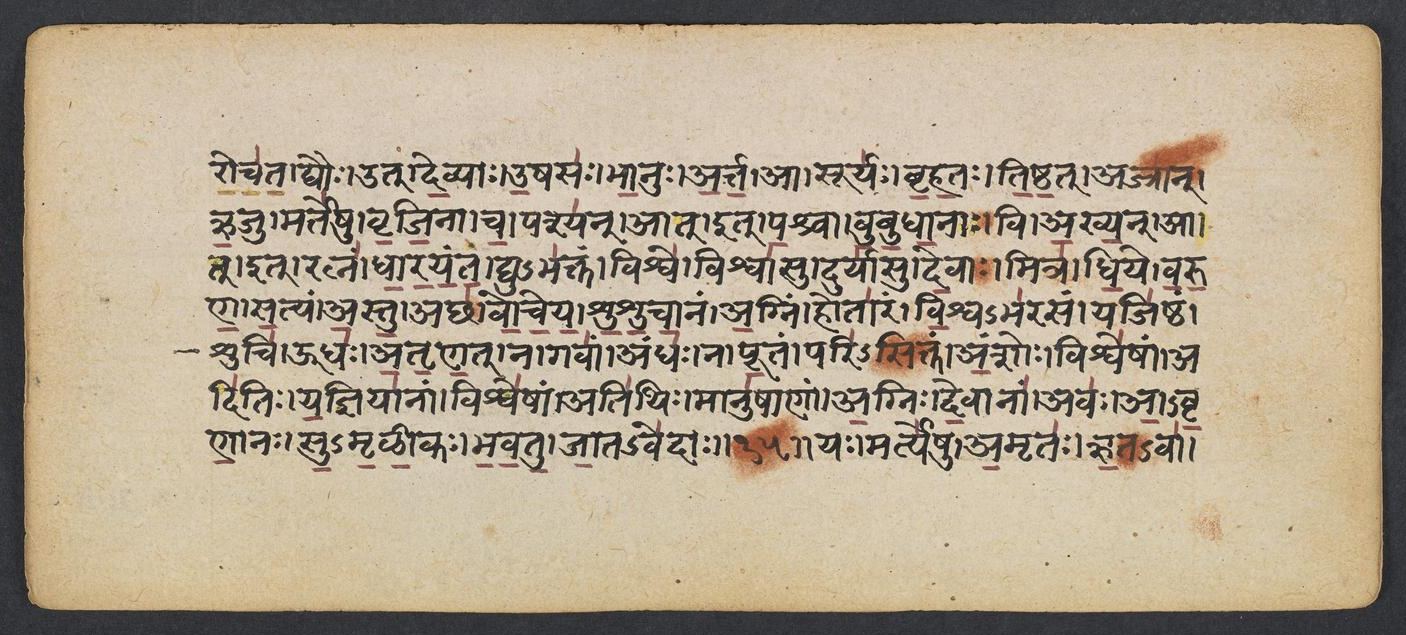
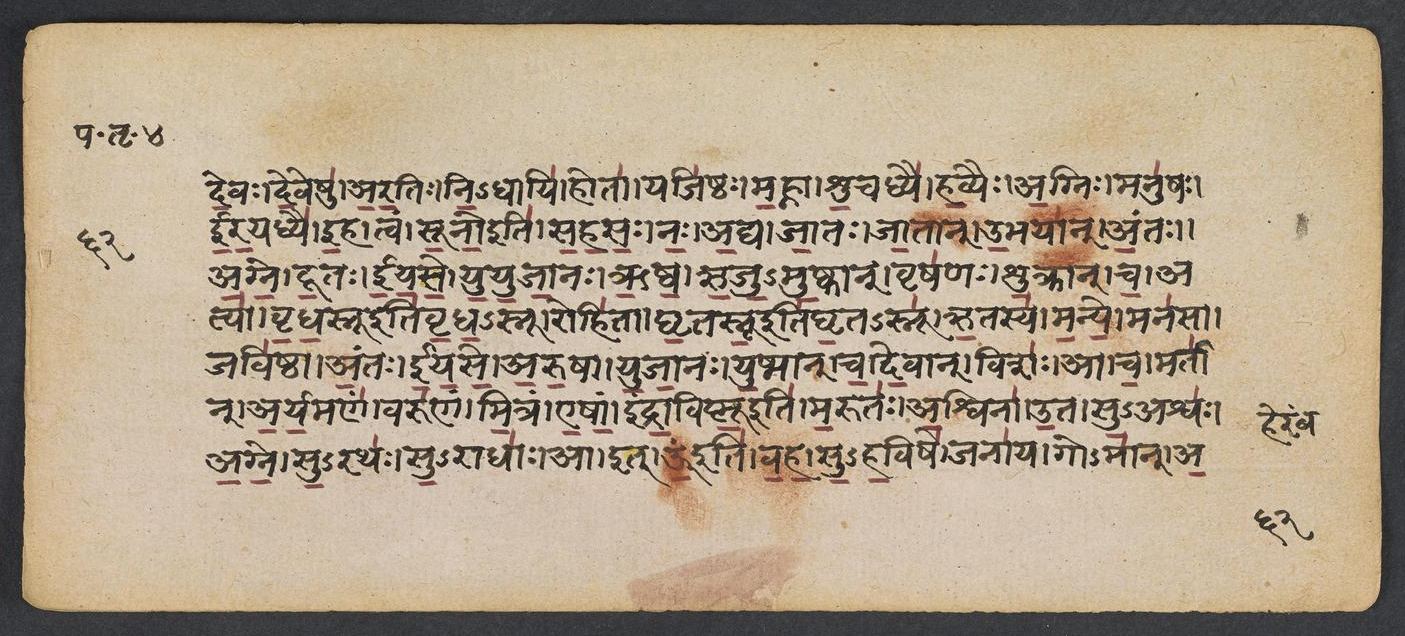
Where on the image
Penn Ms. Coll. 390 Item 41, fol. 253v (numbered 62v by the scribe) (OPenn image 254, upper leaf). Checked on the image: the Rigveda text on this page begins in RV 4.2.1 ‹devaḥ deveṣu aratiḥ ni-dhāyi›. The next page with Rigveda text, fol. 254r (numbered 63r by the scribe), begins in RV 4.2.5 ‹-agne avi-mān aśvī yajñaḥ›. Verses 4.2.1-4 end on this page; 4.2.1 begins on fol. 253r (numbered 62r by the scribe).
1yo martye̍ṣv a̱mṛta̍ ṛ̱tāvā̍ de̱vo de̱veṣv a̍ra̱tir ni̱dhāyi̍ | hotā̱ yaji̍ṣṭho ma̱hnā śu̱cadhyai̍ ha̱vyair a̱gnir manu̍ṣa īra̱yadhyai̍ ||
2i̱ha tvaṁ sū̍no sahaso no a̱dya jā̱to jā̱tām̐ u̱bhayā̍m̐ a̱ntar a̍gne | dū̱ta ī̍yase yuyujā̱na ṛ̍ṣva ṛjumu̱ṣkān vṛṣa̍ṇaḥ śu̱krām̐ś ca̍ ||
3atyā̍ vṛdha̱snū rohi̍tā ghṛ̱tasnū̍ ṛ̱tasya̍ manye̱ mana̍sā̱ javi̍ṣṭhā | a̱ntar ī̍yase aru̱ṣā yu̍jā̱no yu̱ṣmām̐ś ca̍ de̱vān viśa̱ ā ca̱ martā̍n ||
4a̱rya̱maṇa̱ṁ varu̍ṇam mi̱tram e̍ṣā̱m indrā̱viṣṇū̍ ma̱ruto̍ a̱śvino̱ta | svaśvo̍ agne su̱ratha̍ḥ su̱rādhā̱ ed u̍ vaha suha̱viṣe̱ janā̍ya ||
Compare: Padapāṭha (word-by-word text written in the manuscript; Sansknet e-text via GRETIL)
1yaḥ | martyeṣu | amṛtaḥ | ṛta-vā | devaḥ | deveṣu | aratiḥ | ni-dhāyi | hotā | yajiṣṭhaḥ | mahnā | śucadhyai | havyaiḥ | agniḥ | manuṣaḥ | īrayadhyai
2iha | tvam | sūno iti | sahasaḥ | naḥ | adya | jātaḥ | jātān | ubhayān | antaḥ | agne | dūtaḥ | īyase | yyjānaḥ | ṣv | ṛju-muṣkān | vṛṣaṇaḥ | śukrān | ca
3atyā | vṛdhasnū itivṛdha-snū | rohitā | ghṛtasnūitighṛta-snū | ṛtasya | manye | manasā | javiṣṭhā | antaḥ | īyase | aruṣā | yujānaḥ | yuṣmān | ca | devān | viśaḥ | ā | ca | martān
4aryamaṇam | varuṇam | mitram | eṣām | indrāviṣṇūiti | marutaḥ | aśvinā | uta | su-aśvaḥ | agne | su-rathaḥ | su-rādhāḥ | ā | it | oṃ iti | vaha | su-haviṣe | janāya
1THE, Faithful One, Immortal among mortals, a God among the Gods, appointed envoy, Priest, best at worship, must shine forth in glory . Agni shall be raised high with man's oblations.
2Born for us here this day, O Son of Vigour, between both races of born beings, Agni, Thou farest as an envoy, having harnessed, Sublime One! thy strong-muscled radiant stallions.
3I laud the ruddy steeds who pour down blessing, dropping oil, flectest through the thought of Order. Yoking red horses to and fro thou goest between you Deities and mortal races.
4Aryaman, Mitra, Varuṇa, and Indra with Vishṇu, of the Gods, Maruts and Aṣvins- These, Agni, with good car and steeds, bring hither, most bountiful, to folk with fair oblations.
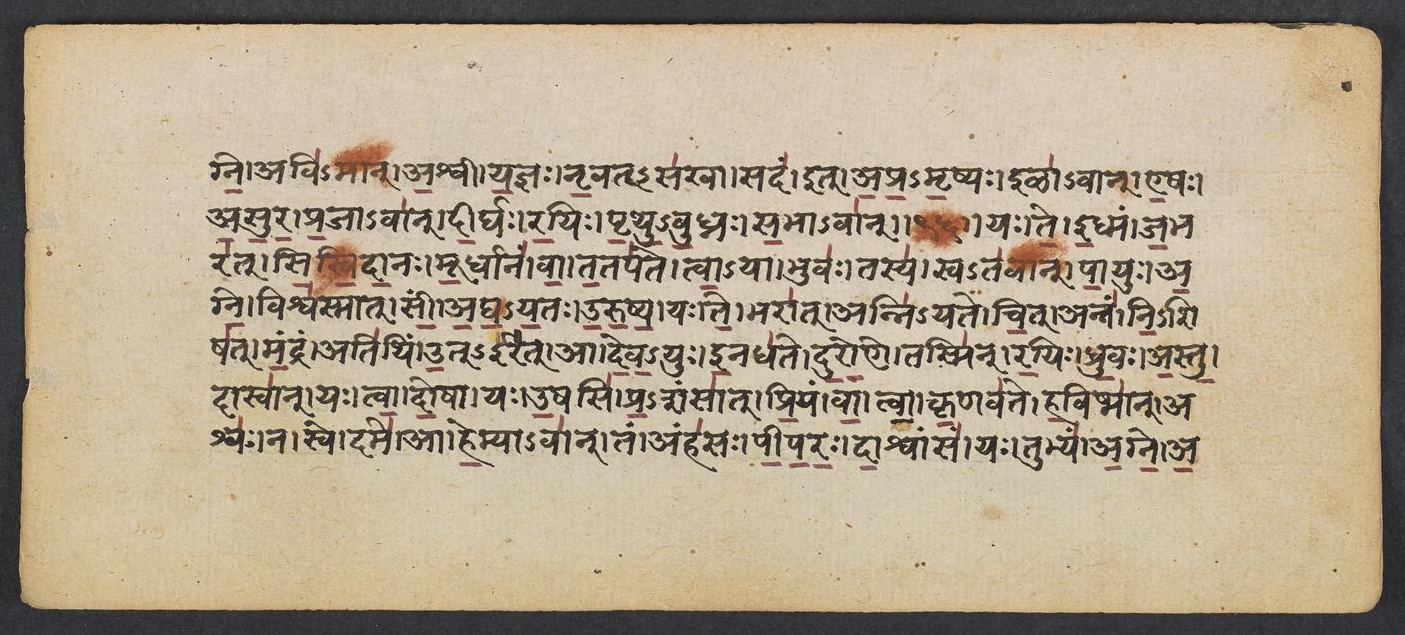
Where on the image
Penn Ms. Coll. 390 Item 41, fol. 254r (numbered 63r by the scribe) (OPenn image 254, lower leaf). Checked on the image: the Rigveda text on this page begins in RV 4.2.5 ‹-agne avi-mān aśvī yajñaḥ›. The next page with Rigveda text, fol. 254v (numbered 63v by the scribe), begins in RV 4.2.9 ‹amṛtāya dāśa-huvaḥ tve iti›. Verses 4.2.5-8 end on this page; 4.2.5 begins on fol. 253v (numbered 62v by the scribe).
5gomā̍m̐ a̱gne 'vi̍mām̐ a̱śvī ya̱jño nṛ̱vatsa̍khā̱ sada̱m id a̍pramṛ̱ṣyaḥ | iḻā̍vām̐ e̱ṣo a̍sura pra̱jāvā̍n dī̱rgho ra̱yiḥ pṛ̍thubu̱dhnaḥ sa̱bhāvā̍n ||
6yas ta̍ i̱dhmaṁ ja̱bhara̍t siṣvidā̱no mū̱rdhāna̍ṁ vā ta̱tapa̍te tvā̱yā | bhuva̱s tasya̱ svata̍vām̐ḥ pā̱yur a̍gne̱ viśva̍smāt sīm aghāya̱ta u̍ruṣya ||
7yas te̱ bharā̱d anni̍yate ci̱d anna̍ṁ ni̱śiṣa̍n ma̱ndram ati̍thim u̱dīra̍t | ā de̍va̱yur i̱nadha̍te duro̱ṇe tasmi̍n ra̱yir dhru̱vo a̍stu̱ dāsvā̍n ||
8yas tvā̍ do̱ṣā ya u̱ṣasi̍ pra̱śaṁsā̍t pri̱yaṁ vā̍ tvā kṛ̱ṇava̍te ha̱viṣmā̍n | aśvo̱ na sve dama̱ ā he̱myāvā̱n tam aṁha̍saḥ pīparo dā̱śvāṁsa̍m ||
Compare: Padapāṭha (word-by-word text written in the manuscript; Sansknet e-text via GRETIL)
5go--mān | agne | avi-mān | aśvī | yajñaḥ | nṛvat-sakhā | sadam | it | apra-mṛṣyaḥ | iḷāvān | eṣaḥ | asura | prajāvān | dīrghaḥ | rayiḥ | pṛthu-budhnaḥ | sabhāvān
6yaḥ | te | idhmam | jabharat | siṣvidānaḥ | mūrdhānam | vā | tatapate | tvāyā | bhuvaḥ | tasya | sva-tavān | pāyuḥ | agne | viśvasmāt | sīm | agha-yataḥ | uruṣya
7yaḥ | te | bharāt | anni-yate | cit | annam | ni-śiṣat | mandram | atithim | ut-īrat | ā | deva-yuḥ | inadhate | duroṇe | tasmin | rayiḥ | dhruvaḥ | astu | dāsvān
8yaḥ | tvā | doṣā | yaḥ | uṣasi | pra-śaṃsāt | priyam | vā | tvā | kṛṇavate | haviṣmān | aśvaḥ | na | sve | dame | ā | hemyāvān | tam | aṃhasaḥ | pīparaḥ | dāśvāṃsam
5Agni, be this our sacrifice eternal, with brave friends, rich in kine and sheep and horses, Rich, Asura! in sacred food and children, in full assembly, wealth broad-based and during.
6The man who, sweating, brings for thee the fuel, and makes his head to ache, thy faithful servant,– Agni, to him be a self-strong Protector guard him from all who seek to do him mischief.
7Who brings thee food, though thou hast food in plenty, welcomes his cheerful guest and speeds him onward, Who kindles thee devoutly in his dwelling,to him be wealth secure and freely giving.
8Whoso sings praise to thee at eve or morning, and, with oblation, doth the thing thou lovest,– In his own home, even as a goId-girt courser, rescue him from distress, the bounteous giver.
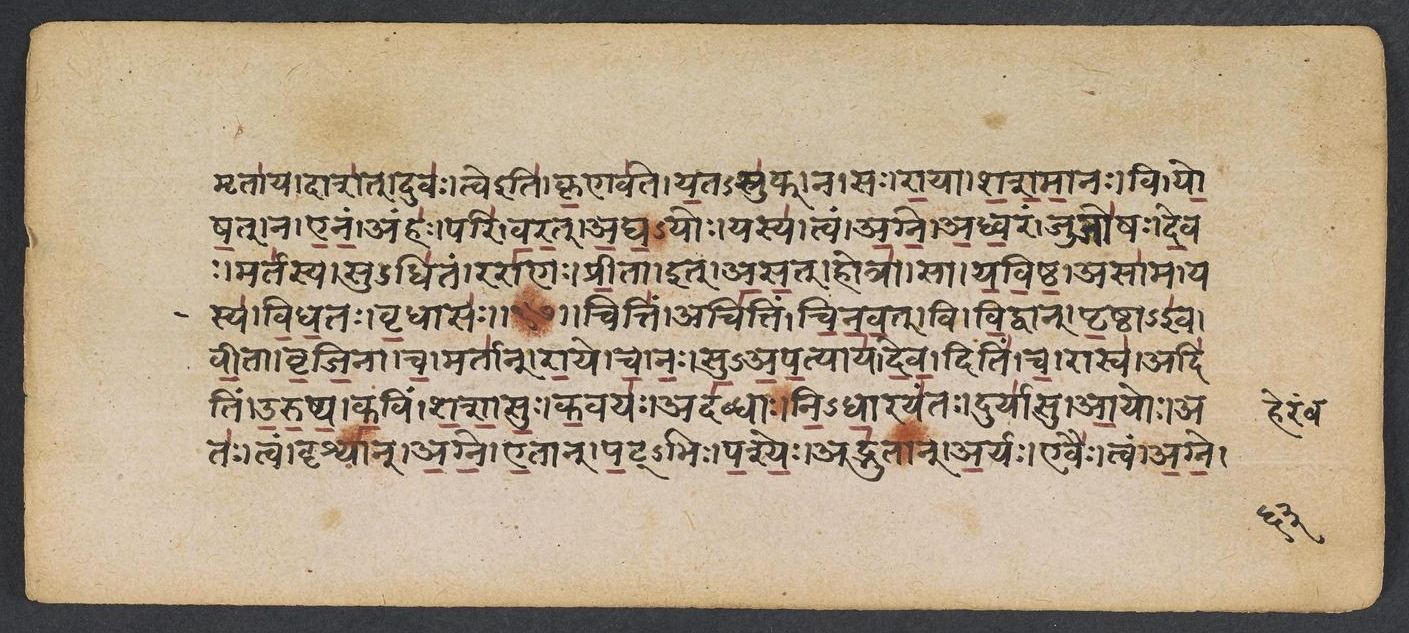
Where on the image
Penn Ms. Coll. 390 Item 41, fol. 254v (numbered 63v by the scribe) (OPenn image 255, upper leaf). Checked on the image: the Rigveda text on this page begins in RV 4.2.9 ‹amṛtāya dāśa-huvaḥ tve iti›. The next page with Rigveda text, fol. 255r (numbered 64r by the scribe), begins in RV 4.2.13 ‹-su-pranītiḥ suta-somāya vidhate yaviṣṭha›. Verses 4.2.9-12 end on this page; 4.2.9 begins on fol. 254r (numbered 63r by the scribe).
9yas tubhya̍m agne a̱mṛtā̍ya̱ dāśa̱d duva̱s tve kṛ̱ṇava̍te ya̱tasru̍k | na sa rā̱yā śa̍śamā̱no vi yo̍ṣa̱n naina̱m aṁha̱ḥ pari̍ varad aghā̱yoḥ ||
10yasya̱ tvam a̍gne adhva̱raṁ jujo̍ṣo de̱vo marta̍sya̱ sudhi̍ta̱ṁ rarā̍ṇaḥ | prī̱ted a̍sa̱d dhotrā̱ sā ya̍vi̱ṣṭhāsā̍ma̱ yasya̍ vidha̱to vṛ̱dhāsa̍ḥ ||
11citti̱m aci̍ttiṁ cinava̱d vi vi̱dvān pṛ̱ṣṭheva̍ vī̱tā vṛ̍ji̱nā ca̱ martā̍n | rā̱ye ca̍ naḥ svapa̱tyāya̍ deva̱ diti̍ṁ ca̱ rāsvādi̍tim uruṣya ||
12ka̱viṁ śa̍śāsuḥ ka̱vayo 'da̍bdhā nidhā̱raya̍nto̱ duryā̍sv ā̱yoḥ | ata̱s tvaṁ dṛśyā̍m̐ agna e̱tān pa̱ḍbhiḥ pa̍śye̱r adbhu̍tām̐ a̱rya evai̍ḥ ||
Compare: Padapāṭha (word-by-word text written in the manuscript; Sansknet e-text via GRETIL)
9yaḥ | tubhyam | agne | amṛtāya | dāśa-huvaḥ | tve iti | kṛṇavate | yata-sruk | na | saḥ | rāyā | śaśamānaḥ | vi | yoṣat | na | enam | aṃhaḥ | pari | varat | agha-yoḥ
10yasya | tvam | agne | adhvaram | jujoṣaḥ | devaḥ | martasya | su-dhitam | rarāṇaḥ | prītā | it | asat | hotrā | sā | yaviṣṭha | asāma | yasya | vidhataḥ | vṛdhāsaḥ
11cittim | acittim | cinavat | vi | vidvān | pṛṣṭāiva | vītā | vṛjinā | ca | martān | rāye | ca | naḥ | su-apatyāya | deva | ditim | ca | rāsva | aditim | uruṣya
12kavim | śaśāsuḥ | kavayaḥ | adabdhāḥ | ni-dhārayantaḥ | duryāsu | āyoḥ | ataḥ | tvam | dṛśyān | agne | etān | paṭ-bhiḥ | paśyeḥ | adbhutām | aryaḥ | evaiḥ
9Whoso brings gifts to thee Immortal, Agni, and doth thee service with uplifted ladle,– Let him not, sorely toiling, lose his riches; let not the sinner's wickedness enclose him.
10Whose well-wrought worship thou acceptest, Agni, thou God a mortal's gift, thou liberal Giver,– Dear be his sacrifice to thee, Most Youthful! and may we strengthen him when he adores thee.
11May he who knows distinguish sense and folly of men, like straight and crooked backs of horses. Lead us, O God, to wealth and noble offspring: keep penury afar and grant us plenty.
12This Sage the Sages, ne'er deceived, commanded, setting him down in dwellings of the living. Hence mayst thou, friendly God, with rapid footsteps behold the Gods, wonderful, fair to look on.
Where on the image
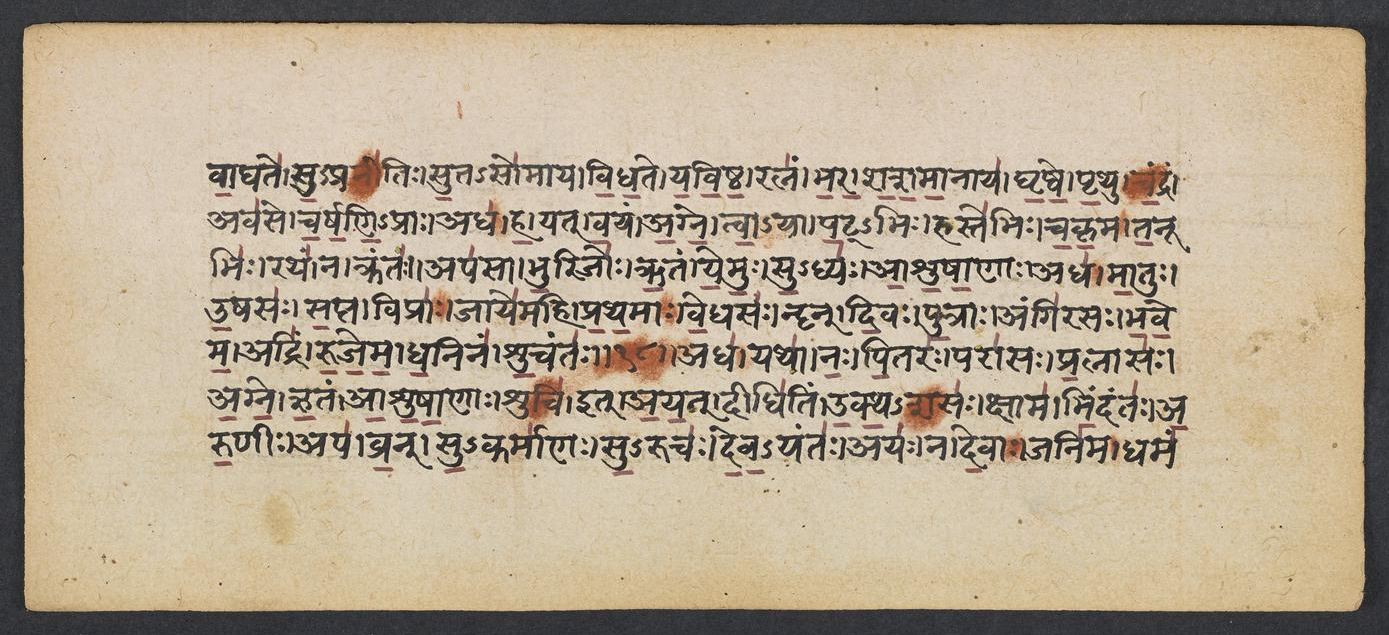
Penn Ms. Coll. 390 Item 41, fol. 255r (numbered 64r by the scribe) (OPenn image 255, lower leaf). Checked on the image: the Rigveda text on this page begins in RV 4.2.13 ‹-su-pranītiḥ suta-somāya vidhate yaviṣṭha›. The next page with Rigveda text, fol. 255v (numbered 64v by the scribe), begins in RV 4.2.17 ‹-dhamantaḥ śucantaḥ agnim vavṛdhantaḥ›. Verses 4.2.13-16 end on this page; 4.2.13 begins on fol. 254v (numbered 63v by the scribe).
13tvam a̍gne vā̱ghate̍ su̱praṇī̍tiḥ su̱taso̍māya vidha̱te ya̍viṣṭha | ratna̍m bhara śaśamā̱nāya̍ ghṛṣve pṛ̱thu śca̱ndram ava̍se carṣaṇi̱prāḥ ||
14adhā̍ ha̱ yad va̱yam a̍gne tvā̱yā pa̱ḍbhir haste̍bhiś cakṛ̱mā ta̱nūbhi̍ḥ | ratha̱ṁ na kranto̱ apa̍sā bhu̱rijo̍r ṛ̱taṁ ye̍muḥ su̱dhya̍ āśuṣā̱ṇāḥ ||
15adhā̍ mā̱tur u̱ṣasa̍ḥ sa̱pta viprā̱ jāye̍mahi pratha̱mā ve̱dhaso̱ nṝn | di̱vas pu̱trā aṅgi̍raso bhave̱mādri̍ṁ rujema dha̱nina̍ṁ śu̱canta̍ḥ ||
16adhā̱ yathā̍ naḥ pi̱tara̱ḥ parā̍saḥ pra̱tnāso̍ agna ṛ̱tam ā̍śuṣā̱ṇāḥ | śucīd a̍ya̱n dīdhi̍tim uktha̱śāsa̱ḥ kṣāmā̍ bhi̱ndanto̍ aru̱ṇīr apa̍ vran ||
Compare: Padapāṭha (word-by-word text written in the manuscript; Sansknet e-text via GRETIL)
13tvam | agne | vāghate | su-pranītiḥ | suta-somāya | vidhate | yaviṣṭha | ratnam | bhara | śaśamānāya | ghṛṣve | pṛthu | candram | avase | carṣaṇi-prāḥ
14adha | ha | yat | vayam | agne | tvāyā | paṭ-bhiḥ | hastebhiḥ | cakṛma | tanūbhiḥ | ratham | na | krantaḥ | apasā | bhurijoḥ | ṛtam | yemuḥ | su-dhyaḥ | āśuṣāṇāḥ
15adha | mātuḥ | uṣasaḥ | sapta | viprāḥ | jāyemahi | prathamāḥ | vedhasaḥ | nṝn | divaḥ | putrāḥ | aṅgirasaḥ | bhavema | adrim | rujema | dhaninam | śucantaḥ
16adha | yathā | naḥ | pitaraḥ | parāsaḥ | pratnāsaḥ | agne | ṛtam | āśuṣāṇāḥ | śuci | it | ayan | dīdhitim | uktha-śāsaḥ | kṣāmā | bhindantaḥ | aruṇīḥ | apa | vran
13Good guidance hast thou for the priest, O Agni, who, Youngest God! with outpoured Soma serves thee. Ruler of men, thou joyous God, bring treasure splendid and plentiful to aid the toiler.
14Now all that we, thy faithful servants, Agni, have done with feet, with hands, and with our bodies, The wise, with toil, the holy rite have guided, as those who frame a car with manual cunning.
15May we, seven sages first in rank, engender, from Dawn the Mother, men to be ordainers. May we, Angirases, be sons of Heaven, and, radiant, burst the wealth-containing mountain.
16As in the days of old our ancient Fathers, speeding the work of holy worship, Agni, Sought pure light and devotion, singing praises; they cleft the ground and made red Dawns apparent.
Where on the image
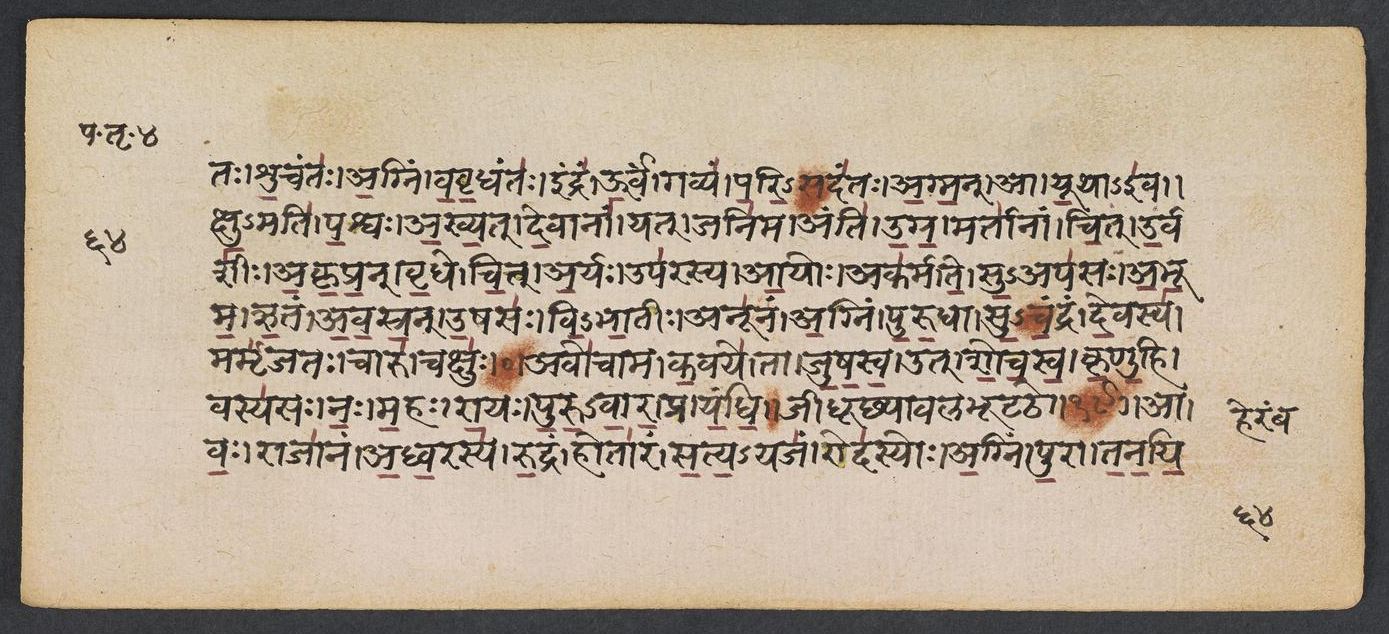
Penn Ms. Coll. 390 Item 41, fol. 255v (numbered 64v by the scribe) (OPenn image 256, upper leaf). Checked on the image: the Rigveda text on this page begins in RV 4.2.17 ‹-dhamantaḥ śucantaḥ agnim vavṛdhantaḥ›. The next page with Rigveda text, fol. 256r (numbered 65r by the scribe), begins in RV 4.3.1 ‹-tanayitnoḥ acittāt hiraṇya-rūpam avase›. Verses 4.2.17-20 end on this page; 4.2.17 begins on fol. 255r (numbered 64r by the scribe).
17su̱karmā̍ṇaḥ su̱ruco̍ deva̱yanto 'yo̱ na de̱vā jani̍mā̱ dhama̍ntaḥ | śu̱canto̍ a̱gniṁ va̍vṛ̱dhanta̱ indra̍m ū̱rvaṁ gavya̍m pari̱ṣada̍nto agman ||
18ā yū̱theva̍ kṣu̱mati̍ pa̱śvo a̍khyad de̱vānā̱ṁ yaj jani̱mānty u̍gra | martā̍nāṁ cid u̱rvaśī̍r akṛpran vṛ̱dhe ci̍d a̱rya upa̍rasyā̱yoḥ ||
19aka̍rma te̱ svapa̍so abhūma ṛ̱tam a̍vasrann u̱ṣaso̍ vibhā̱tīḥ | anū̍nam a̱gnim pu̍ru̱dhā su̍śca̱ndraṁ de̱vasya̱ marmṛ̍jata̱ś cāru̱ cakṣu̍ḥ ||
20e̱tā te̍ agna u̱cathā̍ni ve̱dho 'vo̍cāma ka̱vaye̱ tā ju̍ṣasva | uc cho̍casva kṛṇu̱hi vasya̍so no ma̱ho rā̱yaḥ pu̍ruvāra̱ pra ya̍ndhi ||
Compare: Padapāṭha (word-by-word text written in the manuscript; Sansknet e-text via GRETIL)
17su-karmāṇaḥ | su-rucaḥ | deva-yantaḥ | ayaḥ | na | devāḥ | janima | dhamantaḥ | śucantaḥ | agnim | vavṛdhantaḥ | indram | ūrvam | gavyam | pari-sadantaḥ | agman
18ā | yūthāiva | kṣu-mati | paśvaḥ | akhyat | devānām | yat | janima | anti | ugra | martānām | cit | urvaśīḥ | akṛpran | vṛdhe | cit | aryaḥ | uparasya | āyoḥ
19akarma | te | si-apasaḥ | abhūma | ṛtam | avasran | uṣasaḥ | vi-bhātīḥ | anūnam | agnim | purudhā | su-candram | devasya | marmṛjataḥ | cāru | cakṣuḥ
20etā | te | agne | ucathāni | vedhaḥ | avocāma | kavaye | tā | juṣasva | ut | śocasva | kṛṇuhi | vasyasaḥ | naḥ | mahaḥ | rāyaḥ | puru-vāra | pra | yandhi
17Gods, doing holy acts, devout, resplendent, smelting like ore their human generations. Enkindling Agni and exalting Indra, they came encompassing the stall of cattle.
18Strong One! he marked them-and the Gods before them-like herds of cattle in a foodful pasture. There they moaned forth their strong desire for mortals, to aid the True, the nearest One, the Living.
19We have worked for thee, we have laboured nobly-bright Dawns have shed their light upon our worship- Adding a beauty to the perfect Agni, and the God's beauteous eye that shines for ever.
20Agni, Disposer, we have sung these praises to thee the Wise: do thou accept them gladly. Blaze up on high and ever make us richer. Give us great wealth, O thou whose boons are many.
Notes
- Sanskrit: Aufrecht's edition (1877) with the Vedic accents, as entered by van Nooten and Holland (GRETIL).
- English: Ralph T. H. Griffith, The Hymns of the Rigveda (1889-1892; 2nd ed. 1896-1897), from the VedaWeb digital text; OCR slips in that text were corrected against the printed 2nd edition (data/sources/rigveda/griffith_errata.json).
- Padapāṭha (edition text): Sansknet e-text via GRETIL (CC BY-NC-SA 4.0).
Cite
Sources
- Source: Penn Ms. Coll. 390 Item 41 (undated (catalogued with Penn's 18th-19th c. Vedic manuscripts)), OPenn, Public Domain Mark + Aufrecht's accented text (GRETIL) + Griffith's English (VedaWeb) (holding institution)
- Critical edition: Aufrecht (1877), accented e-text via GRETIL
← previous · → next · v cycle view · l back to library