Rigveda 4.11: To Agni
Introduction
Rigveda 4.11 is a hymn of 6 verses addressed to Agni. It stands in book (maṇḍala) 4, the family book of Vāmadeva. The Rigveda is the oldest collection of Sanskrit hymns, composed in the second half of the second millennium BCE and handed down orally for many centuries before it was written down.
The manuscript shown is Penn Ms. Coll. 390 Item 41 (University of Pennsylvania), an undated paper manuscript of the padapāṭha (the word-by-word recitation text, in which every word is written separately and compounds are split) of the whole Ṛgveda in Devanāgarī, 884 leaves in fascicles, 7-9 lines to the page, accents in red; this hymn stands on fol. 266r-267r. Each section below gives the verses that end on one page; the page boundaries were read on the images (the opening words of every page), not counted out. Where the manuscript is a padapāṭha (the word-by-word recitation text), the section shows Aufrecht's continuous (saṃhitā) text first and, as the edition text, the padapāṭha of the same verses, which is the form written on the page.
How was this verified? (Provenance)
Where on the image
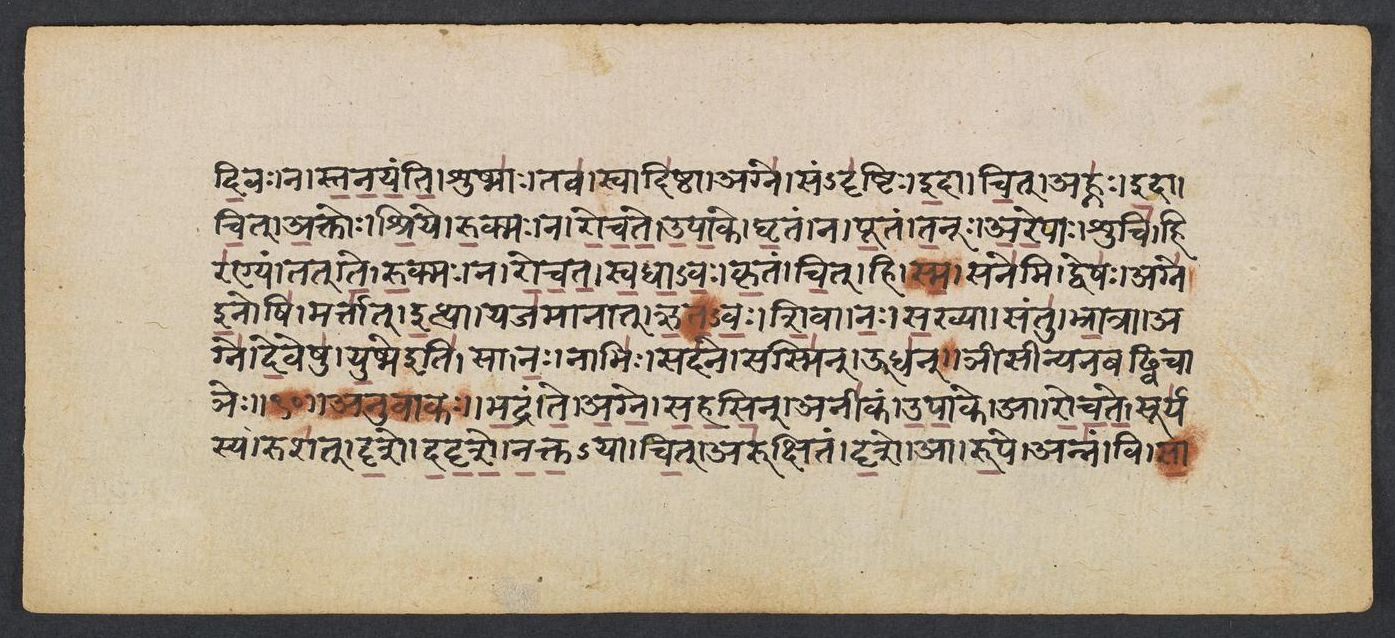
Penn Ms. Coll. 390 Item 41, fol. 266r (numbered 75r by the scribe) (OPenn image 266, lower leaf). Checked on the image: the Rigveda text on this page begins in RV 4.10.4 ‹divaḥ na stanayanti śuṣmāḥ›. The next page with Rigveda text, fol. 266v (numbered 75v by the scribe), begins in RV 4.11.2 ‹-sāhi agne gṛṇate manīṣām›. Verse 4.11.1 ends on this page.
1bha̱draṁ te̍ agne sahasi̱nn anī̍kam upā̱ka ā ro̍cate̱ sūrya̍sya | ruśa̍d dṛ̱śe da̍dṛśe nakta̱yā ci̱d arū̍kṣitaṁ dṛ̱śa ā rū̱pe anna̍m ||
Compare: Padapāṭha (word-by-word text written in the manuscript; Sansknet e-text via GRETIL)
1bhadram | te | agne | sahasin | anīkam | upāke | ā | rocate | sūryasya | ruśat | dṛśe | dadṛśe | nakta-yā | cit | arūkṣitam | dṛśe | ā | rūpe | annam
1THY blessed majesty, victorious Agni, shines brightly in the neighbourhood of Sûrya. Splendid to see, it shows even at nighttime, and food is fair to look on in thy beauty.
Where on the image
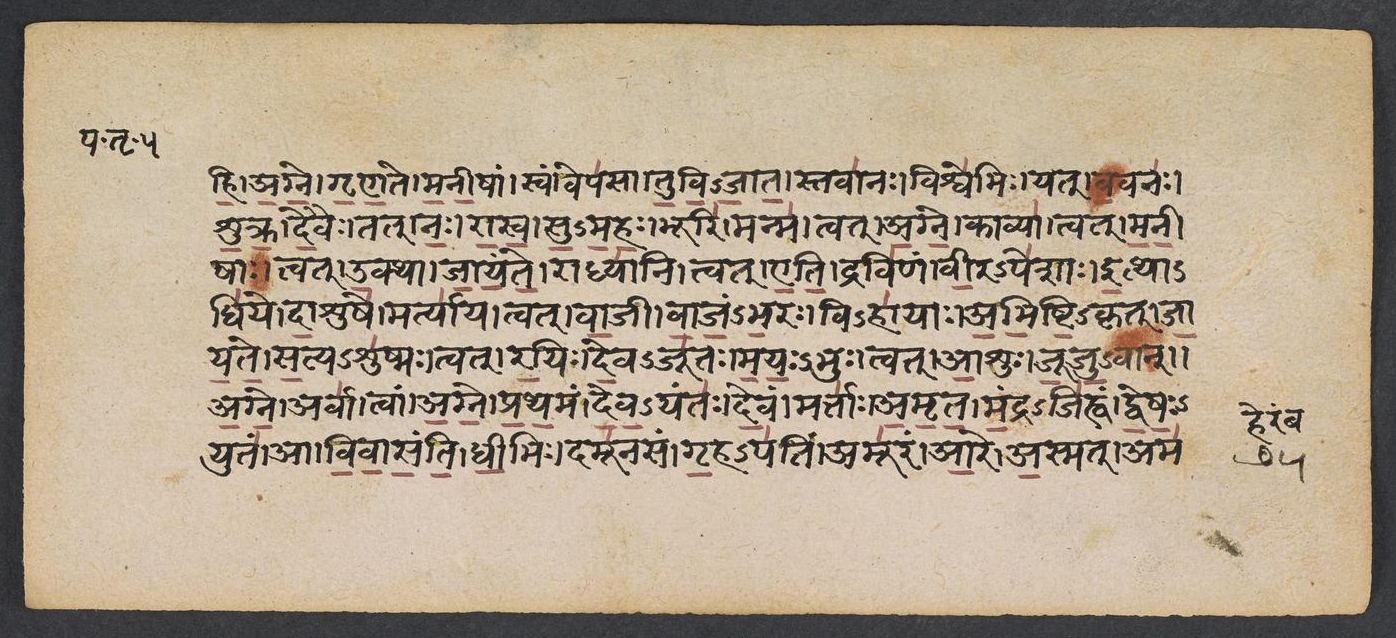
Penn Ms. Coll. 390 Item 41, fol. 266v (numbered 75v by the scribe) (OPenn image 267, upper leaf). Checked on the image: the Rigveda text on this page begins in RV 4.11.2 ‹-sāhi agne gṛṇate manīṣām›. The next page with Rigveda text, fol. 267r (numbered 76r by the scribe), begins in RV 4.11.6 ‹-amatim āre aṃhaḥ āre›. Verses 4.11.2-5 end on this page; 4.11.2 begins on fol. 266r (numbered 75r by the scribe).
2vi ṣā̍hy agne gṛṇa̱te ma̍nī̱ṣāṁ khaṁ vepa̍sā tuvijāta̱ stavā̍naḥ | viśve̍bhi̱r yad vā̱vana̍ḥ śukra de̱vais tan no̍ rāsva sumaho̱ bhūri̱ manma̍ ||
3tvad a̍gne̱ kāvyā̱ tvan ma̍nī̱ṣās tvad u̱kthā jā̍yante̱ rādhyā̍ni | tvad e̍ti̱ dravi̍ṇaṁ vī̱rape̍śā i̱tthādhi̍ye dā̱śuṣe̱ martyā̍ya ||
4tvad vā̱jī vā̍jambha̱ro vihā̍yā abhiṣṭi̱kṛj jā̍yate sa̱tyaśu̍ṣmaḥ | tvad ra̱yir de̱vajū̍to mayo̱bhus tvad ā̱śur jū̍ju̱vām̐ a̍gne̱ arvā̍ ||
5tvām a̍gne pratha̱maṁ de̍va̱yanto̍ de̱vam martā̍ amṛta ma̱ndraji̍hvam | dve̱ṣo̱yuta̱m ā vi̍vāsanti dhī̱bhir damū̍nasaṁ gṛ̱hapa̍ti̱m amū̍ram ||
Compare: Padapāṭha (word-by-word text written in the manuscript; Sansknet e-text via GRETIL)
2vi | sāhi | agne | gṛṇate | manīṣām | kham | vepasā | tuvi-jāta | stavānaḥ | viśvebhiḥ | yat | vavanaḥ | śukra | devaiḥ | tat | naḥ | rāsva | su-mahaḥ | bhūri | manma
3tvat | agne | kāvyā | tvam | manīṣāḥ | tvat | ukthā | jāyante | rādhyāni | tvat | eti | draviṇam | vīra-peśāḥ | itthādhiye | dāśuṣe | martyāya
4tvat | vājī | vājam-bharaḥ | vi-hāyāḥ | abhiṣṭi-kṛt | jāyate | satya-śuṣmaḥ | tvat | rayiḥ | deva-jūtaḥ | mayaḥ-bhuḥ | tvat | āśuḥ | jūju-vān | agne | arvā
5tvām | agne | prathamam | deva-yantaḥ | devam | bhartā | amṛta | mandra-jihvam | dveṣaḥ-yutam | ā | vivāsanti | dhībhiḥ | damūnasam | gṛha-patim | amūram
2Agni, disclose his thought for him who singeth, the well, Strong God! while thou art praised with fervour. Vouchsafe to us that powerful hymn, O Mighty, which, Radiant One! with all the Gods thou lovest.
3From thee, O Agni, springs poetic wisdom, from thee come thoughts and hymns of praise that prosper; From thee flows wealth, with heroes to adorn it, to the true-hearted man who gives oblation.
4From thee the hero springs who wins the booty, bringer of help, mighty, of real courage. From thee comes wealth, sent by the Gods, bliss-giving; Agni, from thee the fleet impetuous charger.
5Immortal Agni, thee whose voice is pleasant, as first in rank, as God, religious mortals Invite with hyrnns; thee who removest hatred, Friend of the Home, the household's Lord, unerring.
Where on the image
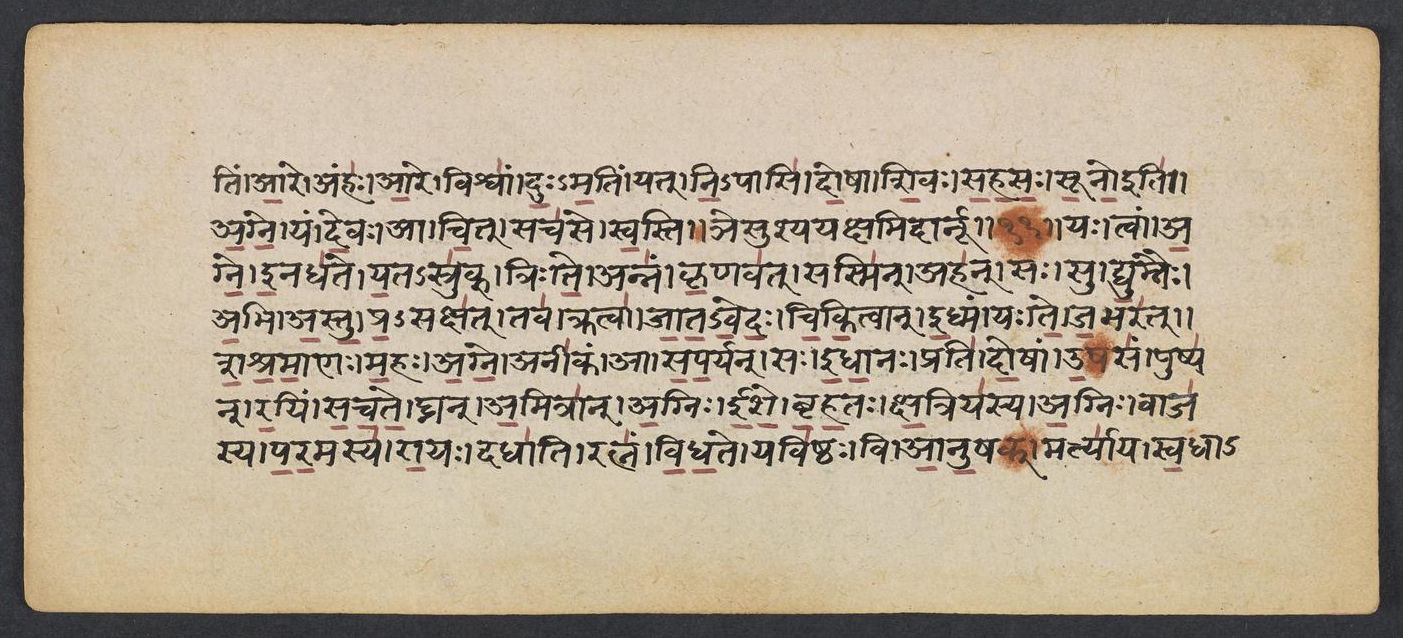
Penn Ms. Coll. 390 Item 41, fol. 267r (numbered 76r by the scribe) (OPenn image 267, lower leaf). Checked on the image: the Rigveda text on this page begins in RV 4.11.6 ‹-amatim āre aṃhaḥ āre›. The next page with Rigveda text, fol. 267v (numbered 76v by the scribe), begins in RV 4.12.3 ‹-svadhāvān›. Verse 4.11.6 ends on this page; 4.11.6 begins on fol. 266v (numbered 75v by the scribe).
6ā̱re a̱smad ama̍tim ā̱re aṁha̍ ā̱re viśvā̍ṁ durma̱tiṁ yan ni̱pāsi̍ | do̱ṣā śi̱vaḥ sa̍hasaḥ sūno agne̱ yaṁ de̱va ā ci̱t saca̍se sva̱sti ||
Compare: Padapāṭha (word-by-word text written in the manuscript; Sansknet e-text via GRETIL)
6āre | asmat | amatim | āre | aṃhaḥ | āre | viśvām | duḥ-matim | yat | ni-pāsi | doṣā | śivaḥ | sahasaḥ | sūno iti | agne | yam | devaḥ | ā | cit | sacase | svasti
6Far from us thou removest want and sorrow, far from us all ill-will when thou protectest. Son of Strength, Agni, blest is he at evening, whom thou as God attendest for his welfare.
Notes
- Sanskrit: Aufrecht's edition (1877) with the Vedic accents, as entered by van Nooten and Holland (GRETIL).
- English: Ralph T. H. Griffith, The Hymns of the Rigveda (1889-1892; 2nd ed. 1896-1897), from the VedaWeb digital text; OCR slips in that text were corrected against the printed 2nd edition (data/sources/rigveda/griffith_errata.json).
- Padapāṭha (edition text): Sansknet e-text via GRETIL (CC BY-NC-SA 4.0).
Cite
Sources
- Source: Penn Ms. Coll. 390 Item 41 (undated (catalogued with Penn's 18th-19th c. Vedic manuscripts)), OPenn, Public Domain Mark + Aufrecht's accented text (GRETIL) + Griffith's English (VedaWeb) (holding institution)
- Critical edition: Aufrecht (1877), accented e-text via GRETIL
← previous · → next · v cycle view · l back to library