Rigveda 4.12: To Agni
Introduction
Rigveda 4.12 is a hymn of 6 verses addressed to Agni. It stands in book (maṇḍala) 4, the family book of Vāmadeva. The Rigveda is the oldest collection of Sanskrit hymns, composed in the second half of the second millennium BCE and handed down orally for many centuries before it was written down.
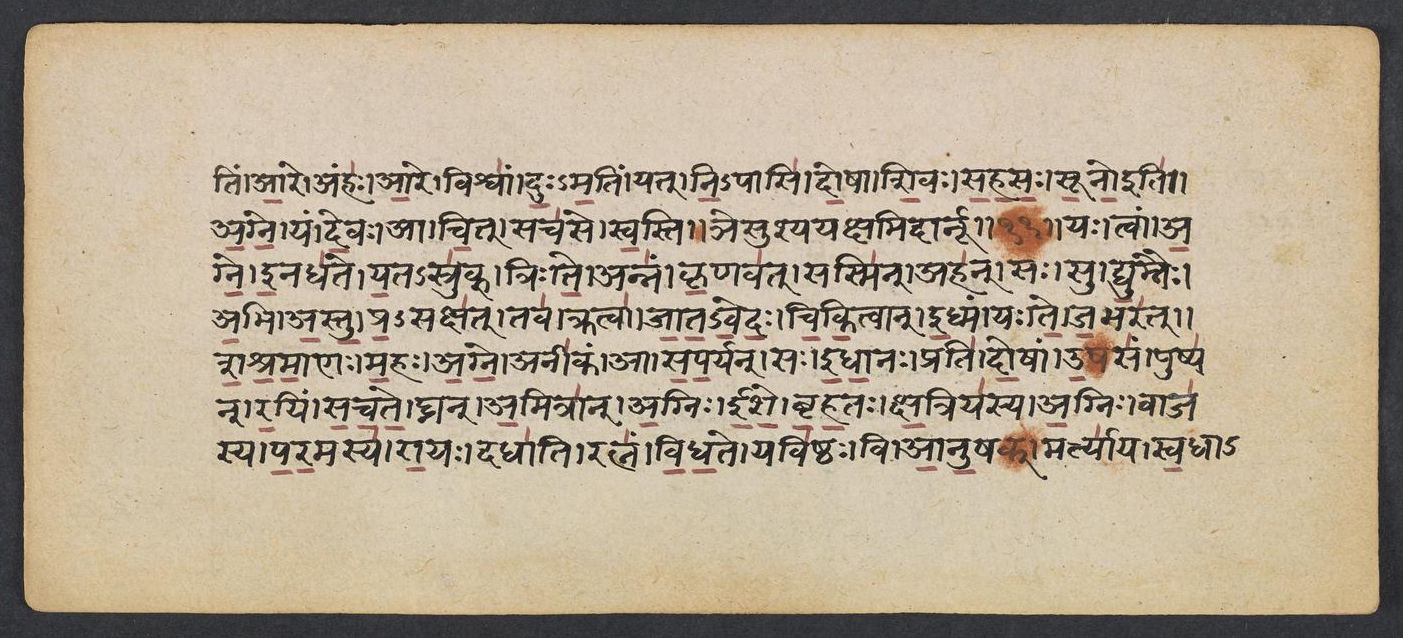
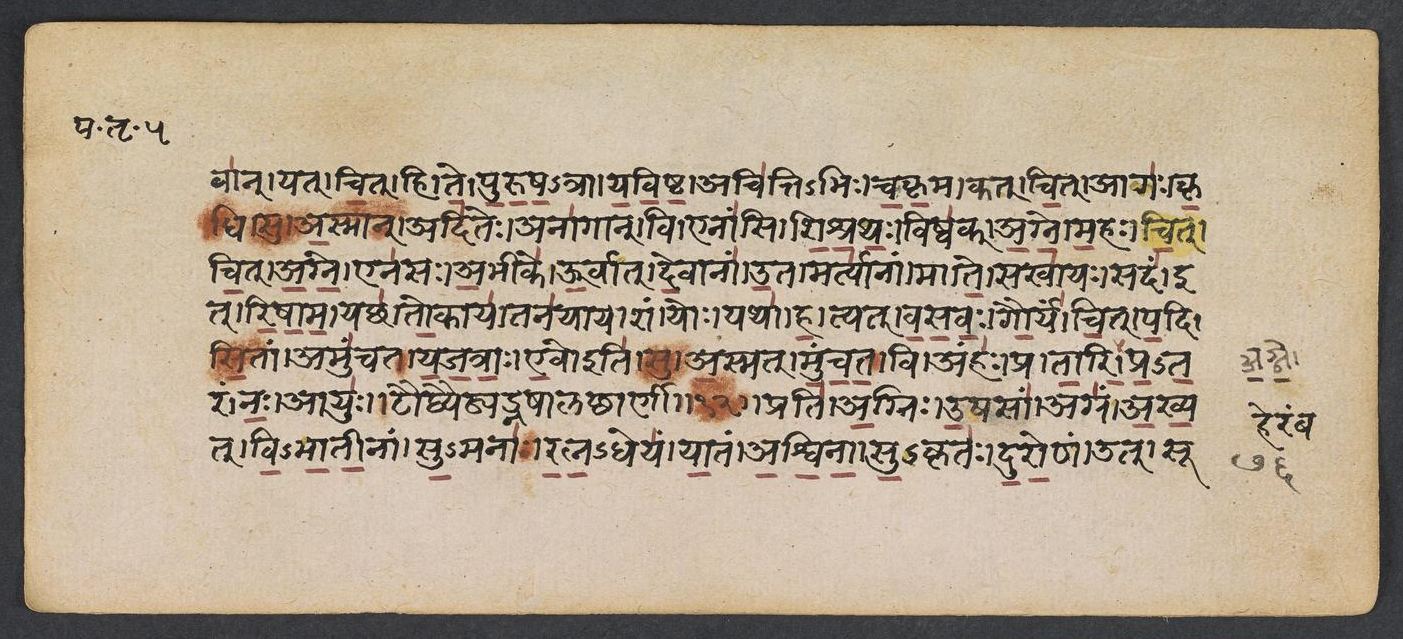
The manuscript shown is Penn Ms. Coll. 390 Item 41 (University of Pennsylvania), an undated paper manuscript of the padapāṭha (the word-by-word recitation text, in which every word is written separately and compounds are split) of the whole Ṛgveda in Devanāgarī, 884 leaves in fascicles, 7-9 lines to the page, accents in red; this hymn stands on fol. 267r-267v. Each section below gives the verses that end on one page; the page boundaries were read on the images (the opening words of every page), not counted out. Where the manuscript is a padapāṭha (the word-by-word recitation text), the section shows Aufrecht's continuous (saṃhitā) text first and, as the edition text, the padapāṭha of the same verses, which is the form written on the page.
How was this verified? (Provenance)
Where on the image
Penn Ms. Coll. 390 Item 41, fol. 267r (numbered 76r by the scribe) (OPenn image 267, lower leaf). Checked on the image: the Rigveda text on this page begins in RV 4.11.6 ‹-amatim āre aṃhaḥ āre›. The next page with Rigveda text, fol. 267v (numbered 76v by the scribe), begins in RV 4.12.3 ‹-svadhāvān›. Verses 4.12.1-2 end on this page.
1yas tvām a̍gna i̱nadha̍te ya̱tasru̱k tris te̱ anna̍ṁ kṛ̱ṇava̱t sasmi̱nn aha̍n | sa su dyu̱mnair a̱bhy a̍stu pra̱sakṣa̱t tava̱ kratvā̍ jātavedaś ciki̱tvān ||
2i̱dhmaṁ yas te̍ ja̱bhara̍c chaśramā̱ṇo ma̱ho a̍gne̱ anī̍ka̱m ā sa̍pa̱ryan | sa i̍dhā̱naḥ prati̍ do̱ṣām u̱ṣāsa̱m puṣya̍n ra̱yiṁ sa̍cate̱ ghnann a̱mitrā̍n ||
Compare: Padapāṭha (word-by-word text written in the manuscript; Sansknet e-text via GRETIL)
1yaḥ | tvām | agne | inadhate | yata-sruk | triḥ | te | annam | kṛṇavat | sasmin | ahan | saḥ | su | dyumnaiḥ | abhi | astu | pra-sakṣat | tava | kratvā | jāta-vedaḥ | cikitvān
2idhmam | yaḥ | te | jabharat | śaśramāṇaḥ | mahaḥ | agne | anīkam | ā | saparyan | saḥ | idhānaḥ | prati | doṣām | uṣasam | puṣyan | rayim | sacate | ghnan | amitrān
1WHOSO enkindles thee, with lifted ladle, and thrice this day offers thee food, O Agni, May he excel, triumphant through thy splendours, wise through thy mental power, O Jâtavedas.
2Whoso with toil and trouble brings thee fuel, serving the majesty of mighty Agni, He, kindling thee at evening and at morning, prospers, and comes to wealth, and slays his foemen.
Where on the image
Penn Ms. Coll. 390 Item 41, fol. 267v (numbered 76v by the scribe) (OPenn image 268, upper leaf). Checked on the image: the Rigveda text on this page begins in RV 4.12.3 ‹-svadhāvān›. The next page with Rigveda text, fol. 268r (numbered 77r by the scribe), begins in RV 4.13.1 ‹-sūryaḥ jyotiṣā devaḥ eti›. Verses 4.12.3-6 end on this page; 4.12.3 begins on fol. 267r (numbered 76r by the scribe).
3a̱gnir ī̍śe bṛha̱taḥ kṣa̱triya̍syā̱gnir vāja̍sya para̱masya̍ rā̱yaḥ | dadhā̍ti̱ ratna̍ṁ vidha̱te yavi̍ṣṭho̱ vy ā̍nu̱ṣaṅ martyā̍ya sva̱dhāvā̍n ||
4yac ci̱d dhi te̍ puruṣa̱trā ya̍vi̱ṣṭhāci̍ttibhiś cakṛ̱mā kac ci̱d āga̍ḥ | kṛ̱dhī ṣv a1̱̍smām̐ adi̍te̱r anā̍gā̱n vy enā̍ṁsi śiśratho̱ viṣva̍g agne ||
5ma̱haś ci̍d agna̱ ena̍so a̱bhīka̍ ū̱rvād de̱vānā̍m u̱ta martyā̍nām | mā te̱ sakhā̍ya̱ḥ sada̱m id ri̍ṣāma̱ yacchā̍ to̱kāya̱ tana̍yāya̱ śaṁ yoḥ ||
6yathā̍ ha̱ tyad va̍savo gau̱rya̍ṁ cit pa̱di ṣi̱tām amu̍ñcatā yajatrāḥ | e̱vo ṣv a1̱̍sman mu̍ñcatā̱ vy aṁha̱ḥ pra tā̍ry agne prata̱raṁ na̱ āyu̍ḥ ||
Compare: Padapāṭha (word-by-word text written in the manuscript; Sansknet e-text via GRETIL)
3agniḥ | āśe | bṛhataḥ | kṣatriyasya | agniḥ | vājasya | paramasya | rāyaḥ | dadhāti | ratnam | vidhate | yaviṣṭhaḥ | vi | ānuṣak | martyāya | svadhāvān
4yat | cit | hi | te | puruṣa-trā | yaviṣṭha | acitti-bhiḥ | cakṛma | kat | cit | āgaḥ | kṛdhi | su | asmān | aditeḥ | anāgān | vi | enāṃsi | śiśrathaḥ | viṣvak | agne
5mahaḥ | cit | agne | enasaḥ | abhīke | ūrvāt | devānām | uta | martyānām | mā | te | sakhāyaḥ | sadam | it | riṣāma | yaccha | tokāya | tanayāya | śam | yoḥ
6yathā | ha | tyat | vasavaḥ | gauryam | cit | padi | sitām | amuñcata | yajatrāḥ | evo iti | su | asmat | muñcata | vi | aṃhaḥ | pra | tāri | agne | pra-taram | naḥ | āyuḥ
3Agni is Master of sublime dominion, Agni is Lord of strength and lofty riches. Straightway the self-reliant God, Most Youthful, gives treasures to the mortal who adores him.
4Most Youthful God, whatever sin, through folly, we here, as human beings, have committed, In sight of Aditi make thou us sinless remit, entirely, Agni, our offences.
5Even in the presence of great sin, O Agni, free us from prison of the Gods or mortals. Never may we who are thy friends be injured: grant health and strength unto our seed and offspring.
6Even as ye here, Gods Excellent and Holy, have loosed the cow that by the foot was tethered, So also set us free from this affliction long let our life, O Agni, be extended.
Notes
- Sanskrit: Aufrecht's edition (1877) with the Vedic accents, as entered by van Nooten and Holland (GRETIL).
- English: Ralph T. H. Griffith, The Hymns of the Rigveda (1889-1892; 2nd ed. 1896-1897), from the VedaWeb digital text; OCR slips in that text were corrected against the printed 2nd edition (data/sources/rigveda/griffith_errata.json).
- Padapāṭha (edition text): Sansknet e-text via GRETIL (CC BY-NC-SA 4.0).
Cite
Sources
- Source: Penn Ms. Coll. 390 Item 41 (undated (catalogued with Penn's 18th-19th c. Vedic manuscripts)), OPenn, Public Domain Mark + Aufrecht's accented text (GRETIL) + Griffith's English (VedaWeb) (holding institution)
- Critical edition: Aufrecht (1877), accented e-text via GRETIL
← previous · → next · v cycle view · l back to library