Rigveda 4.16: To Indra
Introduction
Rigveda 4.16 is a hymn of 21 verses addressed to Indra. It stands in book (maṇḍala) 4, the family book of Vāmadeva. The Rigveda is the oldest collection of Sanskrit hymns, composed in the second half of the second millennium BCE and handed down orally for many centuries before it was written down.
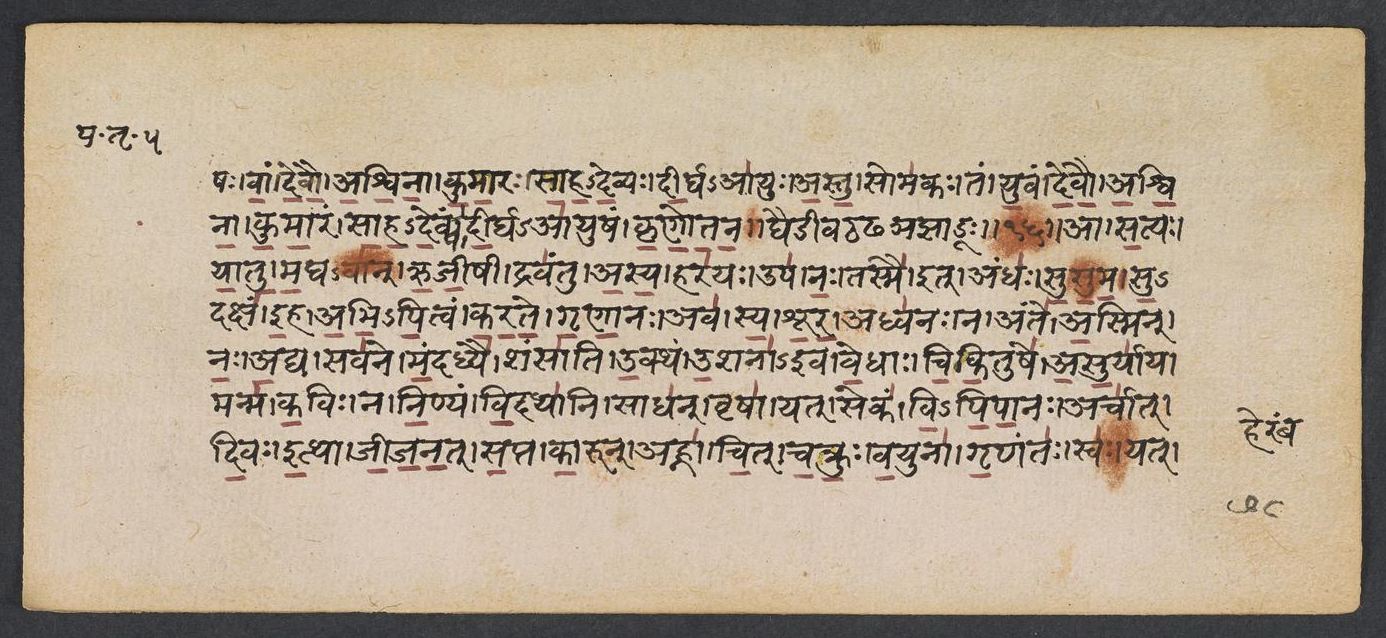
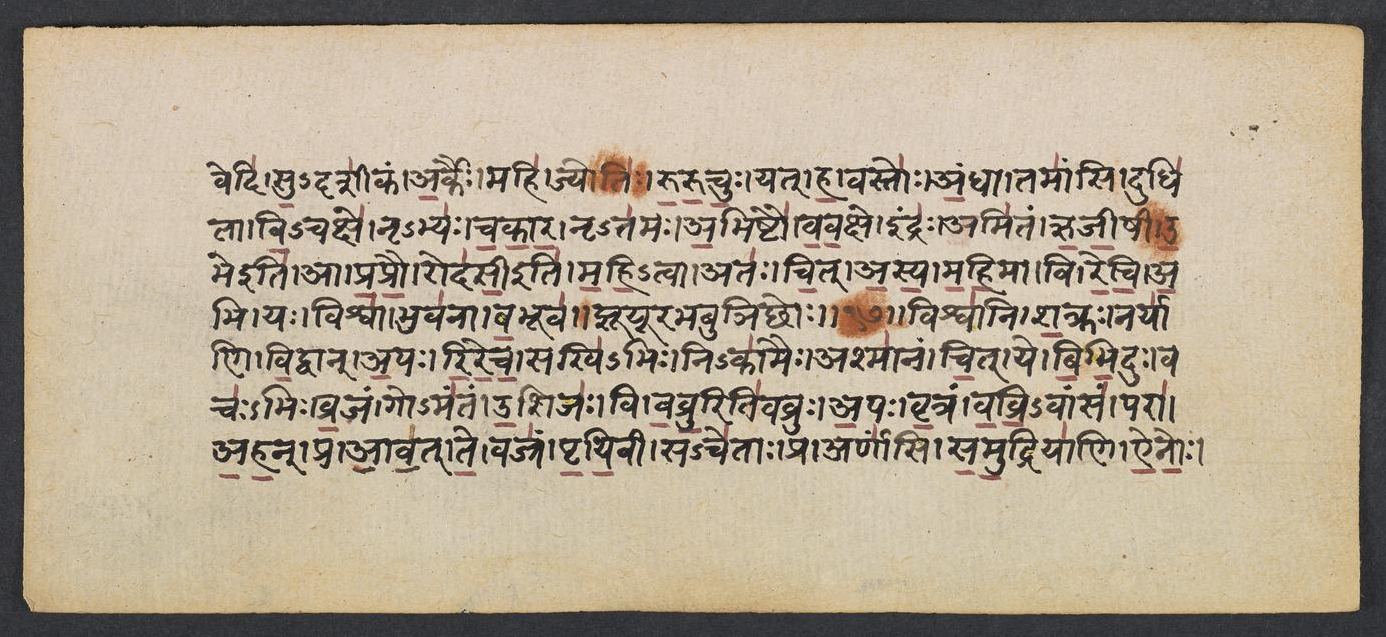
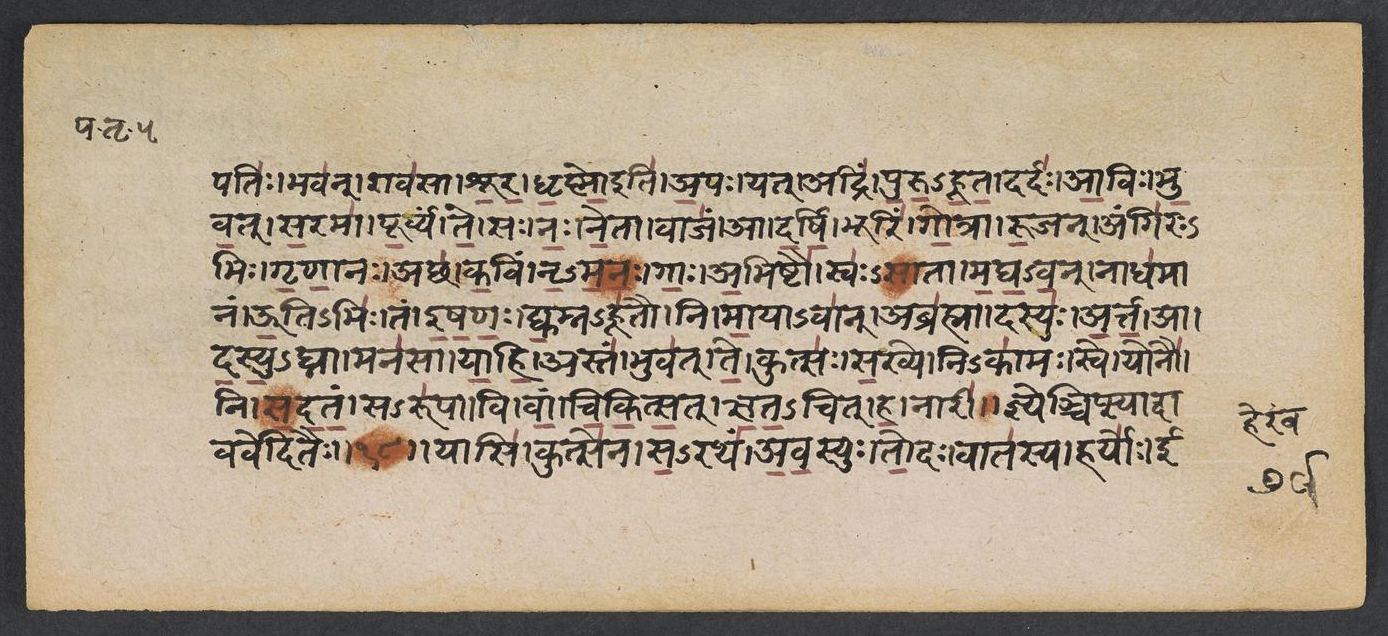
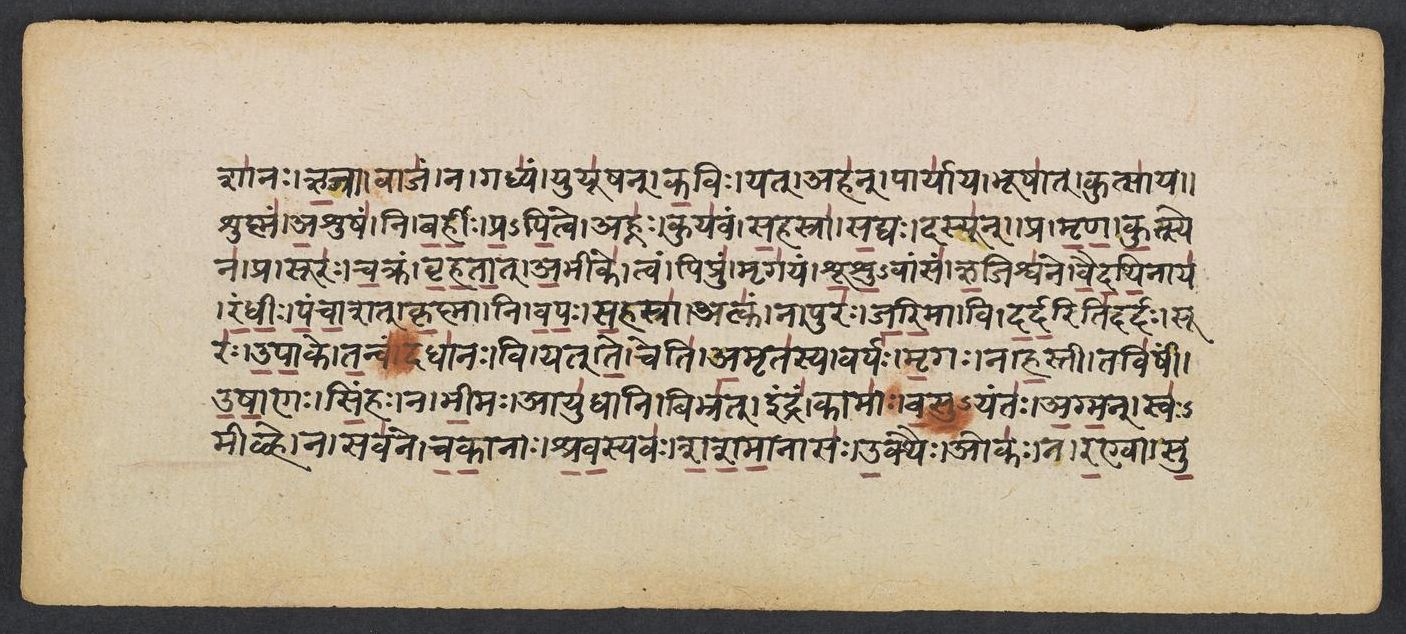
The manuscript shown is Penn Ms. Coll. 390 Item 41 (University of Pennsylvania), an undated paper manuscript of the padapāṭha (the word-by-word recitation text, in which every word is written separately and compounds are split) of the whole Ṛgveda in Devanāgarī, 884 leaves in fascicles, 7-9 lines to the page, accents in red; this hymn stands on fol. 269v-272r. Each section below gives the verses that end on one page; the page boundaries were read on the images (the opening words of every page), not counted out. Where the manuscript is a padapāṭha (the word-by-word recitation text), the section shows Aufrecht's continuous (saṃhitā) text first and, as the edition text, the padapāṭha of the same verses, which is the form written on the page.
How was this verified? (Provenance)
Where on the image
Penn Ms. Coll. 390 Item 41, fol. 269v (numbered 78v by the scribe) (OPenn image 270, upper leaf). Checked on the image: the Rigveda text on this page begins in RV 4.15.9 ‹eṣaḥ vām devau aśvinā›. The next page with Rigveda text, fol. 270r (numbered 79r by the scribe), begins in RV 4.16.4 ‹vedi su-dṛśīkam arkaiḥ mahi›. Verses 4.16.1-3 end on this page.
1ā sa̱tyo yā̍tu ma̱ghavā̍m̐ ṛjī̱ṣī drava̍ntv asya̱ hara̍ya̱ upa̍ naḥ | tasmā̱ id andha̍ḥ suṣumā su̱dakṣa̍m i̱hābhi̍pi̱tvaṁ ka̍rate gṛṇā̱naḥ ||
2ava̍ sya śū̱rādhva̍no̱ nānte̱ 'smin no̍ a̱dya sava̍ne ma̱ndadhyai̍ | śaṁsā̍ty u̱ktham u̱śane̍va ve̱dhāś ci̍ki̱tuṣe̍ asu̱ryā̍ya̱ manma̍ ||
3ka̱vir na ni̱ṇyaṁ vi̱dathā̍ni̱ sādha̱n vṛṣā̱ yat seka̍ṁ vipipā̱no arcā̍t | di̱va i̱tthā jī̍janat sa̱pta kā̱rūn ahnā̍ cic cakrur va̱yunā̍ gṛ̱ṇanta̍ḥ ||
Compare: Padapāṭha (word-by-word text written in the manuscript; Sansknet e-text via GRETIL)
1ā | satyaḥ | yātu | magha-vān | ṛjīṣī | dravantu | asya | harayaḥ | upa | naḥ | tasmai | it | andhaḥ | susuma | su-dakṣam | iha | abhi-pitvam | karate | gṛṇānaḥ
2ava | sya | śūra | adhvanaḥ | na | ante | asmin | naḥ | adya | savane | mandadhyai | śaṃsāti | uktham | uśanāiva | vedhāḥ | cikituṣe | asuryāya | manma
3kaviḥ | na | niṇyam | vidathāni | sādhan | vṛṣā | yat | sekam | vi-pipānaḥ | arcāt | divaḥ | itthā | jījanat | sapta | kārūn | ahnā | cit | cakruḥ | vayunā | gṛṇantaḥ
1IMPETUOUS, true, let Maghavan come hither, and let his Tawny Coursers speed to reach us. For him have we pressed juice exceeding potent: here, praised with song, let him effect his visit.
2Unyoke, as at thy journey's end, O Hero, to gladden thee today at this libation. Like Uṣanâ, the priest a laud shall utter, a hymn to thee, the Lord Divine, who markest.
3When the Bull, quaffing, praises our libation, as a sage paying holy rites in secret, Seven singers here from heaven hath he begotten, who e'en by day have wrought their works while singing.
Where on the image
Penn Ms. Coll. 390 Item 41, fol. 270r (numbered 79r by the scribe) (OPenn image 270, lower leaf). Checked on the image: the Rigveda text on this page begins in RV 4.16.4 ‹vedi su-dṛśīkam arkaiḥ mahi›. The next page with Rigveda text, fol. 270v (numbered 79v by the scribe), begins in RV 4.16.7 ‹-ainoḥ patiḥ bhavan śavasā›. Verses 4.16.4-6 end on this page; 4.16.4 begins on fol. 269v (numbered 78v by the scribe).
4sva1̱̍r yad vedi̍ su̱dṛśī̍kam a̱rkair mahi̱ jyotī̍ rurucu̱r yad dha̱ vasto̍ḥ | a̱ndhā tamā̍ṁsi̱ dudhi̍tā vi̱cakṣe̱ nṛbhya̍ś cakāra̱ nṛta̍mo a̱bhiṣṭau̍ ||
5va̱va̱kṣa indro̱ ami̍tam ṛjī̱ṣy u1̱̍bhe ā pa̍prau̱ roda̍sī mahi̱tvā | ata̍ś cid asya mahi̱mā vi re̍cy a̱bhi yo viśvā̱ bhuva̍nā ba̱bhūva̍ ||
6viśvā̍ni śa̱kro naryā̍ṇi vi̱dvān a̱po ri̍reca̱ sakhi̍bhi̱r nikā̍maiḥ | aśmā̍naṁ ci̱d ye bi̍bhi̱dur vaco̍bhir vra̱jaṁ goma̍ntam u̱śijo̱ vi va̍vruḥ ||
Compare: Padapāṭha (word-by-word text written in the manuscript; Sansknet e-text via GRETIL)
4svaḥ | yat | vedi | su-dṛśīkam | arkaiḥ | mahi | jyotiḥ | rurucuḥ | yat | ha | vastoḥ | andhā | tamāṃsi | dudhitā | vi-cakṣe | nṛ-bhyaḥ | cakāra | nṛ-tamaḥ | abhiṣṭau
5vavakṣe | indraḥ | amitam | ṛjīṣī | ubhe iti | ā | paprau | rodasī iti | mahi-tvā | ataḥ | cit | asya | mahimā | vi | reci | abhi | yaḥ | viśvā | bhuvanā | babhūva
6viśvāni | śakraḥ | naryāṇi | vidvān | apaḥ | rireca | sakhi-bhiḥ | ni-kāmaiḥ | aśmānam | cit | ye | bibhiduḥ | vacaḥ-bhiḥ | vrajam | go--mantam | uśijaḥ | vi | vavruritivavruḥ
4When heaven's fair light by hymns was made apparent (they made great splendour shine at break of morning), He with his succour, best of Heroes, scattered the blinding darkness so that men saw clearly.
5Indra, Impetuous One, hath waxed immensely: he with his vastness hath filled earth and heaven. E'en beyond this his majesty extendeth who hath exceeded all the worlds in greatness.
6Ṣakra who knoweth well all human actions hath with his eager Friends let loose the waters. They with their songs cleft e'en the mountain open and willingly disclosed the stall of cattle.
Where on the image
Penn Ms. Coll. 390 Item 41, fol. 270v (numbered 79v by the scribe) (OPenn image 271, upper leaf). Checked on the image: the Rigveda text on this page begins in RV 4.16.7 ‹-ainoḥ patiḥ bhavan śavasā›. The next page with Rigveda text, fol. 271r (numbered 80r by the scribe), begins in RV 4.16.11 ‹-īśānaḥ ṛjrā vājam na›. Verses 4.16.7-10 end on this page; 4.16.7 begins on fol. 270r (numbered 79r by the scribe).
7a̱po vṛ̱traṁ va̍vri̱vāṁsa̱m parā̍ha̱n prāva̍t te̱ vajra̍m pṛthi̱vī sace̍tāḥ | prārṇā̍ṁsi samu̱driyā̍ṇy aino̱ḥ pati̱r bhava̱ñ chava̍sā śūra dhṛṣṇo ||
8a̱po yad adri̍m puruhūta̱ darda̍r ā̱vir bhu̍vat sa̱ramā̍ pū̱rvyaṁ te̍ | sa no̍ ne̱tā vāja̱m ā da̍rṣi̱ bhūri̍ṁ go̱trā ru̱jann aṅgi̍robhir gṛṇā̱naḥ ||
9acchā̍ ka̱viṁ nṛ̍maṇo gā a̱bhiṣṭau̱ sva̍rṣātā maghava̱n nādha̍mānam | ū̱tibhi̱s tam i̍ṣaṇo dyu̱mnahū̍tau̱ ni mā̱yāvā̱n abra̍hmā̱ dasyu̍r arta ||
10ā da̍syu̱ghnā mana̍sā yā̱hy asta̱m bhuva̍t te̱ kutsa̍ḥ sa̱khye nikā̍maḥ | sve yonau̱ ni ṣa̍data̱ṁ sarū̍pā̱ vi vā̍ṁ cikitsad ṛta̱cid dha̱ nārī̍ ||
Compare: Padapāṭha (word-by-word text written in the manuscript; Sansknet e-text via GRETIL)
7apaḥ | vṛtram | vavri-vāṃsam | parā | ahan | pra | āvat | te | vajram | pṛthivī | sa-cetāḥ | pra | arṇāsi | samudriyāṇi | ainoḥ | patiḥ | bhavan | śavasā | śūra | dhṛṣṇo iti
8apaḥ | yat | adrim | puru-hūta | dardaḥ | āviḥ | bhuvat | saramā | pūrvyam | te | saḥ | naḥ | netā | vājam | ā | darṣi | bhūrim | gotrā | rujan | aṅgiraḥ-bhiḥ | gṛṇānaḥ
9accha | kavim | nṛ-manaḥ | gāḥ | abhiṣṭau | svaḥ-sātā | magha-van | nādamānam | ūti-bhiḥ | tam | iṣaṇaḥ | dyumna-hūtau | ni | māyāvān | abrahmā | dasyuḥ | arta
10ā | dasyu-ghnā | manasā | yāhi | astam | bhuvat | te | kutsaḥ | sakhye | ni-kāmaḥ | sve | yonau | ni | sadatam | sa-rūpā | vi | vām | cikitsat | ṛta-cit | ha | nārī
7He smote away the floods' obstructer, Vr̥itra; Earth, conscious, lent her aid to speed thy thunder. Thou sentest forth the waters of the ocean, as Lord through power and might, O daring Hero.
8When, Much-invoked! the water's rock thou cleftest, Saramâ showed herself and went before thee. Hymned by Angirases, bursting the cowstalls, much strength thou foundest for us as our leader.
9Come, Maghavan, Friend of Man, to aid the singer imploring thee in battle for the sunlight. Speed him with help in his inspired invokings: down sink the sorcerer, the prayerless Dasyu.
10Come to our home resolved to slay the Dasyu: Kutsa longed eagerly to win thy friendship. Alike in form ye both sate in his dwelling the faithful Lady was in doubt between you.
Where on the image
Penn Ms. Coll. 390 Item 41, fol. 271r (numbered 80r by the scribe) (OPenn image 271, lower leaf). Checked on the image: the Rigveda text on this page begins in RV 4.16.11 ‹-īśānaḥ ṛjrā vājam na›. The next page with Rigveda text, fol. 271v (numbered 80v by the scribe), begins in RV 4.16.15 ‹-sudṛśī-iva puṣṭiḥ›. Verses 4.16.11-14 end on this page; 4.16.11 begins on fol. 270v (numbered 79v by the scribe).
11yāsi̱ kutse̍na sa̱ratha̍m ava̱syus to̱do vāta̍sya̱ haryo̱r īśā̍naḥ | ṛ̱jrā vāja̱ṁ na gadhya̱ṁ yuyū̍ṣan ka̱vir yad aha̱n pāryā̍ya̱ bhūṣā̍t ||
12kutsā̍ya̱ śuṣṇa̍m a̱śuṣa̱ṁ ni ba̍rhīḥ prapi̱tve ahna̱ḥ kuya̍vaṁ sa̱hasrā̍ | sa̱dyo dasyū̱n pra mṛ̍ṇa ku̱tsyena̱ pra sūra̍ś ca̱kraṁ vṛ̍hatād a̱bhīke̍ ||
13tvam pipru̱m mṛga̍yaṁ śūśu̱vāṁsa̍m ṛ̱jiśva̍ne vaidathi̱nāya̍ randhīḥ | pa̱ñcā̱śat kṛ̱ṣṇā ni va̍paḥ sa̱hasrātka̱ṁ na puro̍ jari̱mā vi da̍rdaḥ ||
14sūra̍ upā̱ke ta̱nva1̱̍ṁ dadhā̍no̱ vi yat te̱ cety a̱mṛta̍sya̱ varpa̍ḥ | mṛ̱go na ha̱stī tavi̍ṣīm uṣā̱ṇaḥ si̱ṁho na bhī̱ma āyu̍dhāni̱ bibhra̍t ||
Compare: Padapāṭha (word-by-word text written in the manuscript; Sansknet e-text via GRETIL)
11yāsi | kutsena | sa-ratham | avasyuḥ | todaḥ | vātasya | haryoḥ | īśānaḥ | ṛjrā | vājam | na | gadhyam | yuyūṣan | kaviḥ | yat | ahan | pāryāya | bhūṣāt
12kutsāya | śuṣṇam | aśuṣam | ni | barhīḥ | pra-pitve | ahnaḥ | kuyavam | sahasrā | sadyaḥ | dasyūn | pra | mṛṇa | kutsyena | pra | sūraḥ | cakram | vṛhatāt | abhīke
13tvam | piprum | mṛgayam | śūśu-vāṃsam | ṛjiśvane | vaidathināya | randhīḥ | pañcāśat | kṛṣṇā | ni | vapaḥ | sahasrā | ātkam | na | puraḥ | jarimā | vi | dardaḥ
14sūraḥ | upāke | tanvam | dadhānaḥ | vi | yat | te | ceti | amṛtasya | varpaḥ | mṛgaḥ | na | hastī | taviṣīm | uṣāṇaḥ | siṃhaḥ | na | bhīmaḥ | āyudhāni | babhrat
11Thou comest, fain to succour him, with Kutsa,– a goad that masters both the Wind-God's horses, That, holding the brown steeds like spoil for capture, the sage may on the final day be present.
12For Kutsa, with thy thousand, thou at day-break didst hurl down greedy Ṣushṇa, foe of harvest. Quickly with Kutsa's friend destroy the Dasyus, and roll the chariot-wheel of Sarya near us.
13Thou to the son of Vidathin, R̥ijiṣvan, gavest up mighty Mr̥igaya and Pipru. Thou smotest down the swarthy fifty thousand, and rentest forts as age consumes a garment.
14What time thou settest near the Sun thy body, thy form, Immortal One, is seen expanding: Thou a wild elephant with might invested. like a dread lion as thou wieldest weapons.
Where on the image
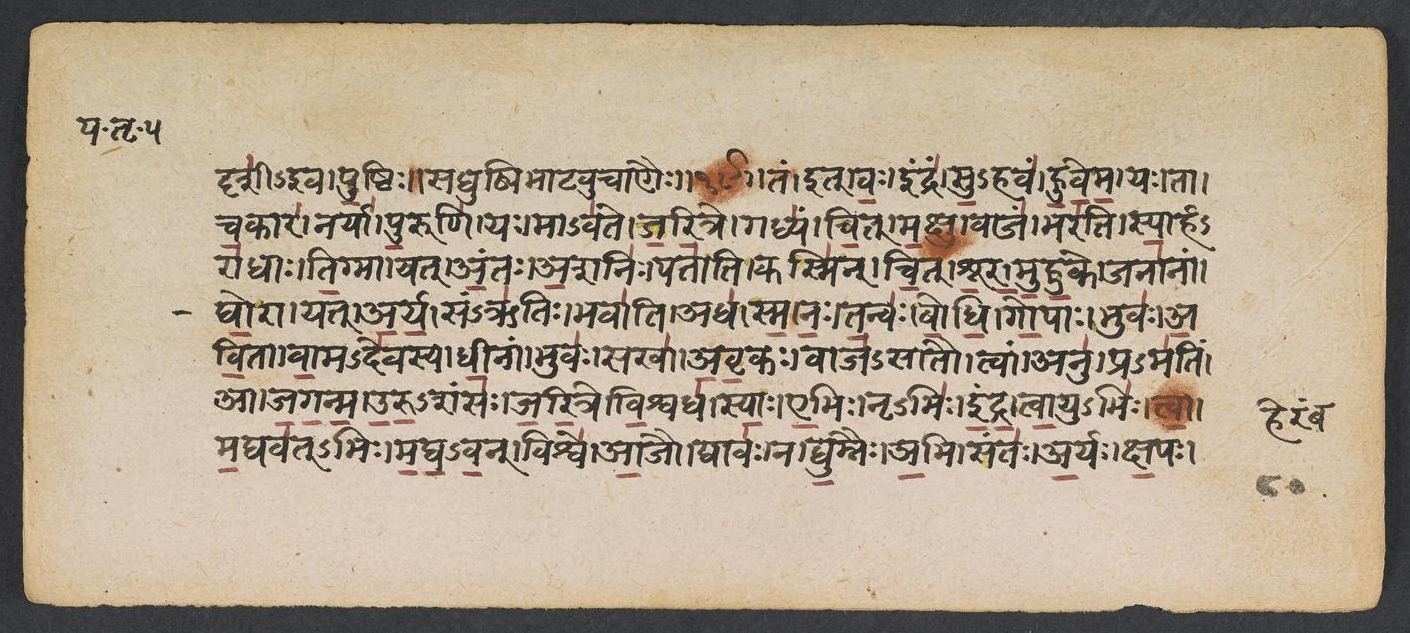
Penn Ms. Coll. 390 Item 41, fol. 271v (numbered 80v by the scribe) (OPenn image 272, upper leaf). Checked on the image: the Rigveda text on this page begins in RV 4.16.15 ‹-sudṛśī-iva puṣṭiḥ›. The next page with Rigveda text, fol. 272r (numbered 81r by the scribe), begins in RV 4.16.19 ‹madema śaradaḥ ca pūrvīḥ›. Verses 4.16.15-18 end on this page; 4.16.15 begins on fol. 271r (numbered 80r by the scribe).
15indra̱ṁ kāmā̍ vasū̱yanto̍ agma̱n sva̍rmīḻhe̱ na sava̍ne cakā̱nāḥ | śra̱va̱syava̍ḥ śaśamā̱nāsa̍ u̱kthair oko̱ na ra̱ṇvā su̱dṛśī̍va pu̱ṣṭiḥ ||
16tam id va̱ indra̍ṁ su̱hava̍ṁ huvema̱ yas tā ca̱kāra̱ naryā̍ pu̱rūṇi̍ | yo māva̍te jari̱tre gadhya̍ṁ cin ma̱kṣū vāja̱m bhara̍ti spā̱rharā̍dhāḥ ||
17ti̱gmā yad a̱ntar a̱śani̱ḥ patā̍ti̱ kasmi̍ñ cic chūra muhu̱ke janā̍nām | gho̱rā yad a̍rya̱ samṛ̍ti̱r bhavā̱ty adha̍ smā nas ta̱nvo̍ bodhi go̱pāḥ ||
18bhuvo̍ 'vi̱tā vā̱made̍vasya dhī̱nām bhuva̱ḥ sakhā̍vṛ̱ko vāja̍sātau | tvām anu̱ prama̍ti̱m ā ja̍ganmoru̱śaṁso̍ jari̱tre vi̱śvadha̍ syāḥ ||
Compare: Padapāṭha (word-by-word text written in the manuscript; Sansknet e-text via GRETIL)
15indram | kāmāḥ | vasu-yantaḥ | agman | svaḥ | mīḷhe | na | savane | cakānāḥ | śravasyavaḥ | śaśamānāsaḥ | ukthaiḥ | okaḥ | na | raṇvā | sudṛśī-iva | puṣṭiḥ
16tam | it | vaḥ | indram | su-havam | huvema | yaḥ | tā | cakāra | naryā | purūṇi | yaḥ | māvate | jaritre | gadhyam | cit | makṣu | vājam | bharati | spārha-rādhāḥ
17tigmā | yat | antaḥ | aśaniḥ | patāti | kasmin | cit | śūra | muhuke | janānām | ghorā | yat | arya | sam-ṛtiḥ | bhavāti | adha | sma | naḥ | tanvaḥ | bodhi | gopāḥ
18bhuvaḥ | avitā | vāma-devasya | dhīnām | bhuvaḥ | sakhā | avṛkaḥ | vāja-sātau | tvām | anu | pra-matim | ā | jaganma | uru-śaṃsaḥ | jaritre | viśvadha | syāḥ
15Wishes for wealth have gone to Indra, longing for him in war for light and at libation, Eager for glory, labouring with praisesongs: he is like home, like sweet and fair nutrition.
16Call we for you that Indra, prompt to listen, him who hath done so much for men's advantage; Who, Lord of envied bounty, to a singer like me brings quickly booty worth the capture.
17When the sharp-pointed arrow, O thou Hero, flieth mid any conflict of the people, When, Faithful One, the dread encounter cometh, then be thou the Protector of our body.
18Further the holy thoughts of Vâmadeva be thou a guileless Friend in fight for booty. We come to thee whose providence protects us: wide be thy sway for ever for thy singer.
Where on the image
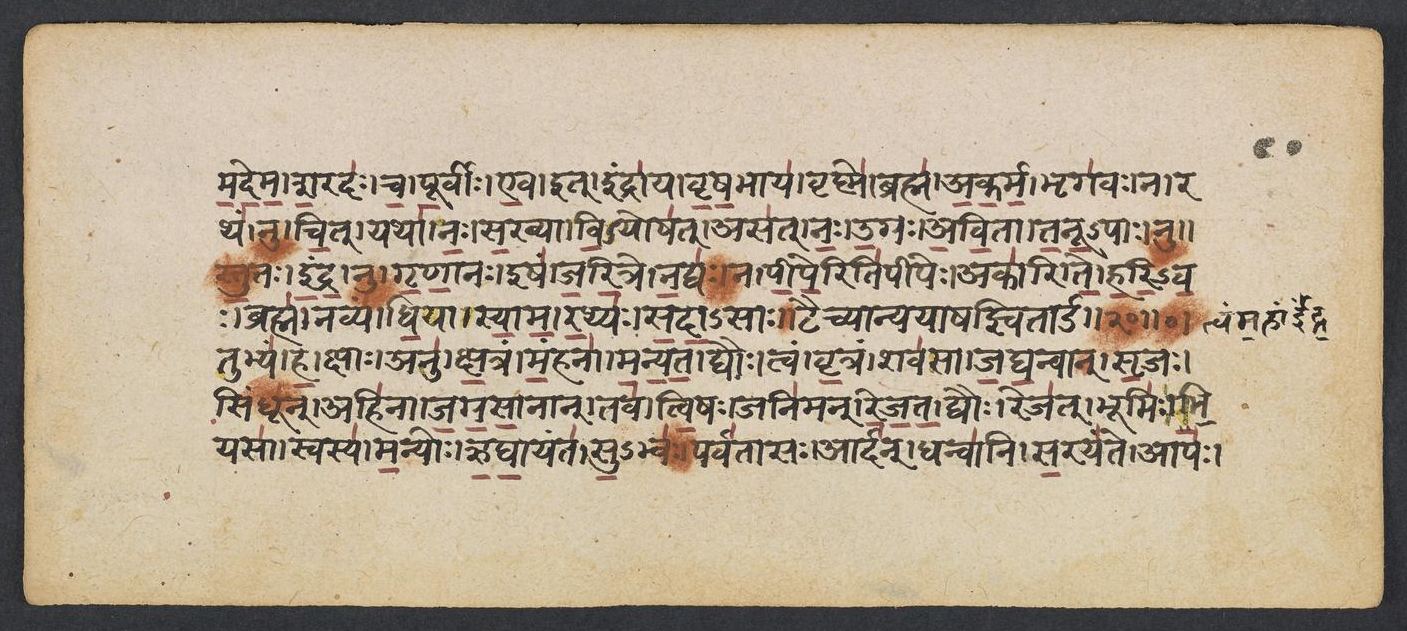
Penn Ms. Coll. 390 Item 41, fol. 272r (numbered 81r by the scribe) (OPenn image 272, lower leaf). Checked on the image: the Rigveda text on this page begins in RV 4.16.19 ‹madema śaradaḥ ca pūrvīḥ›. The next page with Rigveda text, fol. 272v (numbered 81v by the scribe), begins in RV 4.17.3 ‹bhinat girim śavasā vajram›. Verses 4.16.19-21 end on this page; 4.16.19 begins on fol. 271v (numbered 80v by the scribe).
19e̱bhir nṛbhi̍r indra tvā̱yubhi̍ṣ ṭvā ma̱ghava̍dbhir maghava̱n viśva̍ ā̱jau | dyāvo̱ na dyu̱mnair a̱bhi santo̍ a̱ryaḥ kṣa̱po ma̍dema śa̱rada̍ś ca pū̱rvīḥ ||
20e̱ved indrā̍ya vṛṣa̱bhāya̱ vṛṣṇe̱ brahmā̍karma̱ bhṛga̍vo̱ na ratha̍m | nū ci̱d yathā̍ naḥ sa̱khyā vi̱yoṣa̱d asa̍n na u̱gro̍ 'vi̱tā ta̍nū̱pāḥ ||
21nū ṣṭu̱ta i̍ndra̱ nū gṛ̍ṇā̱na iṣa̍ṁ jari̱tre na̱dyo̱3̱̍ na pī̍peḥ | akā̍ri te harivo̱ brahma̱ navya̍ṁ dhi̱yā syā̍ma ra̱thya̍ḥ sadā̱sāḥ ||
Compare: Padapāṭha (word-by-word text written in the manuscript; Sansknet e-text via GRETIL)
19ebhiḥ | nṛ-bhiḥ | indra | tvāyu-bhiḥ | tvā | maghavat-bhiḥ | magha-van | viśve | ājau | dyāvaḥ | na | dyumnaiḥ | abhi | santaḥ | aryaḥ | kṣapaḥ | madema | śaradaḥ | ca | pūrvīḥ
20eva | it | indrāya | vṛṣabhāya | vṛṣṇe | brahma | akarma | bhṛgavaḥ | na | ratham | nu | cit | yathā | naḥ | sakhyā | vi-yoṣat | asat | naḥ | ugraḥ | avitā | tanū-pāḥ
21nu | stutaḥ | indra | nu | gṛṇānaḥ | iṣam | jaritre | nadyaḥ | na | pīperitipīpeḥ | akāri | te | hari-vaḥ | brahma | navyam | dhiyā | syāma | rathyaḥ | sadāsāḥ
19O Indra, with these men who love thee truly, free givers, Maghavan, in every battle, May we rejoice through many autumns, quelling our foes, as days subdue the nights with splendour.
20Now, as the Bhr̥igus wrought a car, for Indra the Strong, the Mighty, we our prayer have fashioned, That he may, ne'er withdraw from us his friendship, but be our bodies' guard and strong defender.
21Now, Indra! lauded, glorified with praises, let power swell. high like rivers for the singer. For thee a new hymn, Lord of Bays, is fashioned. May we, car-borne, through song be victors ever.
Notes
- Sanskrit: Aufrecht's edition (1877) with the Vedic accents, as entered by van Nooten and Holland (GRETIL).
- English: Ralph T. H. Griffith, The Hymns of the Rigveda (1889-1892; 2nd ed. 1896-1897), from the VedaWeb digital text; OCR slips in that text were corrected against the printed 2nd edition (data/sources/rigveda/griffith_errata.json).
- Padapāṭha (edition text): Sansknet e-text via GRETIL (CC BY-NC-SA 4.0).
Cite
Sources
- Source: Penn Ms. Coll. 390 Item 41 (undated (catalogued with Penn's 18th-19th c. Vedic manuscripts)), OPenn, Public Domain Mark + Aufrecht's accented text (GRETIL) + Griffith's English (VedaWeb) (holding institution)
- Critical edition: Aufrecht (1877), accented e-text via GRETIL
← previous · → next · v cycle view · l back to library