Rigveda 4.17: To Indra
Introduction
Rigveda 4.17 is a hymn of 21 verses addressed to Indra. It stands in book (maṇḍala) 4, the family book of Vāmadeva. The Rigveda is the oldest collection of Sanskrit hymns, composed in the second half of the second millennium BCE and handed down orally for many centuries before it was written down.
The manuscript shown is Penn Ms. Coll. 390 Item 41 (University of Pennsylvania), an undated paper manuscript of the padapāṭha (the word-by-word recitation text, in which every word is written separately and compounds are split) of the whole Ṛgveda in Devanāgarī, 884 leaves in fascicles, 7-9 lines to the page, accents in red; this hymn stands on fol. 272r-274v. Each section below gives the verses that end on one page; the page boundaries were read on the images (the opening words of every page), not counted out. Where the manuscript is a padapāṭha (the word-by-word recitation text), the section shows Aufrecht's continuous (saṃhitā) text first and, as the edition text, the padapāṭha of the same verses, which is the form written on the page.
How was this verified? (Provenance)
Where on the image
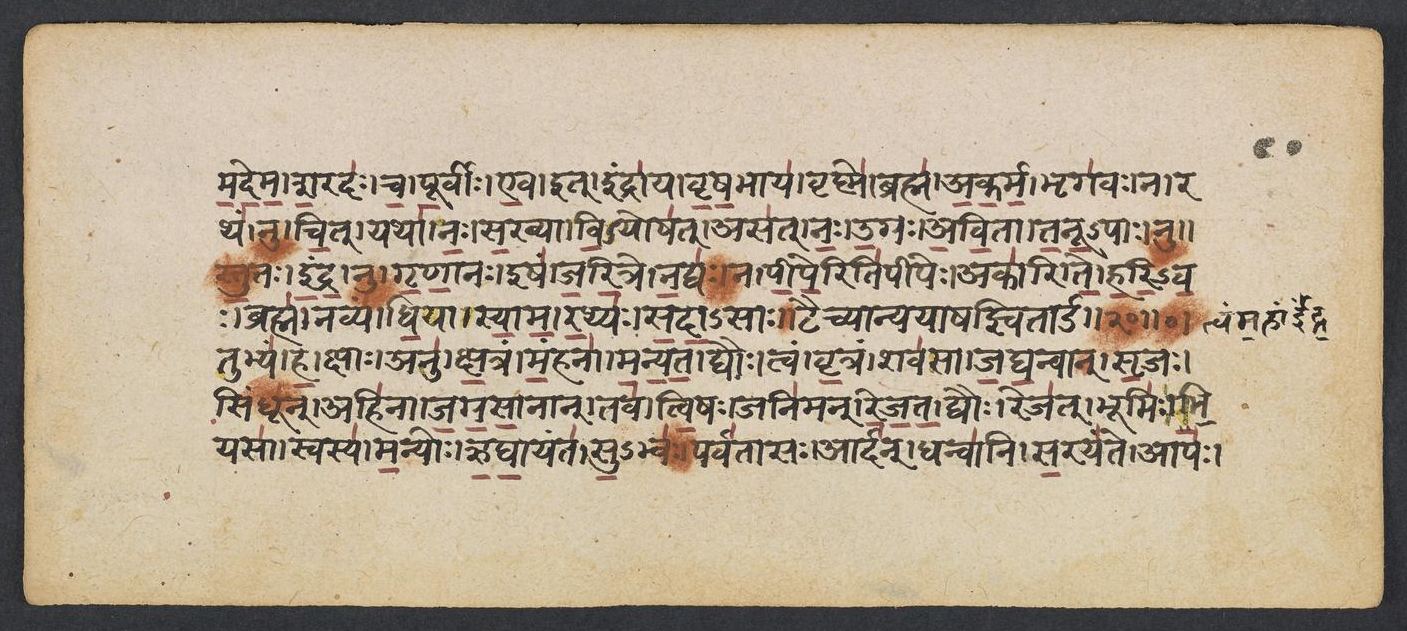
Penn Ms. Coll. 390 Item 41, fol. 272r (numbered 81r by the scribe) (OPenn image 272, lower leaf). Checked on the image: the Rigveda text on this page begins in RV 4.16.19 ‹madema śaradaḥ ca pūrvīḥ›. The next page with Rigveda text, fol. 272v (numbered 81v by the scribe), begins in RV 4.17.3 ‹bhinat girim śavasā vajram›. Verses 4.17.1-2 end on this page.
1tvam ma̱hām̐ i̍ndra̱ tubhya̍ṁ ha̱ kṣā anu̍ kṣa̱tram ma̱ṁhanā̍ manyata̱ dyauḥ | tvaṁ vṛ̱traṁ śava̍sā jagha̱nvān sṛ̱jaḥ sindhū̱m̐r ahi̍nā jagrasā̱nān ||
2tava̍ tvi̱ṣo jani̍man rejata̱ dyau reja̱d bhūmi̍r bhi̱yasā̱ svasya̍ ma̱nyoḥ | ṛ̱ghā̱yanta̍ su̱bhva1̱̍ḥ parva̍tāsa̱ ārda̱n dhanvā̍ni sa̱raya̍nta̱ āpa̍ḥ ||
Compare: Padapāṭha (word-by-word text written in the manuscript; Sansknet e-text via GRETIL)
1tvam | mahān | indra | tubhyam | ha | kṣāḥ | anu | kṣatram | maṃhanā | manyata | dyauḥ | tvam | vṛtram | śavasā | jaghanvān | sṛjaḥ | sindhūn | ahinā | jagrasānān
2tava | tviṣaḥ | janiman | rejata | dyauḥ | rejat | bhūmiḥ | bhiyasā | svasya | manyoḥ | ṛghāyanta | su-bhvaḥ | parvatāsaḥ | ārdan | dhanvāni | sarayante | āpaḥ
1GREAT art thou, Indra; yea, the earth, with gladness, and heaven confess to thee thine high dominion. Thou in thy vigour having slaughtered Vr̥itra didst free the floods arrested by the Dragon.
2Heaven trembled at the birth of thine effulgence; Earth trembled at the fear of thy displeasure. The stedfast mountains shook in agitation . the waters flowed, and desert spots were flooded.
Where on the image
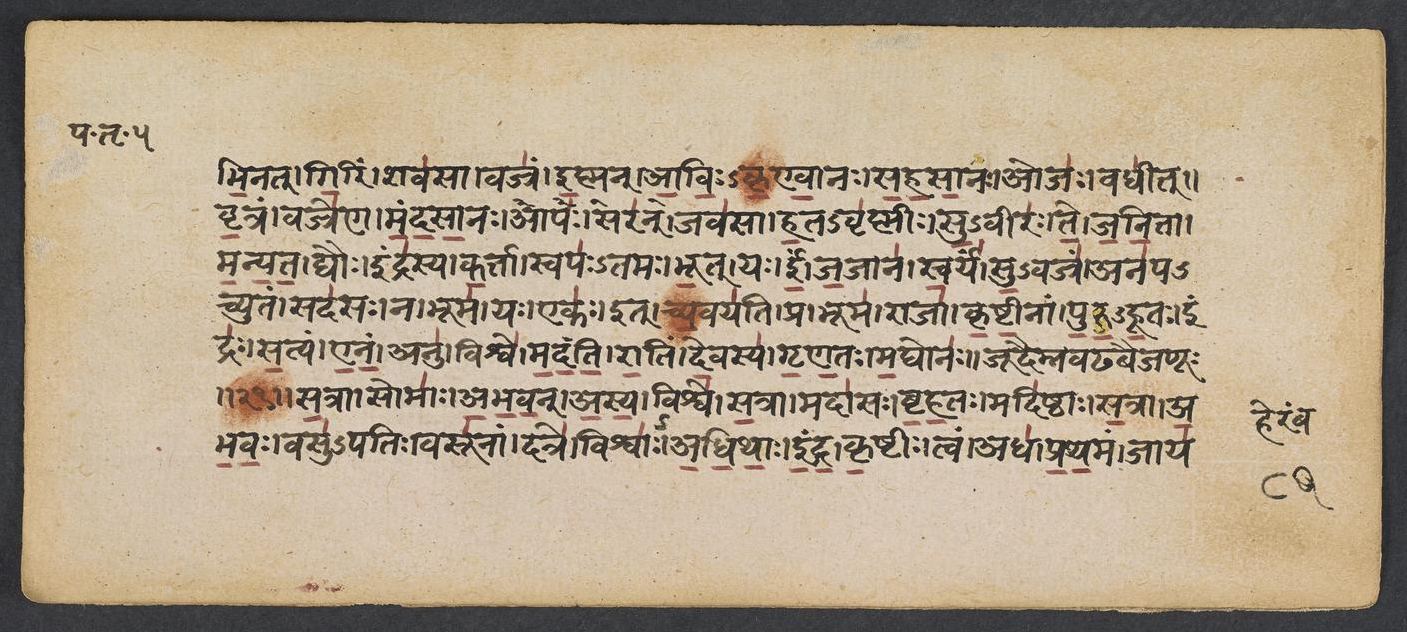
Penn Ms. Coll. 390 Item 41, fol. 272v (numbered 81v by the scribe) (OPenn image 273, upper leaf). Checked on the image: the Rigveda text on this page begins in RV 4.17.3 ‹bhinat girim śavasā vajram›. The next page with Rigveda text, fol. 273r (numbered 82r by the scribe), begins in RV 4.17.7 ‹-jāyamānaḥ ame viśvāḥ adhithāḥ›. Verses 4.17.3-6 end on this page.
3bhi̱nad gi̱riṁ śava̍sā̱ vajra̍m i̱ṣṇann ā̍viṣkṛṇvā̱naḥ sa̍hasā̱na oja̍ḥ | vadhī̍d vṛ̱traṁ vajre̍ṇa mandasā̱naḥ sara̱nn āpo̱ java̍sā ha̱tavṛ̍ṣṇīḥ ||
4su̱vīra̍s te jani̱tā ma̍nyata̱ dyaur indra̍sya ka̱rtā svapa̍stamo bhūt | ya ī̍ṁ ja̱jāna̍ sva̱rya̍ṁ su̱vajra̱m ana̍pacyuta̱ṁ sada̍so̱ na bhūma̍ ||
5ya eka̍ ic cyā̱vaya̍ti̱ pra bhūmā̱ rājā̍ kṛṣṭī̱nām pu̍ruhū̱ta indra̍ḥ | sa̱tyam e̍na̱m anu̱ viśve̍ madanti rā̱tiṁ de̱vasya̍ gṛṇa̱to ma̱ghona̍ḥ ||
6sa̱trā somā̍ abhavann asya̱ viśve̍ sa̱trā madā̍so bṛha̱to madi̍ṣṭhāḥ | sa̱trābha̍vo̱ vasu̍pati̱r vasū̍nā̱ṁ datre̱ viśvā̍ adhithā indra kṛ̱ṣṭīḥ ||
Compare: Padapāṭha (word-by-word text written in the manuscript; Sansknet e-text via GRETIL)
3bhinat | girim | śavasā | vajram | iṣṇan | āviḥ-kṛṇvānaḥ | sahasānaḥ | ojaḥ | vadhīt | vṛtram | vajreṇa | mandasānaḥ | saran | āpaḥ | javasā | hata-vṛṣṇīḥ
4su-vīraḥ | te | janitā | manyata | dyauḥ | indrasya | kartā | svapaḥ-tamaḥ | bhūt | yaḥ | īm | jajāna | svaryam | su-vajram | anapa-cyutam | sadasaḥ | na | bhūma
5yaḥ | ekaḥ | it | cyāvayati | pra | bhūmā | rājā | kṛṣṭīnām | puru-hūtaḥ | indraḥ | satyam | enam | anu | viśve | madanti | rātim | devasya | gṛṇataḥ | maghonaḥ
6satrā | somāḥ | abhavan | asya | viśve | satrā | madāsaḥ | bṛhataḥ | madiṣṭhāḥ | satrā | abhavaḥ | vasu-patiḥ | vasūnām | datre | viśvāḥ | adhithāḥ | indra | kṛṣṭīḥ
3Hurling his bolt with might he cleft the mountain, while, putting forth his strength, he showed his vigour. He slaughtered Vr̥itra with his bolt, exulting, and, their lord slain, forth flowed the waters swiftly.
4Thy Father Dyaus esteemed himself a hero: most noble was the work of Indra's Maker, His who begat the strong bolt's Lord who roareth, immovable like earth from her foundation.
5He who alone o'erthrows the world of creatures, Indra the peoples' King, invoked of many- Verily all rejoice in him, extolling the boons which Maghavan the God hath sent them.
6All Soma juices are his own for ever, most gladdening draughts are ever his, the Mighty, Thou ever wast the Treasure-Lord of treasures: Indra, thou lettest all folk share thy bounty.
Where on the image
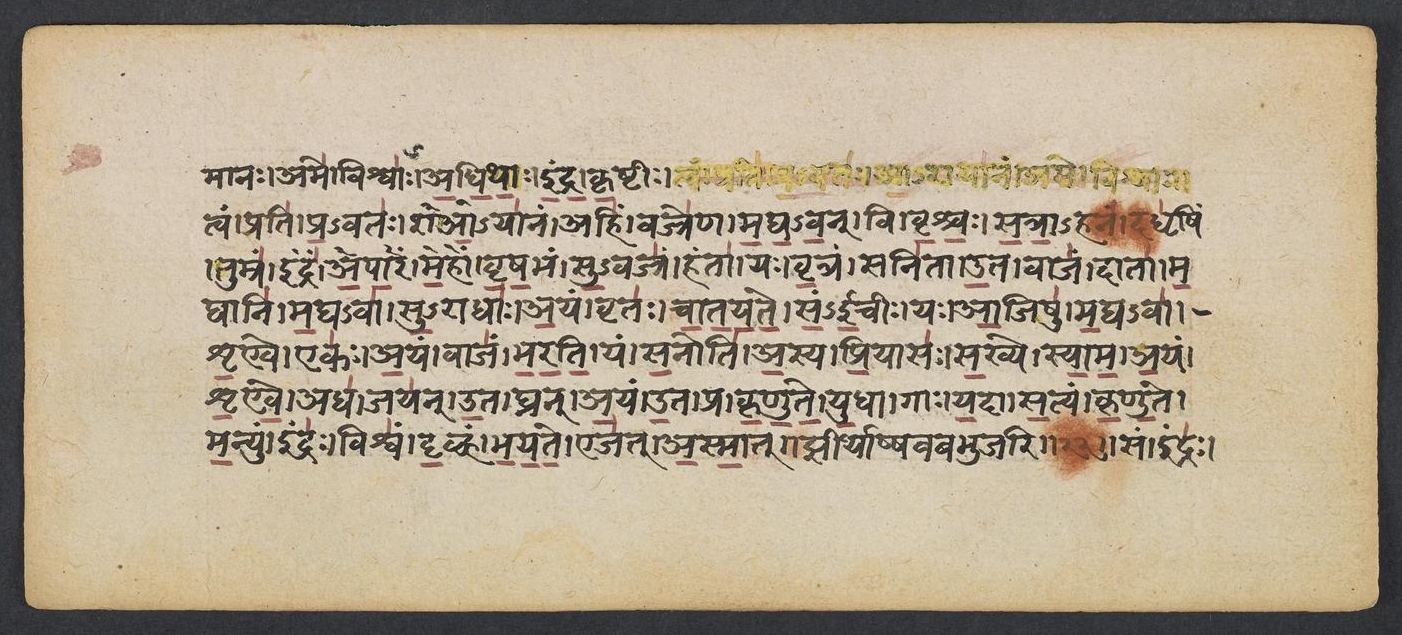
Penn Ms. Coll. 390 Item 41, fol. 273r (numbered 82r by the scribe) (OPenn image 273, lower leaf). Checked on the image: the Rigveda text on this page begins in RV 4.17.7 ‹-jāyamānaḥ ame viśvāḥ adhithāḥ›. The next page with Rigveda text, fol. 273v (numbered 82v by the scribe), begins in RV 4.17.11 ‹gāḥ ajayat sam hiraṇyā›. Verses 4.17.7-10 end on this page; 4.17.7 begins on fol. 272v (numbered 81v by the scribe).
7tvam adha̍ pratha̱maṁ jāya̍mā̱no 'me̱ viśvā̍ adhithā indra kṛ̱ṣṭīḥ | tvam prati̍ pra̱vata̍ ā̱śayā̍na̱m ahi̱ṁ vajre̍ṇa maghava̱n vi vṛ̍ścaḥ ||
8sa̱trā̱haṇa̱ṁ dādhṛ̍ṣi̱ṁ tumra̱m indra̍m ma̱hām a̍pā̱raṁ vṛ̍ṣa̱bhaṁ su̱vajra̍m | hantā̱ yo vṛ̱traṁ sani̍to̱ta vāja̱ṁ dātā̍ ma̱ghāni̍ ma̱ghavā̍ su̱rādhā̍ḥ ||
9a̱yaṁ vṛta̍ś cātayate samī̱cīr ya ā̱jiṣu̍ ma̱ghavā̍ śṛ̱ṇva eka̍ḥ | a̱yaṁ vāja̍m bharati̱ yaṁ sa̱noty a̱sya pri̱yāsa̍ḥ sa̱khye syā̍ma ||
10a̱yaṁ śṛ̍ṇve̱ adha̱ jaya̍nn u̱ta ghnann a̱yam u̱ta pra kṛ̍ṇute yu̱dhā gāḥ | ya̱dā sa̱tyaṁ kṛ̍ṇu̱te ma̱nyum indro̱ viśva̍ṁ dṛ̱ḻham bha̍yata̱ eja̍d asmāt ||
Compare: Padapāṭha (word-by-word text written in the manuscript; Sansknet e-text via GRETIL)
7tvam | adha | prathamam | jāyamānaḥ | ame | viśvāḥ | adhithāḥ | indra | kṛṣṭīḥ | tvam | prati | pra-vataḥ | āśayānam | ahim | vajreṇa | magha-van | vi | vṛścaḥ
8satrāhanan | dadhṛṣim | tumram | indram | mahām | apāram | vṛṣabham | su-vajram | hantā | yaḥ | vṛtram | sanitā | uta | vājam | dātā | maghāni | magha-vā | su-rādhāḥ
9ayam | vṛtaḥ | cātayate | sam-īcīḥ | yaḥ | ājiṣu | magha-vā | śṛṇve | ekaḥ | ayam | vājam | bharati | yam | sanoti | asya | priyāsaḥ | sakhye | syāma
10ayam | śṛṇve | adha | jayan | uta | ghnan | ayam | uta | pra | kṛṇute | yudhā | gāḥ | yadā | satyam | kṛṇute | manyum | indraḥ | viśvam | dṛḷham | bhayate | ejat | asmāt
7Moreover, when thou first wast born, O Indra, thou struckest terror into all the people. Thou, Maghavan, rentest with thy bolt the Dragon who lay against the waterfloods of heaven.
8The ever-slaying, bold and furious Indra, the bright bolt's Lord, infinite, strong and mighty, Who slayeth Vr̥itra and acquireth booty, giver of blessings, Maghavan the bounteous:
9Alone renowned as Maghavan in battles, he frighteneth away assembled armies. He bringeth us the booty that he winneth may we, well-loved, continue in his friendship.
10Renowned is he when conquering and when slaying: 'tis he who winneth cattle in the combat. When Indra hardeneth his indignation all that is fixed and all that moveth fear him.
Where on the image
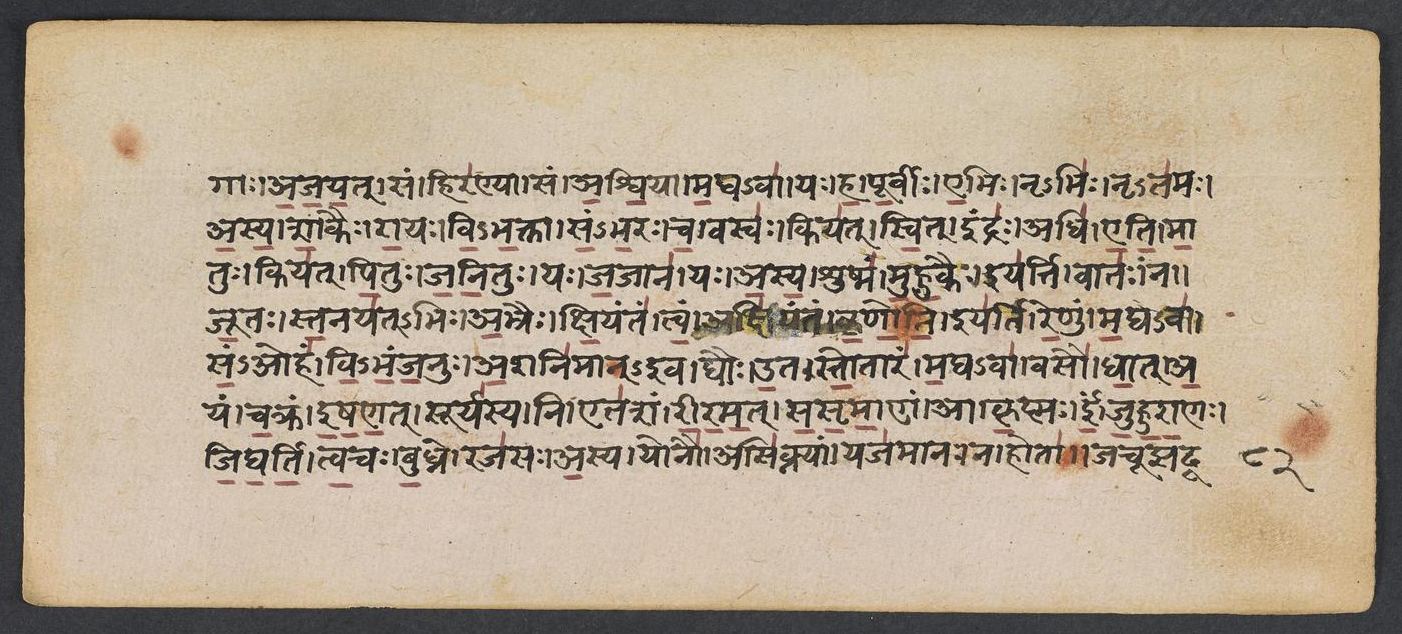
Penn Ms. Coll. 390 Item 41, fol. 273v (numbered 82v by the scribe) (OPenn image 274, upper leaf). Checked on the image: the Rigveda text on this page begins in RV 4.17.11 ‹gāḥ ajayat sam hiraṇyā›. The next page with Rigveda text, fol. 274r (numbered 83r by the scribe), begins in RV 4.17.16 ‹gavyantaḥ indram sakhyāya viprāḥ›. Verses 4.17.11-15 end on this page; 4.17.11 begins on fol. 273r (numbered 82r by the scribe).
11sam indro̱ gā a̍jaya̱t saṁ hira̍ṇyā̱ sam a̍śvi̱yā ma̱ghavā̱ yo ha̍ pū̱rvīḥ | e̱bhir nṛbhi̱r nṛta̍mo asya śā̱kai rā̱yo vi̍bha̱ktā sa̍mbha̱raś ca̱ vasva̍ḥ ||
12kiya̍t svi̱d indro̱ adhy e̍ti mā̱tuḥ kiya̍t pi̱tur ja̍ni̱tur yo ja̱jāna̍ | yo a̍sya̱ śuṣma̍m muhu̱kair iya̍rti̱ vāto̱ na jū̱taḥ sta̱naya̍dbhir a̱bhraiḥ ||
13kṣi̱yanta̍ṁ tva̱m akṣi̍yantaṁ kṛṇo̱tīya̍rti re̱ṇum ma̱ghavā̍ sa̱moha̍m | vi̱bha̱ñja̱nur a̱śani̍mām̐ iva̱ dyaur u̱ta sto̱tāra̍m ma̱ghavā̱ vasau̍ dhāt ||
14a̱yaṁ ca̱kram i̍ṣaṇa̱t sūrya̍sya̱ ny eta̍śaṁ rīramat sasṛmā̱ṇam | ā kṛ̱ṣṇa ī̍ṁ juhurā̱ṇo ji̍gharti tva̱co bu̱dhne raja̍so a̱sya yonau̍ ||
15asi̍knyā̱ṁ yaja̍māno̱ na hotā̍ ||
Compare: Padapāṭha (word-by-word text written in the manuscript; Sansknet e-text via GRETIL)
11sam | indraḥ | gāḥ | ajayat | sam | hiraṇyā | sam | aśviyā | magha-vā | yaḥ | ha | pūrvīḥ | ebhiḥ | nṛ-bhiḥ | nṛ-tamaḥ | asya | śākaiḥ | rāyaḥ | vi-bhaktā | sam-bharaḥ | ca | vasvaḥ
12kiyat | svit | indraḥ | adhi | eti | mātuḥ | kiyat | pituḥ | janituḥ | yaḥ | jajāna | yaḥ | asya | śuṣmam | muhukaiḥ | iyarti | vātaḥ | na | jūtaḥ | stanayat-bhiḥ | abhraiḥ
13kṣiyantam | tvam | akṣiyantam | kṛṇoti | iyarti | reṇum | magha-vā | sam-oham | vi--bhañjanuḥ | aśanimān-iva | dyauḥ | uta | stotāram | magha-vā | vasau | dhāt
14ayam | cakram | iṣaṇat | sūryasya | ni | etaśam | rīramat | sasṛmāṇam | ā | kṛṣṇaḥ | īm | juhurāṇaḥ | jigharti | tvacaḥ | budhne | rajasaḥ | asya | yonau
15asiknayām | yajamānaḥ | na | hotā
11Indra hath won all kine, all gold, all horses,– Maghavan, he who breaketh forts in pieces; Most manly with these men of his who help him, dealing out wealth and gathering the treasure.
12What is the care of Indra for his Mother, what cares he for the Father who begat him? His care is that which speeds his might in conflicts, like wind borne onward by the clouds that thunder.
13Maghavan makes the settled man unsettled: he scatters dust that he hath swept together, Breaking in pieces like Heaven armed with lightning: Maghavan shall enrich the man who lauds h;m.
14He urged the chariot-wheel of Sûrya forward: Etaṣa, speeding on his way, he rested. Him the black undulating cloud bedeweth, in this mid-air's depth, at the base of darkness,
15As in the night the sacrificing priest.
Where on the image
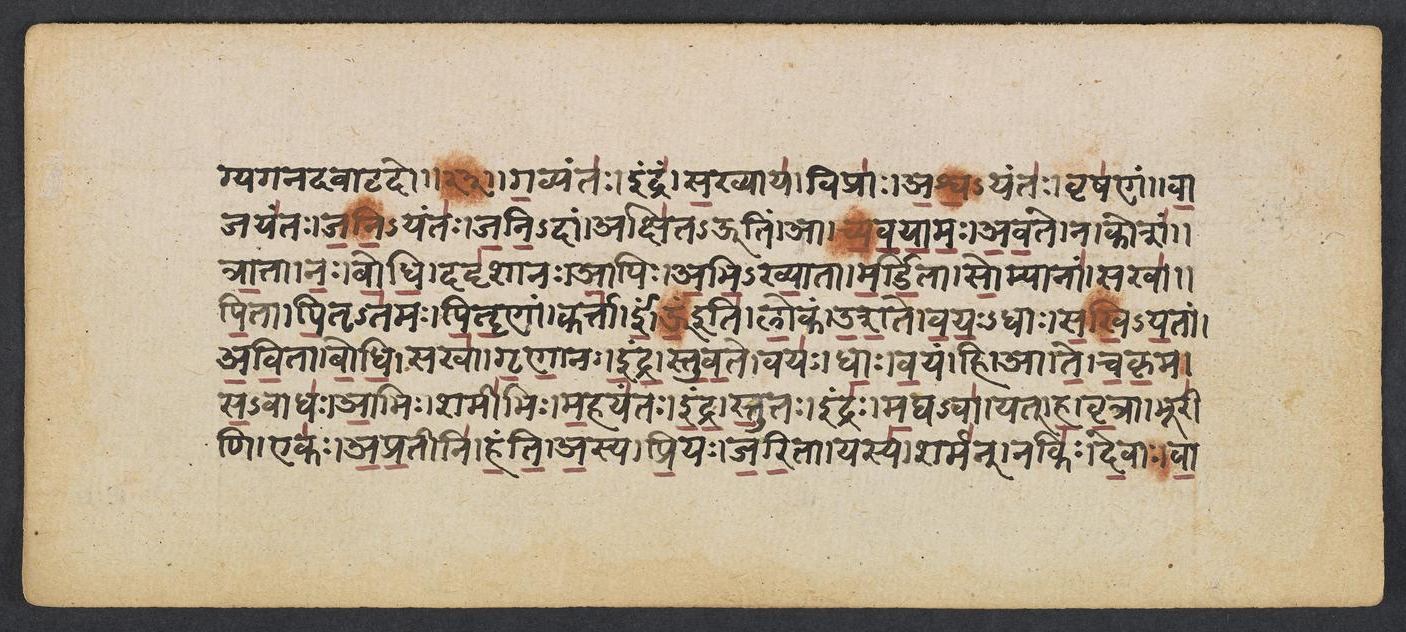
Penn Ms. Coll. 390 Item 41, fol. 274r (numbered 83r by the scribe) (OPenn image 274, lower leaf). Checked on the image: the Rigveda text on this page begins in RV 4.17.16 ‹gavyantaḥ indram sakhyāya viprāḥ›. The next page with Rigveda text, fol. 274v (numbered 83v by the scribe), begins in RV 4.17.19 ‹-vārayante na martāḥ›. Verses 4.17.16-18 end on this page.
16ga̱vyanta̱ indra̍ṁ sa̱khyāya̱ viprā̍ aśvā̱yanto̱ vṛṣa̍ṇaṁ vā̱jaya̍ntaḥ | ja̱nī̱yanto̍ jani̱dām akṣi̍toti̱m ā cyā̍vayāmo 'va̱te na kośa̍m ||
17trā̱tā no̍ bodhi̱ dadṛ̍śāna ā̱pir a̍bhikhyā̱tā ma̍rḍi̱tā so̱myānā̍m | sakhā̍ pi̱tā pi̱tṛta̍maḥ pitṝ̱ṇāṁ karte̍m u lo̱kam u̍śa̱te va̍yo̱dhāḥ ||
18sa̱khī̱ya̱tām a̍vi̱tā bo̍dhi̱ sakhā̍ gṛṇā̱na i̍ndra stuva̱te vayo̍ dhāḥ | va̱yaṁ hy ā te̍ cakṛ̱mā sa̱bādha̍ ā̱bhiḥ śamī̍bhir ma̱haya̍nta indra ||
Compare: Padapāṭha (word-by-word text written in the manuscript; Sansknet e-text via GRETIL)
16gavyantaḥ | indram | sakhyāya | viprāḥ | aśva-yantaḥ | vṛṣaṇam | vājayantaḥ | jani-yantaḥ | jani-dām | akṣita-ūtim | ā | cyavayāmaḥ | avate | na kośam
17trātā | naḥ | bodhi | dadṛśānaḥ | āpiḥ | abhi-khyātā | marḍitā | somyānām | sakhā | pitā | pitṛ-tamaḥ | pitṝṇām | kartā | īm | oṃ iti | lokam | uśate | vayaḥ-dhāḥ
18sakhi-yatām | avitā | bodhi | sakhā | gṛṇānaḥ | indra | stuvate | vayaḥ | dhāḥ | vayam | hi | ā | te | cakṛma | sa-bādhaḥ | ābhiḥ | śamībhiḥ | mahayantaḥ | indra
16Eager for booty, craving strength and horses, we-singers stir Indra, the strong, for friendship, Who gives the wives we seek, whose succour fails not, to hasten, like a pitcher to the fountain.
17Be thou our guardian, show thyself our kinsman, watching and blessing those who pour the Soma; As Friend, as Sire, most fatherly of fathers giving the suppliant vital strength and freedom.
18Be helping Friend of those who seek thy friendship . give life, when lauded, Indra, to the singer. For, Indra, we the priests have paid thee worship, exalting thee with these our sacrifices.
Where on the image
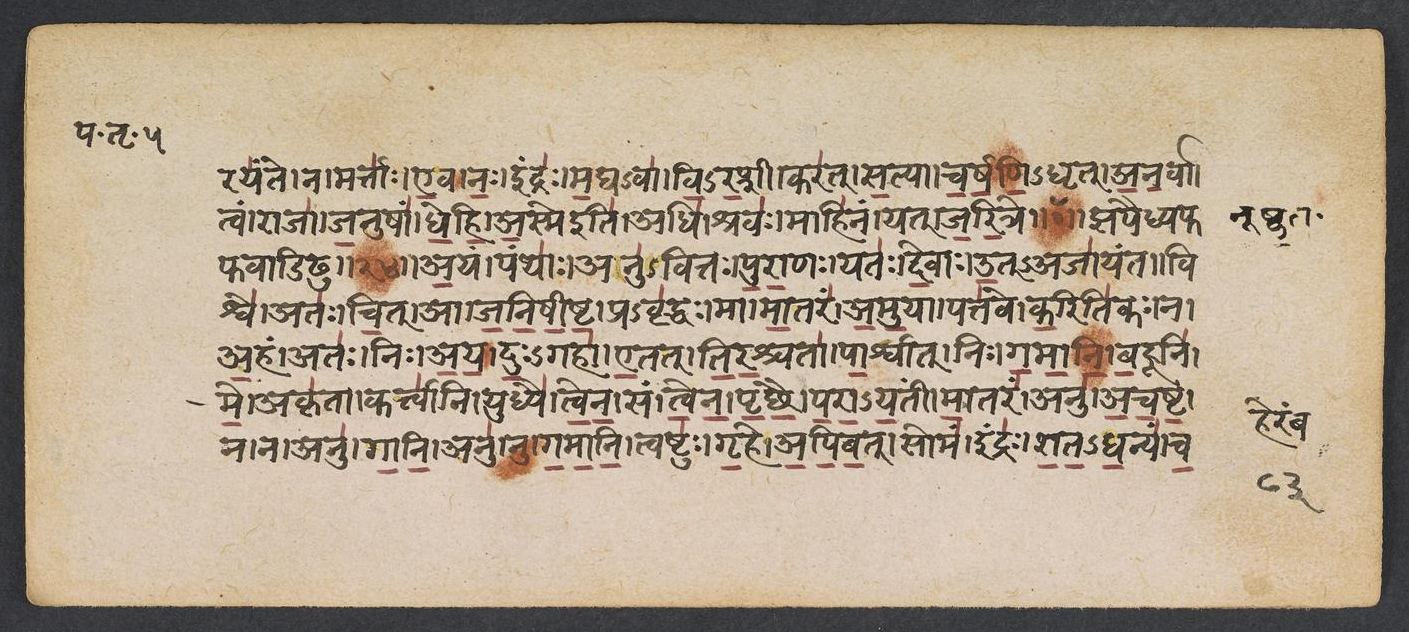
Penn Ms. Coll. 390 Item 41, fol. 274v (numbered 83v by the scribe) (OPenn image 275, upper leaf). Checked on the image: the Rigveda text on this page begins in RV 4.17.19 ‹-vārayante na martāḥ›. The next page with Rigveda text, fol. 275r (numbered 84r by the scribe), begins in RV 4.18.3 ‹-camvoḥ sutasya›. Verses 4.17.19-21 end on this page; 4.17.19 begins on fol. 274r (numbered 83r by the scribe).
19stu̱ta indro̍ ma̱ghavā̱ yad dha̍ vṛ̱trā bhūrī̱ṇy eko̍ apra̱tīni̍ hanti | a̱sya pri̱yo ja̍ri̱tā yasya̱ śarma̱n naki̍r de̱vā vā̱raya̍nte̱ na martā̍ḥ ||
20e̱vā na̱ indro̍ ma̱ghavā̍ vira̱pśī kara̍t sa̱tyā ca̍rṣaṇī̱dhṛd a̍na̱rvā | tvaṁ rājā̍ ja̱nuṣā̍ṁ dhehy a̱sme adhi̱ śravo̱ māhi̍na̱ṁ yaj ja̍ri̱tre ||
21nū ṣṭu̱ta i̍ndra̱ nū gṛ̍ṇā̱na iṣa̍ṁ jari̱tre na̱dyo̱3̱̍ na pī̍peḥ | akā̍ri te harivo̱ brahma̱ navya̍ṁ dhi̱yā syā̍ma ra̱thya̍ḥ sadā̱sāḥ ||
Compare: Padapāṭha (word-by-word text written in the manuscript; Sansknet e-text via GRETIL)
19stutaḥ | indraḥ | magha-vā | yat | ha | vṛtrā | bhūrīṇi | ekaḥ | apratīni | hanti | asya | priyaḥ | jaritā | yasya | śarman | nakiḥ | devāḥ | vārayante | na | martāḥ
20eva | naḥ | indraḥ | magha-vā | vi-rapśī | karat | satyā | carṣaṇi-dhṛt | anavār | tvam | rājā | januṣām | dhehi | asme iti | adhi | śravaḥ | māhinam | yat | jaritre
21nu | stutaḥ | indra | nu | gṛṇānaḥ | iṣam | jaritre | nadyaḥ | na | pīperitipīpeḥ | akāri | te | hari-vaḥ | brahma | navyam | dhiyā | syāma | rathyaḥ | sadāsāḥ
19Alone, when Indra Maghavan is lauded, he slayeth many ne'er-resisted Vr̥itras. Him in whose keeping is the well-loved singer never do Gods or mortals stay or hinder.
20E'en so let Maghavan, the loud-voiced Indra, give us true blessings, foeless, men's upholder. King of all creatures, give us glory amply, exalted glory due to him who lauds thee.
21Now, Indra! lauded, glorified with praises, let power swell high like rivers for the singer. For thee a new hymn, Lord of Bays! is fashioned. May we, car-borne, through song be victors ever.
Notes
- Sanskrit: Aufrecht's edition (1877) with the Vedic accents, as entered by van Nooten and Holland (GRETIL).
- English: Ralph T. H. Griffith, The Hymns of the Rigveda (1889-1892; 2nd ed. 1896-1897), from the VedaWeb digital text; OCR slips in that text were corrected against the printed 2nd edition (data/sources/rigveda/griffith_errata.json).
- Padapāṭha (edition text): Sansknet e-text via GRETIL (CC BY-NC-SA 4.0).
Cite
Sources
- Source: Penn Ms. Coll. 390 Item 41 (undated (catalogued with Penn's 18th-19th c. Vedic manuscripts)), OPenn, Public Domain Mark + Aufrecht's accented text (GRETIL) + Griffith's English (VedaWeb) (holding institution)
- Critical edition: Aufrecht (1877), accented e-text via GRETIL
← previous · → next · v cycle view · l back to library