Rigveda 4.18: Dialogue between Indra, Aditi and Vamadeva
Introduction
Rigveda 4.18 is a hymn of 13 verses addressed to dialogue between Indra, Aditi and Vamadeva. It stands in book (maṇḍala) 4, the family book of Vāmadeva. The Rigveda is the oldest collection of Sanskrit hymns, composed in the second half of the second millennium BCE and handed down orally for many centuries before it was written down.
The manuscript shown is Penn Ms. Coll. 390 Item 41 (University of Pennsylvania), an undated paper manuscript of the padapāṭha (the word-by-word recitation text, in which every word is written separately and compounds are split) of the whole Ṛgveda in Devanāgarī, 884 leaves in fascicles, 7-9 lines to the page, accents in red; this hymn stands on fol. 274v-276r. Each section below gives the verses that end on one page; the page boundaries were read on the images (the opening words of every page), not counted out. Where the manuscript is a padapāṭha (the word-by-word recitation text), the section shows Aufrecht's continuous (saṃhitā) text first and, as the edition text, the padapāṭha of the same verses, which is the form written on the page.
How was this verified? (Provenance)
Where on the image
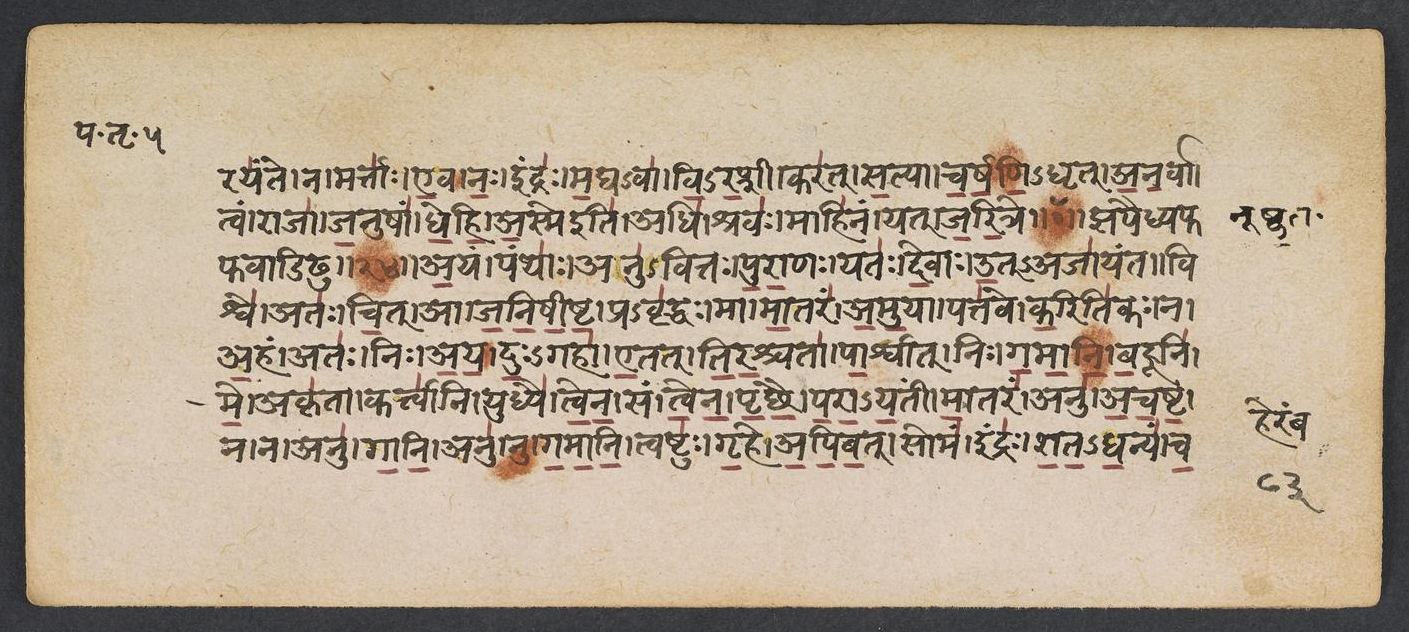
Penn Ms. Coll. 390 Item 41, fol. 274v (numbered 83v by the scribe) (OPenn image 275, upper leaf). Checked on the image: the Rigveda text on this page begins in RV 4.17.19 ‹-vārayante na martāḥ›. The next page with Rigveda text, fol. 275r (numbered 84r by the scribe), begins in RV 4.18.3 ‹-camvoḥ sutasya›. Verses 4.18.1-2 end on this page.
1a̱yam panthā̱ anu̍vittaḥ purā̱ṇo yato̍ de̱vā u̱dajā̍yanta̱ viśve̍ | ata̍ś ci̱d ā ja̍niṣīṣṭa̱ pravṛ̍ddho̱ mā mā̱tara̍m amu̱yā patta̍ve kaḥ ||
2nāham ato̱ nir a̍yā du̱rgahai̱tat ti̍ra̱ścatā̍ pā̱rśvān nir ga̍māṇi | ba̱hūni̍ me̱ akṛ̍tā̱ kartvā̍ni̱ yudhyai̍ tvena̱ saṁ tve̍na pṛcchai ||
Compare: Padapāṭha (word-by-word text written in the manuscript; Sansknet e-text via GRETIL)
1ayam | panthāḥ | anu-vittaḥ | purāṇaḥ | yataḥ | devāḥ | ut-ajāyanta | viśve | ataḥ | cit | ā | janiṣīṣṭa | pra-vṛddhaḥ | mā | mātaram | amuyā | pattave | karitikaḥ
2na | aham | ataḥ | niḥ | aya | duḥ-gahā | etat | tiraścatā | pārśvāt | niḥ | gamāni | bahūni | me | akṛtā | kartvāni | yudhyai | tvena | sam | tvena | pṛcchai
1THIS is the ancient and accepted pathway by which all Gods have come into existence. Hereby could one be born though waxen mighty. Let him not, otherwise, destroy his Mother.
2Not this way go I forth: hard is the passage. Forth from the side obliquely will I issue. Much that is yet undone must I accomplish; one must I combat and the other question.
Where on the image
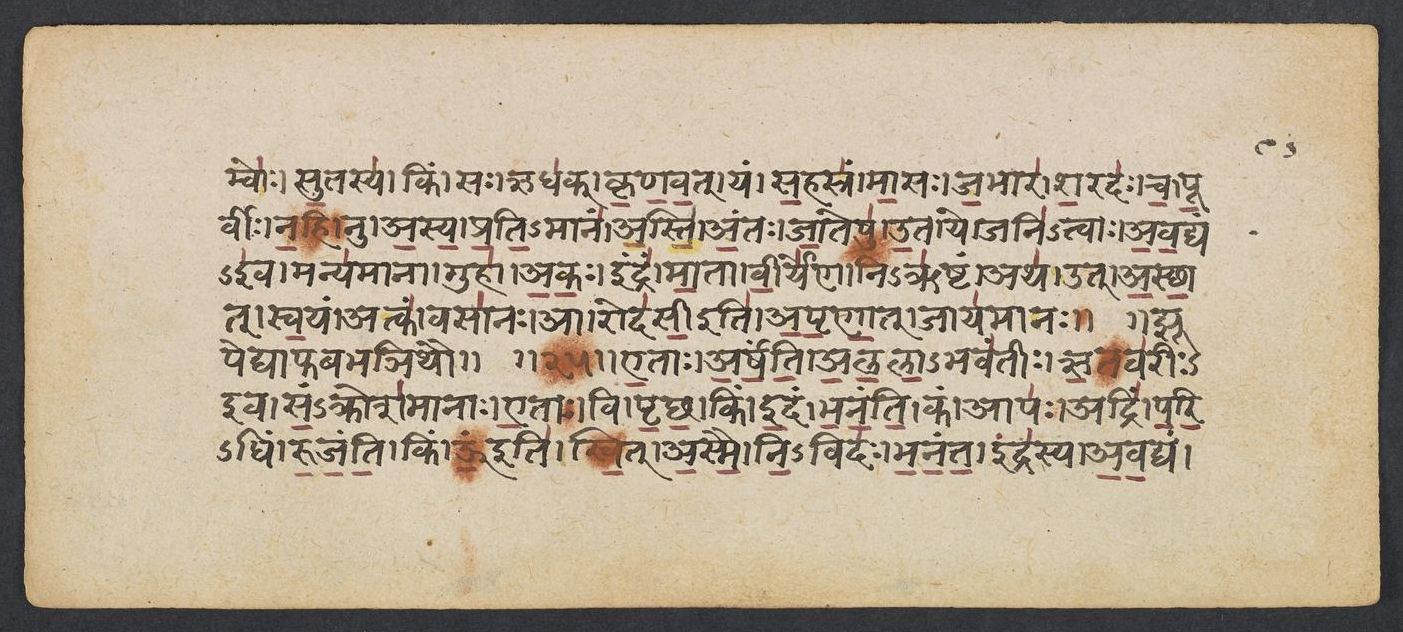
Penn Ms. Coll. 390 Item 41, fol. 275r (numbered 84r by the scribe) (OPenn image 275, lower leaf). Checked on the image: the Rigveda text on this page begins in RV 4.18.3 ‹-camvoḥ sutasya›. The next page with Rigveda text, fol. 275v (numbered 84v by the scribe), begins in RV 4.18.7 ‹didhiṣante āpaḥ mama etān›. Verses 4.18.3-6 end on this page; 4.18.3 begins on fol. 274v (numbered 83v by the scribe).
3pa̱rā̱ya̱tīm mā̱tara̱m anv a̍caṣṭa̱ na nānu̍ gā̱ny anu̱ nū ga̍māni | tvaṣṭu̍r gṛ̱he a̍piba̱t soma̱m indra̍ḥ śatadha̱nya̍ṁ ca̱mvo̍ḥ su̱tasya̍ ||
4kiṁ sa ṛdha̍k kṛṇava̱d yaṁ sa̱hasra̍m mā̱so ja̱bhāra̍ śa̱rada̍ś ca pū̱rvīḥ | na̱hī nv a̍sya prati̱māna̱m asty a̱ntar jā̱teṣū̱ta ye jani̍tvāḥ ||
5a̱va̱dyam i̍va̱ manya̍mānā̱ guhā̍ka̱r indra̍m mā̱tā vī̱rye̍ṇā̱ nyṛ̍ṣṭam | athod a̍sthāt sva̱yam atka̱ṁ vasā̍na̱ ā roda̍sī apṛṇā̱j jāya̍mānaḥ ||
6e̱tā a̍rṣanty alalā̱bhava̍ntīr ṛ̱tāva̍rīr iva sa̱ṁkrośa̍mānāḥ | e̱tā vi pṛ̍ccha̱ kim i̱dam bha̍nanti̱ kam āpo̱ adri̍m pari̱dhiṁ ru̍janti ||
Compare: Padapāṭha (word-by-word text written in the manuscript; Sansknet e-text via GRETIL)
3parāyatīm | mātaram | anu | acaṣṭa | na | na | anu | gāni | anu | nu | gamāni | tvaṣṭuḥ | gṛhe | apibat | somam | indraḥ | śata-dhanyam | camvoḥ | sutasya
4kim | saḥ | ṛdhak | kṛṇavat | yam | sahasram | māsaḥ | jabhāra | śaradaḥ | ca | pūrvīḥ | nahī | nu | āsya | prati-mānam | asti | antaḥ | jateṣu | uta | ye | jani-tvāḥ
5avadyam-iva | manyamānā | guhā | akaḥ | indram | mātā | vīryeṇa | ni-ṛṣtam | atha | ut | asthāt | svayam | atkam | vasānaḥ | ā | rodasī iti | apṛṇāt | jāyamānaḥ
6etāḥ | arṣanti | alalābhavantīḥ | ṛtavarīḥ-iva | sam-krośamānāḥ | etāḥ | vi | pṛccha | kim | idam | bhananti | kam | āpaḥ | adrim | pari-dhim | rujanti
3He bent his eye upon the dying Mother: My word I now withdraw. That way I follow. In Tvashṭar's dwelling Indra drank the Soma, a hundredworth of juice pressed from the mortar.
4What strange act shall he do, he whom his Mother bore for a thousand months and many autumns? No peer hath he among those born already, nor among those who shall be born hereafter.
5Deeming him a reproach, his mother hid him, Indra, endowed with all heroic valour. Then up he sprang himself, assumed his vesture, and filled, as soon as born, the earth and heaven.
6With lively motion onward flow these waters, the Holy Ones, shouting, as 'twere, together. Ask them to. tell thee what the floods are saying, what girdling rock the waters burst asunder.
Where on the image
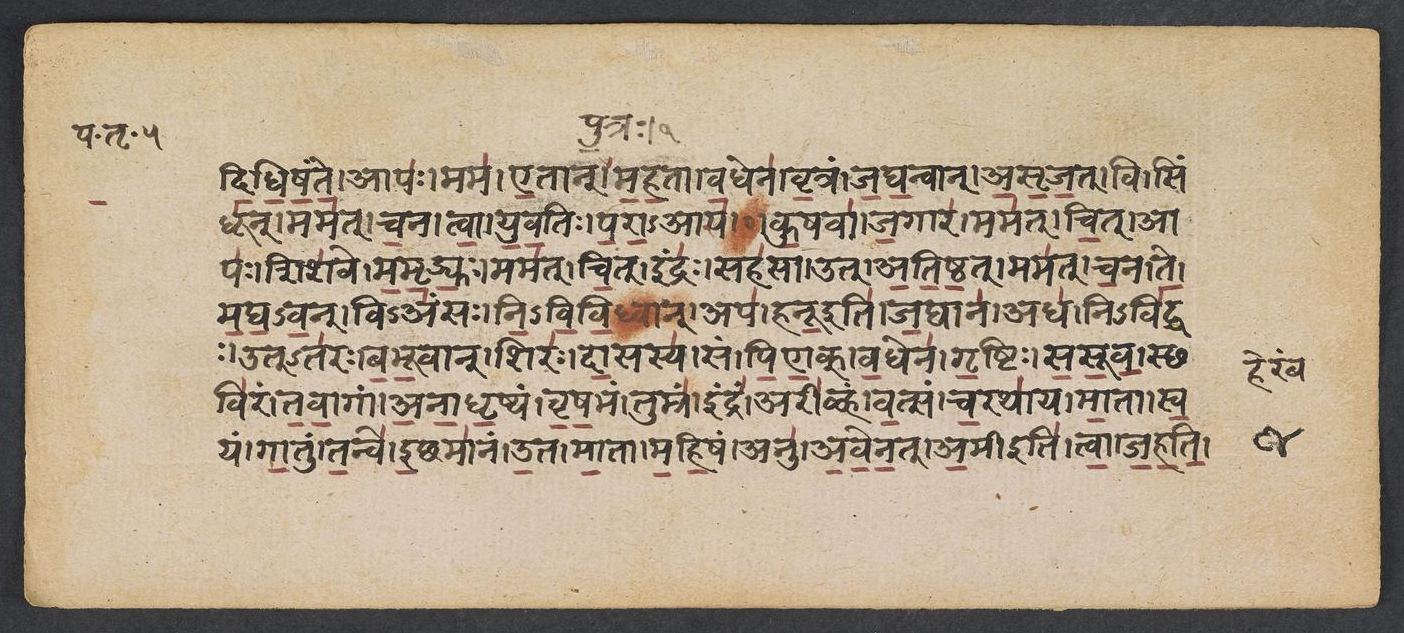
Penn Ms. Coll. 390 Item 41, fol. 275v (numbered 84v by the scribe) (OPenn image 276, upper leaf). Checked on the image: the Rigveda text on this page begins in RV 4.18.7 ‹didhiṣante āpaḥ mama etān›. The next page with Rigveda text, fol. 276r (numbered 85r by the scribe), begins in RV 4.18.11 ‹putra devāḥ atha abravīt›. Verses 4.18.7-10 end on this page; 4.18.7 begins on fol. 275r (numbered 84r by the scribe).
7kim u̍ ṣvid asmai ni̱vido̍ bhana̱ntendra̍syāva̱dyaṁ di̍dhiṣanta̱ āpa̍ḥ | mamai̱tān pu̱tro ma̍ha̱tā va̱dhena̍ vṛ̱traṁ ja̍gha̱nvām̐ a̍sṛja̱d vi sindhū̍n ||
8mama̍c ca̱na tvā̍ yuva̱tiḥ pa̱rāsa̱ mama̍c ca̱na tvā̍ ku̱ṣavā̍ ja̱gāra̍ | mama̍c ci̱d āpa̱ḥ śiśa̍ve mamṛḍyu̱r mama̍c ci̱d indra̱ḥ saha̱sod a̍tiṣṭhat ||
9mama̍c ca̱na te̍ maghava̱n vya̍ṁso nivivi̱dhvām̐ apa̱ hanū̍ ja̱ghāna̍ | adhā̱ nivi̍ddha̱ utta̍ro babhū̱vāñ chiro̍ dā̱sasya̱ sam pi̍ṇag va̱dhena̍ ||
10gṛ̱ṣṭiḥ sa̍sūva̱ sthavi̍raṁ tavā̱gām a̍nādhṛ̱ṣyaṁ vṛ̍ṣa̱bhaṁ tumra̱m indra̍m | arī̍ḻhaṁ va̱tsaṁ ca̱rathā̍ya mā̱tā sva̱yaṁ gā̱tuṁ ta̱nva̍ i̱cchamā̍nam ||
Compare: Padapāṭha (word-by-word text written in the manuscript; Sansknet e-text via GRETIL)
7kim | oṃ iti | svit | asmai | ni-vidaḥ | bhananta | indrasya | avadyam | didhiṣante | āpaḥ | mama | etān | putraḥ | mahatā | vadhena | vṛtram | jaghanvān | asṛjat | vi | sindhūn
8mamat | cana | tvā | yuvatiḥ | parāāsa | mamat | cana | tvā | kuṣavā | jagāra | mamat | cit | āpaḥ | śiśave | mamṛḍyuḥ | mamat | cit | indraḥ | sahasā | ut | atiṣṭhat
9mamat | cana | te | magha-van | vi-aṃsaḥ | ni-vividhvān | apa | hanūiti | jaghāna | adha | ni-viddhaḥ | ut-taraḥ | babhūvān | śiraḥ | dāsasya | sam | piṇak | vadhena
10gṛṣṭiḥ | sāsūva | sthaviram | tavāgām | anādhṛṣyam | vṛṣabham | tumram | indram | arīḷham | vatsam | carathāya | mātā | svayam | gātum | tanve | icchamānam
7Are they addressing him with words of welcome? Will the floods take on them the shame of Indra? With his great thunderbolt my Son hath slaughtered Vr̥itra, and set these rivers free to wander.
8I cast thee from me, mine,– thy youthful mother: thee, mine own offspring, Kushavâ hath swallowed. To him, mine infant, were the waters gracious. Indra, my Son, rose up in conquering vigour.
9Thou art mine own, O Maghavan, whom Vyansa struck to the ground and smote thy jaws in pieces. But, smitten through, the mastery thou wonnest, and with thy bolt the Dâsa's head thou crushedst.
10The Heifer hath brought forth the Strong, the Mighty, the unconquerable Bull, the furious Indra. The Mother left her unlicked Calf to wander, seeking himself, the path that he would follow.
Where on the image
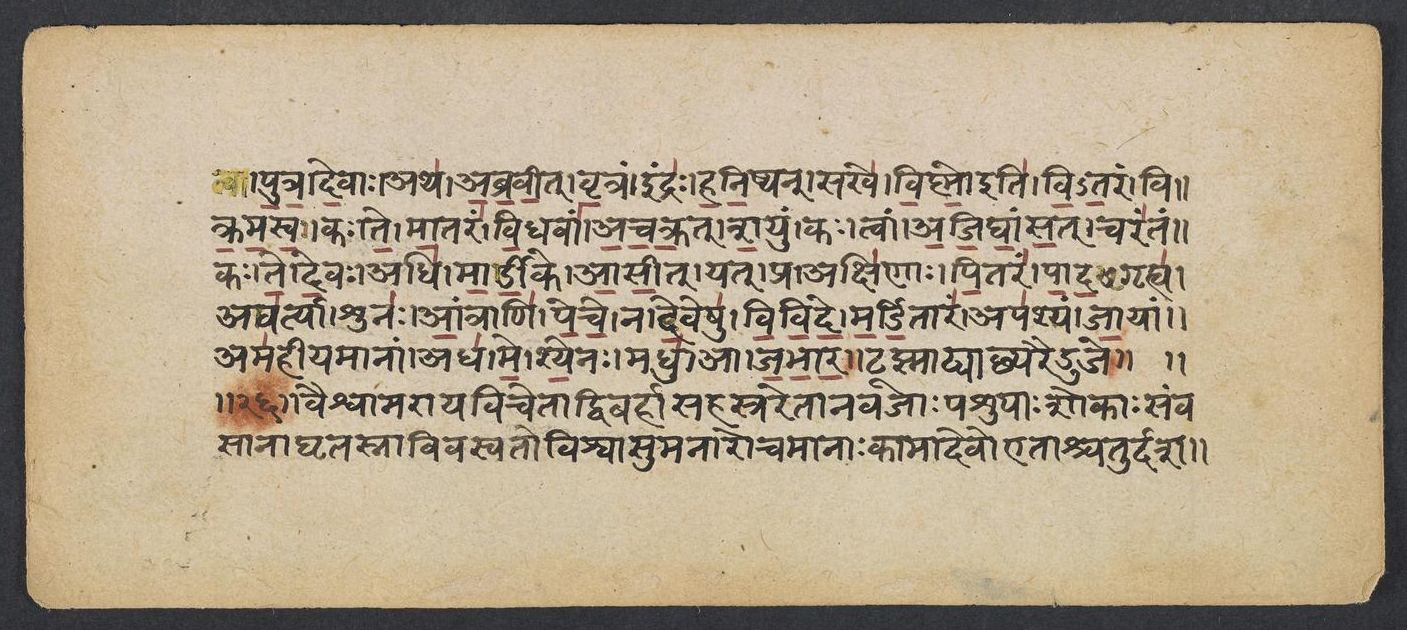
Penn Ms. Coll. 390 Item 41, fol. 276r (numbered 85r by the scribe) (OPenn image 276, lower leaf). Checked on the image: the Rigveda text on this page begins in RV 4.18.11 ‹putra devāḥ atha abravīt›. The next page with Rigveda text, fol. 276v (numbered 85v by the scribe), begins in RV 4.19.1 ‹eva tvām indra vajrin›. Verses 4.18.11-13 end on this page; 4.18.11 begins on fol. 275v (numbered 84v by the scribe).
11u̱ta mā̱tā ma̍hi̱ṣam anv a̍venad a̱mī tvā̍ jahati putra de̱vāḥ | athā̍bravīd vṛ̱tram indro̍ hani̱ṣyan sakhe̍ viṣṇo vita̱raṁ vi kra̍masva ||
12kas te̍ mā̱tara̍ṁ vi̱dhavā̍m acakrac cha̱yuṁ kas tvām a̍jighāṁsa̱c cara̍ntam | kas te̍ de̱vo adhi̍ mārḍī̱ka ā̍sī̱d yat prākṣi̍ṇāḥ pi̱tara̍m pāda̱gṛhya̍ ||
13ava̍rtyā̱ śuna̍ ā̱ntrāṇi̍ pece̱ na de̱veṣu̍ vivide marḍi̱tāra̍m | apa̍śyaṁ jā̱yām ama̍hīyamānā̱m adhā̍ me śye̱no madhv ā ja̍bhāra ||
Compare: Padapāṭha (word-by-word text written in the manuscript; Sansknet e-text via GRETIL)
11uta | mātā | mahiṣam | anu | avenat | amī iti | tvā | jahati | putra | devāḥ | atha | abravīt | vṛtram | indraḥ | haniṣyan | sakhe | viṣṇo iti | vi-taram | vi | kramasva
12kaḥ | te | mātaram | vidhavām | acakrat | śayum | kaḥ | tvām | ajighāṃsat | carantam | kaḥ | te | devaḥ | adhi | mārḍīke | āsīt | yat | pra | akṣiṇāḥ | pitaram | pāda-gṛhya
13avartyā | śunaḥ | āntrāṇi | pece | na | deveṣu | vivide | marḍitāram | apaśyam | jāyām | amahīyamānām | adha | me | śyenaḥ | madhu | ā | jabhāra
11Then to her mighty Child the Mother turned her, saying, My son, these Deities forsake thee. Then Indra said, about to slaughter Vr̥itra, O my friend Vr̥itra, stride full boldly forward.
12Who was he then who made thy Mother widow? Who sought to slay thee lying still or moving? What God, when by the foot thy Sire thou tookest and slewest, was at hand to give thee comfort?
13In deep distress I cooked a dog's intestines. Among the Gods I found not one to comfort. My consort I beheld in degradation. The Falcon then brought me the pleasant Soma.
Notes
- Sanskrit: Aufrecht's edition (1877) with the Vedic accents, as entered by van Nooten and Holland (GRETIL).
- English: Ralph T. H. Griffith, The Hymns of the Rigveda (1889-1892; 2nd ed. 1896-1897), from the VedaWeb digital text; OCR slips in that text were corrected against the printed 2nd edition (data/sources/rigveda/griffith_errata.json).
- Padapāṭha (edition text): Sansknet e-text via GRETIL (CC BY-NC-SA 4.0).
Cite
Sources
- Source: Penn Ms. Coll. 390 Item 41 (undated (catalogued with Penn's 18th-19th c. Vedic manuscripts)), OPenn, Public Domain Mark + Aufrecht's accented text (GRETIL) + Griffith's English (VedaWeb) (holding institution)
- Critical edition: Aufrecht (1877), accented e-text via GRETIL
← previous · → next · v cycle view · l back to library