Rigveda 4.19: To Indra
Introduction
Rigveda 4.19 is a hymn of 11 verses addressed to Indra. It stands in book (maṇḍala) 4, the family book of Vāmadeva. The Rigveda is the oldest collection of Sanskrit hymns, composed in the second half of the second millennium BCE and handed down orally for many centuries before it was written down.
The manuscript shown is Penn Ms. Coll. 390 Item 41 (University of Pennsylvania), an undated paper manuscript of the padapāṭha (the word-by-word recitation text, in which every word is written separately and compounds are split) of the whole Ṛgveda in Devanāgarī, 884 leaves in fascicles, 7-9 lines to the page, accents in red; this hymn stands on fol. 276v-278r. Each section below gives the verses that end on one page; the page boundaries were read on the images (the opening words of every page), not counted out. Where the manuscript is a padapāṭha (the word-by-word recitation text), the section shows Aufrecht's continuous (saṃhitā) text first and, as the edition text, the padapāṭha of the same verses, which is the form written on the page.
How was this verified? (Provenance)
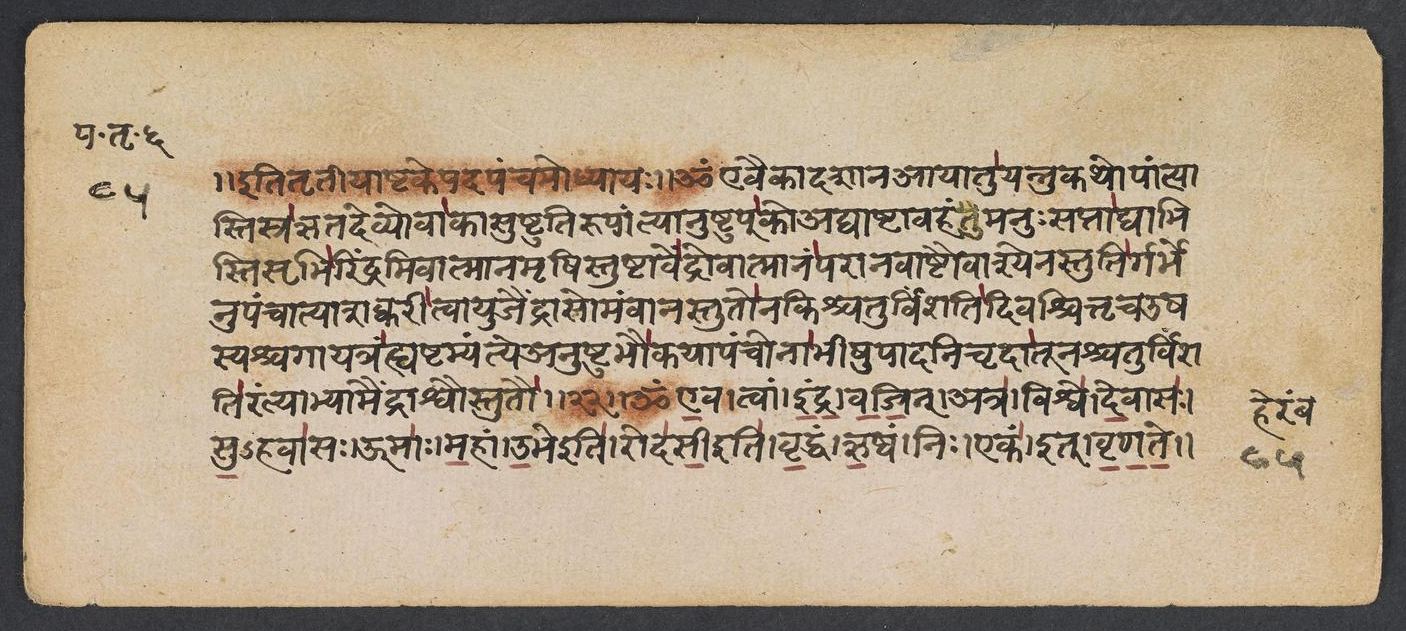
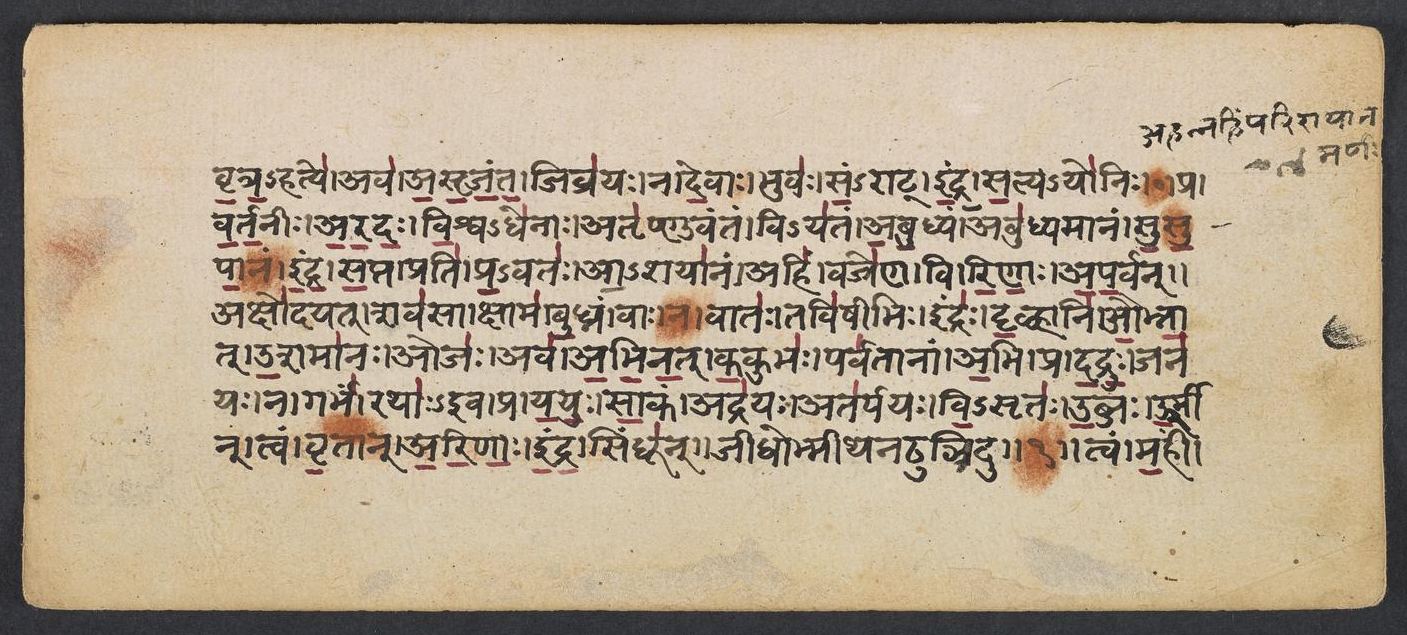
Where on the image
Penn Ms. Coll. 390 Item 41, fol. 277r (numbered 86r by the scribe) (OPenn image 277, lower leaf). Checked on the image: the Rigveda text on this page begins in RV 4.19.1 ‹vṛtra-hatye›. The next page with Rigveda text, fol. 277v (numbered 86v by the scribe), begins in RV 4.19.6 ‹avanim viśva-dhenām turvītaye vayyāya›. Verses 4.19.1-5 end on this page; 4.19.1 begins on fol. 276v (numbered 85v by the scribe).
1e̱vā tvām i̍ndra vajri̱nn atra̱ viśve̍ de̱vāsa̍ḥ su̱havā̍sa̱ ūmā̍ḥ | ma̱hām u̱bhe roda̍sī vṛ̱ddham ṛ̱ṣvaṁ nir eka̱m id vṛ̍ṇate vṛtra̱hatye̍ ||
2avā̍sṛjanta̱ jivra̍yo̱ na de̱vā bhuva̍ḥ sa̱mrāḻ i̍ndra sa̱tyayo̍niḥ | aha̱nn ahi̍m pari̱śayā̍na̱m arṇa̱ḥ pra va̍rta̱nīr a̍rado vi̱śvadhe̍nāḥ ||
3atṛ̍pṇuvanta̱ṁ viya̍tam abu̱dhyam abu̍dhyamānaṁ suṣupā̱ṇam i̍ndra | sa̱pta prati̍ pra̱vata̍ ā̱śayā̍na̱m ahi̱ṁ vajre̍ṇa̱ vi ri̍ṇā apa̱rvan ||
4akṣo̍daya̱c chava̍sā̱ kṣāma̍ bu̱dhnaṁ vār ṇa vāta̱s tavi̍ṣībhi̱r indra̍ḥ | dṛ̱ḻhāny au̍bhnād u̱śamā̍na̱ ojo 'vā̍bhinat ka̱kubha̱ḥ parva̍tānām ||
5a̱bhi pra da̍dru̱r jana̍yo̱ na garbha̱ṁ rathā̍ iva̱ pra ya̍yuḥ sā̱kam adra̍yaḥ | ata̍rpayo vi̱sṛta̍ u̱bja ū̱rmīn tvaṁ vṛ̱tām̐ a̍riṇā indra̱ sindhū̍n ||
Compare: Padapāṭha (word-by-word text written in the manuscript; Sansknet e-text via GRETIL)
1eva | tvām | indra | vajrin | atra | viśve | devāsaḥ | su-havāsaḥ | ūmāḥ | mahām | ubhe iti | rodasī iti | vṛddham | ṛṣvam | niḥ | ekam | it | gṛṇate | vṛtra-hatye
2ava | asṛjanta | jivrayaḥ | na | devāḥ | bhuvaḥ | sam-rāṭ | indra | satya-yoni ḥ | ahan | ahim | pari-śayānam | arṇaḥ | pra | vartanīḥ | aradaḥ | viśva-dhenāḥ
3atṛpṇuvantam | vi-yatam | abudhyam | abudhyamānam | susupāṇam | indra | sapta | prati | pra-vataḥ | āśayānam | ahim | vajreṇa | vi | riṇāḥ | aparvan
4akṣodayat | śavasā | kṣāma | budhnam | vāḥ | na | vātaḥ | taviṣībhiḥ | indraḥ | dṛḷhāni | aubhnāt | uśamānaḥ | ojaḥ | ava | abhinat | kakubhaḥ | parvatānām
5abhi | pra | dadruḥ | janayaḥ | na | garbham | rathāḥ-iva | pra | yayuḥ | sākam | adrayaḥ | atarpayaḥ | vi-sṛtaḥ | ubjaḥ | ūrmīn | tvam | vṛtān | ariṇāḥ | indra | sindhūn
1THEE, verily, O Thunder-wielding Indra, all the Gods here, the Helpers swift to listen, And both the worlds elected, thee the Mighty, High, waxen strong, alone to slaughter Vr̥itra.
2The Gods, as worn witheld, relaxed their efforts: thou, Indra, born of truth, wast Sovran Ruler. Thou slewest Ahi who besieged the waters, and duggest out their all-supporting channels.
3The insatiate one, extended, hard to waken, who slumbered in perpetual sleep, O Indra,– The Dragon stretched against the seven prone rivers, where no joint was, thou rentest with thy thunder.
4Indra with might shook earth and her foundation as the wind stirs the water with its fury. Striving, with strength he burst the firm asunder, and tore away the summits of the mountains.
5They ran to thee as mothers to their offspring: the clouds, like chariots, hastened forth together. Thou didst refresh the streams and force the billows: thou, Indra, settest free obstructed rivers.
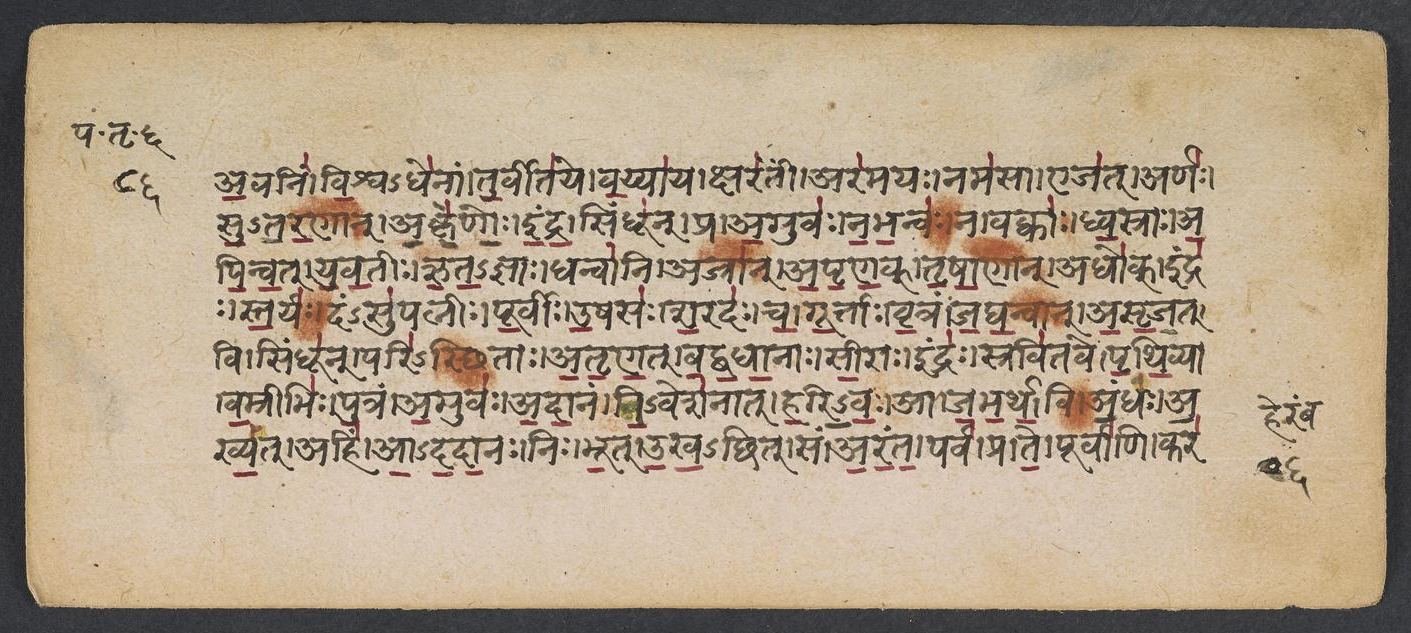
Where on the image
Penn Ms. Coll. 390 Item 41, fol. 277v (numbered 86v by the scribe) (OPenn image 278, upper leaf). Checked on the image: the Rigveda text on this page begins in RV 4.19.6 ‹avanim viśva-dhenām turvītaye vayyāya›. The next page with Rigveda text, fol. 278r (numbered 87r by the scribe), begins in RV 4.19.10 ‹-karaṇāni vipra āvidvān āha›. Verses 4.19.6-9 end on this page; 4.19.6 begins on fol. 277r (numbered 86r by the scribe).
6tvam ma̱hīm a̱vani̍ṁ vi̱śvadhe̍nāṁ tu̱rvīta̍ye va̱yyā̍ya̱ kṣara̍ntīm | ara̍mayo̱ nama̱saija̱d arṇa̍ḥ sutara̱ṇām̐ a̍kṛṇor indra̱ sindhū̍n ||
7prāgruvo̍ nabha̱nvo̱3̱̍ na vakvā̍ dhva̱srā a̍pinvad yuva̱tīr ṛ̍ta̱jñāḥ | dhanvā̱ny ajrā̍m̐ apṛṇak tṛṣā̱ṇām̐ adho̱g indra̍ḥ sta̱ryo̱3̱̍ daṁsu̍patnīḥ ||
8pū̱rvīr u̱ṣasa̍ḥ śa̱rada̍ś ca gū̱rtā vṛ̱traṁ ja̍gha̱nvām̐ a̍sṛja̱d vi sindhū̍n | pari̍ṣṭhitā atṛṇad badbadhā̱nāḥ sī̱rā indra̱ḥ sravi̍tave pṛthi̱vyā ||
9va̱mrībhi̍ḥ pu̱tram a̱gruvo̍ adā̱naṁ ni̱veśa̍nād dhariva̱ ā ja̍bhartha | vy a1̱̍ndho a̍khya̱d ahi̍m ādadā̱no nir bhū̍d ukha̱cchit sam a̍ranta̱ parva̍ ||
Compare: Padapāṭha (word-by-word text written in the manuscript; Sansknet e-text via GRETIL)
6tvam | mahīm | avanim | viśva-dhenām | turvītaye | vayyāya | kṣarantīm | aramayaḥ | namasā | ejat | arṇaḥ | su-taraṇān | akṛṇoḥ | indra | sindhūn
7pra | agruvaḥ | nabhanvaḥ | na | vakvaaḥ | dhvasrāḥ | apinvat | yuvatīḥ | ṛta-jñāḥ | dhanvāni | ajrān | apṛṇak | tṛṣāṇān | adhok | indraḥ | staryaḥ | dam-supatnīḥ
8pūrvīḥ | uṣasaḥ | śaradaḥ | ca | gūrtāḥ | vṛtram | jaghanvān | asṛjat | vi | sindhūn | pari-sthitāḥ | atṛṇat | badbadhānāḥ | sīrāḥ | indraḥ | sravitave | pṛthivyā
9vamrībhiḥ | putram | agruvaḥ | adānam | ni-veśanāt | hari-vaḥ | ā | jabhartha | v i | andhaḥ | akhyat | ahim | ādadānaḥ | niḥ | bhūt | ukha-chit | sam | aranta | parva
6Thou for the sake of Vayya and Turvîti didst stay the great stream, flowing, allsustaining: Yea, at their prayer didst check the rushing river and make the floods easy to cross, O Indra.
7He let the young Maids skilled in Law, unwedded, like fountains, bubbling, flow forth streaming onward. He inundated thirsty plains and deserts, and milked the dry Cows of the mighty master.
8Through many a morn and many a lovely autumn, having slain Vr̥itra, lie set free the rivers. Indra hath set at liberty to wander on earth the streams encompassed pressed together.
9Lord of Bay Steeds, thou broughtest from the ant-hill the unwedded damsel's son whom ants were eating. The blind saw clearly, as he grasped the serpent, rose, brake the jar: hisjoints again united.
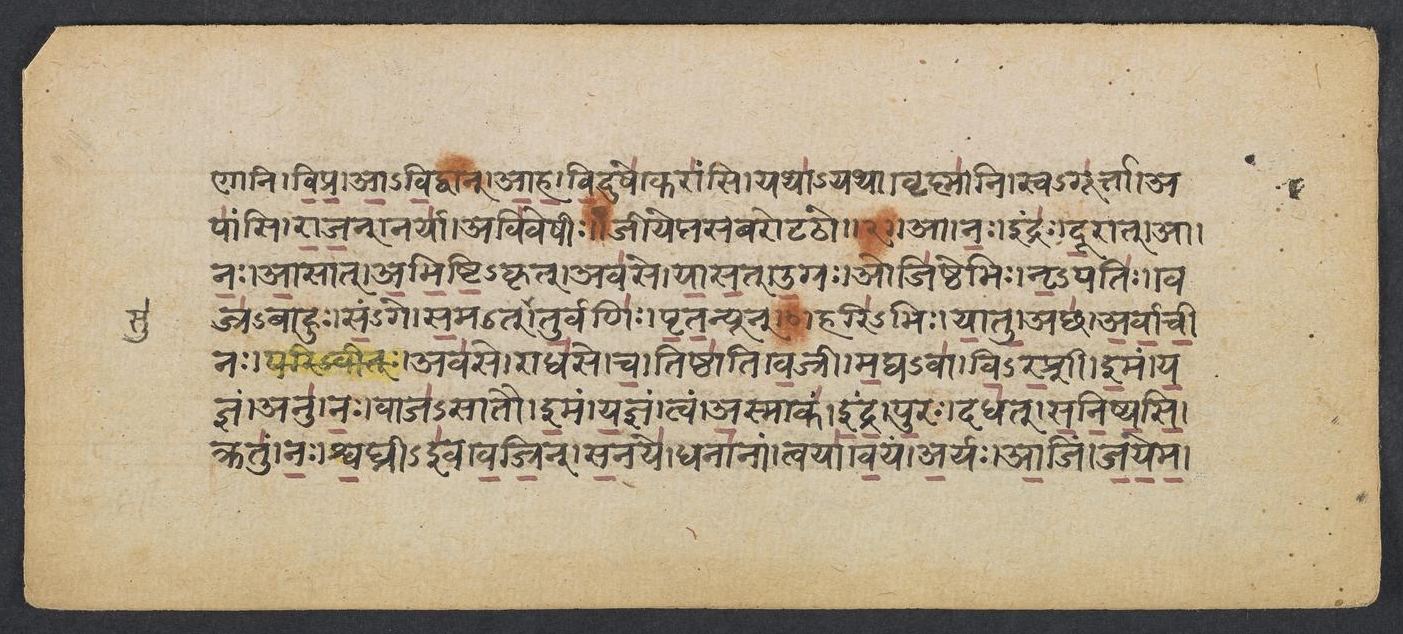
Where on the image
Penn Ms. Coll. 390 Item 41, fol. 278r (numbered 87r by the scribe) (OPenn image 278, lower leaf). Checked on the image: the Rigveda text on this page begins in RV 4.19.10 ‹-karaṇāni vipra āvidvān āha›. The next page with Rigveda text, fol. 278v (numbered 87v by the scribe), begins in RV 4.20.4 ‹uśan oṃ iti su›. Verses 4.19.10-11 end on this page; 4.19.10 begins on fol. 277v (numbered 86v by the scribe).
10pra te̱ pūrvā̍ṇi̱ kara̍ṇāni viprāvi̱dvām̐ ā̍ha vi̱duṣe̱ karā̍ṁsi | yathā̍-yathā̱ vṛṣṇyā̍ni̱ svagū̱rtāpā̍ṁsi rāja̱n naryāvi̍veṣīḥ ||
11nū ṣṭu̱ta i̍ndra̱ nū gṛ̍ṇā̱na iṣa̍ṁ jari̱tre na̱dyo̱3̱̍ na pī̍peḥ | akā̍ri te harivo̱ brahma̱ navya̍ṁ dhi̱yā syā̍ma ra̱thya̍ḥ sadā̱sāḥ ||
Compare: Padapāṭha (word-by-word text written in the manuscript; Sansknet e-text via GRETIL)
10pra | te | pūrvāṇi | karaṇāni | vipra | āvidvān | āha | viduṣe | karāṃsi | yathāyathā | vṛṣṇyāni | sva-gūrtā | apāṃsi | rājan | naryā | aviveṣīḥ
11nu | stutaḥ | indra | nu | gṛṇānaḥ | iṣam | jaritre | nadyaḥ | na | pīperitipīpeḥ | akāri | te | hari-vaḥ | brahma | navyam | dhiyā | syāma | rathyaḥ | sadāsāḥ
10To the wise man, O Sage and Sovran Ruler, the man who knoweth all thine ancient exploits. Hath told these deeds of might as thou hast wrought them, great acts, spontaneous, and to man's advantage.
11Now, Indra! lauded, glorified with praises, let powers swell high, like rivers, for the singer. For thee a new hymn, Lord of Bays! is fashioned. May we, car-borne, through song be victors ever.
Notes
- Sanskrit: Aufrecht's edition (1877) with the Vedic accents, as entered by van Nooten and Holland (GRETIL).
- English: Ralph T. H. Griffith, The Hymns of the Rigveda (1889-1892; 2nd ed. 1896-1897), from the VedaWeb digital text; OCR slips in that text were corrected against the printed 2nd edition (data/sources/rigveda/griffith_errata.json).
- Padapāṭha (edition text): Sansknet e-text via GRETIL (CC BY-NC-SA 4.0).
Cite
Sources
- Source: Penn Ms. Coll. 390 Item 41 (undated (catalogued with Penn's 18th-19th c. Vedic manuscripts)), OPenn, Public Domain Mark + Aufrecht's accented text (GRETIL) + Griffith's English (VedaWeb) (holding institution)
- Critical edition: Aufrecht (1877), accented e-text via GRETIL
← previous · → next · v cycle view · l back to library