Rigveda 4.20: To Indra
Introduction
Rigveda 4.20 is a hymn of 11 verses addressed to Indra. It stands in book (maṇḍala) 4, the family book of Vāmadeva. The Rigveda is the oldest collection of Sanskrit hymns, composed in the second half of the second millennium BCE and handed down orally for many centuries before it was written down.
The manuscript shown is Penn Ms. Coll. 390 Item 41 (University of Pennsylvania), an undated paper manuscript of the padapāṭha (the word-by-word recitation text, in which every word is written separately and compounds are split) of the whole Ṛgveda in Devanāgarī, 884 leaves in fascicles, 7-9 lines to the page, accents in red; this hymn stands on fol. 278r-279r. Each section below gives the verses that end on one page; the page boundaries were read on the images (the opening words of every page), not counted out. Where the manuscript is a padapāṭha (the word-by-word recitation text), the section shows Aufrecht's continuous (saṃhitā) text first and, as the edition text, the padapāṭha of the same verses, which is the form written on the page.
How was this verified? (Provenance)
Where on the image
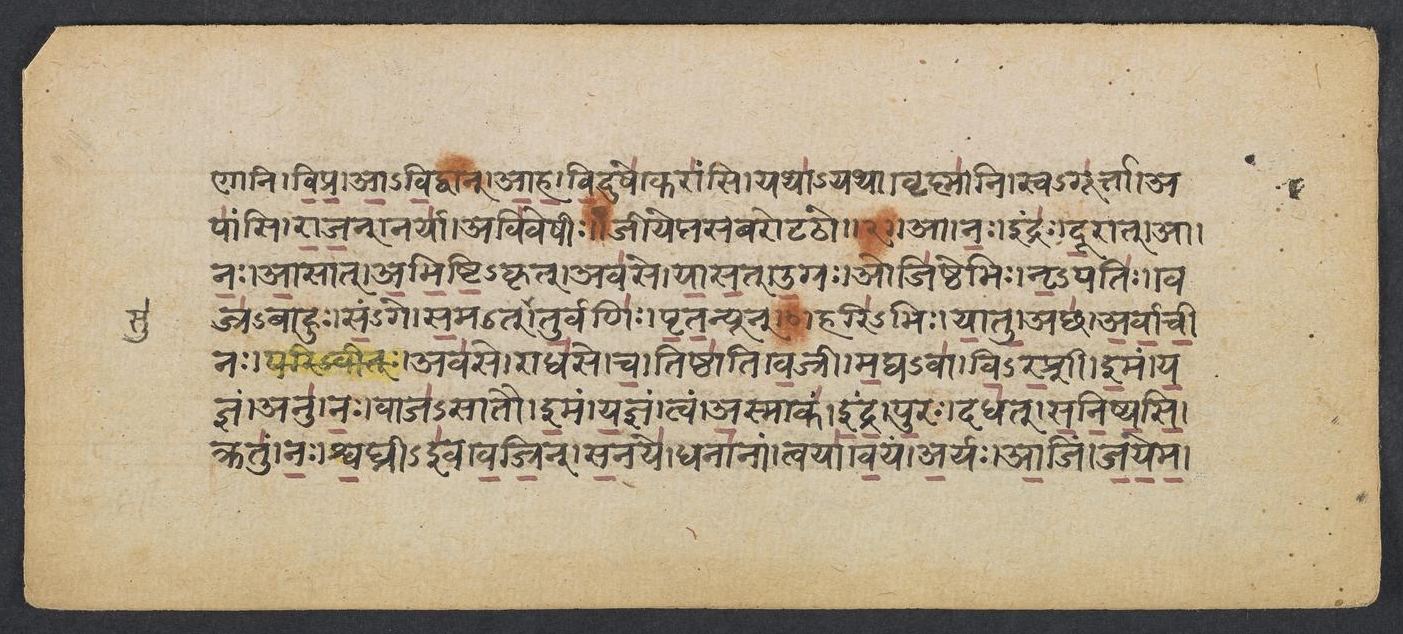
Penn Ms. Coll. 390 Item 41, fol. 278r (numbered 87r by the scribe) (OPenn image 278, lower leaf). Checked on the image: the Rigveda text on this page begins in RV 4.19.10 ‹-karaṇāni vipra āvidvān āha›. The next page with Rigveda text, fol. 278v (numbered 87v by the scribe), begins in RV 4.20.4 ‹uśan oṃ iti su›. Verses 4.20.1-3 end on this page.
1ā na̱ indro̍ dū̱rād ā na̍ ā̱sād a̍bhiṣṭi̱kṛd ava̍se yāsad u̱graḥ | oji̍ṣṭhebhir nṛ̱pati̱r vajra̍bāhuḥ sa̱ṁge sa̱matsu̍ tu̱rvaṇi̍ḥ pṛta̱nyūn ||
2ā na̱ indro̱ hari̍bhir yā̱tv acchā̍rvācī̱no 'va̍se̱ rādha̍se ca | tiṣṭhā̍ti va̱jrī ma̱ghavā̍ vira̱pśīmaṁ ya̱jñam anu̍ no̱ vāja̍sātau ||
3i̱maṁ ya̱jñaṁ tvam a̱smāka̍m indra pu̱ro dadha̍t saniṣyasi̱ kratu̍ṁ naḥ | śva̱ghnīva̍ vajrin sa̱naye̱ dhanā̍nā̱ṁ tvayā̍ va̱yam a̱rya ā̱jiṁ ja̍yema ||
Compare: Padapāṭha (word-by-word text written in the manuscript; Sansknet e-text via GRETIL)
1ā | naḥ | indraḥ | dūrāt | ā | naḥ | āsāt | abhiṣṭi-kṛt | avase | yāsat | ugraḥ | ojiṣṭhebhiḥ | nṛ-patiḥ | vajra-bāhuḥ | sam-ge | samat-su | pṛtanyūn
2ā | naḥ | indraḥ | hari-bhiḥ | yātu | accha | arvācīnaḥ | avase | rādhase | ca | tiṣṭhāti | vajrī | magha-vā | vi-rapśī | imam | yajñam | anu | naḥ | vāja-sātau
3imam | yajñam | tvam | asmākam | indra | puraḥ | dadhat | saniṣyasi | kratum | naḥ | śvaghnī-iva | vajrin | sanaye | dhanānām | tvayā | vayam | aryaḥ | ājim | jayema
1FROM near or far away may mighty Indra giver of succour, come for our protection Lord of men, armed with thunder, with the Strongest, slaying his foes in conflict, in the battles.
2May Indra come to us with Tawny Coursers, inclined to us, to favour and enrich us. May Maghavan, loud-voiced and wielding thunder, stand by us at this sacrifice, in combat.
3Thou, honouring this our sacrifice, O Indra, shalt give us strength and fill us full of courage. To win the booty, Thunder-armed! like hunters may we with thee subdue in fight our foemen.
Where on the image
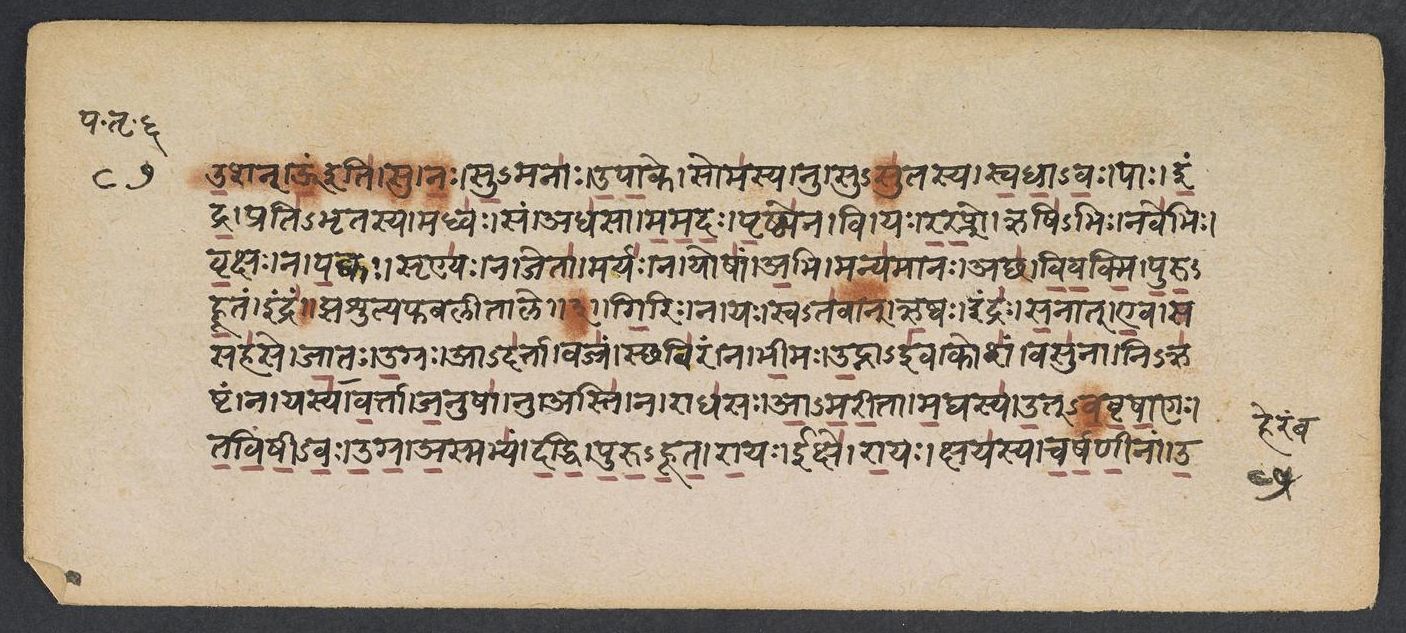
Penn Ms. Coll. 390 Item 41, fol. 278v (numbered 87v by the scribe) (OPenn image 279, upper leaf). Checked on the image: the Rigveda text on this page begins in RV 4.20.4 ‹uśan oṃ iti su›. The next page with Rigveda text, fol. 279r (numbered 88r by the scribe), begins in RV 4.20.8 ‹-uta vrajam apa-vartā asi›. Verses 4.20.4-7 end on this page.
4u̱śann u̱ ṣu ṇa̍ḥ su̱manā̍ upā̱ke soma̍sya̱ nu suṣu̍tasya svadhāvaḥ | pā i̍ndra̱ prati̍bhṛtasya̱ madhva̱ḥ sam andha̍sā mamadaḥ pṛ̱ṣṭhye̍na ||
5vi yo ra̍ra̱pśa ṛṣi̍bhi̱r nave̍bhir vṛ̱kṣo na pa̱kvaḥ sṛṇyo̱ na jetā̍ | maryo̱ na yoṣā̍m a̱bhi manya̍mā̱no 'cchā̍ vivakmi puruhū̱tam indra̍m ||
6gi̱rir na yaḥ svata̍vām̐ ṛ̱ṣva indra̍ḥ sa̱nād e̱va saha̍se jā̱ta u̱graḥ | āda̍rtā̱ vajra̱ṁ sthavi̍ra̱ṁ na bhī̱ma u̱dneva̱ kośa̱ṁ vasu̍nā̱ nyṛ̍ṣṭam ||
7na yasya̍ va̱rtā ja̱nuṣā̱ nv asti̱ na rādha̍sa āmarī̱tā ma̱ghasya̍ | u̱dvā̱vṛ̱ṣā̱ṇas ta̍viṣīva ugrā̱smabhya̍ṁ daddhi puruhūta rā̱yaḥ ||
Compare: Padapāṭha (word-by-word text written in the manuscript; Sansknet e-text via GRETIL)
4uśan | oṃ iti | su | ṇaḥ | su-manāḥ | upāke | somasya | nu | su-sutasya | svadhāvaḥ | pāḥ | indra | prati-bhṛtasya | madhvaḥ | sam | andhasā | mamadaḥ | pṛṣṭhyena
5vi | yaḥ | rarapśe | ṛṣi-bhiḥ | navebhiḥ | vṛkṣaḥ | na | pakvaḥ | sṛṇyaḥ | na | jetā | maryaḥ | na | yoṣām | abhi | manyamānaḥ | accha | vivakmi | puru-hūtam | indram
6giriḥ | na | yaḥ | sva-tavān | ṛṣvaḥ | indraḥ | sanāt | eva | sahase | jātaḥ | ugraḥ | ādartā | vajram | sthaviram | na | bhīmaḥ | udnāiva | kośam | vasunā | ni-ṛṣṭam
7na | yasya | vartā | januṣā | nu | asti | na | rādhasaḥ | āmarītā | maghasya | ut-vavṛṣāṇaḥ | taviṣī-vaḥ | ugra | asmabhyam | daddhi | puru-hūta | rāyaḥ
4Loving us well, benevolent, close beside us, drink, Godlike Indra, of the wellpressed Soma. Drink of the meath we offer, and delight thee with food that cometh from the mountain ridges.
5Him who is sung aloud by recent sages, like a ripe-fruited tree, a scythe-armed victor,– I, like a bridegroom thinking of his consort, call hither Indra, him invoked of many;
6Him who in native strength is like a mountain, the lofty Indra born or old for conquest, Terrific wielder of the ancient thunder. filled full with splendour as a jar with water.
7Whom from of old there is not one to hinder, none to curtail the riches of his bounty. Pouring forth freely, O thou Strong and Mighty, vouchsafe us riches, God invoked of many!
Where on the image
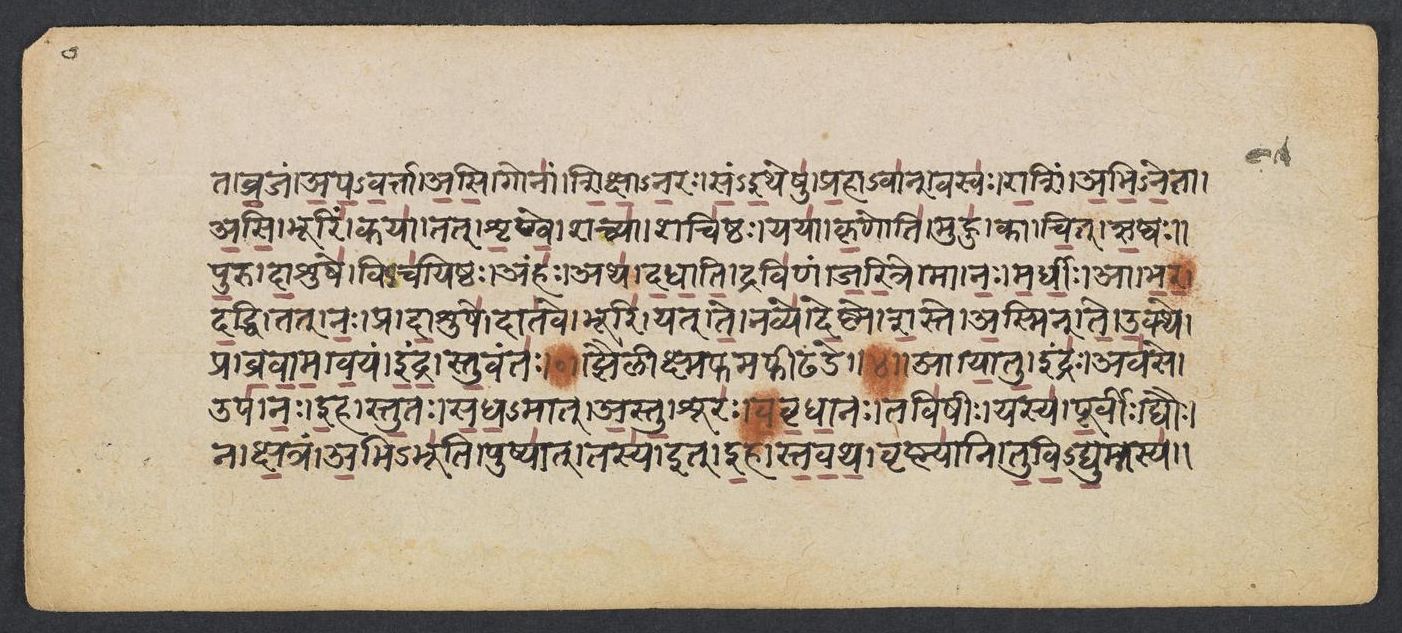
Penn Ms. Coll. 390 Item 41, fol. 279r (numbered 88r by the scribe) (OPenn image 279, lower leaf). Checked on the image: the Rigveda text on this page begins in RV 4.20.8 ‹-uta vrajam apa-vartā asi›. The next page with Rigveda text, fol. 279v (numbered 88v by the scribe), begins in RV 4.21.2 ‹tuvi-rādhasaḥ nṝn yasya kratuḥ›. Verses 4.20.8-11 end on this page; 4.20.8 begins on fol. 278v (numbered 87v by the scribe).
8īkṣe̍ rā̱yaḥ kṣaya̍sya carṣaṇī̱nām u̱ta vra̱jam a̍pava̱rtāsi̱ gonā̍m | śi̱kṣā̱na̱raḥ sa̍mi̱theṣu̍ pra̱hāvā̱n vasvo̍ rā̱śim a̍bhine̱tāsi̱ bhūri̍m ||
9kayā̱ tac chṛ̍ṇve̱ śacyā̱ śaci̍ṣṭho̱ yayā̍ kṛ̱ṇoti̱ muhu̱ kā ci̍d ṛ̱ṣvaḥ | pu̱ru dā̱śuṣe̱ vica̍yiṣṭho̱ aṁho 'thā̍ dadhāti̱ dravi̍ṇaṁ jari̱tre ||
10mā no̍ mardhī̱r ā bha̍rā da̱ddhi tan na̱ḥ pra dā̱śuṣe̱ dāta̍ve̱ bhūri̱ yat te̍ | navye̍ de̱ṣṇe śa̱ste a̱smin ta̍ u̱kthe pra bra̍vāma va̱yam i̍ndra stu̱vanta̍ḥ ||
11nū ṣṭu̱ta i̍ndra̱ nū gṛ̍ṇā̱na iṣa̍ṁ jari̱tre na̱dyo̱3̱̍ na pī̍peḥ | akā̍ri te harivo̱ brahma̱ navya̍ṁ dhi̱yā syā̍ma ra̱thya̍ḥ sadā̱sāḥ ||
Compare: Padapāṭha (word-by-word text written in the manuscript; Sansknet e-text via GRETIL)
8īkṣe | rāyaḥ | kṣayasya | carṣaṇīnām | uta | vrajam | apa-vartā | asi | gonām | śikṣānaraḥ | sam-itheṣu | prahāvān | vasvaḥ | rāśim | abhi-netā | asi | bhūrim
9kayā | tat | śṛṇve | śacyā | śaciṣṭhaḥ | yayā | kṛṇoti | muhu | kā | cit | dṛṣvaḥ | puru | dāśuṣe | vi-cayiṣṭhaḥ | aṃhaḥ | atha | dadhāti | draviṇam | jaritre
10mā | naḥ | mardhīḥ | ā | bhara | daddhi | tat | naḥ | pra | dāśuṣe | dātave | bhūri | yat | te | navye | deṣṇe | śaste | asmin | te | ukthe | pra | bravāma | vayam | indra | stuvantaḥ
11nu | stutaḥ | indra | nu | gṛṇānaḥ | iṣam | jaritre | nadyaḥ | na | pīperitipīpeḥ | akāri | te | hari-vaḥ | brahma | navyam | dhiyā | syāma | rathyaḥ | sadāsāḥ
8Of wealth and homes of men thou art the ruler, and opener of the stable of the cattle. Helper of men, winner of spoil in combats, thou leadest to an ample heap of riches.
9By what great might is he renowned as strongest, wherewith the Lofty One stirs up wild battles? Best soother of the worshipper's great sorrow, he gives possessions to the man who lauds him.
10Slay us not; bring, bestow onus the ample gift which thou hast to give to him who offers. At this new gift, with this laud sung before thee, extolling thee, we, Indra, will declare it.
11Now, Indra! lauded, glorified with praises, let power swell high, like rivers, for the singer. A new hymn, Lord of Bays! for thee is fashioned. May we, car-borne, through song be victors ever.
Notes
- Sanskrit: Aufrecht's edition (1877) with the Vedic accents, as entered by van Nooten and Holland (GRETIL).
- English: Ralph T. H. Griffith, The Hymns of the Rigveda (1889-1892; 2nd ed. 1896-1897), from the VedaWeb digital text; OCR slips in that text were corrected against the printed 2nd edition (data/sources/rigveda/griffith_errata.json).
- Padapāṭha (edition text): Sansknet e-text via GRETIL (CC BY-NC-SA 4.0).
Cite
Sources
- Source: Penn Ms. Coll. 390 Item 41 (undated (catalogued with Penn's 18th-19th c. Vedic manuscripts)), OPenn, Public Domain Mark + Aufrecht's accented text (GRETIL) + Griffith's English (VedaWeb) (holding institution)
- Critical edition: Aufrecht (1877), accented e-text via GRETIL
← previous · → next · v cycle view · l back to library