Rigveda 4.3: To Agni
Introduction
Rigveda 4.3 is a hymn of 16 verses addressed to Agni. It stands in book (maṇḍala) 4, the family book of Vāmadeva. The Rigveda is the oldest collection of Sanskrit hymns, composed in the second half of the second millennium BCE and handed down orally for many centuries before it was written down.
The manuscript shown is Penn Ms. Coll. 390 Item 41 (University of Pennsylvania), an undated paper manuscript of the padapāṭha (the word-by-word recitation text, in which every word is written separately and compounds are split) of the whole Ṛgveda in Devanāgarī, 884 leaves in fascicles, 7-9 lines to the page, accents in red; this hymn stands on fol. 255v-257v. Each section below gives the verses that end on one page; the page boundaries were read on the images (the opening words of every page), not counted out. Where the manuscript is a padapāṭha (the word-by-word recitation text), the section shows Aufrecht's continuous (saṃhitā) text first and, as the edition text, the padapāṭha of the same verses, which is the form written on the page.
How was this verified? (Provenance)
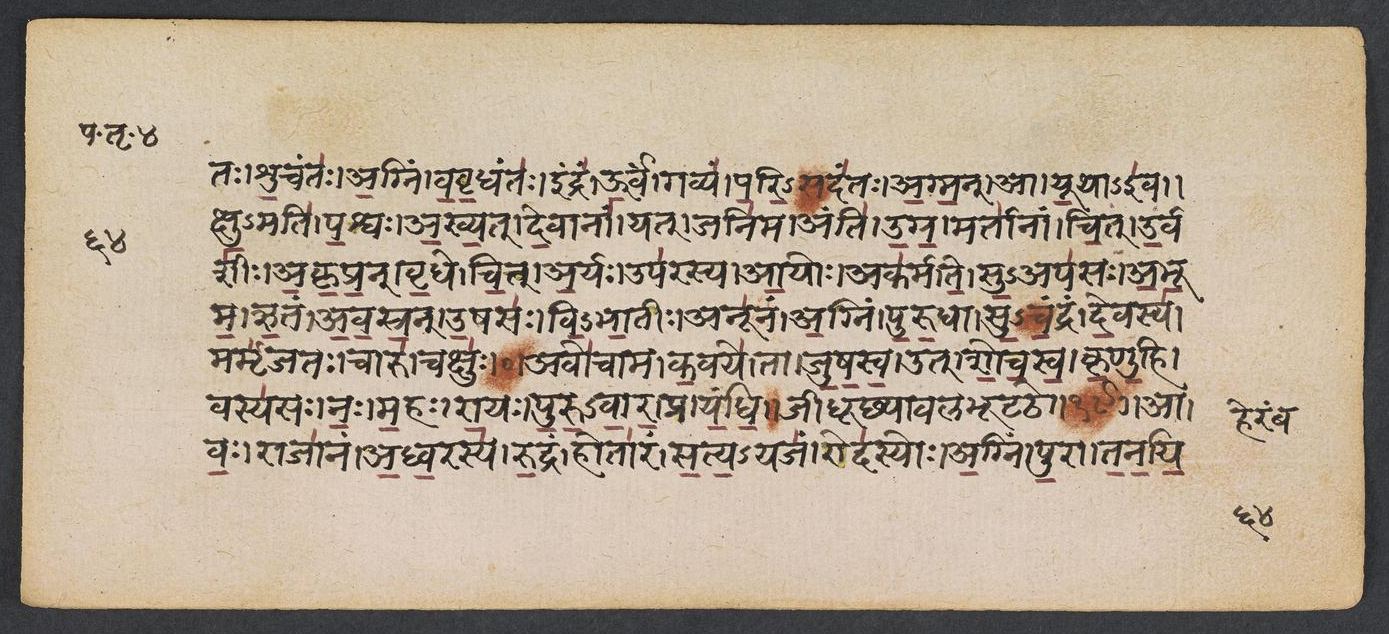
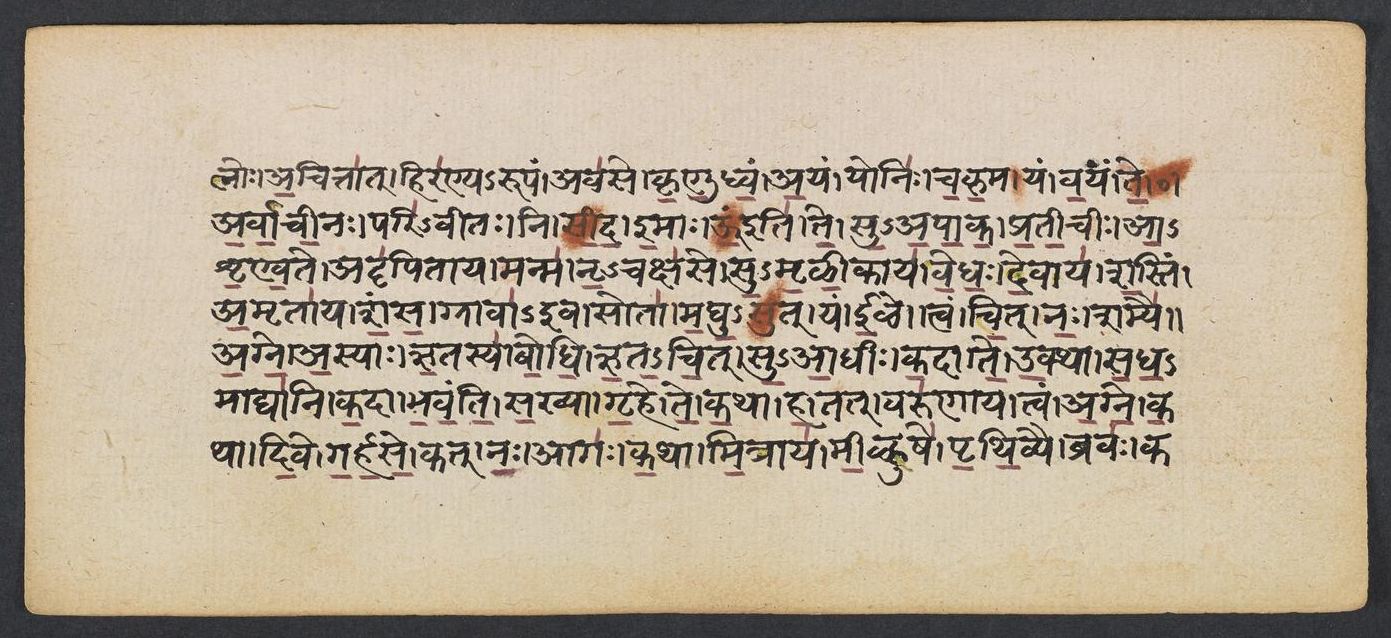
Where on the image
Penn Ms. Coll. 390 Item 41, fol. 256r (numbered 65r by the scribe) (OPenn image 256, lower leaf). Checked on the image: the Rigveda text on this page begins in RV 4.3.1 ‹-tanayitnoḥ acittāt hiraṇya-rūpam avase›. The next page with Rigveda text, fol. 256v (numbered 65v by the scribe), begins in RV 4.3.5 ‹-kat aryamṇe kat bhagāya›. Verses 4.3.1-4 end on this page; 4.3.1 begins on fol. 255v (numbered 64v by the scribe).
1ā vo̱ rājā̍nam adhva̱rasya̍ ru̱draṁ hotā̍raṁ satya̱yaja̱ṁ roda̍syoḥ | a̱gnim pu̱rā ta̍nayi̱tnor a̱cittā̱d dhira̍ṇyarūpa̱m ava̍se kṛṇudhvam ||
2a̱yaṁ yoni̍ś cakṛ̱mā yaṁ va̱yaṁ te̍ jā̱yeva̱ patya̍ uśa̱tī su̱vāsā̍ḥ | a̱rvā̱cī̱naḥ pari̍vīto̱ ni ṣī̍de̱mā u̍ te svapāka pratī̱cīḥ ||
3ā̱śṛ̱ṇva̱te adṛ̍pitāya̱ manma̍ nṛ̱cakṣa̍se sumṛḻī̱kāya̍ vedhaḥ | de̱vāya̍ śa̱stim a̱mṛtā̍ya śaṁsa̱ grāve̍va̱ sotā̍ madhu̱ṣud yam ī̱ḻe ||
4tvaṁ ci̍n na̱ḥ śamyā̍ agne a̱syā ṛ̱tasya̍ bodhy ṛtacit svā̱dhīḥ | ka̱dā ta̍ u̱kthā sa̍dha̱mādyā̍ni ka̱dā bha̍vanti sa̱khyā gṛ̱he te̍ ||
Compare: Padapāṭha (word-by-word text written in the manuscript; Sansknet e-text via GRETIL)
1ā | vaḥ | rājānam | adhvarasya | rudram | hotāram | satya-yajam | rodasyoḥ | agnim | purā | tanayitnoḥ | acittāt | hiraṇya-rūpam | avase | kṛṇudhvam
2ayam | yoniḥ | cakṛma | yam | vayam | te | jāyāiva | patye | uśatī | su-vāsāḥ | arvācīnaḥ | pari-vītaḥ | ni | sīda | imāḥ | oṃ iti | te | su-apāka | pratīcīḥ
3āśṛṇvate | adṛpitāya | manma | nṛ-cakṣase | su-mṛḷīkāya | vedhaḥ | devāya | śastim | amṛtāya | śaṃsa | grāvāiva | sotā | madhu-sut | yam | īḷe
4tvam | cit | naḥ | śamyai | agne | asyāḥ | ṛtasya | bodhi | ṛta-cit | su-ādhīḥ | kadā | te | ukthā | sadha-mādyāni | kadā | bhavanti | sakhyā | gṛhe | te
1WIN, to assist you, Rudra, Lord of worship, Priest of both worlds, effectual Sacrificer, Agni, invested with his golden colours, before the thunder strike and lay you senseless.
2This shrine have we made ready for thy coming, as the fond dame attires her for her husband. Performer of good work, sit down before us, invested while these flames incline to meet thee.
3A hymn, O Priest, to him who hears, the gentle, to him who looks on men, exceeding gracious, A song of praise sing to the God Immortal, whom the stone, presser of the sweet juice, worships.
4Even as true knower of the Law, O Agni, to this our solemn rite he thou attentive. When shall thy songs of festival be sung thee? When is thy friendship shown within our dwelling?
Where on the image
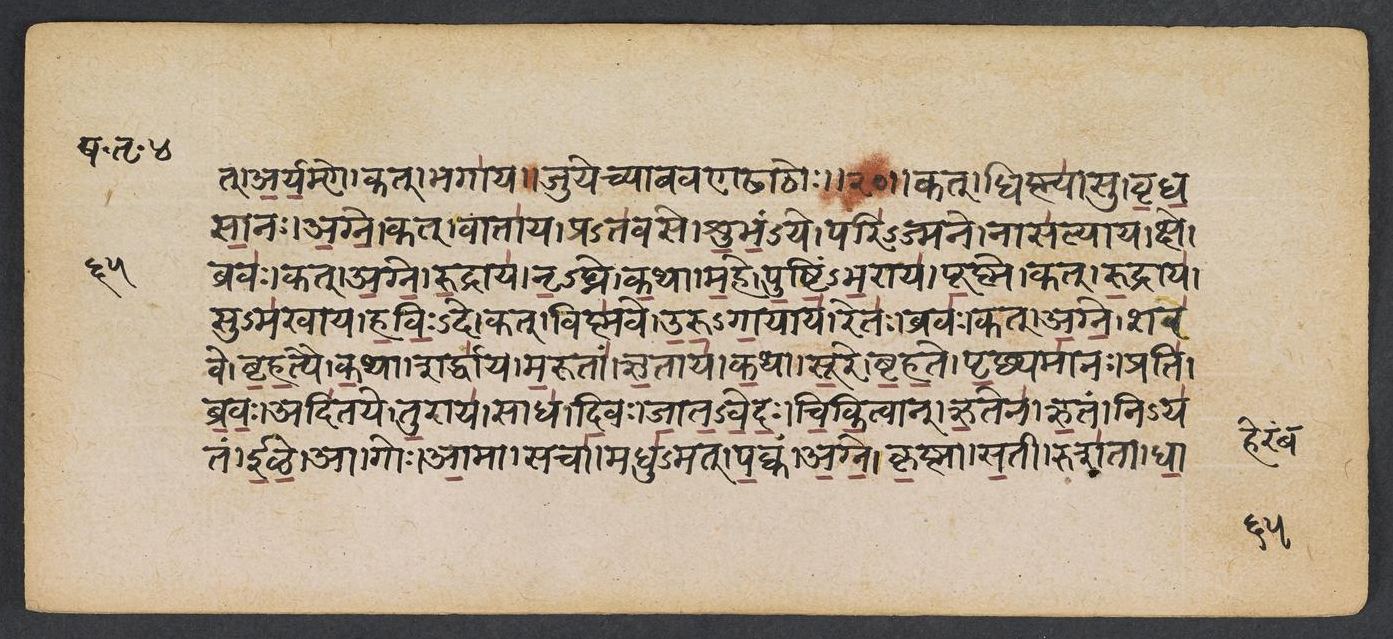
Penn Ms. Coll. 390 Item 41, fol. 256v (numbered 65v by the scribe) (OPenn image 257, upper leaf). Checked on the image: the Rigveda text on this page begins in RV 4.3.5 ‹-kat aryamṇe kat bhagāya›. The next page with Rigveda text, fol. 257r (numbered 66r by the scribe), begins in RV 4.3.9 ‹-dhāsinā eṣā jāmaryeṇa payasā›. Verses 4.3.5-8 end on this page; 4.3.5 begins on fol. 256r (numbered 65r by the scribe).
5ka̱thā ha̱ tad varu̍ṇāya̱ tvam a̍gne ka̱thā di̱ve ga̍rhase̱ kan na̱ āga̍ḥ | ka̱thā mi̱trāya̍ mī̱ḻhuṣe̍ pṛthi̱vyai brava̱ḥ kad a̍rya̱mṇe kad bhagā̍ya ||
6kad dhiṣṇyā̍su vṛdhasā̱no a̍gne̱ kad vātā̍ya̱ prata̍vase śubha̱ṁye | pari̍jmane̱ nāsa̍tyāya̱ kṣe brava̱ḥ kad a̍gne ru̱drāya̍ nṛ̱ghne ||
7ka̱thā ma̱he pu̍ṣṭimbha̱rāya̍ pū̱ṣṇe kad ru̱drāya̱ suma̍khāya havi̱rde | kad viṣṇa̍va urugā̱yāya̱ reto̱ brava̱ḥ kad a̍gne̱ śara̍ve bṛha̱tyai ||
8ka̱thā śardhā̍ya ma̱rutā̍m ṛ̱tāya̍ ka̱thā sū̱re bṛ̍ha̱te pṛ̱cchyamā̍naḥ | prati̍ bra̱vo 'di̍taye tu̱rāya̱ sādhā̍ di̱vo jā̍tavedaś ciki̱tvān ||
Compare: Padapāṭha (word-by-word text written in the manuscript; Sansknet e-text via GRETIL)
5kathā | ha | tat | varuṇāya | tvam | agne | kathā dive garhase | kat | naḥ | āgaḥ | kathā | mitrāya | mīḷhuṣe | pṛthivyai | bravaḥ | kat | aryamṇe | kat | bhagāya
6kat | dhiṣṇyāsu | vṛdhasānaḥ | agne | kat | vātāya | pra-tavase | śubhaṃmye | pari-jmane | nāsatyāya | kṣe | bravaḥ | kat | agne | rudrāya | nṛ-ghne
7kathā | mahe | puṣtim-bharāya | pūṣṇe | kat | rudrāya | su-makhāya | haviḥ-de | kat | v iṣṇave | uru-gāyāya | retaḥ | bravaḥ | kat | agne | śarave | bṛhatyai
8kathā | śardhāya | marutām | ṛtāya | kathā | sūre | bṛhate | pṛcchyamānaḥ | prati | bravaḥ | aditaye | turāya | sādha | divaḥ | jāta-vedaḥ | cikitvān
5Why this complaint to Varuṇa, O Agni? And why to Heaven? for what is our transgression? How wilt thou speak to Earth and bounteous Mitra? What wilt thou say to Aryaman and Bhaga?
6What, when thou blazest on the lesser altars, what to the mighty Wind who comes tobless us, True, circumambient? what to Earth, O Agni, what wilt thou say to man-destroying Rudra?
7How to great Pûshan who promotes our welfare,– to honoured Rudra what, who gives oblations? What sin of ours to the far-striding Vishṇu, what, Agni, wilt thou tell the Lofty Arrow.
8What wilt thou tell the truthful band of Maruts, how answer the great Sun when thou art questioned? Before the Free, before the Swift, defend us: fulfil heaven's work, all-knowing Jâtavedas.
Where on the image
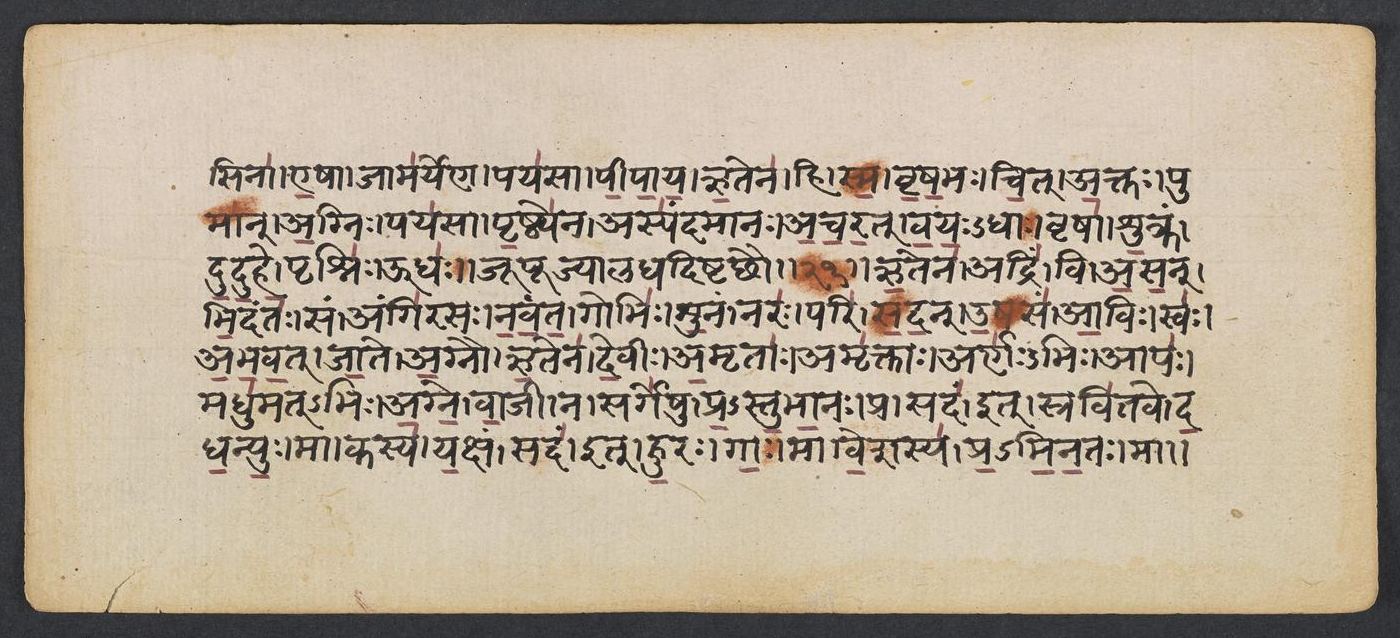
Penn Ms. Coll. 390 Item 41, fol. 257r (numbered 66r by the scribe) (OPenn image 257, lower leaf). Checked on the image: the Rigveda text on this page begins in RV 4.3.9 ‹-dhāsinā eṣā jāmaryeṇa payasā›. The next page with Rigveda text, fol. 257v (numbered 66v by the scribe), begins in RV 4.3.13 ‹āpeḥ mā bhrātuḥ agne›. Verses 4.3.9-12 end on this page; 4.3.9 begins on fol. 256v (numbered 65v by the scribe).
9ṛ̱tena̍ ṛ̱taṁ niya̍tam īḻa̱ ā gor ā̱mā sacā̱ madhu̍mat pa̱kvam a̍gne | kṛ̱ṣṇā sa̱tī ruśa̍tā dhā̱sinai̱ṣā jāma̍ryeṇa̱ paya̍sā pīpāya ||
10ṛ̱tena̱ hi ṣmā̍ vṛṣa̱bhaś ci̍d a̱ktaḥ pumā̍m̐ a̱gniḥ paya̍sā pṛ̱ṣṭhye̍na | aspa̍ndamāno acarad vayo̱dhā vṛṣā̍ śu̱kraṁ du̍duhe̱ pṛśni̱r ūdha̍ḥ ||
11ṛ̱tenādri̱ṁ vy a̍san bhi̱danta̱ḥ sam aṅgi̍raso navanta̱ gobhi̍ḥ | śu̱naṁ nara̱ḥ pari̍ ṣadann u̱ṣāsa̍m ā̱viḥ sva̍r abhavaj jā̱te a̱gnau ||
12ṛ̱tena̍ de̱vīr a̱mṛtā̱ amṛ̍ktā̱ arṇo̍bhi̱r āpo̱ madhu̍madbhir agne | vā̱jī na sarge̍ṣu prastubhā̱naḥ pra sada̱m it sravi̍tave dadhanyuḥ ||
Compare: Padapāṭha (word-by-word text written in the manuscript; Sansknet e-text via GRETIL)
9ṛtena | ṛtam | ni-yatam | īḷe | ā | goḥ | āmā | sacā | madhu-mat | pakvam | agne | kṛṣṇā | satī | ruśatā | dhāsinā | eṣā | jāmaryeṇa | payasā | ppy
10ṛtenaḥ | hi | sma | vṛṣabhaḥ | cit | aktaḥ | pumān | agniḥ | payasā | pṛṣṭyena | aspandamānaḥ | acarat | vayaḥ-dhāḥ | vṛṣā | śukram | duduhe | pṛśniḥ | ūdhaḥ
11ṛtena | adrim | vi | asan | bhidantaḥ | sam | aṅgirasaḥ | navanta | go--bhiḥ | śunam | naraḥ | pari | sadan | uṣasam | āviḥ | svaḥ | abhavat | jāte | agnau
12ṛtena | devīḥ | amṛtāḥ | amṛktāḥ | arṇaḥ-bhiḥ | āpaḥ | madhumat-bhiḥ | agne | vājī | na | sargeṣu | pra-stubhānaḥ | pra | sadam | it | sravitave | dadhanyuh
9I crave the cow's true gift arranged by Order: though raw, she hath the sweet ripe juice, O Agni. Though she is black of hue with milk she teemeth, nutritious, brightly shining, all-sustaining.
10Agni the Bull, the manly, hath been sprinkled with oil upon his back, by Law eternal. He who gives vital power goes on unswerving. Pr̥iṣni the Bull hath milked the pure white udder.
11By Law the Angirases cleft the rock asunder, and sang their hymns together with the cattle. Bringing great bliss the men encompassed Morning: light was apparent at the birth of Agni.
12By Law the Immortal Goddesses the Waters, with meath-rich waves, O Agni, and uninjured, Like a strong courser lauded in his running, sped to flow onward swiftly and for ever.
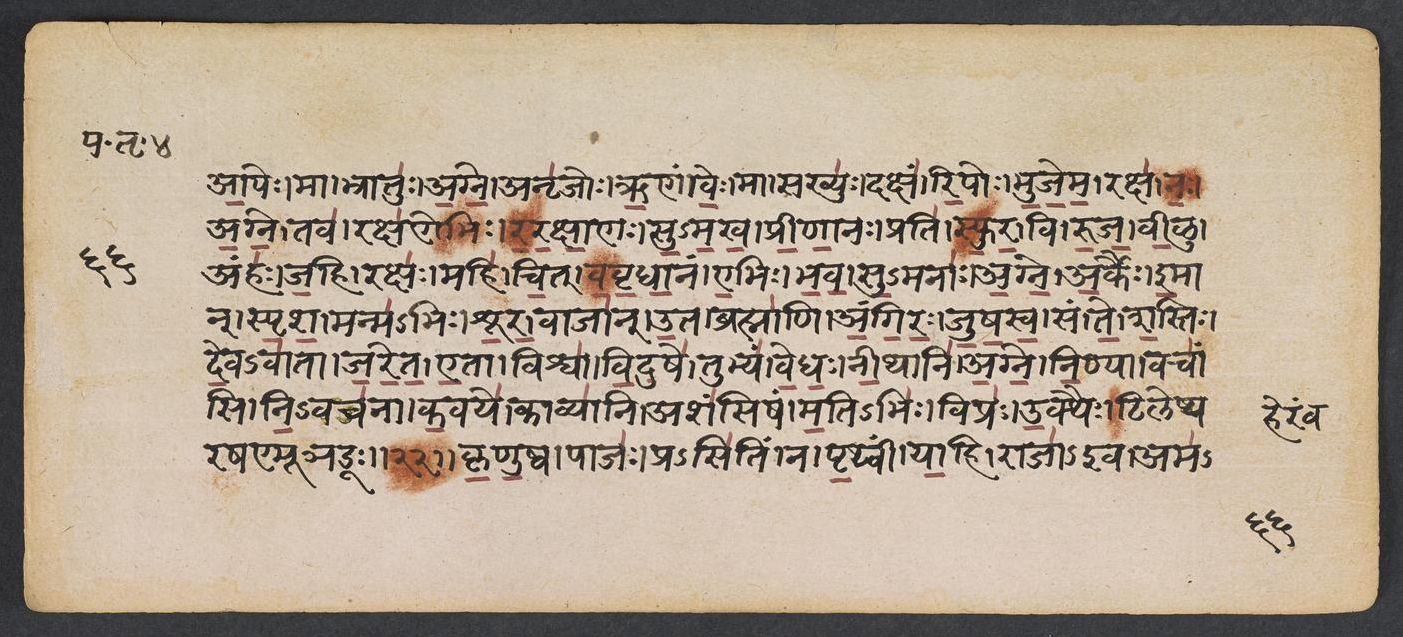
Where on the image
Penn Ms. Coll. 390 Item 41, fol. 257v (numbered 66v by the scribe) (OPenn image 258, upper leaf). Checked on the image: the Rigveda text on this page begins in RV 4.3.13 ‹āpeḥ mā bhrātuḥ agne›. The next page with Rigveda text, fol. 258r (numbered 67r by the scribe), begins in RV 4.4.1 ‹-ama-vān ibhena tṛṣvīm anu›. Verses 4.3.13-16 end on this page; 4.3.13 begins on fol. 257r (numbered 66r by the scribe).
13mā kasya̍ ya̱kṣaṁ sada̱m id dhu̱ro gā̱ mā ve̱śasya̍ pramina̱to māpeḥ | mā bhrātu̍r agne̱ anṛ̍jor ṛ̱ṇaṁ ve̱r mā sakhyu̱r dakṣa̍ṁ ri̱por bhu̍jema ||
14rakṣā̍ ṇo agne̱ tava̱ rakṣa̍ṇebhī rārakṣā̱ṇaḥ su̍makha prīṇā̱naḥ | prati̍ ṣphura̱ vi ru̍ja vī̱ḍv aṁho̍ ja̱hi rakṣo̱ mahi̍ cid vāvṛdhā̱nam ||
15e̱bhir bha̍va su̱manā̍ agne a̱rkair i̱mān spṛ̍śa̱ manma̍bhiḥ śūra̱ vājā̍n | u̱ta brahmā̍ṇy aṅgiro juṣasva̱ saṁ te̍ śa̱stir de̱vavā̍tā jareta ||
16e̱tā viśvā̍ vi̱duṣe̱ tubhya̍ṁ vedho nī̱thāny a̍gne ni̱ṇyā vacā̍ṁsi | ni̱vaca̍nā ka̱vaye̱ kāvyā̱ny aśa̍ṁsiṣam ma̱tibhi̱r vipra̍ u̱kthaiḥ ||
Compare: Padapāṭha (word-by-word text written in the manuscript; Sansknet e-text via GRETIL)
13mā | kasya | yakṣam | sadam | it | huraḥ | gāḥ | mā | veśasya | pra-minataḥ | mā | āpeḥ | mā | bhrātuḥ | agne | anṛjoḥ | ṛṇam | veḥ | mā | sakhyuḥ | dakṣam | ripoḥ | bhujema
14rakṣāṇaḥ | agne | tava | rakṣaṇebhiḥ | rarakṣāṇaḥ | su-makha | prīṇānaḥ | prati | sphura | vi | ruja | vīḷu | aṃhaḥ | jahi | rakṣaḥ | mahi | cit | vavṛdhānam
15ebhiḥ | bhava | su-manāḥ | agne | arkaiḥ | imān | spṛśa | manma-bhiḥ | śūra | vājān | uta | brahmāṇi | aṅgiraḥ | juṣasva | sam | te | śastiḥ | devavātā | jareta
16etā | viśvā | viduṣe | tubhyam | vedhaḥ | nīthāni | agne | niṇyā | vacāṃsi | ni-vacanā | kavaye | kāvyāni | aśaṃsiṣam | mati-bhiḥ | vipraḥ | ukthaiḥ
13Go never to the feast of one who harms us, the treacherous neighbour or. unworthy kinsman. Punish us not for a false brother's trespass. Let us riot feel the might of friend or foeman.
14O Agni, keep us safe with thy protection, loving us, honoured God! and ever guarding. Beat thou away, destroy severe affliction slay e'en the demon when he waxes mighty.
15Through these our songs of praise be gracious, Agni; moved by ourprayers, O Hero, touch our viands. Accept, O Angiras, these our devotions, and let the praise which Gods desire address thee.
16To thee who knowest, Agni, thou Disposer, all these wise secret speeches have I uttered, Sung to thee, Sage, the charming words of wisdom, to thee, O Singer, with. my thoughts and Praises.
Notes
- Sanskrit: Aufrecht's edition (1877) with the Vedic accents, as entered by van Nooten and Holland (GRETIL).
- English: Ralph T. H. Griffith, The Hymns of the Rigveda (1889-1892; 2nd ed. 1896-1897), from the VedaWeb digital text; OCR slips in that text were corrected against the printed 2nd edition (data/sources/rigveda/griffith_errata.json).
- Padapāṭha (edition text): Sansknet e-text via GRETIL (CC BY-NC-SA 4.0).
Cite
Sources
- Source: Penn Ms. Coll. 390 Item 41 (undated (catalogued with Penn's 18th-19th c. Vedic manuscripts)), OPenn, Public Domain Mark + Aufrecht's accented text (GRETIL) + Griffith's English (VedaWeb) (holding institution)
- Critical edition: Aufrecht (1877), accented e-text via GRETIL
← previous · → next · v cycle view · l back to library