Rigveda 4.21: To Indra
Introduction
Rigveda 4.21 is a hymn of 11 verses addressed to Indra. It stands in book (maṇḍala) 4, the family book of Vāmadeva. The Rigveda is the oldest collection of Sanskrit hymns, composed in the second half of the second millennium BCE and handed down orally for many centuries before it was written down.
The manuscript shown is Penn Ms. Coll. 390 Item 41 (University of Pennsylvania), an undated paper manuscript of the padapāṭha (the word-by-word recitation text, in which every word is written separately and compounds are split) of the whole Ṛgveda in Devanāgarī, 884 leaves in fascicles, 7-9 lines to the page, accents in red; this hymn stands on fol. 279r-280v. Each section below gives the verses that end on one page; the page boundaries were read on the images (the opening words of every page), not counted out. Where the manuscript is a padapāṭha (the word-by-word recitation text), the section shows Aufrecht's continuous (saṃhitā) text first and, as the edition text, the padapāṭha of the same verses, which is the form written on the page.
How was this verified? (Provenance)
Where on the image
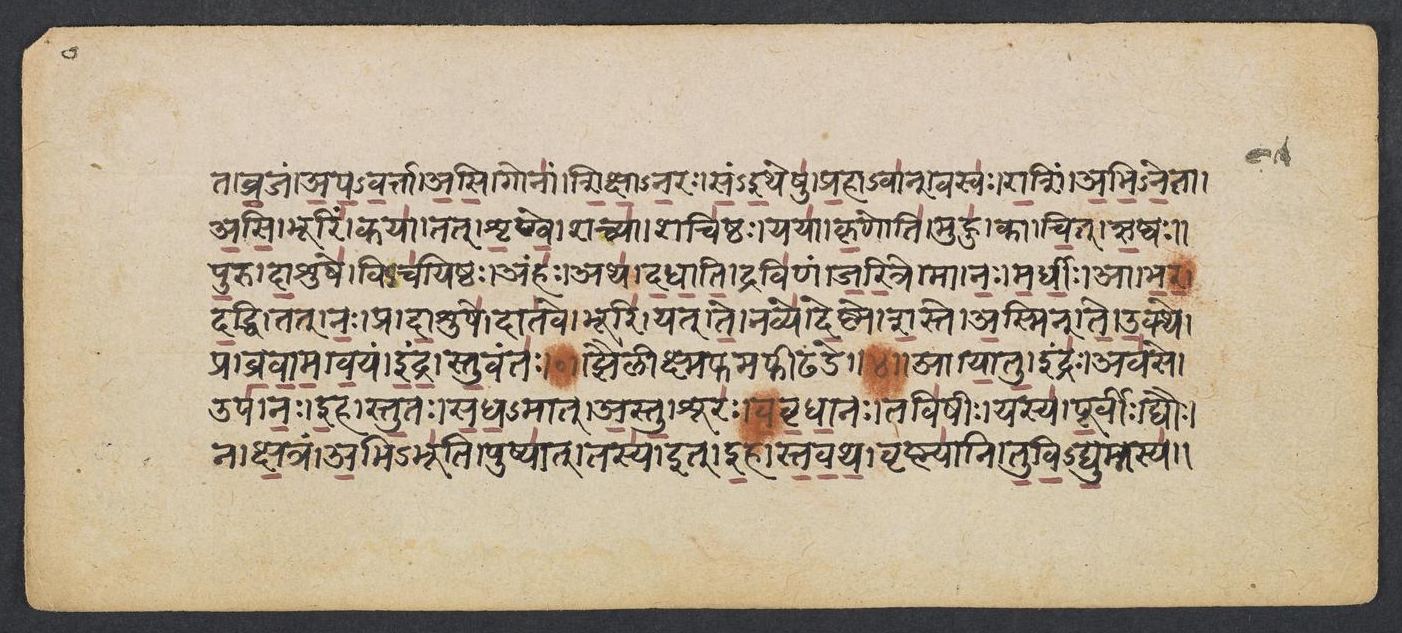
Penn Ms. Coll. 390 Item 41, fol. 279r (numbered 88r by the scribe) (OPenn image 279, lower leaf). Checked on the image: the Rigveda text on this page begins in RV 4.20.8 ‹-uta vrajam apa-vartā asi›. The next page with Rigveda text, fol. 279v (numbered 88v by the scribe), begins in RV 4.21.2 ‹tuvi-rādhasaḥ nṝn yasya kratuḥ›. Verse 4.21.1 ends on this page.
1ā yā̱tv indro 'va̍sa̱ upa̍ na i̱ha stu̱taḥ sa̍dha̱mād a̍stu̱ śūra̍ḥ | vā̱vṛ̱dhā̱nas tavi̍ṣī̱r yasya̍ pū̱rvīr dyaur na kṣa̱tram a̱bhibhū̍ti̱ puṣyā̍t ||
Compare: Padapāṭha (word-by-word text written in the manuscript; Sansknet e-text via GRETIL)
1ā | yātu | indraḥ | avase | upa | naḥ | iha | stutaḥ | sadha-māt | astu | śūraḥ | vavṛdhānaḥ | taviṣīḥ | yasya | pūrvīḥ | dyauḥ | na | kṣatram | abhi-bhūti | puṣyāt
1MAY Indra come to us for our protection; here be the Hero, praised, our feast-companion. May he whose powers are many, waxen mighty, cherish, like Dyaus, his own supreme dominion.
Where on the image
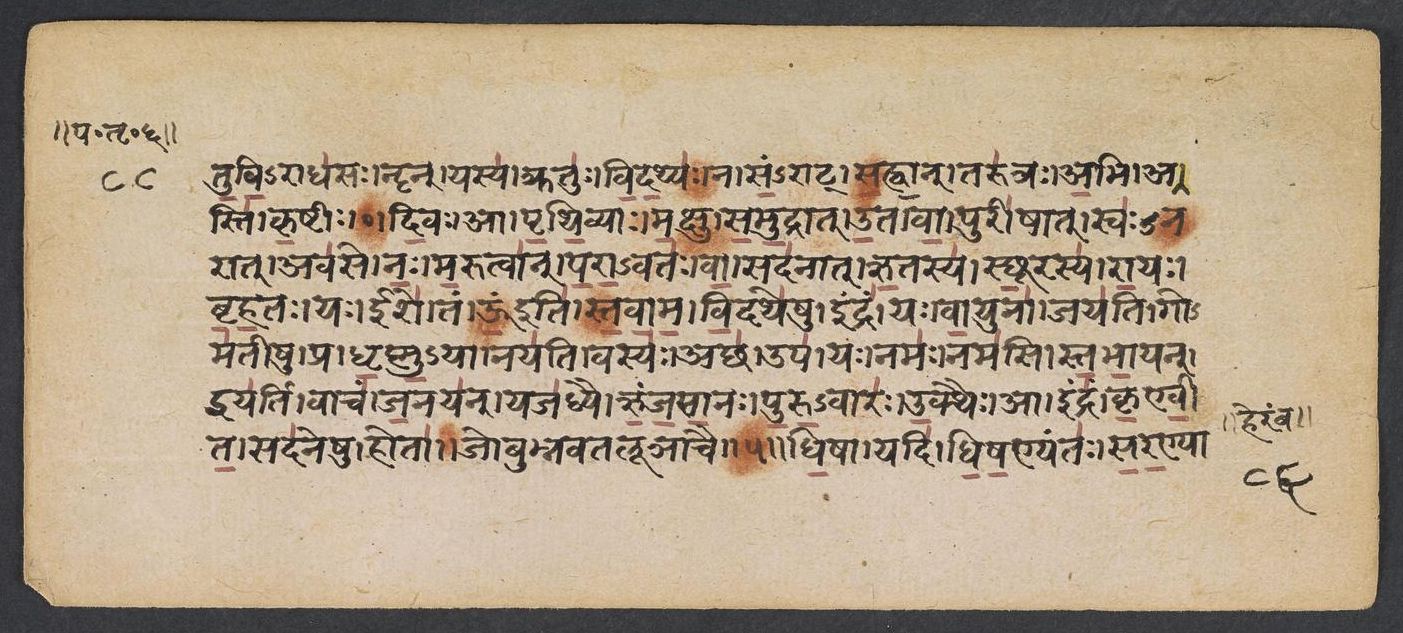
Penn Ms. Coll. 390 Item 41, fol. 279v (numbered 88v by the scribe) (OPenn image 280, upper leaf). Checked on the image: the Rigveda text on this page begins in RV 4.21.2 ‹tuvi-rādhasaḥ nṝn yasya kratuḥ›. The next page with Rigveda text, fol. 280r (numbered 89r by the scribe), begins in RV 4.21.6 ‹-saraṇyān sadantaḥ adrim auśijasya›. Verses 4.21.2-5 end on this page; 4.21.2 begins on fol. 279r (numbered 88r by the scribe).
2tasyed i̱ha sta̍vatha̱ vṛṣṇyā̍ni tuvidyu̱mnasya̍ tuvi̱rādha̍so̱ nṝn | yasya̱ kratu̍r vida̱thyo̱3̱̍ na sa̱mrāṭ sā̱hvān taru̍tro a̱bhy asti̍ kṛ̱ṣṭīḥ ||
3ā yā̱tv indro̍ di̱va ā pṛ̍thi̱vyā ma̱kṣū sa̍mu̱drād u̱ta vā̱ purī̍ṣāt | sva̍rṇarā̱d ava̍se no ma̱rutvā̍n parā̱vato̍ vā̱ sada̍nād ṛ̱tasya̍ ||
4sthū̱rasya̍ rā̱yo bṛ̍ha̱to ya īśe̱ tam u̍ ṣṭavāma vi̱dathe̱ṣv indra̍m | yo vā̱yunā̱ jaya̍ti̱ goma̍tīṣu̱ pra dhṛ̍ṣṇu̱yā naya̍ti̱ vasyo̱ accha̍ ||
5upa̱ yo namo̱ nama̍si stabhā̱yann iya̍rti̱ vāca̍ṁ ja̱naya̱n yaja̍dhyai | ṛ̱ñja̱sā̱naḥ pu̍ru̱vāra̍ u̱kthair endra̍ṁ kṛṇvīta̱ sada̍neṣu̱ hotā̍ ||
Compare: Padapāṭha (word-by-word text written in the manuscript; Sansknet e-text via GRETIL)
2tasya | it | iha | stavatha | vṛṣṇyāni | tuvi-dyumnasya | tuvi-rādhasaḥ | nṝn | yasya | kratuḥ | vidathyaḥ | na | sam-rāṭ | sahvān | tarutraḥ | abhi | asti | kṛṣṭīḥ
3ā | yātu | indraḥ | divaḥ | ā | pṛthivyāḥ | makṣu | samudrāt | uta | vā | purīṣāt | svaḥ-narāt | avase | naḥ | marutvān | parāvataḥ | vā | sadanāt | ṛtasya
4sthūrasya | rāyaḥ | bṛhataḥ | yaḥ | īśe | tam | oṃ iti | stavāma | vidatheṣu | indram | yaḥ | vāyunā | jayati | go--matīṣu | pra | dhṛṣṇu-yā | nayati | vasyaḥ | accha
5upa | yaḥ | namaḥ | namasi | stabhāyan | iyarti | vācam | janayan | yajadhyai | ṛñjasānaḥ | puru-vāraḥ | ukthaiḥ | ā | indram | kṛṇvīta | sadaneṣu | hotā
2Here magnify his great heroic exploits, most glorious One, enriching men with bounties, Whose will is like a Sovran in assembly, who rules the people, Conqueror, all-surpassing.
3Hither let Indra come from earth or heaven, hither with speech from firmament or ocean; With Maruts, from the realm of light to aid us, or from a distance, from the seat of Order.
4That Indra will we laud in our assemblies, him who is Lord of great and lasting riches, Victor with Vâyu where the herds are gathered, who leads with boldness on to higher fortune.
5May the Priest, Lord of many blessings, striving,– who fixing reverence on reverence, giving Vent to his voice, inciteth men to worshipwith lauds bring Indra hither to our dwellings.
Where on the image
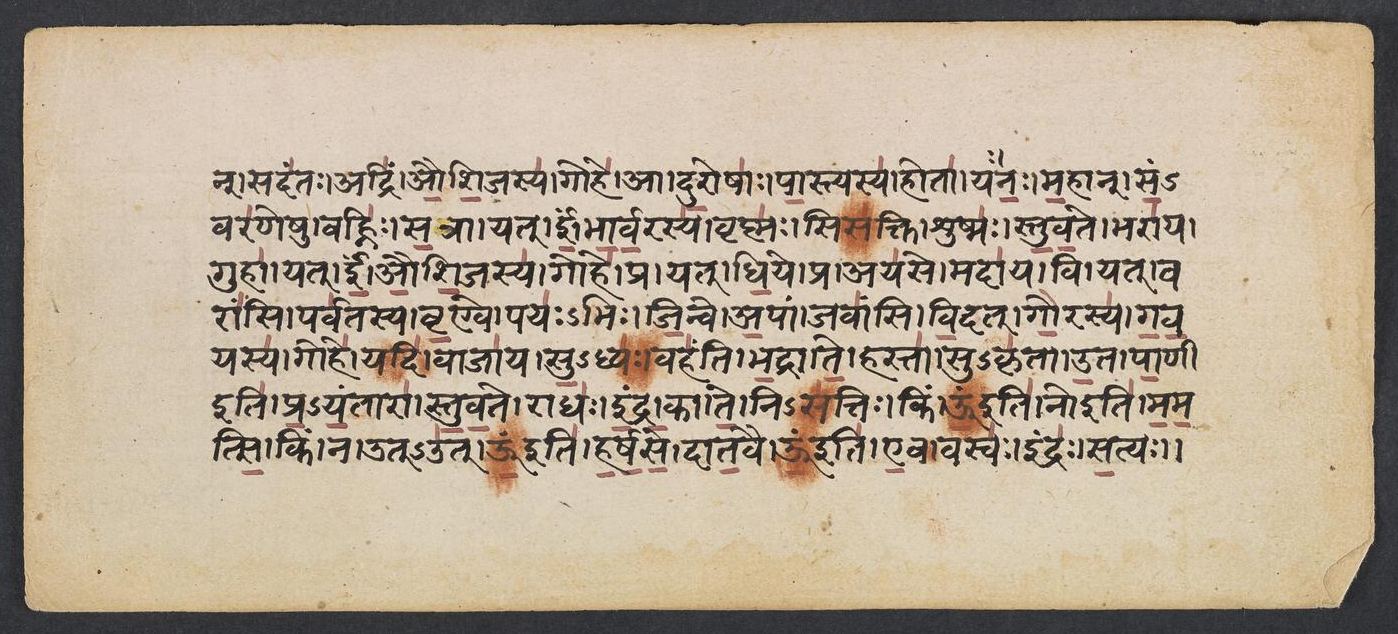
Penn Ms. Coll. 390 Item 41, fol. 280r (numbered 89r by the scribe) (OPenn image 280, lower leaf). Checked on the image: the Rigveda text on this page begins in RV 4.21.6 ‹-saraṇyān sadantaḥ adrim auśijasya›. The next page with Rigveda text, fol. 280v (numbered 89v by the scribe), begins in RV 4.21.10 ‹sam-rāṭ hantā vṛtram varivaḥ›. Verses 4.21.6-9 end on this page; 4.21.6 begins on fol. 279v (numbered 88v by the scribe).
6dhi̱ṣā yadi̍ dhiṣa̱ṇyanta̍ḥ sara̱ṇyān sada̍nto̱ adri̍m auśi̱jasya̱ gohe̍ | ā du̱roṣā̍ḥ pā̱styasya̱ hotā̱ yo no̍ ma̱hān sa̱ṁvara̍ṇeṣu̱ vahni̍ḥ ||
7sa̱trā yad ī̍m bhārva̱rasya̱ vṛṣṇa̱ḥ siṣa̍kti̱ śuṣma̍ḥ stuva̱te bharā̍ya | guhā̱ yad ī̍m auśi̱jasya̱ gohe̱ pra yad dhi̱ye prāya̍se̱ madā̍ya ||
8vi yad varā̍ṁsi̱ parva̍tasya vṛ̱ṇve payo̍bhir ji̱nve a̱pāṁ javā̍ṁsi | vi̱dad gau̱rasya̍ gava̱yasya̱ gohe̱ yadī̱ vājā̍ya su̱dhyo̱3̱̍ vaha̍nti ||
9bha̱drā te̱ hastā̱ sukṛ̍to̱ta pā̱ṇī pra̍ya̱ntārā̍ stuva̱te rādha̍ indra | kā te̱ niṣa̍tti̱ḥ kim u̱ no ma̍matsi̱ kiṁ nod-u̍d u harṣase̱ dāta̱vā u̍ ||
Compare: Padapāṭha (word-by-word text written in the manuscript; Sansknet e-text via GRETIL)
6dhiṣā | yadi | dhiṣaṇyantaḥ | saraṇyān | sadantaḥ | adrim | auśijasya | gohe | ā | duroṣāḥ | pāśtyasya | hotā | yaḥ | naḥ | mahān | sam-varaṇeṣu | vahniḥ
7satrā | yat | im | bhārvarasya | vṛṣṇaḥ | sisakti | śuṣmaḥ | stuvate | bharāya | guhā | yat | īm | auśijasya | gohe | pra | yat | dhiye | pra | ayase | madāya
8vi | yat | varāṃsi | parvatasya | vṛṇve | payaḥ-bhiḥ | jinve | apām | javāṃsi | vidat | gaurasya | gavayasya | gohe | yadi | vājāya | su-dhyaḥ | vahanti
9bhadrā | te | hastā | su-kṛtā | uta | pāṇī iti | pra-yantārā | stuvate | rādhaḥ | indra | kā | te | ni-sattiḥ | kim | oṃ iti | naḥ | mamatsi | kim | na | ut-ut | oṃ iti | harṣase | dātavai | oṃ iti
6When sitting pondering in deep devotion in Auṣija's abode they ply the press-stone, May he whose wrath is fierce, the mighty bearer, come as the house-lord's priest within our chambers.
7Surely the power of Bhârvara the mighty for ever helpeth to support the singer; That which in Auṣija's abode lies hidden, to come forth for delight and for devotion.
8When he unbars the spaces of the mountains, and quickens with his floods the water-torrents, He finds in lair the buffalo and wild-ox when the wise lead him on to vigorous exploit.
9Auspicious are thy hands, thine arms wellfashioned which proffer bounty, Indra, to thy praiser. What sloth is this? Why dost thou not rejoice thee? Why dost thou not delight thyself with giving?
Where on the image
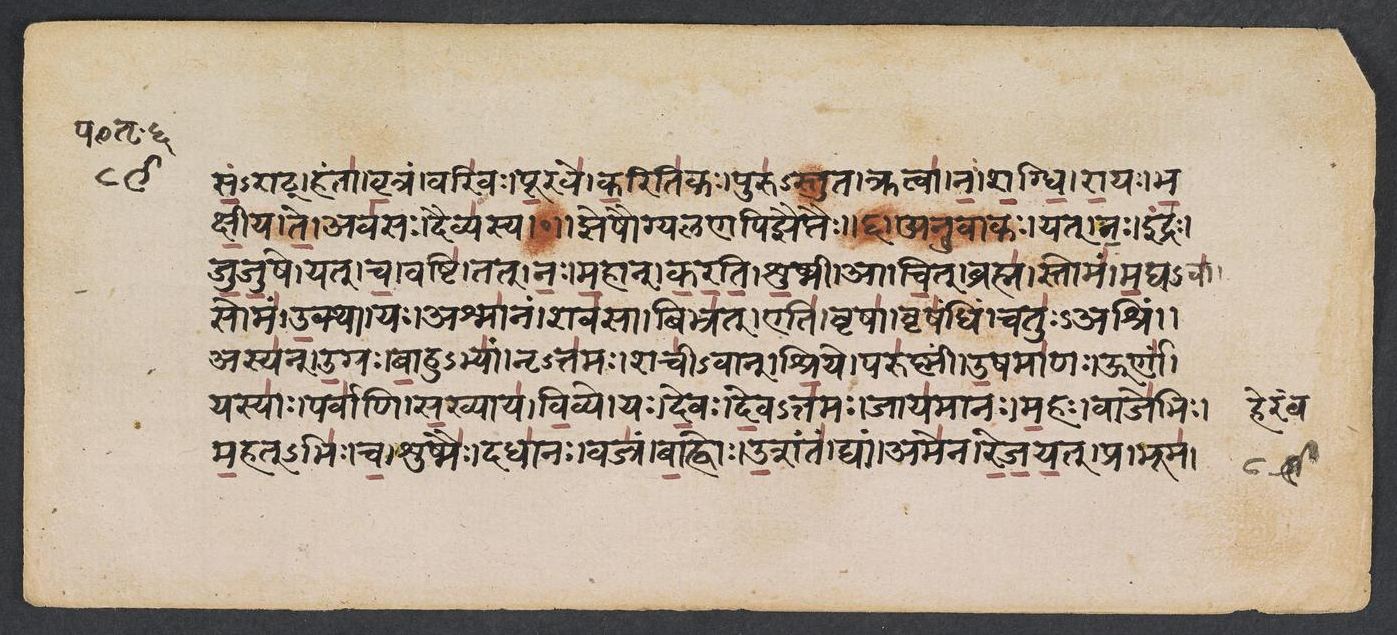
Penn Ms. Coll. 390 Item 41, fol. 280v (numbered 89v by the scribe) (OPenn image 281, upper leaf). Checked on the image: the Rigveda text on this page begins in RV 4.21.10 ‹sam-rāṭ hantā vṛtram varivaḥ›. The next page with Rigveda text, fol. 281r (numbered 90r by the scribe), begins in RV 4.22.4 ‹viśvā rodhāṃsi pra-vataḥ ca›. Verses 4.21.10-11 end on this page; 4.21.10 begins on fol. 280r (numbered 89r by the scribe).
10e̱vā vasva̱ indra̍ḥ sa̱tyaḥ sa̱mrāḍ ḍhantā̍ vṛ̱traṁ vari̍vaḥ pū̱rave̍ kaḥ | puru̍ṣṭuta̱ kratvā̍ naḥ śagdhi rā̱yo bha̍kṣī̱ya te 'va̍so̱ daivya̍sya ||
11nū ṣṭu̱ta i̍ndra̱ nū gṛ̍ṇā̱na iṣa̍ṁ jari̱tre na̱dyo̱3̱̍ na pī̍peḥ | akā̍ri te harivo̱ brahma̱ navya̍ṁ dhi̱yā syā̍ma ra̱thya̍ḥ sadā̱sāḥ ||
Compare: Padapāṭha (word-by-word text written in the manuscript; Sansknet e-text via GRETIL)
10eva | vasvaḥ | indraḥ | satyaḥ | sam-rāṭ | hantā | vṛtram | varivaḥ | pūrave | karitikaḥ | puru-stuta | kratvā | naḥ | śagdhi | rāyaḥ | bhakṣīya | te | avasaḥ | daivyasya
11nu | stutaḥ | indra | nu | gṛṇānaḥ | iṣam | jaritre | nadyaḥ | na | pīperitipīpeḥ | akāri | te | hari-vaḥ | brahma | navyam | dhiyā | syāma | rathyaḥ | sadāsāḥ
10So Indra is the truthful Lord of treasure. Freedom he gave to man by slaying Vr̥itra. Much-lauded! help us with thy power to riches: may I be sharer of thy Godlike favour.
11Now, Indra! lauded, glorified with praises, let power swell high, like rivers, for,the singer. For thee a new hymn, Lord of Bays! is fashioned. May we, car-borne, through song be victors ever.
Notes
- Sanskrit: Aufrecht's edition (1877) with the Vedic accents, as entered by van Nooten and Holland (GRETIL).
- English: Ralph T. H. Griffith, The Hymns of the Rigveda (1889-1892; 2nd ed. 1896-1897), from the VedaWeb digital text; OCR slips in that text were corrected against the printed 2nd edition (data/sources/rigveda/griffith_errata.json).
- Padapāṭha (edition text): Sansknet e-text via GRETIL (CC BY-NC-SA 4.0).
Cite
Sources
- Source: Penn Ms. Coll. 390 Item 41 (undated (catalogued with Penn's 18th-19th c. Vedic manuscripts)), OPenn, Public Domain Mark + Aufrecht's accented text (GRETIL) + Griffith's English (VedaWeb) (holding institution)
- Critical edition: Aufrecht (1877), accented e-text via GRETIL
← previous · → next · v cycle view · l back to library