Rigveda 4.22: To Indra
Introduction
Rigveda 4.22 is a hymn of 11 verses addressed to Indra. It stands in book (maṇḍala) 4, the family book of Vāmadeva. The Rigveda is the oldest collection of Sanskrit hymns, composed in the second half of the second millennium BCE and handed down orally for many centuries before it was written down.
The manuscript shown is Penn Ms. Coll. 390 Item 41 (University of Pennsylvania), an undated paper manuscript of the padapāṭha (the word-by-word recitation text, in which every word is written separately and compounds are split) of the whole Ṛgveda in Devanāgarī, 884 leaves in fascicles, 7-9 lines to the page, accents in red; this hymn stands on fol. 280v-281v. Each section below gives the verses that end on one page; the page boundaries were read on the images (the opening words of every page), not counted out. Where the manuscript is a padapāṭha (the word-by-word recitation text), the section shows Aufrecht's continuous (saṃhitā) text first and, as the edition text, the padapāṭha of the same verses, which is the form written on the page.
How was this verified? (Provenance)
Where on the image
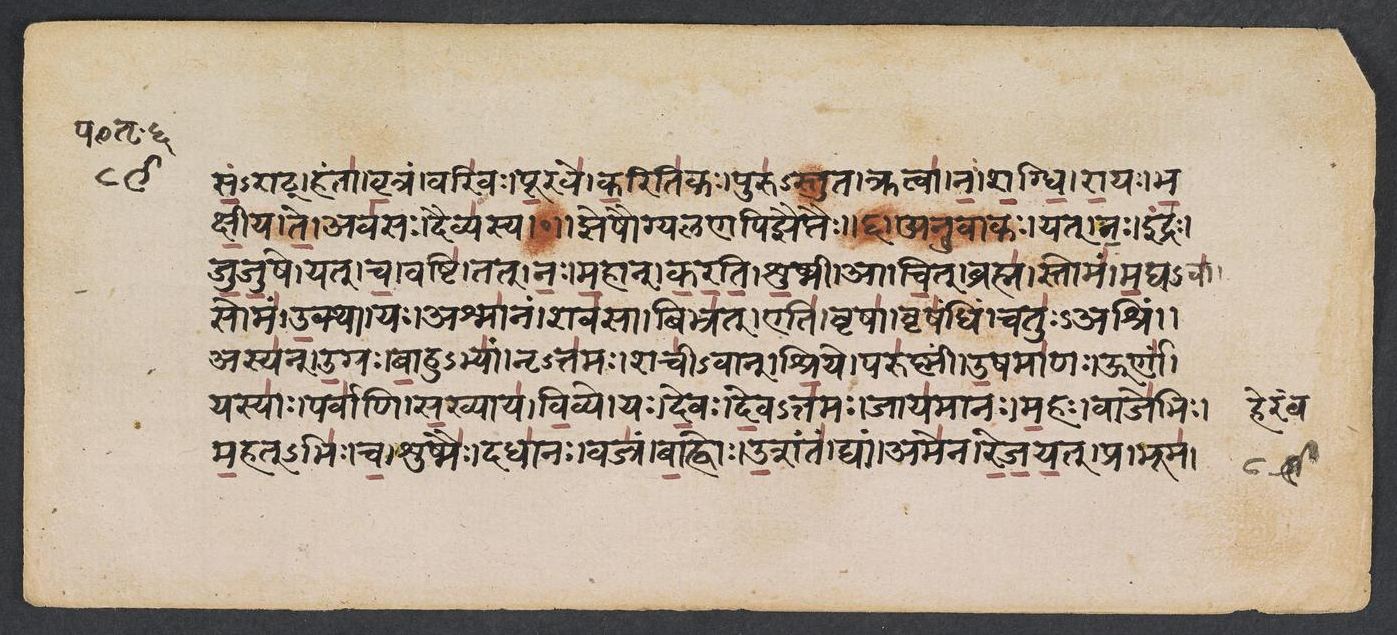
Penn Ms. Coll. 390 Item 41, fol. 280v (numbered 89v by the scribe) (OPenn image 281, upper leaf). Checked on the image: the Rigveda text on this page begins in RV 4.21.10 ‹sam-rāṭ hantā vṛtram varivaḥ›. The next page with Rigveda text, fol. 281r (numbered 90r by the scribe), begins in RV 4.22.4 ‹viśvā rodhāṃsi pra-vataḥ ca›. Verses 4.22.1-3 end on this page.
1yan na̱ indro̍ juju̱ṣe yac ca̱ vaṣṭi̱ tan no̍ ma̱hān ka̍rati śu̱ṣmy ā ci̍t | brahma̱ stoma̍m ma̱ghavā̱ soma̍m u̱kthā yo aśmā̍na̱ṁ śava̍sā̱ bibhra̱d eti̍ ||
2vṛṣā̱ vṛṣa̍ndhi̱ṁ catu̍raśri̱m asya̍nn u̱gro bā̱hubhyā̱ṁ nṛta̍ma̱ḥ śacī̍vān | śri̱ye paru̍ṣṇīm u̱ṣamā̍ṇa̱ ūrṇā̱ṁ yasyā̱ḥ parvā̍ṇi sa̱khyāya̍ vi̱vye ||
3yo de̱vo de̱vata̍mo̱ jāya̍māno ma̱ho vāje̍bhir ma̱hadbhi̍ś ca̱ śuṣmai̍ḥ | dadhā̍no̱ vajra̍m bā̱hvor u̱śanta̱ṁ dyām ame̍na rejaya̱t pra bhūma̍ ||
Compare: Padapāṭha (word-by-word text written in the manuscript; Sansknet e-text via GRETIL)
1yat | naḥ | indraḥ | jujuṣe | yat | ca | vaṣṭi | tat | naḥ | mahān | karati | śuṣmī | ā | cit | brahma | stomam | magha-vā | somam | ukthā | yaḥ | aśmānam | śavasā | bibhrat | eti
2vṛṣā | vṛṣandhim | catuḥ-aśrim | asyan | ugraḥ | bāhu-bhyām | nṛ-tamaḥ | śacī-vān | śriye | paruṣṇīm | uṣamāṇaḥ | ūrṇām | yasyāḥ | parvāṇi | sakhyāya | vivye
3yaḥ | devaḥ | deva-tamaḥ | jāyamānaḥ | mahaḥ | vājebhiḥ | mahat-bhiḥ | ca | śuṣmaiḥ | dadhānaḥ | vajram | bāhvoḥ | uśantam | dyām | amena | rejayat | pra | bhūma
1THAT gift of ours which Indra loves and welcomes, even that he makes for us, the Great and Strong One. He who comes wielding in his might the thunder, Maghavan, gives prayer, praise, and laud, and Soma.
2Bull, hurler of the four-edged rain-producer with both his arms, strong, mighty, most heroic; Wearing as wool Parushṇî for adornment, whose joints for sake of friendship he hath covered.
3God who of all the Gods was born divinest, endowed with ample strength and mighty powers, And bearing in his arms the yearning thunder, with violent rush caused heaven and earth to tremble.
Where on the image
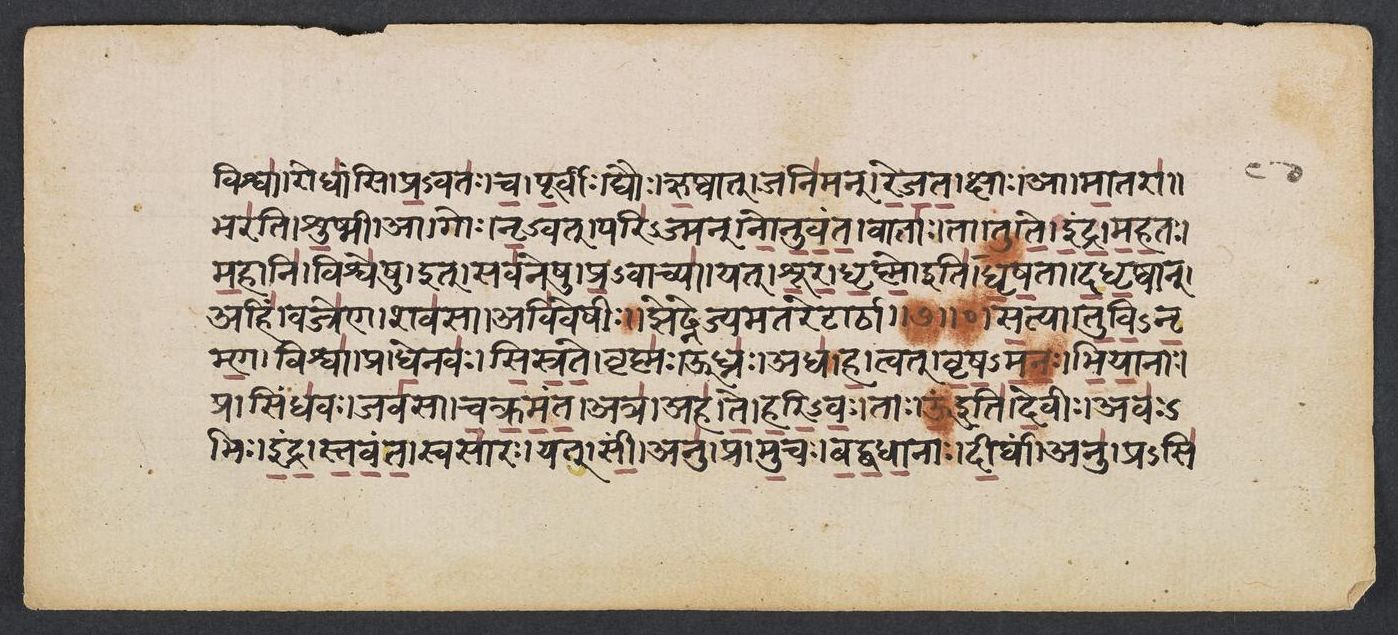
Penn Ms. Coll. 390 Item 41, fol. 281r (numbered 90r by the scribe) (OPenn image 281, lower leaf). Checked on the image: the Rigveda text on this page begins in RV 4.22.4 ‹viśvā rodhāṃsi pra-vataḥ ca›. The next page with Rigveda text, fol. 281v (numbered 90v by the scribe), begins in RV 4.22.7 ‹-pra-sitim syandayadhyai›. Verses 4.22.4-6 end on this page.
4viśvā̱ rodhā̍ṁsi pra̱vata̍ś ca pū̱rvīr dyaur ṛ̱ṣvāj jani̍man rejata̱ kṣāḥ | ā mā̱tarā̱ bhara̍ti śu̱ṣmy ā gor nṛ̱vat pari̍jman nonuvanta̱ vātā̍ḥ ||
5tā tū ta̍ indra maha̱to ma̱hāni̱ viśve̱ṣv it sava̍neṣu pra̱vācyā̍ | yac chū̍ra dhṛṣṇo dhṛṣa̱tā da̍dhṛ̱ṣvān ahi̱ṁ vajre̍ṇa̱ śava̱sāvi̍veṣīḥ ||
6tā tū te̍ sa̱tyā tu̍vinṛmṇa̱ viśvā̱ pra dhe̱nava̍ḥ sisrate̱ vṛṣṇa̱ ūdhna̍ḥ | adhā̍ ha̱ tvad vṛ̍ṣamaṇo bhiyā̱nāḥ pra sindha̍vo̱ java̍sā cakramanta ||
Compare: Padapāṭha (word-by-word text written in the manuscript; Sansknet e-text via GRETIL)
4viśvā | rodhāṃsi | pra-vataḥ | ca | pūrvīḥ | dyauḥ | ṛṣvāt | janiman | rejata | kṣāḥ | ā | mātarā | bharati | śuṣmī | ā | goḥ | nṛ-vat | pari-jman | nonuvanta | vātāḥ
5tā | tu | te | indra | mahataḥ | mahāni | viśveṣu | it | savaneṣu | pra-vācyā | yat | śūra | dhṛṣṇo iti | dhṛṣatā | dadhṛṣvān | ahim | vajreṇa | śavasā | aviveṣīḥ
6tā | tu | te | satyā | tuvi-nṛmṇa | viśvā | pra | dhenavaḥ | sisrate | vṛṣṇaḥ | ūdhnaḥ | adha | ha | tvat | vṛṣa-manaḥ | bhiyānāḥ | pra | sindhavaḥ | javasā | cakramanta
4Before the High God, at his birth, heaven trembled, earth, many floods and all the precipices. The Strong One bringeth nigh the Bull's two Parents: loud sing the winds, like men, in air's midregion.
5These are thy great deeds, Indra, thine, the Mighty, deeds to be told aloud at all libations, That thou, O Hero, bold and boldly daring, didst with thy bolt, by strength, destroy the Dragon.
6True are all these thy deeds, O Most Heroic. The Milch-kine issued from the streaming udder. In fear of thee, O thou of manly spirit, the rivers swiftly set themselves in motion.
Where on the image
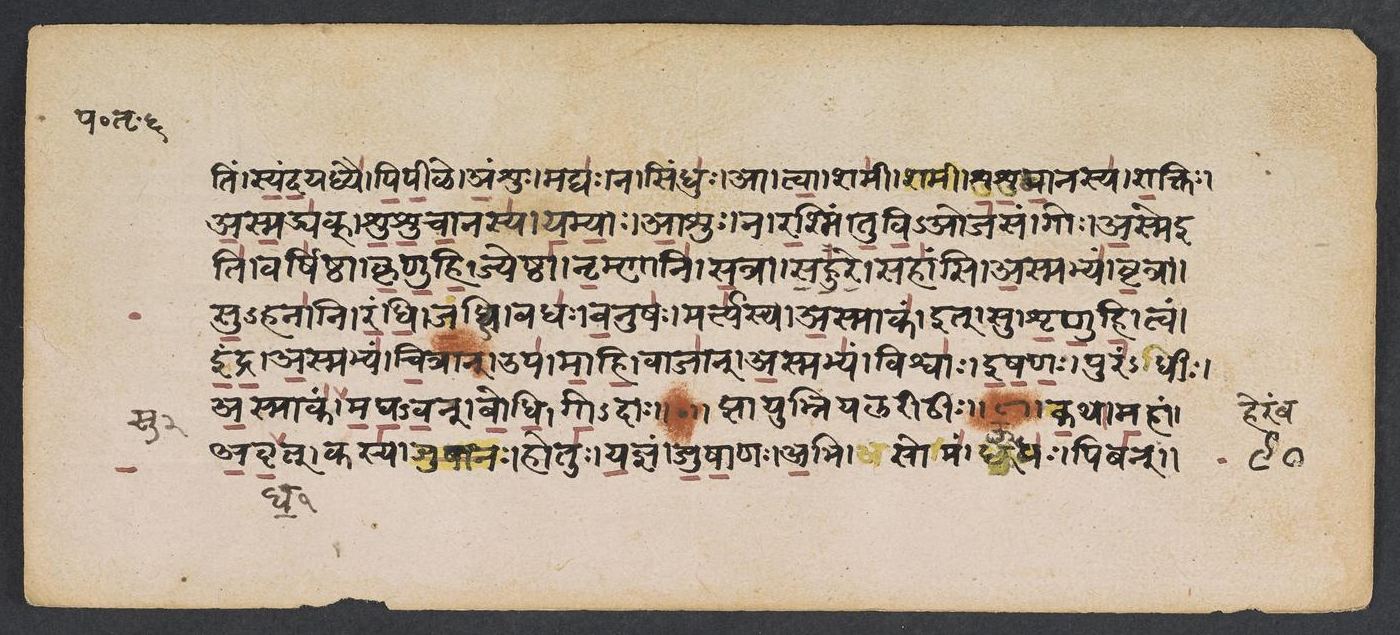
Penn Ms. Coll. 390 Item 41, fol. 281v (numbered 90v by the scribe) (OPenn image 282, upper leaf). Checked on the image: the Rigveda text on this page begins in RV 4.22.7 ‹-pra-sitim syandayadhyai›. The next page with Rigveda text, fol. 282r (numbered 91r by the scribe), begins in RV 4.23.1 ‹uśānaḥ juṣamāṇaḥ andhaḥ vavakṣe›. Verses 4.22.7-11 end on this page; 4.22.7 begins on fol. 281r (numbered 90r by the scribe).
7atrāha̍ te hariva̱s tā u̍ de̱vīr avo̍bhir indra stavanta̱ svasā̍raḥ | yat sī̱m anu̱ pra mu̱co ba̍dbadhā̱nā dī̱rghām anu̱ prasi̍tiṁ syanda̱yadhyai̍ ||
8pi̱pī̱ḻe a̱ṁśur madyo̱ na sindhu̱r ā tvā̱ śamī̍ śaśamā̱nasya̍ śa̱ktiḥ | a̱sma̱drya̍k chuśucā̱nasya̍ yamyā ā̱śur na ra̱śmiṁ tu̱vyoja̍sa̱ṁ goḥ ||
9a̱sme varṣi̍ṣṭhā kṛṇuhi̱ jyeṣṭhā̍ nṛ̱mṇāni̍ sa̱trā sa̍hure̱ sahā̍ṁsi | a̱smabhya̍ṁ vṛ̱trā su̱hanā̍ni randhi ja̱hi vadha̍r va̱nuṣo̱ martya̍sya ||
10a̱smāka̱m it su śṛ̍ṇuhi̱ tvam i̍ndrā̱smabhya̍ṁ ci̱trām̐ upa̍ māhi̱ vājā̍n | a̱smabhya̱ṁ viśvā̍ iṣaṇa̱ḥ pura̍ṁdhīr a̱smāka̱ṁ su ma̍ghavan bodhi go̱dāḥ ||
11nū ṣṭu̱ta i̍ndra̱ nū gṛ̍ṇā̱na iṣa̍ṁ jari̱tre na̱dyo̱3̱̍ na pī̍peḥ | akā̍ri te harivo̱ brahma̱ navya̍ṁ dhi̱yā syā̍ma ra̱thya̍ḥ sadā̱sāḥ ||
Compare: Padapāṭha (word-by-word text written in the manuscript; Sansknet e-text via GRETIL)
7atra | aha | te | hari-vaḥ | tāḥ | oṃ iti | devīḥ | avaḥ-bhiḥ | indra | stavanta | svasāraḥ | yat | sīm | anu | pra | mucaḥ | badbadhānāḥ | dīrghām | anu | pra-sitim | syandayadhyai
8pipīḷe | aṃśuḥ | madyaḥ | na | sindhuḥ | ā | tvā | śamī | śaśamānasya | śaktiḥ | asmadryak | śuśumānasya | yamyāḥ | āśuḥ | na | raśmim | tuvi-ojasam | goḥ
9asme iti | varṣiṣṭhā | kṛṇuhi | jyeṣṭhā | nṛmṇāni | satrā | sahure | sahāṃsi | asmabhyam | vṛtrā | su-hanāni | randhi | jahi | vadhaḥ | vanuṣaḥ | martyasya
10asmākam | it | su | śṛṇuhi | tvam | indra | asmabhyam | citrān | upa | māhi | vājān | asmabhyam | viśvāḥ | iṣaṇaḥ | puram-dhīḥ | asmākam | su | magha-van | bodhi | godāḥ
11nu | stutaḥ | indra | nu | gṛṇānaḥ | iṣam | jaritre | nadyaḥ | na | pīperitipīpeḥ | akāri | te | hari-vaḥ | brahma | navyam | dhiyā | syāma | rathyaḥ | sadāsāḥ
7With joy, O Indra, Lord of Tawny Coursers, the Sisters then, these Goddesses, extolled thee, When thou didst give the prisoned ones their freedom to wander at their will in long succession.
8Pressed is the gladdening stalk as 'twere a river: so let the rite, the toiler's power, attract thee To us-ward, of the Bright One, as the courser strains his. exceedingly strong leather bridle.
9Ever by us perform thy most heroic, thine highest, best victorious deeds, O Victor. For us make Vr̥itras easy to be conquered: destroy the weapon of our mortal foeman.
10Graciously listen to our prayer, O Indra, and strength of varied sort bestow thou on us. Send to us all intelligence arid wisdom O Maghavan, be he who gives us cattle.
11Now, Indra! lauded, glorified with praises, let wealth swell high like rivers to the singer. For thee a new hymn, Lord of Bays, is fashioned. May we, car-borne, through song be victors ever.
Notes
- Sanskrit: Aufrecht's edition (1877) with the Vedic accents, as entered by van Nooten and Holland (GRETIL).
- English: Ralph T. H. Griffith, The Hymns of the Rigveda (1889-1892; 2nd ed. 1896-1897), from the VedaWeb digital text; OCR slips in that text were corrected against the printed 2nd edition (data/sources/rigveda/griffith_errata.json).
- Padapāṭha (edition text): Sansknet e-text via GRETIL (CC BY-NC-SA 4.0).
Cite
Sources
- Source: Penn Ms. Coll. 390 Item 41 (undated (catalogued with Penn's 18th-19th c. Vedic manuscripts)), OPenn, Public Domain Mark + Aufrecht's accented text (GRETIL) + Griffith's English (VedaWeb) (holding institution)
- Critical edition: Aufrecht (1877), accented e-text via GRETIL
← previous · → next · v cycle view · l back to library