Rigveda 4.23: To Indra
Introduction
Rigveda 4.23 is a hymn of 11 verses addressed to Indra. It stands in book (maṇḍala) 4, the family book of Vāmadeva. The Rigveda is the oldest collection of Sanskrit hymns, composed in the second half of the second millennium BCE and handed down orally for many centuries before it was written down.
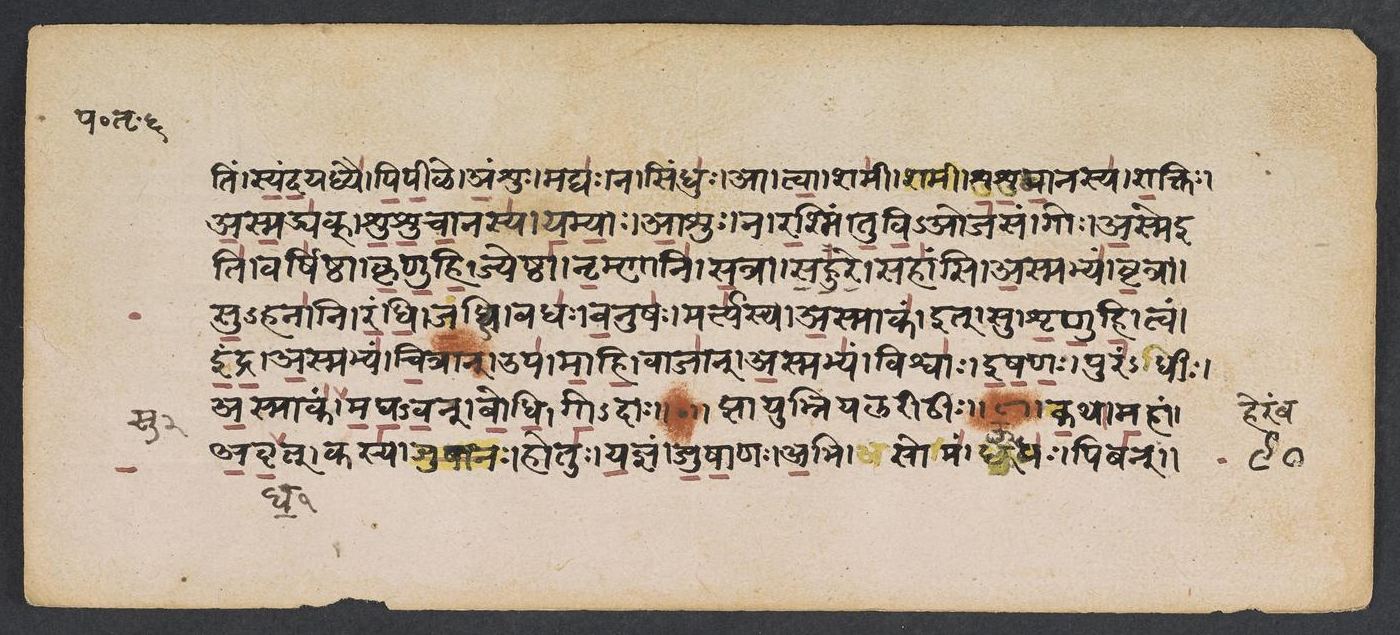
The manuscript shown is Penn Ms. Coll. 390 Item 41 (University of Pennsylvania), an undated paper manuscript of the padapāṭha (the word-by-word recitation text, in which every word is written separately and compounds are split) of the whole Ṛgveda in Devanāgarī, 884 leaves in fascicles, 7-9 lines to the page, accents in red; this hymn stands on fol. 281v-283r. Each section below gives the verses that end on one page; the page boundaries were read on the images (the opening words of every page), not counted out. Where the manuscript is a padapāṭha (the word-by-word recitation text), the section shows Aufrecht's continuous (saṃhitā) text first and, as the edition text, the padapāṭha of the same verses, which is the form written on the page.
How was this verified? (Provenance)
Where on the image
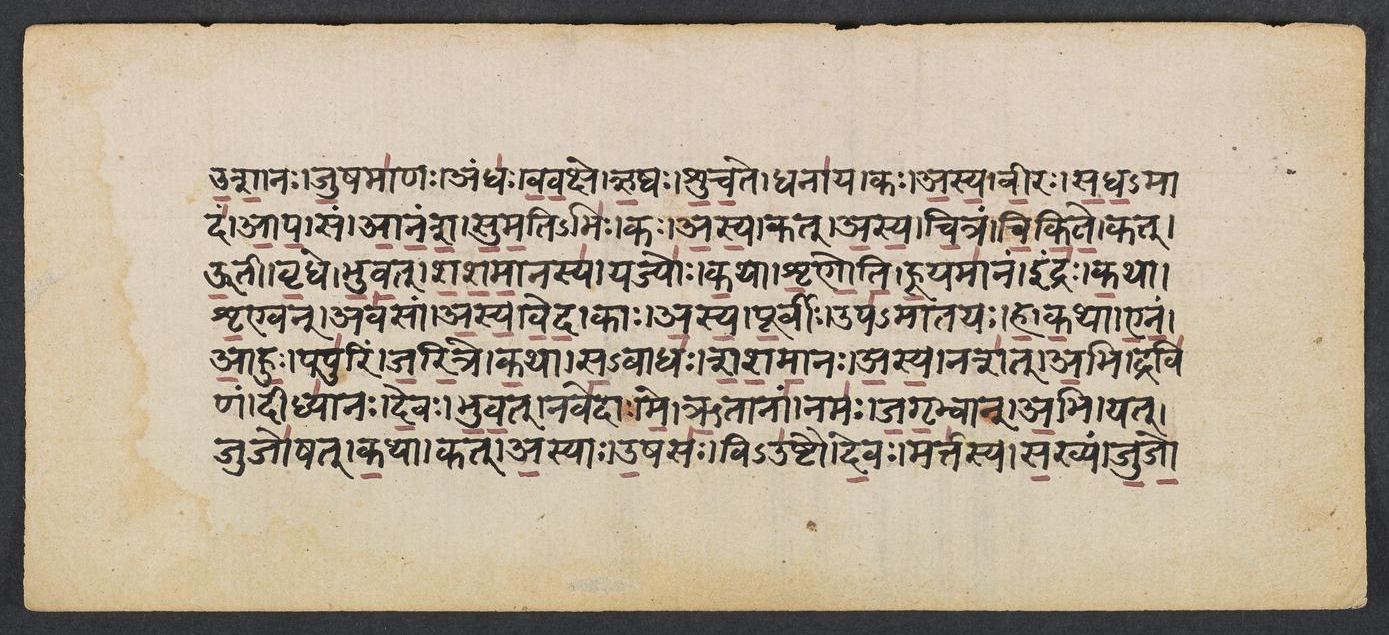
Penn Ms. Coll. 390 Item 41, fol. 282r (numbered 91r by the scribe) (OPenn image 282, lower leaf). Checked on the image: the Rigveda text on this page begins in RV 4.23.1 ‹uśānaḥ juṣamāṇaḥ andhaḥ vavakṣe›. The next page with Rigveda text, fol. 282v (numbered 91v by the scribe), begins in RV 4.23.5 ‹-jujoṣa kathā kat asya›. Verses 4.23.1-4 end on this page; 4.23.1 begins on fol. 281v (numbered 90v by the scribe).
1ka̱thā ma̱hām a̍vṛdha̱t kasya̱ hotu̍r ya̱jñaṁ ju̍ṣā̱ṇo a̱bhi soma̱m ūdha̍ḥ | piba̍nn uśā̱no ju̱ṣamā̍ṇo̱ andho̍ vava̱kṣa ṛ̱ṣvaḥ śu̍ca̱te dhanā̍ya ||
2ko a̍sya vī̱raḥ sa̍dha̱māda̍m āpa̱ sam ā̍naṁśa suma̱tibhi̱ḥ ko a̍sya | kad a̍sya ci̱traṁ ci̍kite̱ kad ū̱tī vṛ̱dhe bhu̍vac chaśamā̱nasya̱ yajyo̍ḥ ||
3ka̱thā śṛ̍ṇoti hū̱yamā̍na̱m indra̍ḥ ka̱thā śṛ̱ṇvann ava̍sām asya veda | kā a̍sya pū̱rvīr upa̍mātayo ha ka̱thaina̍m āhu̱ḥ papu̍riṁ jari̱tre ||
4ka̱thā sa̱bādha̍ḥ śaśamā̱no a̍sya̱ naśa̍d a̱bhi dravi̍ṇa̱ṁ dīdhyā̍naḥ | de̱vo bhu̍va̱n nave̍dā ma ṛ̱tānā̱ṁ namo̍ jagṛ̱bhvām̐ a̱bhi yaj jujo̍ṣat ||
Compare: Padapāṭha (word-by-word text written in the manuscript; Sansknet e-text via GRETIL)
1kathā | mahām | avṛdhat | kasya | hotuḥ | yajñam | juṣāṇaḥ | abhi | somam | ūdhaḥ | piban | uśānaḥ | juṣamāṇaḥ | andhaḥ | vavakṣe | ṛṣvaḥ | śucate | dhanāya
2kaḥ | asya | vīraḥ | sadha-mādam | āpa | sam | ānaṃśa | sumati-bhiḥ | kaḥ | asya | kat | asya | citram | cikite | kat | ūtī | vṛdhe | bhuvat | śaśamānasya | yajyoḥ
3kathā | śṛṇoti | hūyamānam | indraḥ | kathā | śṛṇvan | avasām | asya | veda | kāḥ | asya | pūrvīḥ | upa-mātayaḥ | ha | kathā | enam | āhuḥ | papurim | jaritre
4kathā | sa-bādhaḥ | śaśamānaḥ | asya | naśat | abhi | draviṇam | dīdhyānaḥ | devaḥ | bhavat | navedāḥ | me | ṛtānām | namaḥ | jagṛbhvān | abhi | yat | jujoṣat
1How, what priest's sacrifice hath he made mighty, rejoicing in the Soma and its fountain? Delighting in juice, eagerly drinking, the Lofty One hath waxed for splendid riches.
2What hero hath been made his feast-companion? Who hath been partner in his loving-kindness? What know we of his wondrous acts? How often comes he to aid and speed the pious toiler?
3How heareth Indra offered invocation? How, hearing, marketh he the invoker's wishes? What are his ancient acts of bounty? Wherefore call they him One who filleth full the singer?
4How doth the priest who laboureth, ever longing, win for himself the wealth which he possesseth? May he, the God, mark well my truthful praises, having received the homage which he loveth.
Where on the image
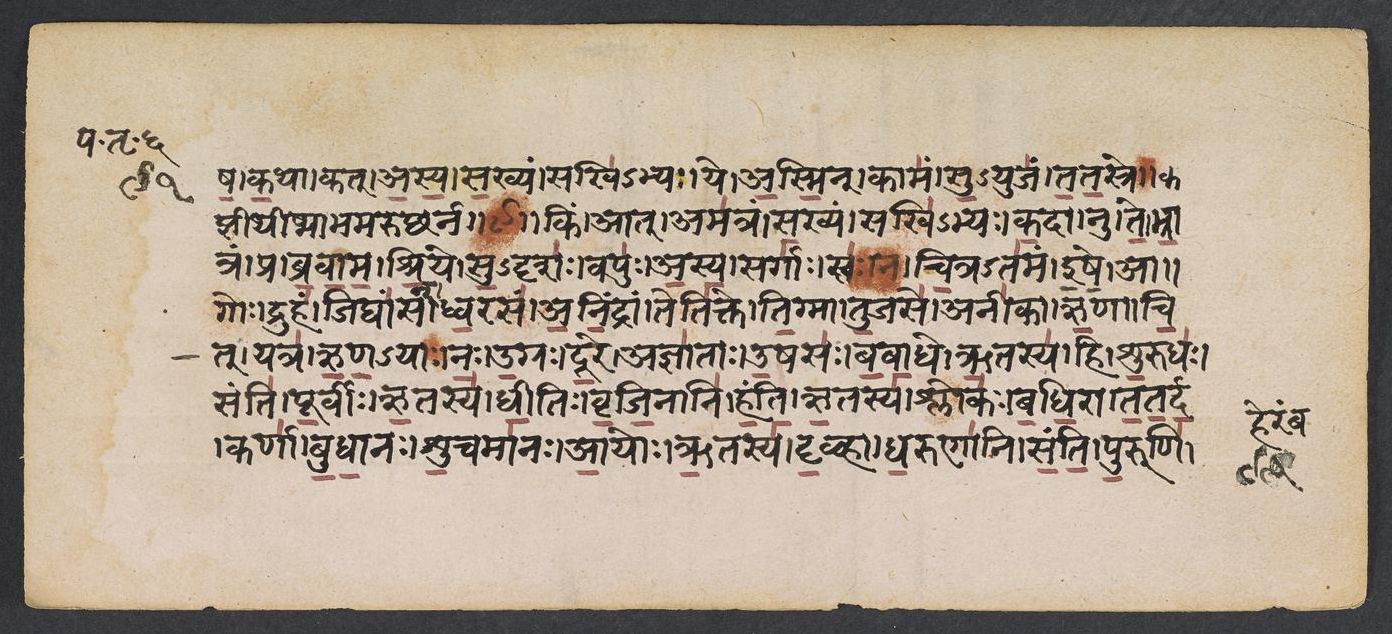
Penn Ms. Coll. 390 Item 41, fol. 282v (numbered 91v by the scribe) (OPenn image 283, upper leaf). Checked on the image: the Rigveda text on this page begins in RV 4.23.5 ‹-jujoṣa kathā kat asya›. The next page with Rigveda text, fol. 283r (numbered 92r by the scribe), begins in RV 4.23.9 ‹candrā vapuṣe vapūṃṣi ṛtena›. Verses 4.23.5-8 end on this page; 4.23.5 begins on fol. 282r (numbered 91r by the scribe).
5ka̱thā kad a̱syā u̱ṣaso̱ vyu̍ṣṭau de̱vo marta̍sya sa̱khyaṁ ju̍joṣa | ka̱thā kad a̍sya sa̱khyaṁ sakhi̍bhyo̱ ye a̍smi̱n kāma̍ṁ su̱yuja̍ṁ tata̱sre ||
6kim ād ama̍traṁ sa̱khyaṁ sakhi̍bhyaḥ ka̱dā nu te̍ bhrā̱tram pra bra̍vāma | śri̱ye su̱dṛśo̱ vapu̍r asya̱ sargā̱ḥ sva1̱̍r ṇa ci̱trata̍mam iṣa̱ ā goḥ ||
7druha̱ṁ jighā̍ṁsan dhva̱rasa̍m ani̱ndrāṁ teti̍kte ti̱gmā tu̱jase̱ anī̍kā | ṛ̱ṇā ci̱d yatra̍ ṛṇa̱yā na̍ u̱gro dū̱re ajñā̍tā u̱ṣaso̍ babā̱dhe ||
8ṛ̱tasya̱ hi śu̱rudha̱ḥ santi̍ pū̱rvīr ṛ̱tasya̍ dhī̱tir vṛ̍ji̱nāni̍ hanti | ṛ̱tasya̱ śloko̍ badhi̱rā ta̍tarda̱ karṇā̍ budhā̱naḥ śu̱camā̍na ā̱yoḥ ||
Compare: Padapāṭha (word-by-word text written in the manuscript; Sansknet e-text via GRETIL)
5kathā | kat | asyāḥ | uṣasaḥ | vi-uṣṭau | devaḥ | martasya | sakhyam | jujoṣa | kathā | kat | asya | sakhyam | sakhi-bhyaḥ | ye | asmin | kāmam | su-yujam | tatasre
6kim | āt | amatram | sakhyam | sakhi-bhyaḥ | kadā | nu | te | bhrātram | pra | bravāma | śriye | su-dṛśaḥ | vapuḥ | asya | sargāḥ | svaḥ | na | citra-tamam | iṣe | ā | goḥ
7duham | jighāṃsam | dhvarasam | anindrām | tetikte | tigmā | tujase | anīkā | ṛṇā | cit | yatra | ṛṇa-yāḥ | naḥ | ugraḥ | dūre | ajñātāḥ | uṣasaḥ | babādhe
8ṛtasya | hi | śuru-dhaḥ | santi | pūrvīḥ | ṛtasya | dhītiḥ | vṛjināni | hanti | ṛtasya | ślokaḥ | badhirā | tatarda | karṇā | budhānaḥ | śucamānaḥ | āyoḥ
5How, and what bond of friendship with a mortal hath the God chosen as this morn is breaking? How, and what love hath he for those who love him, who have entwined in him their firm affection?
6Is then thy friendship with thy friends most mighty? Thy brotherhood with us, -when may we tell it? The streams of milk move, as most wondrous sunlight, the beauty of the Lovely One for glory.
7About to slay the Indra-less destructive spirit he sharpens his keen arms to strike her. Whereby the Strong, although our debts' exactor, drives in the distant mornings that we know not.
8Eternal Law hath varied food that strengthens; thought of eternal Law, removes transgressions. The praise-hymn of eternal Law, arousing, glowing, hath oped the deaf ears of the living.
Where on the image
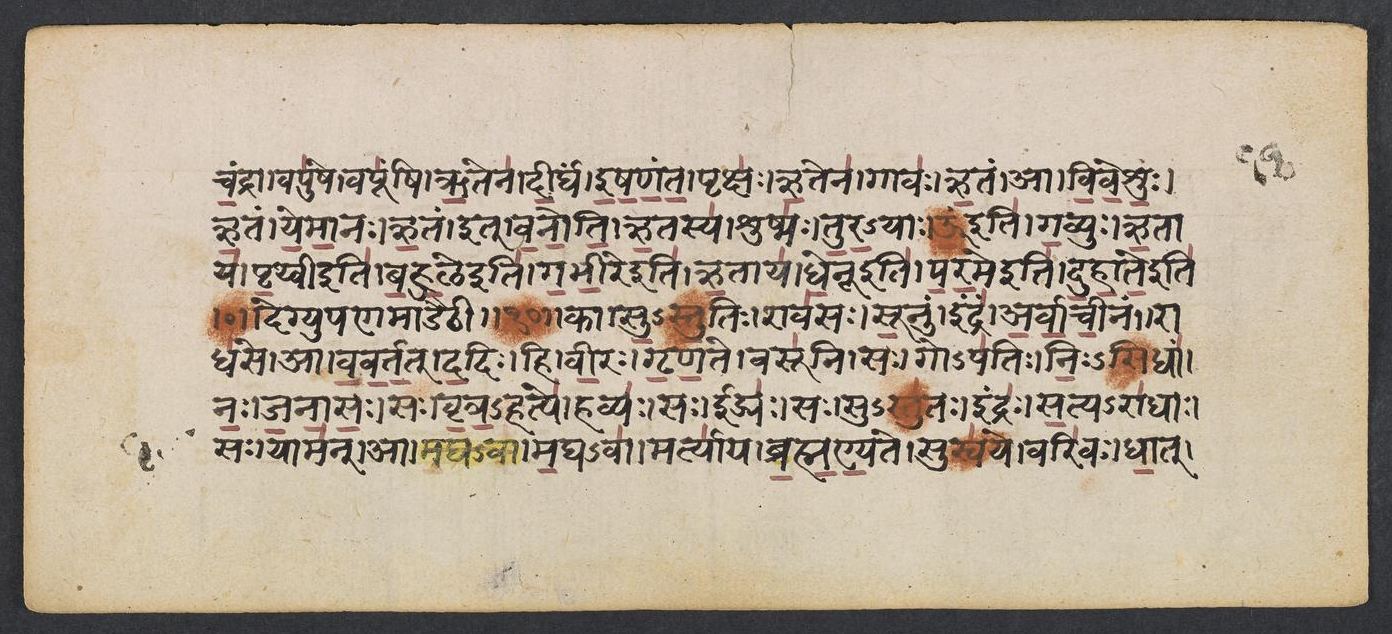
Penn Ms. Coll. 390 Item 41, fol. 283r (numbered 92r by the scribe) (OPenn image 283, lower leaf). Checked on the image: the Rigveda text on this page begins in RV 4.23.9 ‹candrā vapuṣe vapūṃṣi ṛtena›. The next page with Rigveda text, fol. 283v (numbered 92v by the scribe), begins in RV 4.24.3 ‹tam it naraḥ vi›. Verses 4.23.9-11 end on this page; 4.23.9 begins on fol. 282v (numbered 91v by the scribe).
9ṛ̱tasya̍ dṛ̱ḻhā dha̱ruṇā̍ni santi pu̱rūṇi̍ ca̱ndrā vapu̍ṣe̱ vapū̍ṁṣi | ṛ̱tena̍ dī̱rgham i̍ṣaṇanta̱ pṛkṣa̍ ṛ̱tena̱ gāva̍ ṛ̱tam ā vi̍veśuḥ ||
10ṛ̱taṁ ye̍mā̱na ṛ̱tam id va̍noty ṛ̱tasya̱ śuṣma̍s tura̱yā u̍ ga̱vyuḥ | ṛ̱tāya̍ pṛ̱thvī ba̍hu̱le ga̍bhī̱re ṛ̱tāya̍ dhe̱nū pa̍ra̱me du̍hāte ||
11nū ṣṭu̱ta i̍ndra̱ nū gṛ̍ṇā̱na iṣa̍ṁ jari̱tre na̱dyo̱3̱̍ na pī̍peḥ | akā̍ri te harivo̱ brahma̱ navya̍ṁ dhi̱yā syā̍ma ra̱thya̍ḥ sadā̱sāḥ ||
Compare: Padapāṭha (word-by-word text written in the manuscript; Sansknet e-text via GRETIL)
9ṛtasya | dṛḷhā | dharuṇāni | santi | purūṇi | candrā | vapuṣe | vapūṃṣi | ṛtena | dīrgham | iṣaṇanta | pṛkṣaḥ | ṛtena | gāvaḥ | ṛtam | ā | viveśuḥ
10ṛtam | yemānaḥ | ṛtam | it | vanoti | ṛtasya | śuṣmaḥ | tura-yāḥ | oṃ iti | gavyuḥ | ṛtāya | pṛthvī iti | bahuleiti | gabhīre iti | ṛtāya | dhenū iti | parame iti | duhāteiti
11nu | stutaḥ | indra | nu | gṛṇānaḥ | iṣam | jaritre | nadyaḥ | na | pīperitipīpeḥ | akāri | te | hari-vaḥ | brahma | navyam | dhiyā | syāma | rathyaḥ | sadāsāḥ
9Firm-seated are eternal Law's foundations in its fair form are many splendid beauties. By holy Law long lasting food they bring us; by holy Law have cows come to our worship.
10Fixing eternal Law he, too, upholds it swift moves the might of Law and wins the booty. To Law belong the vast deep Earth and Heaven: Milch-kine supreme, to Law their milk they render.
11Now, Indra! lauded,– glorified with praises, let power swell high like rivers to the singer. For thee a new hymn, Lord of Bays, is fashioned. May we, car-borne, through song be victors ever.
Notes
- Sanskrit: Aufrecht's edition (1877) with the Vedic accents, as entered by van Nooten and Holland (GRETIL).
- English: Ralph T. H. Griffith, The Hymns of the Rigveda (1889-1892; 2nd ed. 1896-1897), from the VedaWeb digital text; OCR slips in that text were corrected against the printed 2nd edition (data/sources/rigveda/griffith_errata.json).
- Padapāṭha (edition text): Sansknet e-text via GRETIL (CC BY-NC-SA 4.0).
Cite
Sources
- Source: Penn Ms. Coll. 390 Item 41 (undated (catalogued with Penn's 18th-19th c. Vedic manuscripts)), OPenn, Public Domain Mark + Aufrecht's accented text (GRETIL) + Griffith's English (VedaWeb) (holding institution)
- Critical edition: Aufrecht (1877), accented e-text via GRETIL
← previous · → next · v cycle view · l back to library