Rigveda 4.24: To Indra
Introduction
Rigveda 4.24 is a hymn of 11 verses addressed to Indra. It stands in book (maṇḍala) 4, the family book of Vāmadeva. The Rigveda is the oldest collection of Sanskrit hymns, composed in the second half of the second millennium BCE and handed down orally for many centuries before it was written down.
The manuscript shown is Penn Ms. Coll. 390 Item 41 (University of Pennsylvania), an undated paper manuscript of the padapāṭha (the word-by-word recitation text, in which every word is written separately and compounds are split) of the whole Ṛgveda in Devanāgarī, 884 leaves in fascicles, 7-9 lines to the page, accents in red; this hymn stands on fol. 283r-284r. Each section below gives the verses that end on one page; the page boundaries were read on the images (the opening words of every page), not counted out. Where the manuscript is a padapāṭha (the word-by-word recitation text), the section shows Aufrecht's continuous (saṃhitā) text first and, as the edition text, the padapāṭha of the same verses, which is the form written on the page.
How was this verified? (Provenance)
Where on the image
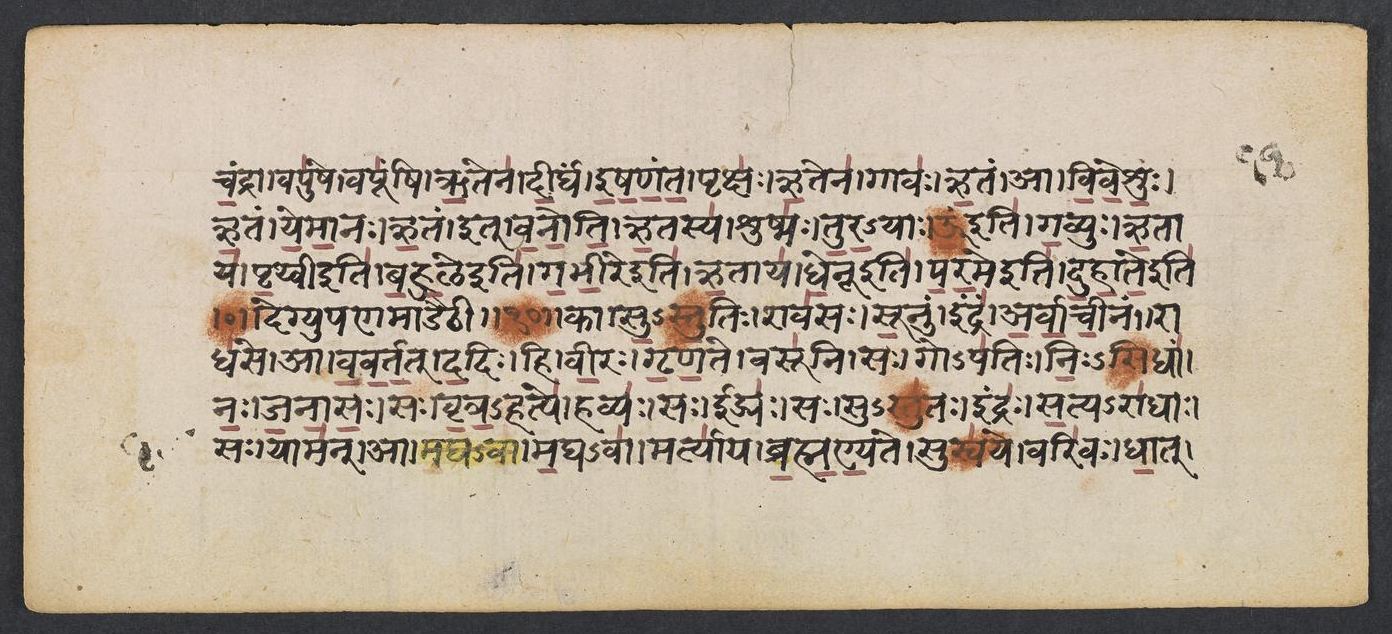
Penn Ms. Coll. 390 Item 41, fol. 283r (numbered 92r by the scribe) (OPenn image 283, lower leaf). Checked on the image: the Rigveda text on this page begins in RV 4.23.9 ‹candrā vapuṣe vapūṃṣi ṛtena›. The next page with Rigveda text, fol. 283v (numbered 92v by the scribe), begins in RV 4.24.3 ‹tam it naraḥ vi›. Verses 4.24.1-2 end on this page.
1kā su̍ṣṭu̱tiḥ śava̍saḥ sū̱num indra̍m arvācī̱naṁ rādha̍sa̱ ā va̍vartat | da̱dir hi vī̱ro gṛ̍ṇa̱te vasū̍ni̱ sa gopa̍tir ni̱ṣṣidhā̍ṁ no janāsaḥ ||
2sa vṛ̍tra̱hatye̱ havya̱ḥ sa īḍya̱ḥ sa suṣṭu̍ta̱ indra̍ḥ sa̱tyarā̍dhāḥ | sa yāma̱nn ā ma̱ghavā̱ martyā̍ya brahmaṇya̱te suṣva̍ye̱ vari̍vo dhāt ||
Compare: Padapāṭha (word-by-word text written in the manuscript; Sansknet e-text via GRETIL)
1kā | su-stutiḥ | śavasaḥ | sūnum | indram | arvācīnam | rādhase | ā | vavartat | dadiḥ | hi | vīraḥ | gṛṇate | vasūni | saḥ | go--patiḥ | niḥ-sidhām | naḥ | janāsaḥ
2saḥ | vṛtra-hatye | havyaḥ | saḥ | īḍyaḥ | saḥ | su-stutaḥ | indraḥ | satya-rādhāḥ | saḥ | yāman | ā | magha-vā | martyāya | brahmaṇyate | suṣvaye | var ivaḥ | dhāt
1WHAT worthy praise will bring before us Indra, the Son of Strength, that he may grant us riches; For he the Hero, gives the singer treasures: he is the Lord who sends us gifts, ye people.
2To be invoked and hymned in fight with Vr̥itra, that well-praised Indra gives us real bounties. That Maghavan brings comfort in the foray to the religious man who pours libations.
Where on the image
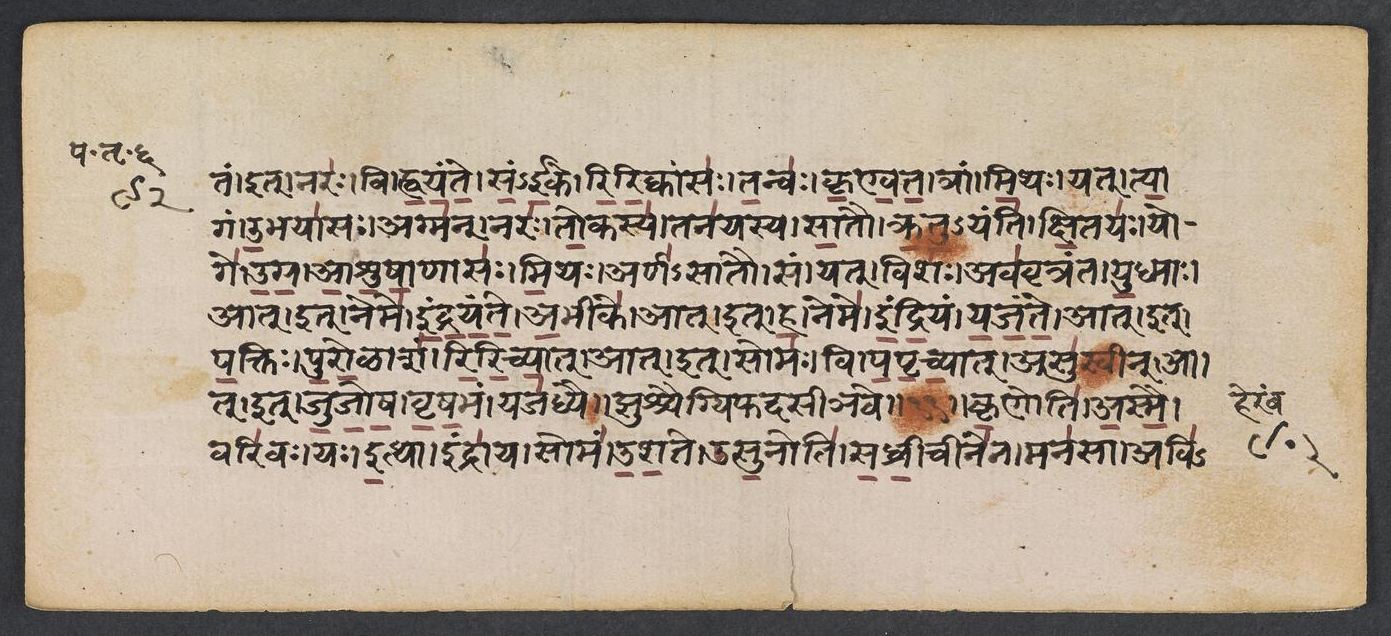
Penn Ms. Coll. 390 Item 41, fol. 283v (numbered 92v by the scribe) (OPenn image 284, upper leaf). Checked on the image: the Rigveda text on this page begins in RV 4.24.3 ‹tam it naraḥ vi›. The next page with Rigveda text, fol. 284r (numbered 93r by the scribe), begins in RV 4.24.6 ‹-avi-venam tam it sakhāyam›. Verses 4.24.3-5 end on this page.
3tam in naro̱ vi hva̍yante samī̱ke ri̍ri̱kvāṁsa̍s ta̱nva̍ḥ kṛṇvata̱ trām | mi̱tho yat tyā̱gam u̱bhayā̍so̱ agma̱n nara̍s to̱kasya̱ tana̍yasya sā̱tau ||
4kra̱tū̱yanti̍ kṣi̱tayo̱ yoga̍ ugrāśuṣā̱ṇāso̍ mi̱tho arṇa̍sātau | saṁ yad viśo 'va̍vṛtranta yu̱dhmā ād in nema̍ indrayante a̱bhīke̍ ||
5ād id dha̱ nema̍ indri̱yaṁ ya̍janta̱ ād it pa̱ktiḥ pu̍ro̱ḻāśa̍ṁ riricyāt | ād it somo̱ vi pa̍pṛcyā̱d asu̍ṣvī̱n ād ij ju̍joṣa vṛṣa̱bhaṁ yaja̍dhyai ||
Compare: Padapāṭha (word-by-word text written in the manuscript; Sansknet e-text via GRETIL)
3tam | it | naraḥ | vi | hvayante | sam-īke | ririkvaaṃsaḥ | tanvaḥ | kṛṇvata | trām | mithaḥ | yat | tyāgam | ubhyāsaḥ | agman | naraḥ | tokasya | tanayasya | sātau
4kratuanti | kṣitayaḥ | yoge | ugra | āśuṣāṇāsaḥ | mithaḥ | arṇa-sātau | sam | yat | viśaḥ | avavṛtranta | yudhmāḥ | āt | it | neme | indrayante | abhīke
5āt | it | ha | neme | indriyam | yajante | āt | it | paktiḥ | puroḷāśam | riricyāt | āt | it | somaḥ | vi | papṛcyāt | asusvīn | āt | it | jujoṣa | vṛṣabham | yajadhyai
3Him, verily, the men invoke in combat; risking their lives they make him their protector, When heroes, foe to foe, give up their bodies, fighting, each side, for children and their offspring.
4Strong God! the folk at need put forth their vigour, striving together in the whirl of battle. When warrior bands encounter one another some in the grapple quit themselves like Indra.
5Hence many a one worships the might of Indra: hence let the brew succeed the meal-oblation. Hence let the Soma banish those who pour not: even hence I joy to pay the Strong One worship.
Where on the image
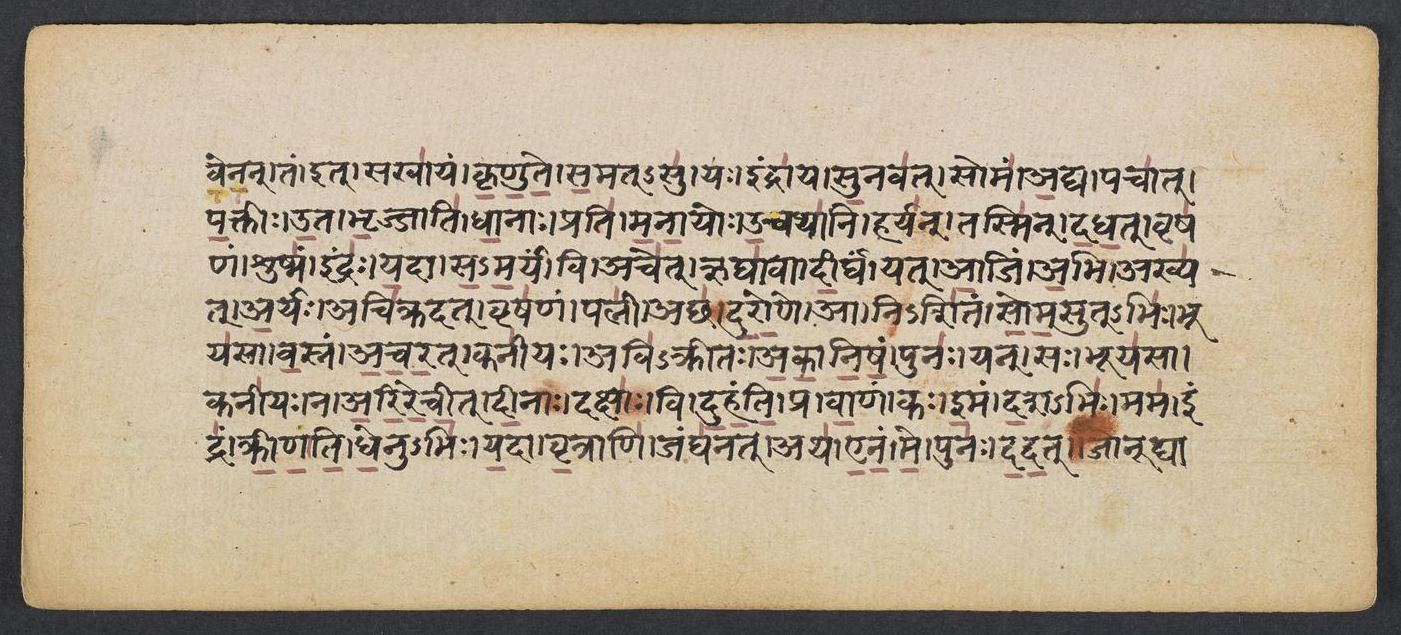
Penn Ms. Coll. 390 Item 41, fol. 284r (numbered 93r by the scribe) (OPenn image 284, lower leaf). Checked on the image: the Rigveda text on this page begins in RV 4.24.6 ‹-avi-venam tam it sakhāyam›. The next page with Rigveda text, fol. 284v (numbered 93v by the scribe), begins in RV 4.25.1 ‹kaḥ adya naryaḥ deva-kāmaḥ›. Verses 4.24.6-11 end on this page; 4.24.6 begins on fol. 283v (numbered 92v by the scribe).
6kṛ̱ṇoty a̍smai̱ vari̍vo̱ ya i̱tthendrā̍ya̱ soma̍m uśa̱te su̱noti̍ | sa̱dhrī̱cīne̍na̱ mana̱sāvi̍vena̱n tam it sakhā̍yaṁ kṛṇute sa̱matsu̍ ||
7ya indrā̍ya su̱nava̱t soma̍m a̱dya pacā̍t pa̱ktīr u̱ta bhṛ̱jjāti̍ dhā̱nāḥ | prati̍ manā̱yor u̱cathā̍ni̱ harya̱n tasmi̍n dadha̱d vṛṣa̍ṇa̱ṁ śuṣma̱m indra̍ḥ ||
8ya̱dā sa̍ma̱ryaṁ vy ace̱d ṛghā̍vā dī̱rghaṁ yad ā̱jim a̱bhy akhya̍d a̱ryaḥ | aci̍krada̱d vṛṣa̍ṇa̱m patny acchā̍ duro̱ṇa ā niśi̍taṁ soma̱sudbhi̍ḥ ||
9bhūya̍sā va̱snam a̍cara̱t kanī̱yo 'vi̍krīto akāniṣa̱m puna̱r yan | sa bhūya̍sā̱ kanī̍yo̱ nāri̍recīd dī̱nā dakṣā̱ vi du̍hanti̱ pra vā̱ṇam ||
10ka i̱maṁ da̱śabhi̱r mamendra̍ṁ krīṇāti dhe̱nubhi̍ḥ | ya̱dā vṛ̱trāṇi̱ jaṅgha̍na̱d athai̍nam me̱ puna̍r dadat ||
11nū ṣṭu̱ta i̍ndra̱ nū gṛ̍ṇā̱na iṣa̍ṁ jari̱tre na̱dyo̱3̱̍ na pī̍peḥ | akā̍ri te harivo̱ brahma̱ navya̍ṁ dhi̱yā syā̍ma ra̱thya̍ḥ sadā̱sāḥ ||
Compare: Padapāṭha (word-by-word text written in the manuscript; Sansknet e-text via GRETIL)
6kṛṇoti | asmai | varivaḥ | yaḥ | itthā | indrāya | somam | uśate | sunoti | sadhrīcīnena | manasā | avi-venam | tam | it | sakhāyam | kṛṇute | samat-su
7yaḥ | indrāya | sunavat | somam | adya | pacāt | paktīḥ | uta | bhṛjjāti | dhānāḥ | prati | manāyoḥ | ucathāni | haryan | tasmin | dadhat | vṛṣaṇam | śuṣmam | indraḥ
8yadā | sa-maryam | vi | acet | ṛghāvā | dīrgham | yat | ājim | abhi | akhyat | aryaḥ | acikradat | vṛṣaṇam | patnī | accha | duroṇe | ā | ni-śitam | somasut-bhiḥ
9bhūyasā | vasnam | acarat | kanīyaḥ | avi-krītaḥ | akāniṣam | punaḥ | yan | saḥ | bhūyasā | kanīyaḥ | na | arirecīt | dīnāḥ | dakṣāḥ | vi | duhanti | pra | vāṇam
10kaḥ | imam | daśa-bhiḥ | mama | indram | krīṇāti | dhenu-bhiḥ | yadā | vṛtrāṇi | jaṅghanat | atha | enam | me | punaḥ | dadat
11nu | stutaḥ | indra | nu | gṛṇānaḥ | iṣam | jaritre | nadyaḥ | na | pīperitipīpeḥ | akāri | te | hari-vaḥ | brahma | navyam | dhiyā | syāma | rathyaḥ | sadāsāḥ
6Indra gives comfort to the man who truly presses, for him who longs for it, the Soma, Not disaffected, with devoted spirit this man he takes to be his friend in battles.
7He who this day for Indra presses Soma, prepares the brew and fries the grains of barley- Loving the hymns of that devoted servant, to him may Indra give heroic vigour.
8When the impetuous chief hath sought the conflict, and the lord looked upon the long-drawn battle, The matron calls to the Strong God whom pressers of Soma have encouraged in the dwelling.
9He bid a small price for a thing of value: I was content, returning, still unpurchased. He heightened not his insufficient offer. Simple and clever, both milk out the udder.
10Who for ten milch-kine purchaseth from rne this Indra who is mine? When he hath slain the Vr̥itras let the buyer give him back to me.
11Now, Indra! lauded, glorified with praises, let wealth swell high like rivers for the singer. For thee a new hymn, Lord of Bays, is fashioned. May we, car-borne, through song be victors ever.
Notes
- Sanskrit: Aufrecht's edition (1877) with the Vedic accents, as entered by van Nooten and Holland (GRETIL).
- English: Ralph T. H. Griffith, The Hymns of the Rigveda (1889-1892; 2nd ed. 1896-1897), from the VedaWeb digital text; OCR slips in that text were corrected against the printed 2nd edition (data/sources/rigveda/griffith_errata.json).
- Padapāṭha (edition text): Sansknet e-text via GRETIL (CC BY-NC-SA 4.0).
Cite
Sources
- Source: Penn Ms. Coll. 390 Item 41 (undated (catalogued with Penn's 18th-19th c. Vedic manuscripts)), OPenn, Public Domain Mark + Aufrecht's accented text (GRETIL) + Griffith's English (VedaWeb) (holding institution)
- Critical edition: Aufrecht (1877), accented e-text via GRETIL
← previous · → next · v cycle view · l back to library