Rigveda 4.30: To Indra
Introduction
Rigveda 4.30 is a hymn of 24 verses addressed to Indra. It stands in book (maṇḍala) 4, the family book of Vāmadeva. The Rigveda is the oldest collection of Sanskrit hymns, composed in the second half of the second millennium BCE and handed down orally for many centuries before it was written down.
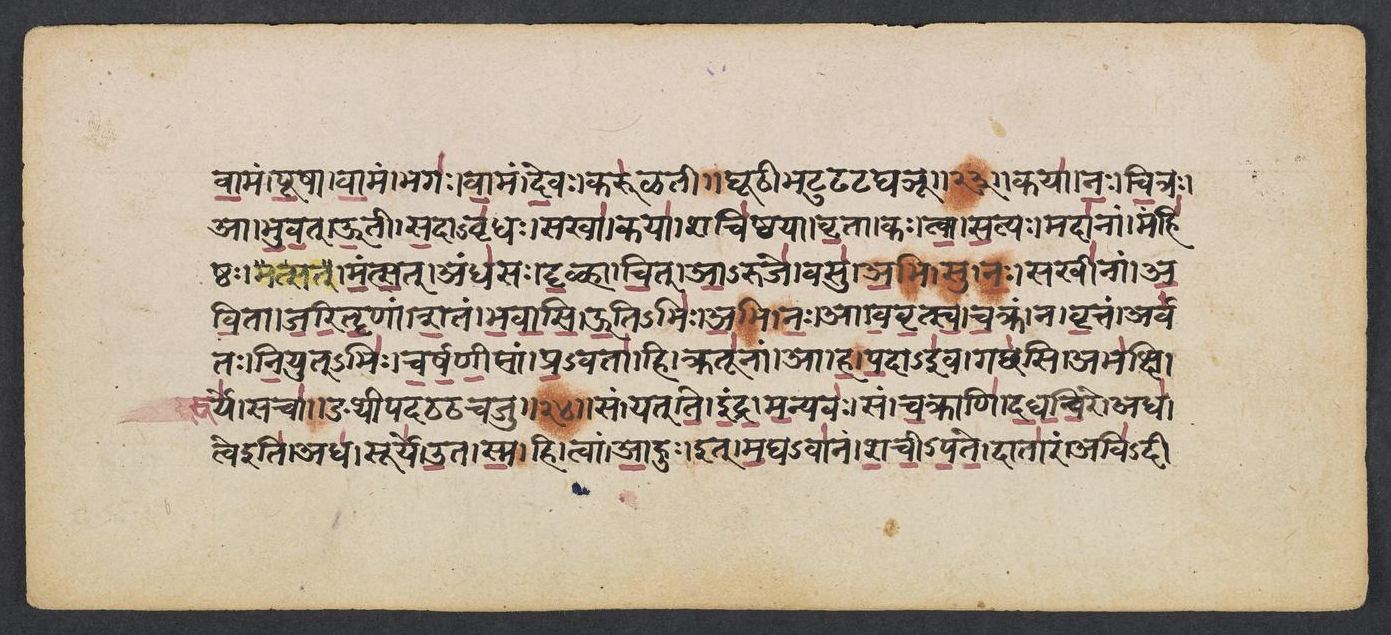
The manuscript shown is Penn Ms. Coll. 390 Item 41 (University of Pennsylvania), an undated paper manuscript of the padapāṭha (the word-by-word recitation text, in which every word is written separately and compounds are split) of the whole Ṛgveda in Devanāgarī, 884 leaves in fascicles, 7-9 lines to the page, accents in red; this hymn stands on fol. 288r-290r. Each section below gives the verses that end on one page; the page boundaries were read on the images (the opening words of every page), not counted out. Where the manuscript is a padapāṭha (the word-by-word recitation text), the section shows Aufrecht's continuous (saṃhitā) text first and, as the edition text, the padapāṭha of the same verses, which is the form written on the page.
How was this verified? (Provenance)
Where on the image
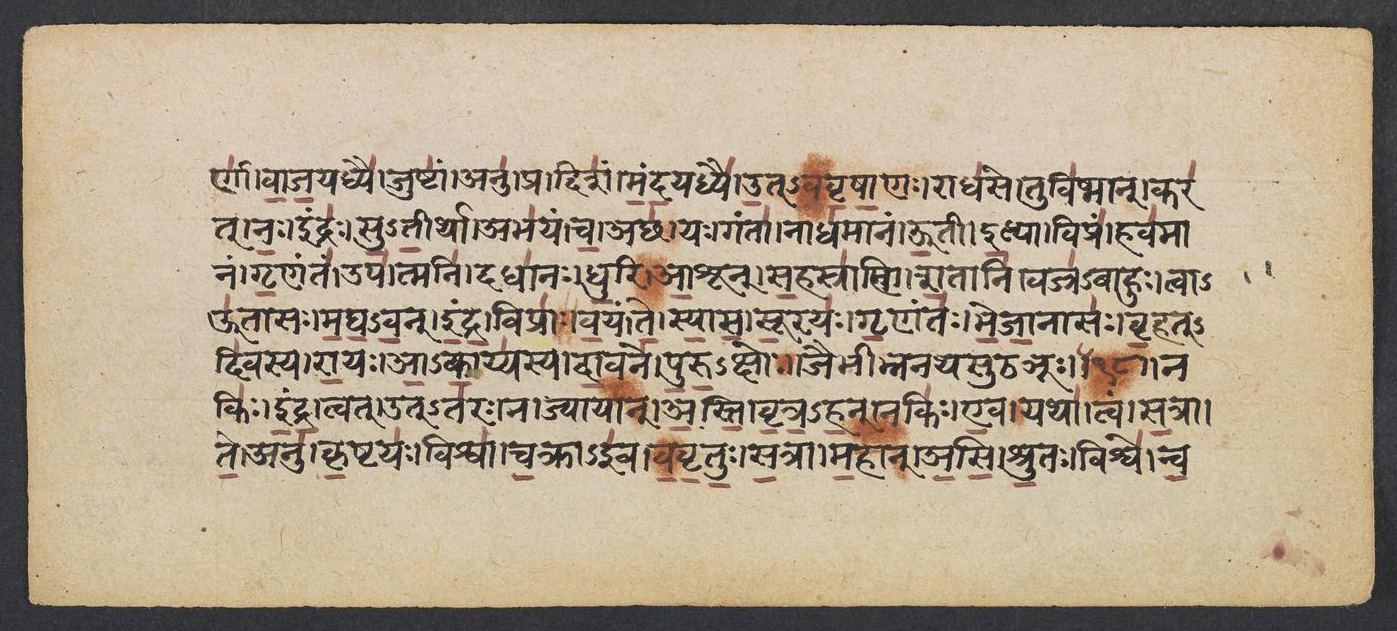
Penn Ms. Coll. 390 Item 41, fol. 288r (numbered 97r by the scribe) (OPenn image 288, lower leaf). Checked on the image: the Rigveda text on this page begins in RV 4.29.3 ‹-karṇā vājayadhyai juṣṭām anu›. The next page with Rigveda text, fol. 288v (numbered 97v by the scribe), begins in RV 4.30.3 ‹-cana it anā tvā›. Verses 4.30.1-2 end on this page.
1naki̍r indra̱ tvad utta̍ro̱ na jyāyā̍m̐ asti vṛtrahan | naki̍r e̱vā yathā̱ tvam ||
2sa̱trā te̱ anu̍ kṛ̱ṣṭayo̱ viśvā̍ ca̱kreva̍ vāvṛtuḥ | sa̱trā ma̱hām̐ a̍si śru̱taḥ ||
Compare: Padapāṭha (word-by-word text written in the manuscript; Sansknet e-text via GRETIL)
1nakiḥ | indra | tvat | ut-taraḥ | na | jyāyān | asti | vṛtra-han | nakiḥ | eva | yathā | tvam
2satrā | te | anu | kṛṣṭayaḥ | viśvā | cakrāiva | vavṛtuḥ | satrā | mahān | asi | śrutaḥ
1O INDRA, Vr̥itra-slayer, none is better, mightier than thou: Verily there is none like thee.
2Like chariot-wheels these people all together follow after thee: Thou ever art renowned as Great.
Where on the image
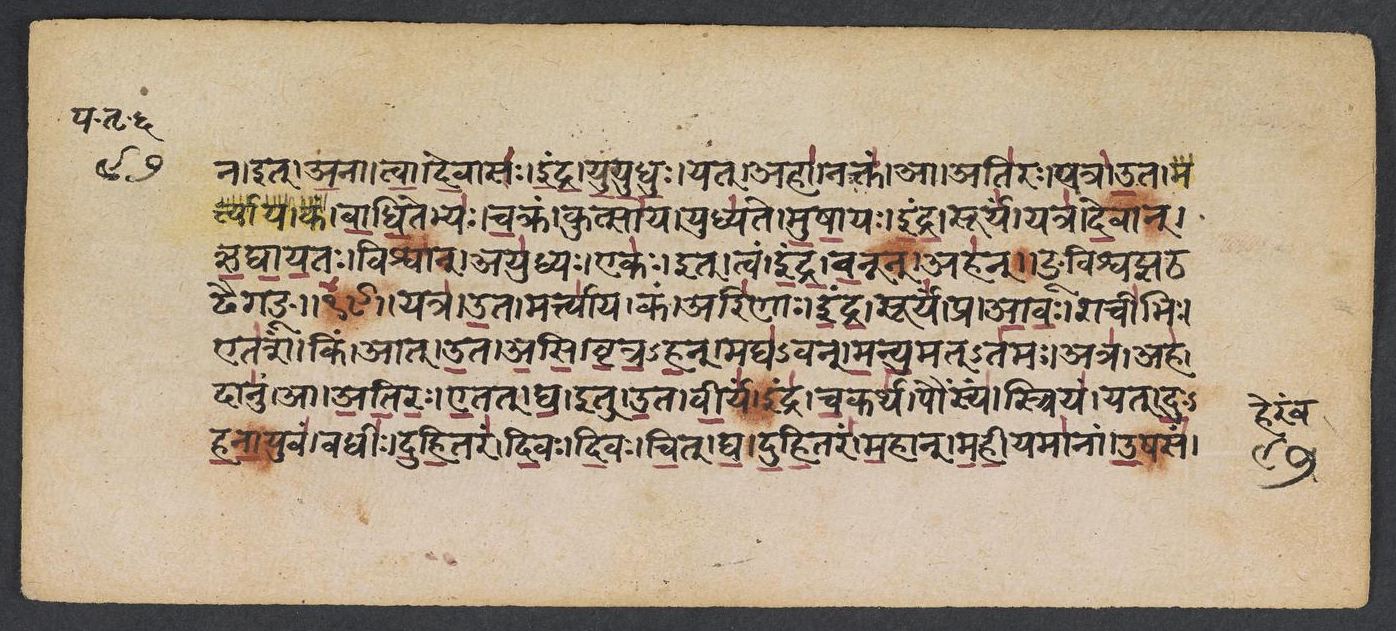
Penn Ms. Coll. 390 Item 41, fol. 288v (numbered 97v by the scribe) (OPenn image 289, upper leaf). Checked on the image: the Rigveda text on this page begins in RV 4.30.3 ‹-cana it anā tvā›. The next page with Rigveda text, fol. 289r (numbered 98r by the scribe), begins in RV 4.30.9 ‹indra sam piṇak›. Verses 4.30.3-8 end on this page; 4.30.3 begins on fol. 288r (numbered 97r by the scribe).
3viśve̍ ca̱ned a̱nā tvā̍ de̱vāsa̍ indra yuyudhuḥ | yad ahā̱ nakta̱m āti̍raḥ ||
4yatro̱ta bā̍dhi̱tebhya̍ś ca̱kraṁ kutsā̍ya̱ yudhya̍te | mu̱ṣā̱ya i̍ndra̱ sūrya̍m ||
5yatra̍ de̱vām̐ ṛ̍ghāya̱to viśvā̱m̐ ayu̍dhya̱ eka̱ it | tvam i̍ndra va̱nūm̐r aha̍n ||
6yatro̱ta martyā̍ya̱ kam ari̍ṇā indra̱ sūrya̍m | prāva̱ḥ śacī̍bhi̱r eta̍śam ||
7kim ād u̱tāsi̍ vṛtraha̱n magha̍van manyu̱matta̍maḥ | atrāha̱ dānu̱m āti̍raḥ ||
8e̱tad ghed u̱ta vī̱rya1̱̍m indra̍ ca̱kartha̱ pauṁsya̍m | striya̱ṁ yad du̍rhaṇā̱yuva̱ṁ vadhī̍r duhi̱tara̍ṁ di̱vaḥ ||
Compare: Padapāṭha (word-by-word text written in the manuscript; Sansknet e-text via GRETIL)
3viśve | cana | it | anā | tvā | devāsaḥ | indra | yuyudhuḥ | yat | ahā | naktam | ā | at iraḥ
4yatra | uta | bādhitebhyaḥ | cakram | kutsāya | yudhyate | muṣāyaḥ | indra | sūryam
5yatra | devān | ṛghāyataḥ | viśvān | ayudhyaḥ | ekaḥ | it | tvam | indra | vanūn | ahan
6yatra | uta | martyāya | kam | ariṇāḥ | indra | sūryam | pra | āvaḥ | śacībhiḥ | etaśam
7kim | āt | uta | asi | vṛtra-han | magha-van | manyumat-tamaḥ | atra | aha | dānum | ā | atiraḥ
8etat | gha | it | uta | vīryam | indra | cakartha | paiṃsyam | striyam | yat | duḥ-hanāyuvam | vadhīḥ | duhitaram | divaḥ
3Not even all the gathered Gods conquered thee, Indra, in the war, When thou didst lengthen days by night.
4When for the sake of those oppressed, and Kutsa as he battled, Thou stolest away the Sun's car-wheel.
5When, fighting singly, Indra. thou o'ercamest all the furious Gods, thou slewest those who strove with thee.
6When also for a mortal man, Indra, thou speddest forth the Sun, And holpest Etaṣa with might.
7What? Vr̥itra-slayer, art not thou, Maghavan, fiercest in thy wrath? So hast thou quelled the demon too.
8And this heroic deed of might thou, Indra, also hast achieved, That thou didst smite to death the Dame, Heaven's Daughter, meditating ill.
Where on the image
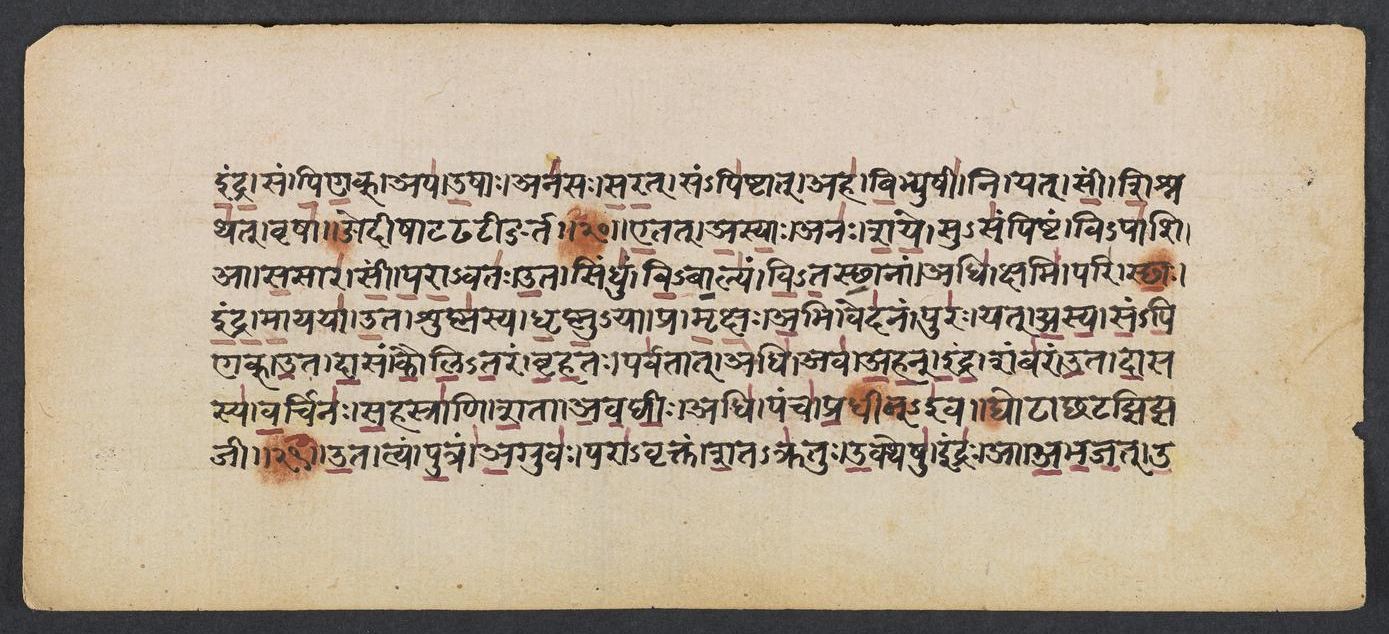
Penn Ms. Coll. 390 Item 41, fol. 289r (numbered 98r by the scribe) (OPenn image 289, lower leaf). Checked on the image: the Rigveda text on this page begins in RV 4.30.9 ‹indra sam piṇak›. The next page with Rigveda text, fol. 289v (numbered 98v by the scribe), begins in RV 4.30.17 ‹uta tyā turvaśāyadū iti›. Verses 4.30.9-16 end on this page; 4.30.9 begins on fol. 288v (numbered 97v by the scribe).
9di̱vaś ci̍d ghā duhi̱tara̍m ma̱hān ma̍hī̱yamā̍nām | u̱ṣāsa̍m indra̱ sam pi̍ṇak ||
10apo̱ṣā ana̍saḥ sara̱t sampi̍ṣṭā̱d aha̍ bi̱bhyuṣī̍ | ni yat sī̍ṁ śi̱śnatha̱d vṛṣā̍ ||
11e̱tad a̍syā̱ ana̍ḥ śaye̱ susa̍mpiṣṭa̱ṁ vipā̱śy ā | sa̱sāra̍ sīm parā̱vata̍ḥ ||
12u̱ta sindhu̍ṁ vibā̱lya̍ṁ vitasthā̱nām adhi̱ kṣami̍ | pari̍ ṣṭhā indra mā̱yayā̍ ||
13u̱ta śuṣṇa̍sya dhṛṣṇu̱yā pra mṛ̍kṣo a̱bhi veda̍nam | puro̱ yad a̍sya sampi̱ṇak ||
14u̱ta dā̱saṁ kau̍lita̱ram bṛ̍ha̱taḥ parva̍tā̱d adhi̍ | avā̍hann indra̱ śamba̍ram ||
15u̱ta dā̱sasya̍ va̱rcina̍ḥ sa̱hasrā̍ṇi śa̱tāva̍dhīḥ | adhi̱ pañca̍ pra̱dhīm̐r i̍va ||
16u̱ta tyam pu̱tram a̱gruva̱ḥ parā̍vṛktaṁ śa̱takra̍tuḥ | u̱ktheṣv indra̱ ābha̍jat ||
Compare: Padapāṭha (word-by-word text written in the manuscript; Sansknet e-text via GRETIL)
9divaḥ | cit | gha | duhitaram | mahān | mahīyamānām | uṣasam | indra | sam | piṇak
10apa | uṣāḥ | anasaḥ | sarat | sam-piṣṭāt | aha | bibhyuṣī | ni | yat | sīm | śiśnathat | vṛṣā
11etat | asyāḥ | anaḥ | śaye | su-sampiṣṭam | vi-pāśi | ā | sasāra | sīm | parāvataḥ
12uta | sindhum | vi-bālyam | vi-tasthānām | adhi | kṣami | pari | sthāḥ | indra | māyayā
13uta | śuṣṇasya | dhṛṣṇu-yā | pra | mṛkṣaḥ | abhi | vedanam | puraḥ | yat | asya | sam-piṇak
14uta | dāsam | kauli-taram | bṛhataḥ | parvatāt | adhi | ava | ahan | indra | śambaram
15uta | dāsasya | varcinaḥ | sahasrāṇi | śatā | avadhīḥ | adhi | pañca | pradhīn-iva
16uta | tyam | putram | agruvaḥ | parāvṛktam | śata-kratuḥ | uktheṣu | indraḥ | ā | abhajat
9Thou, Indra, Mighty One, didst crush Ushas, though Daughter of the Sky. When lifting up herself in pride.
10Then from her chariot Ushas fled, affrighted, from her ruined car. When the strong God had shattered it.
11So there this car of Ushas lay, broken to pieces, in Vipâṣ, And she herself fled far away.
12Thou, Indra, didst with magic power resist the overflowing stream Who spread her waters o'er the land.
13Valiantly didst thou seize and take the store which Ṣushṇa had amassed, When thou didst crush his fortresses.
14Thou, Indra, also smotest down Kulitara's son Ṣambara, The Dâsa, from the lofty hill.
15Of Dâsa Varcin's thou didst slay the hundred thousand and the five, Crushed like the fellies, of a car.
16So Indra, Lord of Heroes, Powers, caused the unwedded damsel's son, The castaway, to share the lauds.
Where on the image
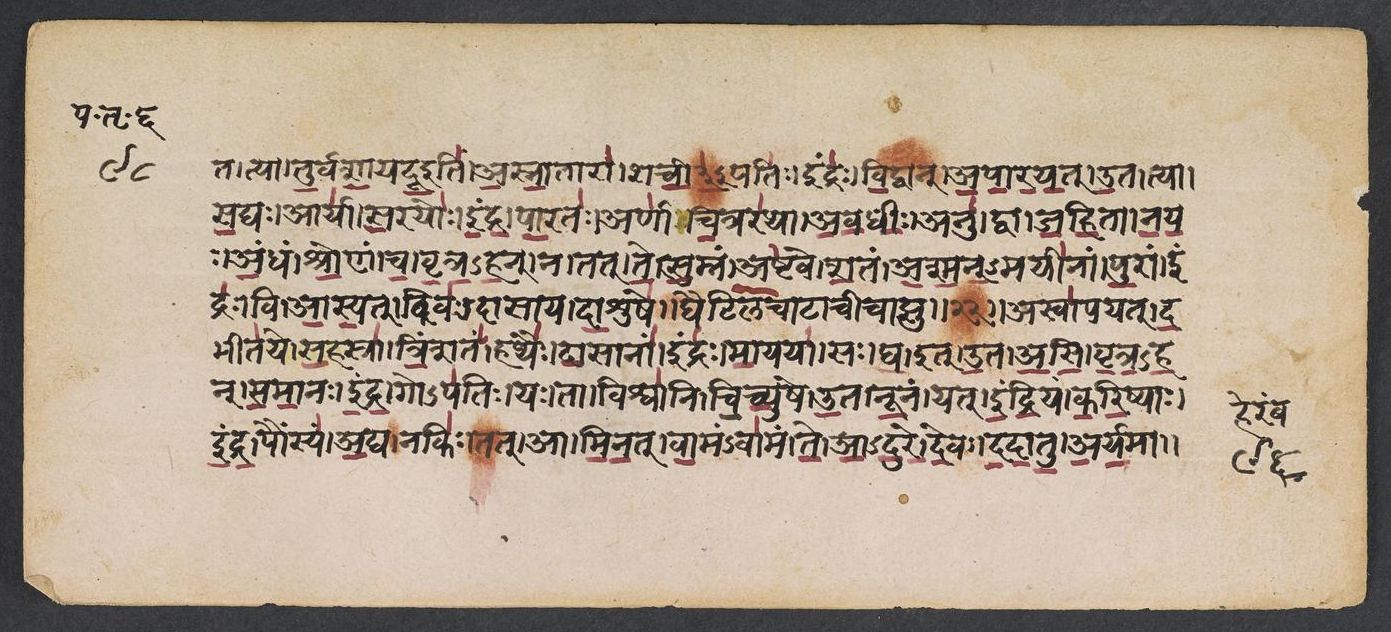
Penn Ms. Coll. 390 Item 41, fol. 289v (numbered 98v by the scribe) (OPenn image 290, upper leaf). Checked on the image: the Rigveda text on this page begins in RV 4.30.17 ‹uta tyā turvaśāyadū iti›. The next page with Rigveda text, fol. 290r (numbered 99r by the scribe), begins in RV 4.30.24 ‹vāmam pūṣā vāmam bhagaḥ›. Verses 4.30.17-23 end on this page.
17u̱ta tyā tu̱rvaśā̱yadū̍ asnā̱tārā̱ śacī̱pati̍ḥ | indro̍ vi̱dvām̐ a̍pārayat ||
18u̱ta tyā sa̱dya āryā̍ sa̱rayo̍r indra pā̱rata̍ḥ | arṇā̍ci̱trara̍thāvadhīḥ ||
19anu̱ dvā ja̍hi̱tā na̍yo̱ 'ndhaṁ śro̱ṇaṁ ca̍ vṛtrahan | na tat te̍ su̱mnam aṣṭa̍ve ||
20śa̱tam a̍śma̱nmayī̍nām pu̱rām indro̱ vy ā̍syat | divo̍dāsāya dā̱śuṣe̍ ||
21asvā̍payad da̱bhīta̍ye sa̱hasrā̍ tri̱ṁśata̱ṁ hathai̍ḥ | dā̱sānā̱m indro̍ mā̱yayā̍ ||
22sa ghed u̱tāsi̍ vṛtrahan samā̱na i̍ndra̱ gopa̍tiḥ | yas tā viśvā̍ni cicyu̱ṣe ||
23u̱ta nū̱naṁ yad i̍ndri̱yaṁ ka̍ri̱ṣyā i̍ndra̱ pauṁsya̍m | a̱dyā naki̱ṣ ṭad ā mi̍nat ||
Compare: Padapāṭha (word-by-word text written in the manuscript; Sansknet e-text via GRETIL)
17uta | tyā | turvaśāyadū iti | asnātārā | śacī-patiḥ | indraḥ | vidvān | apārayat
18uta | tyā | sadyaḥ | āryā | sarayoḥ | indra | pārataḥ | arṇācitrarathā | avadhīḥ
19anu | dvā | jahitā | nayaḥ | andham | śroṇam | ca | vṛtra-han | na | tat | te | sumnam | aṣṭave
20śatam | aśman-mayīnām | purām | indraḥ | vi | āsyat | divaḥ-dāsāya | dāśuṣe
21asvāpayat | dabhītaye | sahasrā | triṃśatam | hathaiḥ | dāsānām | indraḥ | māyayā
22saḥ | gha | it | uta | asi | vṛtra-han | samānaḥ | indra | go--patiḥ | yaḥ | tā | viśvāni | cicyuṣe
23uta | nūnam | yat | indriyam | kariṣyāḥ | indra | paiṃsyam | adya | nakiḥ | ṭat | ā | minat
17So sapient Indra, Lord of Might, brought Turvaga and Yadu, those Who feared the flood, in safety o'er.
18Arṇa and Chitraratha, both Aryas, thou, Indra, slewest swift, On yonder side of Sarayu,
19Thou, Vr̥itra-slayer, didst conduct those two forlorn, the blind, the lame. None may attain this bliss of thine.
20For Divodâsa, him who brought oblations, Indra overthrew A hundred fortresses of stone.
21The thirty thousand Disas he with magic power and weapons sent To slumber, for Dabhîti's sake.
22As such, O Vr̥itra-slayer, thou art general Lord of kine for all, Thou Shaker of all things that be.
23Indra, whatever deed of might thou hast this day to execute, None be there now to hinder it.
Where on the image
Penn Ms. Coll. 390 Item 41, fol. 290r (numbered 99r by the scribe) (OPenn image 290, lower leaf). Checked on the image: the Rigveda text on this page begins in RV 4.30.24 ‹vāmam pūṣā vāmam bhagaḥ›. The next page with Rigveda text, fol. 290v (numbered 99v by the scribe), begins in RV 4.31.7 ‹-avi-dīdhayum›. Verse 4.30.24 ends on this page; 4.30.24 begins on fol. 289v (numbered 98v by the scribe).
24vā̱maṁ-vā̍maṁ ta ādure de̱vo da̍dātv arya̱mā | vā̱mam pū̱ṣā vā̱mam bhago̍ vā̱maṁ de̱vaḥ karū̍ḻatī ||
Compare: Padapāṭha (word-by-word text written in the manuscript; Sansknet e-text via GRETIL)
24vamam-vāmam | te | ādure | devaḥ | dadātu | aryamā | vāmam | pūṣā | vāmam | bhagaḥ | vāmam | devaḥ | karūḷatī
24O Watchful One, may Aryaman the God give thee all goodly things. May Pûshan, Bhaga, and the God Karûlatî give all things fair.
Notes
- Sanskrit: Aufrecht's edition (1877) with the Vedic accents, as entered by van Nooten and Holland (GRETIL).
- English: Ralph T. H. Griffith, The Hymns of the Rigveda (1889-1892; 2nd ed. 1896-1897), from the VedaWeb digital text; OCR slips in that text were corrected against the printed 2nd edition (data/sources/rigveda/griffith_errata.json).
- Padapāṭha (edition text): Sansknet e-text via GRETIL (CC BY-NC-SA 4.0).
Cite
Sources
- Source: Penn Ms. Coll. 390 Item 41 (undated (catalogued with Penn's 18th-19th c. Vedic manuscripts)), OPenn, Public Domain Mark + Aufrecht's accented text (GRETIL) + Griffith's English (VedaWeb) (holding institution)
- Critical edition: Aufrecht (1877), accented e-text via GRETIL
← previous · → next · v cycle view · l back to library