Rigveda 4.4: To Agni killer of demons
Introduction
Rigveda 4.4 is a hymn of 15 verses addressed to Agni killer of demons. It stands in book (maṇḍala) 4, the family book of Vāmadeva. The Rigveda is the oldest collection of Sanskrit hymns, composed in the second half of the second millennium BCE and handed down orally for many centuries before it was written down.
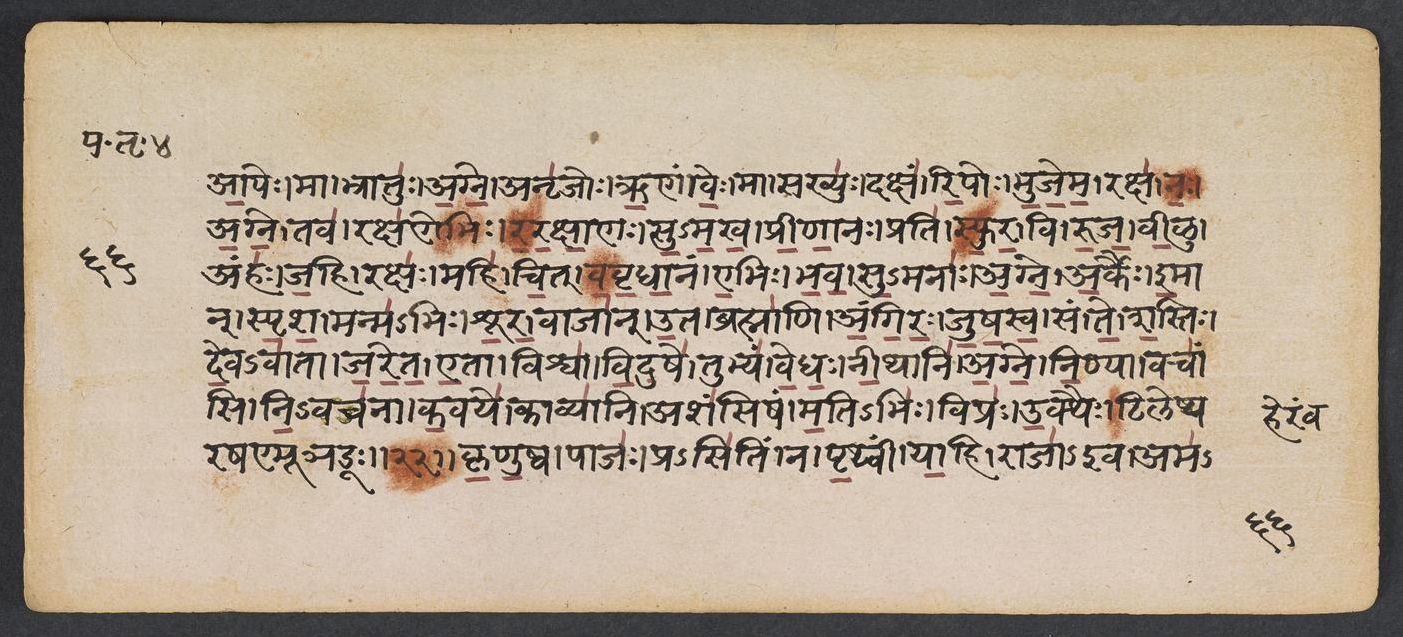
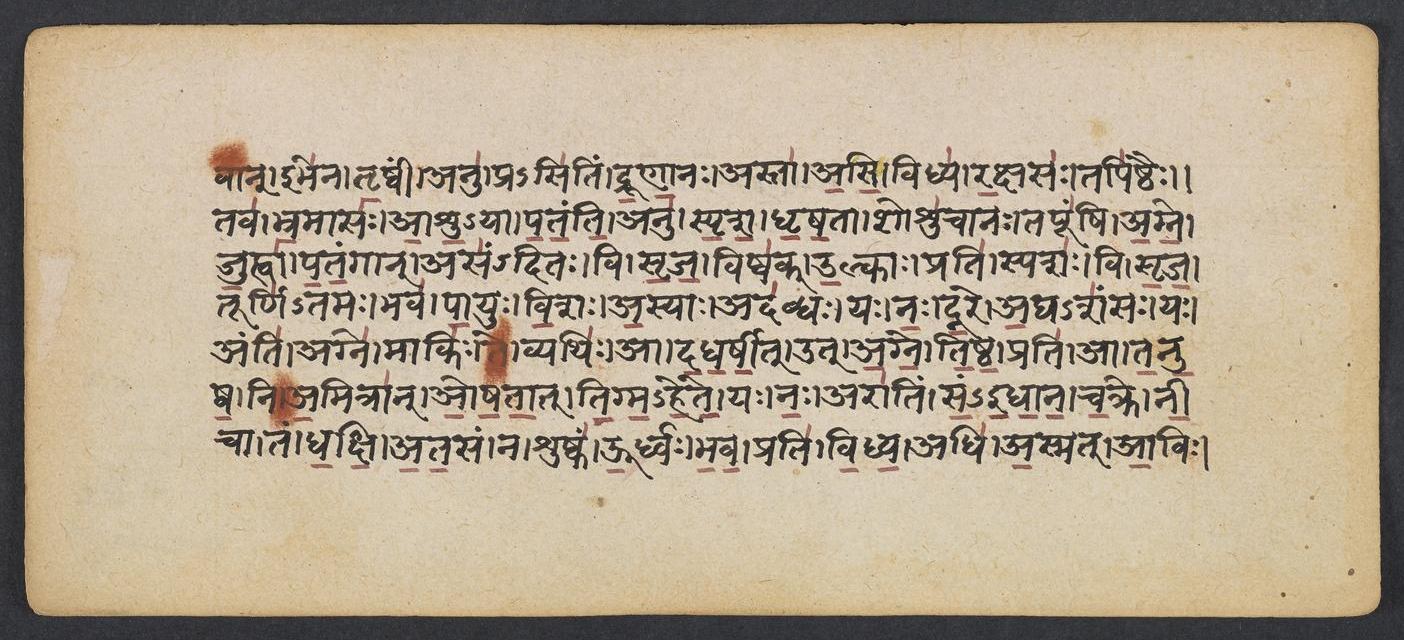
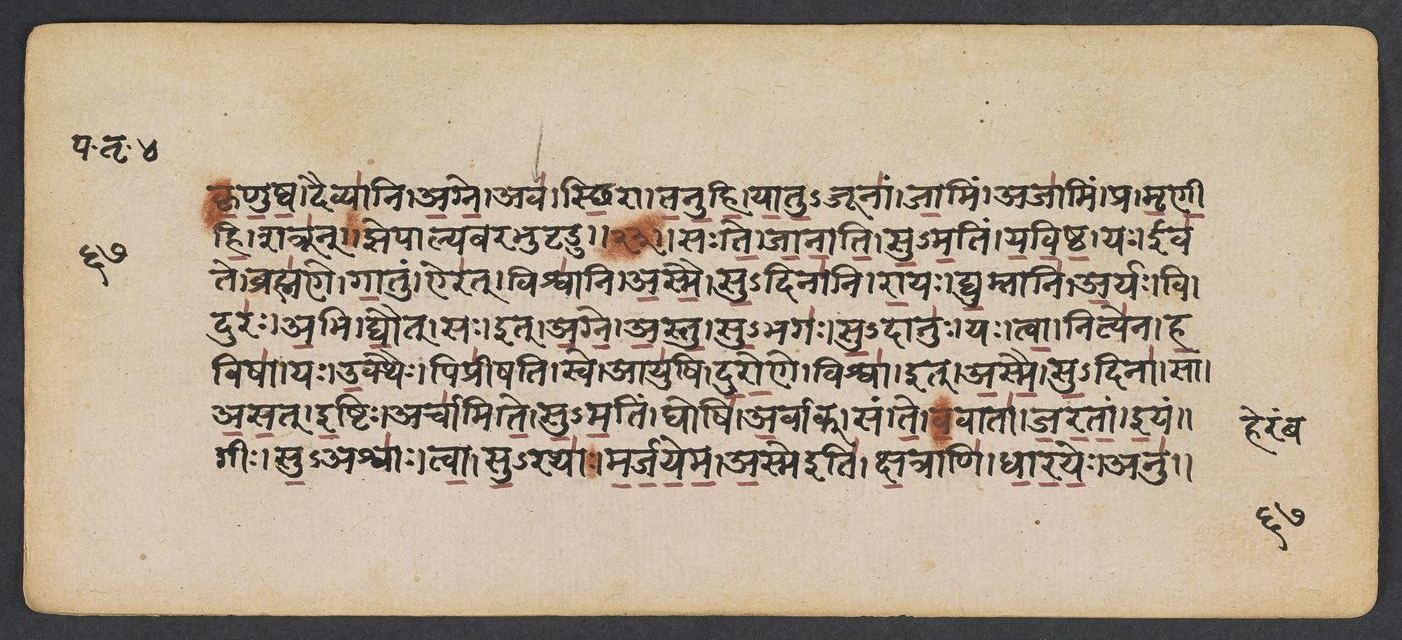
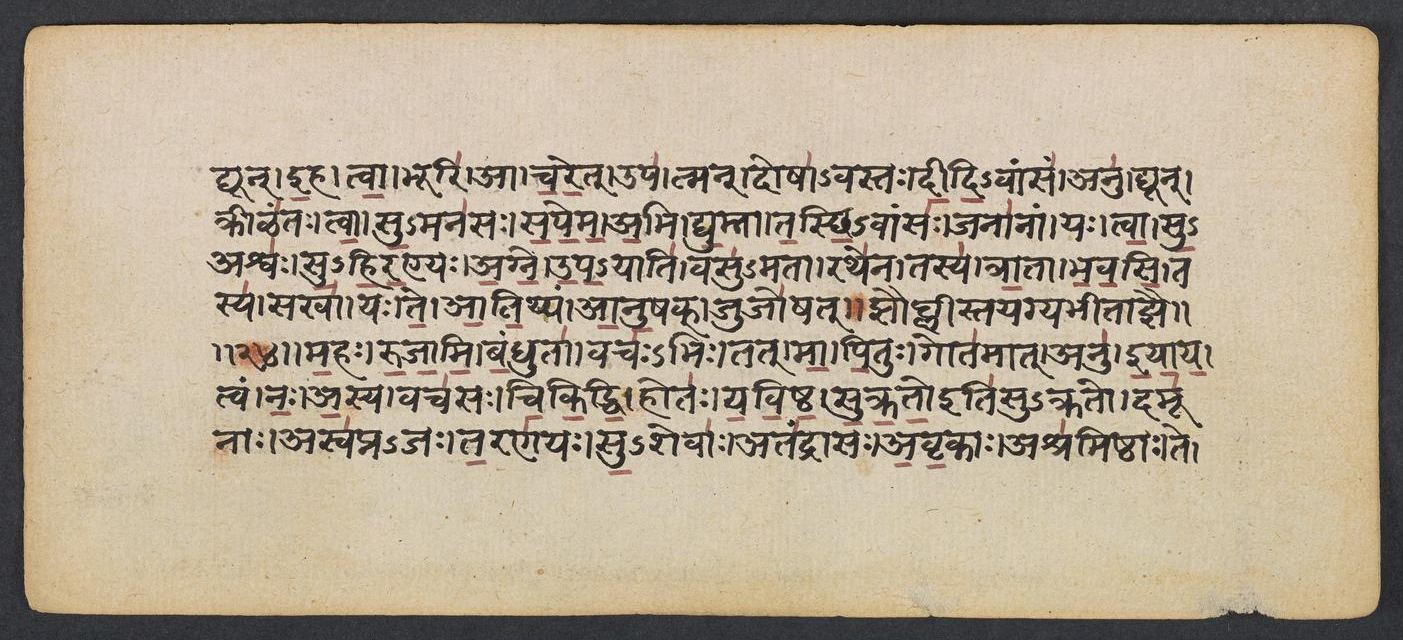
The manuscript shown is Penn Ms. Coll. 390 Item 41 (University of Pennsylvania), an undated paper manuscript of the padapāṭha (the word-by-word recitation text, in which every word is written separately and compounds are split) of the whole Ṛgveda in Devanāgarī, 884 leaves in fascicles, 7-9 lines to the page, accents in red; this hymn stands on fol. 257v-259v. Each section below gives the verses that end on one page; the page boundaries were read on the images (the opening words of every page), not counted out. Where the manuscript is a padapāṭha (the word-by-word recitation text), the section shows Aufrecht's continuous (saṃhitā) text first and, as the edition text, the padapāṭha of the same verses, which is the form written on the page.
How was this verified? (Provenance)
Where on the image
Penn Ms. Coll. 390 Item 41, fol. 258r (numbered 67r by the scribe) (OPenn image 258, lower leaf). Checked on the image: the Rigveda text on this page begins in RV 4.4.1 ‹-ama-vān ibhena tṛṣvīm anu›. The next page with Rigveda text, fol. 258v (numbered 67v by the scribe), begins in RV 4.4.5 ‹kṛṇuṣva daivyāni agne ava›. Verses 4.4.1-4 end on this page; 4.4.1 begins on fol. 257v (numbered 66v by the scribe).
1kṛ̱ṇu̱ṣva pāja̱ḥ prasi̍ti̱ṁ na pṛ̱thvīṁ yā̱hi rāje̱vāma̍vā̱m̐ ibhe̍na | tṛ̱ṣvīm anu̱ prasi̍tiṁ drūṇā̱no 'stā̍si̱ vidhya̍ ra̱kṣasa̱s tapi̍ṣṭhaiḥ ||
2tava̍ bhra̱māsa̍ āśu̱yā pa̍ta̱nty anu̍ spṛśa dhṛṣa̱tā śośu̍cānaḥ | tapū̍ṁṣy agne ju̱hvā̍ pata̱ṁgān asa̍ṁdito̱ vi sṛ̍ja̱ viṣva̍g u̱lkāḥ ||
3prati̱ spaśo̱ vi sṛ̍ja̱ tūrṇi̍tamo̱ bhavā̍ pā̱yur vi̱śo a̱syā ada̍bdhaḥ | yo no̍ dū̱re a̱ghaśa̍ṁso̱ yo anty agne̱ māki̍ṣ ṭe̱ vyathi̱r ā da̍dharṣīt ||
4ud a̍gne tiṣṭha̱ praty ā ta̍nuṣva̱ ny a1̱̍mitrā̍m̐ oṣatāt tigmahete | yo no̱ arā̍tiṁ samidhāna ca̱kre nī̱cā taṁ dha̍kṣy ata̱saṁ na śuṣka̍m ||
Compare: Padapāṭha (word-by-word text written in the manuscript; Sansknet e-text via GRETIL)
1kṛṇuṣva | pājaḥ | pra-sitim | na | pṛthvīm | yāhi | rājāiva | ama-vān | ibhena | tṛṣvīm | anu | pra-sitim | drūṇānaḥ | astā | asi | vidhya | rakṣasaḥ | tapiṣṭhaiḥ
2tava | bhramāsaḥ | āśu-yā | patanti | anu | spṛśa | dhṛṣatā | śośucānaḥ | tapāūṃṣi | agne | juhvā | pataṅgān | asam-ditaḥ | vi | sṛja | viṣvak | ulkāḥ
3prati | spaśaḥ | vi | sṛja | tūrṇi-tamaḥ | bhava | pāyuḥ | viśaḥ | asyāḥ | adabdhaḥ | yaḥ | naḥ | dūre | agha-śaṃsaḥ | yaḥ | anti | agne | mākiḥ | te | vyathiḥ | ā | dadharṣīt
4ut | agne | tiṣṭha | prati | ā | tanuṣva | ni | amitrān | oṣatāt | tigma-hete | yaḥ | naḥ | arātim | sam-idhāna | cakre | nīcā | tam | dhakṣi | atasam | na | śuṣkam
1PUT forth like a wide-spreading net thy vigour; go like a mighty King with his attendants. Thou, following thy swift net, shootest arrows: transfix the fiends with darts that burn most fiercely.
2Forth go in rapid flight thy whirling weapons: follow them closely, glowing in thy fury. Spread with thy tongue the winged flames, O Agni; unfettered, cast thy firebrands all around thee.
3Send thy spies forward, flectest in thy motion; be, ne'er deceived, the guardian of this people From him who, near or far, is bent on evil, and let no trouble sent from thee o'ercome us.
4Rise up, O Agni, spread thee out before us: burn down our foes, thou who hast sharpened arrows. Him, blazing Agni! who hath worked us mischief, consume thou utterly like dried-up stubble.
Where on the image
Penn Ms. Coll. 390 Item 41, fol. 258v (numbered 67v by the scribe) (OPenn image 259, upper leaf). Checked on the image: the Rigveda text on this page begins in RV 4.4.5 ‹kṛṇuṣva daivyāni agne ava›. The next page with Rigveda text, fol. 259r (numbered 68r by the scribe), begins in RV 4.4.8 ‹dyūn›. Verses 4.4.5-7 end on this page; 4.4.5 begins on fol. 258r (numbered 67r by the scribe).
5ū̱rdhvo bha̍va̱ prati̍ vi̱dhyādhy a̱smad ā̱viṣ kṛ̍ṇuṣva̱ daivyā̍ny agne | ava̍ sthi̱rā ta̍nuhi yātu̱jūnā̍ṁ jā̱mim ajā̍mi̱m pra mṛ̍ṇīhi̱ śatrū̍n ||
6sa te̍ jānāti suma̱tiṁ ya̍viṣṭha̱ ya īva̍te̱ brahma̍ṇe gā̱tum aira̍t | viśvā̍ny asmai su̱dinā̍ni rā̱yo dyu̱mnāny a̱ryo vi duro̍ a̱bhi dyau̍t ||
7sed a̍gne astu su̱bhaga̍ḥ su̱dānu̱r yas tvā̱ nitye̍na ha̱viṣā̱ ya u̱kthaiḥ | piprī̍ṣati̱ sva āyu̍ṣi duro̱ṇe viśved a̍smai su̱dinā̱ sāsa̍d i̱ṣṭiḥ ||
Compare: Padapāṭha (word-by-word text written in the manuscript; Sansknet e-text via GRETIL)
5ūrdhvaḥ | bhava | prati | vidhya | adhi | asmat | āviḥ | kṛṇuṣva | daivyāni | agne | ava | sthirā | tanuhi | yātu-jūnām | jāmim | ajāmim | pra | mṛṇīhi | śatrūn
6saḥ | te | jānāti | su-matim | yaviṣṭha | yaḥ | īvate | brahmaṇe | gātum | airat | viśvāni | asmai | su-dināni | rāyaḥ | dyumnāni | aryaḥ | vi | duraḥ | abhi | dyaut
7saḥ | it | agne | astu | su-bhagaḥ | su-dānuḥ | yaḥ | tvā | nityena | haviṣā | yaḥ | ukthaiḥ | piprīṣati | sve | āyuṣi | duroṇe | viśvā | it | asmai | su-dinā | sā | asat | iṣṭiḥ
5Rise, Agni, drive off those who fight against us: make manifest thine own celestial vigour. Slacken the strong bows of the demondriven: destroy our foemen whether kin or stranger.
6Most Youthful God, he knoweth well thy favour who gave an impulse to this high devotion. All fair days and magnificence of riches hast thou beamed forth upon the good man's portals.
7Blest, Agni, be the man, the liberal giver, who with his lauds and regular oblation Is fain to please thee for his life and dwelling. May all his days be bright: be this his longing.
Where on the image
Penn Ms. Coll. 390 Item 41, fol. 259r (numbered 68r by the scribe) (OPenn image 259, lower leaf). Checked on the image: the Rigveda text on this page begins in RV 4.4.8 ‹dyūn›. The next page with Rigveda text, fol. 259v (numbered 68v by the scribe), begins in RV 4.4.12 ‹pāyavaḥ sadhryañcaḥ ni-sadya agne›. Verses 4.4.8-11 end on this page; 4.4.8 begins on fol. 258v (numbered 67v by the scribe).
8arcā̍mi te suma̱tiṁ ghoṣy a̱rvāk saṁ te̍ vā̱vātā̍ jaratām i̱yaṁ gīḥ | svaśvā̍s tvā su̱rathā̍ marjayemā̱sme kṣa̱trāṇi̍ dhāraye̱r anu̱ dyūn ||
9i̱ha tvā̱ bhūry ā ca̍re̱d upa̱ tman doṣā̍vastar dīdi̱vāṁsa̱m anu̱ dyūn | krīḻa̍ntas tvā su̱mana̍saḥ sapemā̱bhi dyu̱mnā ta̍sthi̱vāṁso̱ janā̍nām ||
10yas tvā̱ svaśva̍ḥ suhira̱ṇyo a̍gna upa̱yāti̱ vasu̍matā̱ rathe̍na | tasya̍ trā̱tā bha̍vasi̱ tasya̱ sakhā̱ yas ta̍ āti̱thyam ā̍nu̱ṣag jujo̍ṣat ||
11ma̱ho ru̍jāmi ba̱ndhutā̱ vaco̍bhi̱s tan mā̍ pi̱tur gota̍mā̱d anv i̍yāya | tvaṁ no̍ a̱sya vaca̍saś cikiddhi̱ hota̍r yaviṣṭha sukrato̱ damū̍nāḥ ||
Compare: Padapāṭha (word-by-word text written in the manuscript; Sansknet e-text via GRETIL)
8arcāmi | te | su-matim | ghoṣi | arvāk | sam | te | vavātā | jaratām | iyam | gīḥ | su-aśvāḥ | tvā | su-rathāḥ | marjayema | asme iti | kṣatrāṇi | dhārayeḥ | anu | dyūn
9iha | tvā | bhūri | ā | caret | upa | tman | doṣāvastaḥ | dīdivāṃsam | anu | dyūn | krīḷantaḥ | tvā | su-manasaḥ | sapema | abhi | dyumnā | tasthivāṃsaḥ | janānām
10yaḥ | tvā | su-aśvaḥ | su-hiraṇyaḥ | agne | upa-yāti | vasu-matā | rathena | tasya | trātā | bhavasi | tasya | sakhā | yaḥ | te | ātithyam | ānuṣak | jujoṣat
11mahaḥ | rujāmi | bandhutā | vacaḥ-bhiḥ | tat | mā | pituḥ | gotamāt | anu | iyāya | tvam | naḥ | asya | vacasaḥ | cikiddhi | hotaḥ | yaviṣṭha | sukrato itisu-krato | damūnāḥ
8I praise thy gracious favour: sing in answer. May this my song sing like a loved one with thee. Lords of good steeds and cars may we adorn thee, and day by day vouchsafe thou us dominion.
9Here of free choice let each one serve thee richly, resplendent day by day at eve and morning. So may we honour thee, content and joyous, passing beyond the glories of the people.
10Whoso with good steeds and fine gold, O Agni, comes nigh thee on a car laden with treasure, His Friend art thou, yea, thou art his Protector whose joy it is to entertain thee duly.
11Through words and kinship I destroy the mighty: this power I have from Gotama my father. Mark thou this speech of ours, O thou Most Youthful, Friend of the House, exceeding wise, Invoker.
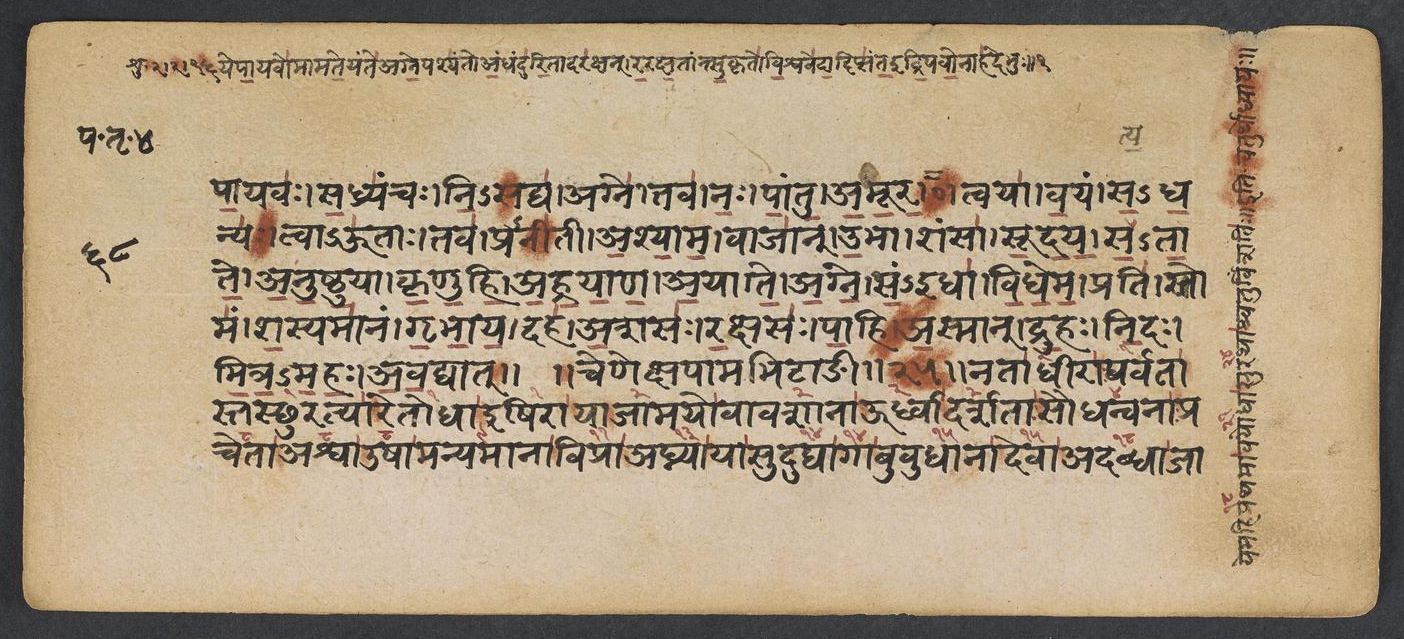
Where on the image
Penn Ms. Coll. 390 Item 41, fol. 259v (numbered 68v by the scribe) (OPenn image 260, upper leaf). Checked on the image: the Rigveda text on this page begins in RV 4.4.12 ‹pāyavaḥ sadhryañcaḥ ni-sadya agne›. The next page with Rigveda text, fol. 260r (numbered 69r by the scribe), begins in RV 4.5.1 ‹vaiśvānarāya mīḷhuṣe sa-joṣāḥ kathā›. Verses 4.4.12-15 end on this page; 4.4.12 begins on fol. 259r (numbered 68r by the scribe).
12asva̍pnajas ta̱raṇa̍yaḥ su̱śevā̱ ata̍ndrāso 'vṛ̱kā aśra̍miṣṭhāḥ | te pā̱yava̍ḥ sa̱dhrya̍ñco ni̱ṣadyāgne̱ tava̍ naḥ pāntv amūra ||
13ye pā̱yavo̍ māmate̱yaṁ te̍ agne̱ paśya̍nto a̱ndhaṁ du̍ri̱tād ara̍kṣan | ra̱rakṣa̱ tān su̱kṛto̍ vi̱śvave̍dā̱ dipsa̍nta̱ id ri̱pavo̱ nāha̍ debhuḥ ||
14tvayā̍ va̱yaṁ sa̍dha̱nya1̱̍s tvotā̱s tava̱ praṇī̍ty aśyāma̱ vājā̍n | u̱bhā śaṁsā̍ sūdaya satyatāte 'nuṣṭhu̱yā kṛ̍ṇuhy ahrayāṇa ||
15a̱yā te̍ agne sa̱midhā̍ vidhema̱ prati̱ stoma̍ṁ śa̱syamā̍naṁ gṛbhāya | dahā̱śaso̍ ra̱kṣasa̍ḥ pā̱hy a1̱̍smān dru̱ho ni̱do mi̍tramaho ava̱dyāt ||
Compare: Padapāṭha (word-by-word text written in the manuscript; Sansknet e-text via GRETIL)
12asvapna-jaḥ | taraṇayaḥ | su-śevāḥ | atandrāsaḥ | avṛkāḥ | aśramiṣṭhāḥ | te | pāyavaḥ | sadhryañcaḥ | ni-sadya | agne | tava | naḥ | pāntu | amūra
13ye | pāyavaḥ | māmateyam | te | agne | paśyantaḥ | andham | duḥ-itāt | arakṣan | rarakṣa | tān | su-kṛtaḥ | viśva-vedāḥ | dipsantaḥ | it | ripavaḥ | na | aha | debhuḥ
14tvayā | vayam | sadhanyaḥ | tvāūtāḥ | tava | pra-nītī | aśyāma | vājān | ubhā | śaṃsā | sūdaya | satya-tāte | anuṣṭhuyā | kṛṇuhi | ahrayāṇa
15ayā | te | agne | sam-idhā | vidhema | prati | stomam | śasyamānam | gṛbhāya | daha | aśasaḥ | rakṣasaḥ | pāhi | asmān | druhaḥ | nidaḥ | mitra-mahaḥ | avadyāt
12Knowing no slumber, speedy and propitious, alert and ever friendly, most unwearied, May thy protecting powers, unerring Agni, taking their places here, combined, preserve us.
13Thy guardian rays, O Agni, when they saw him, preserved blind Mâmateya from affliction. Lord of all riches, he preserved the pious: the foes who fain would harm them did no mischief
14Aided by thee with thee may we be wealthy, may we gain strength with thee to guide us onward. Fulfil the words of both, O Ever Truthful: straightway do this, thou God whom power emboldens.
15O Agni, with this fuel will we serve thee; accept the laud we sing to thee with favour Destroy the cursing Raksasas: preserve us, O rich in friends, from guile and scorn and slander.
Notes
- Sanskrit: Aufrecht's edition (1877) with the Vedic accents, as entered by van Nooten and Holland (GRETIL).
- English: Ralph T. H. Griffith, The Hymns of the Rigveda (1889-1892; 2nd ed. 1896-1897), from the VedaWeb digital text; OCR slips in that text were corrected against the printed 2nd edition (data/sources/rigveda/griffith_errata.json).
- Padapāṭha (edition text): Sansknet e-text via GRETIL (CC BY-NC-SA 4.0).
Cite
Sources
- Source: Penn Ms. Coll. 390 Item 41 (undated (catalogued with Penn's 18th-19th c. Vedic manuscripts)), OPenn, Public Domain Mark + Aufrecht's accented text (GRETIL) + Griffith's English (VedaWeb) (holding institution)
- Critical edition: Aufrecht (1877), accented e-text via GRETIL
← previous · → next · v cycle view · l back to library