Rigveda 4.31: To Indra
Introduction
Rigveda 4.31 is a hymn of 15 verses addressed to Indra. It stands in book (maṇḍala) 4, the family book of Vāmadeva. The Rigveda is the oldest collection of Sanskrit hymns, composed in the second half of the second millennium BCE and handed down orally for many centuries before it was written down.
The manuscript shown is Penn Ms. Coll. 390 Item 41 (University of Pennsylvania), an undated paper manuscript of the padapāṭha (the word-by-word recitation text, in which every word is written separately and compounds are split) of the whole Ṛgveda in Devanāgarī, 884 leaves in fascicles, 7-9 lines to the page, accents in red; this hymn stands on fol. 290r-291r. Each section below gives the verses that end on one page; the page boundaries were read on the images (the opening words of every page), not counted out. Where the manuscript is a padapāṭha (the word-by-word recitation text), the section shows Aufrecht's continuous (saṃhitā) text first and, as the edition text, the padapāṭha of the same verses, which is the form written on the page.
How was this verified? (Provenance)
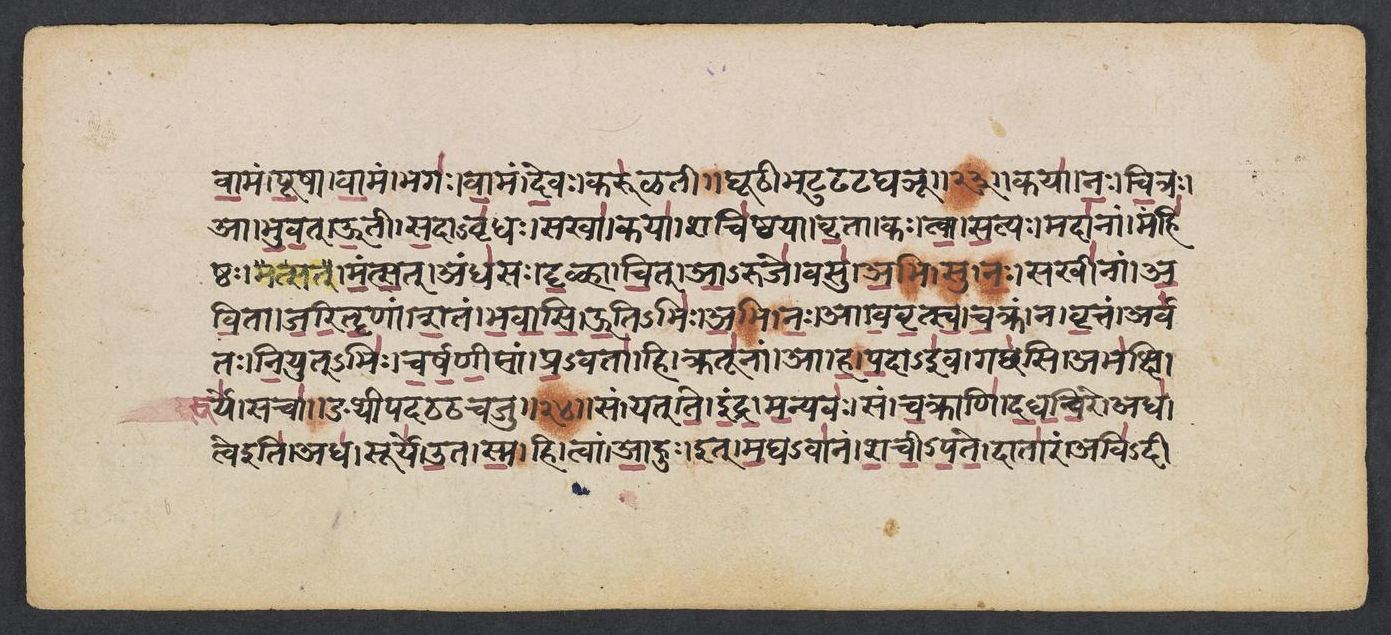
Where on the image
Penn Ms. Coll. 390 Item 41, fol. 290r (numbered 99r by the scribe) (OPenn image 290, lower leaf). Checked on the image: the Rigveda text on this page begins in RV 4.30.24 ‹vāmam pūṣā vāmam bhagaḥ›. The next page with Rigveda text, fol. 290v (numbered 99v by the scribe), begins in RV 4.31.7 ‹-avi-dīdhayum›. Verses 4.31.1-6 end on this page.
1kayā̍ naś ci̱tra ā bhu̍vad ū̱tī sa̱dāvṛ̍dha̱ḥ sakhā̍ | kayā̱ śaci̍ṣṭhayā vṛ̱tā ||
2kas tvā̍ sa̱tyo madā̍nā̱m maṁhi̍ṣṭho matsa̱d andha̍saḥ | dṛ̱ḻhā ci̍d ā̱ruje̱ vasu̍ ||
3a̱bhī ṣu ṇa̱ḥ sakhī̍nām avi̱tā ja̍ritṝ̱ṇām | śa̱tam bha̍vāsy ū̱tibhi̍ḥ ||
4a̱bhī na̱ ā va̍vṛtsva ca̱kraṁ na vṛ̱ttam arva̍taḥ | ni̱yudbhi̍ś carṣaṇī̱nām ||
5pra̱vatā̱ hi kratū̍nā̱m ā hā̍ pa̱deva̱ gaccha̍si | abha̍kṣi̱ sūrye̱ sacā̍ ||
6saṁ yat ta̍ indra ma̱nyava̱ḥ saṁ ca̱krāṇi̍ dadhanvi̱re | adha̱ tve adha̱ sūrye̍ ||
Compare: Padapāṭha (word-by-word text written in the manuscript; Sansknet e-text via GRETIL)
1kayā | naḥ | citraḥ | ā | bhuvat | ūtī | sadāvṛdhaḥ | sakhā | kayā | śaciṣṭhayā | vṛtā
2kaḥ | tvā | satyaḥ | madānām | maṃhiṣṭhaḥ | matsat | andhasaḥ | dṛḷhā | cit | āruje | vasu
3abhi | su | naḥ | sakhīnām | avitā | jaritṝṇām | śatam | bhavāsi | ūti-bhiḥ
4abhi | naḥ | ā | vavṛtsva | cakram | na | vṛttam | arvataḥ | niyut-bhiḥ | carṣaṇīnām
5pra-vatā | hi | kratūnām | ā | ha | padāiva | gacchasi | abhakṣi | sūrye | sacā
6sam | yat | te | indra | manyavaḥ | sam | cakrāṇi | dadhanvire | adha | tve iti | adha | sūrye
1WITH what help will he come to us, wonderful, ever-waxing Friend; With what most mighty company?
2What genuine and most liberal draught will spirit thee with juice to burst Open e'en strongly-guarded wealth?
3Do thou who art Protector of us thy friends who praise thee With hundred aids approach us.
4Like as a courser's circling wheel, so turn thee hitherward to us, Attracted by the hymns of men.
5Thou seekest as it were thine own stations with swift descent of powers: I share thee even with the Sun.
6What time thy courage and his wheels together, Indra, run their course With thee and with the Sun alike,
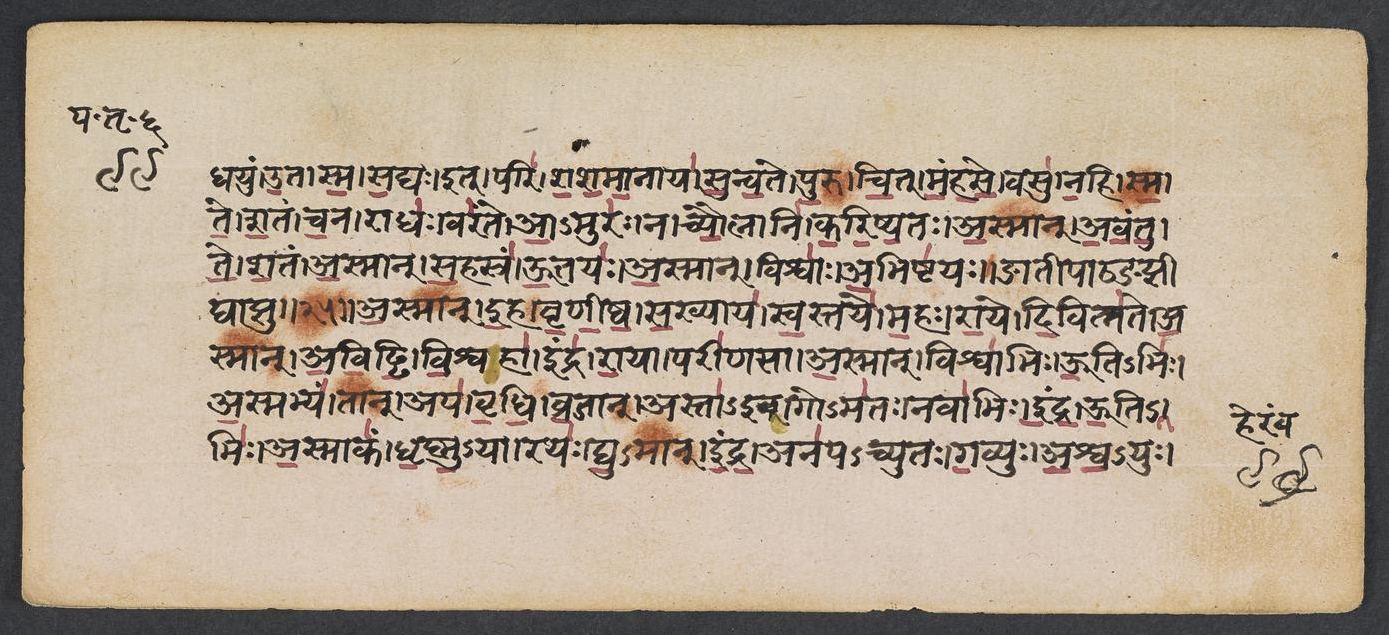
Where on the image
Penn Ms. Coll. 390 Item 41, fol. 290v (numbered 99v by the scribe) (OPenn image 291, upper leaf). Checked on the image: the Rigveda text on this page begins in RV 4.31.7 ‹-avi-dīdhayum›. The next page with Rigveda text, fol. 291r (numbered 100r by the scribe), begins in RV 4.31.14 ‹īyate›. Verses 4.31.7-13 end on this page; 4.31.7 begins on fol. 290r (numbered 99r by the scribe).
7u̱ta smā̱ hi tvām ā̱hur in ma̱ghavā̍naṁ śacīpate | dātā̍ra̱m avi̍dīdhayum ||
8u̱ta smā̍ sa̱dya it pari̍ śaśamā̱nāya̍ sunva̱te | pu̱rū ci̍n maṁhase̱ vasu̍ ||
9na̱hi ṣmā̍ te śa̱taṁ ca̱na rādho̱ vara̍nta ā̱mura̍ḥ | na cyau̱tnāni̍ kariṣya̱taḥ ||
10a̱smām̐ a̍vantu te śa̱tam a̱smān sa̱hasra̍m ū̱taya̍ḥ | a̱smān viśvā̍ a̱bhiṣṭa̍yaḥ ||
11a̱smām̐ i̱hā vṛ̍ṇīṣva sa̱khyāya̍ sva̱staye̍ | ma̱ho rā̱ye di̱vitma̍te ||
12a̱smām̐ a̍viḍḍhi vi̱śvahendra̍ rā̱yā parī̍ṇasā | a̱smān viśvā̍bhir ū̱tibhi̍ḥ ||
13a̱smabhya̱ṁ tām̐ apā̍ vṛdhi vra̱jām̐ aste̍va̱ goma̍taḥ | navā̍bhir indro̱tibhi̍ḥ ||
Compare: Padapāṭha (word-by-word text written in the manuscript; Sansknet e-text via GRETIL)
7uta | sma | hi | tvām | āhuḥ | it | magha-vānam | śacī-pate | dātāram | avi-dīdhayum
8uta | sma | sadyaḥ | it | pari | śaśamānāya | sunvate | puru | cit | maṃhase | vasu
9nahi | sma | te | śatam | cana | rādhaḥ | varante | āmuraḥ | na | cyautnāni | kariṣyataḥ
10asmān | avantu | te | śatam | asmān | sahasram | ūtayaḥ | asmān | viśvāḥ | abhiṣṭayaḥ
11asmān | iha | vṛṇīṣva | sakhyāya | svastaye | mahaḥ | rāye | divitmate
12asmān | aviḍḍhi | viśva-hā | indra | rāyā | parīṇasā | asmān | viśvābhiḥ | ūti-bhiḥ
13asmabhyam | tān | apa | vṛdhi | vrajān | astāiva | go--mataḥ | navābhiḥ | indra | ūti-bhiḥ
7So even, Lord of Power and Might, the people call thee Maghavan, Giver, who pauses not to think.
8And verily to him who toils and presses Soma juice for thee Thou quickly givest ample wealth.
9No, not a hundred hinderers can check thy gracious bounty's flow, Nor thy great deeds when thou wilt act.
10May thine assistance keep us safe, thy hundred and thy thousand aids: May all thy favours strengthen us.
11Do thou elect us this place for friendship and prosperity, And great celestial opulence.
12Favour us, Indra, evermore with overflowing store of wealth: With all thy succours aid thou us.
13With new protections, Indra, like an archer, open thou forus The stables that are filled with kine.
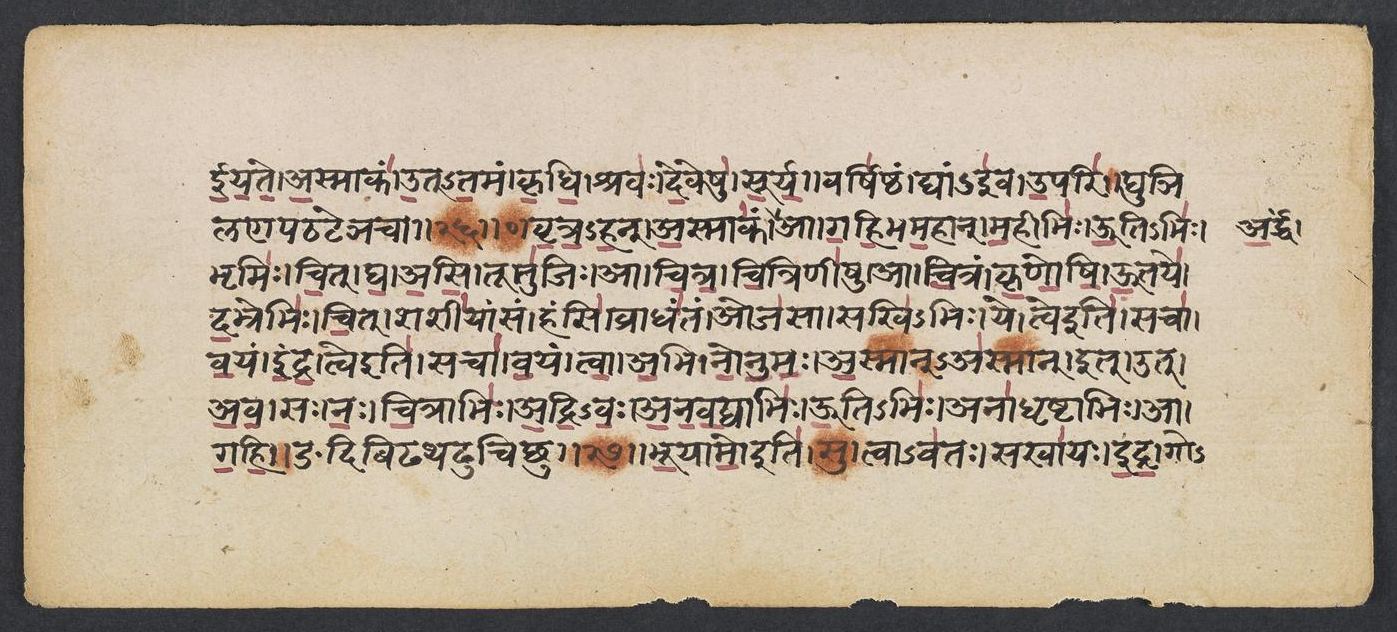
Where on the image
Penn Ms. Coll. 390 Item 41, fol. 291r (numbered 100r by the scribe) (OPenn image 291, lower leaf). Checked on the image: the Rigveda text on this page begins in RV 4.31.14 ‹īyate›. The next page with Rigveda text, fol. 291v (numbered 100v by the scribe), begins in RV 4.32.6 ‹-go--mataḥ yujaḥ vājāya ghṛṣvaye›. Verses 4.31.14-15 end on this page; 4.31.14 begins on fol. 290v (numbered 99v by the scribe).
14a̱smāka̍ṁ dhṛṣṇu̱yā ratho̍ dyu̱mām̐ i̱ndrāna̍pacyutaḥ | ga̱vyur a̍śva̱yur ī̍yate ||
15a̱smāka̍m utta̱maṁ kṛ̍dhi̱ śravo̍ de̱veṣu̍ sūrya | varṣi̍ṣṭha̱ṁ dyām i̍vo̱pari̍ ||
Compare: Padapāṭha (word-by-word text written in the manuscript; Sansknet e-text via GRETIL)
14asmākam | dhṛṣṇu-yā | rathaḥ | dyu-mān | indra | anapa-cyutaḥ | gavyuḥ | aśvayuḥ | īyate
15asmākam | ut-tamam | kṛdhi | śravaḥ | deveṣu | sūrya | varṣiṣṭham | dyām-iva | upari
14Our chariot, Indra, boldly moves endued with splendour, ne'er repulsed, Winning for us both kine andsteeds.
15O Sûrya, make our fame to be most excellent among the Gods, Most lofty as the heaven on high.
Notes
- Sanskrit: Aufrecht's edition (1877) with the Vedic accents, as entered by van Nooten and Holland (GRETIL).
- English: Ralph T. H. Griffith, The Hymns of the Rigveda (1889-1892; 2nd ed. 1896-1897), from the VedaWeb digital text; OCR slips in that text were corrected against the printed 2nd edition (data/sources/rigveda/griffith_errata.json).
- Padapāṭha (edition text): Sansknet e-text via GRETIL (CC BY-NC-SA 4.0).
Cite
Sources
- Source: Penn Ms. Coll. 390 Item 41 (undated (catalogued with Penn's 18th-19th c. Vedic manuscripts)), OPenn, Public Domain Mark + Aufrecht's accented text (GRETIL) + Griffith's English (VedaWeb) (holding institution)
- Critical edition: Aufrecht (1877), accented e-text via GRETIL
← previous · → next · v cycle view · l back to library