Rigveda 4.38: To Dadhikra
Introduction
Rigveda 4.38 is a hymn of 10 verses addressed to Dadhikra. It stands in book (maṇḍala) 4, the family book of Vāmadeva. The Rigveda is the oldest collection of Sanskrit hymns, composed in the second half of the second millennium BCE and handed down orally for many centuries before it was written down.
The manuscript shown is Penn Ms. Coll. 390 Item 41 (University of Pennsylvania), an undated paper manuscript of the padapāṭha (the word-by-word recitation text, in which every word is written separately and compounds are split) of the whole Ṛgveda in Devanāgarī, 884 leaves in fascicles, 7-9 lines to the page, accents in red; this hymn stands on fol. 299r-300v. Each section below gives the verses that end on one page; the page boundaries were read on the images (the opening words of every page), not counted out. Where the manuscript is a padapāṭha (the word-by-word recitation text), the section shows Aufrecht's continuous (saṃhitā) text first and, as the edition text, the padapāṭha of the same verses, which is the form written on the page.
How was this verified? (Provenance)
Where on the image
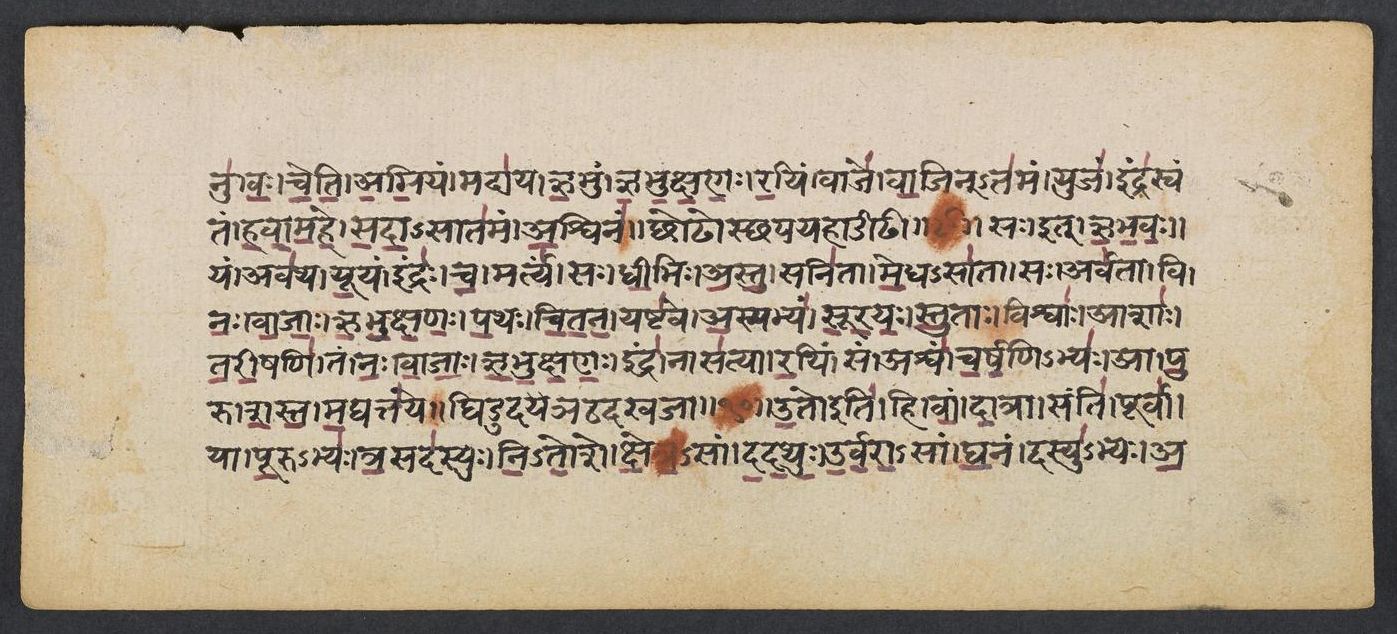
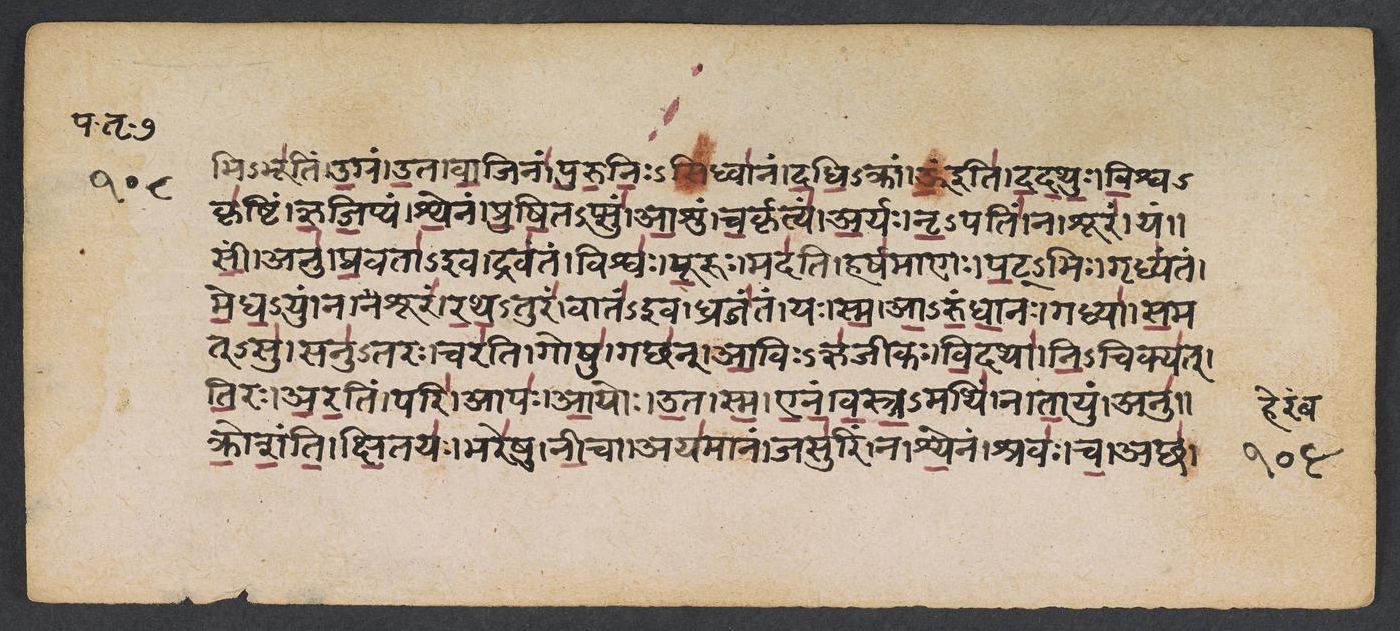
Penn Ms. Coll. 390 Item 41, fol. 299v (numbered 108v by the scribe) (OPenn image 300, upper leaf). Checked on the image: the Rigveda text on this page begins in RV 4.38.1 ‹-abhi-bhūtim ugram›. The next page with Rigveda text, fol. 300r (numbered 109r by the scribe), begins in RV 4.38.5 ‹paśu-mat ca yūtham›. Verses 4.38.1-4 end on this page; 4.38.1 begins on fol. 299r (numbered 108r by the scribe).
1u̱to hi vā̍ṁ dā̱trā santi̱ pūrvā̱ yā pū̱rubhya̍s tra̱sada̍syur nito̱śe | kṣe̱trā̱sāṁ da̍dathur urvarā̱sāṁ gha̱naṁ dasyu̍bhyo a̱bhibhū̍tim u̱gram ||
2u̱ta vā̱jina̍m puruni̱ṣṣidhvā̍naṁ dadhi̱krām u̍ dadathur vi̱śvakṛ̍ṣṭim | ṛ̱ji̱pyaṁ śye̱nam pru̍ṣi̱tapsu̍m ā̱śuṁ ca̱rkṛtya̍m a̱ryo nṛ̱pati̱ṁ na śūra̍m ||
3yaṁ sī̱m anu̍ pra̱vate̍va̱ drava̍nta̱ṁ viśva̍ḥ pū̱rur mada̍ti̱ harṣa̍māṇaḥ | pa̱ḍbhir gṛdhya̍ntam medha̱yuṁ na śūra̍ṁ ratha̱tura̱ṁ vāta̍m iva̱ dhraja̍ntam ||
4yaḥ smā̍rundhā̱no gadhyā̍ sa̱matsu̱ sanu̍tara̱ś cara̍ti̱ goṣu̱ gaccha̍n | ā̱virṛ̍jīko vi̱dathā̍ ni̱cikya̍t ti̱ro a̍ra̱tim pary āpa̍ ā̱yoḥ ||
Compare: Padapāṭha (word-by-word text written in the manuscript; Sansknet e-text via GRETIL)
1uto iti | hi | vām | dātrā | santi | pūrvā | yā | pūru-bhyaḥ | trasadasyuḥ | ni-tośe | kṣetra-sām | dādathuḥ | urvarāsām | ghanam | dasyu-bhyaḥ | abhi-bhūtim | ugram
2uta | vājinam | puruniḥ-sidhvānam | dadhi-krām | oṃ iti | dadathuḥ | viśva-kṛṣtim | ṛjipyam | śyenam | pruṣita-psum | āśum | carkṛtyam | aryaḥ | nṛ-patim | na | śūram
3yam | sīm | anu | pravatāiva | dravantam | viśvaḥ | pūruḥ | madati | harṣamāṇaḥ | paṭ-bhiḥ | gṛdhyantam | medha-yum | na | śūram | ratha-turam | vātam-iva | dhrajantam
4yaḥ | sma | ārundhānaḥ | gadhyā | samat-su | sanu-taraḥ | carati | goṣu | gacchan | āviḥ-ṛjīkaḥ | vidathā | ni-cikyat | tiraḥ | aratim | pari | āpaḥ | āyoḥ
1FROM you two came the gifts in days aforetime which Trasadasyu granted to the Pûrus. Ye gave the winner of our fields and plough-lands, and the strong smiter who subdued the Dasytis.
2And ye gave mighty Dadhikrâs, the giver of many gifts, who visiteth all people, Impetuous hawk, swift and of varied colour, like a brave King whom each true man must honour.
3Whom, as 'twere down a precipice, swift rushing, each Pûru praises and his heart rejoices,– Springing forth like a hero fain for battle, whirling the car and flying like the tempest.
4Who gaineth precious booty in the combats and moveth, winning spoil, among the cattle; Shown in bright colour, looking on the assemblies, beyond the churl, to worship of the living.
Where on the image
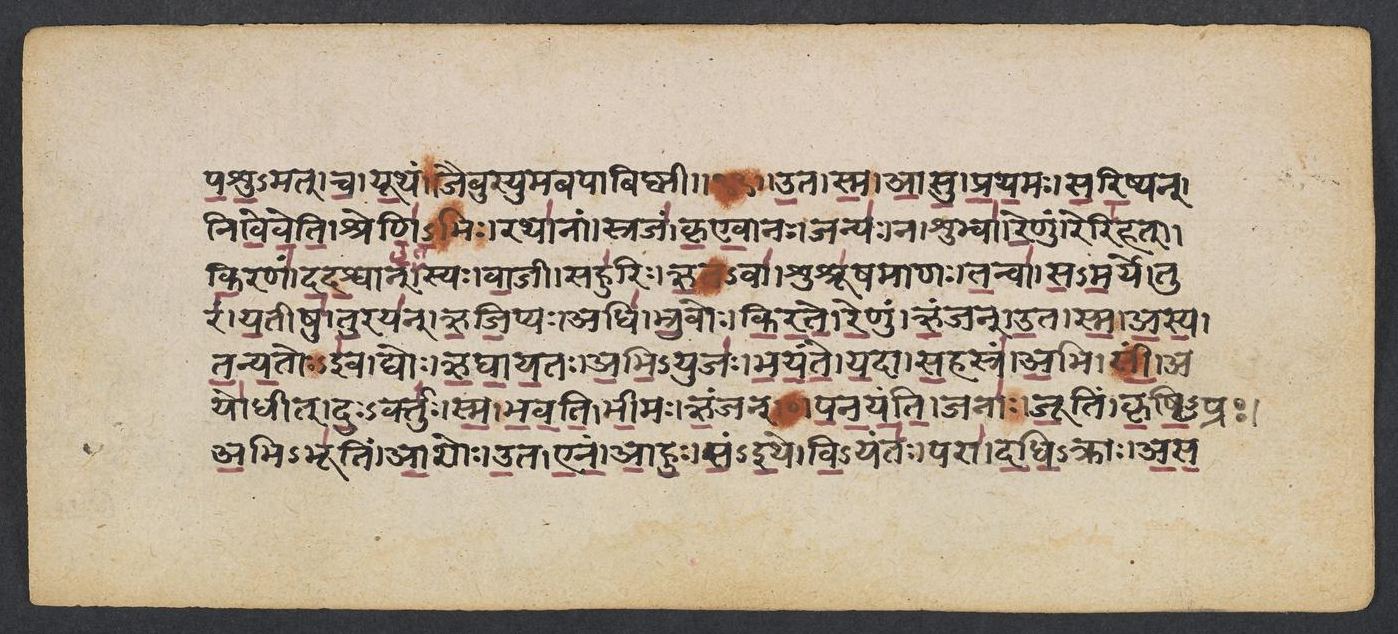
Penn Ms. Coll. 390 Item 41, fol. 300r (numbered 109r by the scribe) (OPenn image 300, lower leaf). Checked on the image: the Rigveda text on this page begins in RV 4.38.5 ‹paśu-mat ca yūtham›. The next page with Rigveda text, fol. 300v (numbered 109v by the scribe), begins in RV 4.38.9 ‹-asarat sahasraiḥ›. Verses 4.38.5-8 end on this page; 4.38.5 begins on fol. 299v (numbered 108v by the scribe).
5u̱ta smai̍naṁ vastra̱mathi̱ṁ na tā̱yum anu̍ krośanti kṣi̱tayo̱ bhare̍ṣu | nī̱cāya̍māna̱ṁ jasu̍ri̱ṁ na śye̱naṁ śrava̱ś cācchā̍ paśu̱mac ca̍ yū̱tham ||
6u̱ta smā̍su pratha̱maḥ sa̍ri̱ṣyan ni ve̍veti̱ śreṇi̍bhī̱ rathā̍nām | sraja̍ṁ kṛṇvā̱no janyo̱ na śubhvā̍ re̱ṇuṁ reri̍hat ki̱raṇa̍ṁ dada̱śvān ||
7u̱ta sya vā̱jī sahu̍rir ṛ̱tāvā̱ śuśrū̍ṣamāṇas ta̱nvā̍ sama̱rye | tura̍ṁ ya̱tīṣu̍ tu̱raya̍nn ṛji̱pyo 'dhi̍ bhru̱voḥ ki̍rate re̱ṇum ṛ̱ñjan ||
8u̱ta smā̍sya tanya̱tor i̍va̱ dyor ṛ̍ghāya̱to a̍bhi̱yujo̍ bhayante | ya̱dā sa̱hasra̍m a̱bhi ṣī̱m ayo̍dhīd du̱rvartu̍ḥ smā bhavati bhī̱ma ṛ̱ñjan ||
Compare: Padapāṭha (word-by-word text written in the manuscript; Sansknet e-text via GRETIL)
5uta | sma | enam | vastra-mathim | na | tāyum | anu | krośanti | kṣitayaḥ | bhareṣu | nīcā | ayamānam | jasurim | na | śyenam | śravaḥ | ca | accha | paśu-mat | ca | yūtham
6uta | sma | āsu | prathamaḥ | sariṣyan | ni | veveti | śreṇi-bhiḥ | rathānām | srajam | kṛṇvānaḥ | janyaḥ | na | śubhvā | reṇum | rerihat | kiraṇam | dṛśvān
7uta | syaḥ | vājī | sahuriḥ | ṛta-vā | śuśrūṣamāṇaḥ | tanvā | sa-marye | turam | yatīṣu | turayan | ṛjipyaḥ | adhi | bhruvoḥ | kirate | reṇum | ṛñjan
8uta | sma | asya | tanyatoḥ-iva | dyoḥ | ṛghāyataḥ | abhi-yujaḥ | bhayante | yadā | sahasram | abhi | sīm | ayodhīt | duḥ-vartuḥ | sma | bhavati | bhīmaḥ | ṛñjan
5Loudly the folk cry after him in battles, as 'twere a thief who steals away a garment; Speeding to glory, or a herd of cattle, even as a hungry falcon swooping downward.
6And, fain to come forth first amid these armies, this way and that with rows of cars he rushes, Gay like a bridesman, making him a garland, tossing the dust, champing the rein that holds him.
7And that strong Steed, victorious and faithful, obedient with his body in the combat, Speeding straight on amid the swiftly pressing, casts o'er his brows the dust he tosses upward.
8And at his thunder, like the roar of heaven, those who attack tremble and are affrighted; For when he fights against embattled thousands, dread is he in his striving; none may stay him.
Where on the image
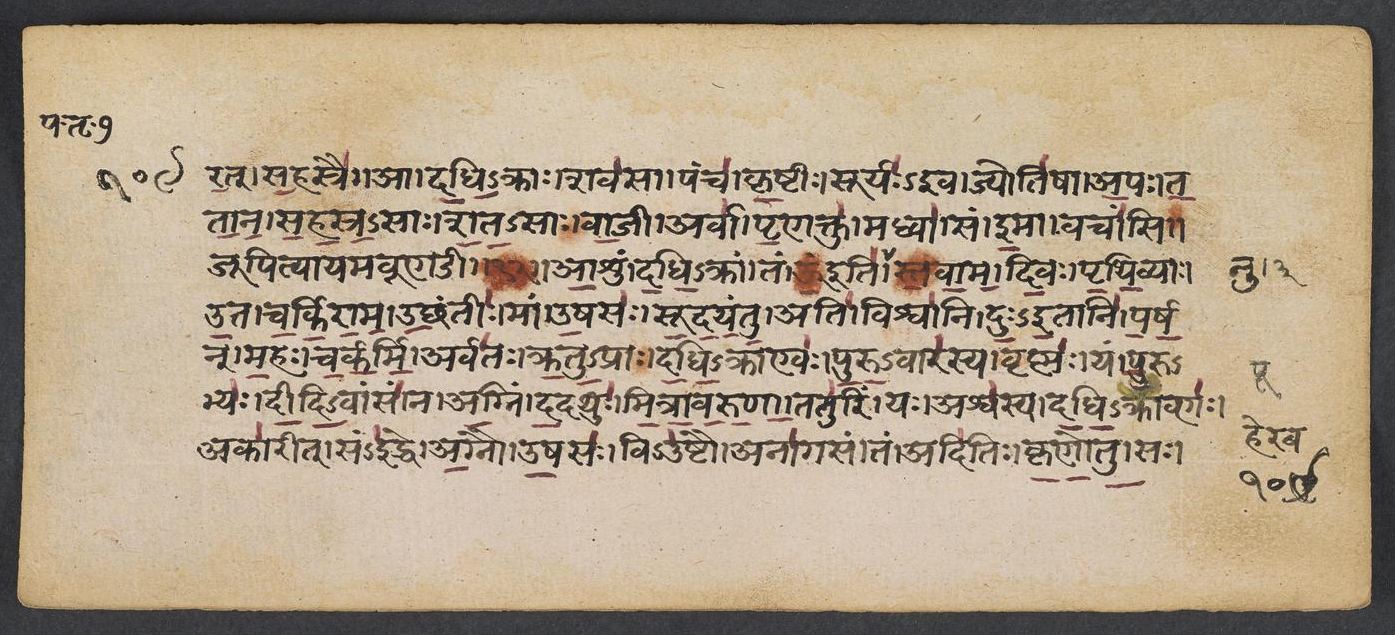
Penn Ms. Coll. 390 Item 41, fol. 300v (numbered 109v by the scribe) (OPenn image 301, upper leaf). Checked on the image: the Rigveda text on this page begins in RV 4.38.9 ‹-asarat sahasraiḥ›. The next page with Rigveda text, fol. 301r (numbered 110r by the scribe), begins in RV 4.39.3 ‹mitreṇa varuṇena sa-joṣāḥ›. Verses 4.38.9-10 end on this page; 4.38.9 begins on fol. 300r (numbered 109r by the scribe).
9u̱ta smā̍sya panayanti̱ janā̍ jū̱tiṁ kṛ̍ṣṭi̱pro a̱bhibhū̍tim ā̱śoḥ | u̱taina̍m āhuḥ sami̱the vi̱yanta̱ḥ parā̍ dadhi̱krā a̍sarat sa̱hasrai̍ḥ ||
10ā da̍dhi̱krāḥ śava̍sā̱ pañca̍ kṛ̱ṣṭīḥ sūrya̍ iva̱ jyoti̍ṣā̱pas ta̍tāna | sa̱ha̱sra̱sāḥ śa̍ta̱sā vā̱jy arvā̍ pṛ̱ṇaktu̱ madhvā̱ sam i̱mā vacā̍ṁsi ||
Compare: Padapāṭha (word-by-word text written in the manuscript; Sansknet e-text via GRETIL)
9uta | sma | asya | panayanti | janāḥ | jūtim | kṛṣṭi-praḥ | abhi-bhūtim | āśoḥ | uta | enam | āhuḥ | sam-ithe | vi-yantaḥ | parā | dadhi-krāḥ | asarat | sahasraiḥ
10ā | dadhi-krāḥ | śavasā | pañca | kṛṣṭīḥ | sūryaḥ-iva | jyotiṣāḥapaḥḥtatānaḥsahasra-sāḥḥśata-sāḥḥvājīḥarvāḥpṛṇaktuḥmadhvāḥsamḥimāḥvacāṃsi
9The people praise the overpowering swiftness of this fleet Steed who giveth men abundance. Of him they say when drawing back from battle. Dadhikrâs hath sped forward with his thousands.
10Dadhikrâs hath o'erspread the Fivefold People with vigour, as the Sun lightens the waters. May the strong Steed who winneth hundreds, thousands, requite with sweetness these my words and praises.
Notes
- Sanskrit: Aufrecht's edition (1877) with the Vedic accents, as entered by van Nooten and Holland (GRETIL).
- English: Ralph T. H. Griffith, The Hymns of the Rigveda (1889-1892; 2nd ed. 1896-1897), from the VedaWeb digital text; OCR slips in that text were corrected against the printed 2nd edition (data/sources/rigveda/griffith_errata.json).
- Padapāṭha (edition text): Sansknet e-text via GRETIL (CC BY-NC-SA 4.0).
Cite
Sources
- Source: Penn Ms. Coll. 390 Item 41 (undated (catalogued with Penn's 18th-19th c. Vedic manuscripts)), OPenn, Public Domain Mark + Aufrecht's accented text (GRETIL) + Griffith's English (VedaWeb) (holding institution)
- Critical edition: Aufrecht (1877), accented e-text via GRETIL
← previous · → next · v cycle view · l back to library