Rigveda 4.5: To Agni Vaisvanara
Introduction
Rigveda 4.5 is a hymn of 15 verses addressed to Agni Vaisvanara. It stands in book (maṇḍala) 4, the family book of Vāmadeva. The Rigveda is the oldest collection of Sanskrit hymns, composed in the second half of the second millennium BCE and handed down orally for many centuries before it was written down.
The manuscript shown is Penn Ms. Coll. 390 Item 41 (University of Pennsylvania), an undated paper manuscript of the padapāṭha (the word-by-word recitation text, in which every word is written separately and compounds are split) of the whole Ṛgveda in Devanāgarī, 884 leaves in fascicles, 7-9 lines to the page, accents in red; this hymn stands on fol. 260r-262r. Each section below gives the verses that end on one page; the page boundaries were read on the images (the opening words of every page), not counted out. Where the manuscript is a padapāṭha (the word-by-word recitation text), the section shows Aufrecht's continuous (saṃhitā) text first and, as the edition text, the padapāṭha of the same verses, which is the form written on the page.
How was this verified? (Provenance)
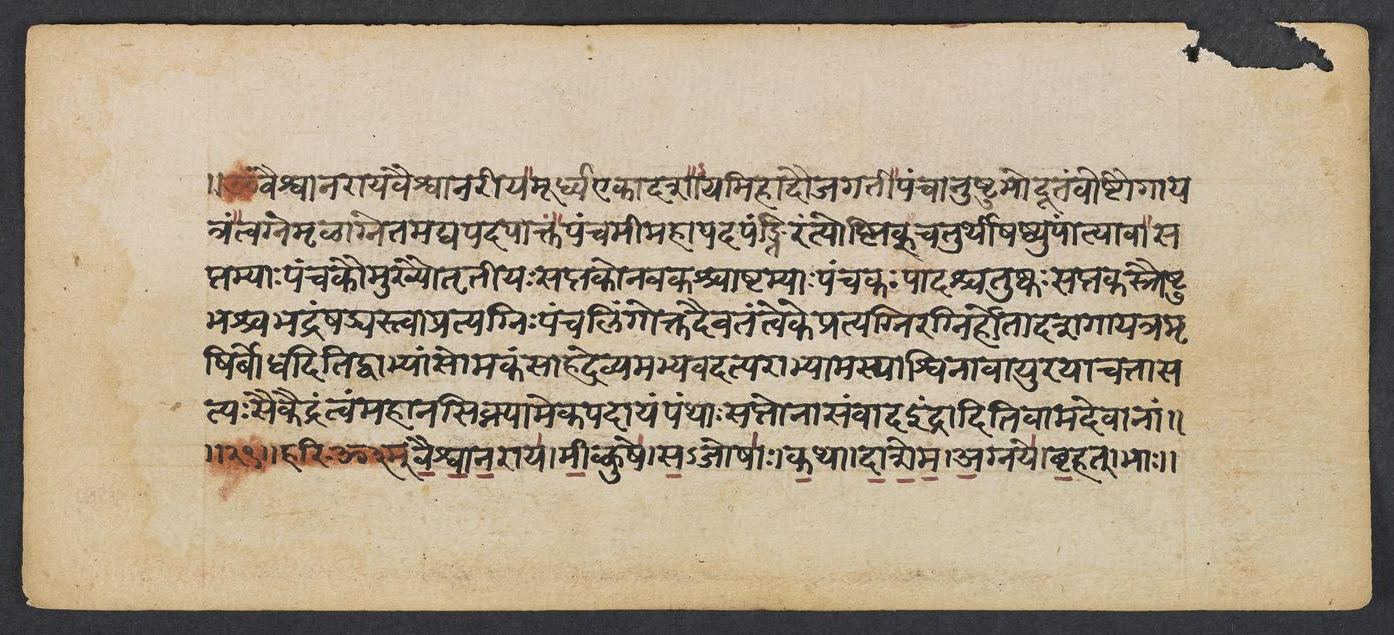
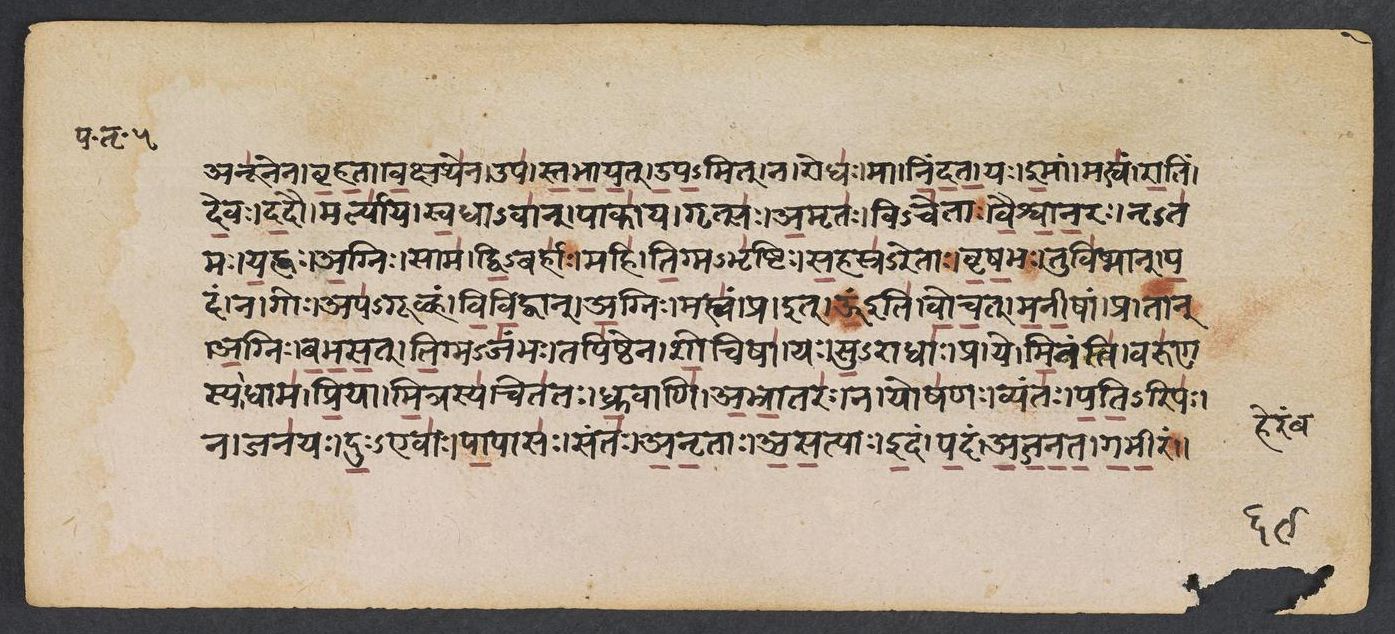
Where on the image
Penn Ms. Coll. 390 Item 41, fol. 260v (numbered 69v by the scribe) (OPenn image 261, upper leaf). Checked on the image: the Rigveda text on this page begins in RV 4.5.1 ‹anūnena bṛhatā vakṣathena upa›. The next page with Rigveda text, fol. 261r (numbered 70r by the scribe), begins in RV 4.5.6 ‹idam me agne kiyate›. Verses 4.5.1-5 end on this page; 4.5.1 begins on fol. 260r (numbered 69r by the scribe).
1vai̱śvā̱na̱rāya̍ mī̱ḻhuṣe̍ sa̱joṣā̍ḥ ka̱thā dā̍śemā̱gnaye̍ bṛ̱had bhāḥ | anū̍nena bṛha̱tā va̱kṣathe̱nopa̍ stabhāyad upa̱min na rodha̍ḥ ||
2mā ni̍ndata̱ ya i̱mām mahya̍ṁ rā̱tiṁ de̱vo da̱dau martyā̍ya sva̱dhāvā̍n | pākā̍ya̱ gṛtso̍ a̱mṛto̱ vice̍tā vaiśvāna̱ro nṛta̍mo ya̱hvo a̱gniḥ ||
3sāma̍ dvi̱barhā̱ mahi̍ ti̱gmabhṛ̍ṣṭiḥ sa̱hasra̍retā vṛṣa̱bhas tuvi̍ṣmān | pa̱daṁ na gor apa̍gūḻhaṁ vivi̱dvān a̱gnir mahya̱m pred u̍ vocan manī̱ṣām ||
4pra tām̐ a̱gnir ba̍bhasat ti̱gmaja̍mbha̱s tapi̍ṣṭhena śo̱ciṣā̱ yaḥ su̱rādhā̍ḥ | pra ye mi̱nanti̱ varu̍ṇasya̱ dhāma̍ pri̱yā mi̱trasya̱ ceta̍to dhru̱vāṇi̍ ||
5a̱bhrā̱taro̱ na yoṣa̍ṇo̱ vyanta̍ḥ pati̱ripo̱ na jana̍yo du̱revā̍ḥ | pā̱pāsa̱ḥ santo̍ anṛ̱tā a̍sa̱tyā i̱dam pa̱dam a̍janatā gabhī̱ram ||
Compare: Padapāṭha (word-by-word text written in the manuscript; Sansknet e-text via GRETIL)
1vaiśvānarāya | mīḷhuṣe | sa-joṣāḥ | kathā | dāśema | agnaye | bṛhat | bhāḥ | anūnena | bṛhatā | vakṣathena | upa | stabhāyat | upa-mit | na | rodhaḥ
2mā | nindata | yaḥ | imām | mahyam | rātim | devaḥ | dadau | maryāya | sva-dhāvān | pākāya | gṛtsaḥ | amṛtaḥ | vi-cetāḥ | vaiśvānaraḥ | nṛ-tamaḥ | yahvaḥ | agniḥ
3sāma | dvi-barhāḥ | mahi | tigma-bhṛṣṭiḥ | sahasra-retāḥ | vṛṣabhaḥ | tuviṣmān | padam | na | goḥ | apa-gūḷham | vividvān | agniḥ | mahyam | pra | it | oṃ iti | vocat | manīṣām
4pra | tān | agniḥ | babhasat | tigma-jambhaḥ | tapiṣṭhena | śociṣā | yaḥ | su-rādhāḥ | pra | ye | minanti | varuṇasya | dhāma | priyā | mitrasya | cetataḥ | dhruvāṇi
5abhrātaraḥ | na | yoṣaṇaḥ | vyantaḥ | pati-ripaḥ | na | janayaḥ | duḥ-evāḥ | pāpāsaḥ | santaḥ | anṛtāḥ | asatyāḥ | idam | padam | ajanata | gabhīram
1How shall we give with one accord oblation to Agni, to Vaiṣvânara the Bounteous? Great light, with full high growth hath he uplifted, and, as a pillar bears the roof, sustains it.
2Reproach not him who, God and selfreliant, vouchsafed this bounty unto me a mortal,– Deathless, discerner, wise, to me the simple, Vaiṣvânara most manly, youthful Aini.
3Sharp-pointed, powerful, strong, of boundless vigour, Agni who knows the lofty hymn, kept secret As the lost milch-cow's track, the doubly Mighty,– he hath declared to me this hidden knowledge.
4May he with sharpened teeth, the Bounteous Giver, Agni, consume with flame most fiercely glowing. Those who regard not Varuṇa's commandments and the dear stedfast laws of sapient Mitra.
5Like youthful women without brothers, straying, like dames who hate their lords, of evil conduct, They who are full of sin, untrue, unfaithful, they have engendered this abysmal station.
Where on the image
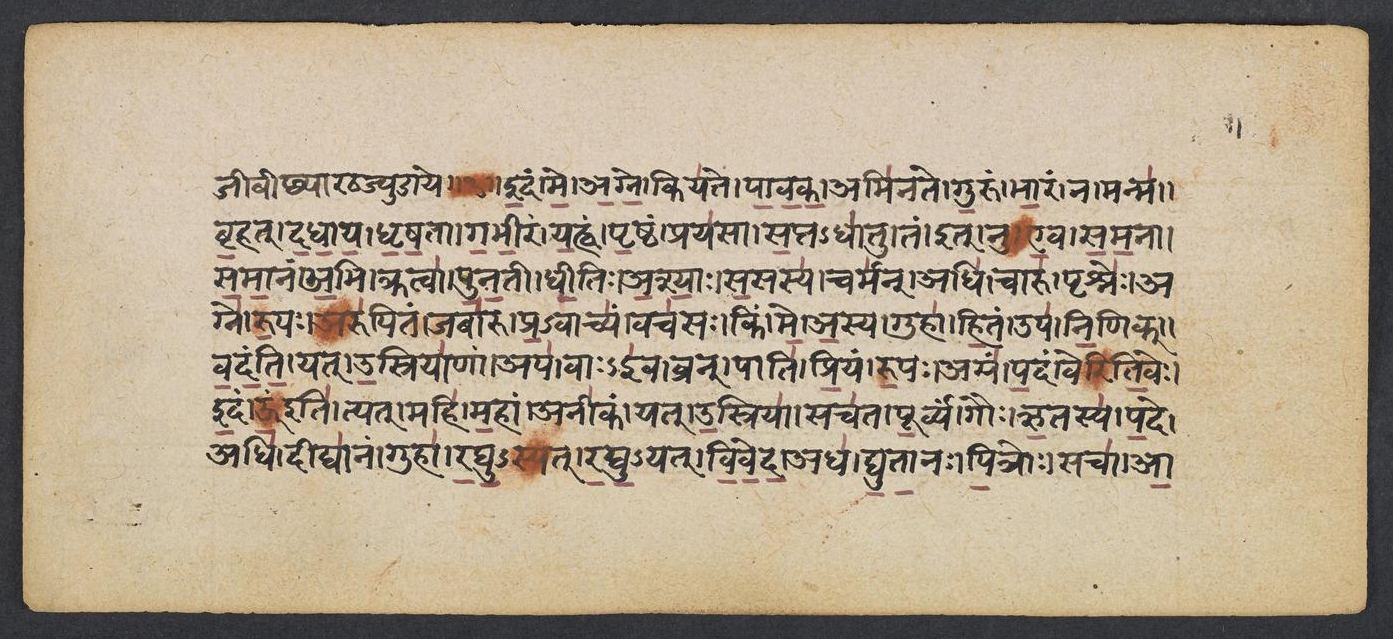
Penn Ms. Coll. 390 Item 41, fol. 261r (numbered 70r by the scribe) (OPenn image 261, lower leaf). Checked on the image: the Rigveda text on this page begins in RV 4.5.6 ‹idam me agne kiyate›. The next page with Rigveda text, fol. 261v (numbered 70v by the scribe), begins in RV 4.5.10 ‹-āsā amanuta guhyam cāru›. Verses 4.5.6-9 end on this page.
6i̱dam me̍ agne̱ kiya̍te pāva̱kāmi̍nate gu̱rum bhā̱raṁ na manma̍ | bṛ̱had da̍dhātha dhṛṣa̱tā ga̍bhī̱raṁ ya̱hvam pṛ̱ṣṭham praya̍sā sa̱ptadhā̍tu ||
7tam in nv e̱3̱̍va sa̍ma̱nā sa̍mā̱nam a̱bhi kratvā̍ puna̱tī dhī̱tir a̍śyāḥ | sa̱sasya̱ carma̱nn adhi̱ cāru̱ pṛśne̱r agre̍ ru̱pa āru̍pita̱ṁ jabā̍ru ||
8pra̱vācya̱ṁ vaca̍sa̱ḥ kim me̍ a̱sya guhā̍ hi̱tam upa̍ ni̱ṇig va̍danti | yad u̱sriyā̍ṇā̱m apa̱ vār i̍va̱ vran pāti̍ pri̱yaṁ ru̱po agra̍m pa̱daṁ veḥ ||
9i̱dam u̱ tyan mahi̍ ma̱hām anī̍ka̱ṁ yad u̱sriyā̱ saca̍ta pū̱rvyaṁ gauḥ | ṛ̱tasya̍ pa̱de adhi̱ dīdyā̍na̱ṁ guhā̍ raghu̱ṣyad ra̍ghu̱yad vi̍veda ||
Compare: Padapāṭha (word-by-word text written in the manuscript; Sansknet e-text via GRETIL)
6idam | me | agne | kiyate | pāvaka | āminate | gurum | bhāram | na | manma | bṛhat | dadhātha | dhṛṣatā | gabhīram | yahvam | pṛṣṭham | prayasā | sapta-dhātu
7tam | it | nu | eva | samanā | samānam | abhi | kratvā | punatī | dhītiḥ | aśyāḥ | sasasya | carman | adhi | cāru | pṛśneḥ | agne | rupaḥ | arupitam | jabāru
8pra-vācyam | vacasaḥ | kim | me | asya | guhā | hitam | upa | niṇik | vadanti | yat | usriyāṇām | apa | vāḥ-iva | vran | pāti | priyam | rupaḥ | agram | padam | veḥ
9idam | oṃ iti | tyat | mahi | mahām | anīkam | yat | usriyā | sacata | pūrvyam | gauḥ | ṛtasya | pade | adhi | dīdyānam | guhā | raghu-syat | raghu-yat | viveda
6To me, weak, innocent, thou, luminous Agni, hast boldly given as 'twere a heavy burthen, This Prstha hymn, profound and strong and mighty, of seven elements, and with offered dainties.
7So may our song that purifies, through wisdom reach in a moment him the Universal, Established on the height, on earth's best .station, above the beauteous grassy skin of Pr̥iṣni.
8Of this my speech what shall I utter further? They indicate the milk stored up in secret When they have thrown as 'twere the cows' stalls open. The Bird protects earths' best and wellloved station.
9This is the Great Ones' mighty apparition which from of old the radiant Cow hath followed. This, shining brightly in the place of Order, swift, hasting on in secret, she discovered.
Where on the image
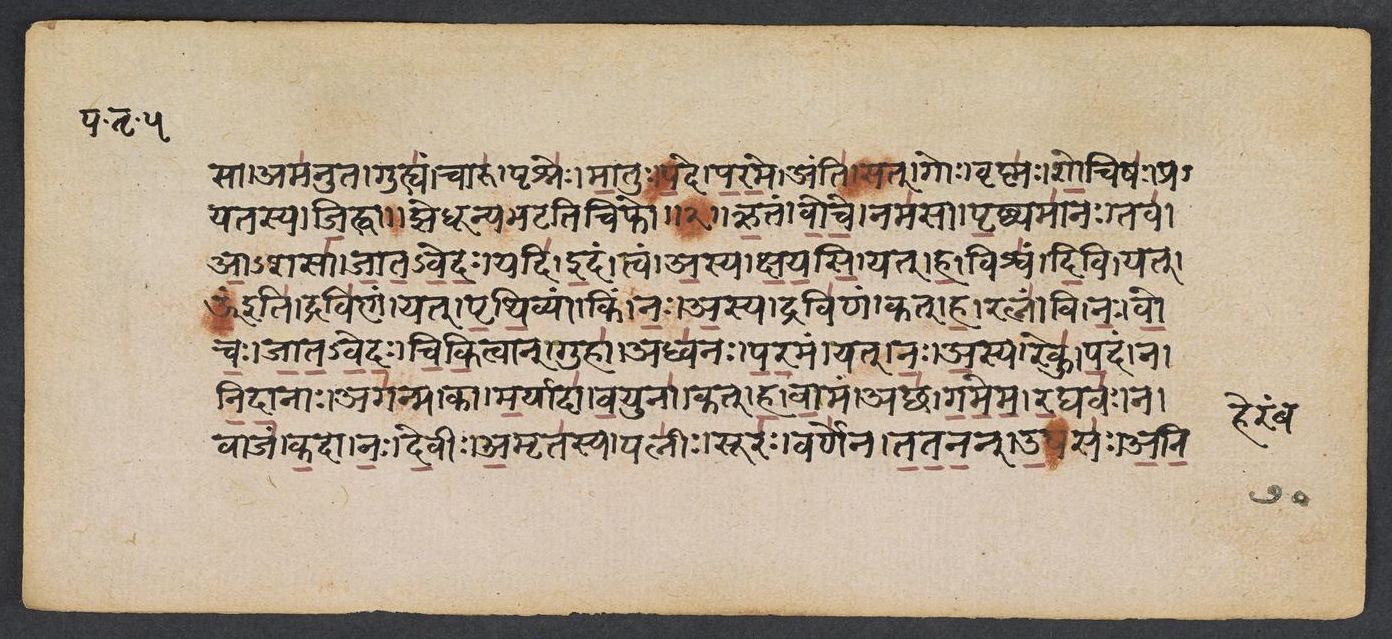
Penn Ms. Coll. 390 Item 41, fol. 261v (numbered 70v by the scribe) (OPenn image 262, upper leaf). Checked on the image: the Rigveda text on this page begins in RV 4.5.10 ‹-āsā amanuta guhyam cāru›. The next page with Rigveda text, fol. 262r (numbered 71r by the scribe), begins in RV 4.5.14 ‹-anireṇa vacasā phalgvena pratītyena›. Verses 4.5.10-13 end on this page; 4.5.10 begins on fol. 261r (numbered 70r by the scribe).
10adha̍ dyutā̱naḥ pi̱troḥ sacā̱sāma̍nuta̱ guhya̱ṁ cāru̱ pṛśne̍ḥ | mā̱tuṣ pa̱de pa̍ra̱me anti̱ ṣad gor vṛṣṇa̍ḥ śo̱ciṣa̱ḥ praya̍tasya ji̱hvā ||
11ṛ̱taṁ vo̍ce̱ nama̍sā pṛ̱cchyamā̍na̱s tavā̱śasā̍ jātavedo̱ yadī̱dam | tvam a̱sya kṣa̍yasi̱ yad dha̱ viśva̍ṁ di̱vi yad u̱ dravi̍ṇa̱ṁ yat pṛ̍thi̱vyām ||
12kiṁ no̍ a̱sya dravi̍ṇa̱ṁ kad dha̱ ratna̱ṁ vi no̍ voco jātavedaś ciki̱tvān | guhādhva̍naḥ para̱maṁ yan no̍ a̱sya reku̍ pa̱daṁ na ni̍dā̱nā aga̍nma ||
13kā ma̱ryādā̍ va̱yunā̱ kad dha̍ vā̱mam acchā̍ gamema ra̱ghavo̱ na vāja̍m | ka̱dā no̍ de̱vīr a̱mṛta̍sya̱ patnī̱ḥ sūro̱ varṇe̍na tatanann u̱ṣāsa̍ḥ ||
Compare: Padapāṭha (word-by-word text written in the manuscript; Sansknet e-text via GRETIL)
10adha | dyutānaḥ | pitroḥ | sacā | āsā | amanuta | guhyam | cāru | pṛśneḥ | mātuḥ | pade | parame | anti | sat | goḥ | vṛṣṇaḥ | śociṣaḥ | pra-yatasya | jihvā
11ṛtam | voce | namasā | pṛcchyamānaḥ | tava | āśasā | jāta-vedaḥ | yadi | idam | tvam | asya | kṣayasi | yat | ha | viśvam | divi | yat oṃ iti | draviṇam | yat | pṛthivyām
12kim | naḥ | asya | draviṇam | kat | ha | ratnam | vi | naḥ | vocaḥ | jāta-vedaḥ | ci kitvān | guhā | adhvanaḥ | paramam | yat | naḥ | asya | reku | padam | na | ni-dānāḥ | aganma
13kā | maryādā | vayunā | kat | ha | vāmam | accha | gamema | raghavaḥ | na | vājam | kadā | naḥ | devīḥ | amṛtasya | patnīḥ | sūraḥ | varṇena | tatanan | uṣasaḥ
10He then who shone together with his Parents remembered Pr̥iṣni's fair and secret treasure, Which, in the Mother Cow's most lofty station, the Bull's tongue, of the flame bent forward, tasted.
11With reverence I declare the Law, O Agni; what is, comes by thine order, Jâtavedas. Of this, whate'er it be, thou art the Sovran, yea, all the wealth that is in earth or heaven.
12What is our wealth therefrom, and what our treasure? Tell us O Jâtavedas, for thou knowest, What is our best course in this secret passage: we, unreproached, have reached a place far distant.
13What is the limit, what the rules, the guerdon? Like fleet-foot coursers speed we to the contest. When will the Goddesses, the Immortal's Spouses, the Dawns, spread over us the Sun-God's splendour?
Where on the image
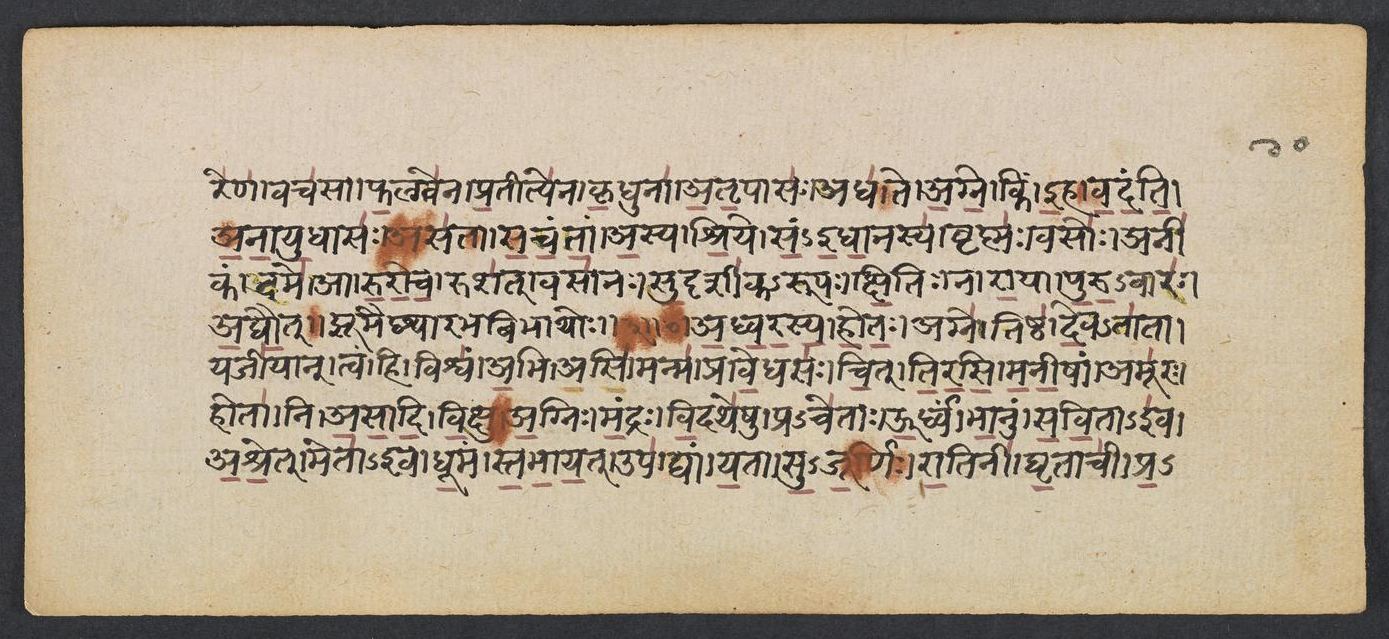
Penn Ms. Coll. 390 Item 41, fol. 262r (numbered 71r by the scribe) (OPenn image 262, lower leaf). Checked on the image: the Rigveda text on this page begins in RV 4.5.14 ‹-anireṇa vacasā phalgvena pratītyena›. The next page with Rigveda text, fol. 262v (numbered 71v by the scribe), begins in RV 4.6.3 ‹-pra-dakṣiṇit deva-tātim urāṇaḥ ut›. Verses 4.5.14-15 end on this page; 4.5.14 begins on fol. 261v (numbered 70v by the scribe).
14a̱ni̱reṇa̱ vaca̍sā pha̱lgve̍na pra̱tītye̍na kṛ̱dhunā̍tṛ̱pāsa̍ḥ | adhā̱ te a̍gne̱ kim i̱hā va̍danty anāyu̱dhāsa̱ āsa̍tā sacantām ||
15a̱sya śri̱ye sa̍midhā̱nasya̱ vṛṣṇo̱ vaso̱r anī̍ka̱ṁ dama̱ ā ru̍roca | ruśa̱d vasā̍naḥ su̱dṛśī̍karūpaḥ kṣi̱tir na rā̱yā pu̍ru̱vāro̍ adyaut ||
Compare: Padapāṭha (word-by-word text written in the manuscript; Sansknet e-text via GRETIL)
14anireṇa | vacasā | phalgvena | pratītyena | kṛdhunā | atṛpāsaḥ | adha | te | agne | k im | iha | vadanti | anāyudhāsaḥ | āsatā | sacantām
15asya | śriye | sam-idhānasya | vṛṣṇaḥ | vasoḥ | anīkam | dame | ā | ruroca | ruśat | vasānaḥ | sudṛśīka-rūpaḥ | kṣitiḥ | na | rāyā | puru-vāraḥ | adyaut
14Unsatisfied, with speech devoid of vigour, scanty and frivolous and inconclusive, Wherefore do they address thee here, O Agni? Let these who have no weapons suffer sorrow.
15The majesty of him the Good, the Mighty, aflame, hath shone for glory in the dwelling. He, clothed in light, hath shone most fair to look on, wealthy in boons, as a home shines with riches.
Notes
- Sanskrit: Aufrecht's edition (1877) with the Vedic accents, as entered by van Nooten and Holland (GRETIL).
- English: Ralph T. H. Griffith, The Hymns of the Rigveda (1889-1892; 2nd ed. 1896-1897), from the VedaWeb digital text; OCR slips in that text were corrected against the printed 2nd edition (data/sources/rigveda/griffith_errata.json).
- Padapāṭha (edition text): Sansknet e-text via GRETIL (CC BY-NC-SA 4.0).
Cite
Sources
- Source: Penn Ms. Coll. 390 Item 41 (undated (catalogued with Penn's 18th-19th c. Vedic manuscripts)), OPenn, Public Domain Mark + Aufrecht's accented text (GRETIL) + Griffith's English (VedaWeb) (holding institution)
- Critical edition: Aufrecht (1877), accented e-text via GRETIL
← previous · → next · v cycle view · l back to library