Rigveda 4.41: To Indra and Varuna
Introduction
Rigveda 4.41 is a hymn of 11 verses addressed to Indra and Varuna. It stands in book (maṇḍala) 4, the family book of Vāmadeva. The Rigveda is the oldest collection of Sanskrit hymns, composed in the second half of the second millennium BCE and handed down orally for many centuries before it was written down.
The manuscript shown is Penn Ms. Coll. 390 Item 41 (University of Pennsylvania), an undated paper manuscript of the padapāṭha (the word-by-word recitation text, in which every word is written separately and compounds are split) of the whole Ṛgveda in Devanāgarī, 884 leaves in fascicles, 7-9 lines to the page, accents in red; this hymn stands on fol. 302r-303r. Each section below gives the verses that end on one page; the page boundaries were read on the images (the opening words of every page), not counted out. Where the manuscript is a padapāṭha (the word-by-word recitation text), the section shows Aufrecht's continuous (saṃhitā) text first and, as the edition text, the padapāṭha of the same verses, which is the form written on the page.
How was this verified? (Provenance)
Where on the image
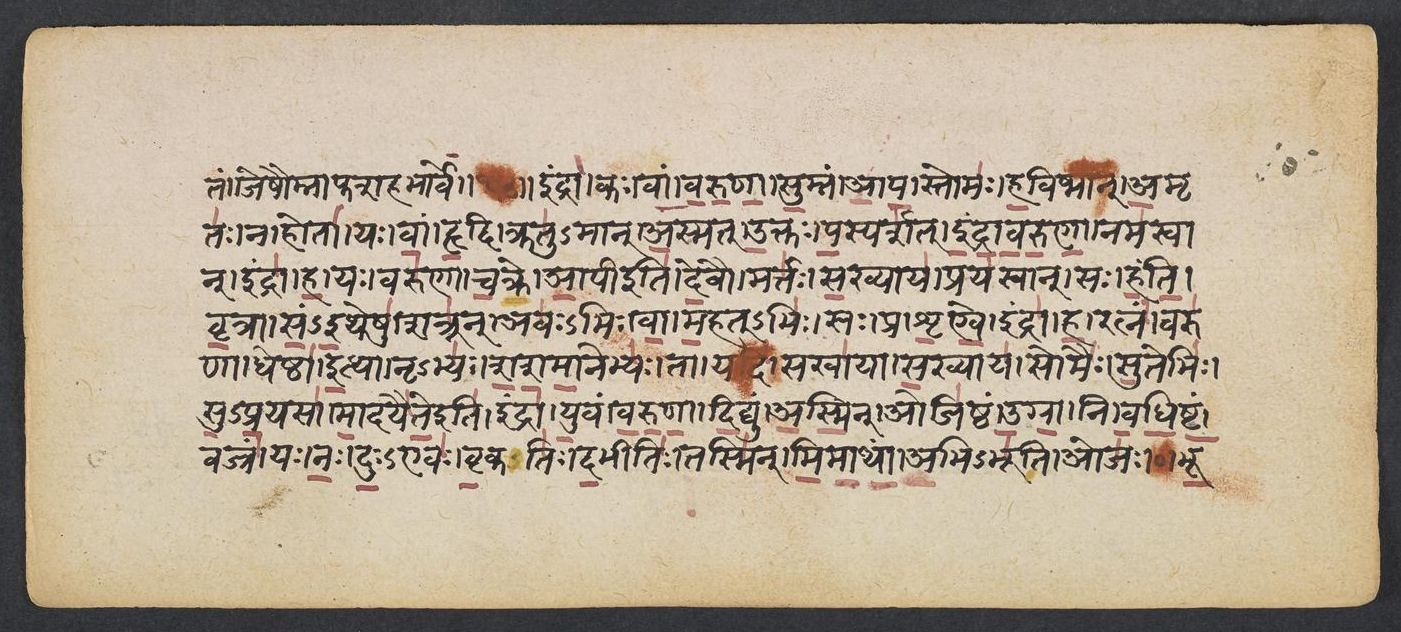
Penn Ms. Coll. 390 Item 41, fol. 302r (numbered 111r by the scribe) (OPenn image 302, lower leaf). Checked on the image: the Rigveda text on this page begins in RV 4.40.5 ‹-ṛtam›. The next page with Rigveda text, fol. 302v (numbered 111v by the scribe), begins in RV 4.41.5 ‹-bhūtam asyāḥ dhiyaḥ pretārā›. Verses 4.41.1-4 end on this page.
1indrā̱ ko vā̍ṁ varuṇā su̱mnam ā̍pa̱ stomo̍ ha̱viṣmā̍m̐ a̱mṛto̱ na hotā̍ | yo vā̍ṁ hṛ̱di kratu̍mām̐ a̱smad u̱ktaḥ pa̱sparśa̍d indrāvaruṇā̱ nama̍svān ||
2indrā̍ ha̱ yo varu̍ṇā ca̱kra ā̱pī de̱vau marta̍ḥ sa̱khyāya̱ praya̍svān | sa ha̍nti vṛ̱trā sa̍mi̱theṣu̱ śatrū̱n avo̍bhir vā ma̱hadbhi̱ḥ sa pra śṛ̍ṇve ||
3indrā̍ ha̱ ratna̱ṁ varu̍ṇā̱ dheṣṭhe̱tthā nṛbhya̍ḥ śaśamā̱nebhya̱s tā | yadī̱ sakhā̍yā sa̱khyāya̱ somai̍ḥ su̱tebhi̍ḥ supra̱yasā̍ mā̱dayai̍te ||
4indrā̍ yu̱vaṁ va̍ruṇā di̱dyum a̍smi̱nn oji̍ṣṭham ugrā̱ ni va̍dhiṣṭa̱ṁ vajra̍m | yo no̍ du̱revo̍ vṛ̱kati̍r da̱bhīti̱s tasmi̍n mimāthām a̱bhibhū̱ty oja̍ḥ ||
Compare: Padapāṭha (word-by-word text written in the manuscript; Sansknet e-text via GRETIL)
1indrā | kaḥ | vām | varuṇā | sumnam | āpa | stomaḥ | haviṣmān | amṛtaḥ | na | hotā | yaḥ | vām | hṛdi | kratu-mān | asmat | uktaḥ | pasparśat | indrāvaruṇā | namasvān
2indrā | ha | yaḥ | varuṇā | cakre | āpī iti | devau | martaḥ | sakhyāya | prayasvān | saḥ | hanti | vṛtrā | sam-itheṣu | śatrūn | avaḥ-bhiḥ | vā | mahat-bhiḥ | saḥ | pra | śṛṇve
3indrā | ha | ratnam | varuṇā | dheṣṭhā | itthā | nṛ-bhyaḥ | śaśamānebhyaḥ | tā | yadi | sakhāyā | sakhyāya | somaiḥ | sutebhiḥ | su-prayasā | mādayaiteiti
4indrā | yuvam | varuṇā | didyum | asmin | ojiṣṭham | ugrā | ni | vadhiṣṭam | vajram | yaḥ | naḥ | duḥ-evaḥ | vṛkatiḥ | dabhītiḥ | tasmin | mimāthām | abhi-bhūti | ojaḥ
1WHAT laud, O Indra-Varuṇa, with oblation, hath like the Immortal Priest obtained your favour? Hath our effectual laud, addressed with homage, touched you, O Indra-Varuṇa, in spirit?
2He who with dainty food hath won you, Indra and Varuṇa, Gods, as his allies to friendship, Slayeth the Vr̥itras and his foes in battles, and through your mighty favours is made famous.
3Indra and Varuṇa are most liberal givers of treasure to the men who toil to serve them, When they, as Friends inclined to friendship, honoured with dainty food, delight in flowing Soma.
4Indra and Varuṇa, ye hurl, O Mighty, on him your strongest flashing bolt of thunder Who treats us ill, the robber and oppressor: measure on him your overwhelming vigour.
Where on the image
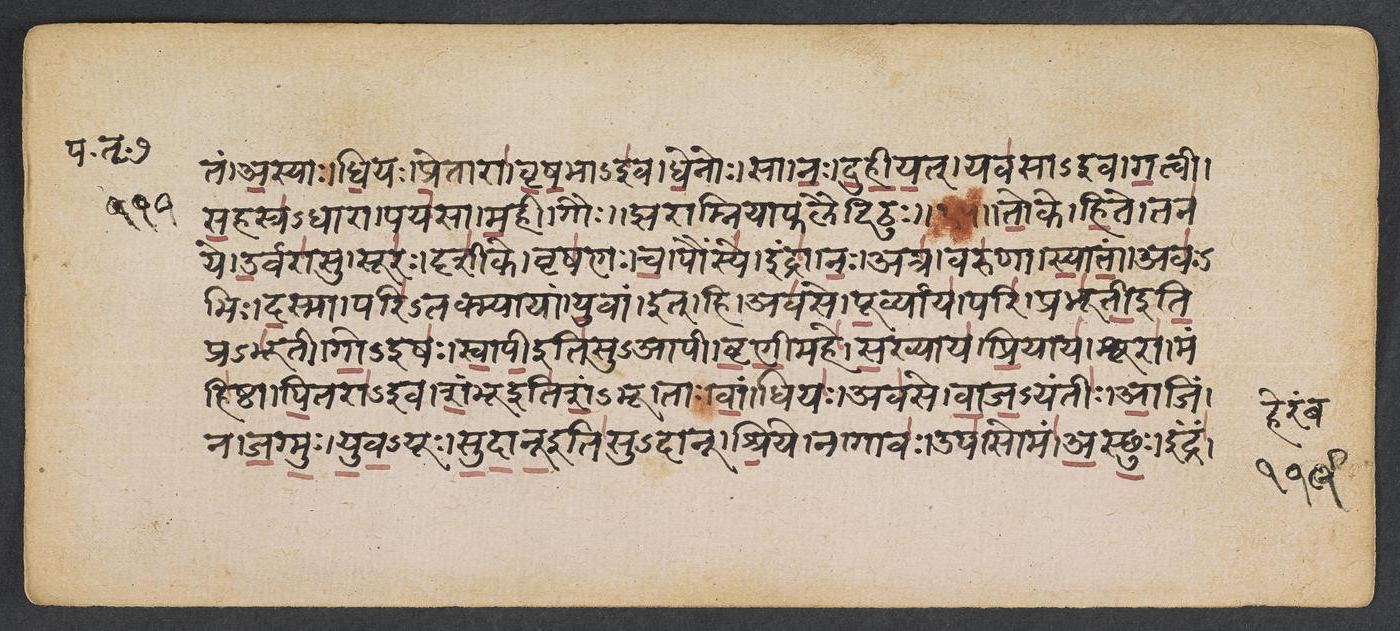
Penn Ms. Coll. 390 Item 41, fol. 302v (numbered 111v by the scribe) (OPenn image 303, upper leaf). Checked on the image: the Rigveda text on this page begins in RV 4.41.5 ‹-bhūtam asyāḥ dhiyaḥ pretārā›. The next page with Rigveda text, fol. 303r (numbered 112r by the scribe), begins in RV 4.41.8 ‹giraḥ varuṇam me manīṣāḥ›. Verses 4.41.5-7 end on this page; 4.41.5 begins on fol. 302r (numbered 111r by the scribe).
5indrā̍ yu̱vaṁ va̍ruṇā bhū̱tam a̱syā dhi̱yaḥ pre̱tārā̍ vṛṣa̱bheva̍ dhe̱noḥ | sā no̍ duhīya̱d yava̍seva ga̱tvī sa̱hasra̍dhārā̱ paya̍sā ma̱hī gauḥ ||
6to̱ke hi̱te tana̍ya u̱rvarā̍su̱ sūro̱ dṛśī̍ke̱ vṛṣa̍ṇaś ca̱ pauṁsye̍ | indrā̍ no̱ atra̱ varu̍ṇā syātā̱m avo̍bhir da̱smā pari̍takmyāyām ||
7yu̱vām id dhy ava̍se pū̱rvyāya̱ pari̱ prabhū̍tī ga̱viṣa̍ḥ svāpī | vṛ̱ṇī̱mahe̍ sa̱khyāya̍ pri̱yāya̱ śūrā̱ maṁhi̍ṣṭhā pi̱tare̍va śa̱mbhū ||
Compare: Padapāṭha (word-by-word text written in the manuscript; Sansknet e-text via GRETIL)
5indrā | yuvam | varuṇā | bhūtam | asyāḥ | dhiyaḥ | pretārā | vṛṣabhāiva | dhenoḥ | sā | naḥ | duhīyat | yavasāiva | gatvī | sahasra-dhārā | payasā | mahī | gauḥ
6toke | hite | tanaye | urvarāsu | sūraḥ | dṛśīke | vṛṣaṇaḥ | ca | paiṃsye | indrā | naḥ | atra | varuṇā | syātām | avaḥ-bhiḥ | dasmā | pari-takmyāyām
7yuvām | it | hi | avase | pūrvyāya | pari | prabhūtī itipra-bhūtī | go--iṣaḥ | svāpī itisu-āpī | vṛṇīmahe | sakhyāya | priyāya | śūrā | maṃhiṣṭhā | pitarāiva | śambhū itiśam-bhū
5O Indra-Varuṇa, be ye the lovers of this my song, as steers who love the milch-Cow. Milk may it yield us as, gone forth to pasture, the great Cow pouring out her thousand rivers.
6For fertile fields, for worthy sons and grandsons, for the Sun's beauty and for steer-like vigour, May Indra-Varuṇa with gracious favours work marvels for us in the stress of battle.
7For you, as Princes, for your ancient kindness, good comrades of the man who seeks for booty, We choose to us for the dear bond of friendship, most liberal Heroes bringing bliss like parents.
Where on the image
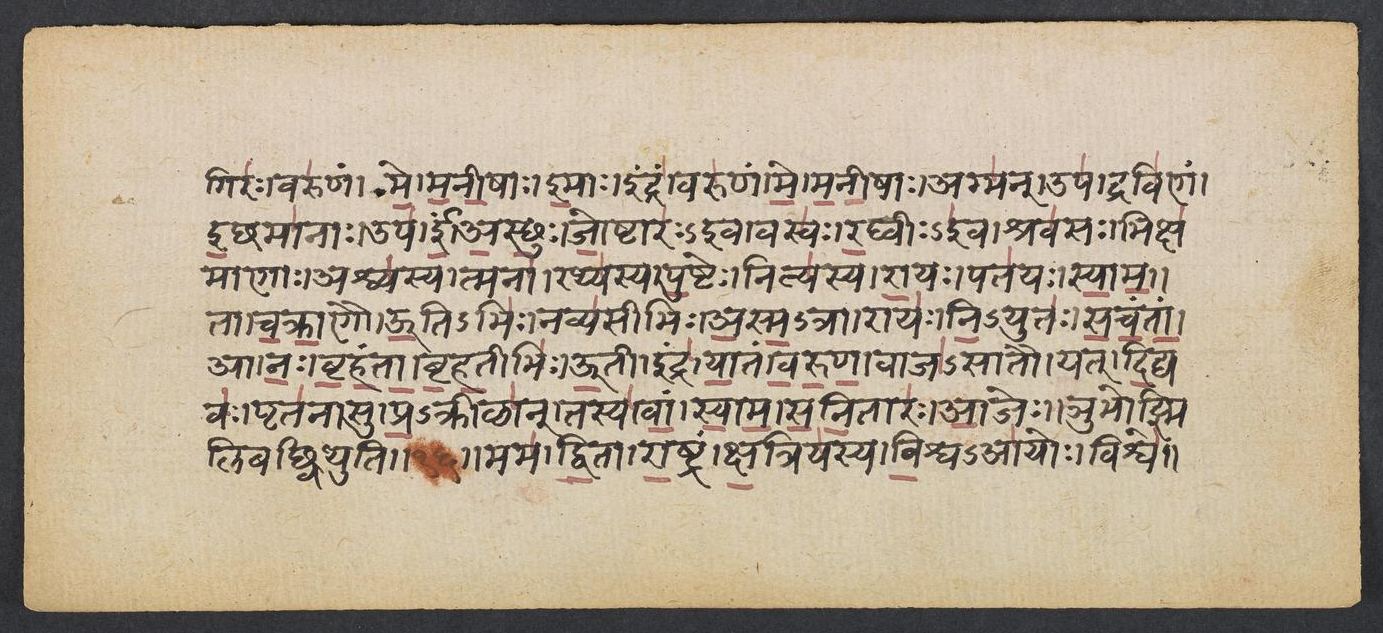
Penn Ms. Coll. 390 Item 41, fol. 303r (numbered 112r by the scribe) (OPenn image 303, lower leaf). Checked on the image: the Rigveda text on this page begins in RV 4.41.8 ‹giraḥ varuṇam me manīṣāḥ›. The next page with Rigveda text, fol. 303v (numbered 112v by the scribe), begins in RV 4.42.1 ‹amṛtāḥ yathā naḥ kratum›. Verses 4.41.8-11 end on this page; 4.41.8 begins on fol. 302v (numbered 111v by the scribe).
8tā vā̱ṁ dhiyo 'va̍se vāja̱yantī̍r ā̱jiṁ na ja̍gmur yuva̱yūḥ su̍dānū | śri̱ye na gāva̱ upa̱ soma̍m asthu̱r indra̱ṁ giro̱ varu̍ṇam me manī̱ṣāḥ ||
9i̱mā indra̱ṁ varu̍ṇam me manī̱ṣā agma̱nn upa̱ dravi̍ṇam i̱cchamā̍nāḥ | upe̍m asthur jo̱ṣṭāra̍ iva̱ vasvo̍ ra̱ghvīr i̍va̱ śrava̍so̱ bhikṣa̍māṇāḥ ||
10aśvya̍sya̱ tmanā̱ rathya̍sya pu̱ṣṭer nitya̍sya rā̱yaḥ pata̍yaḥ syāma | tā ca̍krā̱ṇā ū̱tibhi̱r navya̍sībhir asma̱trā rāyo̍ ni̱yuta̍ḥ sacantām ||
11ā no̍ bṛhantā bṛha̱tībhi̍r ū̱tī indra̍ yā̱taṁ va̍ruṇa̱ vāja̍sātau | yad di̱dyava̱ḥ pṛta̍nāsu pra̱krīḻā̱n tasya̍ vāṁ syāma sani̱tāra̍ ā̱jeḥ ||
Compare: Padapāṭha (word-by-word text written in the manuscript; Sansknet e-text via GRETIL)
8tāḥ | vām | dhiyaḥ | avase | vāja-yantīḥ | ājim | na | jamuḥ | yuva-yūḥ | sudānūitisu-dānū | śriye | na | gāvaḥ | upa | somam | asthuḥ | indram | giraḥ | varuṇam | me | manīṣāḥ
9imāḥ | indram | varuṇam | me | manīṣāḥ | agman | upa | draviṇam | icchamānāḥ | upa | īm | asthuḥ | joṣṭāraḥ-iva | vasvaḥ | raghvīḥ-iva | śravasaḥ | bhikṣamāṇāḥ
10aśvyasya | tmanā | rathyasya | puṣṭeḥ | nityasya | rāyaḥ | patayaḥ | syāma | tā | cakrāṇau | ūti-bhiḥ | navyasībhiḥ | asma-trā | rāyaḥ | ni-yutaḥ | sacantām
11ā | naḥ | bṛhantā | bṛhatībhiḥ | ūtī | indra | yātam | varuṇa | vāja-sātau | yat | didyavaḥ | pṛtanāsu | pra-krīḷān | tasya | vām | syāma | sanitāraḥ | ojaḥ
8Showing their strength, these hymns for grace, Free-givers I have gone to you, devoted, as to battle. For glory have they gone, as milk to Soma, to Indra-Varuṇa my thoughts and praises.
9To Indra and to Varuṇa, desirous of gaining wealth have these my thoughts proceeded. They have come nigh to you as treasurelovers, like mares, fleet-footed, eager for the glory.
10May we ourselves be lords of during riches, of ample sustenance for car and hones. So may the Twain who work with newest succours bring yoked teams hitherward to us and riches.
11Come with your mighty succours, O ye Mighty; come, Indra-Varuṇa, to us in battle. What time the flashing arrows play in combat, may we through you be winners in the contest.
Notes
- Sanskrit: Aufrecht's edition (1877) with the Vedic accents, as entered by van Nooten and Holland (GRETIL).
- English: Ralph T. H. Griffith, The Hymns of the Rigveda (1889-1892; 2nd ed. 1896-1897), from the VedaWeb digital text; OCR slips in that text were corrected against the printed 2nd edition (data/sources/rigveda/griffith_errata.json).
- Padapāṭha (edition text): Sansknet e-text via GRETIL (CC BY-NC-SA 4.0).
Cite
Sources
- Source: Penn Ms. Coll. 390 Item 41 (undated (catalogued with Penn's 18th-19th c. Vedic manuscripts)), OPenn, Public Domain Mark + Aufrecht's accented text (GRETIL) + Griffith's English (VedaWeb) (holding institution)
- Critical edition: Aufrecht (1877), accented e-text via GRETIL
← previous · → next · v cycle view · l back to library