Rigveda 4.6: To Agni
Introduction
Rigveda 4.6 is a hymn of 11 verses addressed to Agni. It stands in book (maṇḍala) 4, the family book of Vāmadeva. The Rigveda is the oldest collection of Sanskrit hymns, composed in the second half of the second millennium BCE and handed down orally for many centuries before it was written down.
The manuscript shown is Penn Ms. Coll. 390 Item 41 (University of Pennsylvania), an undated paper manuscript of the padapāṭha (the word-by-word recitation text, in which every word is written separately and compounds are split) of the whole Ṛgveda in Devanāgarī, 884 leaves in fascicles, 7-9 lines to the page, accents in red; this hymn stands on fol. 262r-263v. Each section below gives the verses that end on one page; the page boundaries were read on the images (the opening words of every page), not counted out. Where the manuscript is a padapāṭha (the word-by-word recitation text), the section shows Aufrecht's continuous (saṃhitā) text first and, as the edition text, the padapāṭha of the same verses, which is the form written on the page.
How was this verified? (Provenance)
Where on the image
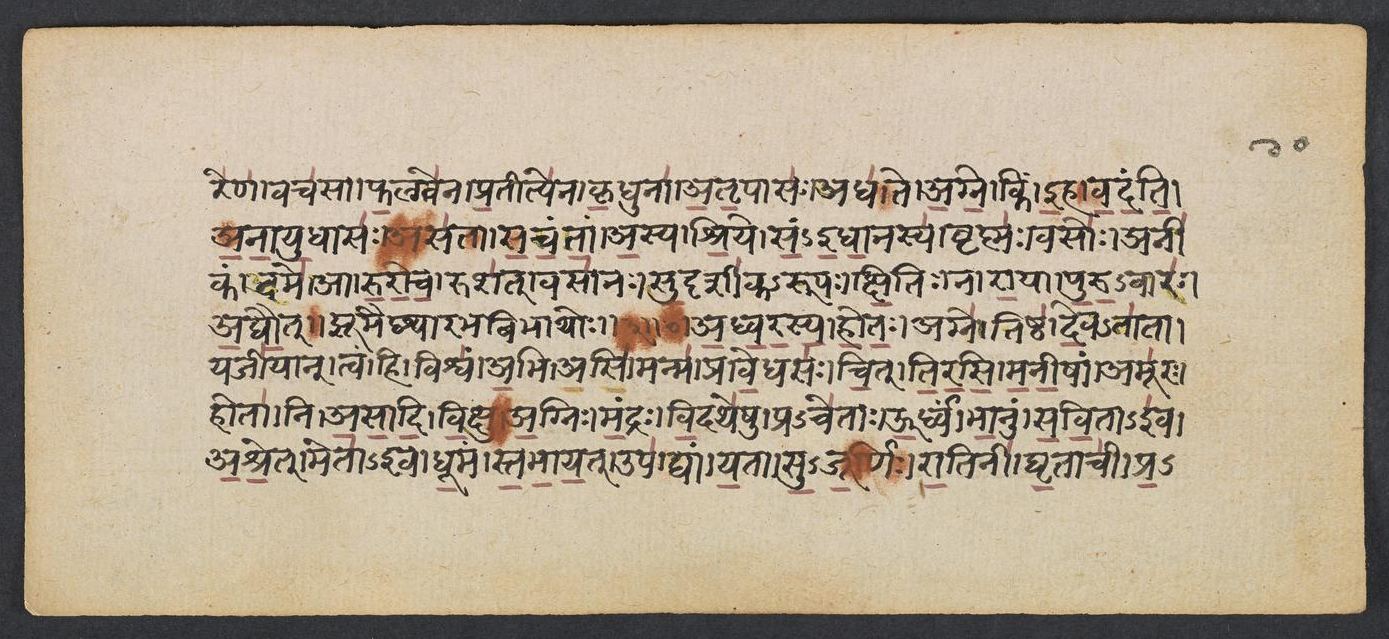
Penn Ms. Coll. 390 Item 41, fol. 262r (numbered 71r by the scribe) (OPenn image 262, lower leaf). Checked on the image: the Rigveda text on this page begins in RV 4.5.14 ‹-anireṇa vacasā phalgvena pratītyena›. The next page with Rigveda text, fol. 262v (numbered 71v by the scribe), begins in RV 4.6.3 ‹-pra-dakṣiṇit deva-tātim urāṇaḥ ut›. Verses 4.6.1-2 end on this page.
1ū̱rdhva ū̱ ṣu ṇo̍ adhvarasya hota̱r agne̱ tiṣṭha̍ de̱vatā̍tā̱ yajī̍yān | tvaṁ hi viśva̍m a̱bhy asi̱ manma̱ pra ve̱dhasa̍ś cit tirasi manī̱ṣām ||
2amū̍ro̱ hotā̱ ny a̍sādi vi̱kṣv a1̱̍gnir ma̱ndro vi̱dathe̍ṣu̱ prace̍tāḥ | ū̱rdhvam bhā̱nuṁ sa̍vi̱tevā̍śre̱n mete̍va dhū̱maṁ sta̍bhāya̱d upa̱ dyām ||
Compare: Padapāṭha (word-by-word text written in the manuscript; Sansknet e-text via GRETIL)
1ūrdhvaḥ | oṃ iti | su | ṇaḥ | adhvarasya | hotaḥ | agne | tiṣṭha | deva-tātā | yajīyān | tvam | hi | viśvam | abhi | asi | manma | pra | vedhasaḥ | cit | tirasi | manīṣām
2amūraḥ | hotā | ni | asādi | vikṣu | agniḥ | mandraḥ | vidatheṣu | pra-cetāḥ | ūrdhvam | bhānum | savitāiva | aśret | metāiva | dhūmam | stabhāyat | upa | dyām
1PRIEST of our rite, stand up erect, O Agni, in the Gods' service best of sacrificers, For over evei y thought thou art the Ruler: thou furtherest e'en the wisdom of the pious.
2He was set down mid men as Priest unerring, Agni, wise, welcome in our holy synods. Like Savitar he hath lifted up his splendour, and like a builder raised his smoke to heaven.
Where on the image
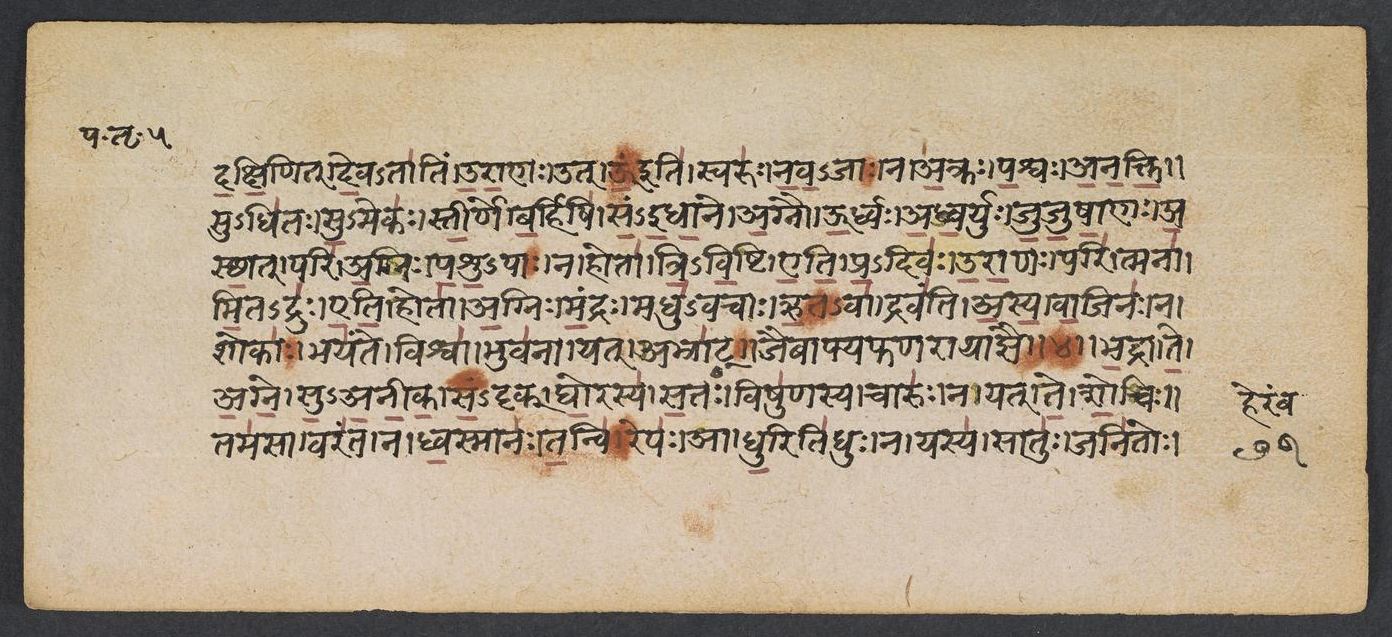
Penn Ms. Coll. 390 Item 41, fol. 262v (numbered 71v by the scribe) (OPenn image 263, upper leaf). Checked on the image: the Rigveda text on this page begins in RV 4.6.3 ‹-pra-dakṣiṇit deva-tātim urāṇaḥ ut›. The next page with Rigveda text, fol. 263r (numbered 72r by the scribe), begins in RV 4.6.7 ‹avāri na mātarāpitarā nu›. Verses 4.6.3-6 end on this page; 4.6.3 begins on fol. 262r (numbered 71r by the scribe).
3ya̱tā su̍jū̱rṇī rā̱tinī̍ ghṛ̱tācī̍ pradakṣi̱ṇid de̱vatā̍tim urā̱ṇaḥ | ud u̱ svaru̍r nava̱jā nākraḥ pa̱śvo a̍nakti̱ sudhi̍taḥ su̱meka̍ḥ ||
4stī̱rṇe ba̱rhiṣi̍ samidhā̱ne a̱gnā ū̱rdhvo a̍dhva̱ryur ju̍juṣā̱ṇo a̍sthāt | pary a̱gniḥ pa̍śu̱pā na hotā̍ trivi̱ṣṭy e̍ti pra̱diva̍ urā̱ṇaḥ ||
5pari̱ tmanā̍ mi̱tadru̍r eti̱ hotā̱gnir ma̱ndro madhu̍vacā ṛ̱tāvā̍ | drava̍nty asya vā̱jino̱ na śokā̱ bhaya̍nte̱ viśvā̱ bhuva̍nā̱ yad abhrā̍ṭ ||
6bha̱drā te̍ agne svanīka sa̱ṁdṛg gho̱rasya̍ sa̱to viṣu̍ṇasya̱ cāru̍ḥ | na yat te̍ śo̱cis tama̍sā̱ vara̍nta̱ na dhva̱smāna̍s ta̱nvī̱3̱̍ repa̱ ā dhu̍ḥ ||
Compare: Padapāṭha (word-by-word text written in the manuscript; Sansknet e-text via GRETIL)
3yatā | su-jūrṇiḥ | rātinī | ghṛtācī | pra-dakṣiṇit | deva-tātim | urāṇaḥ | ut | oṃ iti | svaruḥ | nava-jāḥ | na | akraḥ | paśvaḥ | anakti | su-dhitaḥ | su-mekaḥ
4stīrṇe | barhiṣi | sam-idhāne | agnau | ūrdhvaḥ | adhvaryuḥ | jujuṣāṇaḥ | asthāt | pari | agniḥ | paśu-pāḥ | na | hotā | tri-viṣṭi | eti | pra-divaḥ | urāṇaḥ
5pari | tmanā | mita-druḥ | eti | hotā | agniḥ | mandraḥ | madhu-vacāḥ | ṛta-vā | dravanti | asya | vājinaḥ | na | śokāḥ | bhayante | viśvā | bhuvanā | yat | abhrāṭ
6bhadrā | te | agne | su-anīka | sam-dṛk | ghorasya | sataḥ | viṣuṇasya | cāruḥ | na | yat | te | śociḥ | tamasā | varanta | na | dhvasmānaḥ | tanvi | repaḥ | ā | dhuri ti
3The glowing ladle, filled with oil, is lifted; choosing Gods' service to the right he circles. Eager he rises like the new-wrought pillar which, firmly set and fixed, anoints the victims.
4When sacred grass is strewn and Agni kindled, the Adhvaryu rises to, his task rej o cing. Agni the Priest, like one who tends the cattle, goes three times round, as from of old he wills it.
5Agni himself, the Priest, with measured motion, goes round, with sweet speech, cheerful, true to Order. His fulgent flames run forth like vigorous horses; all creatures are affrighted when he blazes.
6Beautiful and auspicious is thine aspect, O lovely Agni, terrible when spreading. Thy splendours are not covered by the darkness: detraction leaves no stain upon thy body.
Where on the image
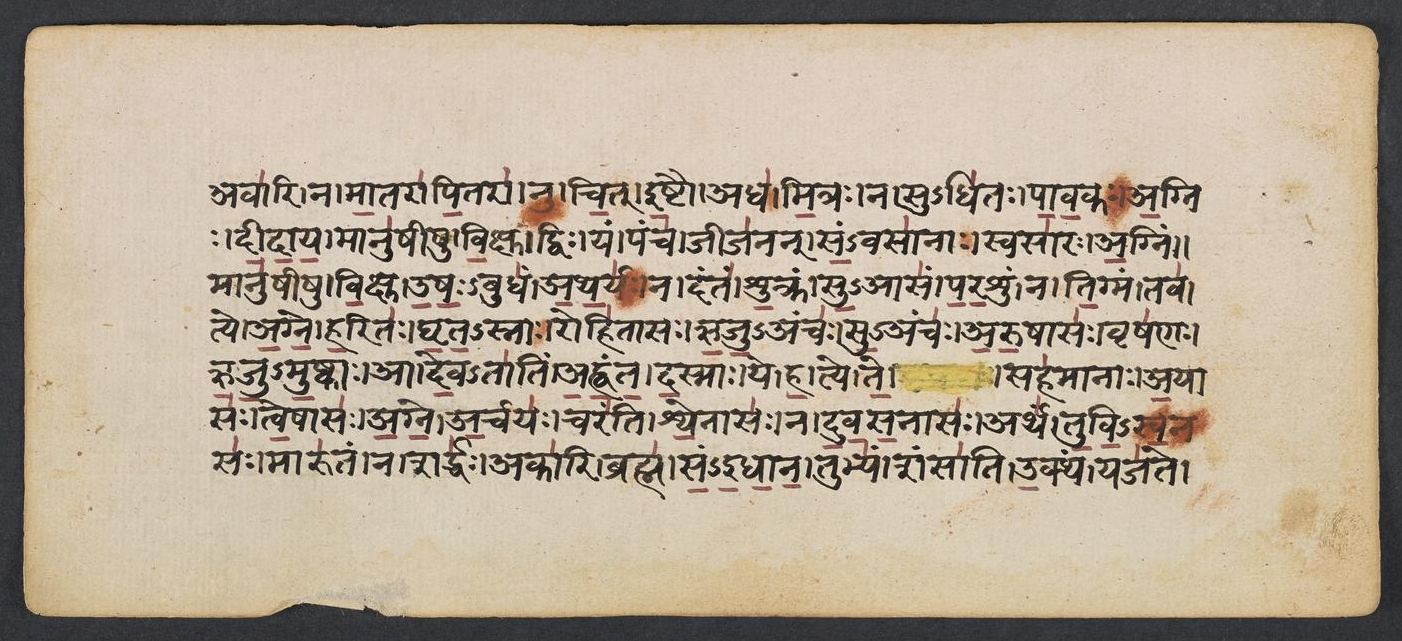
Penn Ms. Coll. 390 Item 41, fol. 263r (numbered 72r by the scribe) (OPenn image 263, lower leaf). Checked on the image: the Rigveda text on this page begins in RV 4.6.7 ‹avāri na mātarāpitarā nu›. The next page with Rigveda text, fol. 263v (numbered 72v by the scribe), begins in RV 4.6.11 ‹vi oṃ iti dhāḥ›. Verses 4.6.7-10 end on this page; 4.6.7 begins on fol. 262v (numbered 71v by the scribe).
7na yasya̱ sātu̱r jani̍to̱r avā̍ri̱ na mā̱tarā̍pi̱tarā̱ nū ci̍d i̱ṣṭau | adhā̍ mi̱tro na sudhi̍taḥ pāva̱ko̱3̱̍ 'gnir dī̍dāya̱ mānu̍ṣīṣu vi̱kṣu ||
8dvir yam pañca̱ jīja̍nan sa̱ṁvasā̍nā̱ḥ svasā̍ro a̱gnim mānu̍ṣīṣu vi̱kṣu | u̱ṣa̱rbudha̍m atha̱ryo̱3̱̍ na danta̍ṁ śu̱kraṁ svāsa̍m para̱śuṁ na ti̱gmam ||
9tava̱ tye a̍gne ha̱rito̍ ghṛta̱snā rohi̍tāsa ṛ̱jvañca̱ḥ svañca̍ḥ | a̱ru̱ṣāso̱ vṛṣa̍ṇa ṛjumu̱ṣkā ā de̱vatā̍tim ahvanta da̱smāḥ ||
10ye ha̱ tye te̱ saha̍mānā a̱yāsa̍s tve̱ṣāso̍ agne a̱rcaya̱ś cara̍nti | śye̱nāso̱ na du̍vasa̱nāso̱ artha̍ṁ tuviṣva̱ṇaso̱ māru̍ta̱ṁ na śardha̍ḥ ||
Compare: Padapāṭha (word-by-word text written in the manuscript; Sansknet e-text via GRETIL)
7na | yasya | sātuḥ | janitoḥ | avāri | na | mātarāpitarā | nu | cit | iṣṭau | adha | mitraḥ | na | su-dhitaḥ | pāvakaḥ | agniḥ | dīdāya | mānuṣīṣu | vikṣu
8dviḥ | yam | pañca | jījanan | sam-vasānāḥ | svasāraḥ | agnim | mānuṣīṣu | vi kṣu | uṣaḥ-budham | atharyaḥ | na | dantam | śukram | su-āsam | paraśum | na | t igmam
9tava | tye | agne | haritaḥ | ghṛta-snāḥ | rohitāsaḥ | ṛju-añcaḥ | su-añcaḥ | aruṣāsaḥ | vṛṣaṇaḥ | ṛju-muṣkāḥ | ā | deva-tātim | ahvanta | dasmāḥ
10ye | ha | tye | te | sahamānāḥ | ayāsaḥ | tveṣāsaḥ | agne | arcayaḥ | caranti | śyenāsaḥ | na | duvasanāsaḥ | artham | tuvi-svaṇasaḥ | mārutam | na | śardhaḥ
7Naught hindered his production, Bounteous Giver: his Mother and his Sire were free to send him. Then as Friend benevolent, refulgent, Agni shone forth in human habitations.
8He, Agni, whom the twice-five sisters, dwelling together, in the homes of men engendered, Bright like a spear's tooth, wakened in the morning, with powerful mouth and like an axe wellsharpened.
9These thy Bay Coursers, Agni, dropping fatness, ruddy vigorous, speeding straightly forward, And red steeds, wonderful, of mighty muscle, are to this service of the Gods invited:
10These brightly-shining games of thine, O Agni, that move for ever restless, allsubduing, Like falcons hasting eagerly to the quarry, roar loudly like the army of the Maruts.
Where on the image
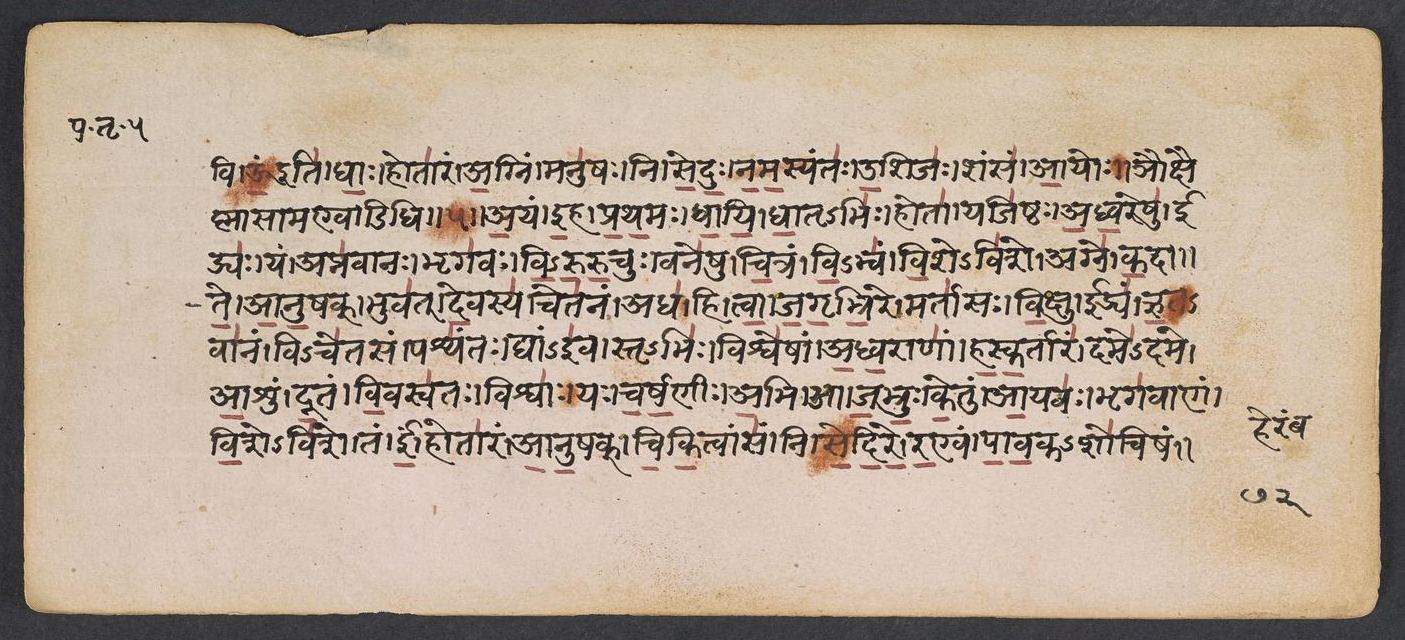
Penn Ms. Coll. 390 Item 41, fol. 263v (numbered 72v by the scribe) (OPenn image 264, upper leaf). Checked on the image: the Rigveda text on this page begins in RV 4.6.11 ‹vi oṃ iti dhāḥ›. The next page with Rigveda text, fol. 264r (numbered 73r by the scribe), begins in RV 4.7.5 ‹yajiṣṭham sapta dhāma-bhiḥ›. Verse 4.6.11 ends on this page; 4.6.11 begins on fol. 263r (numbered 72r by the scribe).
11akā̍ri̱ brahma̍ samidhāna̱ tubhya̱ṁ śaṁsā̍ty u̱kthaṁ yaja̍te̱ vy ū̍ dhāḥ | hotā̍ram a̱gnim manu̍ṣo̱ ni ṣe̍dur nama̱syanta̍ u̱śija̱ḥ śaṁsa̍m ā̱yoḥ ||
Compare: Padapāṭha (word-by-word text written in the manuscript; Sansknet e-text via GRETIL)
11akāri | brahma | sam-idhāna | tubhyam | śaṃsāti | uktham | yajate | vi | oṃ iti | dhāḥ | hotāram | agnim | manuṣaḥ | ni | seduḥ | namasyantaḥ | uśijaḥ | śaṃsam | āyoḥ
11To thee, O flaming God, hath prayer been offered. Let the priest laud thee: give to him who worships. Men have established Agni as Invoker, fain to adore the glory of the living.
Notes
- Sanskrit: Aufrecht's edition (1877) with the Vedic accents, as entered by van Nooten and Holland (GRETIL).
- English: Ralph T. H. Griffith, The Hymns of the Rigveda (1889-1892; 2nd ed. 1896-1897), from the VedaWeb digital text; OCR slips in that text were corrected against the printed 2nd edition (data/sources/rigveda/griffith_errata.json).
- Padapāṭha (edition text): Sansknet e-text via GRETIL (CC BY-NC-SA 4.0).
Cite
Sources
- Source: Penn Ms. Coll. 390 Item 41 (undated (catalogued with Penn's 18th-19th c. Vedic manuscripts)), OPenn, Public Domain Mark + Aufrecht's accented text (GRETIL) + Griffith's English (VedaWeb) (holding institution)
- Critical edition: Aufrecht (1877), accented e-text via GRETIL
← previous · → next · v cycle view · l back to library