Rigveda 4.7: To Agni
Introduction
Rigveda 4.7 is a hymn of 11 verses addressed to Agni. It stands in book (maṇḍala) 4, the family book of Vāmadeva. The Rigveda is the oldest collection of Sanskrit hymns, composed in the second half of the second millennium BCE and handed down orally for many centuries before it was written down.
The manuscript shown is Penn Ms. Coll. 390 Item 41 (University of Pennsylvania), an undated paper manuscript of the padapāṭha (the word-by-word recitation text, in which every word is written separately and compounds are split) of the whole Ṛgveda in Devanāgarī, 884 leaves in fascicles, 7-9 lines to the page, accents in red; this hymn stands on fol. 263v-264v. Each section below gives the verses that end on one page; the page boundaries were read on the images (the opening words of every page), not counted out. Where the manuscript is a padapāṭha (the word-by-word recitation text), the section shows Aufrecht's continuous (saṃhitā) text first and, as the edition text, the padapāṭha of the same verses, which is the form written on the page.
How was this verified? (Provenance)
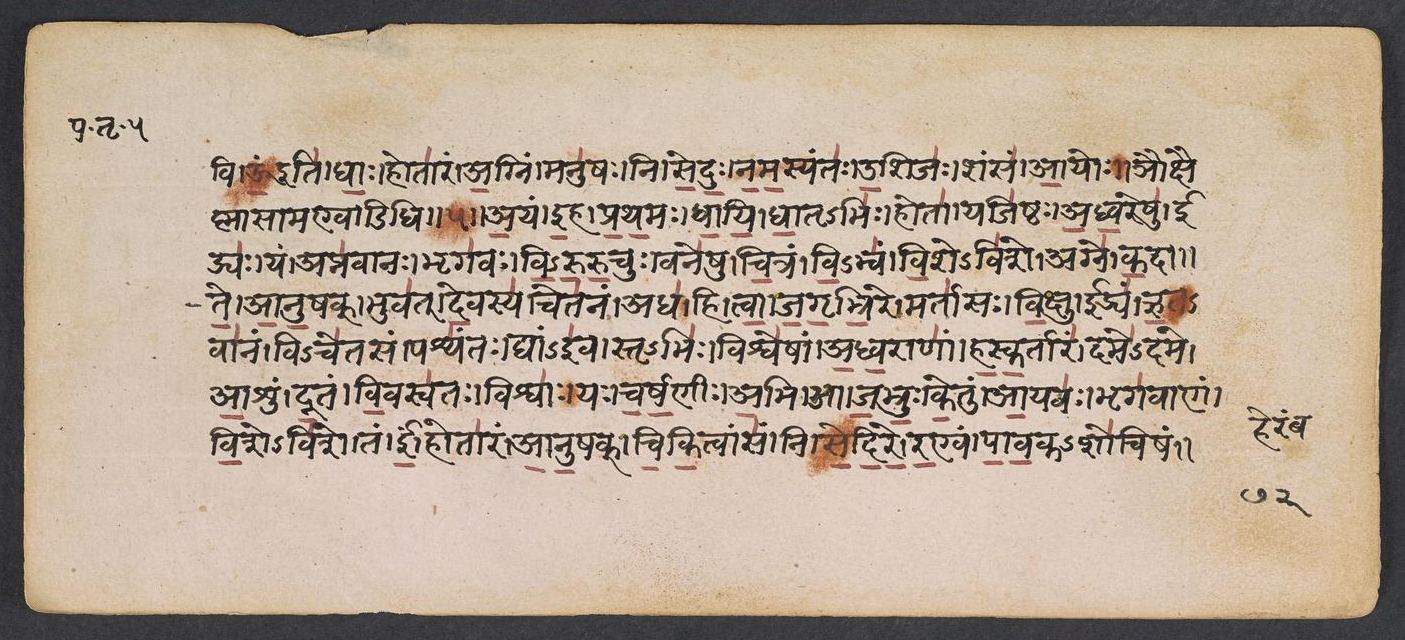
Where on the image
Penn Ms. Coll. 390 Item 41, fol. 263v (numbered 72v by the scribe) (OPenn image 264, upper leaf). Checked on the image: the Rigveda text on this page begins in RV 4.6.11 ‹vi oṃ iti dhāḥ›. The next page with Rigveda text, fol. 264r (numbered 73r by the scribe), begins in RV 4.7.5 ‹yajiṣṭham sapta dhāma-bhiḥ›. Verses 4.7.1-4 end on this page.
1a̱yam i̱ha pra̍tha̱mo dhā̍yi dhā̱tṛbhi̱r hotā̱ yaji̍ṣṭho adhva̱reṣv īḍya̍ḥ | yam apna̍vāno̱ bhṛga̍vo viruru̱cur vane̍ṣu ci̱traṁ vi̱bhva̍ṁ vi̱śe-vi̍śe ||
2agne̍ ka̱dā ta̍ ānu̱ṣag bhuva̍d de̱vasya̱ ceta̍nam | adhā̱ hi tvā̍ jagṛbhri̱re martā̍so vi̱kṣv īḍya̍m ||
3ṛ̱tāvā̍na̱ṁ vice̍tasa̱m paśya̍nto̱ dyām i̍va̱ stṛbhi̍ḥ | viśve̍ṣām adhva̱rāṇā̍ṁ haska̱rtāra̱ṁ dame̍-dame ||
4ā̱śuṁ dū̱taṁ vi̱vasva̍to̱ viśvā̱ yaś ca̍rṣa̱ṇīr a̱bhi | ā ja̍bhruḥ ke̱tum ā̱yavo̱ bhṛga̍vāṇaṁ vi̱śe-vi̍śe ||
Compare: Padapāṭha (word-by-word text written in the manuscript; Sansknet e-text via GRETIL)
1ayam | iha | prathamaḥ | dhāyi | dhātṛ-bhiḥ | hotā | yajiṣṭhaḥ | adhvareṣu | īḍyaḥ | yam | apnavānaḥ | bhṛgavaḥ | vi-rurucuḥ | vaneṣu | citram | vi-bhvam | viśe--viśe
2agne | kadā | te | ānuṣak | bhuvat | devasya | cetanam | adha | hi | tvā | jagṛbhrire | matārsaḥ | vikṣu īḍyam
3ṛta-vānam | vi-cetasam | paśyantaḥ | dyām-iva | stṛ-bhiḥ | viśveṣām | adhvarāṇām | haskartāram | dame--dame
4āśum | dūtam | vivasvataḥ | viśvāḥ | yaḥ | carṣaṇīḥ | abhi | ā | jabhruḥ | ketum | āyavaḥ | bhṛgavāṇam | viśe--viśe
1HERE by ordainers was this God appointed first Invoker, best at worship, to be praised at rites: Whom Apnavâna, and the Bhr̥igus caused to shine bright-coloured in the wood, spreading from home to home.
2When shall thy glory as a God, Agni, be suddenly shown forth. For mortal men have held thee fast, adorable in all their homes,
3Seeing thee faithful to the Law, most sapient, like the starry heaven, Illumining with cheerful ray each solemn rite in every house.
4Vivasvan's envoy living men have taken as their ensign, swift, The ruler over all mankind, moving like Bhr̥igu in each home.
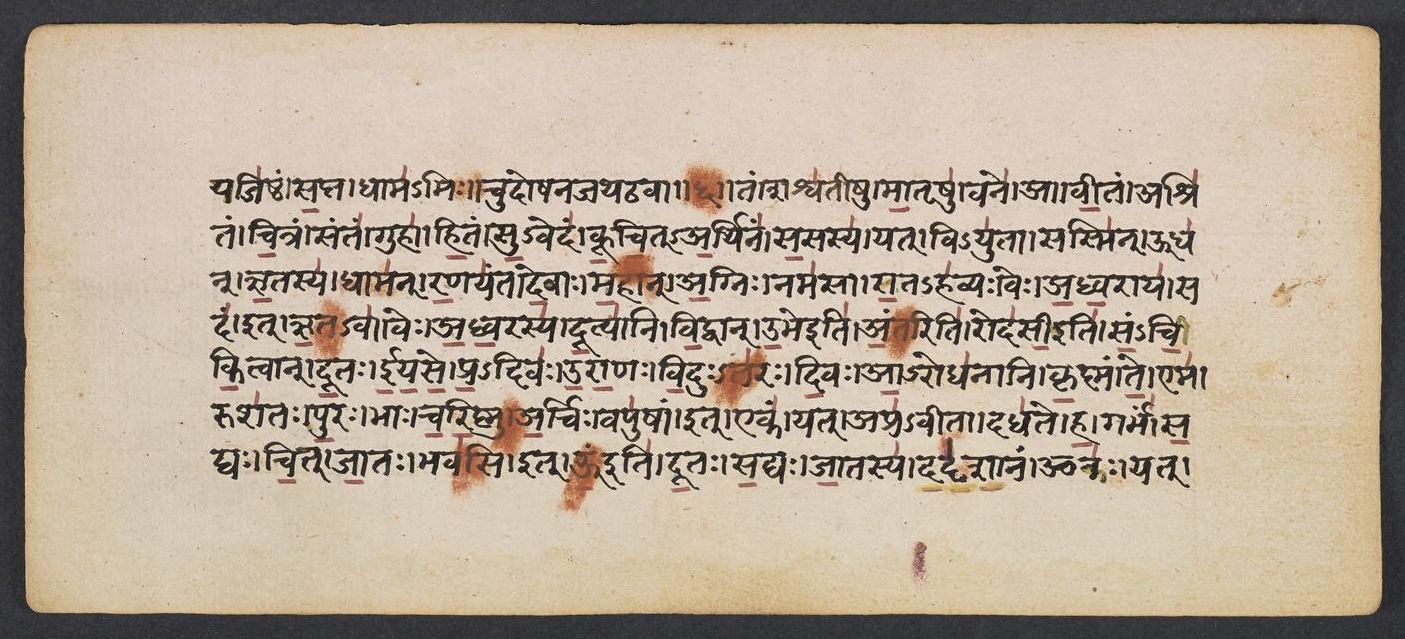
Where on the image
Penn Ms. Coll. 390 Item 41, fol. 264r (numbered 73r by the scribe) (OPenn image 264, lower leaf). Checked on the image: the Rigveda text on this page begins in RV 4.7.5 ‹yajiṣṭham sapta dhāma-bhiḥ›. The next page with Rigveda text, fol. 264v (numbered 73v by the scribe), begins in RV 4.7.10 ‹asya vātaḥ anu-vāti śociḥ›. Verses 4.7.5-9 end on this page; 4.7.5 begins on fol. 263v (numbered 72v by the scribe).
5tam ī̱ṁ hotā̍ram ānu̱ṣak ci̍ki̱tvāṁsa̱ṁ ni ṣe̍dire | ra̱ṇvam pā̍va̱kaśo̍ciṣa̱ṁ yaji̍ṣṭhaṁ sa̱pta dhāma̍bhiḥ ||
6taṁ śaśva̍tīṣu mā̱tṛṣu̱ vana̱ ā vī̱tam aśri̍tam | ci̱traṁ santa̱ṁ guhā̍ hi̱taṁ su̱veda̍ṁ kūcida̱rthina̍m ||
7sa̱sasya̱ yad viyu̍tā̱ sasmi̱nn ūdha̍nn ṛ̱tasya̱ dhāma̍n ra̱ṇaya̍nta de̱vāḥ | ma̱hām̐ a̱gnir nama̍sā rā̱taha̍vyo̱ ver a̍dhva̱rāya̱ sada̱m id ṛ̱tāvā̍ ||
8ver a̍dhva̱rasya̍ dū̱tyā̍ni vi̱dvān u̱bhe a̱ntā roda̍sī saṁciki̱tvān | dū̱ta ī̍yase pra̱diva̍ urā̱ṇo vi̱duṣṭa̍ro di̱va ā̱rodha̍nāni ||
9kṛ̱ṣṇaṁ ta̱ ema̱ ruśa̍taḥ pu̱ro bhāś ca̍ri̱ṣṇv a1̱̍rcir vapu̍ṣā̱m id eka̍m | yad apra̍vītā̱ dadha̍te ha̱ garbha̍ṁ sa̱dyaś ci̍j jā̱to bhava̱sīd u̍ dū̱taḥ ||
Compare: Padapāṭha (word-by-word text written in the manuscript; Sansknet e-text via GRETIL)
5tam | īm | hotāram | ānuṣak | cikitvāṃsam | ni | sedire | raṇvam | pāvaka-śociṣam | yajiṣṭham | sapta | dhāma-bhiḥ
6tam | śaśvatīṣu | mātṛṣu | vane | ā | vītam | aśritam | citram | santam | guhā | hitam | su-vedam | kūcit-arthinam
7sasasya | yat | vi-yutā | sasmin | ūdhan | ṛtasya | dhāman | raṇayanta | devāḥ | mahān | agniḥ | namasā | rāta-havyaḥ | veḥ | adhvarāya | sadam | it | ṛta-vā
8veḥ | adhvarasya | dūtyāni | vidvān | ubhe iti | antariti | rodasī iti | sam-cikitvān | dūtaḥ | īyase | pra-divaḥ | urāṇaḥ | viduḥ-taraḥ | divaḥ | ārodhanāni
9kṛṣṇam | te | ema | ruśataḥ | puraḥ | bhāḥ | cariṣṇu | arciḥ | vapuṣām | it | ekam | yat | apra-vītā | dadhate | ha | garbham | sadyaḥ | cit | jātaḥ | bhavasi | it | oṃ iti | dūtaḥ
5Him the intelligent have they placed duly as Invoking Priest, Welcome, with sanctifying flame, best worshipper, with sevenfold might;
6In his Eternal Mothers, in the wood, concealed and unapproached, Kept secret though his flames are bright seekingon all sides, quickly found.
7That as food spreads forth in this earthly udder, Gods may rejoice them in the home of Order, Great Agni, served with reverence and oblation, flies ever to the sacrifice, the Faithful.
8Bird of each rite, skilled in an envoy's duties, knowing both worlds and that which lies between them, Thou goest from of old a willing Herald, knowing full well heaven's innermost recesses.
9Bright God, thy path is black: light is before thee: thy moving splendour is the chief of wonders. When she, yet unimpregnate, hath conceived thee, even when newly born thou art an envoy.
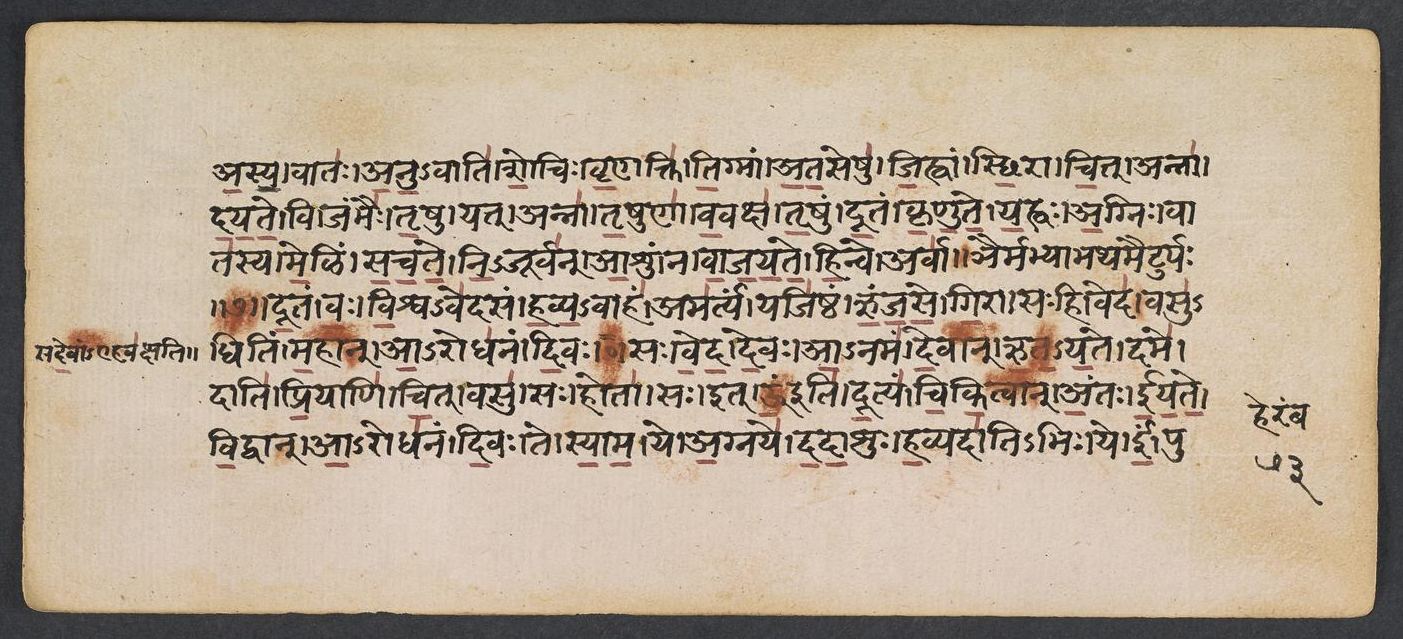
Where on the image
Penn Ms. Coll. 390 Item 41, fol. 264v (numbered 73v by the scribe) (OPenn image 265, upper leaf). Checked on the image: the Rigveda text on this page begins in RV 4.7.10 ‹asya vātaḥ anu-vāti śociḥ›. The next page with Rigveda text, fol. 265r (numbered 74r by the scribe), begins in RV 4.8.5 ‹-puṣyantaḥ indhate›. Verses 4.7.10-11 end on this page; 4.7.10 begins on fol. 264r (numbered 73r by the scribe).
10sa̱dyo jā̱tasya̱ dadṛ̍śāna̱m ojo̱ yad a̍sya̱ vāto̍ anu̱vāti̍ śo̱ciḥ | vṛ̱ṇakti̍ ti̱gmām a̍ta̱seṣu̍ ji̱hvāṁ sthi̱rā ci̱d annā̍ dayate̱ vi jambhai̍ḥ ||
11tṛ̱ṣu yad annā̍ tṛ̱ṣuṇā̍ va̱vakṣa̍ tṛ̱ṣuṁ dū̱taṁ kṛ̍ṇute ya̱hvo a̱gniḥ | vāta̍sya me̱ḻiṁ sa̍cate ni̱jūrva̍nn ā̱śuṁ na vā̍jayate hi̱nve arvā̍ ||
Compare: Padapāṭha (word-by-word text written in the manuscript; Sansknet e-text via GRETIL)
10sadyaḥ | jātasya | dadṛśānam | ojaḥ | yat | asya | vātaḥ | anu-vāti | śociḥ | vṛṇakti | tigmām | ataseṣu | jihvām | sthirā | cit | annā | dayate | vi | jambhaiḥ
11tṛṣu | yat | annā | tṛṣuṇā | vavakṣa | tṛṣum | dūtam | kṛṇute | yahvaḥ | agniḥ | vātasya | meḷim | sacate | ni-jūrvan | āśum | na | vājayate | hinve | arvā
10Yet newly born, his vigour is apparent when the wind blows upon his fiery splendour, His sharpened tongue he layeth on the brushwood, and with his teeth e'en solid food consumeth.
11When he hath borne off food with swift flame swiftly, strong Agni makes himself a speedy envoy, Follows the rustling of the wind, consuming, and courser-like, speeds, drives the swift horse onward.
Notes
- Sanskrit: Aufrecht's edition (1877) with the Vedic accents, as entered by van Nooten and Holland (GRETIL).
- English: Ralph T. H. Griffith, The Hymns of the Rigveda (1889-1892; 2nd ed. 1896-1897), from the VedaWeb digital text; OCR slips in that text were corrected against the printed 2nd edition (data/sources/rigveda/griffith_errata.json).
- Padapāṭha (edition text): Sansknet e-text via GRETIL (CC BY-NC-SA 4.0).
Cite
Sources
- Source: Penn Ms. Coll. 390 Item 41 (undated (catalogued with Penn's 18th-19th c. Vedic manuscripts)), OPenn, Public Domain Mark + Aufrecht's accented text (GRETIL) + Griffith's English (VedaWeb) (holding institution)
- Critical edition: Aufrecht (1877), accented e-text via GRETIL
← previous · → next · v cycle view · l back to library