Rigveda 5.3: To Agni
Introduction
Rigveda 5.3 is a hymn of 12 verses addressed to Agni. It stands in book (maṇḍala) 5, the family book of the Atri clan. The Rigveda is the oldest collection of Sanskrit hymns, composed in the second half of the second millennium BCE and handed down orally for many centuries before it was written down.
The manuscript shown is Penn Ms. Coll. 390 Item 41 (University of Pennsylvania), an undated paper manuscript of the padapāṭha (the word-by-word recitation text, in which every word is written separately and compounds are split) of the whole Ṛgveda in Devanāgarī, 884 leaves in fascicles, 7-9 lines to the page, accents in red; this hymn stands on fol. 321r-322v. Each section below gives the verses that end on one page; the page boundaries were read on the images (the opening words of every page), not counted out. Where the manuscript is a padapāṭha (the word-by-word recitation text), the section shows Aufrecht's continuous (saṃhitā) text first and, as the edition text, the padapāṭha of the same verses, which is the form written on the page.
How was this verified? (Provenance)
Where on the image
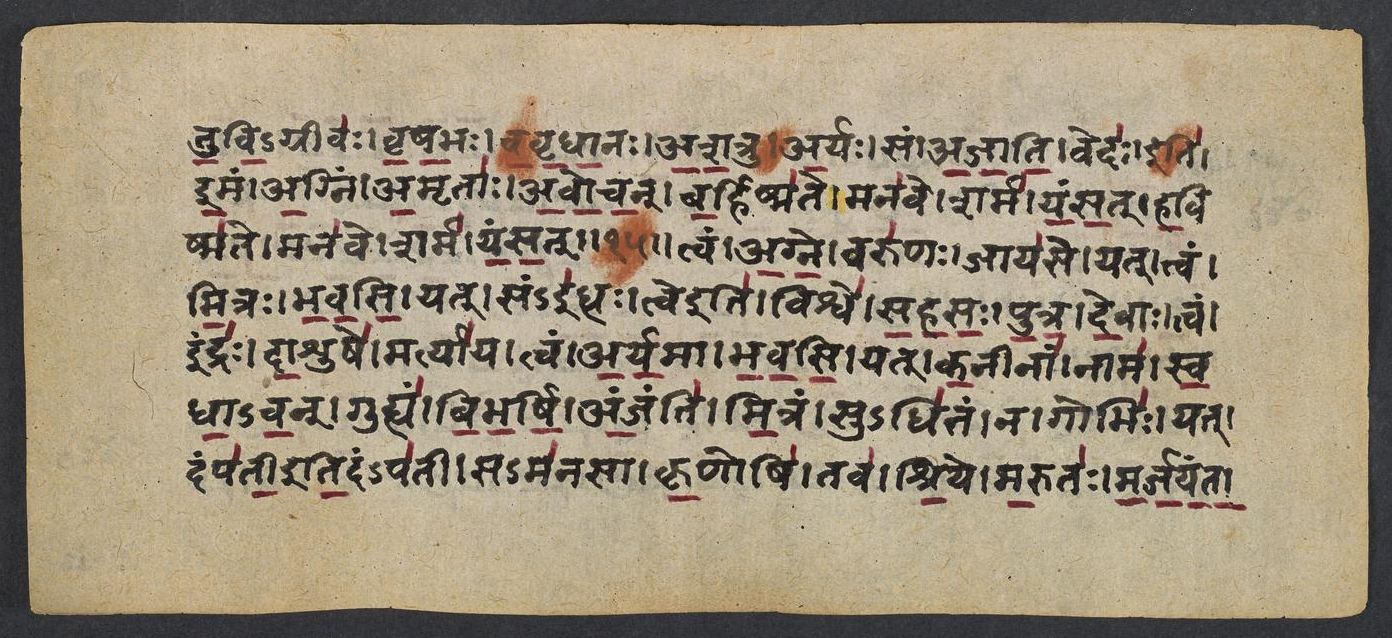
Penn Ms. Coll. 390 Item 41, fol. 321r (numbered 130r by the scribe) (OPenn image 321, lower leaf). Checked on the image: the Rigveda text on this page begins in RV 5.2.12 ‹tuvi-grīvaḥ vṛṣabhaḥ vavṛdhānaḥ aśatru›. The next page with Rigveda text, fol. 321v (numbered 130v by the scribe), begins in RV 5.3.3 ‹rudra yat te janima›. Verses 5.3.1-2 end on this page.
1tvam a̍gne̱ varu̍ṇo̱ jāya̍se̱ yat tvam mi̱tro bha̍vasi̱ yat sami̍ddhaḥ | tve viśve̍ sahasas putra de̱vās tvam indro̍ dā̱śuṣe̱ martyā̍ya ||
2tvam a̍rya̱mā bha̍vasi̱ yat ka̱nīnā̱ṁ nāma̍ svadhāva̱n guhya̍m bibharṣi | a̱ñjanti̍ mi̱traṁ sudhi̍ta̱ṁ na gobhi̱r yad dampa̍tī̱ sama̍nasā kṛ̱ṇoṣi̍ ||
Compare: Padapāṭha (word-by-word text written in the manuscript; Sansknet e-text via GRETIL)
1tvam | agne | varuṇaḥ | jāyase | yat | tvam | mitraḥ | bhavasi | yat | sam-iddhaḥ | tve | viśve | sahasaḥ | putra | devāḥ | tvam | indraḥ | dāśuṣe | martyāya
2tvam | aryamā | bhavasi | yat | kanīnām | nāma | svadhāvan | guhyam | bibharṣi | añjanti | mitram | su-dhitam | na | gobhiḥ | yat | dampatī itidam-patī | sa-manasā | kṛṇoṣi
1THOU at thy birth art Varuṇa, O Agni; when thou art kindled thou becomest Mitra. In thee, O Son of Strength, all Gods are centred. Indra art thou to man who brings oblation.
2Aryaman art thou as regardeth maidens mysterious, is thy name, O Self-sustainer. As a kind friend with streams of milk they balm thee what time thou makest wife and lord oneminded.
Where on the image
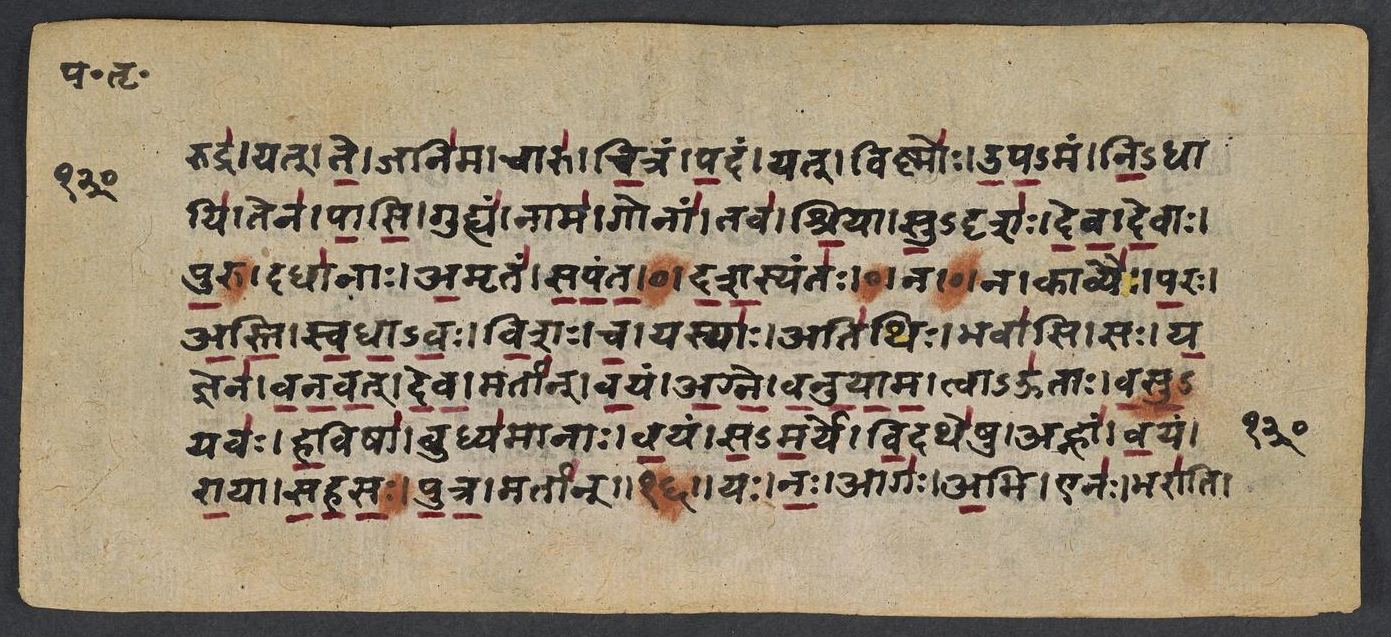
Penn Ms. Coll. 390 Item 41, fol. 321v (numbered 130v by the scribe) (OPenn image 322, upper leaf). Checked on the image: the Rigveda text on this page begins in RV 5.3.3 ‹rudra yat te janima›. The next page with Rigveda text, fol. 322r (numbered 131r by the scribe), begins in RV 5.3.7 ‹adhi it agham agha-śaṃse›. Verses 5.3.3-6 end on this page; 5.3.3 begins on fol. 321r (numbered 130r by the scribe).
3tava̍ śri̱ye ma̱ruto̍ marjayanta̱ rudra̱ yat te̱ jani̍ma̱ cāru̍ ci̱tram | pa̱daṁ yad viṣṇo̍r upa̱maṁ ni̱dhāyi̱ tena̍ pāsi̱ guhya̱ṁ nāma̱ gonā̍m ||
4tava̍ śri̱yā su̱dṛśo̍ deva de̱vāḥ pu̱rū dadhā̍nā a̱mṛta̍ṁ sapanta | hotā̍ram a̱gnim manu̍ṣo̱ ni ṣe̍dur daśa̱syanta̍ u̱śija̱ḥ śaṁsa̍m ā̱yoḥ ||
5na tvad dhotā̱ pūrvo̍ agne̱ yajī̍yā̱n na kāvyai̍ḥ pa̱ro a̍sti svadhāvaḥ | vi̱śaś ca̱ yasyā̱ ati̍thi̱r bhavā̍si̱ sa ya̱jñena̍ vanavad deva̱ martā̍n ||
6va̱yam a̍gne vanuyāma̱ tvotā̍ vasū̱yavo̍ ha̱viṣā̱ budhya̍mānāḥ | va̱yaṁ sa̍ma̱rye vi̱dathe̱ṣv ahnā̍ṁ va̱yaṁ rā̱yā sa̍hasas putra̱ martā̍n ||
Compare: Padapāṭha (word-by-word text written in the manuscript; Sansknet e-text via GRETIL)
3tava | śriye | marutaḥ | marjayanta | rudra | yat | te | janima | cāru | citram | padam | yat | viṣṇoḥ | upa-mam | ni-dhāyi | tena | pāsi | guhyam | nāma | gonām
4tava | śriyā | su-dṛśaḥ | deva | devāḥ | puru | dadhānāḥ | amṛtam | sapanta | hotāram | agnim | manuṣaḥ | ni | seduḥ | daśasyantaḥ | uśijaḥ | śaṃsam | āyoḥ
5na | tvat | hotā | pūrvaḥ | agne | yajīyān | na | kāvyaiḥ | paraḥ | asti | svadhāvaḥ | viśaḥ | ca | yasyāḥ | atithiḥ | bhavāsi | saḥ | yajñena | vana-vat | deva | martān
6vayam | agne | vanuyāma | tvāūtāḥ | vasu-yavaḥ | haviṣā | budhyamānāḥ | vayam | sa-marye | vidatheṣu | ahnām | vayam | rāyā | sahasaḥ | putra | martān
3The Maruts deck their beauty for thy glory, yea, Rudra! for thy birth fair, brightly-coloured. That which was fixed as Vishṇu's loftiest station-therewith the secret of the Cows thou guardest.
4Gods through thy glory, God who art so lovely! granting abundant gifts gained life immortal. As their own Priest have men established Agni; and serve him fain for praise from him who liveth.
5There is no priest more skilled than thou in worship; none Self-sustainer pass thee in wisdom. Ile man within whose house as guest thou dwellest, O God, by sacrifice shall conquer mortals.
6Aided by thee, O Agni may we conquer through our oblation, fain for wealth, awakened: May we in battle, in the days' assemblies,O Son of Strength, by riches conquer mortals.
Where on the image
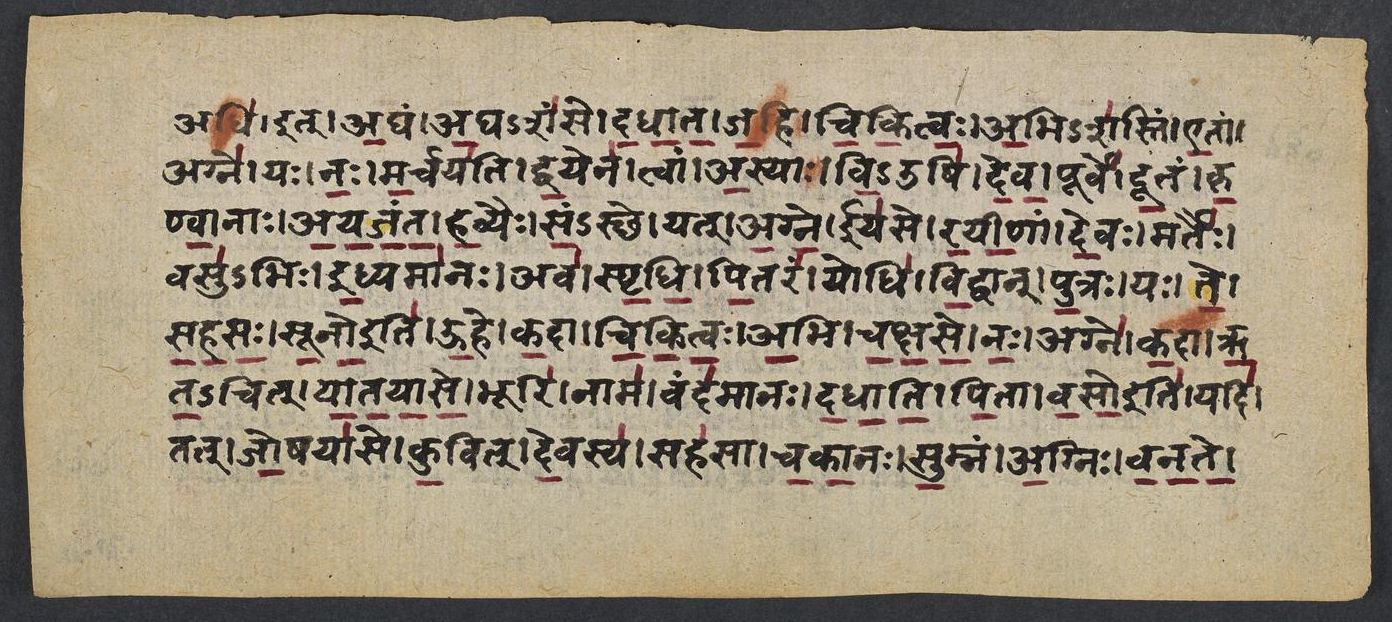
Penn Ms. Coll. 390 Item 41, fol. 322r (numbered 131r by the scribe) (OPenn image 322, lower leaf). Checked on the image: the Rigveda text on this page begins in RV 5.3.7 ‹adhi it agham agha-śaṃse›. The next page with Rigveda text, fol. 322v (numbered 131v by the scribe), begins in RV 5.3.10 ‹vavṛdhānaḥ›. Verses 5.3.7-9 end on this page; 5.3.7 begins on fol. 321v (numbered 130v by the scribe).
7yo na̱ āgo̍ a̱bhy eno̱ bharā̱ty adhīd a̱gham a̱ghaśa̍ṁse dadhāta | ja̱hī ci̍kitvo a̱bhiśa̍stim e̱tām agne̱ yo no̍ ma̱rcaya̍ti dva̱yena̍ ||
8tvām a̱syā vyuṣi̍ deva̱ pūrve̍ dū̱taṁ kṛ̍ṇvā̱nā a̍yajanta ha̱vyaiḥ | sa̱ṁsthe yad a̍gna̱ īya̍se rayī̱ṇāṁ de̱vo martai̱r vasu̍bhir i̱dhyamā̍naḥ ||
9ava̍ spṛdhi pi̱tara̱ṁ yodhi̍ vi̱dvān pu̱tro yas te̍ sahasaḥ sūna ū̱he | ka̱dā ci̍kitvo a̱bhi ca̍kṣase̱ no 'gne̍ ka̱dām̐ ṛ̍ta̱cid yā̍tayāse ||
Compare: Padapāṭha (word-by-word text written in the manuscript; Sansknet e-text via GRETIL)
7yaḥ | naḥ | āgaḥ | abhi | enaḥ | bharāti | adhi | it | agham | agha-śaṃse | dadhāta | jahi | cikitvaḥ | abhi-śastim | etām | agne | yaḥ | naḥ | marcayati | dvayena
8tvām | asyāḥ | vi-uṣi | deva | pūrve | dūtam | kṛṇvānāḥ | ayajanta | havyaiḥ | sam-sthe | yat | āgne | īyase | rayīṇām | devaḥ | martaiḥ | vasu-bhiḥ | idhyamānaḥ
9ava | spṛdhi | pitaram | yodhi | vidvān | putraḥ | yaḥ | te | sahasaḥ | sūno iti | ūhe | kadā | cikitvaḥ | abhi | cakṣase | naḥ | agne | kadā | ṛta-cit | yātayāse
7He shall bring evil on the evil-plottcr whoever turns against us sin and outrage. Destroy this calumny of him, O Agni, whoever injures us with double-dealing.
8At this dawn's flushing, God! our ancient fathers served thee with offerings, making thee their envoy, When, Agni, to the store of wealth thou goest, a God enkindled with good things by mortals.
9Save, thou who knowest, draw thy father near thee, who counts as thine own son, O Child of Power. O sapient Agni, when wilt thou regard us? When, skilled in holy Law, wilt thou direct us?
Where on the image
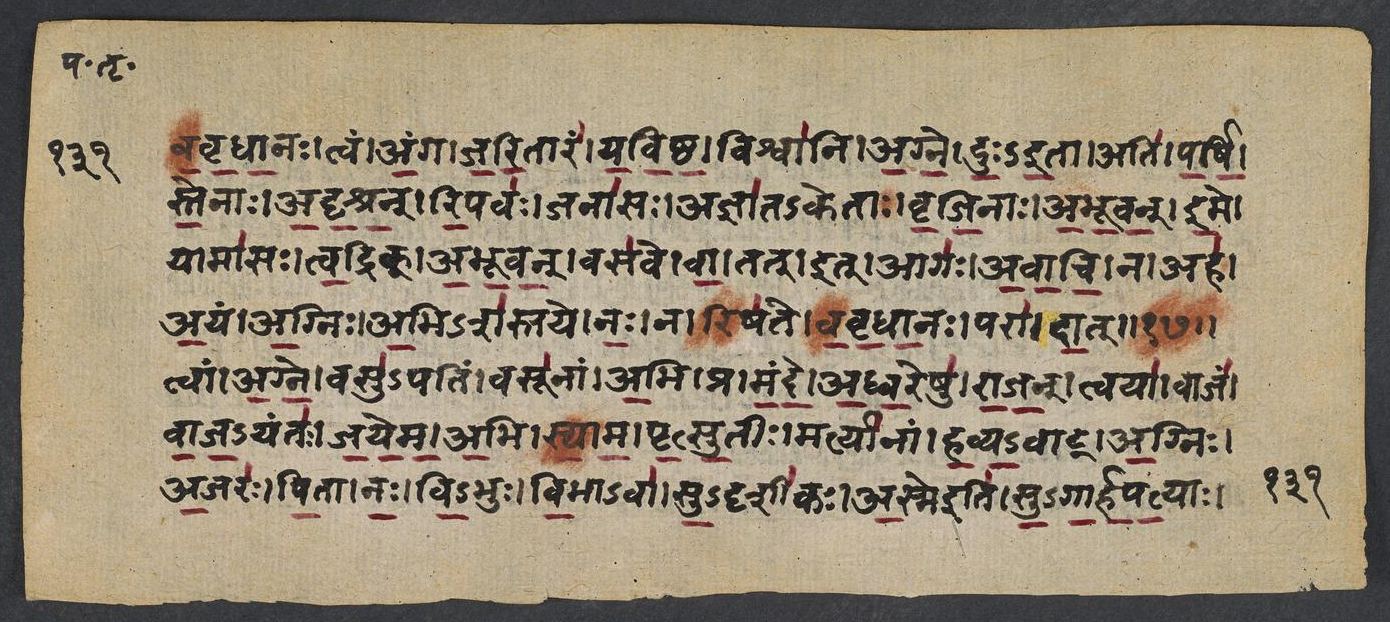
Penn Ms. Coll. 390 Item 41, fol. 322v (numbered 131v by the scribe) (OPenn image 323, upper leaf). Checked on the image: the Rigveda text on this page begins in RV 5.3.10 ‹vavṛdhānaḥ›. The next page with Rigveda text, fol. 323r (numbered 132r by the scribe), begins in RV 5.4.2 ‹sam iṣaḥ didīhi asmadryak›. Verses 5.3.10-12 end on this page; 5.3.10 begins on fol. 322r (numbered 131r by the scribe).
10bhūri̱ nāma̱ vanda̍māno dadhāti pi̱tā va̍so̱ yadi̱ taj jo̱ṣayā̍se | ku̱vid de̱vasya̱ saha̍sā cakā̱naḥ su̱mnam a̱gnir va̍nate vāvṛdhā̱naḥ ||
11tvam a̱ṅga ja̍ri̱tāra̍ṁ yaviṣṭha̱ viśvā̍ny agne duri̱tāti̍ parṣi | ste̱nā a̍dṛśran ri̱pavo̱ janā̱so 'jñā̍taketā vṛji̱nā a̍bhūvan ||
12i̱me yāmā̍sas tva̱drig a̍bhūva̱n vasa̍ve vā̱ tad id āgo̍ avāci | nāhā̱yam a̱gnir a̱bhiśa̍staye no̱ na rīṣa̍te vāvṛdhā̱naḥ parā̍ dāt ||
Compare: Padapāṭha (word-by-word text written in the manuscript; Sansknet e-text via GRETIL)
10bhūri | nāma | vandamānaḥ | dadhāti | pitā | vaso iti | yadi | tat | joṣayāse | kuvit | devasya | sahasā | cakānaḥ | sumnam | agniḥ | vanate | vavṛdhānaḥ
11tvam | aṅga | jaritāram | yaviṣṭha | viśvāni | agne | duḥ-itā | ati | parṣi | stenāḥ | adṛśran | ripavaḥ | janāsaḥ | ajñāta-ketāḥ | vṛjināḥ | abhūvan
12ime | yāmāsaḥ | tvadrik | abhūvan | vasave | vā | tat | it | āgaḥ | avāci | na | aha | ayam | agniḥ | abhi-śastaye | naḥ | na | riṣate | vavṛdhānaḥ | parā | dāt
10Adoring thee he gives thee many a title, when thou, Good Lord! acceptest this as Father. And doth not Agni, glad in strength of Godhead, gain splendid bliss when he hath waxen mighty?
11Most Youthful Agni, verily thou bearest thy praiser safely over all his troubles. Thieves have been seen by us and open foemen: unknown have been the plottings of the wicked.
12To thee these eulogies have been directed: or to the Vasu hath this sin been spoken. But this our Agni, flaming high, shall never yield us to calumny, to him who wrongs us.
Notes
- Sanskrit: Aufrecht's edition (1877) with the Vedic accents, as entered by van Nooten and Holland (GRETIL).
- English: Ralph T. H. Griffith, The Hymns of the Rigveda (1889-1892; 2nd ed. 1896-1897), from the VedaWeb digital text; OCR slips in that text were corrected against the printed 2nd edition (data/sources/rigveda/griffith_errata.json).
- Padapāṭha (edition text): Sansknet e-text via GRETIL (CC BY-NC-SA 4.0).
Cite
Sources
- Source: Penn Ms. Coll. 390 Item 41 (undated (catalogued with Penn's 18th-19th c. Vedic manuscripts)), OPenn, Public Domain Mark + Aufrecht's accented text (GRETIL) + Griffith's English (VedaWeb) (holding institution)
- Critical edition: Aufrecht (1877), accented e-text via GRETIL
← previous · → next · v cycle view · l back to library