Rigveda 5.29: To Indra
Introduction
Rigveda 5.29 is a hymn of 15 verses addressed to Indra. It stands in book (maṇḍala) 5, the family book of the Atri clan. The Rigveda is the oldest collection of Sanskrit hymns, composed in the second half of the second millennium BCE and handed down orally for many centuries before it was written down.
The manuscript shown is Penn Ms. Coll. 390 Item 41 (University of Pennsylvania), an undated paper manuscript of the padapāṭha (the word-by-word recitation text, in which every word is written separately and compounds are split) of the whole Ṛgveda in Devanāgarī, 884 leaves in fascicles, 7-9 lines to the page, accents in red; this hymn stands on fol. 339r-341r. Each section below gives the verses that end on one page; the page boundaries were read on the images (the opening words of every page), not counted out. Where the manuscript is a padapāṭha (the word-by-word recitation text), the section shows Aufrecht's continuous (saṃhitā) text first and, as the edition text, the padapāṭha of the same verses, which is the form written on the page.
How was this verified? (Provenance)
Where on the image
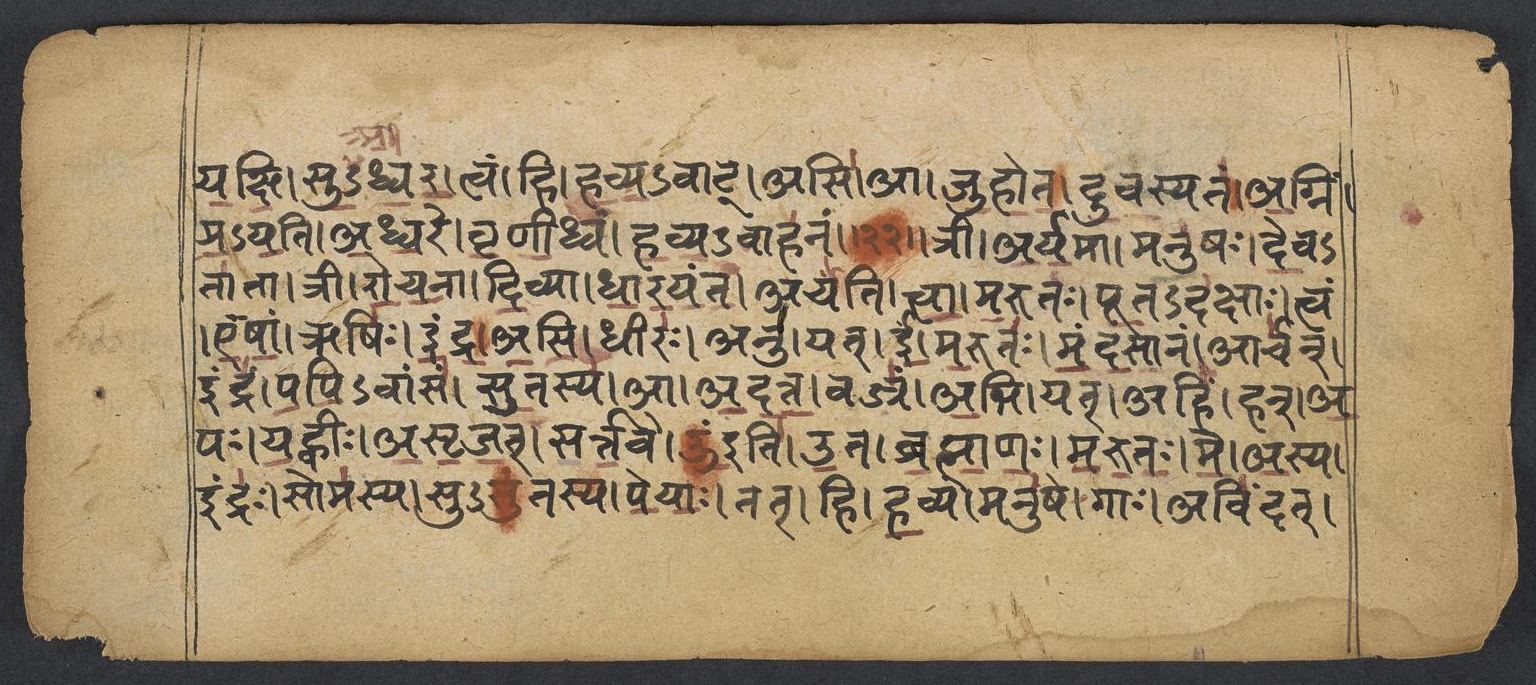
Penn Ms. Coll. 390 Item 41, fol. 339r (numbered 12r by the scribe) (OPenn image 339, lower leaf). Checked on the image: the Rigveda text on this page begins in RV 5.28.5 ‹yakṣi su-adhvara tvam hi›. The next page with Rigveda text, fol. 339v (numbered 12v by the scribe), begins in RV 5.29.3 ‹ahan ahim papi-vān indraḥ›. Verses 5.29.1-2 end on this page.
1try a̍rya̱mā manu̍ṣo de̱vatā̍tā̱ trī ro̍ca̱nā di̱vyā dhā̍rayanta | arca̍nti tvā ma̱ruta̍ḥ pū̱tada̍kṣā̱s tvam e̍ṣā̱m ṛṣi̍r indrāsi̱ dhīra̍ḥ ||
2anu̱ yad ī̍m ma̱ruto̍ mandasā̱nam ārca̱nn indra̍m papi̱vāṁsa̍ṁ su̱tasya̍ | āda̍tta̱ vajra̍m a̱bhi yad ahi̱ṁ hann a̱po ya̱hvīr a̍sṛja̱t sarta̱vā u̍ ||
Compare: Padapāṭha (word-by-word text written in the manuscript; Sansknet e-text via GRETIL)
1trī | aryamā | manuṣaḥ | deva-tātā | trī | rocanā | divyā | dhārayanta | arcanti | tvā | marutaḥ | pūta-dakṣāḥ | tvam | eṣām | ṛṣiḥ | indra | asi | dhīraḥ
2anu | yat | īm | marutaḥ | mandasānam | ārcan | indram | papi-vāṃsam | sutasya | ā | adatta | vajram | abhi | yat | ahim | han | apaḥ | yahvīḥ | asṛjat | sartavai | oṃ iti
1MAN'S worship of the Gods hath three great lustres, and three celestial lights have they established The Maruts gifted with pure strength adore thee, for thou, O Indra, art their sapient R̥ishi.
2What time the Maruts sang their song to Indra, joyous when he had drunk of Soma juices, He grasped his thunderbolt to slay the Dragon, and loosed, that they might flow, the youthful Waters.
Where on the image
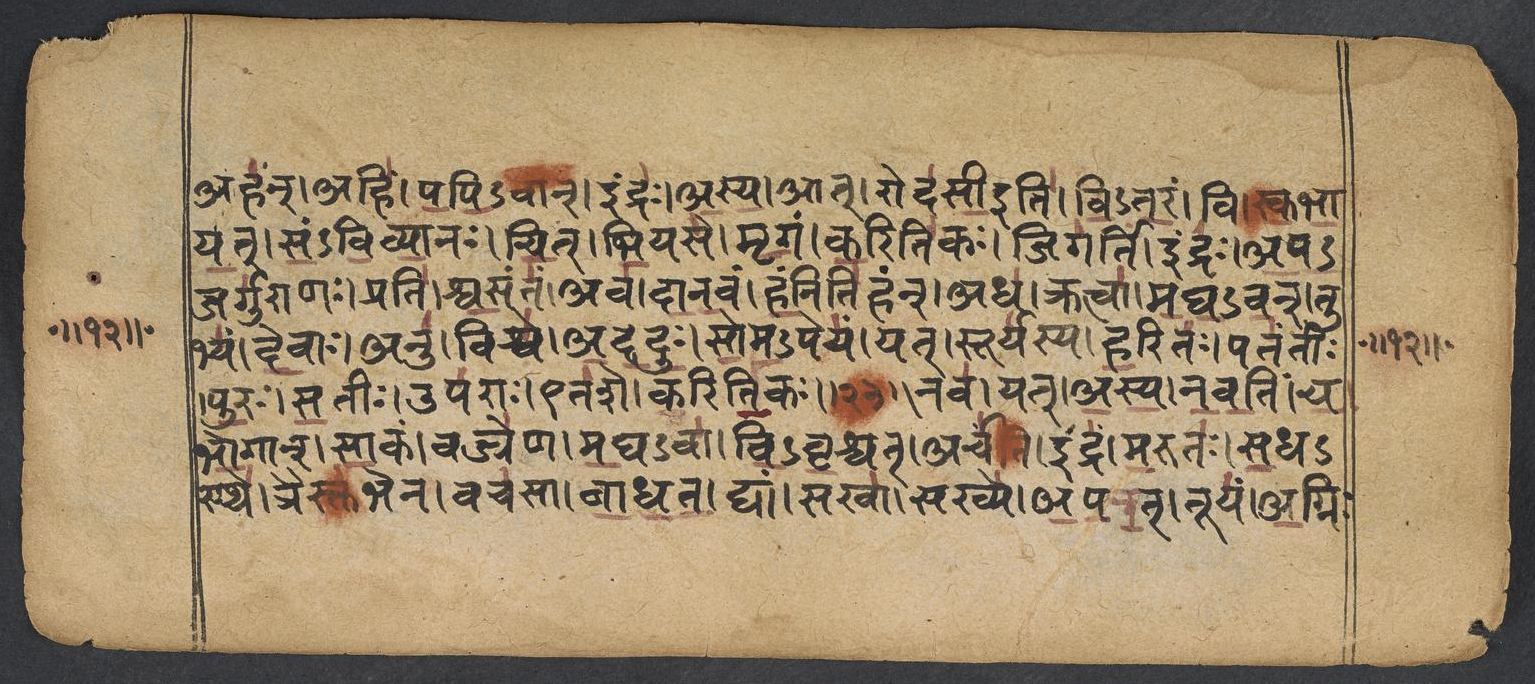
Penn Ms. Coll. 390 Item 41, fol. 339v (numbered 12v by the scribe) (OPenn image 340, upper leaf). Checked on the image: the Rigveda text on this page begins in RV 5.29.3 ‹ahan ahim papi-vān indraḥ›. The next page with Rigveda text, fol. 340r (numbered 13r by the scribe), begins in RV 5.29.7 ‹-agniḥ asya kratvā mahiṣā›. Verses 5.29.3-6 end on this page; 5.29.3 begins on fol. 339r (numbered 12r by the scribe).
3u̱ta bra̍hmāṇo maruto me a̱syendra̱ḥ soma̍sya̱ suṣu̍tasya peyāḥ | tad dhi ha̱vyam manu̍ṣe̱ gā avi̍nda̱d aha̱nn ahi̍m papi̱vām̐ indro̍ asya ||
4ād roda̍sī vita̱raṁ vi ṣka̍bhāyat saṁvivyā̱naś ci̍d bhi̱yase̍ mṛ̱gaṁ ka̍ḥ | jiga̍rti̱m indro̍ apa̱jargu̍rāṇa̱ḥ prati̍ śva̱santa̱m ava̍ dāna̱vaṁ ha̍n ||
5adha̱ kratvā̍ maghava̱n tubhya̍ṁ de̱vā anu̱ viśve̍ adaduḥ soma̱peya̍m | yat sūrya̍sya ha̱rita̱ḥ pata̍ntīḥ pu̱raḥ sa̱tīr upa̍rā̱ eta̍śe̱ kaḥ ||
6nava̱ yad a̍sya nava̱tiṁ ca̍ bho̱gān sā̱kaṁ vajre̍ṇa ma̱ghavā̍ vivṛ̱ścat | arca̱ntīndra̍m ma̱ruta̍ḥ sa̱dhasthe̱ traiṣṭu̍bhena̱ vaca̍sā bādhata̱ dyām ||
Compare: Padapāṭha (word-by-word text written in the manuscript; Sansknet e-text via GRETIL)
3uta | brahmāṇaḥ | marutaḥ | me | asya | indraḥ | somasya | su-sutasya | peyāḥ | tat | hi | havyam | manuṣe | gāḥ | avindat | ahan | ahim | papi-vān | indraḥ | asya
4āt | rodasī iti | vi-taram | vi | skabhāyat | sam-vivyānaḥ | cit | bhayase | mṛgam | karitikaḥ | jigartim | indraḥ | apa-jargurāṇaḥ | prati | śvasantam | ava | dānavam | hannitihan
5adha | kratvā | magha-van | tubhyam | devāḥ | anu | viśve | adaduḥ | soma-peyam | yat | sūryasya | haritaḥ | patantīḥ | puraḥ | satīḥ | uparāḥ | etaśe | karitikaḥ
6nava | yat | asya | navatim | ca | bhogān | sākam | vajreṇa | magha-vā | vivṛścat | arcanti | indram | marutaḥ | sadha-sthe | traistubhena | vacasā | bādhata | dyām
3And, O ye Brahmans, Maruts, so may Indra drink draughts of this my carefully pressed Sorna; For this oblation found for man the cattle, and Indra, having quaffed it, slew the Dragon.
4Then heaven and earth he sundered and supported: wrapped even in these he struck the Beast with terror. So Indra forced the Engulfer to disgorgement, and slew the Dânava. panting against him.
5Thus all the Gods, O Maghavan, delivered to thee of their free will the draught of Soma; When thou for Etaṣa didst cause to tarry the flying mares of Sûrya racing forward.
6When Maghavan with the thunderbolt demolished his nine-and-ninety castles all together, The Maruts, where they met, glorified Indra: ye with the Trishṭup hymn obstructed heaven.
Where on the image
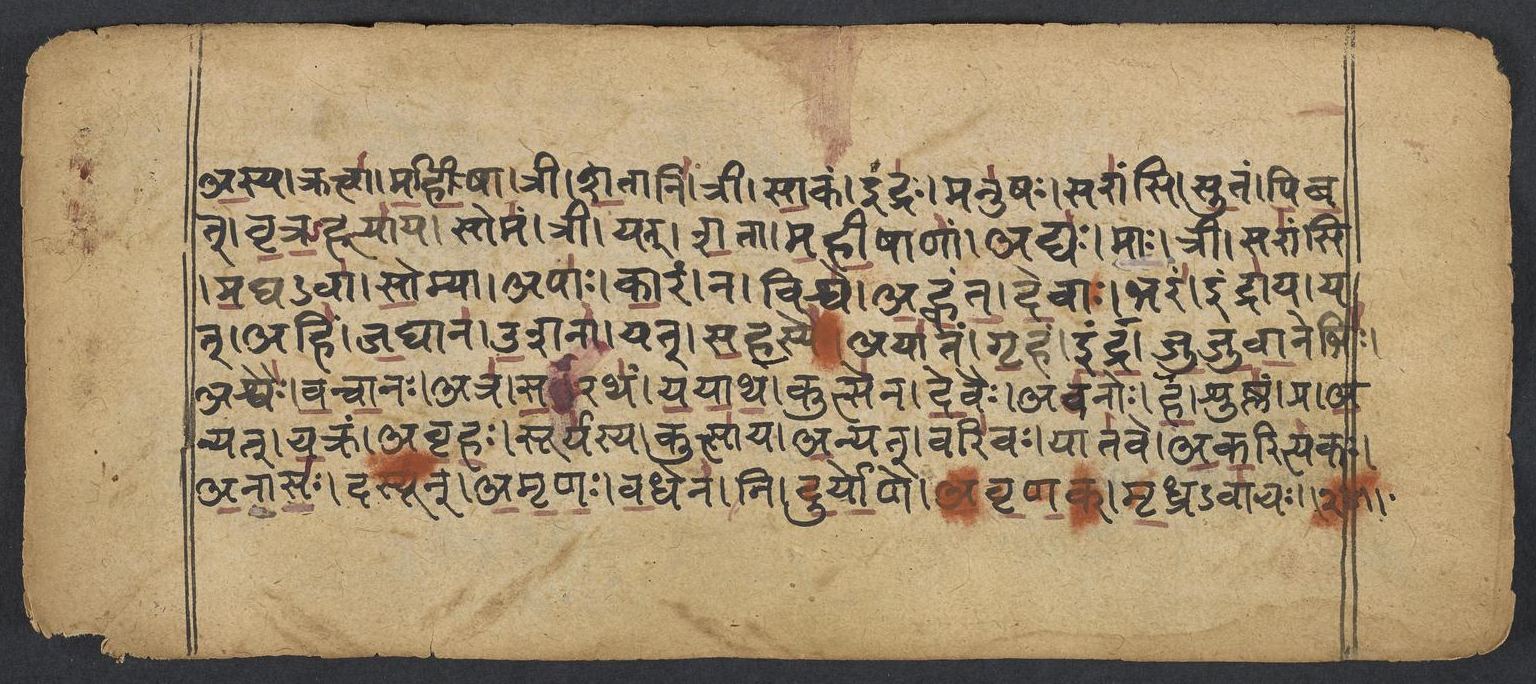
Penn Ms. Coll. 390 Item 41, fol. 340r (numbered 13r by the scribe) (OPenn image 340, lower leaf). Checked on the image: the Rigveda text on this page begins in RV 5.29.7 ‹-agniḥ asya kratvā mahiṣā›. The next page with Rigveda text, fol. 340v (numbered 13v by the scribe), begins in RV 5.29.11 ‹stomāsaḥ tvā gauri-vīteḥ avardhan›. Verses 5.29.7-10 end on this page; 5.29.7 begins on fol. 339v (numbered 12v by the scribe).
7sakhā̱ sakhye̍ apaca̱t tūya̍m a̱gnir a̱sya kratvā̍ mahi̱ṣā trī śa̱tāni̍ | trī sā̱kam indro̱ manu̍ṣa̱ḥ sarā̍ṁsi su̱tam pi̍bad vṛtra̱hatyā̍ya̱ soma̍m ||
8trī yac cha̱tā ma̍hi̱ṣāṇā̱m agho̱ mās trī sarā̍ṁsi ma̱ghavā̍ so̱myāpā̍ḥ | kā̱raṁ na viśve̍ ahvanta de̱vā bhara̱m indrā̍ya̱ yad ahi̍ṁ ja̱ghāna̍ ||
9u̱śanā̱ yat sa̍ha̱syai̱3̱̍r ayā̍taṁ gṛ̱ham i̍ndra jūjuvā̱nebhi̱r aśvai̍ḥ | va̱nvā̱no atra̍ sa̱ratha̍ṁ yayātha̱ kutse̍na de̱vair ava̍nor ha̱ śuṣṇa̍m ||
10prānyac ca̱kram a̍vṛha̱ḥ sūrya̍sya̱ kutsā̍yā̱nyad vari̍vo̱ yāta̍ve 'kaḥ | a̱nāso̱ dasyū̍m̐r amṛṇo va̱dhena̱ ni du̍ryo̱ṇa ā̍vṛṇaṅ mṛ̱dhravā̍caḥ ||
Compare: Padapāṭha (word-by-word text written in the manuscript; Sansknet e-text via GRETIL)
7sakhā | sakhye | apacat | tūyam | agniḥ | asya | kratvā | mahiṣā | trī | śatāni | trī | sākam | indraḥ | manuṣaḥ | sarāṃsi | sutam | pibat | vṛtra-hatyāya | somam
8trī | yat | śatā | mahiṣāṇām | aghaḥ | māḥ | trī | sarāṃsi | magha-vā | somyā | apāḥ | kāram | na | viśve | ahvanta | devāḥ | bharam | indrāya | yat | ahim | jaghāna
9uśanā | yat | sahasyaiḥ | ayātam | gṛham | indra | jūjuvānebhiḥ | aśvaiḥ | vanvānaḥ | atra | saratham | yayātha | kutsena | devaiḥ | avanoḥ | ha | śuṣṇam
10pra | anyat | cakram | avṛhaḥ | sūryasya | kutsāya | anyat | varivaḥ | yātave | akar ity akaḥ | anāsaḥ | dasyūn | amṛṇaḥ | vadhena | ni | duryoṇe | avṛṇak | mṛdhra-vācaḥ
7As friend to aid a friend, Agni dressed quickly three hundred buffaloes, even as he willed it. And Indra, from man's gift, for Vr̥itra's slaughter, drank off at once three lakes of pressed-out Soma.
8When thou three hundred buffaloes' flesh hadst eaten, and drunk, as Maghavan, three lakes of Soma, All the Gods raised as 'twere a shout of triumph to Indra praise because he slew the Dragon.
9What time ye came with strong steeds swiftly speeding, O Uṣanâ and Indra, to the dwelling, Thou camest thither -conquering together with Kutsa and the Gods: thou slewest Ṣushṇa.
10One car-wheel of the Sun thou rolledst forward, and one thou settest free to move for Kutsa. Thou slewest noseless Dasyus with thy weapon, and in their home o'erthrewest hostile speakers.
Where on the image
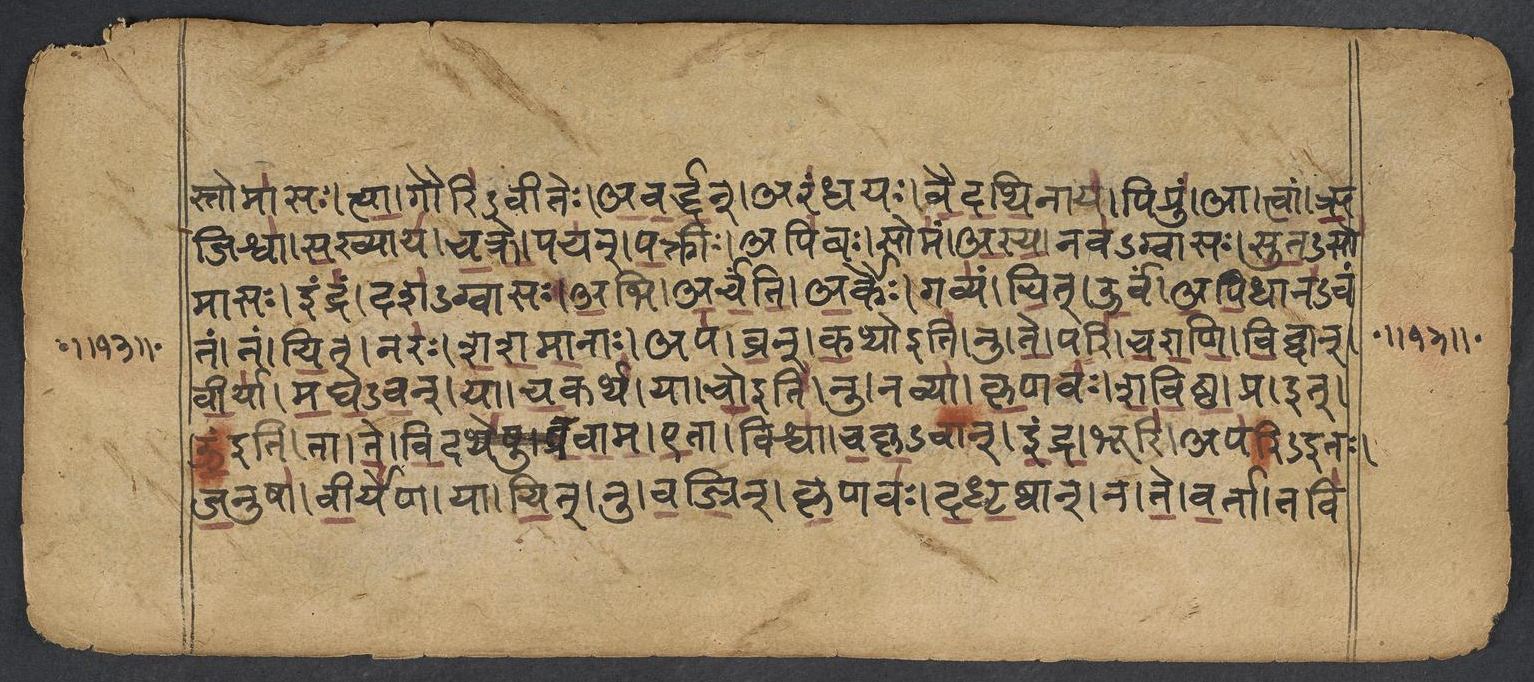
Penn Ms. Coll. 390 Item 41, fol. 340v (numbered 13v by the scribe) (OPenn image 341, upper leaf). Checked on the image: the Rigveda text on this page begins in RV 5.29.11 ‹stomāsaḥ tvā gauri-vīteḥ avardhan›. The next page with Rigveda text, fol. 341r (numbered 14r by the scribe), begins in RV 5.29.14 ‹-taviṣyāḥ asti tasyāḥ›. Verses 5.29.11-13 end on this page.
11stomā̍sas tvā̱ gauri̍vīter avardha̱nn ara̍ndhayo vaidathi̱nāya̱ pipru̍m | ā tvām ṛ̱jiśvā̍ sa̱khyāya̍ cakre̱ paca̍n pa̱ktīr api̍ba̱ḥ soma̍m asya ||
12nava̍gvāsaḥ su̱taso̍māsa̱ indra̱ṁ daśa̍gvāso a̱bhy a̍rcanty a̱rkaiḥ | gavya̍ṁ cid ū̱rvam a̍pi̱dhāna̍vanta̱ṁ taṁ ci̱n nara̍ḥ śaśamā̱nā apa̍ vran ||
13ka̱tho nu te̱ pari̍ carāṇi vi̱dvān vī̱ryā̍ maghava̱n yā ca̱kartha̍ | yā co̱ nu navyā̍ kṛ̱ṇava̍ḥ śaviṣṭha̱ pred u̱ tā te̍ vi̱dathe̍ṣu bravāma ||
Compare: Padapāṭha (word-by-word text written in the manuscript; Sansknet e-text via GRETIL)
11stomāsaḥ | tvā | gauri-vīteḥ | avardhan | arandhayaḥ | vaidathināya | piprum | ā | tvām | ṛjiśvā | sakhyāya | cakre | pacan | paktīḥ | apibaḥ | somam | asya
12nava-gvāsaḥ | suta-sāomāsaḥ | indram | daśa-gvāsaḥ | abhi | arcanti | arkaiḥ | gavyam | cit | ūrvam | apidhāna-vantam | tam | cit | naraḥ | śaśamānāḥ | apa | vran
13katho iti | nu | te | pari | carāṇi | vidvān | vīryā | magha-van | yā | cakartha | yā | co iti | nu | navyā | kṛṇavaḥ | śaviṣṭha | pra | it | oṃ iti | tā | te | vidatheṣu | bravāma
11The lauds of Gaurivîti made thee mighty to Vidathin's son, as prey, thou gavest Pipru. R̥ijiṣvan drew thee into friendship dressing the sacred food, and thou hast drunk his Soma.
12Navagvas and Daṣagvas with libations of Soma juice sing hymns of praise to Indra. Labouring at their task the men laid open the stall of Kine though firmly closed and fastened.
13How shall I serve thee, Maghavan, though knowing full well what hero deeds thou hast accomplished? And the fresh deeds which thou wilt do, Most Mighty! these, too, will we tell forth in sacred synods.
Where on the image
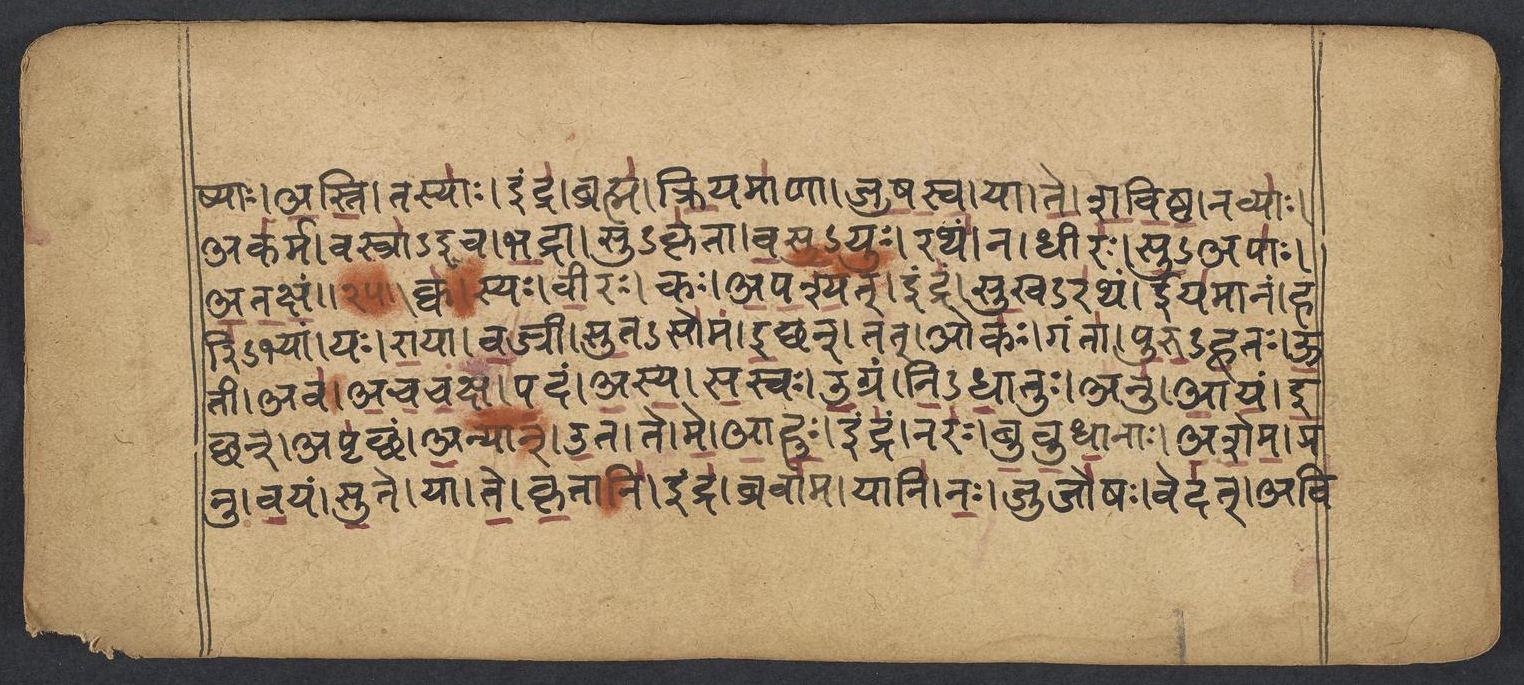
Penn Ms. Coll. 390 Item 41, fol. 341r (numbered 14r by the scribe) (OPenn image 341, lower leaf). Checked on the image: the Rigveda text on this page begins in RV 5.29.14 ‹-taviṣyāḥ asti tasyāḥ›. The next page with Rigveda text, fol. 341v (numbered 14v by the scribe), begins in RV 5.30.3 ‹-avidvān śṛṇavat ca vidvān›. Verses 5.29.14-15 end on this page; 5.29.14 begins on fol. 340v (numbered 13v by the scribe).
14e̱tā viśvā̍ cakṛ̱vām̐ i̍ndra̱ bhūry apa̍rīto ja̱nuṣā̍ vī̱rye̍ṇa | yā ci̱n nu va̍jrin kṛ̱ṇavo̍ dadhṛ̱ṣvān na te̍ va̱rtā tavi̍ṣyā asti̱ tasyā̍ḥ ||
15indra̱ brahma̍ kri̱yamā̍ṇā juṣasva̱ yā te̍ śaviṣṭha̱ navyā̱ aka̍rma | vastre̍va bha̱drā sukṛ̍tā vasū̱yū ratha̱ṁ na dhīra̱ḥ svapā̍ atakṣam ||
Compare: Padapāṭha (word-by-word text written in the manuscript; Sansknet e-text via GRETIL)
14etā | viśvā | cakṛ-vān | indra | bhūri | apari-itaḥ | januṣā | vīryeṇa | yā | cit | nu | vajrin | kṛṇavaḥ | dadhṛṣvān | na | te | vartā | taviṣyāḥ | asti | tasyāḥ
15indra | brahma | kriyamāṇā | juṣasva | yā | te | śaviṣṭha | navyāḥ | akarma | vastrāiva | bhadrā | su-kṛtā | vasu-yuḥ | ratham | na | dhīraḥ | su-apāḥ | atakṣam
14Resistless from of old through hero courage, thou hast done all these many acts, O Indra. What thou wilt do in bravery, Thunder-wielder! none is there who may hinder this thy prowess.
15Indra, accept the prayers which now are offered, accept the new prayers, Mightiest! which we utter. Like fair and well-made robes, I, seeking riches, as a deft craftsman makes a car, have wrought them.
Notes
- Sanskrit: Aufrecht's edition (1877) with the Vedic accents, as entered by van Nooten and Holland (GRETIL).
- English: Ralph T. H. Griffith, The Hymns of the Rigveda (1889-1892; 2nd ed. 1896-1897), from the VedaWeb digital text; OCR slips in that text were corrected against the printed 2nd edition (data/sources/rigveda/griffith_errata.json).
- Padapāṭha (edition text): Sansknet e-text via GRETIL (CC BY-NC-SA 4.0).
Cite
Sources
- Source: Penn Ms. Coll. 390 Item 41 (undated (catalogued with Penn's 18th-19th c. Vedic manuscripts)), OPenn, Public Domain Mark + Aufrecht's accented text (GRETIL) + Griffith's English (VedaWeb) (holding institution)
- Critical edition: Aufrecht (1877), accented e-text via GRETIL
← previous · → next · v cycle view · l back to library