Rigveda 5.30: To Indra
Introduction
Rigveda 5.30 is a hymn of 15 verses addressed to Indra. It stands in book (maṇḍala) 5, the family book of the Atri clan. The Rigveda is the oldest collection of Sanskrit hymns, composed in the second half of the second millennium BCE and handed down orally for many centuries before it was written down.
The manuscript shown is Penn Ms. Coll. 390 Item 41 (University of Pennsylvania), an undated paper manuscript of the padapāṭha (the word-by-word recitation text, in which every word is written separately and compounds are split) of the whole Ṛgveda in Devanāgarī, 884 leaves in fascicles, 7-9 lines to the page, accents in red; this hymn stands on fol. 341r-343r. Each section below gives the verses that end on one page; the page boundaries were read on the images (the opening words of every page), not counted out. Where the manuscript is a padapāṭha (the word-by-word recitation text), the section shows Aufrecht's continuous (saṃhitā) text first and, as the edition text, the padapāṭha of the same verses, which is the form written on the page.
How was this verified? (Provenance)
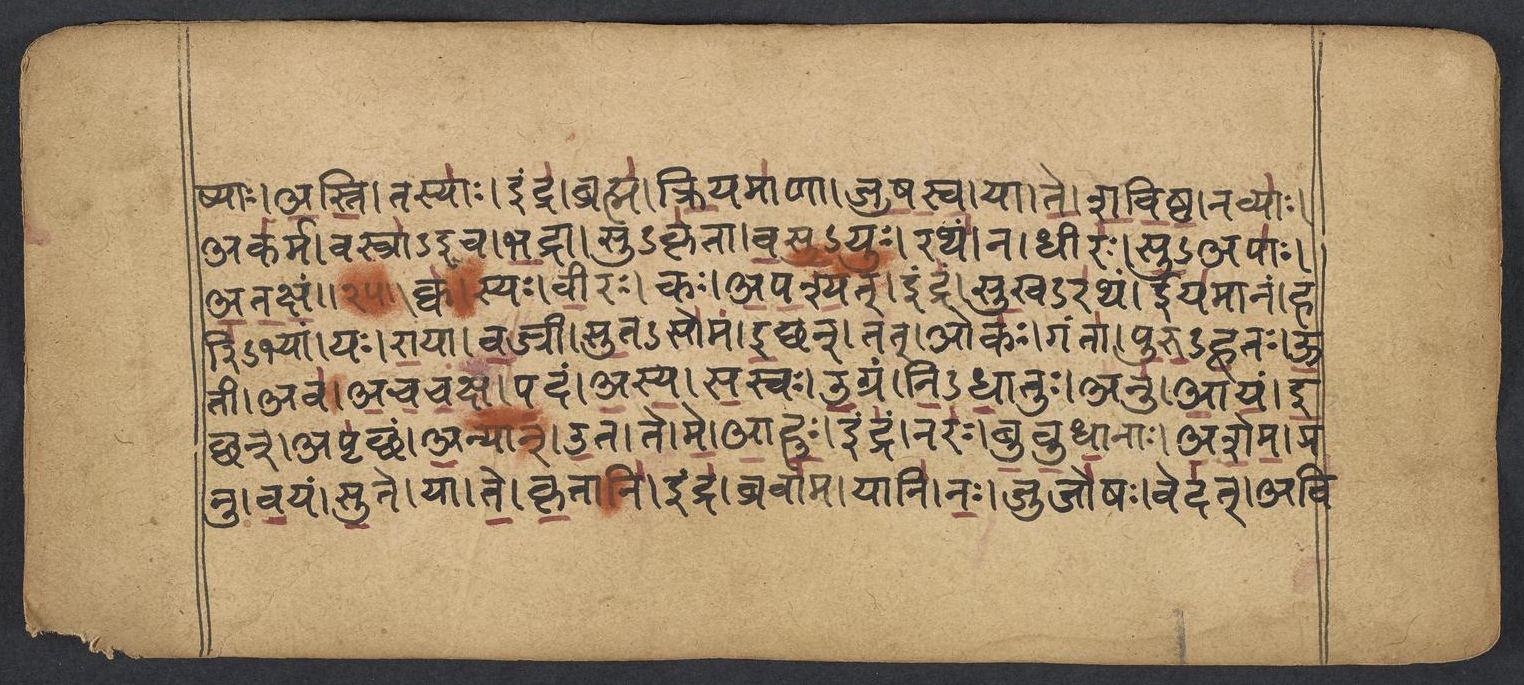
Where on the image
Penn Ms. Coll. 390 Item 41, fol. 341r (numbered 14r by the scribe) (OPenn image 341, lower leaf). Checked on the image: the Rigveda text on this page begins in RV 5.29.14 ‹-taviṣyāḥ asti tasyāḥ›. The next page with Rigveda text, fol. 341v (numbered 14v by the scribe), begins in RV 5.30.3 ‹-avidvān śṛṇavat ca vidvān›. Verses 5.30.1-2 end on this page.
1kva1̱̍ sya vī̱raḥ ko a̍paśya̱d indra̍ṁ su̱khara̍tha̱m īya̍māna̱ṁ hari̍bhyām | yo rā̱yā va̱jrī su̱taso̍mam i̱cchan tad oko̱ gantā̍ puruhū̱ta ū̱tī ||
2avā̍cacakṣam pa̱dam a̍sya sa̱svar u̱graṁ ni̍dhā̱tur anv ā̍yam i̱cchan | apṛ̍ccham a̱nyām̐ u̱ta te ma̍ āhu̱r indra̱ṁ naro̍ bubudhā̱nā a̍śema ||
Compare: Padapāṭha (word-by-word text written in the manuscript; Sansknet e-text via GRETIL)
1kva | syaḥ | vīraḥ | kaḥ | apaśyat | indram | sukha-ratham | īyamānam | hari-bhyām | yaḥ | rāyā | vajrī | suta-somam | icchan | tat | okaḥ | gantā | puru-hūtaḥ | ūtī
2ava | acacakṣam | padam | asya | sasvaḥ | ugram | ni-dhātuḥ | anu | āyam | icchan | apṛccham | anyān | uta | te | me | āhuḥ | indram | naraḥ | bubudhānāḥ | aśema
1WHERE is that Hero? Who hath looked on Indra borne on light-rolling car by Tawny Coursers, Who, Thunderer, seeks with wealth the Soma-presser, and to his house goes, much-invoked, to aid him?
2I have beheld his strong and secret dwelling, longing have sought the Founder's habitation. I asked of others, and they said in answer, May we, awakened men, attain to Indra.
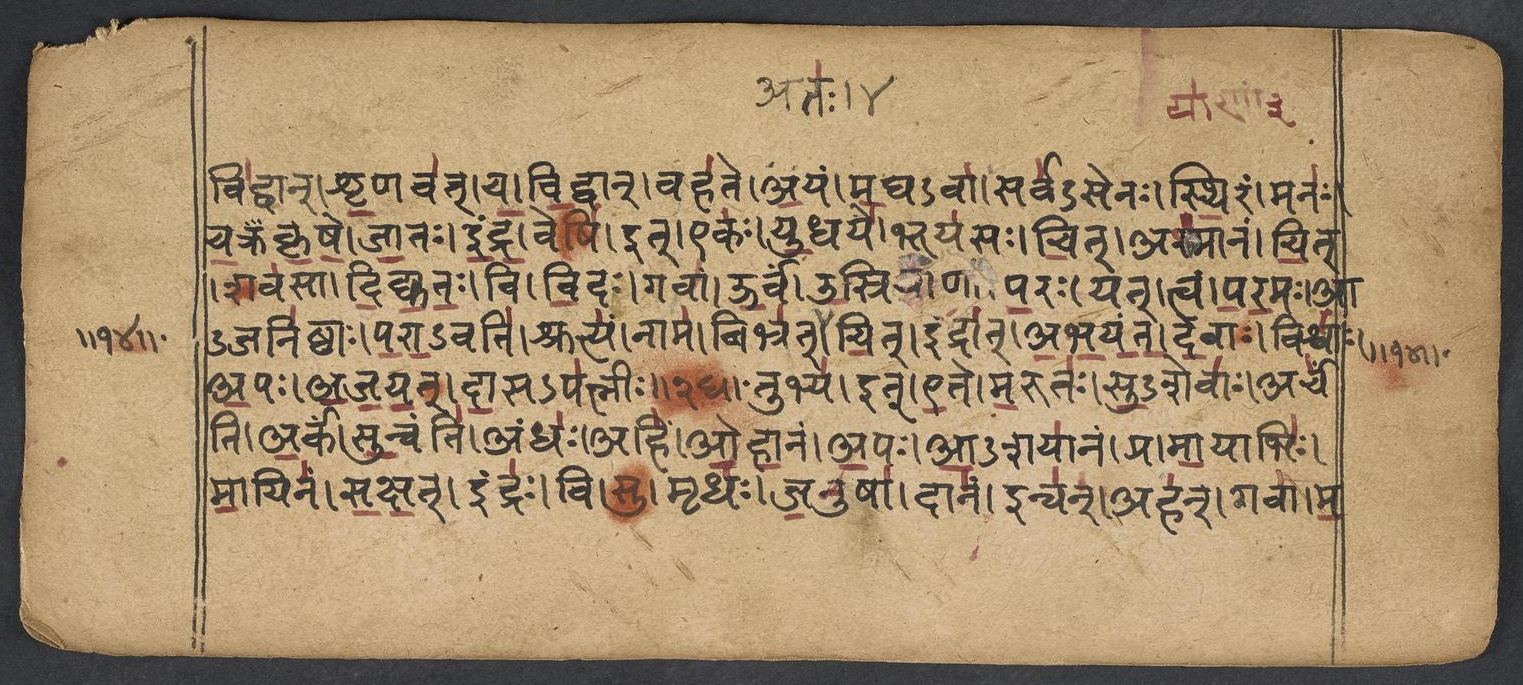
Where on the image
Penn Ms. Coll. 390 Item 41, fol. 341v (numbered 14v by the scribe) (OPenn image 342, upper leaf). Checked on the image: the Rigveda text on this page begins in RV 5.30.3 ‹-avidvān śṛṇavat ca vidvān›. The next page with Rigveda text, fol. 342r (numbered 15r by the scribe), begins in RV 5.30.7 ‹-magha-van sam-cakānaḥ atra dāsasya›. Verses 5.30.3-6 end on this page; 5.30.3 begins on fol. 341r (numbered 14r by the scribe).
3pra nu va̱yaṁ su̱te yā te̍ kṛ̱tānīndra̱ bravā̍ma̱ yāni̍ no̱ jujo̍ṣaḥ | veda̱d avi̍dvāñ chṛ̱ṇava̍c ca vi̱dvān vaha̍te̱ 'yam ma̱ghavā̱ sarva̍senaḥ ||
4sthi̱ram mana̍ś cakṛṣe jā̱ta i̍ndra̱ veṣīd eko̍ yu̱dhaye̱ bhūya̍saś cit | aśmā̍naṁ ci̱c chava̍sā didyuto̱ vi vi̱do gavā̍m ū̱rvam u̱sriyā̍ṇām ||
5pa̱ro yat tvam pa̍ra̱ma ā̱jani̍ṣṭhāḥ parā̱vati̱ śrutya̱ṁ nāma̱ bibhra̍t | ata̍ś ci̱d indrā̍d abhayanta de̱vā viśvā̍ a̱po a̍jayad dā̱sapa̍tnīḥ ||
6tubhyed e̱te ma̱ruta̍ḥ su̱śevā̱ arca̍nty a̱rkaṁ su̱nvanty andha̍ḥ | ahi̍m ohā̱nam a̱pa ā̱śayā̍na̱m pra mā̱yābhi̍r mā̱yina̍ṁ sakṣa̱d indra̍ḥ ||
Compare: Padapāṭha (word-by-word text written in the manuscript; Sansknet e-text via GRETIL)
3pra | nu | vayam | sute | yā | te | kṛtāni | indra | bravāma | yāni | naḥ | jujoṣaḥ | vedat | avidvān | śṛṇavat | ca | vidvān | vahate | ayam | magha-vā | sarva-senaḥ
4sthiram | manaḥ | cakṛṣe | jātaḥ | indra | veṣi | it | ekaḥ | yudhaye | bhūyasaḥ | cit | aśmānam | cit | śavasā | didyutaḥ | vi | vidaḥ | gavām | ūrvam | usriyāṇām
5paraḥ | yat | tvam | paramaḥ | ājaniṣṭhāḥ | parāvati | śrutyam | nāma | bibhrat | ataḥ | cit | indrāt | abhayanta | devāḥ | viśvāḥ | apaḥ | ajayat | dāsa-patnīḥ
6tubhya | it | ete | marutaḥ | su-śevāḥ | arcanti | arkam | sunvanti | andhaḥ | ahim | ohānam | apa | āśayānam | pra | māyābhiḥ | māyinam | sakṣat | indraḥ
3We will tell, Indra, when we pour libation, what mighty deeds thou hast performed to please us. Let him who knows not learn, who knows them listen: hither rides Maghavan with all his army.
4Indra, when born, thou madest firm thy spirit: alone thou seekest war to fight with many. With might thou clavest e'en the rock asunder, and foundest out the stable of the Milch-kine.
5When thou wast born supremest at a distance, bearing a name renowned in far-off regions, Since then e'en Gods have been afraid of Indra: he conquered all the floods which served the Dâsa.
6These blissful Maruts sing their psalm to praise thee, and pour to thee libation of the Soma. Indra with wondrous powers subdued the Dragon, the guileful lurker who beset the waters.
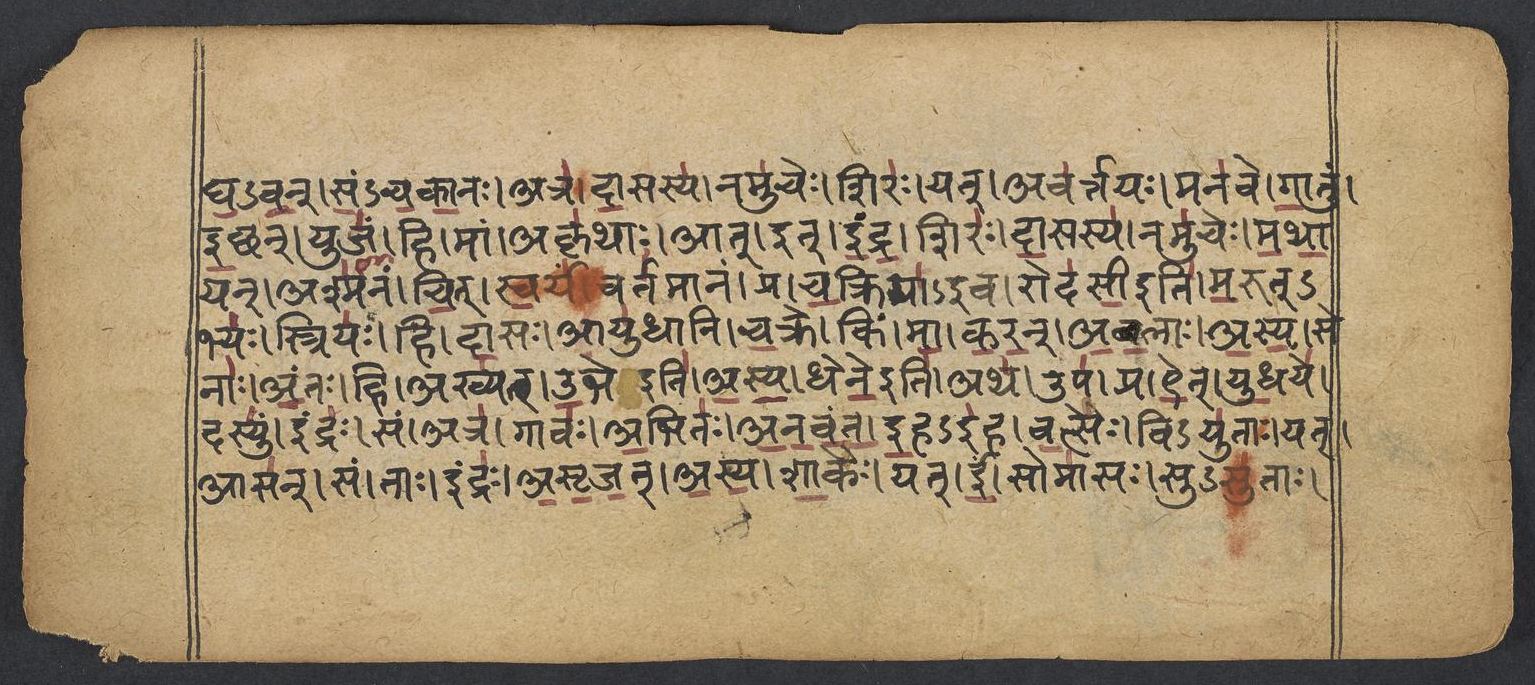
Where on the image
Penn Ms. Coll. 390 Item 41, fol. 342r (numbered 15r by the scribe) (OPenn image 342, lower leaf). Checked on the image: the Rigveda text on this page begins in RV 5.30.7 ‹-magha-van sam-cakānaḥ atra dāsasya›. The next page with Rigveda text, fol. 342v (numbered 15v by the scribe), begins in RV 5.30.10 ‹amandan›. Verses 5.30.7-9 end on this page; 5.30.7 begins on fol. 341v (numbered 14v by the scribe).
7vi ṣū mṛdho̍ ja̱nuṣā̱ dāna̱m inva̱nn aha̱n gavā̍ maghavan saṁcakā̱naḥ | atrā̍ dā̱sasya̱ namu̍ce̱ḥ śiro̱ yad ava̍rtayo̱ mana̍ve gā̱tum i̱cchan ||
8yuja̱ṁ hi mām akṛ̍thā̱ ād id i̍ndra̱ śiro̍ dā̱sasya̱ namu̍cer mathā̱yan | aśmā̍naṁ cit sva̱rya1̱̍ṁ varta̍māna̱m pra ca̱kriye̍va̱ roda̍sī ma̱rudbhya̍ḥ ||
9striyo̱ hi dā̱sa āyu̍dhāni ca̱kre kim mā̍ karann aba̱lā a̍sya̱ senā̍ḥ | a̱ntar hy akhya̍d u̱bhe a̍sya̱ dhene̱ athopa̱ praid yu̱dhaye̱ dasyu̱m indra̍ḥ ||
Compare: Padapāṭha (word-by-word text written in the manuscript; Sansknet e-text via GRETIL)
7vi | su | mṛdhaḥ | januṣā | dānam | invan | ahan | gavā | magha-van | sam-cakānaḥ | atra | dāsasya | namuceḥ | śiraḥ | yat | avartayaḥ | manave | gātum | icchan
8yujam | hi | mām | akṛthāḥ | āt | it | indra | śiraḥ | dāsasya | namuceḥ | mathāyan | aśmānam | cit | svaryam | vartamānam | pra | cakriyāiva | rodasī iti | marut-bhyaḥ
9striyaḥ | hi | dāsaḥ | āyudhāni | cakre | kim | mā | karan | abalāḥ | asya | senāḥ | antaḥ | hi | akhyat | ubhe iti | asya | dheneiti | atha | upa | pra | ait | yudhaye | dasyum | indraḥ
7Thou, Maghavan, from the first didst scatter foemen, speeding, while joying in the milk, the Giver. There, seeking man's prosperity, thou torest away the head of Namuci the Dâsa.
8Pounding the head of Namuci the Dâsa, me, too thou madest thine associate, Indra! Yea, and the rolling stone that is in heaven both worlds, as on a car, brought to the Maruts.
9Women for weapons hath the Dâsa taken, What injury can his feeble armies To me? Well he distinguished his two different voices, and Indra then advanced to fight the Dasyu.
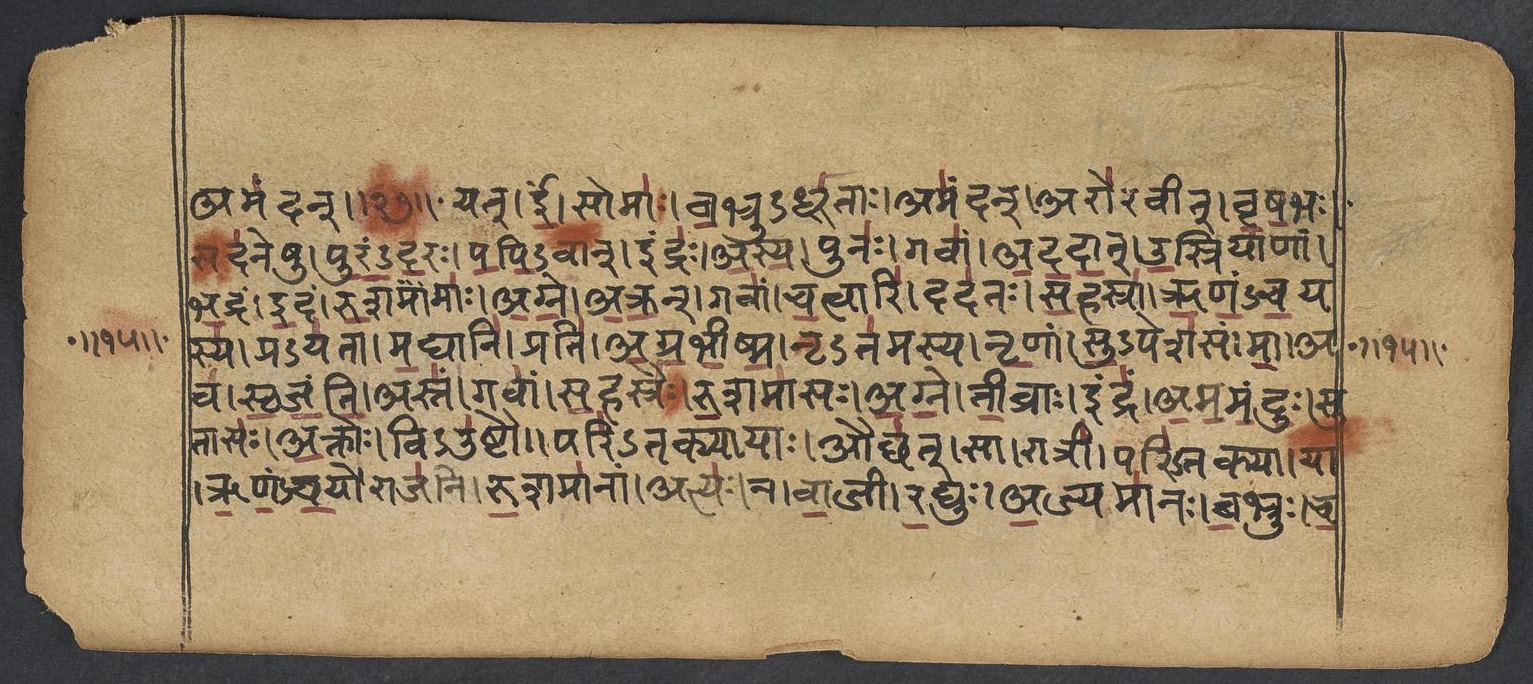
Where on the image
Penn Ms. Coll. 390 Item 41, fol. 342v (numbered 15v by the scribe) (OPenn image 343, upper leaf). Checked on the image: the Rigveda text on this page begins in RV 5.30.10 ‹amandan›. The next page with Rigveda text, fol. 343r (numbered 16r by the scribe), begins in RV 5.30.14 ‹-catvāri asanat sahasrā›. Verses 5.30.10-13 end on this page; 5.30.10 begins on fol. 342r (numbered 15r by the scribe).
10sam atra̱ gāvo̱ 'bhito̍ 'navante̱heha̍ va̱tsair viyu̍tā̱ yad āsa̍n | saṁ tā indro̍ asṛjad asya śā̱kair yad ī̱ṁ somā̍sa̱ḥ suṣu̍tā̱ ama̍ndan ||
11yad ī̱ṁ somā̍ ba̱bhrudhū̍tā̱ ama̍nda̱nn aro̍ravīd vṛṣa̱bhaḥ sāda̍neṣu | pu̱ra̱ṁda̱raḥ pa̍pi̱vām̐ indro̍ asya̱ puna̱r gavā̍m adadād u̱sriyā̍ṇām ||
12bha̱dram i̱daṁ ru̱śamā̍ agne akra̱n gavā̍ṁ ca̱tvāri̱ dada̍taḥ sa̱hasrā̍ | ṛ̱ṇa̱ṁca̱yasya̱ praya̍tā ma̱ghāni̱ praty a̍grabhīṣma̱ nṛta̍masya nṛ̱ṇām ||
13su̱peśa̍sa̱m māva̍ sṛja̱nty asta̱ṁ gavā̍ṁ sa̱hasrai̍ ru̱śamā̍so agne | tī̱vrā indra̍m amamanduḥ su̱tāso̱ 'ktor vyu̍ṣṭau̱ pari̍takmyāyāḥ ||
Compare: Padapāṭha (word-by-word text written in the manuscript; Sansknet e-text via GRETIL)
10sam | atra | gāvaḥ | abhitaḥ | anavanta | iha-iha | vatsaiḥ | vi-yutāḥ | yat | āsan | sam | tāḥ | indraḥ | asṛjat | asya | śākaiḥ | yat | īm | somāsaḥ | su-sutāḥ | amandan
11yat | īm | somāḥ | babhru-dhūtāḥ | amandan | aroravīt | vṛṣabhaḥ | sādaneṣu | puram-daraḥ | papi-vān | indraḥ | asya | punaḥ | gavām | adadāt | usriyāṇām
12bhadram | idam | ruśamāḥ | agne | akran | gavām | catvāri | dadataḥ | sahasrā | ṛṇam-cayasya | pra-yatā | maghāni | prati | agrabhīṣma | nṛ-tamasya | nṛṇām
13su-peśasam | mā | ava | sṛjanti | astam | gavām | sahasraiḥ | ruśamāsaḥ | agne | tīvrāḥ | indram | amamanduḥ | sutāsaḥ | aktoḥ | vi-uṣṭau | pari-takmyāyāḥ
10Divided from their calves the Cows went lowing around, on every side, hither and thither. These Indra re-united with his helpers, what time the well-pressed Soma made him joyful.
11What time the Somas mixed by Babhru cheered him, loud the Steer bellowed in his habitations. So Indra drank thereof, the Fort-destroyer, and gave him guerdon, in return, of milch-kine.
12This good deed have the Ruṣamas done, Agni! that they have granted me four thousand cattle. We have received R̥iṇanchaya's wealth, of heroes the most heroic, which was freely offered.
13The Ruṣamas, O Agni, sent me homeward with fair adornment and with kine in thousands. The strong libations have made Indra joyful, when night, whose course was ending, changed to morning.
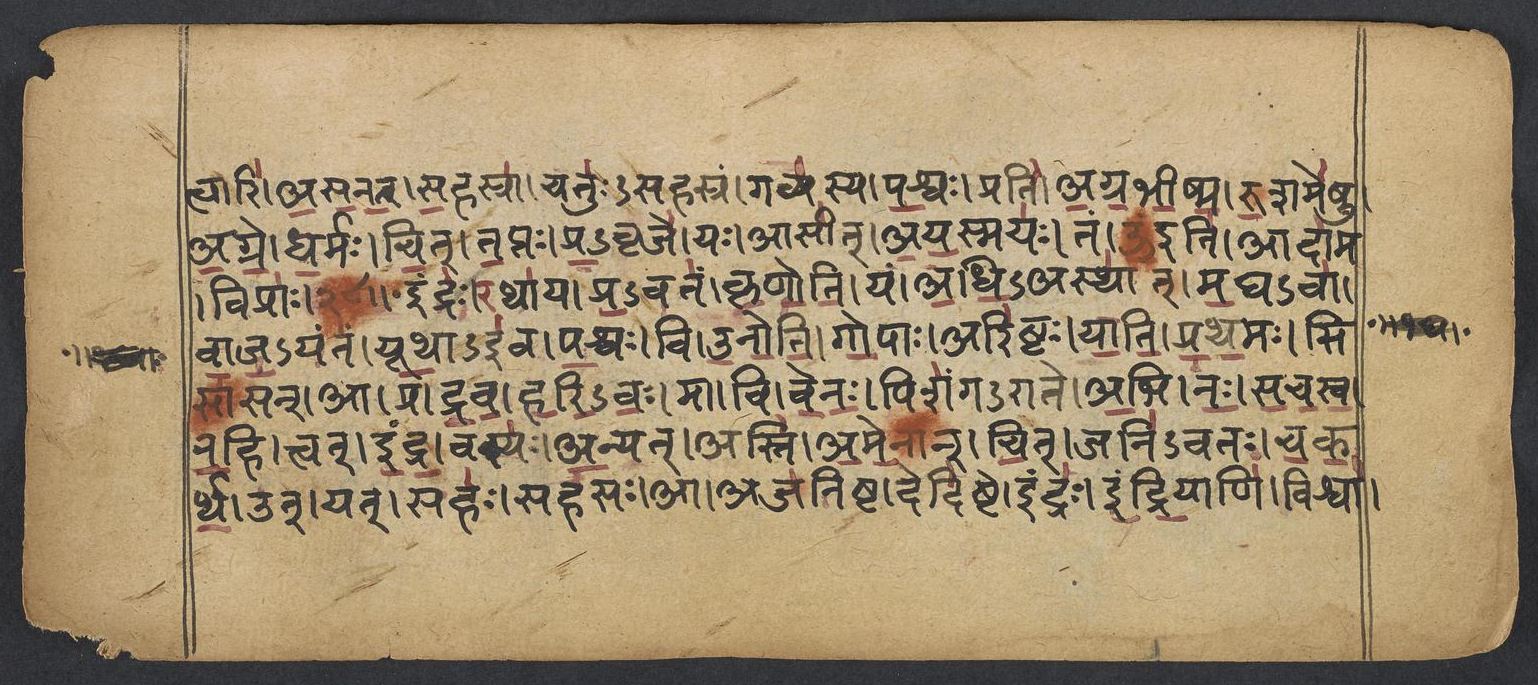
Where on the image
Penn Ms. Coll. 390 Item 41, fol. 343r (numbered 16r by the scribe) (OPenn image 343, lower leaf). Checked on the image: the Rigveda text on this page begins in RV 5.30.14 ‹-catvāri asanat sahasrā›. The next page with Rigveda text, fol. 343v (numbered 16v by the scribe), begins in RV 5.31.3 ‹pra acodayat su-dughāḥ vavre›. Verses 5.30.14-15 end on this page; 5.30.14 begins on fol. 342v (numbered 15v by the scribe).
14auccha̱t sā rātrī̱ pari̍takmyā̱ yām̐ ṛ̍ṇaṁca̱ye rāja̍ni ru̱śamā̍nām | atyo̱ na vā̱jī ra̱ghur a̱jyamā̍no ba̱bhruś ca̱tvāry a̍sanat sa̱hasrā̍ ||
15catu̍ḥsahasra̱ṁ gavya̍sya pa̱śvaḥ praty a̍grabhīṣma ru̱śame̍ṣv agne | gha̱rmaś ci̍t ta̱ptaḥ pra̱vṛje̱ ya āsī̍d aya̱smaya̱s tam v ādā̍ma̱ viprā̍ḥ ||
Compare: Padapāṭha (word-by-word text written in the manuscript; Sansknet e-text via GRETIL)
14aucchat | sā | rātrī | pari-takmyā | yā | ṛṇam-caye | rājani | ruśamānām | atyaḥ | na | vājī | raghuḥ | ajyamānaḥ | babhruḥ | catvāri | asanat | sahasrā
15catuḥ-sahasram | gavyasya | paśvaḥ | prati | agrabhīṣma | ruśameṣu | agne | gharmaḥ | cit | taptaḥ | pra-vṛje | yaḥ | āsīt | ayasmayaḥ | tam | oṃ iti | ādāma | viprāḥ
14Night, well-nigh ended, at R̥iṇanchaya's coming, King of the Ruṣamas, was changed to morning. Like a strong courser, fleet of foot, urged onward, Babhru hath gained four thousand as his guerdon.
15We have received four thousand head of cattle presented by the Ruṣamas, O Agni. And we, the singers, have received the caldron of metal which was heated for Pravargya.
Notes
- Sanskrit: Aufrecht's edition (1877) with the Vedic accents, as entered by van Nooten and Holland (GRETIL).
- English: Ralph T. H. Griffith, The Hymns of the Rigveda (1889-1892; 2nd ed. 1896-1897), from the VedaWeb digital text; OCR slips in that text were corrected against the printed 2nd edition (data/sources/rigveda/griffith_errata.json).
- Padapāṭha (edition text): Sansknet e-text via GRETIL (CC BY-NC-SA 4.0).
Cite
Sources
- Source: Penn Ms. Coll. 390 Item 41 (undated (catalogued with Penn's 18th-19th c. Vedic manuscripts)), OPenn, Public Domain Mark + Aufrecht's accented text (GRETIL) + Griffith's English (VedaWeb) (holding institution)
- Critical edition: Aufrecht (1877), accented e-text via GRETIL
← previous · → next · v cycle view · l back to library